Hook: In the world of boutique-brand charms, material performance translates to design freedom, production yield, and long-term customer satisfaction. For designers working with factory-direct suppliers, selecting 316L stainless steel as the base material unlocks a predictable path from concept to private-label packaging. This guide outlines metallurgical and process-driven reasons why 316L stainless steel charms perform well in real-world production, with practical implications for design, sourcing, and manufacturing strategy. As a trusted OEM/ODM partner, Lancy Jewelry combines a modern CNC-driven facility with laser cutting, welding, and finishing capabilities to deliver consistently plated, visually pristine charms across global markets. Our SGS certifications—RoHS, REACH, Nickel Release EN1811, and Salt Spray 240H—underscore our commitment to safety, reliability, and durable finishes. For designers and sourcing managers evaluating options, this guide provides a technical framework to optimize material choice, finishes, and production workflows while maintaining lean MOQs and fast sample development.
Why 316L Stainless Steel Charms: Core Advantages
316L stainless steel charms — the material strengths
316L stainless steel features a low carbon profile with added molybdenum. The molybdenum enhances resistance to chloride-induced corrosion, a key consideration for environments with humidity, sweat, or salt exposure. For designers, this translates into more stable surface appearance during wear testing and longer service life in retail displays. In practice, that means fewer warranty concerns and more consistent plating retention across production lots, which matters for private-label packaging and wholesale programs.
Alloy chemistry and micromechanics — what matters most
In the 316L family, the typical composition includes chromium, nickel, and molybdenum, with a deliberately low carbon content to reduce sensitization during welding or heat treatment. The presence of molybdenum is the key differentiator from other stainless grades and drives superior pitting resistance in chloride-containing environments. For design teams, these microstructural features support stable surfaces during CNC shaping, laser marking, and joining processes. The low carbon content also supports reliable passivation and smoother post-processing after engraving or enamel filling, which matters for private-label runs with strict color-matching requirements.
Plating finishes and color stability
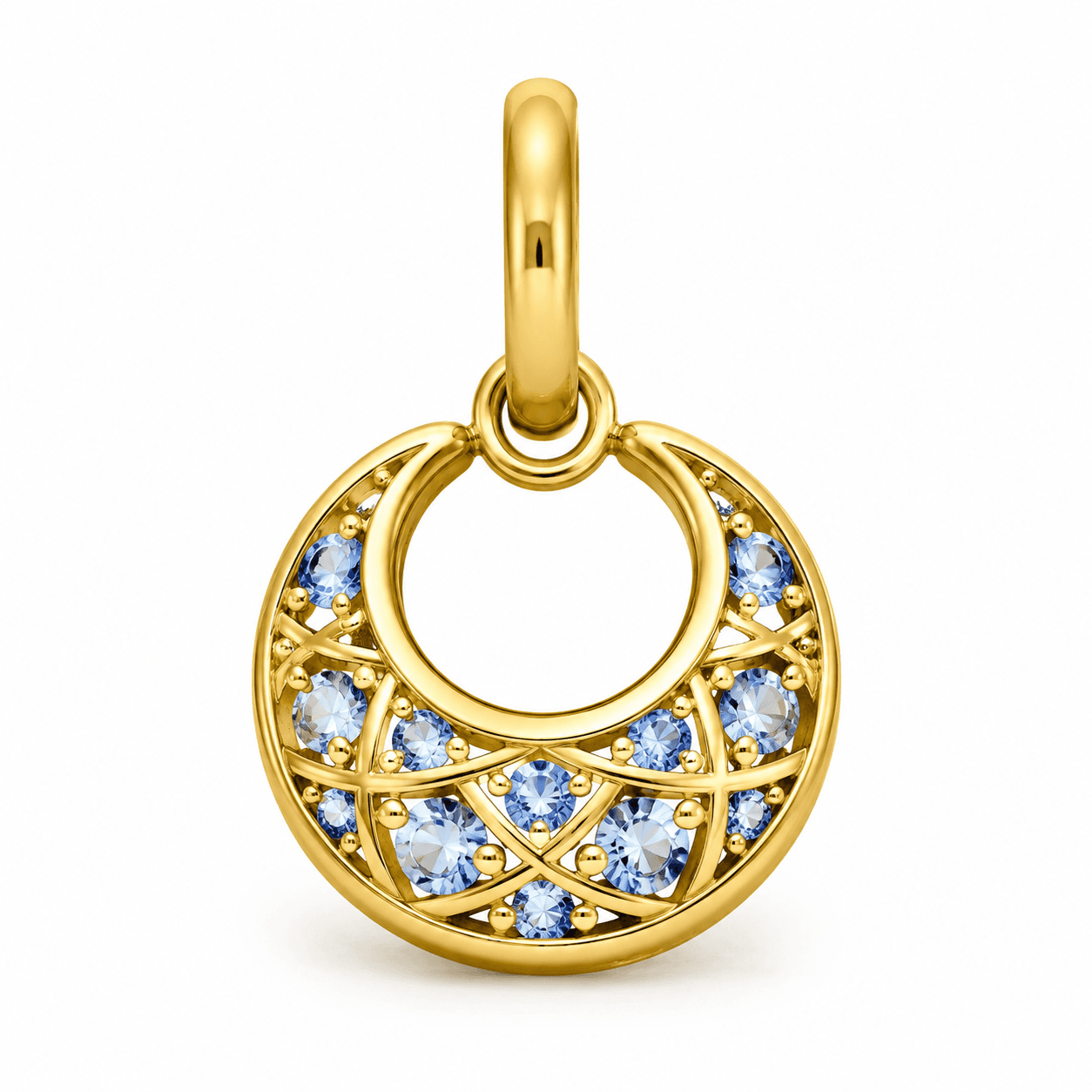
316L provides a robust platform for PVD plating, including gold, rose gold, and silver finishes, as well as enamel and crystal inlays. The metal’s grain structure and corrosion resistance help reduce discoloration or dulling of plated layers over time, supporting boutique-ready appearances in mass-market contexts. For designers, this reliability means you can pursue ambitious color options or inlay work without sacrificing longevity. When partnering with a factory-direct supplier, you can expect consistent plating thickness and color consistency across lots, thanks to in-house finishing capabilities and strict process controls.
Manufacturing tolerances and process harmony
From CNC precision to laser cutting and welding, the manufacturing ecosystem for 316L charms requires tight tolerances to ensure components such as bail holes, jump rings, and attachment points align with standard chains and clasps. The low carbon content reduces carbide precipitation during welding, minimizing hard spots and deformation that could impact fit or finish. For designers, this yields more forgiving tolerances during fixture-based production, enabling a smoother sample-to-production transition and fewer reworks in private-label runs.
Consistency across finishes, inlays, and packaging
Finish consistency is a practical discriminator in markets worldwide. 316L’s chemical stability supports uniform electroplating and enamel filling results. When combined with PVD plating, designers can rely on repeatable color fidelity, improved scratch resistance, and stable luster across batches—critical when planning boutique-ready series or private-label programs with brand standards. Lancy’s SGS-certified environment ensures finish integrity aligns with RoHS/REACH compliance, nickel-release limits, and salt-spray durability, reducing regulatory risk for partners distributing globally.
Comparative note: real-world terms for 316L versus other options
While other stainless grades may offer formability or general corrosion resistance, 316L delivers molybdenum-driven protection against chloride attack. In coastal or humid settings, charms made with 316L exhibit fewer surface changes after wear or exposure to sweat and salts. Designers planning cross-market distribution — including the US, EU, UK, Australia, Canada, and other regions — benefit from the added margin of safety that 316L provides, reducing post-sale service and return risk across diverse consumer environments. When combined with private-label packaging and low MOQ options, the business case for 316L becomes clear for global OEM and ODM partnerships.
Process-driven insights for design teams
To maximize the benefits of 316L, designers should align with production-ready parameters: wall thickness that balances strength with plating thickness, bore tolerances for bail attachments, and planarity for enamel or crystal inlays. Early-stage prototypes can leverage sample development capabilities to enable fast feedback between design intent and manufacturing feasibility. The result is a smoother path from concept through private-label packaging to market launch, with predictable lead times and reduced risk in bulk orders.
Benefits and Why It Matters
Key benefits for designers and brands
Material reliability: 316L stainless steel’s corrosion resistance and low carbon profile reduce wear-related changes in harsh environments, helping preserve surface finish across product lifecycles. Finish durability: PVD-plated options and enamel/crystal inlay compatibility deliver consistent aesthetics across seasons and collections. Manufacturing consistency: Tight tolerances and controlled finishing support reliable sample development and scalable bulk orders. Regulatory alignment: SGS certifications underpin compliance for global markets, increasing buyer confidence in private-label and OEM/ODM projects. All of these factors contribute to predictable MOQs, better design-to-manufacture alignment, and a smoother path to wholesale distribution.
Why these benefits matter in a global context
Design teams partnering with a factory-direct supplier must manage cross-market expectations: color fidelity, finish stability, and lead times vary by region and season. 316L-based charms offer a universal standard that reduces regional variance in wear performance and finish maintenance. This universality supports a more efficient sourcing strategy for boutique brands and charm-bar retailers worldwide, enabling a consistent product line across channels with a single material platform. In partnership with Lancy Jewelry, you can pursue OEM or ODM programs, private-label initiatives, and low MOQs with confidence that the core material and process infrastructure are aligned for global scale.
Detailed Analysis and Practical Guide
Step-by-step evaluation for a new collection
Step 1 — Define mechanical requirements: Determine expected wear patterns, attachment methods, and tolerance bands for bail holes, jump rings, or clasps. Consider chain compatibility and the need for robust soldering or welding during assembly.
Step 2 — Material and chemistry review: Confirm the 316L base composition, emphasize low carbon content, and review molybdenum presence for chloride resistance. Validate that your supplier can trace alloy lots and provide certifications (RoHS, REACH, EN1811, Salt Spray) for regulatory comfort in key markets.
Step 3 — Finish and inlay strategy: Choose finishes (PVD gold, rose gold, silver) and inlays (enamel, crystal) that align with design intent and color-matching requirements. Plan for consistent plating thickness control across batches.
Step 4 — Prototype to production handoff: Leverage sample development to refine tolerances and verify fit with standard charm chains, key rings, or clasps. Validate in-production jigging and fixture setups before mass production.
Step 5 — Quality control and packaging: Implement passivation, cleaning, and surface finish-quality checks. Align private-label packaging design with brand guidelines and ensure product labeling complies with cross-border regulations.
Step 6 — Commercial considerations: Establish MOQs aligned with design complexity, plan for private-label or wholesale programs, and coordinate with OEM/ODM teams to schedule production windows and lead times.
Step 7 — Continuous improvement: Collect market feedback, monitor finish performance on high-visibility collections, and refine process controls for plating uniformity and enamel fill consistency. This is where the supplier’s capability, such as Lancy’s CNC, laser, and finishing suite, proves decisive for iterative collections.
Process integration: from design to market
Successful 316L charm programs rely on cross-functional alignment: design teams, manufacturing engineers, and supply-chain managers must harmonize material behavior with finish options, tolerances, and packaging. The integration is facilitated by an OEM/ODM approach that supports customization, private-label packaging, and flexible MOQs. This alignment also enables scalable production for bulk orders and ongoing catalog development, matching the needs of boutique jewelry brands, charm bar retailers, gift companies, and distributors.
Technical recap: material, process, and performance
In short, 316L stainless steel charms provide a favorable combination of chemical stability, mechanical integrity, finish compatibility, and manufacturing reproducibility. The alloy chemistry supports durable plating and inlay work, while the low carbon profile minimizes sensitization risks during processing. When paired with a robust fabrication line and SGS-compliant quality controls, the material foundation becomes a reliable platform for global private-label and OEM/ODM initiatives.
FAQ (Frequently Asked Questions)
Q1: Is 316L stainless steel a preferred base material for charm applications?
A1: Yes. 316L offers superior corrosion resistance due to molybdenum content, better weldability with low carbon (reducing sensitization), and more stable finishes when plated or inlaid. This makes it a preferred base material for global charm programs.
Q2: What finishes work best with 316L charms?
A2: PVD plating (gold, rose gold, silver), enamel color filling, and crystal inlays pair well with 316L, with finishes controlled by plating thickness and color-matching processes to ensure cross-market consistency.
Q3: How does Lancy support private-label and OEM/ODM programs?
A3: Lancy Jewelry offers OEM/ODM development, logo engraving, PVD plating, enamel color filling, crystal setting, and private-label packaging. We provide low MOQs, fast sample development, and scalable production plans to accommodate private-label launches and wholesale orders.
Q4: What is the typical lead time for a new 316L charm collection?
A4: Lead times vary by complexity and capacity, but the process emphasizes rapid sample development and a clear transition to mass production with controlled plating and finishing to maintain consistency across bulk orders.
Call to Action — Partner With Us
If you are designing a new charm line for boutique brands, charm bar retailers, or private-label programs, consider a dedicated partnership with Lancy Jewelry. We bring a modern factory with CNC, laser cutting, laser marking, welding, and polishing capabilities, backed by SGS-certified compliance. Partnering with us supports OEM/ODM development, private-label packaging, and flexible MOQs to match your market strategy. Explore our OEM service page, request a quote, or contact our sales team to start your private-label journey. OEM Service | Request a Quote | Contact | All Products.