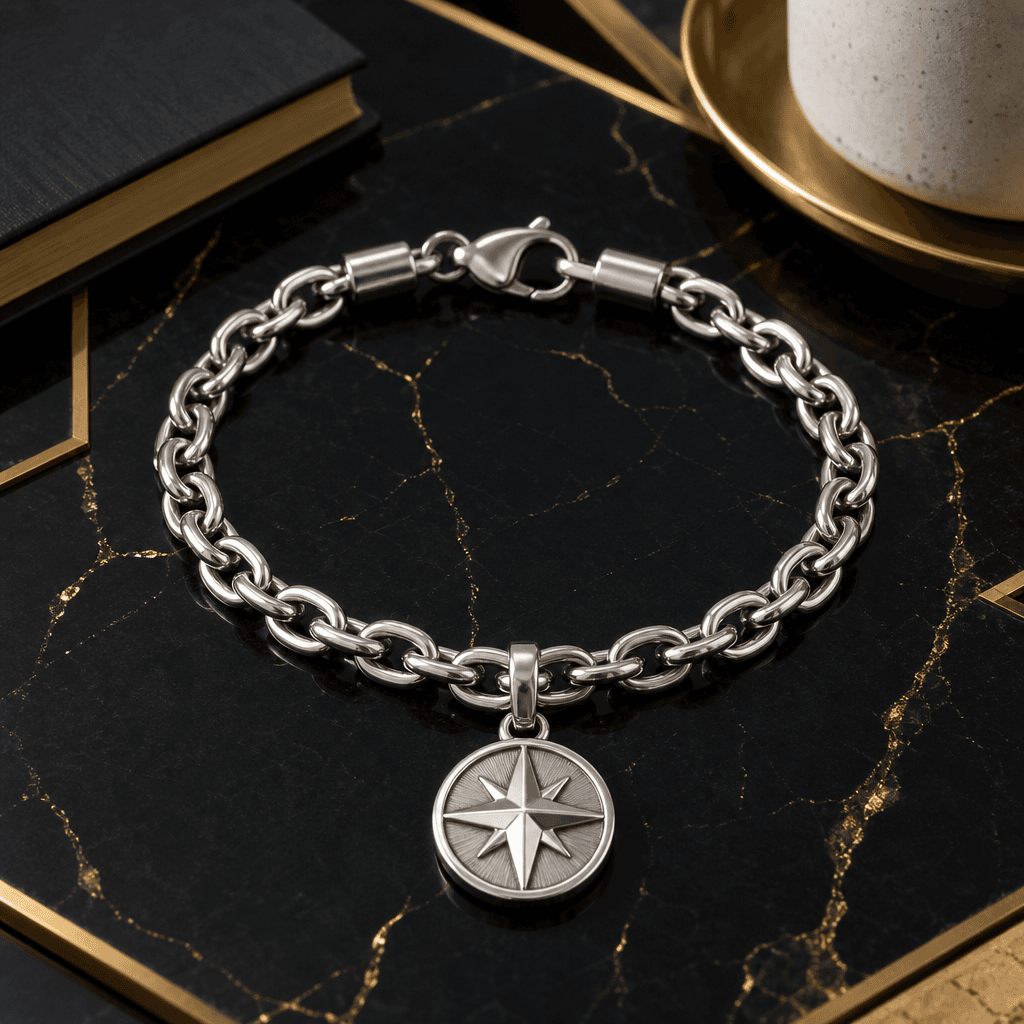
When you source bulk stainless steel charms wholesale, the risk isn’t just cost—it’s consistency, wear performance, and documentation you can stand behind in every market. Procurement teams need a supplier evaluation process that’s repeatable, auditable, and focused on real-world durability.
Bulk stainless steel charms wholesale: Supplier Vetting & Tests checklist
This checklist is designed for procurement teams running vendor onboarding, annual reviews, and bulk production rollouts. It keeps your decisions grounded in measurable quality evidence—especially for 316L stainless steel charms and downstream finishing such as PVD, enamel filling, and crystal inlay.
Vendor readiness (document control & traceability)
- [ ] Request a written process map covering CNC, laser cutting/marking, welding, polishing, and finishing steps (including where PVD, enamel, and crystal operations occur).
- [ ] Confirm traceability for incoming material lots to finished charms (batch records and retained samples policy).
- [ ] Require documented dimensional inspection criteria (tolerance windows for charm face, loop/jump ring interface, and thickness).
- [ ] Verify change-control practices: plating parameters, enamel color recipes, and setting methods should be governed by controlled revisions.
- [ ] Ask for packaging SOPs for private label charms (tray configuration, barcode/label placement, and damage-prevention inserts).
Quality compliance evidence (market-ready documentation)
- [ ] Collect compliance test reports tied to the actual charm product family you’re buying (not generic material sheets).
- [ ] Review RoHS and REACH evidence (substance compliance for production shipments).
- [ ] Request Nickel Release testing documentation aligned with EN1811 (critical for wearer-safety risk management).
- [ ] Validate corrosion resistance expectations using salt spray results; confirm reported exposure duration and pass/fail thresholds (e.g., 240H salt spray results).
- [ ] Ensure reports specify testing standard identifiers, sample counts, and measurement methods.
Durability testing & wear resistance (what to demand before you commit)
- [ ] Define performance targets for finishing durability: plating adhesion, surface stability, and resistance to rubbing abrasion.
- [ ] Require plating verification: PVD layer uniformity and adherence checks (ask how they prevent micro-delamination on edges).
- [ ] For enamel-filled charms, request checks for enamel integrity: chipping risk, surface smoothness, and color retention stability.
- [ ] For crystal inlay, require evidence of secure setting and resistance to loosening under normal handling.
- [ ] Ask for retention testing or post-finish sample evaluation methodology (how samples are aged and re-inspected).
Why it matters: durability, consistency, and audit-ready procurement
Key benefits you can quantify
- Lower returns and fewer quality incidents by tying supplier approval to testable wear and corrosion outcomes.
- Consistent plating quality across bulk charm orders by requiring controlled PVD parameters and documented inspection frequency.
- Stronger buyer confidence when you can show evidence that supports your compliance file across US, EU, UK, AU, CA, DE, FR, SP, NE, and RU procurement workflows.
- Production stability through change control and traceability—essential when running annual assortment updates.
- Credible safety documentation: certifications and lab results including RoHS, REACH, Nickel Release EN1811, and Salt Spray 240H.
What to watch in the real world (common failure points)
Procurement teams often find issues after inventory is in transit: edge wear, plating thinning at contact points, enamel micro-chips, or loosened inlay stones from handling. A robust vetting process catches these risks early by testing the finished charm state—not just base material claims.
Detailed analysis guide: step-by-step supplier evaluation for bulk orders
Step 1: Shortlist suppliers by production capability fit
- [ ] Choose suppliers that manufacture finished 316L stainless steel charms in-house with clear separation between base shaping and finishing operations.
- [ ] Confirm the supplier supports OEM/ODM development: custom logo engraving, series planning, and private-label packaging.
- [ ] Ask whether sample development is iterative and time-bound for your targets.
Step 2: Run a structured sample development and verification cycle
- [ ] Request samples for the exact charm model, finish, and packaging configuration you plan to buy.
- [ ] Perform visual and mechanical checks: edge sharpness, surface uniformity, and stability of the jump ring/attachment interface.
- [ ] Validate decorative finish: verify PVD coverage consistency; inspect enamel color uniformity and smoothness; check crystal inlay seating.
- [ ] Document defects with high-resolution photos and a grading rubric (severity, location, and frequency).
Step 3: Demand the right testing pack (before bulk charm orders)
- [ ] Compliance pack: RoHS, REACH, Nickel Release EN1811 documentation, plus corrosion evidence such as 240H salt spray results.
- [ ] Durability pack: finish adhesion and wear resistance methodology (ask for what they test, not only what they claim).
- [ ] Metallurgical/quality approach: confirm how they ensure consistent performance of 316L stainless steel throughout polishing and finishing.
Step 4: Conduct an audit-ready review (process, not promises)
- [ ] Ask for manufacturing checklists used during each production shift or batch.
- [ ] Confirm inspection points: incoming material inspection, in-process dimensional checks, post-finish cosmetic inspection.
- [ ] Review sample retention: what they keep, for how long, and under what storage conditions.
- [ ] Verify how they handle nonconforming lots and rework approvals (who signs off, and what criteria trigger rejection).
Step 5: Align commercial controls with quality (so economics don’t override standards)
- [ ] Set expectations on MOQ strategy and sampling quantities aligned to your assortment roadmap (keep MOQ manageable without cutting testing corners).
- [ ] Define bulk order checkpoints: pre-shipment photo/video verification, finishing consistency checks, and final packaging QC.
- [ ] Require an RFQ-driven specification sheet that locks in finish parameters and acceptance criteria.
FAQ: bulk stainless steel charms wholesale supplier vetting
1) What should procurement teams request first when evaluating a wholesale charm supplier?
Start with a complete sample plan and a documentation pack: traceability approach, controlled finishing processes, and compliance test reports (RoHS, REACH, Nickel Release EN1811, and corrosion results such as Salt Spray 240H). Then confirm finish verification methods for PVD, enamel, and crystal inlay.
2) How do we evaluate durability if suppliers don’t share a test methodology?
Ask for the exact testing method, sample size, and pass/fail thresholds. If they only provide claims, treat that as a gap. Durability must be demonstrated at the finished charm state because wear and corrosion risks typically appear after polishing and coatings.
3) Why is 316L stainless steel emphasized for charm durability?
316L stainless steel is the base material buyers commonly expect for corrosion resistance and long-term wear performance in charm applications. A quality supplier should consistently execute finishing steps on the same base specification to maintain predictable results.
4) What role does private-label packaging play in the supplier decision?
Packaging affects damage rates and brand presentation. A reliable supplier should provide private label packaging SOPs, including tray or protective insert design, labeling control, and shipment-proof packing—so your charms arrive in sale-ready condition.
Partner With Us: streamline bulk ordering with proven quality control
For procurement teams seeking a dependable OEM/ODM partner for 316L stainless steel charms, Lancy Jewelry offers structured sample development, consistent PVD plating quality, and durable finishing controls for enamel and crystal inlay designs—supported by compliance documentation including RoHS, REACH, Nickel Release EN1811, and Salt Spray 240H.
Next step: Send your RFQ with charm style targets, finishes, and private-label packaging requirements. We’ll help you validate specifications quickly and plan bulk charm orders with audit-ready evidence.
OEM Service | Request a Quote | All Products | Contact