Stainless Steel Wholesale Pendants and Charms: Technical Deep Dive
Wholesale buyers seeking reliable, scalable supply of 316L stainless steel charms need more than pretty product pages. This technical deep-dive unpacks the core science behind 316L stainless steel charms, revealing how alloy chemistry, surface finishing, and process controls drive margins, reliability, and cross-market consistency. At Lancy Jewelry, a modern OEM/ODM facility with CNC, laser cutting, laser marking, welding, and polishing, we align material science with practical sourcing outcomes. SGS certified for RoHS, REACH, Nickel Release EN1811, and Salt Spray 240H, our 316L stainless steel charms form the backbone of private-label programs and wholesale catalogs across the US, EU, UK, AU, CA, and beyond. Learn how material choices translate into stable pricing, low MOQ options, and faster sample development, while meeting the demands of boutique brands and charm bar retailers.
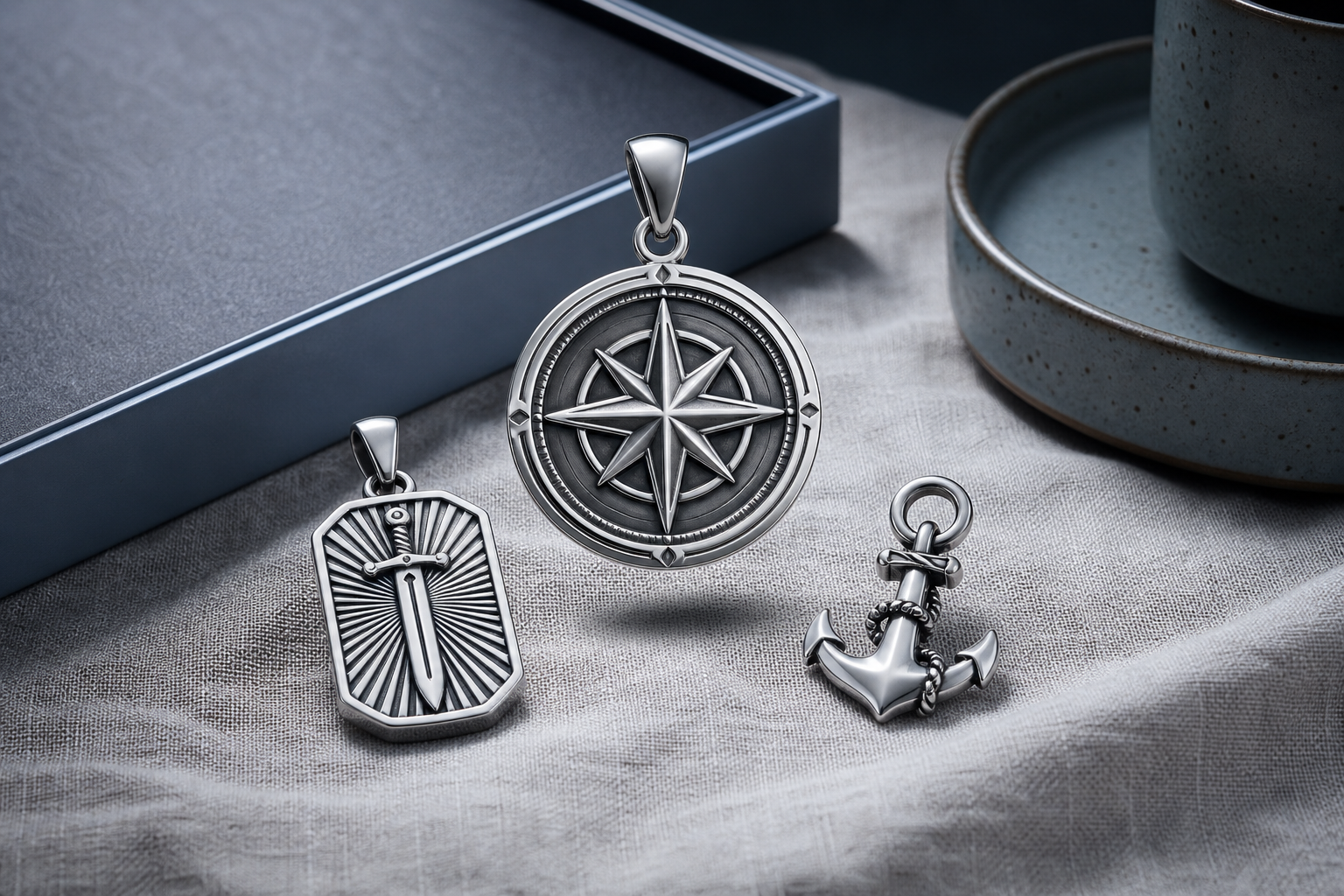
Main topic: Stainless Steel Wholesale Pendants and Charms
316L stainless steel is the foundational material for Lancy’s charms. This section explains why that choice matters at scale—from chemistry to certified performance—and how it translates into reliable, margin-friendly procurement for global markets. Throughout, you’ll find practical guidance for OEM/ODM workflows, private-label packaging, and consistent plating outcomes that support wholesale business models.
316L stainless steel as the base material
316L is a low-carbon variant of stainless steel designed to balance corrosion resistance with formability. The low carbon content (typically around 0.03% max) minimizes chromium carbide precipitation during welding and heat treatment, which is essential when you’re producing small charm components with welds, engravings, or enamel fills. For wholesale charm programs, this material choice reduces risk across large production runs by delivering predictable mechanical properties and stable surface behavior under plating and coating processes.
Alloy composition and chemistry
In widely accepted specifications, 316L stainless steel comprises roughly: chromium 16–18%, nickel 10–14%, and molybdenum 2–3%, with iron as the balance. The molybdenum gives improved resistance to pitting and crevice corrosion in chloride environments, which matters for gift-ready charms that may be exposed to sweat, humidity, or consumer handling. The precise chemistry in a certified supplier like Lancy is controlled to tight tolerances to ensure plating adhesion, enamel uptake, and crystal setting remain consistent across lots. When you scale to wholesale or private-label programs, this stability helps maintain uniform color and brightness, reduces color variation after plating, and minimizes rework in QC checkpoints.
Corrosion resistance and passivation
316L exhibits a robust passive oxide film that protects the base metal from corrosion. In practical terms for wholesale charm manufacturing, this means lower long-term maintenance for plated finishes and enamel fills, even when charms are exposed to sweat, cosmetics, or humidity. The passivation behavior interacts with PVD plating outcomes; a well-controlled surface prior to plating ensures stronger adhesion of color layers such as gold or rose gold, and better resistance to wear through repeated handling in retail environments.
Mechanical properties and formability
316L provides a favorable balance of strength and ductility suitable for small charms with intricate engravings or enamel recesses. Typical tensile strength ranges can be discussed with the supplier and vary with processing, heat treatment, and cold-working. For wholesale jewelry manufacturing, the practical takeaway is predictability: the alloy accepts laser engraving, stamping, and mild deformation required for bail attachments or jump rings without cracking or deformation that would complicate mass production. This predictability underpins reliable yield in high-volume runs and reduces scrap, supporting healthier margins for OEM/ODM partners.
PVD plating compatibility and color options
PVD plating is a core capability for 316L stainless steel charms. It enables consistent color choices such as gold plated, rose gold plating, and silver finish. The adhesion between PVD layers and 316L stainless steel is influenced by surface preparation, cleaning, and pre-etch steps. Lancy uses controlled plasma cleaning, pre-oxidation, and adhesion-promoting interlayers to secure durable coatings that resist wear, scratching, and color fading during handling and assembly in bulk orders. For wholesale buyers, this translates into uniform appearance across batches, which is critical for catalog photography, private-label packaging, and cross-market sales.
Enamel and crystal inlay on 316L bases
Enamel filling and crystal inlays add aesthetic value, but they rely on robust base-metal interactions. 316L provides an excellent canvas because its surface oxide layer supports enamel bonding and crystal retention without excessive substrate distortion during curing or mounting. Enamel colors are typically filled into recessed areas and fired to fuse with the metal surface, while crystals are set with micro-wells or prongs crafted through CNC and laser finishing. For wholesale programs, consistent enamel density and crystal seating across thousands of pieces are essential to prevent gaps in color or sparkle that would affect catalog consistency and margins.
Quality and traceability—certifications
Lancy Jewelry carries SGS certification with RoHS and REACH compliance, Nickel Release EN1811 testing, and Salt Spray 240H evaluation. These certifications support cross-market acceptance and help wholesale buyers demonstrate compliance to brand partners and retailers worldwide. Traceability is maintained through batch controls, production records, and inspection checkpoints across the modern facility—featuring CNC, laser cutting, laser marking, welding, and polishing—to ensure that every charm meets agreed specifications before shipment. These controls are integral to sustaining reliable supply for private-label packaging and bulk charm orders.
Benefits and why it matters for wholesale programs
Key benefits for wholesale and private-label buyers
- Low MOQ options support private-label and boutique-brand launches without capital risk. Working with an experienced OEM charms manufacturer like Lancy helps align minimum order quantities with demand forecasts and seasonal campaigns.
- Consistent plating quality reduces color drift and finish imperfections across multi-batch runs, enabling uniform catalog imagery and consistent consumer perception.
- Private-label packaging and branding-ready capabilities streamline go-to-market timelines for gift programs and distributor networks.
- Fast sample development accelerates decision cycles, enabling faster onboarding of new SKUs and more aggressive assortment planning.
- Cross-market compatibility with global color preferences and regulatory requirements, supported by SGS certifications and robust process controls.
- Clear OEM/ODM workflows that translate designs into scalable production with traceable outputs and predictable lead times.
For wholesale buyers, the combination of 316L stainless steel base material, PVD color options, enamel/crystal capabilities, and strict process controls creates a reliable foundation for margin management and long-term supplier relationships. See how this translates into practical decisions by visiting our OEM service page or exploring catalog options such as the Birthstone Collection and Alphabet Series in our collections. You can also review our private-label packaging options and request a formal quote through our quote portal.
Detailed analysis and practical guide
Steps and points for evaluating stainless steel charms at scale
- Confirm 316L stainless steel as the base and select plating (gold plated, rose gold plating, silver finish) and enamel/crystal options. Align on surface preparation, pre-cleaning, and post-plate inspection criteria to ensure cross-batch consistency.
- Validate plating thickness targets (in microns, typically a few tenths to a few microns for jewelry finishes) and adhesion tests. Ensure the supplier’s process supports consistent color, gloss, and wear resistance across thousands of pieces.
- Decide on enamel color ranges, fill depth, and curing parameters. For crystal inlays, confirm stone seating mechanics, prong strength, and drop tests to prevent loss during handling in wholesale shipments.
- Define on-site QC checks (visual finish, thickness, plating adhesion, color match, enamel fill uniformity) and plan third-party or SGS-based tests as required by target markets. Use standardized test methods to maintain cross-market comparability.
- Coordinate packaging design, branding elements, and SKU labeling for private-label programs. Ensure packaging reduces transit risk and supports retailer shelf presentation.
- Agree on MOQ ranges suitable for ongoing campaigns and seasonal launches. Establish lead-time expectations, sample turnaround, and contingency plans for supply disruptions.
- Start with a small batch to validate design, color, and finish. Use feedback to refine processes before full-scale production, minimizing costly revisions later.
- Once samples meet criteria, scale production with clear batch IDs, QC checkpoints, and documentation to support drop-ship or distributor networks.
In practice, Lancy’s integrated capabilities—from CNC to laser marking and precise polishing—help you execute these steps efficiently. For quick access to our OEM/ ODM workflows or to view ready-to-ship options such as our private-label charms, visit our OEM service page and contact us for a formal quote. If you’re exploring catalog-level ideas, our Birthstone Collection and Alphabet Series demonstrate how consistent 316L-based charms can be integrated into diverse private-label offerings. Birthstone Collection and Alphabet Series pages showcase standard sizing, finish variants, and packaging concepts that wholesale buyers can adapt to private-label programs.
FAQ
Q1: Why choose 316L stainless steel for charms?
A: 316L provides robust corrosion resistance, good formability for engraving and enamel fills, and compatibility with PVD plating. Its low carbon content improves weldability and reduces sensitization, which is important in high-volume charm production where repeatability is critical.
Q2: What is the typical MOQ and how does Lancy support low MOQs?
A: Lancy offers low MOQ options to support private-label programs and boutique-brand launches. The exact minimum varies by design, finish, and packaging requirements, but the approach is to align MOQs with demand forecasts while preserving quality and margin integrity.
Q3: How long does sample development take?
A: Sample development timelines depend on design complexity and finish. In general, a few days to a few weeks are typical, with expedited prototyping available for time-sensitive projects. The process includes design confirmation, material verification, and finish validation before proceeding to bulk production. For a faster start, leverage our OEM services and request a sample through our standard inquiry flow.
Q4: What certifications and compliance should I expect?
A: SGS-certified with RoHS, REACH, Nickel Release EN1811, and Salt Spray 240H testing is provided. These certifications help ensure cross-market acceptance and compliance for wholesale channels, gift programs, and private-label packaging across global markets.
Call to action: Partner with us
Ready to scale your charm program with reliable, scalable 316L stainless steel options? Partner with Lancy Jewelry—your OEM/ODM stainless steel charms manufacturer for boutique brands and private-label buyers. Explore our OEM service options, browse ready-to-build collections such as the Birthstone Collection, and contact us to discuss private-label packaging, low MOQs, and rapid sample development. For a formal quote and lead-time confirmation, use Request a Quote or reach out through Contact today.
Related resources