In the world of boutique charm programs, the choice of base material drives performance, compliance, and long-term supplier relationships. This technical deep dive examines 316L stainless steel car charms for bracelets, focusing on alloy chemistry, finishing options, testing protocols, and supplier diligence for procurement teams. The goal is to equip buyers with actionable criteria for vendor vetting, documentation, and scale-ready production while maintaining strict material discipline around 316L stainless steel charms as the base.
Stainless steel car charms for bracelets
Material science foundations
316L stainless steel is a low-carbon Austenitic alloy renowned for corrosion resistance, tough mechanical properties, and predictable formability. The low carbon content reduces carbide precipitation during welding and heat treatment, which translates to better corrosion resistance in chloride-rich environments common to consumer jewelry assemblies. For car charms—rigid, mechanical parts with precision holes for jump rings or clasps—these properties support reliable fabrication, consistent surface finish, and stable performance across markets with variable humidity and sweat exposure.
316L alloy chemistry and practical implications
Key compositional ranges for 316L stainless steel used in charms typically emphasize chromium (Cr) and nickel (Ni) contents to balance corrosion resistance and workability. The absence of high carbon content minimizes sensitization and enhances weldability for features like small holes, engraved logos, or integrated mounting points. While some processors discuss alternative stainless grades, Lancy Jewelry standardizes on 316L stainless steel because of its combination of biocompatibility, formability, and compatibility with downstream finishes such as PVD plating, enamel filling, and crystal inlay. In vendor audits, look for material certifications that confirm composition ranges and RoHS/REACH compliance.
Surface finishing and compatibility with car charm designs
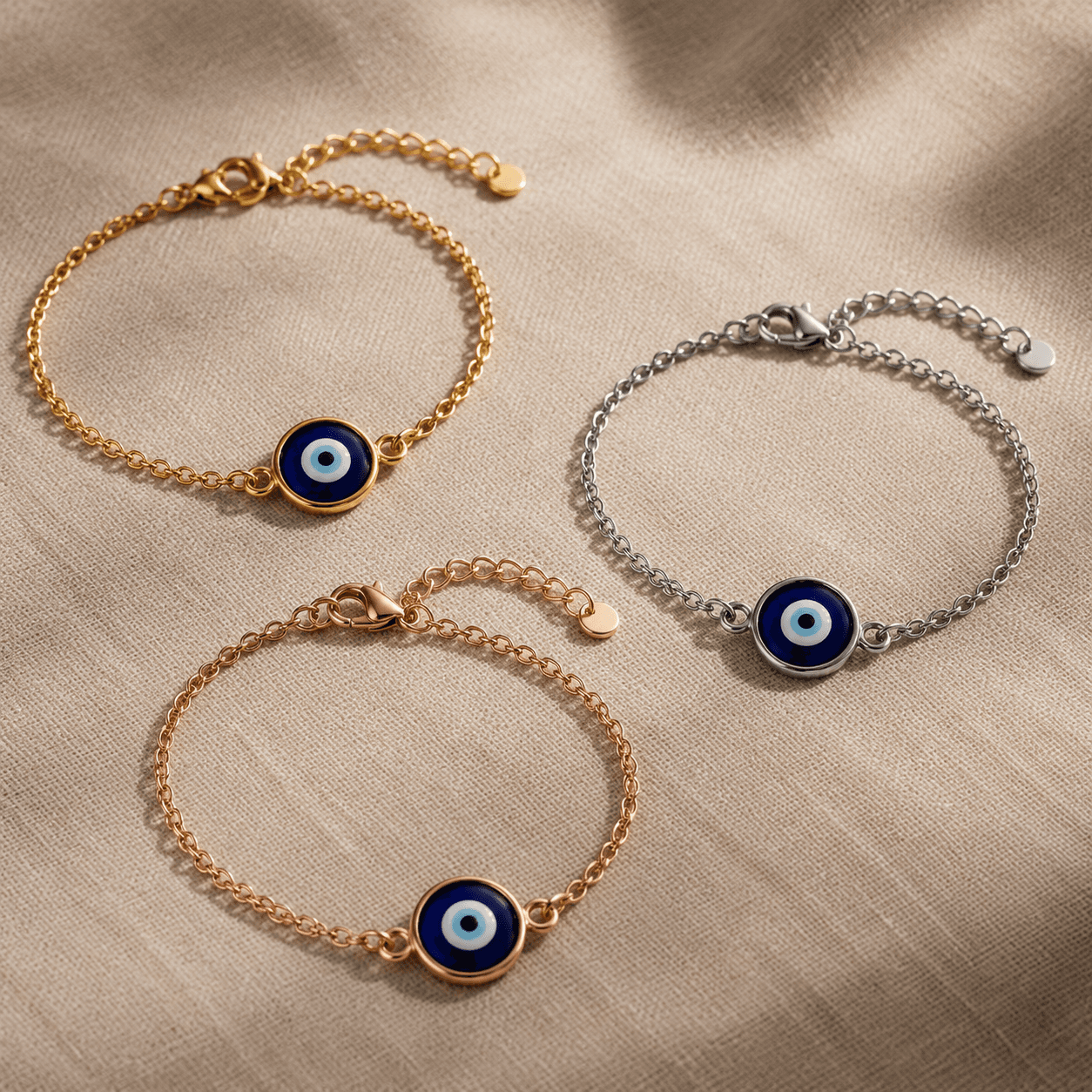
Car charms require finishes that resist wear, chipping, and color fading. PVD plating is a common choice, delivering durable gold, rose-gold, or silver-tone appearances with color stability. Enamel color filling can add detail, while crystal inlay may provide accent sparkle. When evaluating finishes, procurement teams should verify plating thickness specifications, adhesion tests, and compatibility with subsequent processes such as laser engraving for logos or private-label branding. Importantly, 316L stainless steel surfaces should be properly prepared to maximize coating adhesion and to minimize porosity that could trap contaminants.
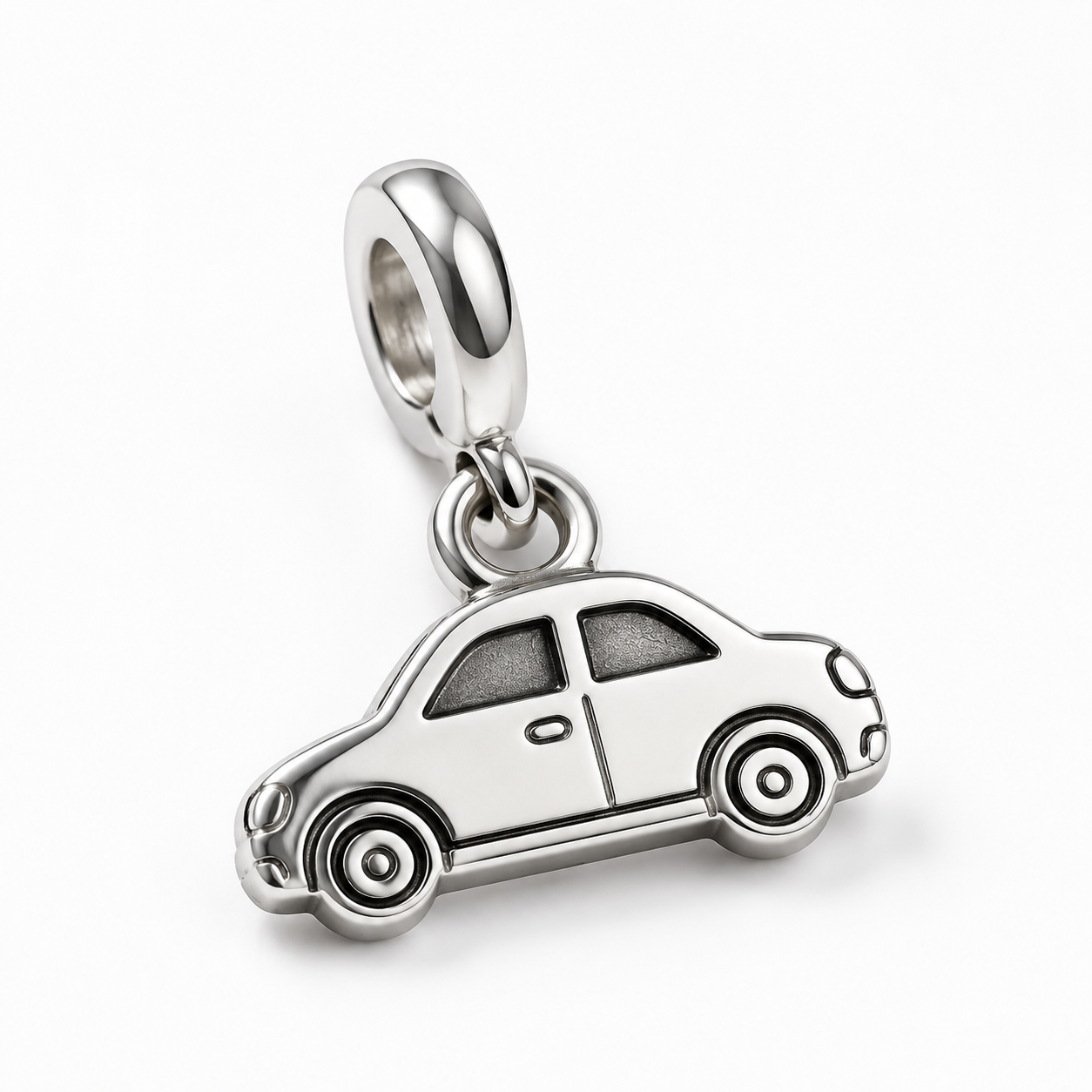
Why 316L stainless steel car charms matter for procurement
Benefits and vendor diligence
- Consistent plating quality: PVD finishes on 316L provide durable color and uniform appearance across batches, which reduces rework and returns in wholesale stainless steel charms programs.
- Material traceability: SGS certified (RoHS, REACH, Nickel Release EN1811, Salt Spray 240H) ensures compliance and documentation for audits, cross-border shipments, and private-label packaging.
- Design flexibility: The chemical stability of 316L supports a broad range of finishes, including enamel filling and crystal inlay, facilitating variety in catalog programs while maintaining base material discipline.
- Operational efficiency: Low MOQ support and robust sample development pipelines enable faster time-to-market for OEM and ODM engagements, with predictable lead times and quality.
- Global applicability: Cross-market feasibility is enhanced by corrosion resistance and biocompatibility, simplifying regulatory storytelling for US, EU, UK, AU, CA, DE, FR, SP, NE, RU markets.
Detailed analysis and practical guide
Step 1: Material selection and alloy chemistry alignment
Begin with confirmation that the base material is 316L stainless steel as the core platform, ensuring the product remains within Lancy’s material policy. Review supplier certificates that document Cr/Ni ranges and carbon levels typical for 316L. For buyers performing supplier audits, request material test reports (MTRs) and RoHS/REACH declarations. The aim is to establish a single, auditable material standard across all car charm SKUs to support batch-to-batch consistency and unified QC criteria.
Step 2: Surface finishing strategy and process compatibility
Define the finishing roadmap early: PVD plating choices (gold plated, rose gold plating, silver finish), enamel color filling, and crystal inlay. Each finish imposes specific adhesion and compatibility requirements. PVD needs clean, activated surfaces and controlled deposition parameters. Enameling requires compatible dielectric layers and curing cycles that do not compromise the base 316L substrate. Catalog the plating thickness targets and adhesion test standards (by supplier or internal specs) to minimize color variance across lots. Align with your supplier on process controls to achieve consistent boutique-ready results for private-label packaging.
Step 3: Tolerances, features, and mechanical reliability
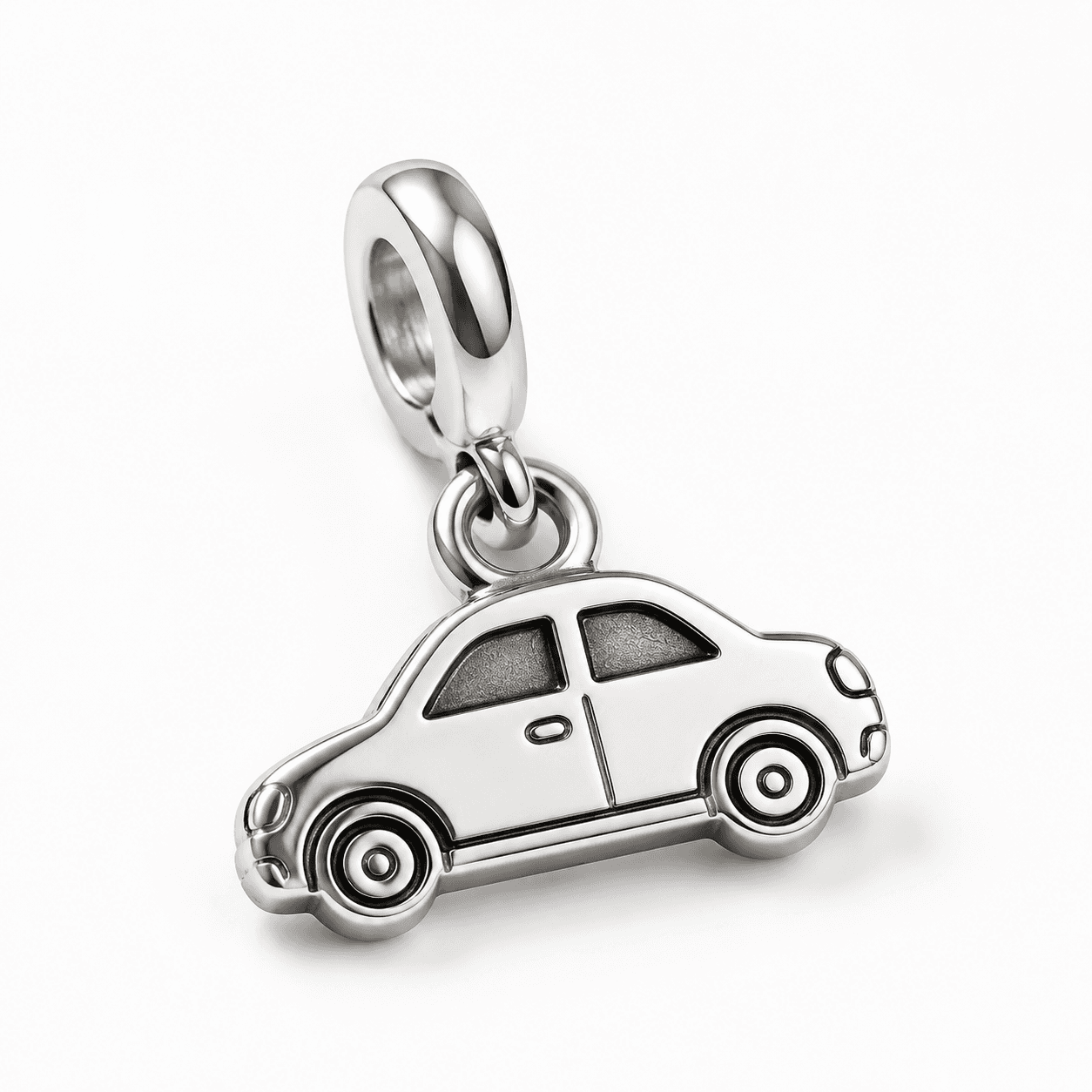
Car charms often include precise holes for jump rings, mini-inlays, and engraving logos. Establish tight tolerances on hole diameters, bail alignment, and overall silhouette to ensure mechanical fit with standard connectors. For 316L, surface finish uniformity, edge deburring, and corner radii are critical for wear resistance and user handling. Include mechanical tests such as drop simulations, torque checks, and salt spray exposure to confirm long-term performance in fashion accessory contexts.
Step 4: Documentation and compliance for audits
Compile a formal documentation package for RFQ and supplier qualification: material certificates, RoHS/REACH declarations, Nickel Release EN1811 test results, and Salt Spray 240H results. Include process validation records for PVD and enamel/crystal processes, and a sample development log that documents times, iterations, and acceptance criteria. These documents support private-label and OEM engagements and facilitate wholesale orders with consistent quality claims across regions.
Step 5: Private-label packaging, branding, and MOQ management
When engaging in private-label programs, define packaging specifications that reflect brand identity while preserving component integrity. Establish a clear MOQ policy that balances supplier capacity with market demand, and outline a robust sample development timeline to shorten time-to-market for new SKUs. Use the OEM/ODM framework to request logo engraving options and to prototype packaging variants that align with customer budgets and distribution channels.
FAQ
Q1: What makes 316L stainless steel suitable for car charms intended for bracelets?
A1: 316L stainless steel provides excellent corrosion resistance, biocompatibility, and durability with low carbon content that minimizes sensitization. This makes it reliable for long-term wear on bracelets, where contact with skin and sweat is common. Its mechanical strength supports small mechanical features like holes and engravings essential for car charm designs.
Q2: Why is PVD plating commonly used on 316L stainless steel car charms?
A2: PVD plating offers durable color finishes with excellent adhesion to 316L, resisting scratching and fading through daily wear. It also enables a boutique aesthetic (gold, rose gold, silver tones) that can be matched to brand themes and enamel accents without compromising base material integrity.
Q3: What documentation should we request during vendor qualification?
A3: Request SGS certifications including RoHS and REACH declarations, Nickel Release EN1811 test results, and Salt Spray 240H results. Also require material certificates (MTRs) for 316L content, process validation records for coatings and enameling, and a sample development log to track iterations and acceptance criteria. This documentation supports compliance audits and private-label packaging approvals.
Q4: What are typical lead times and MOQs for private-label car charms?
A4: Lead times vary by finish and complexity, but a well-aligned ODM/OEM program with a modern facility can provide predictable cycles. MOQ policies are designed to be supplier-friendly, enabling low MOQs for new programs while offering scalable options for bulk orders. Always include a sample development window in the RFQ to validate design intent before committing to larger production runs.
Partner with us
As a dedicated stainless steel charms manufacturer, Lancy Jewelry offers OEM/ODM capabilities, low MOQ support, and a robust sample development pipeline to accelerate private-label projects. Our modern facility features CNC, laser cutting, laser marking, welding, and polishing, delivering consistent plating quality and scalable production for global markets. All programs are documented with SGS-certified compliance, ensuring readiness for cross-border distribution and retailer partnerships. If you are evaluating suppliers for private-label car charms or wholesale stainless steel charms, we invite you to explore how we can align with your sourcing, QA, and packaging needs.
Explore our All Products to review current 316L stainless steel charm options, visit our OEM Service page for development tracks, or contact us directly for a tailored RFQ. You can also initiate a formal inquiry or request a quote via Request a Quote to start the private-label journey with Lancy Jewelry. For direct partnership discussions, Contact our sales team today.