Stainless Steel Southern Charm Jewelry Wholesale: A Sourcing Guide for Wholesale Buyers
In the competitive space of charm sourcing, wholesale buyers must separate reliable suppliers from the rest by evaluating technical compatibility, manufacturing discipline, and risk. The base material, 316L stainless steel, offers a durable, corrosion-resistant platform for boutique brands and private-label programs. When you combine a disciplined supplier capability with transparent pricing, consistent plating, and scalable MOQs, margins stay healthy across global markets. This guide provides a step-by-step framework for identifying, evaluating, and partnering with a stainless steel charms manufacturer that can support OEM/ODM development, private-label packaging, and fast sample development.
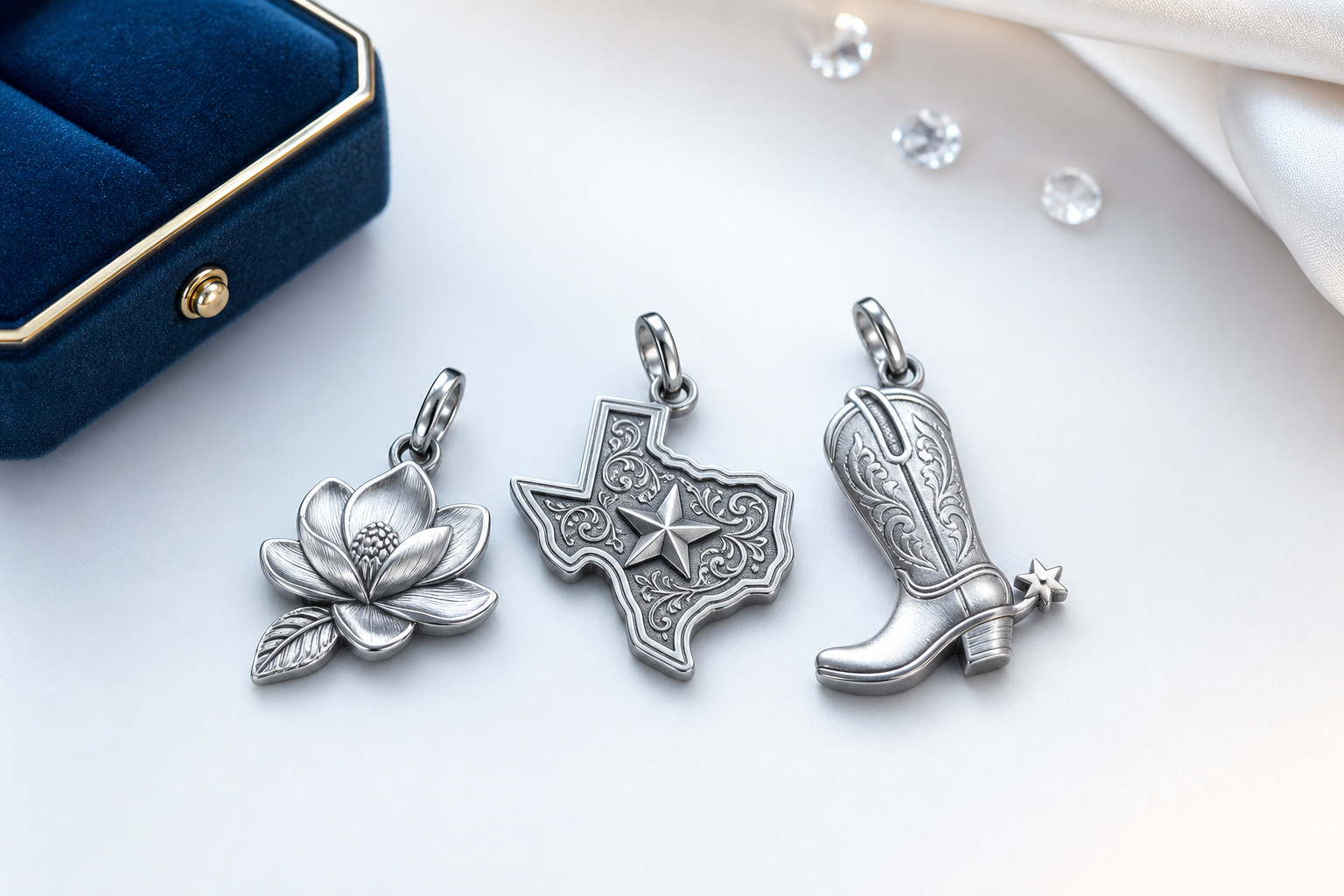
Main topic: stainless steel southern charm jewelry wholesale
Sub-point: Why 316L stainless steel is the baseline material
316L stainless steel is the standard for durable charm production due to its lower carbon content, excellent corrosion resistance, and compatibility with diverse finishes. For boutique brands and private-label buyers, 316L provides predictable behavior under PVD plating, enamel filling, and crystal inlay. A reputable stainless steel charms manufacturer will emphasize the chemistry of the alloy—chromium, nickel, molybdenum, and trace elements—that contribute to passivation, shine retention, and long-term color stability. When you assess potential suppliers, request material data, traceability documentation, and supplier QA protocols that confirm consistent 316L chemistry across production lots. At Lancy Jewelry, our modern facility integrates CNC, laser cutting, laser marking, welding, and polishing to deliver stable base material and repeatable finishes.
Sub-point: What to look for in a stainless steel charms manufacturer
Evaluating a supplier begins with capability and credibility. Look for:
- Clear OEM/ODM development pipelines, including logo engraving and private-label packaging options.
- Equipment maturity: CNC, laser cutting, laser marking, welding, and polishing capabilities that mitigate dimensional variance.
- Transparent plating practices (PVD plating, color options like gold, silver, rose gold) and enamel or crystal inlay capabilities.
- Quality assurance credentials and test results that align with RoHS, REACH, and EN1811 nickel-release standards.
For buyers, it is essential that the supplier can provide sample development, packaging customization, and scalable MOQs that align with private-label or wholesale business models. A dependable partner will also offer a clear RFQ and quotation flow to minimize friction during initial orders. Explore our OEM service page to understand how we turn product concepts into market-ready charms and related accessories.
Internal note: When engaging suppliers, reference terms such as OEM, ODM, MOQ, and RFQ in your formal requests to keep communications precise and efficient.
Sub-point: Plating, finishes, and decorative details
The charm’s surface finish dramatically influences perceived value and durability. PVD plating provides durable color, while enamel filling and crystal inlays add visual appeal for boutique lines. A reliable supplier should confirm plating thickness, color consistency across lots, and the absence of plating defects after salt-spray testing. Certifications and lab tests (such as SGS RoHS, REACH, and Nickel Release EN1811) help ensure that the finishes meet regulatory expectations and consumer safety standards. When evaluating potential partners, request:
- Plate thickness uniformity data and process controls for plating stations.
- Colorimetric or spectrophotometric data showing color repeatability across batches.
- Sampling notes that capture enamel fill uniformity and crystal setting integrity.
Sample workflows often reveal how well a supplier scales from prototypes to bulk orders. A credible partner will provide a structured path from initial samples to production runs with staged QC milestones. For buyers seeking maximum control, consider a supplier that offers both private-label packaging and custom logo charms as part of an integrated manufacturing program.
To explore concrete options, browse our product catalog and OEM service pages for a sense of capabilities and workflow alignment: All Products, OEM Service, or contact our team directly via Contact.
Step: Visualizing the supply chain and supplier reliability
For global sourcing, reliability translates into consistent lead times, predictable pricing, and robust communication. A trustworthy stainless steel charms manufacturer will provide:
- Detailed MOQs and scalable pricing tiers aligned with your private-label or wholesale volumes.
- Comprehensive QC procedures, including lot tracking and reject-rate reporting.
- Clear responsibilities for supply continuity, material certifications, and after-sales support.
In practice, this means assessing not just price per unit, but total landed cost, including packaging, labeling, and regulatory compliance for each market you serve. A well-structured supplier relationship enables you to secure favorable terms on bulk orders and maintain margin integrity across channels.
Sub-point: MOQ, pricing, and lead times
Low MOQ support is a critical factor for private-label buyers testing new lines or launching limited-edition runs. When negotiating, clarify whether MOQs apply per design, per color, or per finish, and request market-appropriate lead times for regular and expedited production. A strong partner will offer transparent cost breakdowns for 316L stainless steel charms, including base metal costs, plating, enamel fills, crystal inlays, packaging, and labeling. It is common to negotiate a staged MOQ tied to sample approvals to minimize risk while maintaining speed to market.
For reference, a reliable 316L stainless steel charms manufacturer will provide a documented path from concept to production, including a sample development timeline, a private-label packaging design file, and a formal quotation. If you are evaluating suppliers for a global rollout, confirm their ability to scale and support multiple markets with consistent quality across batches.
In this context, consider partnering with a supplier like Lancy Jewelry, which emphasizes 316L stainless steel, PVD finishes, enamel options, and crystal inlays, along with private-label packaging and low MOQ programs. Our capability suite supports OEM/ODM development, logo engraving, and robust sample development timelines.
Internal links for practical next steps: explore our OEM service, request formal pricing via Request a Quote, or contact our team at Contact to start the evaluation process.
Benefits/Why it matters
Key benefits (include certifications)
Engaging with a qualified 316L stainless steel charms manufacturer yields several operational and financial advantages. First, 316L’s corrosion resistance and biocompatibility help ensure longevity in daily wear, which reduces warranty costs and strengthens brand reputation. Second, a supplier with SGS certifications demonstrates adherence to regulatory requirements, including RoHS and REACH compliance, nickel-release testing (EN1811), and Salt Spray corrosion resistance (260H or 240H depending on test protocol). These certifications provide a clear signal of risk management and product safety for global markets. Third, a factory with a modern CNC, laser cutting, laser marking, welding, and polishing lines helps ensure dimensional accuracy and consistent surface finishes across production lots. Finally, private-label packaging and low MOQs enable boutique brands and private-label buyers to test new lines with minimal upfront risk while maintaining healthy margins on bulk orders.
From a sourcing perspective, selecting a supplier that can deliver a complete package—OEM/ODM development, logo engraving, PVD plating, enamel filling, crystal setting, plus private-label packaging—simplifies the go-to-market process and shortens time-to-market. This integrated capability is particularly valuable for global brands seeking consistent cross-market presentation and a unified customer experience. For ongoing supplier reviews, verify the supplier’s ability to provide test reports, material certifications, and process controls that align with your target markets.
Detailed analysis / Guide
Step 1: Define your project and spec
Begin with a precise brief: the finish (PVD gold plated, silver finish, rose gold plating), decorative details (enamel color options, crystal inlays), and packaging requirements. Define sizes, whether the charm will be used as necklace pendants or bracelet spacers, and the intended markets. A clear spec reduces back-and-forth and speeds up supplier validation. Prepare a bill of materials (BOM) for the base 316L stainless steel charm, including the finish, enamel color codes, crystal type, and any branding elements for logo engraving.
Step 2: Evaluate alloy chemistry and material safety
Ask for alloy composition data, passivation processes, and supplier QA test results to confirm consistent 316L chemistry. A reliable supplier will maintain traceability for each batch and supply test certificates indicating chromium, nickel, and molybdenum contents—key indicators of corrosion resistance and weldability. In addition, confirm nickel-release test results (EN1811) to address consumer safety concerns in sensitive markets. These details support a compliant, long-lasting product line for global distribution.
Step 3: Assess manufacturing capabilities (OEM/ODM, logo engraving, PVD plating, enamel, crystals)
Assess whether the supplier can execute your design through to finished product. An ideal partner offers:
- OEM/ODM development paths for concept-to-prototype-to-production.
- Logo engraving capabilities on the charm or packaging for brand consistency.
- PVD plating with color options (gold, rose gold, silver) and coating thickness control.
- Enamel color filling and crystal inlay capabilities with alignment precision.
- Private-label packaging and labeling tailored to distribution channels.
Request sample sets that demonstrate each finishing technique, as real-world samples reveal plating uniformity, enamel fill coverage, and crystal alignment under lighting conditions similar to buyers’ retail environments.
Step 4: Sample development and private-label options
Sample development is your first real test of supplier reliability. A competent charm factory will provide a structured sample program, with provisional timelines, costs, and acceptance criteria. If you require branding on packaging, confirm file formats, color accuracy, and fold-out packaging components. A private-label program should cover branding on packaging, hangtags, and care instructions to ensure a smooth, single-vendor experience for your private-label program.
Step 5: Packaging, labeling, and compliance
Private-label packaging is not merely aesthetics; it also affects shelf impact, shipping efficiency, and regulatory compliance. Ensure packaging materials meet your markets’ regulatory and environmental expectations, and verify labeling requirements such as origin, care guidelines, and safety notes. Confirm whether the supplier can provide compliant packaging solutions that align with your product strategy while maintaining cost efficiency for wholesale orders.
Step 6: Pilot orders and scale-up
Before committing to large-scale orders, run a pilot order to validate production flow, lead times, and quality control across multiple SKUs or finishes. A successful pilot reduces risk when you ramp up to bulk charm orders and expands your private-label catalog with confidence.
In practice, partner with a company that can support ongoing sample development, fast iterations, and flexible MOQs. A proven supplier will present a clear roadmap from pilot to mass production and provide ongoing support for packaging, labeling, and global shipping requirements.
FAQ
1) What is 316L stainless steel, and why is it preferred for charms?
316L is a low carbon stainless steel variant known for excellent corrosion resistance, strength, and weldability. Its composition—primarily chromium, nickel, and molybdenum—yields superior resistance to salt spray and chlorine exposure, making it a reliable base material for charms that are worn or handled frequently. For global brands, 316L also provides consistent performance across markets, which supports uniform customer experiences and fewer post-sales issues.
2) What does MOQ mean in practice, and how does low MOQ affect pricing?
MOQ stands for minimum order quantity. Low MOQs enable private-label buyers and boutique brands to test new lines without tying up substantial working capital. While MOQs influence per-unit pricing, reputable suppliers balance MOQ with production efficiency to offer competitive pricing for bulk charm orders when lines prove successful. When negotiating, clarify MOQs per design, finish, or packaging configuration and seek transparent cost breakdowns for new finishes or branding options.
3) How should I structure an RFQ for stainless steel charms?
A well-structured RFQ includes: material spec (316L stainless steel), finish requirements (PVD color, enamel details), decorative elements (crystal inlay), branding needs (logo engraving), packaging and labeling preferences, required certifications (SGS RoHS/REACH, EN1811, salt spray tests), MOQs, lead times, sample costs, and shipping destinations. Providing reference drawings or CAD files helps the supplier quote accurately and reduces iteration cycles.
4) How long does sample development typically take?
Lead times vary, but a robust supplier should provide a realistic timeline for sample development, including design revision cycles, finishing tests, and first-article inspection. Expect a few weeks for initial samples, with expedited options available for urgent programs. A reliable partner will offer status updates and digital proofs at each milestone to keep the project on track.
Call to action — Partner With Us
If you are sourcing stainless steel charms for global markets and need a dependable, factory-direct partner with OEM/ODM capability, Lancy Jewelry stands ready to support your private-label and wholesale initiatives. We offer 316L stainless steel charms, PVD plating, enamel, crystal inlay, and robust private-label packaging, backed by SGS-certified processes and a modern manufacturing facility equipped with CNC, laser cutting, laser marking, welding, and finishing lines. Start with a formal RFQ or request a sample to evaluate fit, then scale to bulk charm orders with a clear, low-risk path to market. Reach out via our OEM service page, request pricing through the quote flow, or contact the sales team to begin a verified supply partnership.