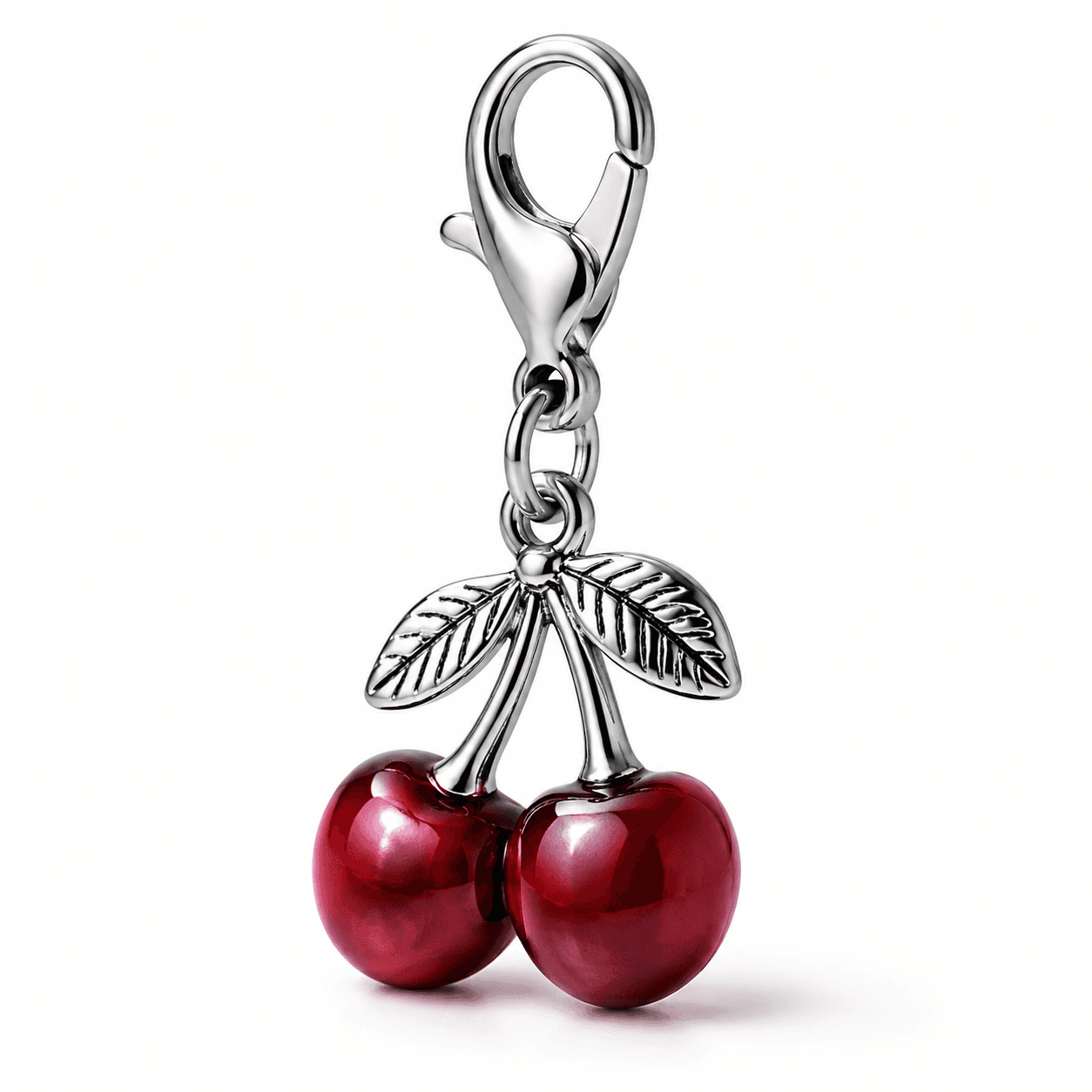
For procurement and sourcing teams, selecting the right supplier for a cherry charm keychain starts with material integrity, manufacturing controls, and documentation. This practical guide from Lancy Jewelry, a modern stainless steel charms manufacturer with OEM/ODM capabilities, outlines a structured vetting process to support private-label programs and multi-market rollouts across regions while focusing on a pure 316L stainless steel base.
Why 316L stainless steel matters for cherry charm keychains
316L stainless steel serves as a low-carbon variant that delivers strong corrosion resistance, good formability, and reliable performance when finished with PVD plating or enamel and crystal inlays. The reduced carbon content helps minimize microstructural changes during finishing, supporting a stable surface and consistent plating across production runs. For boutique-brand programs, this translates into durable visuals, stable color from gold, rose gold, or silver finishes, and dependable performance across shipments and shelves. In practice, expect a chemistry profile that emphasizes iron with chromium, nickel, and molybdenum components, while keeping carbon at trace levels to maintain process stability. This chemistry underpins reliable plateability, bright finishes, and robust long-term performance in mass production settings.
Key supplier vetting criteria you should apply
Use a structured checklist when evaluating stainless steel charms suppliers to ensure a scalable, private-label capable program:
- Material specification: request a material certificate confirming 316L base material, grade, and chemical composition within tolerance ranges. Verify that the base material supports finishing options such as PVD plating, enamel color filling, and crystal inlays.
- Manufacturing capabilities: confirm CNC machining, laser cutting, laser marking, welding, and polishing capabilities, plus finishing options like PVD plating, enamel color filling, and crystal setting.
- Process controls: inquire about plating thickness targets, adhesion testing, and uniformity across lots to minimize color variation and finish drift between batches.
- Quality documentation: request test reports, lot traceability, and a clear non-conformity handling process. Independent verification from accredited labs helps reduce regulatory risk across markets.
- Sample development and lead times: establish reasonable timelines for prototypes, color fills, and finished samples to support private-label packaging approvals and artwork reviews.
- Private-label capabilities: verify packaging options, labeling, and alignment with brand guidelines for private-label programs across regions.
- Commercial terms: discuss MOQ, lead times, price bands, and options for low MOQ charm production to support boutique launches or regional campaigns.
- Traceability and audits: request factory audit reports, supplier approvals, and evidence of corrective actions from past audits to gauge ongoing quality improvement.
To anchor these evaluations, benchmark against documented capabilities of a dedicated charm factory with OEM/ODM experience that can deliver private-label packaging and scalable sample development.
Documentation and audits: what to request
Documentation should cover:
- Material certificates for 316L stainless steel base material, including composition ranges and manufacturing lot traceability.
- Testing and compliance: records for applicable regulatory standards and corrosion protection performance as relevant to target markets.
- Plating specification sheets: coating thickness, adhesion, brightness, and color tolerance for PVD finishes (gold, rose gold, silver).
- Finishing process records: enamel fill recipes, crystal inlay specifications, and polishing pass counts to ensure uniform surface finish.
- Testing protocols: salt spray or corrosion resistance data and nickel-release test results to minimize regulatory risk across regions.
- Traceability data: lot codes, manufacturing dates, and chain-of-custody for every batch.
Benefits of thorough vetting: why it matters for global charm programs
Material science advantages that translate to business value
A rigorous evaluation of 316L stainless steel chemistry and finishing processes reduces late-stage defects and returns. When a supplier demonstrates stable chemistry, reliable plating adherence, and consistent enamel or crystal fills, private-label products achieve uniform aesthetics across batches and regions. This consistency is critical for boutique brands that rely on repeatable visuals, color accuracy in enamel fills, and the longevity of a charm’s finish in multi-market distribution.
Certification and process controls as risk mitigators
Documented certifications and well-defined QA processes materially lower regulatory risk across global markets. For procurement teams managing programs across multiple regions, valid test reports and clearly documented QA workflows provide confidence that products meet consumer safety expectations and compliance standards.
Detailed analysis and step-by-step guide
- Step 1 – Define technical specs for the cherry charm keychain
Develop a precise spec sheet covering base material as 316L stainless steel, target finishes (PVD gold, rose gold, or silver), enamel color fills, crystal inlays, bail or jump ring specifications, dimensions in the 8-18 mm range, and tolerance bands for each feature. Include packaging and private-label artwork requirements to ensure branding alignment. Reference internal procurement playbooks and the supplier’s ability to meet private-label packaging needs. For a seamless reference, explore OEM service and product examples in our catalog.
- Step 2 – Confirm material chemistry and alloy compliance
Request a material certificate detailing chemical composition with emphasis on chromium and nickel levels typical for 316L. Check carbon content to minimize welding-related microstructural risk and ensure the base material is suitable for your chosen finishing system (PVD, enamel, or crystal inlays). This step helps confirm you are engaging a true stainless steel charms manufacturer capable of consistent material performance across batches.
- Step 3 – Evaluate plating quality and finish stability
Review plating thickness targets, adhesion testing methods, and color tolerances for gold, rose gold, and silver finishes. Confirm the supplier can maintain consistent finishes across runs and that PVD processes are market-relevant 316L stainless steel. Inquire about protective topcoats or sealants used to prevent discoloration or wear during multi-market shipments.
- Step 4 – Assess enamel and crystal inlay capabilities
Ask for enamel color charts, curing processes, and fill-depth tolerances. For crystal inlays, request grain sizes, stone quality standards, and setting methods. Ensure color fastness tests and crystal retention tests are part of the QA package, given the frequent handling in retail environments.
- Step 5 – Review manufacturing capabilities and scale readiness
Verify CNC precision, laser cutting, laser marking, welding, and polishing throughput. Assess whether the facility can support private-label packaging and the production cadence for sample development and bulk charm orders. A capable partner should provide turnkey support from prototype to full production, with clear lead times and quality gates.
- Step 6 – Check quality management and audit readiness
Request a quality management workflow that includes incoming inspection, in-process checks, and final QA. Ensure the supplier can provide test reports and maintain batch traceability. A mature QA program includes accredited testing and documented corrective actions.
- Step 7 – Affirm packaging, labeling, and private-label options
Confirm whether the supplier offers private-label packaging, branding options, and packaging artwork approvals. This is essential for boutique brands requiring consistent branding across multiple SKUs and regional markets. If you plan multi-market launches, verify packaging meets regulatory and label requirements in each target region.
- Step 8 – Pilot with samples and plan next steps
Request a series of samples to evaluate visual fidelity, finish consistency, bail functionality, and compatibility with your chosen chain or jump rings. This is where sample development becomes critical: confirm turnaround times, review criteria, and acceptance standards. If satisfactory, move toward a formal RFQ and discuss bulk orders and MOQ terms. Initiate the process through your preferred channel, such as OEM service and a quote request channel, to align production plans with your private-label branding and packaging requirements.
FAQ
Q1: What makes 316L stainless steel suitable for charm components?
A1: 316L stainless steel offers strong corrosion resistance, good formability, and compatibility with plating and inlays. Its low carbon content helps maintain a uniform microstructure during finishing, reducing surface imperfections that could affect aesthetics or durability.
Q2: What should I include in a supplier vetting checklist?
A2: Include material certificates, plating specifications, QA protocols, sample timelines, packaging capabilities, private-label options, and certifications such as RoHS/REACH and nickel-release testing. Request factory audit reports or third-party test results when available.
Q3: How do I verify plating quality and color stability for long-term use?
A3: Review plating thickness targets, adhesion tests, and color tolerance specifications. Look for consistent results across multiple lots and environmental testing data. Request lab reports from the plating provider to confirm stability under expected handling and display conditions.
Q4: How can I obtain samples and proceed to bulk orders?
A4: Start with sample development to evaluate finish, fit, and branding compatibility. If satisfactory, move to an RFQ with clear MOQs and pricing for bulk orders, and discuss private-label packaging and lead times. You can begin through OEM/ODM options and a formal quote request channel to streamline the process.
Call to action: Partner with Lancy Jewelry
At Lancy Jewelry, we position ourselves as a 316L stainless steel charms manufacturer with a modern facility that covers CNC, laser cutting, laser marking, welding, and polishing. Our OEM charms manufacturer and ODM charm supplier services include low MOQ charm production, sample development, and private-label packaging. We maintain robust QA practices and documentation, supported by certifications to help global programs across the US, EU, UK, AU, CA, DE, FR, SP, NE, RU and beyond. Explore our catalog and capabilities: visit All Products to see stainless steel charms and accessory options, learn more about our OEM service for customized programs, or connect with our team for a tailored proposal. For faster quotes and sample timelines, initiate a request via the quote channel and we will align production plans with your private-label branding and packaging requirements.