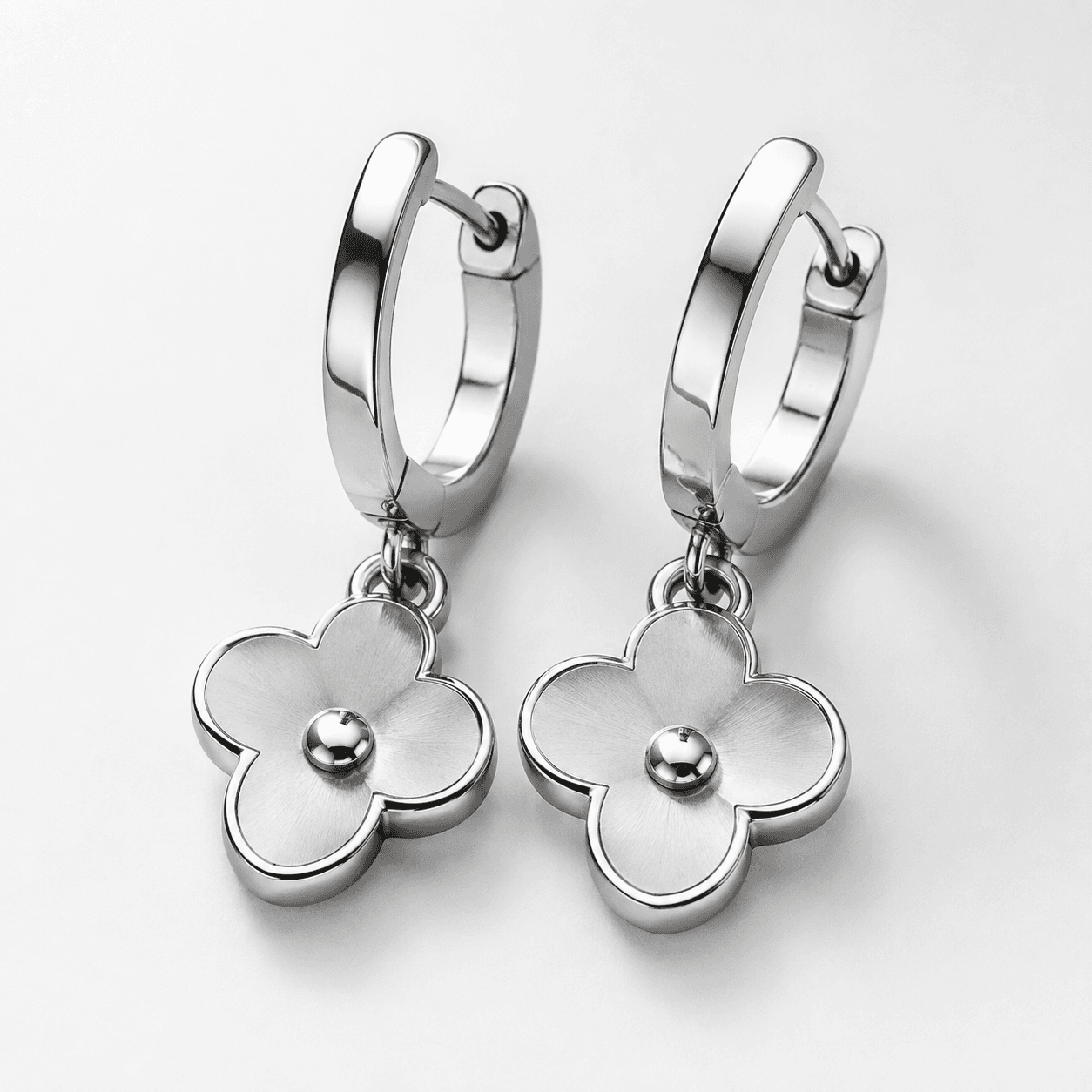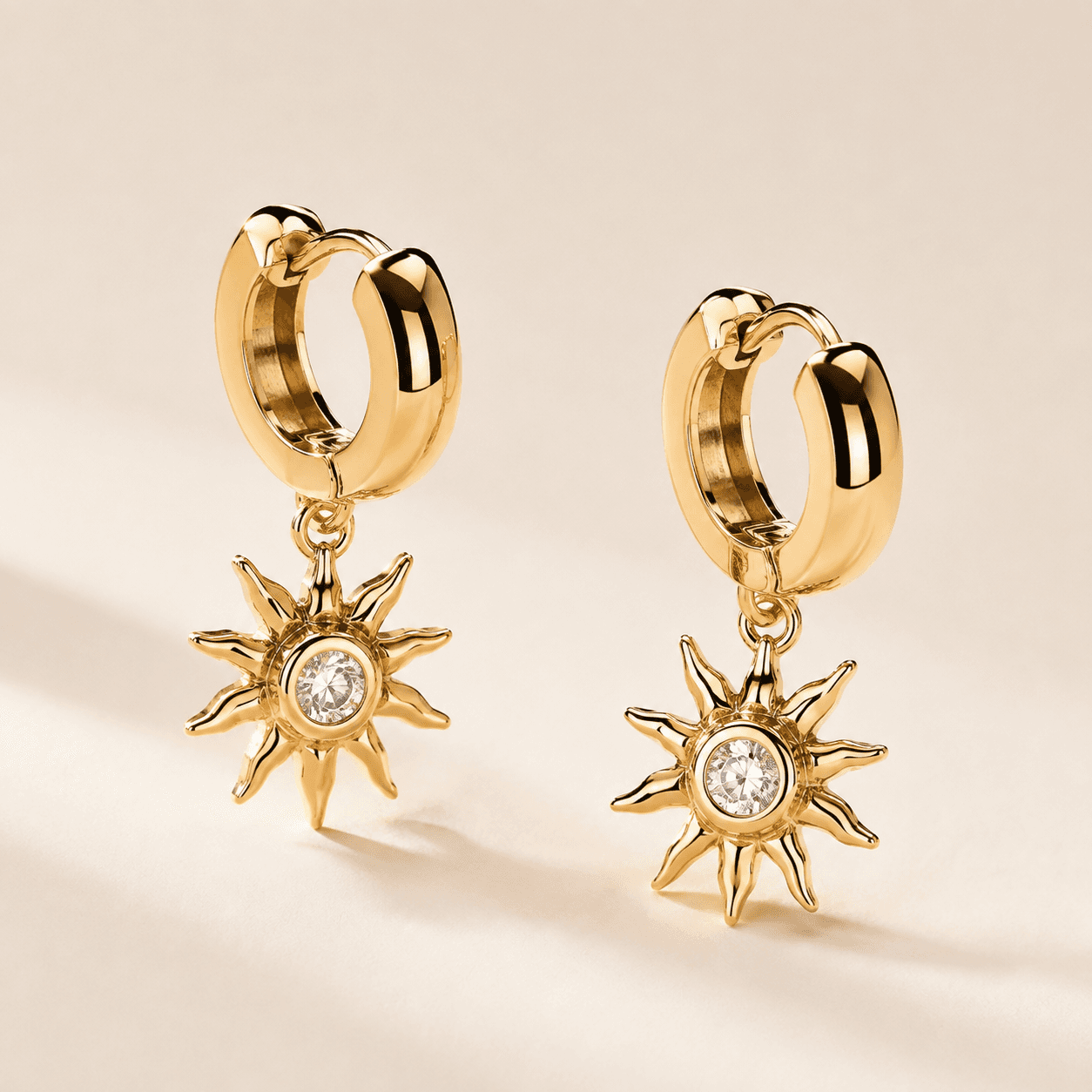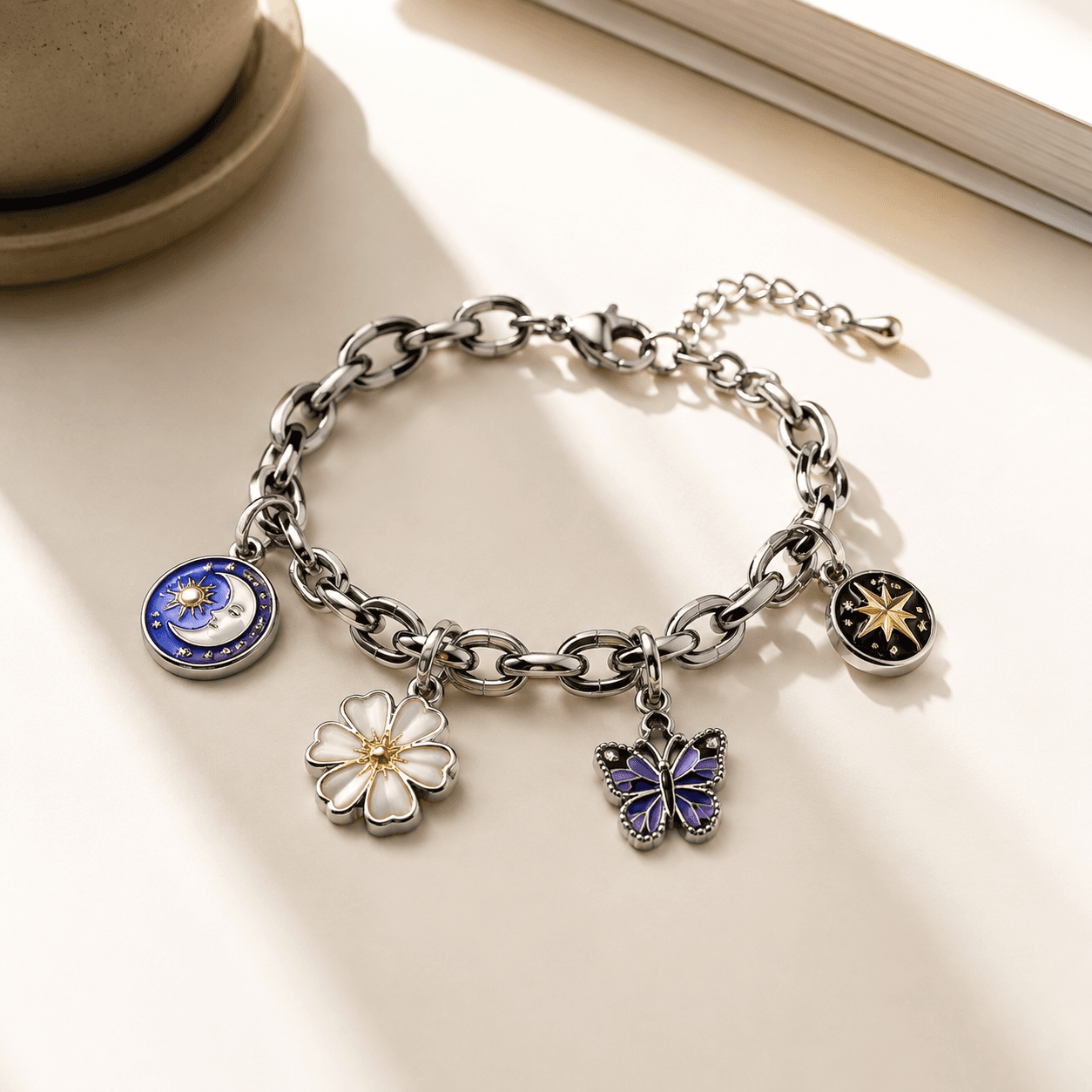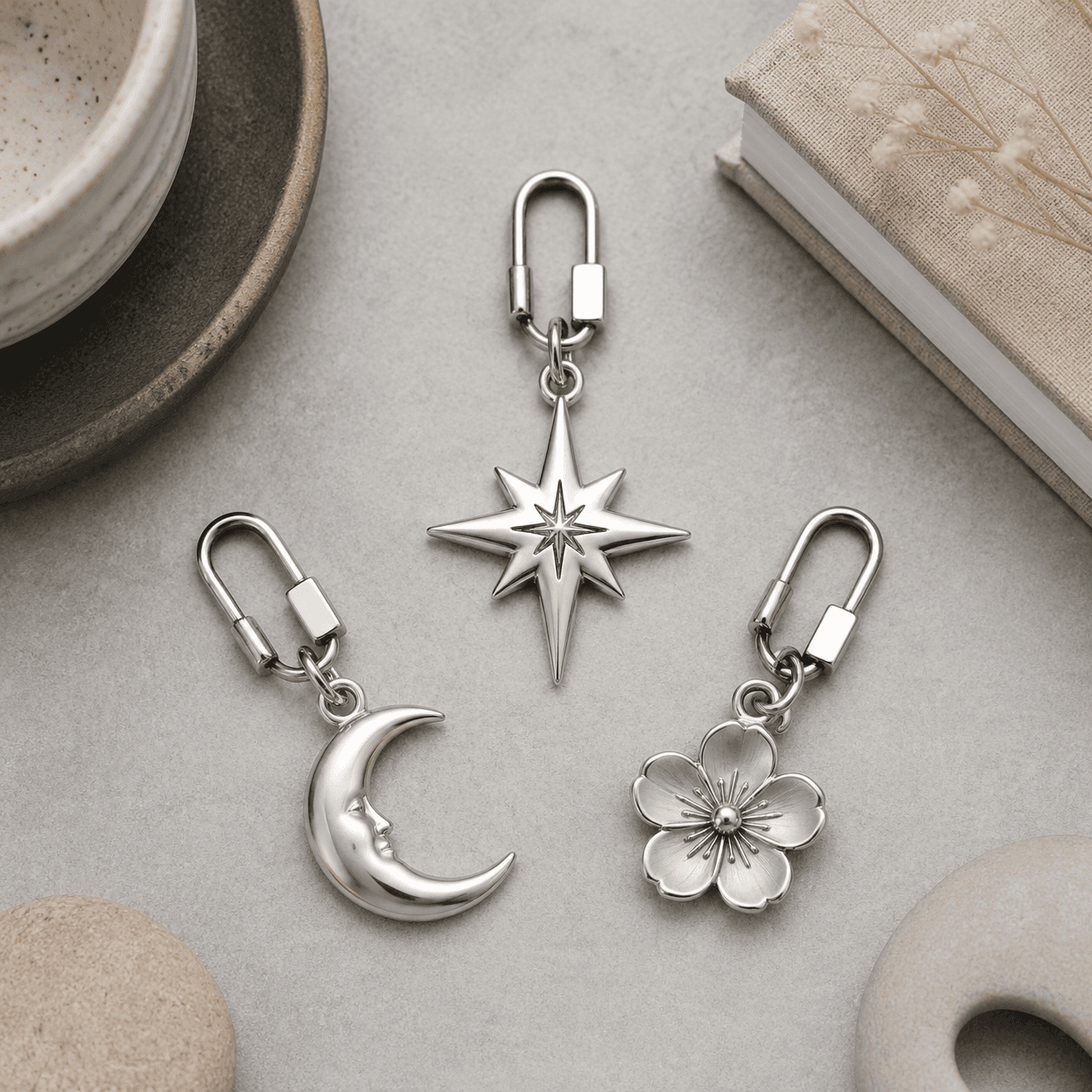
In the fast-moving boutique jewelry market, bag charm keychains must deliver durable performance, consistent finishes, and scalable production. This practical guide examines 316L stainless steel bag charm keychains from a materials and manufacturing perspective, offering designers and sourcing teams clear guidance on material behavior, finishes, and OEM/ ODM production. By understanding the base metal, surface treatments, and production milestones, brands can translate design intent into reliable, scale-ready results.
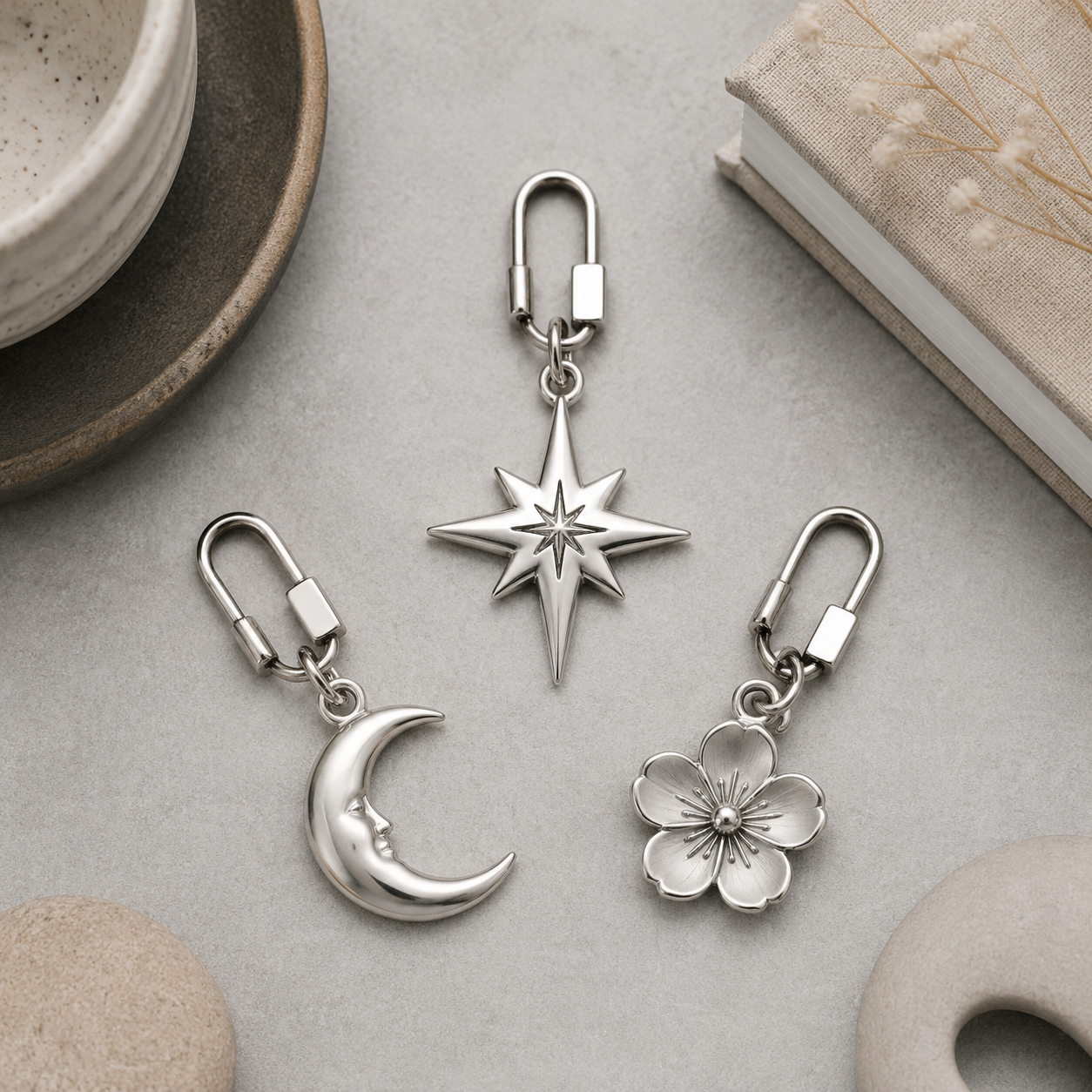
Main topic: 316L Stainless Steel Bag Charm Keychains — Material and Production Deep Dive
Why 316L is favored for bag charm applications
316L stainless steel is the baseline for bag charm keychains due to its corrosion resistance, formability, and reliability in daily wear. The low carbon content minimizes sensitization during welding and finishing, which is especially important for multi-step fabrication and decorative features. This material supports long lifecycle performance, ensuring finishes maintain their appearance through handling, moisture exposure, and routine retail use.
Chemical composition and microstructure
316L is an austenitic stainless steel alloy with optimized chromium, nickel, and molybdenum content. Chromium forms a protective passive film (Cr2O3) against oxidation, while nickel stabilizes the austenitic phase to improve ductility. Molybdenum enhances pitting corrosion resistance, particularly in chloride-containing environments. The “L” designation indicates low carbon, reducing carbide precipitation during welding and heat-affected zones, preserving corrosion resistance at joints and interiors of small charm components.
Mechanical properties relevant to bag charms
Key properties include high strength, good ductility, and fatigue resistance in thin sections. The austenitic microstructure yields non-magnetic behavior in many conditions, which can support consumer perception during handling in retail settings. Wear resistance is influenced by surface finish and coating quality, not solely by the base metal; therefore, finish control is essential when enamel and crystal inlays are part of the design.
Manufacturing implications: formability, joining, and assembly
316L’s formability supports intricate bail attachments and internal cavities for decorative elements. However, its work-hardening rate requires careful control of CNC, laser cutting, and joining parameters to avoid distortion. When assembling components, technicians rely on precise joining methods and post-assembly smoothing to preserve tolerances and surface quality. The low carbon content also reduces sensitization risk during heat treatment, enabling more predictable post-weld finishing outcomes.
Benefits and practical considerations for bag charm programs
Material performance and cross-market stability
316L stainless steel offers reliable corrosion resistance in diverse environments and stable performance under daily wear. This base metal supports consistent plating results and predictable enamel or crystal seating. For brands, using 316L with controlled coating processes translates into uniform color and finish across production lots, supporting private-label packaging and shelf presentation in wholesale programs.
Certification and compliance as a market-ready foundation
Manufacturing with 316L at Lancy Jewelry is supported by SGS certifications, including RoHS, REACH, Nickel Release EN1811, and Salt Spray testing. These attestations help buyers meet regulatory expectations in multiple regions, simplify acceptance testing, and reduce compliance risk in wholesale or private-label programs. For designers, this means more time focusing on design iterations rather than compliance management.
Finish versatility: PVD and decorative options
316L serves as a robust base for finishes such as PVD gold plating, silver finishes, and rose gold plating. In addition, enamel color filling and crystal inlay provide decorative options. The base metal supports thin, durable protective layers and coatings, enabling boutique-ready aesthetics while maintaining mechanical integrity. Finishes should be selected with substrate compatibility, coating thickness, and interactions with enamel pigments or crystal seating in mind.
Detailed design and production guidance
Material specification and tolerances
When defining a bag charm specification, start with 316L stainless steel as the baseline. Specify purity levels, dimensional tolerances, and surface finishes. Align on coating thickness (for PVD) and enamel depth. Document target chemical composition to ensure consistent results across heats and lots, enabling repeatable, private-label runs.
Surface finishes and decorative techniques
Common finishes include: - PVD plating in gold, rose gold, or silver tones for durable color. - Silver or gold-tone finishes via electrochemical processes. - Enamel color filling for vibrant shop-ready appearances. - Crystal inlay for premium texture and light reflection. Each technique has adhesion and abrasion characteristics. Plan color-matching strategies for multiple SKUs and ensure enamel and crystal seating integrate with the chosen base finish. Conduct tests for color stability, chipping resistance, and crack propagation under typical handling, including repeated opening and closing of jump rings and light bending of the charm piece.
Attachment geometry and connector considerations
The bail, jump rings, and connectors must be physically plausible and integrated with the charm’s holes or loops. 316L provides flexibility for intricate bail geometries and recessed features for enamel seating. Design should accommodate standard jewelry hardware tolerances so attachments fit a wide range of chains, clasps, and key-ring components without inducing stress at joints.
Production workflow and stage-gated checks
Typical production steps include CNC machining for precision features, laser cutting for clean outlines, laser marking for branding or serialization, and joining of components with post-assembly polishing. A stage-gated approach helps catch finish inconsistencies early: material certification, dimensional inspection, coating thickness verification, and finish adhesion testing prior to assembly. For enamel and crystal seating, validate seat depth, alignment, and sealing to prevent pigment seepage or crystal loosening during handling.
Quality control, testing, and global readiness
Beyond dimensional and surface checks, quality programs should include RoHS and REACH documentation, Nickel Release EN1811 testing, and Salt Spray testing to simulate environmental exposure. A compliant, modern facility with CNC, laser cutting, laser marking, welding, and polishing supports cross-border distribution and reduces regulatory friction for private-label programs and wholesale partnerships. For designers, these controls translate into lower post-launch defects and stronger sell-through in diverse markets.
Private-label packaging and branding considerations
Packaging is a critical layer of perceived value. When partnering on private-label bag charms, plan packaging types that protect finishes and present the design clearly. Private-label packaging often includes product cards, care instructions, and barcode-ready labeling. A thoughtful packaging strategy should harmonize with the finish choice—PVD finishes may benefit from anti-scratch packaging surfaces, while enamel-and-crystal variants may require padding and clear windows to showcase detail.
FAQ
Q1: Why is 316L stainless steel a solid base for bag charm keychains?
A1: 316L offers strong corrosion resistance, a stable austenitic structure, and low carbon content ideal for welding and finishing. Its composition supports consistent plating performance and reliable enamel or crystal seating, making it a dependable base for cross-market bag charm programs.
Q2: What finishes are available for 316L bag charm charms?
A2: Finishes include PVD plating in gold, silver, and rose tones, plus electroplated silver finishes. Enamel color filling and crystal inlay provide decorative options. Finishes are selected to balance aesthetics with durability, with controlled thickness and consistent adhesion across lots.
Q3: What is the typical lead time for sample development and bulk orders?
A3: Lancy supports fast sample development to accelerate design validation. Lead times vary by finish, complexity, and volume, but a typical cycle includes CAD review, prototype tooling, and first-run samples. For bulk orders, production timelines align with quantities and packaging requirements, leveraging modular capabilities to support low MOQ charm production when suitable.
Q4: How do you ensure safety and compliance across markets?
A4: Compliance is supported by SGS certifications, including RoHS and REACH for material safety, Nickel Release EN1811 testing to manage nickel exposure, and Salt Spray testing for corrosion resistance. Manufacturing processes rely on a modern facility with CNC, laser cutting, laser marking, welding, and polishing to maintain accuracy and repeatability.
Call to action: Partner with Lancy Jewelry
For brands seeking reliable 316L stainless steel bag charm keychains with consistent finishes and scalable production, Lancy Jewelry provides OEM/ODM capabilities, low MOQs, and private-label packaging options. Our charm factory integrates precision machining, finishing, and quality controls to support global distribution. Explore our OEM services to start a custom program, or request a quote for bulk charm orders and flexible sample development timelines. Browse all product lines to understand the breadth of 316L stainless steel charms available and align your private-label collection with our manufacturing strengths. Visit the OEM services page, or contact our team to discuss your specification, timeline, and packaging needs.