Hook
In the world of boutique-brand charm programs, the material and process choices behind a keychain charm determine not only aesthetics but also longevity, consistency, and scale. 316L stainless steel offers a unique blend of corrosion resistance, formability, and surface-compatibility that suits high-volume OEM/ODM production. This deep-dive explores the material science of 316L stainless steel, how it interacts with surface finishes such as PVD plating and enamel, and how modern manufacturing capabilities—CNC, laser cutting, laser marking, welding, and polishing—translate into reliable, private-label charm programs. This guide is designed for product developers, prototyping teams, and sourcing managers seeking to optimize both design and lead times for personalized keychain charms.
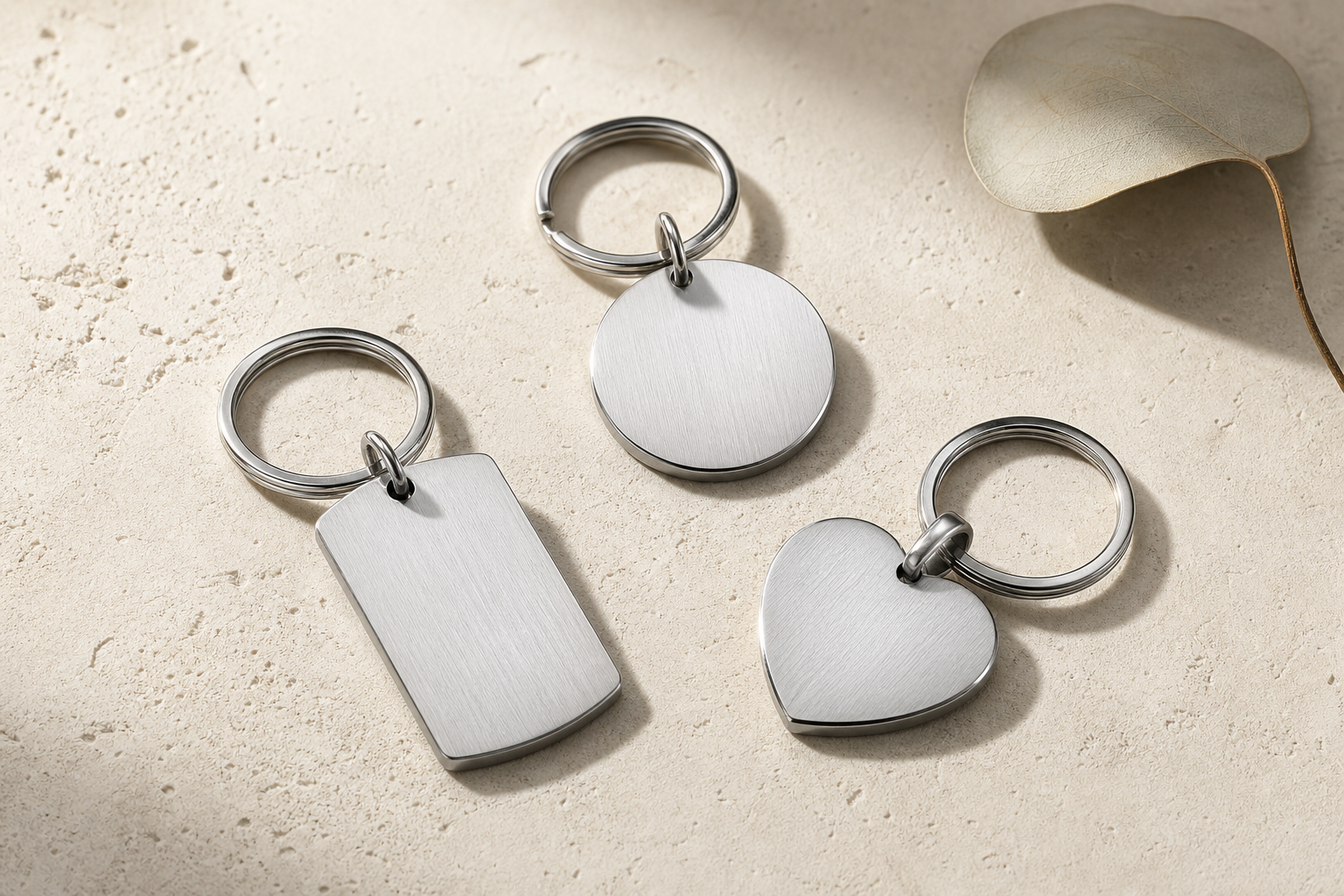
Main topic: 316L Stainless Steel Personalized Keychain Charms: A Technical Deep Dive
316L stainless steel charms, when used as a base material, unlock a robust platform for customization with PVD finishes, enamel fills, and crystal inlays. The material’s chemistry, mechanical behavior, and surface compatibility define how a charm performs from initial prototyping through mass production. This section examines the core properties that matter most for keychain charms and explains how these properties influence design choices, finish selection, and process flows across global markets.
Sub-point: Chemical composition and microstructure of 316L
316L is an austenitic stainless steel with a low carbon content, typically containing chromium 16–18%, nickel 10–14%, and molybdenum 2–3%. The addition of molybdenum improves pitting and crevice corrosion resistance, especially in chloride-containing environments. The low carbon designation (L) minimizes carbide precipitation during welding, preserving corrosion resistance in heat-affected zones. For charm manufacturing, this composition delivers reliable ductility for forming holes, lobes, and bail interfaces while maintaining a clean passivation layer that supports subsequent surface treatments.
Sub-point: Corrosion resistance and passivation behavior
316L’s chromium-rich oxide layer forms spontaneously in air, creating a passive film that resists many common corrosive environments. The presence of molybdenum enhances resistance to chloride-induced pitting—critical for items frequently handled, exposed to sweat, cosmetics, and varying humidity. In production, post-fabrication passivation and controlled cleaning help ensure a uniform oxide layer, which in turn improves coating adhesion and long-term finish stability for PVD plating and enamel application.
Sub-point: Mechanical properties and formability relevant to charms
The austenitic structure yields good formability, dent resistance, and toughness, which supports precision laser marking, engraving of logos, and tight tolerances during stamping and forming. While 316L is not as hard as precipitation-hardened grades, achieving desired surface textures—polish, brushed, or satin—remains feasible with controlled mechanical finishing. For charm designers, this means reliable feature retention across small details like engravings, bail holes, and fine character lines in alphabet or symbol charms.
Sub-point: Surface finishes and adhesion considerations for charms
Finish selection—PVD plating (gold, silver, rose gold), enamel filling, and crystal inlays—must harmonize with 316L’s chemistry. PVD adheres well to clean, well-prepared 316L surfaces, but adhesion strength varies with the base’s surface roughness, cleaning regimen, and any prior mechanical treatment. Enamel fills depend on surface energy and microtexture to prevent spalling. Crystal inlays rely on precise seating and bonding practices. A robust process requires a documented cleaning, activation, and pre-treatment protocol to maintain colorfastness and scratch resistance across thousands of parts.
Sub-point: Quality and certifications that underpin cross-market reliability
Certification is central to global sourcing. Lancy Jewelry maintains SGS-certified practices including RoHS, REACH, Nickel Release EN1811, and Salt Spray 240H. These certifications confirm compliance with metal safety, sweat-resistance expectations, and corrosion tests—critical for market access in US, EU, UK, AU, CA, DE, FR, SP, NE, and RU. For product developers, these certifications translate into predictable compliance across private-label programs and bulk orders, reducing supplier risk and enabling smoother RFQ-to-launch cycles.
Sub-point: Practical implications for toy-like tokens vs. premium charms
While 316L can be finished in a wide range of ways, the desired consumer feel—mature, boutique, or sporty—will influence finishing choices. For premium applications, gold-plated or rose-gold-plated finishes with enamel accents bring luxury perception; for budget-conscious lines, silver finish or a clear enamel accent can maintain an upscale look without increasing cost. Across contexts, the base material remains 316L stainless steel, ensuring uniformity in sourcing and downstream processing for globally distributed programs.
Sub-point: Process-flow overview for OEM/ODM and private-label partnerships
From initial sketch to finished charm, the workflow often includes design validation, material selection, prototype development, PVD or enamel finishing, crystal setting, engraving, and private-label packaging. Lancy’s modern facility supports CNC, laser cutting, laser marking, welding, and polishing, enabling rapid translation from concept to tangible samples. This integrated capability is essential for consistent quality, traceability, and scalable production—particularly when dealing with a high mix of finishes, motifs, and private-label branding requirements. Partners benefit from a streamlined path to market through OEM/ODM manufacturing and accessible sample development processes, which minimize uncertainty during early-stage prototyping.
Benefits/Why it matters
Key benefits: material science reliability, finish consistency, and regulatory confidence
- Consistent plating quality: The 316L base provides predictable adhesion for PVD and enamel finishes, supporting repeatable color, brightness, and wear resistance across batches.
- Regulatory compliance and safety: SGS-certified RoHS, REACH, Nickel Release EN1811, and Salt Spray 240H certifications give cross-market confidence in product safety and performance.
- Prototype to production speed: OEM/ODM development workflows, rapid logo engraving, enamel fills, and crystal setting enable fast sample development and scale-up for wholesale stainless steel charms.
- Private-label packaging support: End-to-end private-label capabilities align with boutique brands and gift programs seeking a cohesive brand experience.
- Low MOQ and flexible scheduling: The ability to support low MOQ charm production helps private-label buyers test assortments and optimize catalog planning without capital risk.
Why this matters for global markets
Cross-market applicability rests on material stability and finish performance. 316L stainless steel’s corrosion resistance and non-magnetic properties—when properly processed—reduce variability between production runs and regional supply challenges. The ability to deliver consistently plated, enamel-filled, or crystal-enhanced charms with controlled tolerances supports multi-region launch plans, diverse colorways, and signature branding that resonate with boutique retailers and charm-bar operators.
Detailed analysis/Guide
Design to prototype workflow for 316L keychain charms
1) Define base geometry and tolerances: Determine bail design, hole/loop dimensions, and overall silhouette. 2) Select surface options: PVD plating (gold, rose gold, silver), enamel fills, and crystal inlays. 3) Create initial CAD and, if needed, a 3D-printed or machined prototype. 4) Fabricate a first article using CNC, laser cutting, and welding, ensuring accurate hole diameters and surface finish. 5) Conduct logo engraving and any private-label branding marks. 6) Move to small-batch samples for fit, finish, and color testing. 7) Validate coating adhesion, color consistency, and wear resistance before approval for mass production.
Material testing protocol for 316L charm programs
Develop a test plan that includes:
- Visual inspection for surface uniformity, burrs, and engraving clarity.
- Adhesion tests for enamel and crystals (crosshatch or blister tests).
- Coating adhesion checks after thermal cycling and mechanical abrasion.
- Cleanliness and passivation verification to ensure stable oxide formation.
- Salt spray (environmental corrosion) and humidity exposure to simulate long-term wear in different climates.
- Nickel release testing to meet EN1811 requirements for skin-contact safety.
In practice, your team should align with a verified supplier who can provide documentation and traceability for each lot, enabling faster RFQ responses and smoother audits in global markets.
Surface finishing choices and their practical impact
PVD options offer color durability and wear resistance, while enamel fills provide vibrant, branded color accents. For PVD plating, note the following:
- Adhesion depends on surface preparation, including degreasing and micro-activation.
- Gold and rose-gold finishes can vary in thickness; establishing nominal plating thickness helps maintain consistent color and wear performance across batches.
- Enamel requires compatible base texture and surface cleanliness to prevent chipping during assembly or wear at contact edges.
- Crystal inlays require precise seating and bonding; ensure controlled humidity and vibration during curing to prevent misalignment.
Quality control and process controls
Quality control should be embedded at every step, from material receipt to final packaging. Implement:
- Incoming material inspection for 316L composition and finish readiness.
- In-process checks for hole alignment, bail thread clearance, and engraving depth.
- Coating thickness measurement and color standardization against a reference sample.
- Final visual inspection and dimensional verification before packaging.
- Documentation and traceability for each batch, including lot numbers, plating batch codes, and surface treatment records.
Lead times, supply chain considerations, and cross-market readiness
Lead times depend on design complexity, finish choices, and packaging requirements. A typical path includes a 1–3 week prototype window, followed by 4–8 weeks for initial production after sample approval for standard finishes and motifs. For private-label packaging and branding, additional time may be required to align packaging artwork, branding inserts, and label compliance across regions. Global buyers should consider establishing a stable collaboration with a single OEM/ODM partner to minimize changeovers and ensure consistent color and finish across seasonal lines. For sourcing teams, this is where a strong partner like Lancy Jewelry—backed by a modern facility and SGS certifications—delivers predictable schedules and scalable production capacity. Internal links to explore scalable options include the OEM service page and the request-a-quote flow for rapid sample development and bulk charm orders.
Documentation, regulatory, and international considerations
Regulatory documentation ensures that private-label programs can be launched across multiple markets with minimal risk. Required documentation typically includes material composition data, RoHS conformity statements, EN1811 nickel-release test results, and salt spray test reports. Cross-market teams benefit from a centralized documentation package that accompanies each lot, enabling efficient RFQs, audits, and supplier reviews. Lancy’s SGS certifications provide a foundation for regulatory confidence, reducing the need for duplicate testing while supporting ongoing product improvements and new finish options as market preferences evolve.
FAQ
Q1: Why choose 316L stainless steel for keychain charms?
A1: 316L offers a combination of corrosion resistance, formability, and passive film stability that supports reliable finishing—whether you select PVD plating, enamel fills, or crystal inlays. Its low carbon content minimizes sensitization during welding, preserving integrity in intricate bail designs and engraved surfaces. This makes it a strong baseline material for private-label programs that require consistency across geographies and climates.
Q2: What is the typical lead time for prototyping and bulk orders with Lancy?
A2: Prototyping typically ranges from 1 to 3 weeks, depending on finish complexity and engraving requirements. Mass production after sample approval generally requires 4 to 8 weeks, with shorter timelines possible for standard finishes and common motifs. Flexible MOQs and accelerated sample development options are available to support private-label launches and wholesale programs.
Q3: What certifications does Lancy Jewelry hold?
A3: Lancy Jewelry maintains SGS-certified practices including RoHS, REACH, Nickel Release EN1811, and Salt Spray 240H, ensuring regulatory compliance and product safety across global markets. These certifications underpin quality-safety assurances for private-label programs and bulk orders.
Q4: What customization options are available for 316L stainless steel charms?
A4: We offer OEM/ODM development, logo engraving, PVD plating (gold, rose gold, silver), enamel color filling, crystal setting, private-label packaging, and comprehensive sample support. This enables end-to-end customization from concept to finished product, aligned with brand aesthetics and packaging strategies.
Call to action: Partner With Us
Ready to accelerate your private-label or wholesale charm program with a reliable 316L stainless steel charms manufacturer and supplier? Partner with Lancy Jewelry to leverage a modern fabrication facility, robust finishing options, and SGS-certified quality control. Start with a conversation about OEM/ODM opportunities or request a sample development package to validate your design before committing to mass production. Explore our OEM service and begin RFQ workflows today: OEM/ODM manufacturing and Request a Quote to initiate private-label projects that scale across US, EU, UK, AU, CA, and beyond.
Related resources