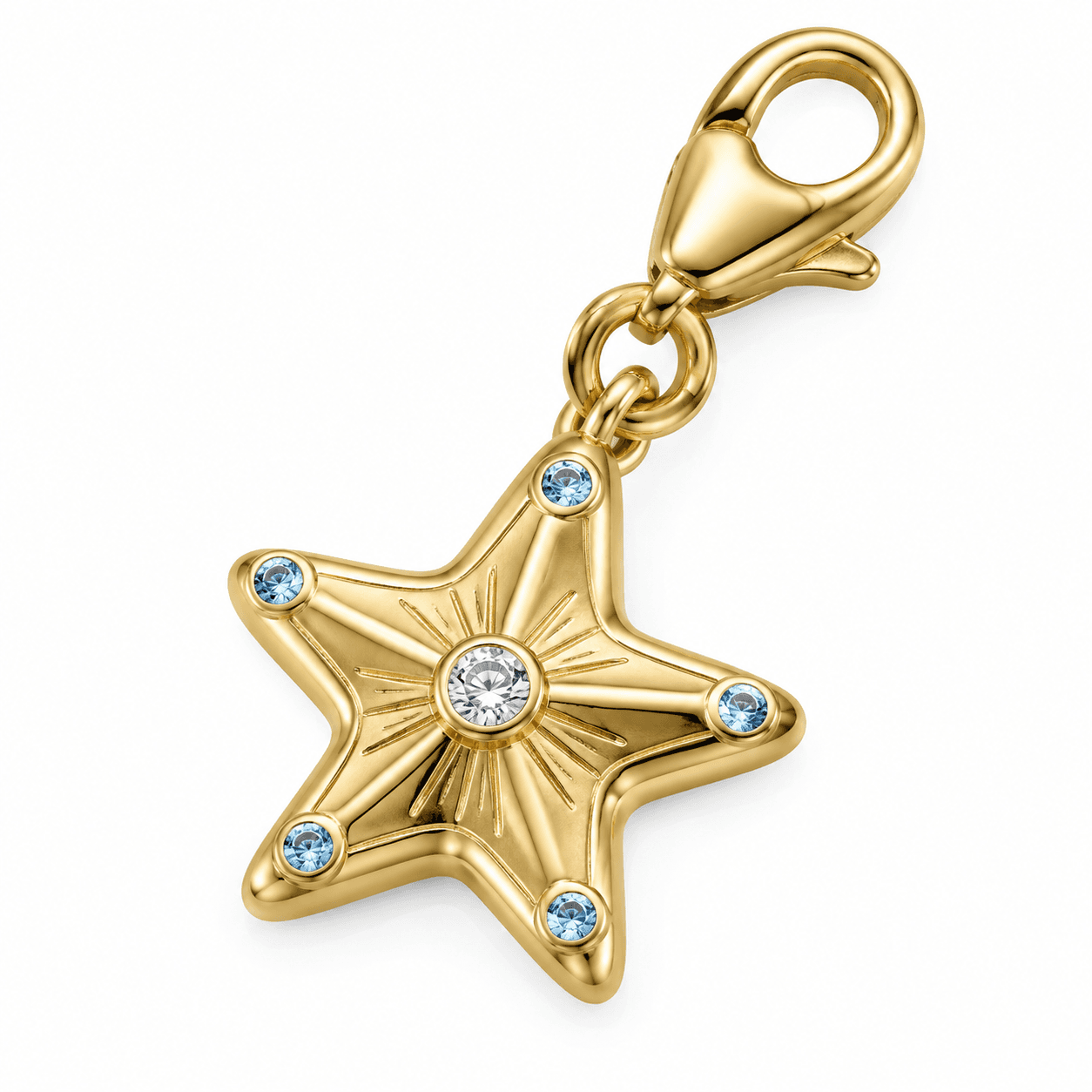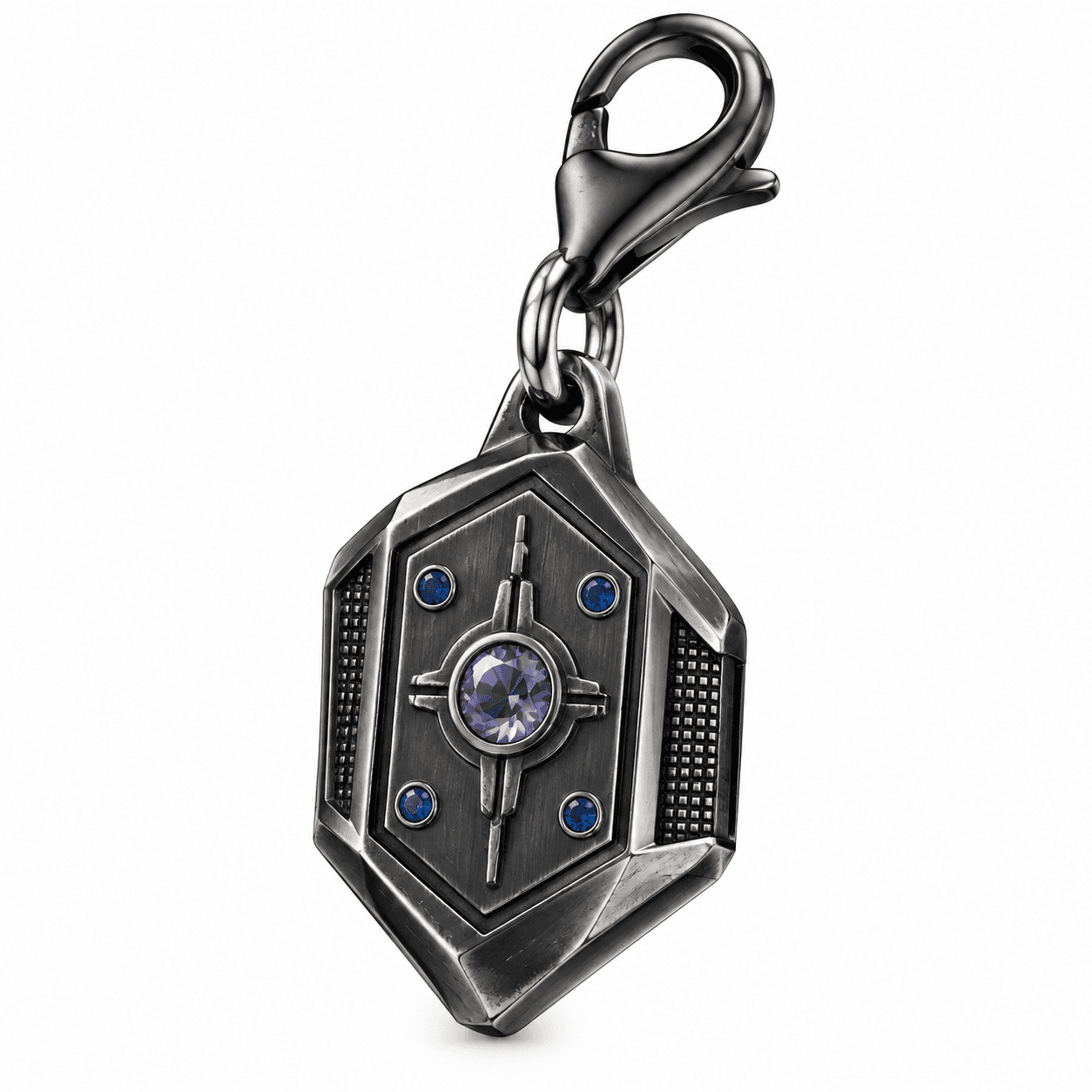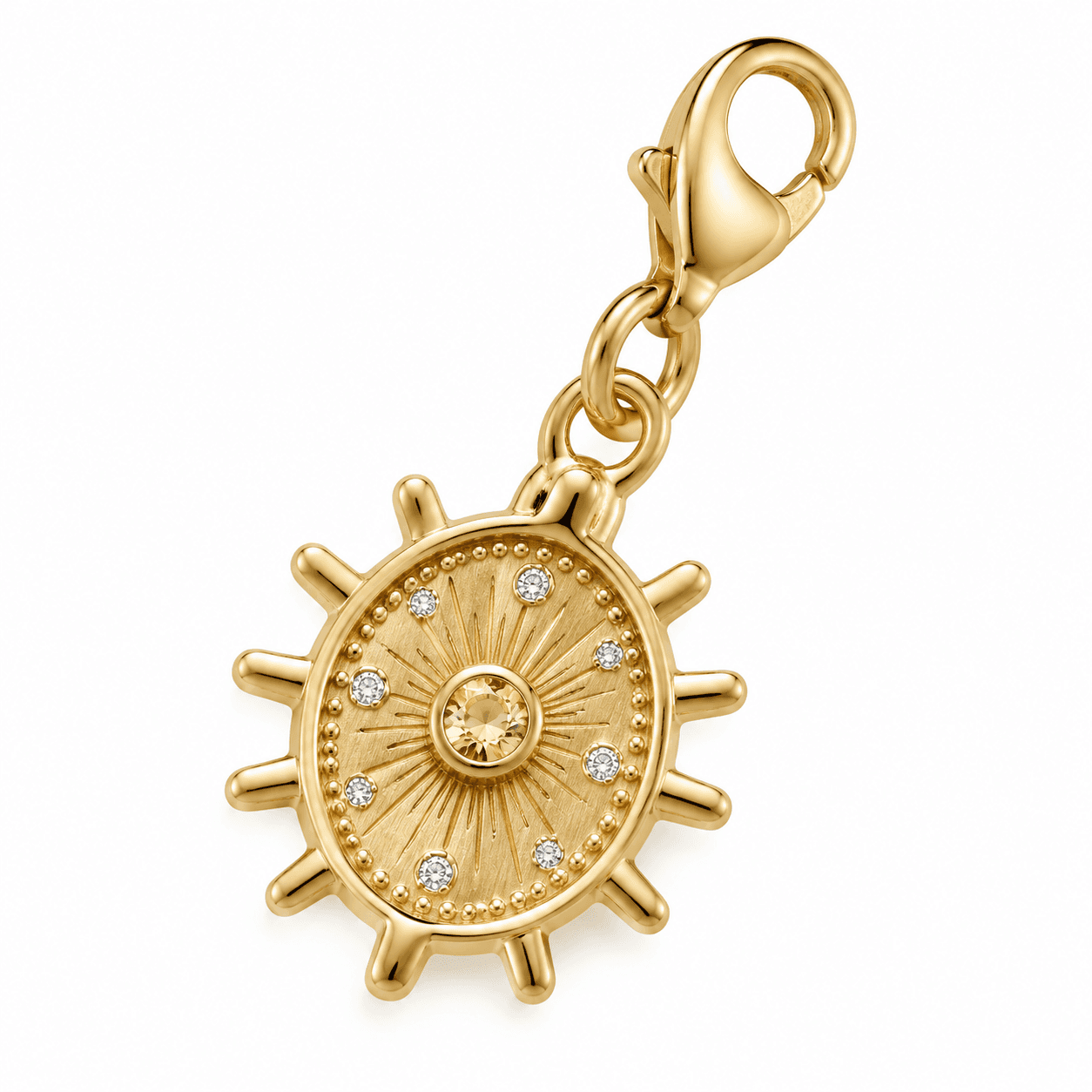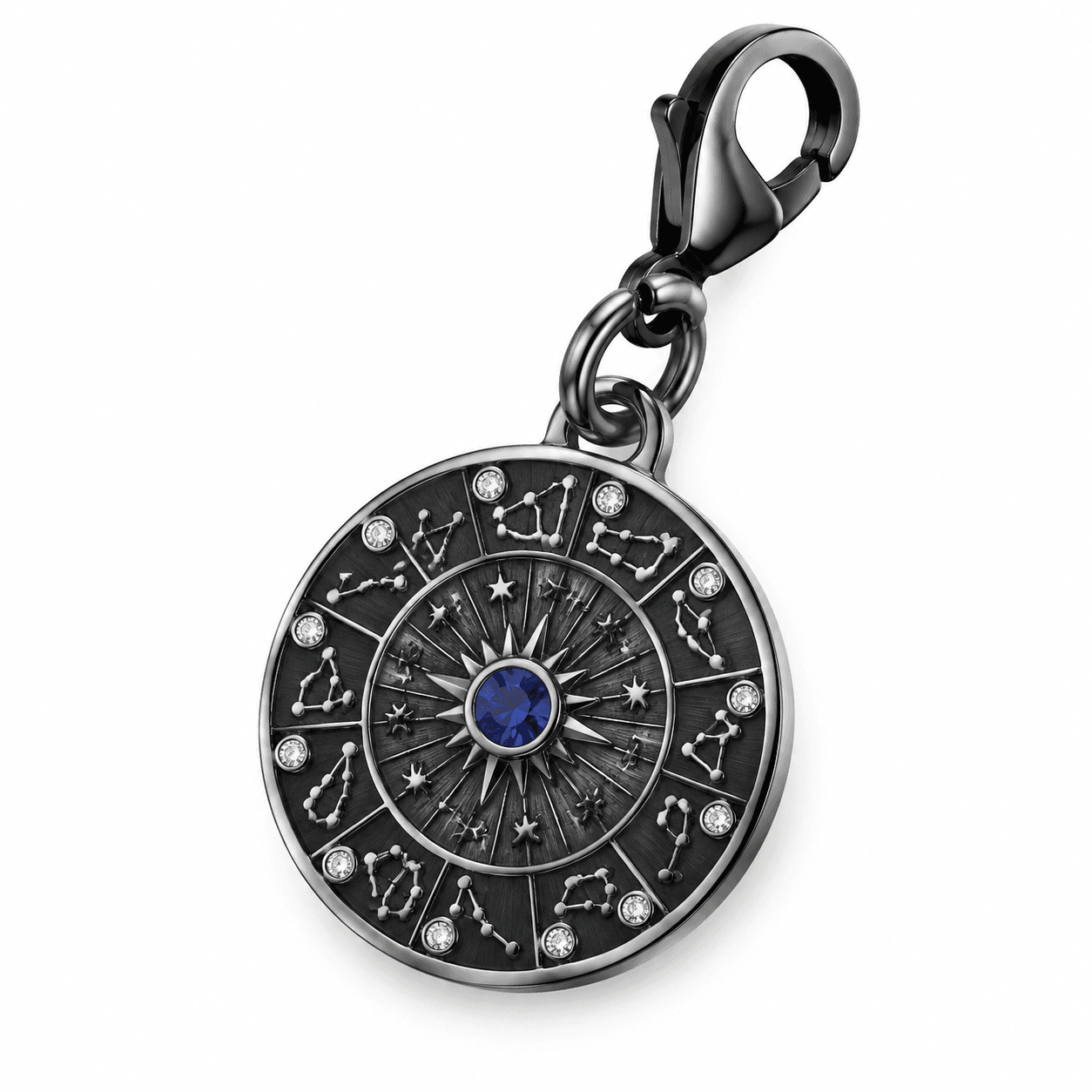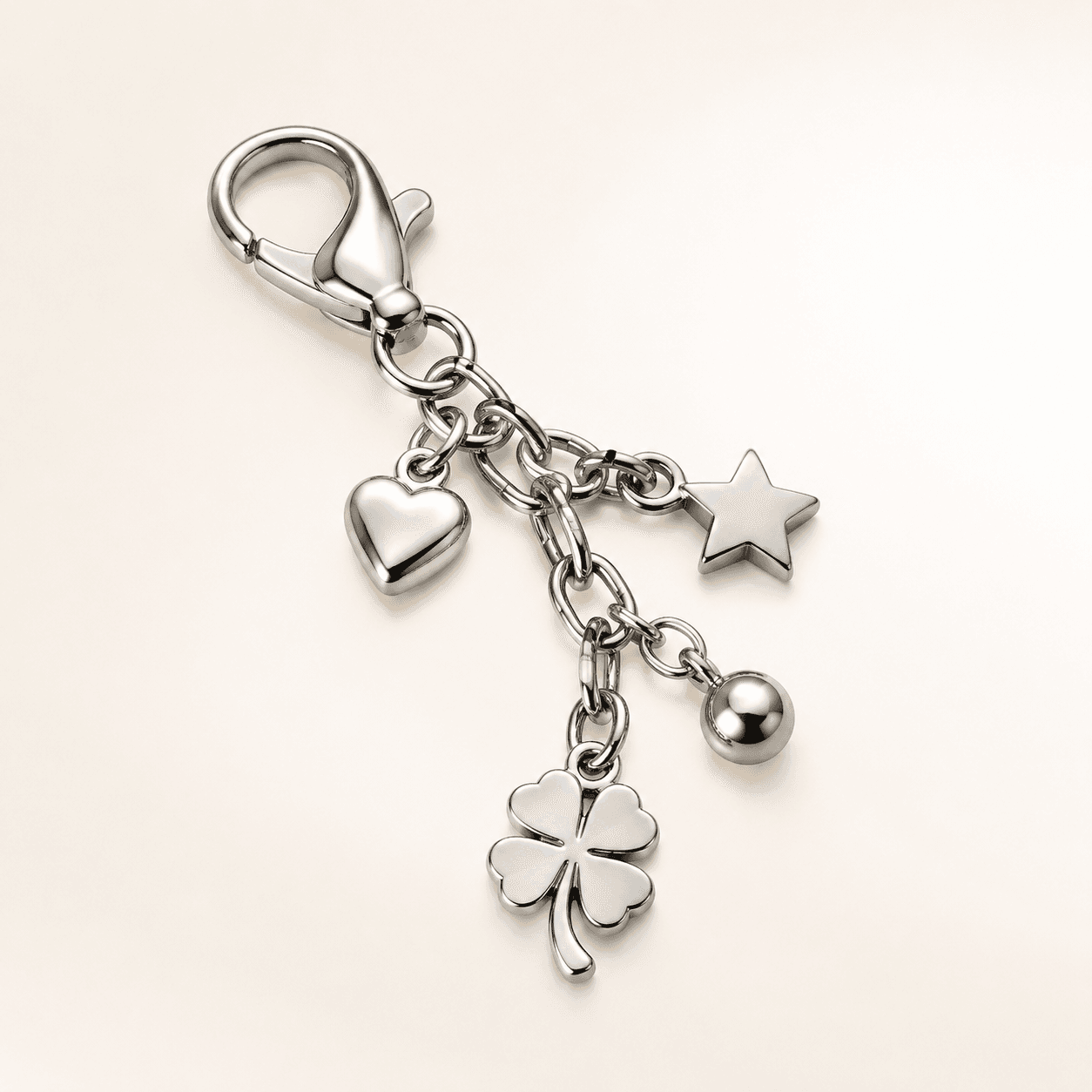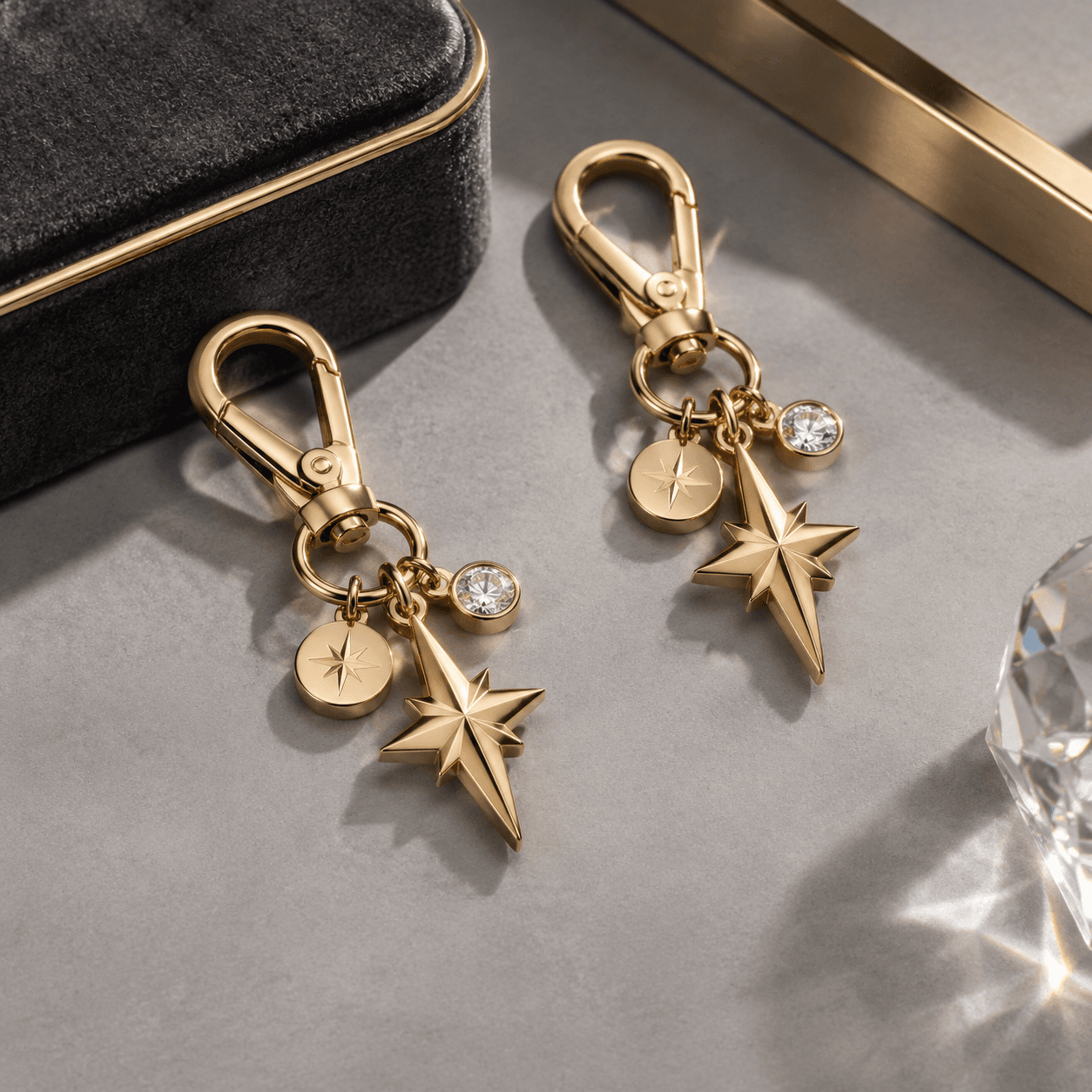
The search term star charm silver often reflects a design requirement rather than a request for a specific base material. For professional jewelry designers, the important question is how a silver-look surface is achieved while maintaining the performance and consistency expected from a production-ready charm. Lancy Jewelry develops charms from 316L stainless steel, with a silver finish available for a clean, neutral appearance and additional options such as PVD gold plating, rose gold plating, enamel, and crystal inlay.
This material deep dive explains how 316L stainless steel influences charm design, prototyping, surface finishing, engraving, and production control. It also covers how buyers can interpret SGS-related testing such as RoHS, REACH, EN1811, and Salt Spray when evaluating a stainless steel charms manufacturer. For brands planning OEM or ODM development, the goal is to connect creative specifications with measurable manufacturing requirements rather than treating surface appearance as the only quality criterion.
What Star Charm Silver Means in a 316L Stainless Steel Design
For a professional product brief, star charm silver is best treated as a combination of shape, visual finish, and intended use. The star form determines the geometry, negative space, edge treatment, engraving area, and attachment point, while the silver finish determines the visible surface character. Lancy uses 316L stainless steel as the base material for its charms, giving designers a consistent foundation for repeatable production. This distinction is important because the appearance of a silver-toned charm does not by itself identify the underlying material or manufacturing process.
316L stainless steel is an austenitic stainless steel valued in jewelry applications for its corrosion resistance, mechanical stability, and suitability for detailed forming and finishing. For a charm designer, these properties translate into practical choices: thin lines need enough structural support, small cutouts need controlled radii, and the bail or jump ring needs to be positioned so the finished piece hangs naturally. A well-designed star charm therefore starts with engineering considerations before decorative treatment is added.
During OEM or ODM development, Lancy can review the target dimensions, artwork, logo location, hole or loop geometry, finish requirement, and intended application before sample development begins. Buyers can also review the wider stainless steel charm catalog to compare available design directions while keeping the production specification centered on 316L stainless steel.
Material Science: Why 316L Stainless Steel Matters
The material specification affects far more than durability. In a charm, the base metal influences how accurately a small design can be formed, how edges can be refined, how engraving behaves, and how the surface responds to polishing and finishing. 316L stainless steel contains chromium and molybdenum within its standardized composition, contributing to strong corrosion resistance in many everyday environments. The low-carbon grade also supports stable fabrication practices when the manufacturing process is properly controlled.
For designers, the useful takeaway is that material selection should be considered alongside geometry. A star with narrow points, deep recesses, micro-engraving, or multiple color zones requires enough physical definition for those details to remain clear after finishing. Lancy's factory workflow can evaluate artwork and dimensions during development so that the final sample reflects practical manufacturing tolerances instead of relying only on a flat graphic file.
Material documentation should also be interpreted according to the buyer's destination market and compliance program. SGS-related documentation may include testing or certification evidence covering areas such as RoHS, REACH, EN1811, and Salt Spray. These references serve different purposes: chemical compliance, restricted-substance control, nickel-release evaluation, and corrosion-performance assessment are not interchangeable. A sourcing manager should therefore request the relevant report scope, test method, sample identification, and date rather than treating a certification name as a universal quality guarantee.
Silver Finish, PVD Options, and Surface Engineering
A silver-look surface is only one part of a finished charm's visual specification. Surface preparation normally begins with controlled polishing or other finishing steps that establish the foundation for the final appearance. Surface cleanliness, edge quality, polishing consistency, and handling discipline all influence whether the finished star reads as crisp and professional. For a collection intended to sit together on a retail display, consistency between individual pieces can be as important as the appearance of one isolated sample.
Lancy also supports PVD finishing for selected color requirements, including gold plated and rose gold plating, while enamel color filling and crystal inlay can introduce additional visual dimensions. PVD is a physical vapor deposition process in which a coating material is deposited under controlled vacuum conditions. For a designer, the practical point is to specify the target appearance, coverage areas, color reference, and required performance rather than assuming that every coating specification has identical process parameters.
When developing a star series, it is useful to establish a finish matrix before mass production: base material, surface preparation, finish type, visible color, gloss level, logo treatment, and testing expectations should all be recorded. This reduces ambiguity between the approved sample and the bulk order. Lancy's OEM service can be used to organize these specifications for custom development, especially when one star concept needs several controlled finish variations.
From Sketch to Sample: Prototyping a Custom Star Charm
Successful charm prototyping converts creative intent into manufacturing instructions. A designer should provide the preferred overall dimensions, reference artwork, thickness target, attachment location, finish, color requirements, engraving content, and expected quantity. If the star contains cutouts or very fine details, vector artwork is particularly useful because it allows production teams to assess line width, spacing, and symmetry before tooling or sampling decisions are finalized.
The attachment mechanism deserves special attention. A charm should hang from a real hole or loop with a mechanically plausible bail or jump ring, and the opening must be large enough for the intended connector without creating excessive movement. The attachment point should also support the charm's center of gravity. If the star is asymmetrical because of lettering, enamel, or crystal placement, the hole location may need adjustment so the finished product does not rotate into an unintended orientation during use.
For boutique brands and private-label buyers, sample development is the stage where these details can be verified economically. Lancy supports custom logo charms, engraving, enamel color filling, crystal setting, and private-label packaging as part of its OEM/ODM workflow. A clear approval sample can then become the reference point for subsequent bulk charm orders, helping production teams maintain the same geometry and finish expectations across the order.
Quality Control and How Buyers Should Read Test Evidence
Quality control for stainless steel charms should combine dimensional inspection, visual inspection, functional inspection, and applicable material or finish testing. Dimensional checks can verify overall size, thickness, hole position, and symmetry. Visual inspection should cover scratches, burrs, uneven polishing, incomplete enamel coverage, plating variation, and surface contamination. Functional inspection is especially relevant to the bail or jump ring because a visually attractive charm still needs a reliable attachment point.
SGS documentation can support buyer evaluation when the report is matched to the actual product and requirement. REACH and RoHS relate to chemical and restricted-substance considerations, while EN1811 is associated with nickel-release testing for products intended for prolonged skin contact. Salt Spray testing evaluates corrosion resistance under a defined accelerated test environment. These tests should not be interpreted as identical measurements, and a buyer should check the tested material, finish, test duration, method, and acceptance criteria.
For a stainless steel charms manufacturer, repeatability is also a quality metric. A strong production specification records the approved sample, finish requirement, logo dimensions, color references, packaging instructions, inspection criteria, and applicable test expectations. This creates a common reference for purchasing, production, and quality teams. Buyers can also submit an RFQ through Request a Quote when they need production quantities, sampling requirements, or customized specifications reviewed together.
Design Variables That Create Better Custom Charm Series
Designers can build a more commercially useful star charm series by varying controlled elements rather than changing every specification at once. Useful variables include silhouette, point geometry, internal cutouts, engraving position, finish, enamel color, crystal placement, and size. Keeping the core 316L stainless steel specification stable allows the collection to feel coordinated while still giving buyers multiple visual options for different retail programs.
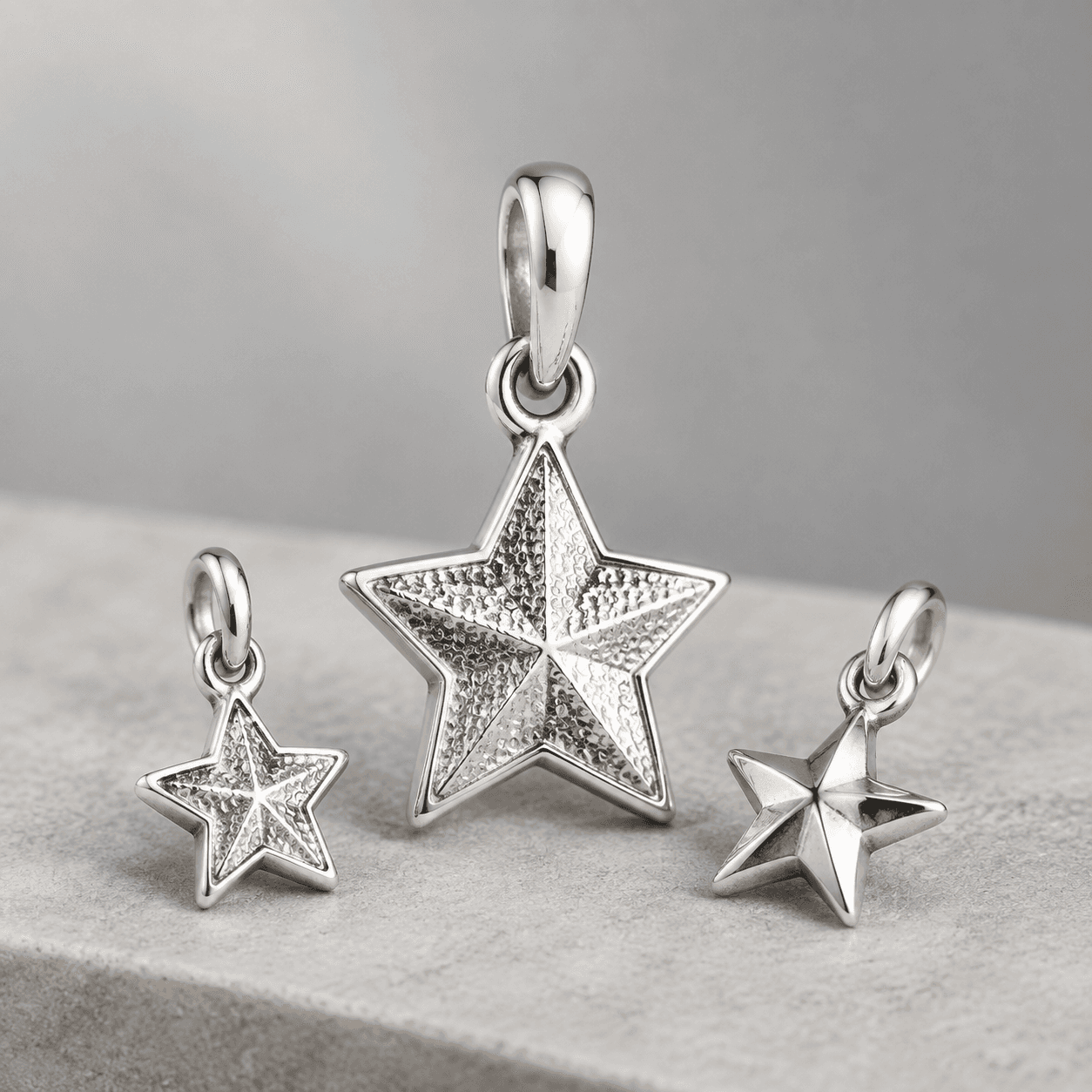
Scale should be selected according to the intended application. Small charms benefit from simplified artwork and stronger visual contrast because extremely fine details can become difficult to inspect at retail scale. Medium formats allow more room for engraving or decorative treatment, while larger statement charms can accommodate more complex silhouettes. In every case, the attachment hole or loop should remain proportionate and mechanically sound rather than being treated as an afterthought.
For B2B programs, this approach supports low MOQ charm production because a family of related designs can be planned around shared manufacturing logic. A boutique brand may request several star variations with different finishes or engraved identifiers, while a gift company may need a consistent shape language across a broader accessory program. The practical objective is to create a specification that is distinctive enough for the buyer's collection while remaining repeatable for production.
Frequently Asked Questions About Star Charm Silver
Planning the Right B2B Specification for Production
A production-ready specification should be concise enough for purchasing teams to use but detailed enough for engineering and quality teams to act on. At minimum, record the charm name or code, 316L stainless steel base requirement, dimensions, thickness, attachment geometry, surface finish, decorative treatment, logo or engraving data, inspection expectations, packaging instructions, and required documentation. This structure is especially useful when a buyer is managing several designs in one private-label program.
Commercial planning should be connected to the technical specification. Estimated annual demand, first-order quantity, target sample date, expected reorder frequency, packaging configuration, and destination markets can affect how the factory plans development and production. An ODM charm supplier can also help translate a broad design direction into a manufacturable family of related pieces, while an OEM workflow is useful when the buyer already has detailed artwork and specifications.
For buyers comparing suppliers, practical evaluation should focus on communication quality, sample accuracy, finish consistency, documented quality controls, development speed, and the ability to maintain the approved specification at scale. Lancy supports factory-direct development for boutique jewelry brands, gift companies, distributors, and private-label buyers. Visit OEM Service to review the custom manufacturing workflow or Contact Lancy Jewelry for project-specific technical questions.
Start Your Star Charm Development
To begin an RFQ or sample request, send the star artwork or sketch, desired charm dimensions, 316L stainless steel requirement, preferred silver finish or other PVD finish, engraving or logo details, enamel or crystal requirements, estimated quantity, packaging needs, and destination market. If you have a target sample date, include it so the development plan can be evaluated with the project scope.
For the fastest technical review, include a dimensioned drawing or vector file and identify which details are mandatory versus adjustable. Lancy can assess the design for manufacturability, prepare sample development requirements, and clarify MOQ, finish, testing, and private-label packaging considerations before bulk charm orders are confirmed. Submit your project through Request a Quote or browse All Products for additional 316L stainless steel charm references.
Related resources
Related resources
- Stainless Steel Decorative Philips Screwhead Pendant Charm: OEM Guide
- How to Choose a Stainless Steel Charm Keychain Supplier for PVD
- stainless steel charm keychain supplier Guide to PVD Finishes & Tests
- How to Choose a Stainless Steel Charm Keychain Supplier China
- How to Choose a stainless steel mobile keychain charm supplier
- How to Source Wholesale Jewelry Making Kits: 316L Animal Charms
- How to Source Custom Pet Tag Accessory Using Stainless Steel Charms
- How to Choose Stainless Steel Race Car Charms OEM Suppliers
- Stainless Steel Enamel Christmas Charms: Supplier Guide Tips
- Guide to stainless steel mobile keychain charm manufacturer china