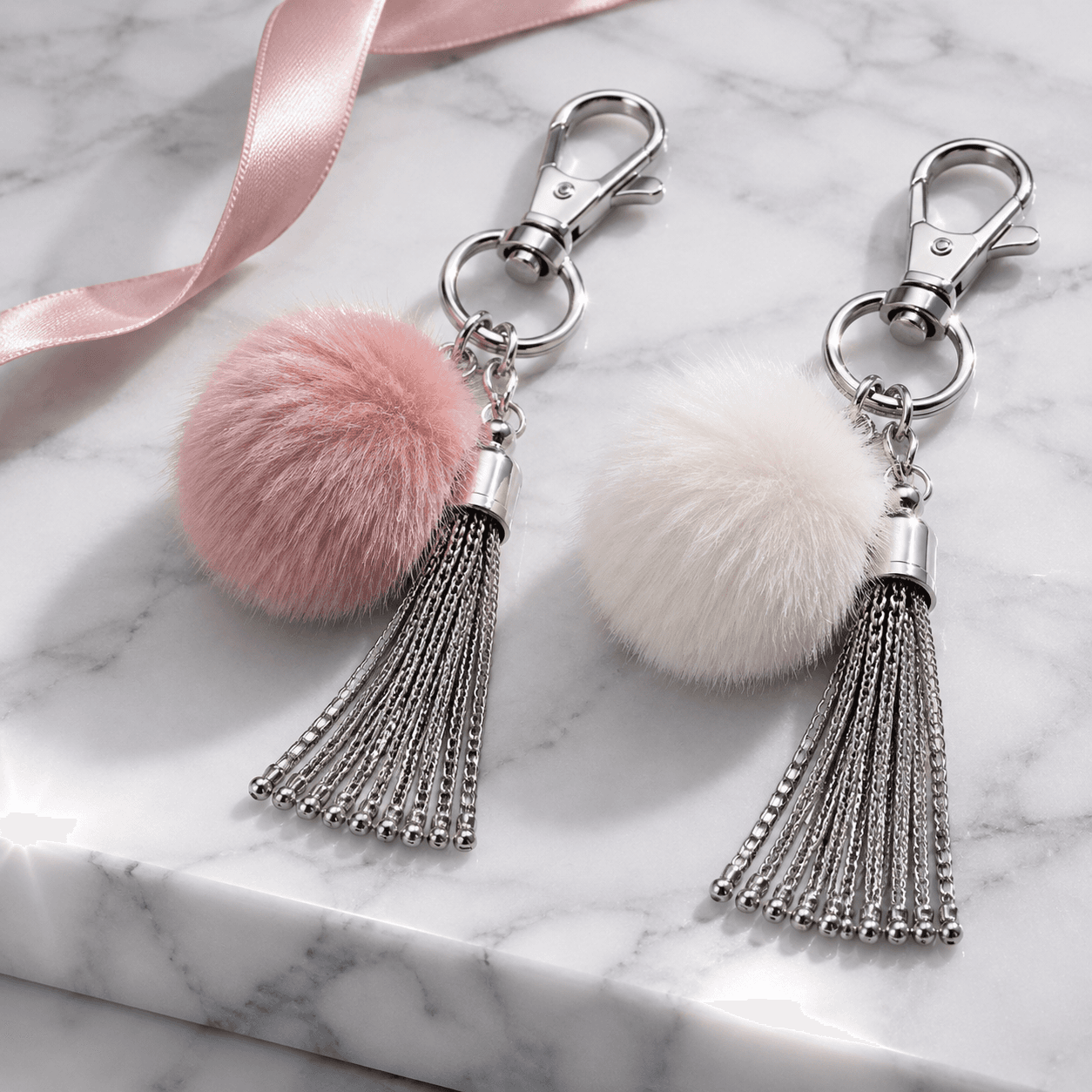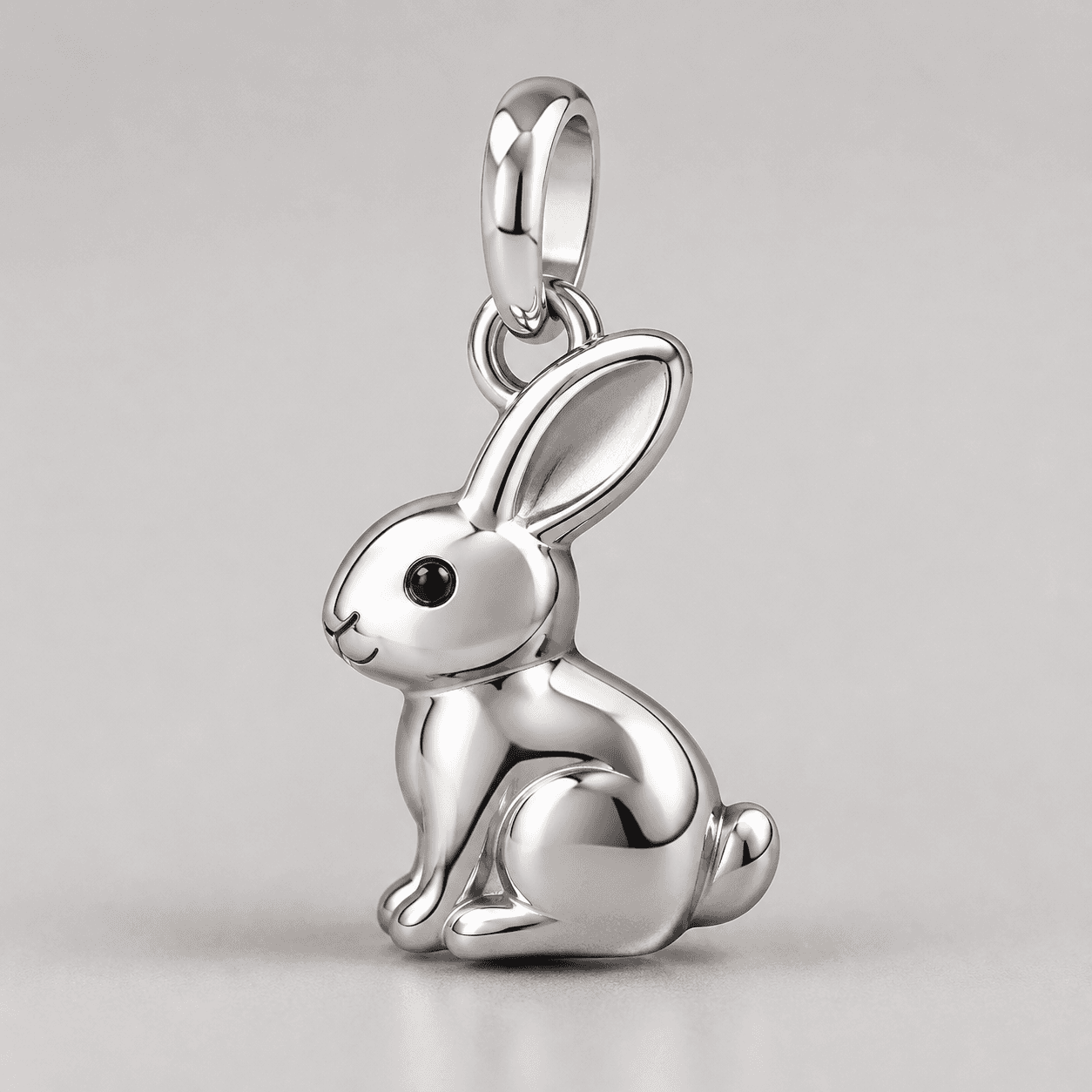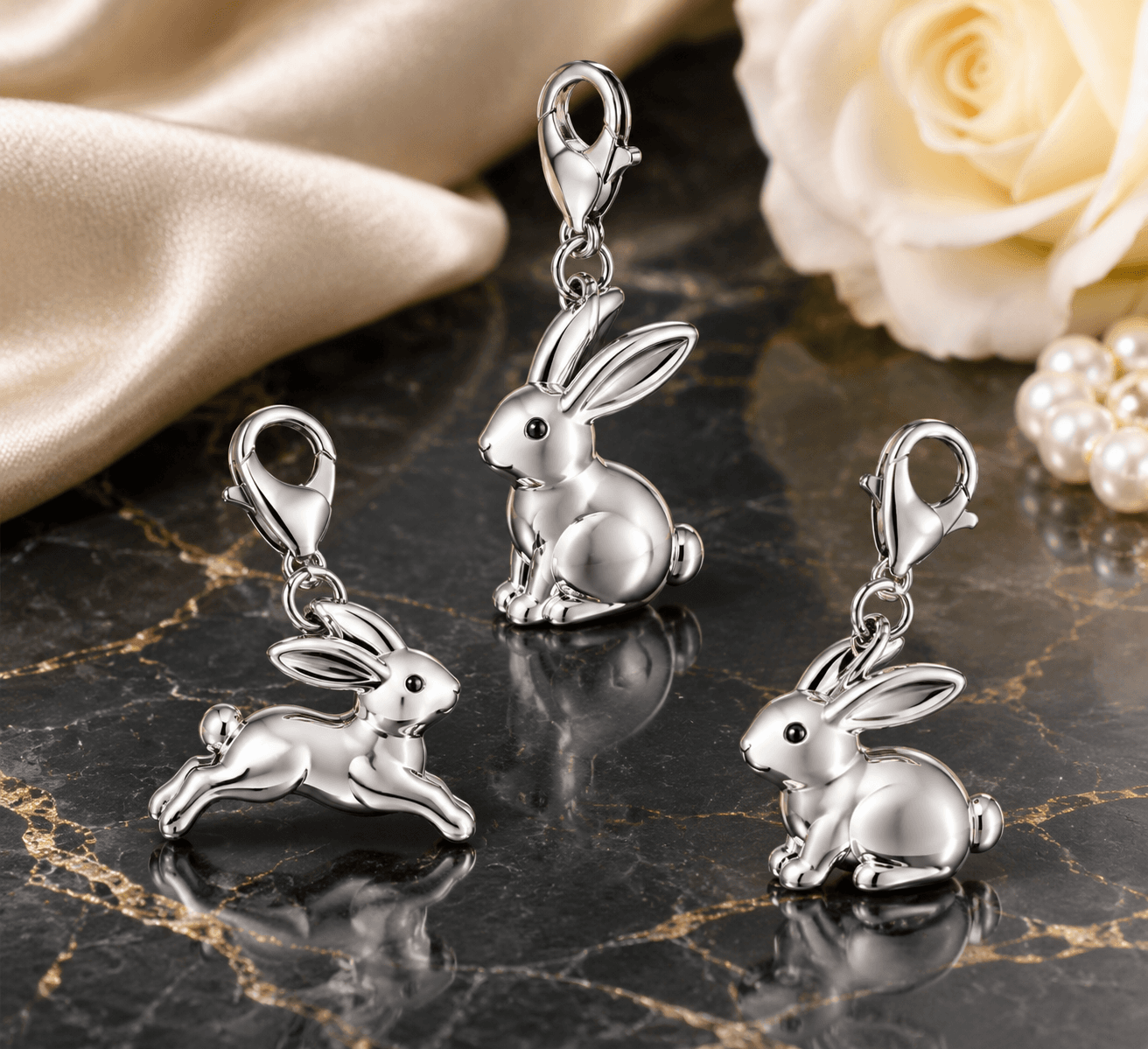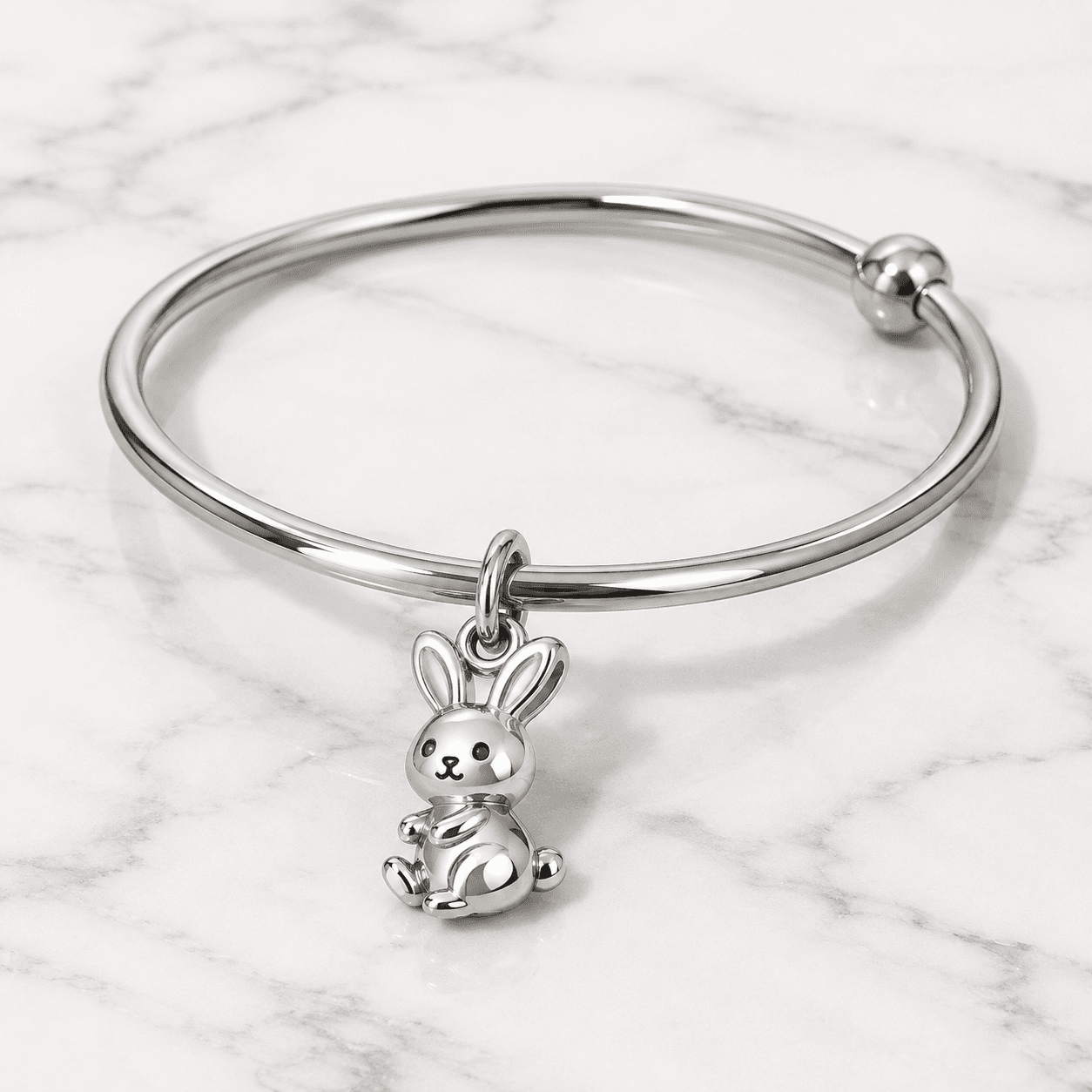
Choosing a rabbit bag charm manufacturer involves more than finding an attractive design at a competitive price. For jewelry designers and boutique buyers, the material composition, surface treatment, attachment construction, and production consistency all influence the final product. A charming rabbit silhouette may attract attention, but its long-term commercial value depends on reliable manufacturing and documented quality control.
When sourcing from China, buyers should understand what makes 316L stainless steel suitable for decorative accessories, how its chemical composition affects performance, and which questions to ask before approving a production order. This guide explains how to evaluate a stainless steel rabbit bag charm factory, compare manufacturing capabilities, and develop customized products for the North American market.
316L Stainless Steel Rabbit Bag Charm Factory China: Understanding the Material
What Is 316L Stainless Steel?
316L stainless steel is a low-carbon grade within the austenitic stainless steel family. Its chemical composition typically includes iron as the primary element, chromium at approximately 16–18%, nickel at approximately 10–14%, and molybdenum at approximately 2–3%. The exact composition is controlled by the applicable material specification and production requirements.
Each element contributes different characteristics. Chromium helps form a passive surface layer that supports corrosion resistance. Nickel contributes to the stable austenitic structure and supports ductility. Molybdenum improves resistance to localized corrosion, particularly in environments containing chlorides. The low carbon content helps reduce the risk of sensitization during certain thermal processing conditions.
For rabbit bag charms, these characteristics provide a practical foundation for products that may experience frequent handling, exposure to moisture, and everyday contact with bags and accessories.
Why Material Chemistry Matters for Jewelry Designers
Designers sometimes concentrate on appearance while overlooking the relationship between composition and manufacturing performance. However, material selection affects cutting, welding, polishing, engraving, and surface finishing.
- Chromium: Supports the formation of a protective passive surface layer.
- Nickel: Contributes to structural stability and mechanical properties.
- Molybdenum: Improves resistance to localized corrosion.
- Low carbon content: Helps maintain corrosion resistance following appropriate thermal processing.
- Iron: Forms the principal metallic foundation of the material.
For sourcing managers, understanding these characteristics makes it easier to evaluate technical documentation rather than relying exclusively on a supplier's product description.
Important Material Considerations for North American Buyers
US and Canadian buyers should consider moisture exposure, repeated handling, surface durability, and skin-contact requirements when developing decorative accessories. A bag charm may be attached to a handbag, backpack, gift accessory, or keychain. Although it is not necessarily designed for continuous skin contact, customers may still handle it frequently.
Nickel release is therefore worth discussing when a design includes components that could contact skin. Buyers should request relevant test documentation and clarify which finished-product components were tested. European EN1811 testing can provide useful information about nickel release, although its applicability and acceptance depend on the destination market and product category.
FDA compliance should not be confused with a general jewelry quality certificate. Ordinary decorative accessories should be evaluated under the product requirements applicable to their intended use. US buyers should also consider relevant Consumer Product Safety Commission requirements, applicable state regulations, and accurate product labeling. Canadian importers should review the requirements applicable to their particular product and distribution channel.
Benefits of Choosing a Specialized 316L Stainless Steel Charm Manufacturer
1. More Consistent Material Selection
Working with a specialized stainless steel charms manufacturer helps buyers establish clear material requirements from the beginning. Instead of relying on broad descriptions, specify the 316L grade, applicable material documentation, product dimensions, and inspection expectations.
Consistent material selection is particularly important for boutique brands planning coordinated product families. Rabbit charms, animal motifs, heart designs, and seasonal decorative accessories should follow a consistent technical specification even when their shapes differ.
2. Better Surface Finishing Options
316L stainless steel supports several decorative finishing approaches. Depending on the product design, buyers can consider a natural silver finish, PVD gold plated surfaces, rose gold plating, enamel color filling, and crystal inlay.
These options give jewelry designers room to develop distinctive rabbit designs without changing the specified base material. However, the finishing process should be evaluated separately from the underlying material. Buyers should request samples that demonstrate color consistency, surface smoothness, edge quality, and resistance to ordinary handling.
3. Documented Testing and Quality Assurance
Third-party testing provides additional evidence when evaluating a manufacturing partner. Lancy Jewelry has SGS testing documentation covering RoHS, REACH, Nickel Release EN1811, and Salt Spray 240H. Buyers should confirm the relevant report numbers, tested samples, dates, and scope before applying any test result to a new product or production batch.
These documents address different aspects of product evaluation:
- RoHS: Addresses restrictions on specified hazardous substances in applicable products.
- REACH: Addresses chemical substance requirements in the European regulatory framework.
- Nickel Release EN1811: Evaluates nickel release under the applicable testing method.
- Salt Spray 240H: Provides information about corrosion performance under the specified salt spray test conditions.
A test report is not automatically a guarantee that every future product or production batch meets identical results. Responsible buyers should verify that the tested configuration matches the product being purchased.
Detailed Supplier Evaluation: How to Compare Rabbit Bag Charm Factories
Step 1: Confirm the Material Specification
Begin by asking the supplier to confirm that the charm body is manufactured from 316L stainless steel. Request supporting material documentation and establish whether the attachment ring, decorative elements, and other functional components follow the same material requirement.
For a rabbit bag charm, the main body and attachment hardware deserve particular attention. A supplier should be able to explain the material specifications of each component rather than describing the complete product with one general material statement.
Step 2: Evaluate Manufacturing Capabilities
A factory's equipment and technical experience influence how accurately it can produce custom shapes. Rabbit designs often include curved ears, facial details, small decorative recesses, and dimensional transitions that require careful processing.
When evaluating an OEM charms manufacturer, ask about the following capabilities:
- CNC processing: Supports accurate dimensional development and repeatable component production.
- Laser cutting: Helps create controlled outlines and detailed shapes.
- Laser marking: Supports custom logos, identification details, and decorative engraving.
- Welding: Supports suitable structural connections where the design requires them.
- Polishing: Improves surface smoothness and prepares the product for subsequent finishing.
- Enamel filling and crystal setting: Add decorative detail while preserving the specified stainless steel foundation.
Ask the supplier to explain which processes are performed in-house and which require external coordination. This information helps buyers understand production scheduling and quality responsibilities.
Step 3: Compare Manufacturing and Customization Options
Two factories may offer similar-looking rabbit charms but differ significantly in customization support. For jewelry designers, the ability to translate an original sketch into a manufacturable product is particularly important.
Use the following comparison when assessing suppliers:
| Evaluation Area | Basic Supplier Approach | Specialized Factory Approach | Buyer Verification |
|---|---|---|---|
| Material specification | General material description | Defined 316L specification | Material documentation |
| Design development | Limited existing options | OEM and ODM development | Technical drawings and samples |
| Logo customization | Limited marking options | Laser logo engraving | Sample engraving inspection |
| Surface finishing | Basic finish selection | PVD and decorative finishing options | Color and adhesion evaluation |
| Quality testing | Unspecified inspection | Documented testing support | Relevant third-party reports |
| Packaging | Standard bulk packing | Private-label packaging support | Packaging sample approval |
| Production planning | Limited project coordination | Sample and bulk-order planning | Written production schedule |
The comparison should be used as an evaluation framework rather than an assumption that every supplier follows the same production model. Request evidence for each capability before making a sourcing decision.
Step 4: Examine Surface Finishing and Decoration
Surface finishing has a significant effect on the perceived quality of a rabbit charm. A polished silver finish can emphasize the silhouette, while PVD gold plating creates a warmer appearance. Rose gold plating offers another visual direction for boutique collections.
Enamel can introduce color to the rabbit's ears, clothing details, or decorative motifs. Crystal inlay can add a small focal point, provided the setting is mechanically secure and appropriate for the intended use.
Ask suppliers to provide finished samples instead of judging the production capability from unfinished components. Inspect the transition between decorative sections, the consistency of color, and the condition of edges and attachment points.
Step 5: Check Mechanical Construction
A bag charm must remain securely attached during ordinary use. The connection mechanism should be treated as an essential engineering feature rather than an afterthought.
For a rabbit charm, inspect the bail or jump ring and confirm that it passes through a real hole or closed loop. The attachment should have adequate clearance and should not overlap the decorative body in a way that restricts movement. Check that the ring closes properly and that the connection does not create sharp edges.
Where a separate key ring or clasp is included, request a complete assembly sample. Evaluate opening and closing operation, connection strength, and the overall balance of the accessory.
Step 6: Request Samples Before Bulk Production
Sample development is one of the most useful stages in custom manufacturing. It allows designers to evaluate proportions, decorative details, finish, and physical construction before committing to larger quantities.
A practical sample approval process should include:
- Submit the design sketch, reference dimensions, and material specification.
- Discuss production feasibility and identify details requiring adjustment.
- Approve the technical drawing and proposed attachment construction.
- Review the first physical sample for dimensions and appearance.
- Evaluate finishing quality and functional performance.
- Record approved specifications for production reference.
Keep an approved sample or documented sample specification as the reference for future production. This reduces misunderstandings when repeating orders or developing coordinated designs.
Step 7: Evaluate MOQ, Pricing, and Production Planning
MOQ is an important consideration for boutique brands and independent retailers. A lower initial order requirement can help buyers test a new rabbit charm concept without committing excessive inventory.
However, the lowest quoted MOQ is not necessarily the most economical option. Custom tooling, decorative processes, packaging requirements, and sample development can influence the total project cost.
When requesting a quotation, provide the desired order quantity, dimensions, finish, decoration, logo requirements, packaging specifications, and destination market. Ask the factory to separate development charges, unit pricing, packaging costs, and shipping arrangements where applicable.
Step 8: Assess Private-Label and Packaging Support
Packaging contributes to the retail presentation of a finished bag charm. Boutique brands may require branded cards, protective packaging, individual product identification, or coordinated presentation across a collection.
Discuss artwork requirements, printing specifications, packaging dimensions, and assembly responsibilities before production begins. A clear packaging specification helps prevent inconsistencies between product approval and final delivery.
316L Stainless Steel Versus Other Material Considerations
Material comparison is useful when defining a product's intended performance. Rather than selecting a material based only on appearance or initial quotation, buyers should assess corrosion behavior, mechanical properties, finishing requirements, and maintenance expectations.
| Evaluation Factor | 316L Stainless Steel | Alternative Material Categories |
|---|---|---|
| Material documentation | Can be specified against a recognized grade | Depends on the exact material specification |
| Corrosion resistance | Good resistance under many everyday conditions | Varies considerably by composition and treatment |
| Mechanical performance | Suitable for many small decorative components | Depends on the material and component design |
| Surface finishing | Supports polishing and decorative treatments | Process suitability varies |
| Quality verification | Material and finished-product testing can be requested | Requires material-specific testing |
| Maintenance | Routine cleaning is generally straightforward | Care requirements vary by material and finish |
The important point is that no material specification guarantees every aspect of finished-product performance. Geometry, polishing, coating quality, assembly, and environmental exposure also matter. Lancy Jewelry focuses on 316L stainless steel charms, allowing buyers to establish a consistent material direction across custom decorative accessory programs.
How Lancy Jewelry Supports Custom Rabbit Bag Charm Projects
OEM and ODM Development
Lancy Jewelry provides OEM and ODM manufacturing support for boutique jewelry brands, charm bar retailers, gift companies, and private-label buyers. Customers can develop rabbit designs from original artwork or discuss adjustments to existing concepts.
The manufacturing process can incorporate CNC processing, laser cutting, laser marking, welding, and polishing. Depending on the approved design, additional options include PVD gold plating, rose gold plating, silver finish, enamel color filling, and crystal inlay.
Sample Support and Flexible Production Planning
New collections often require several rounds of development before a design is ready for bulk orders. Lancy supports sample development so buyers can review the product's proportions, finish, and attachment construction before proceeding.
Low MOQ support can also help boutique businesses introduce new designs in manageable quantities. Final minimum quantities depend on the design, processing requirements, packaging, and production arrangement.
Quality Documentation and Manufacturing Coordination
Lancy Jewelry provides access to SGS testing documentation covering RoHS, REACH, Nickel Release EN1811, and Salt Spray 240H. Buyers can discuss the relevant documentation and testing scope during the quotation and development process.
For international customers, clear communication is equally important. Confirm specifications, sample approval, packaging requirements, inspection criteria, and delivery expectations in writing before placing a production order.
Frequently Asked Questions
1. Why is 316L stainless steel suitable for rabbit bag charms?
316L stainless steel offers a useful combination of corrosion resistance, mechanical performance, and finishing flexibility. Its chromium, nickel, and molybdenum content contributes to its material properties. These characteristics make it suitable for many decorative accessories that receive regular handling.
2. Can a Chinese factory manufacture customized rabbit bag charms?
Yes. A qualified OEM/ODM factory can develop custom silhouettes, dimensions, engraved logos, decorative details, and finishing options. Buyers should provide drawings or design references and request physical samples before approving bulk production.
3. What certifications should North American buyers request?
Buyers should request relevant material documentation, applicable chemical compliance reports, nickel release information where skin contact is relevant, and finished-product quality inspection records. SGS documentation covering RoHS, REACH, EN1811, and Salt Spray 240H can provide useful supporting evidence. FDA requirements should be evaluated according to the actual product category and intended use rather than assumed to apply as a general jewelry certification.
4. How can buyers reduce risks when ordering wholesale stainless steel charms?
Start with a clear material specification, approve a physical sample, verify the attachment mechanism, confirm finishing requirements, and establish written inspection standards. Also clarify MOQ, production lead time, packaging, and delivery arrangements before confirming the purchase order.
Partner With Lancy Jewelry for Custom 316L Stainless Steel Charms
Finding a reliable rabbit bag charm factory requires a balanced evaluation of material chemistry, manufacturing capability, finishing quality, product construction, and commercial flexibility. For North American boutique brands and sourcing managers, these factors help establish a dependable foundation for distinctive decorative accessory collections.
Lancy Jewelry combines 316L stainless steel manufacturing expertise with OEM/ODM development, logo engraving, PVD finishing, enamel decoration, crystal setting, sample support, and private-label packaging. Our team works with buyers to translate design concepts into practical production specifications.
Whether you are developing a new rabbit bag charm, expanding an animal-themed collection, or planning a coordinated gift program, we welcome your project requirements.
Explore our 316L stainless steel product catalog, learn more about our OEM manufacturing services, or contact Lancy Jewelry to discuss your design.
Send us your drawings, target quantity, preferred finish, logo requirements, and packaging expectations. Our team can help evaluate the project, arrange sample development, and prepare an RFQ for your next collection.