Choosing a rabbit bag charm manufacturer is not simply a matter of reviewing attractive product photos or accepting a low quotation. For procurement teams, the real question is whether a supplier can repeatedly deliver compliant 316L stainless steel charms with stable finishing, reliable attachment hardware, controlled production, and documentation that stands up to internal review.
A supplier that passes an initial sample review but cannot demonstrate material traceability, wear testing, process control, or consistent bulk production creates avoidable sourcing risk. The following checklist is designed for buyers in North America who need a practical framework for evaluating a stainless steel rabbit bag charm manufacturer before approving samples, issuing a purchase order, or committing to a private-label program.
How to Vet a Stainless Steel Rabbit Bag Charm Manufacturer
Start with material and product-scope verification
- ☐ Confirm in writing that the charm base is 316L stainless steel.
- ☐ Confirm that the supplier's production scope matches the actual product: a standalone rabbit charm intended for bag-charm and decorative accessory programs.
- ☐ Request a clear material specification rather than relying on generic descriptions such as "stainless steel."
- ☐ Ask whether the same approved material specification will be maintained from sample production through bulk orders.
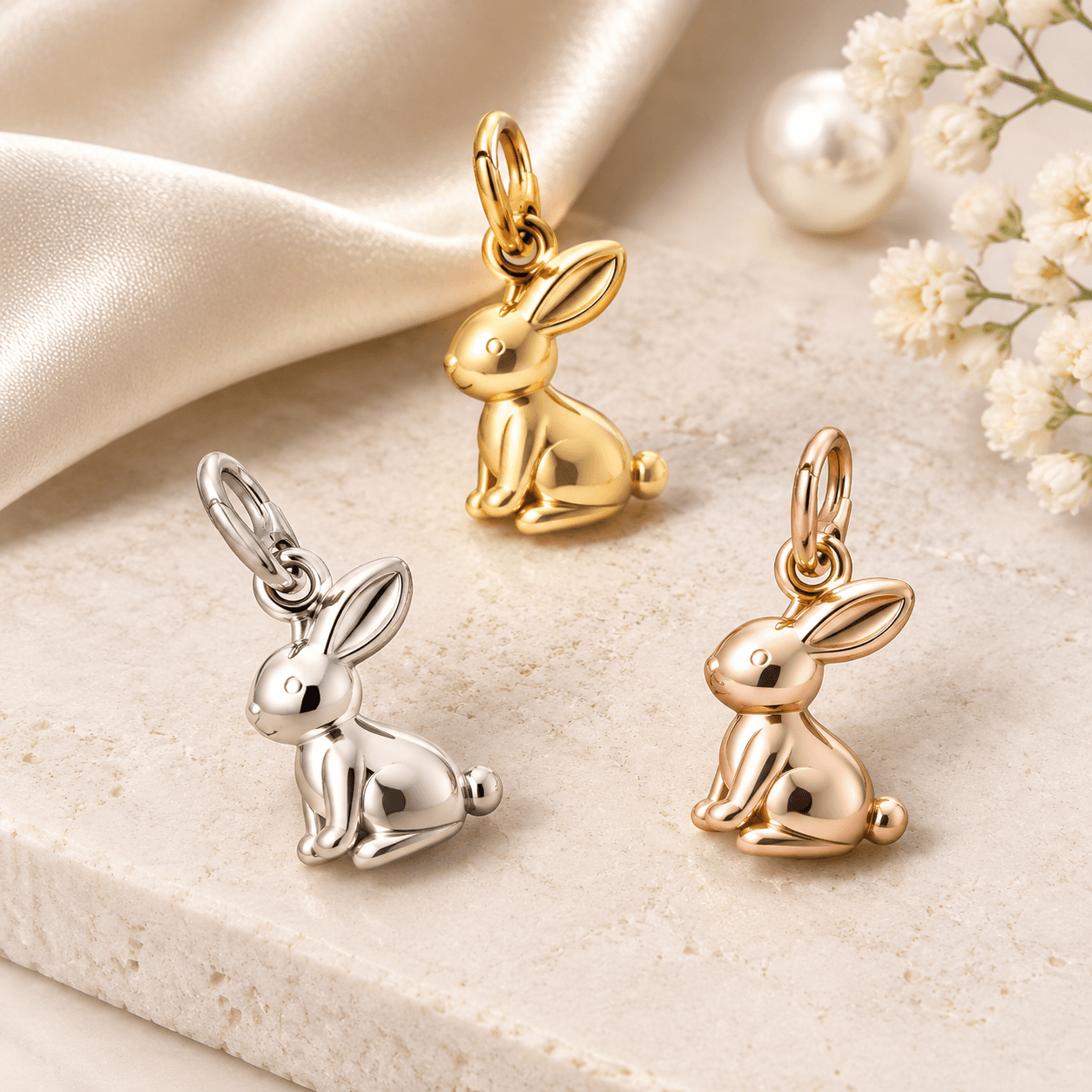
- ☐ Confirm which finishing processes are available, including PVD, gold plated, rose gold plating, silver finish, enamel, and crystal inlay where applicable.
- ☐ Verify that the bail or jump ring is mechanically plausible and properly connected to the charm body.
For procurement teams, the key principle is simple: approve the material specification first, then evaluate aesthetics. A visually successful sample is not enough if the underlying specification is unclear or difficult to audit.
Evaluate the supplier, not only the product
- ☐ Identify whether the company operates as an actual charm factory or primarily as a trading intermediary.
- ☐ Request an overview of production capabilities, including CNC machining, laser cutting, laser marking, welding, polishing, and finishing.
- ☐ Confirm whether OEM and ODM development are handled directly by the supplier's technical team.
- ☐ Ask who controls quality approval before shipment.
- ☐ Request evidence of production capacity appropriate to your expected order volume.
- ☐ Establish one accountable contact for technical specifications, sampling, quality issues, and RFQ management.
Why Manufacturer Vetting Matters for Rabbit Bag Charms
Material compliance reduces long-term sourcing risk
316L stainless steel is a strong foundation for repeat-use decorative accessories because procurement teams can establish a defined material specification and then verify production against that specification. The objective is not merely to identify a supplier that can produce one acceptable sample. It is to establish a repeatable manufacturing system.
For North American buyers, compliance documentation should be treated as part of the product specification. Lancy Jewelry maintains SGS certification documentation covering RoHS, REACH, Nickel Release EN1811, and Salt Spray 240H. These records provide useful evidence for supplier qualification and quality review, but buyers should still define their own documentation requirements, applicable market requirements, and acceptance criteria before purchase.
Wear resistance affects customer returns and brand reputation
Rabbit bag charms are frequently handled, moved, attached, detached, and exposed to everyday environmental conditions. Finishing therefore deserves the same procurement attention as the decorative design. Buyers should evaluate surface consistency, edge finishing, coating durability, color stability, and resistance to visible wear.
- ☐ Review Salt Spray 240H documentation where applicable to your specification.
- ☐ Request finishing specifications for PVD or other approved surface treatments.
- ☐ Define acceptable limits for scratches, discoloration, surface pits, uneven coating, and exposed areas.
- ☐ Test repeated handling and attachment points rather than evaluating only a static sample.
- ☐ Confirm that production inspection checks the front design, edges, attachment loop, and finish.
North American compliance requires clear thinking about regulatory claims
Procurement teams should distinguish between relevant product testing and broad regulatory marketing claims. Finished jewelry accessories are not generally evaluated through the FDA as a primary product category, so a supplier's claim of being "FDA approved" should not be treated as a substitute for appropriate material, chemical, or product documentation. Depending on the product, distribution channel, state, and intended use, buyers may also need to assess applicable U.S. or Canadian requirements, including chemical disclosure obligations and retailer-specific standards.
The practical approach is to build a compliance file around the actual product specification. That file can include the approved material description, applicable SGS reports, finish specifications, approved sample records, inspection criteria, packaging requirements, and purchase-order documentation.
Detailed Supplier-Vetting Checklist
1. Verify technical documentation before sampling
Do not begin with a price comparison. Begin with a technical questionnaire. Ask the supplier to document the 316L stainless steel specification, available finishes, manufacturing processes, attachment hardware, production tolerances, and testing capabilities.
For an advanced procurement process, require the supplier to distinguish between specifications that are guaranteed, specifications that are tested by an external laboratory, and specifications that are controlled through internal inspection. This prevents a common sourcing problem: treating an informal sales statement as if it were a controlled technical requirement.
- ☐ Material specification documented.
- ☐ Finish specification documented.
- ☐ Product dimensions and tolerances documented.
- ☐ Attachment mechanism documented.
- ☐ Testing and certification records identified.
- ☐ Packaging and labeling requirements documented.
2. Inspect the sample as a production prototype
A sample should be treated as a production prototype rather than a promotional freebie. Procurement, product development, and quality teams should jointly review it.
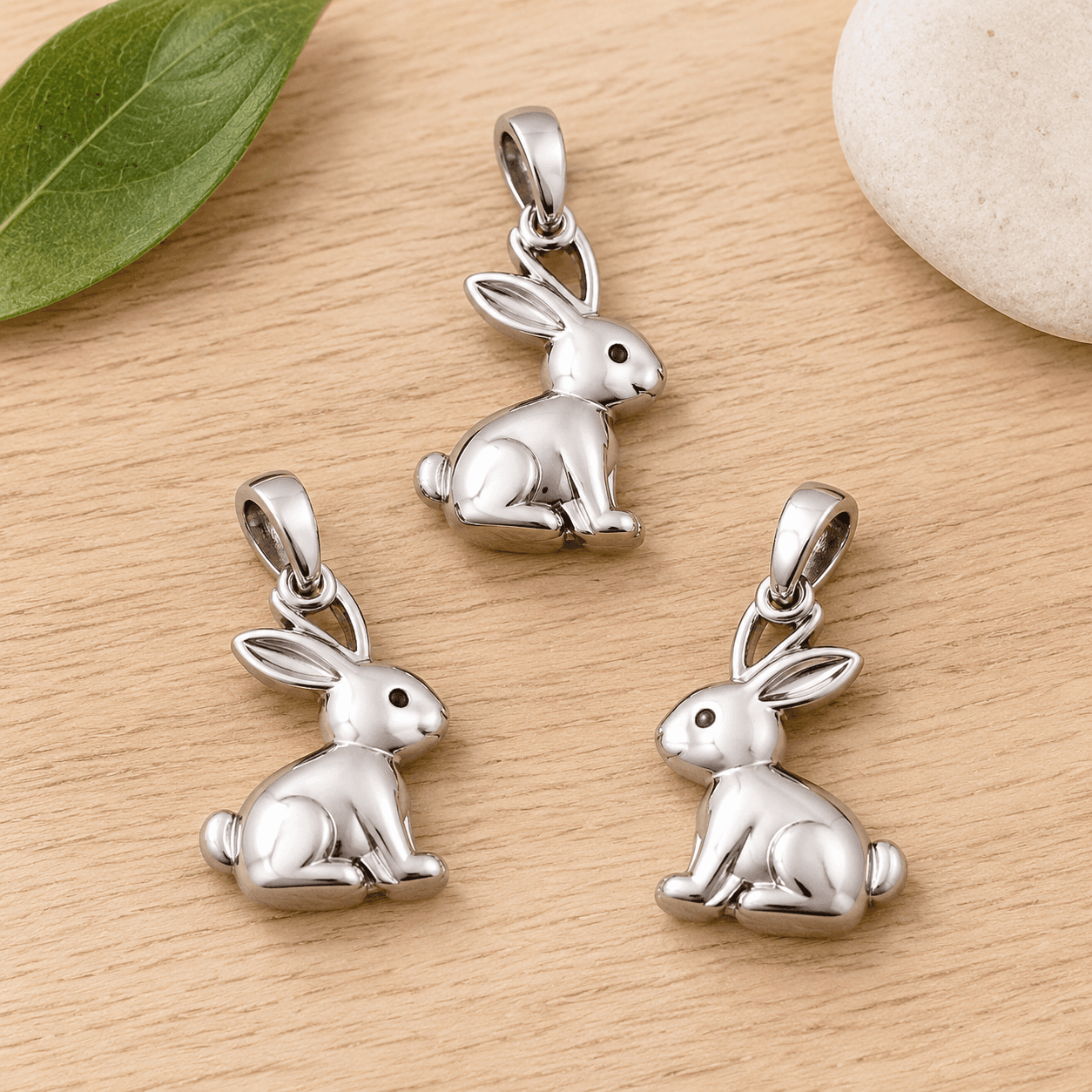
Inspect the rabbit silhouette from multiple angles. Check whether the design is symmetrical where intended, whether edges are smooth, and whether the surface has consistent polishing. Examine the bail or jump ring to ensure it passes through a real hole or loop and remains mechanically secure. If the design includes enamel or crystal inlay, inspect the filling or setting for gaps, overflow, looseness, or inconsistent placement.
- ☐ Verify dimensions against the approved drawing.
- ☐ Verify the complete outer silhouette.
- ☐ Inspect all visible surfaces under consistent lighting.
- ☐ Check attachment points for mechanical integrity.
- ☐ Inspect PVD or other approved finishing for consistency.
- ☐ Record sample defects with photographs and measurable acceptance criteria.
3. Test durability instead of assuming it
Wear resistance should be evaluated through a defined test plan. The exact test method should reflect the product's intended use and your company's quality standard.
For a bag charm, consider repeated movement, friction, attachment stress, surface handling, and environmental exposure. If a coating is specified, establish what constitutes acceptable change after testing. A supplier should be able to explain its testing process rather than simply promising that the finish is durable.
- ☐ Define an attachment-stress test.
- ☐ Define a surface-abrasion or handling test appropriate to the finish.
- ☐ Review salt-spray results when relevant to the specification.
- ☐ Establish visual inspection criteria before testing.
- ☐ Compare tested samples with an approved reference sample.
- ☐ Document pass/fail criteria before production begins.
4. Audit production-process control
When supplier qualification reaches the factory-audit stage, focus on process control rather than showroom presentation. A modern charm factory should be able to explain how design files move into production, how dimensions are controlled, how laser marking is verified, how polishing is inspected, and how finished pieces are released.
At Lancy Jewelry, manufacturing capabilities include CNC, laser cutting, laser marking, welding, and polishing. These capabilities support controlled OEM and ODM development from technical concept through production. For procurement teams, the important question is whether the supplier can connect each capability to a defined quality checkpoint.
- ☐ Review incoming material controls.
- ☐ Review production-stage inspection points.
- ☐ Review marking and logo verification procedures.
- ☐ Review polishing and surface inspection procedures.
- ☐ Review final inspection and shipment-release procedures.
- ☐ Confirm how nonconforming products are isolated and handled.
5. Assess sampling and development speed
Fast sample development is commercially valuable, but speed should never replace specification control. Ask the supplier to explain the sample-development workflow, including drawing confirmation, prototype approval, finishing confirmation, revision control, and final sample sign-off.
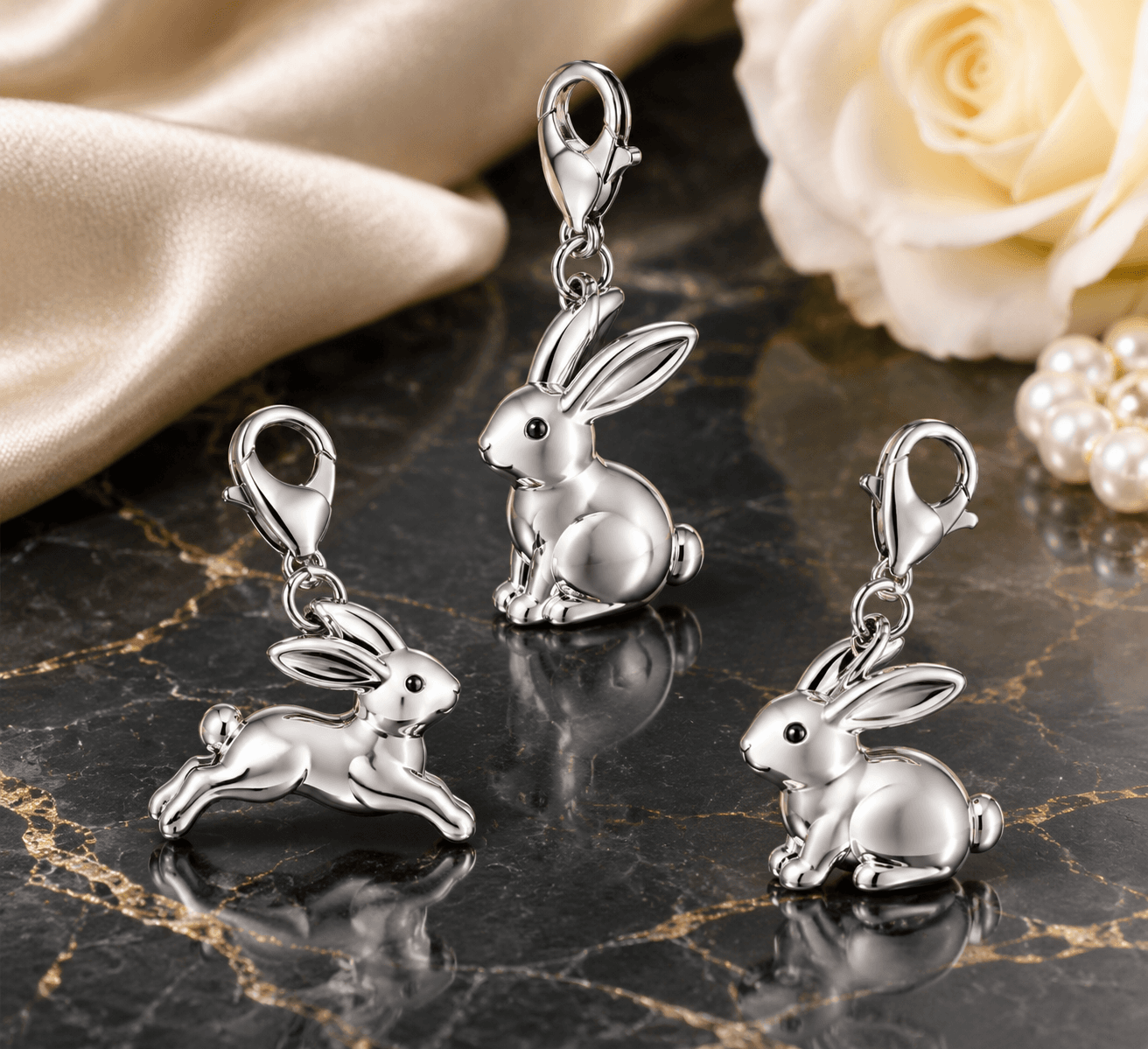
For boutique brands and private-label buyers, this is particularly important when a series contains multiple related rabbit designs or coordinated decorative charms. A supplier should be able to preserve design consistency across a series while still accommodating controlled OEM or ODM changes.
- ☐ Confirm sample-development lead time.
- ☐ Confirm revision and approval procedures.
- ☐ Confirm whether logo engraving can be incorporated into the approved design.
- ☐ Confirm private-label packaging capabilities.
- ☐ Confirm how approved samples are retained as production references.
6. Evaluate MOQ and bulk-order readiness
MOQ should be evaluated together with production reliability. A low MOQ can be useful for testing a new product series, but the supplier must still demonstrate the ability to maintain the same specification when volume increases.
Ask whether pricing, lead time, inspection, packaging, and finish consistency change materially between sample quantities and bulk orders. For growing brands, a supplier that supports controlled low MOQ charm production can reduce inventory exposure while allowing procurement teams to validate market demand before scaling.
- ☐ Confirm MOQ by design and finish.
- ☐ Confirm lead time for repeat orders.
- ☐ Confirm capacity for bulk charm orders.
- ☐ Confirm packaging quantities and carton controls.
- ☐ Confirm quality requirements remain unchanged at higher volume.
7. Build a supplier scorecard
Do not approve a manufacturer based on price alone. Use a weighted scorecard covering technical capability, material compliance, testing documentation, finishing consistency, sample development, MOQ flexibility, communication, production capacity, packaging, and final inspection.
A practical procurement scorecard might assign the highest weighting to compliance and quality, followed by manufacturing capability, delivery reliability, and commercial terms. Price should be evaluated only after the supplier meets the minimum technical and quality threshold.
How Lancy Jewelry Supports a Controlled Sourcing Process
Lancy Jewelry operates as a B2B OEM/ODM 316L stainless steel charms manufacturer for boutique brands, charm bar retailers, gift companies, private-label buyers, and distributors. The production scope is focused on 316L stainless steel charms, with capabilities covering logo engraving, PVD plating, enamel color filling, crystal setting, private-label packaging, and sample support.
For buyers qualifying a stainless steel charms manufacturer, the objective is to create a repeatable approval path: define the specification, review documentation, approve the sample, establish inspection criteria, and then release the production order. Lancy's SGS certification documentation covering RoHS, REACH, Nickel Release EN1811, and Salt Spray 240H can support this qualification process.
Buyers can review the broader product range through All Products, explore manufacturing capabilities through OEM Service, or submit an RFQ for a specific rabbit charm program. For direct coordination, use the Contact page.
FAQ
What should I verify first when choosing a stainless steel rabbit bag charm manufacturer?
Start with the material specification, supplier manufacturing capability, testing documentation, and sample-control process. Confirm that the charm base is 316L stainless steel and that the supplier can provide evidence supporting the required quality and compliance specifications before moving to commercial approval.
What certifications should procurement teams request?
Request documentation relevant to your product specification and target market. Lancy Jewelry provides SGS certification documentation covering RoHS, REACH, Nickel Release EN1811, and Salt Spray 240H. Buyers should also define any retailer, state, market, or internal testing requirements that apply to their specific program.
How can I evaluate durability before placing a bulk order?
Use an approved sample and a predefined test plan. Evaluate attachment strength, surface handling, finish wear, environmental exposure, and visual changes against documented acceptance criteria. Where applicable, review Salt Spray 240H results and other relevant testing records.
Is a low MOQ supplier suitable for a private-label program?
Yes, provided the supplier can maintain the approved material, finish, dimensions, and inspection standards as order volume changes. Low MOQ charm production is most useful when it is combined with disciplined sample approval and reliable bulk-order controls.
Partner With a Manufacturer That Can Be Audited
The best supplier is not necessarily the one with the lowest quotation. It is the manufacturer that can demonstrate control from material specification through sample development, finishing, testing, inspection, packaging, and bulk shipment.
For North American procurement teams, the decision should be evidence-based. Require documentation, inspect the sample as a production prototype, define wear-resistance criteria, audit manufacturing processes, and establish measurable acceptance standards before issuing a purchase order.
If your sourcing program requires 316L stainless steel charms, private-label development, controlled MOQ, or repeat bulk orders, Lancy Jewelry can support the process from RFQ and sample development through OEM/ODM production. Start with your product specification and quality requirements, then build the approval process around measurable evidence rather than assumptions.