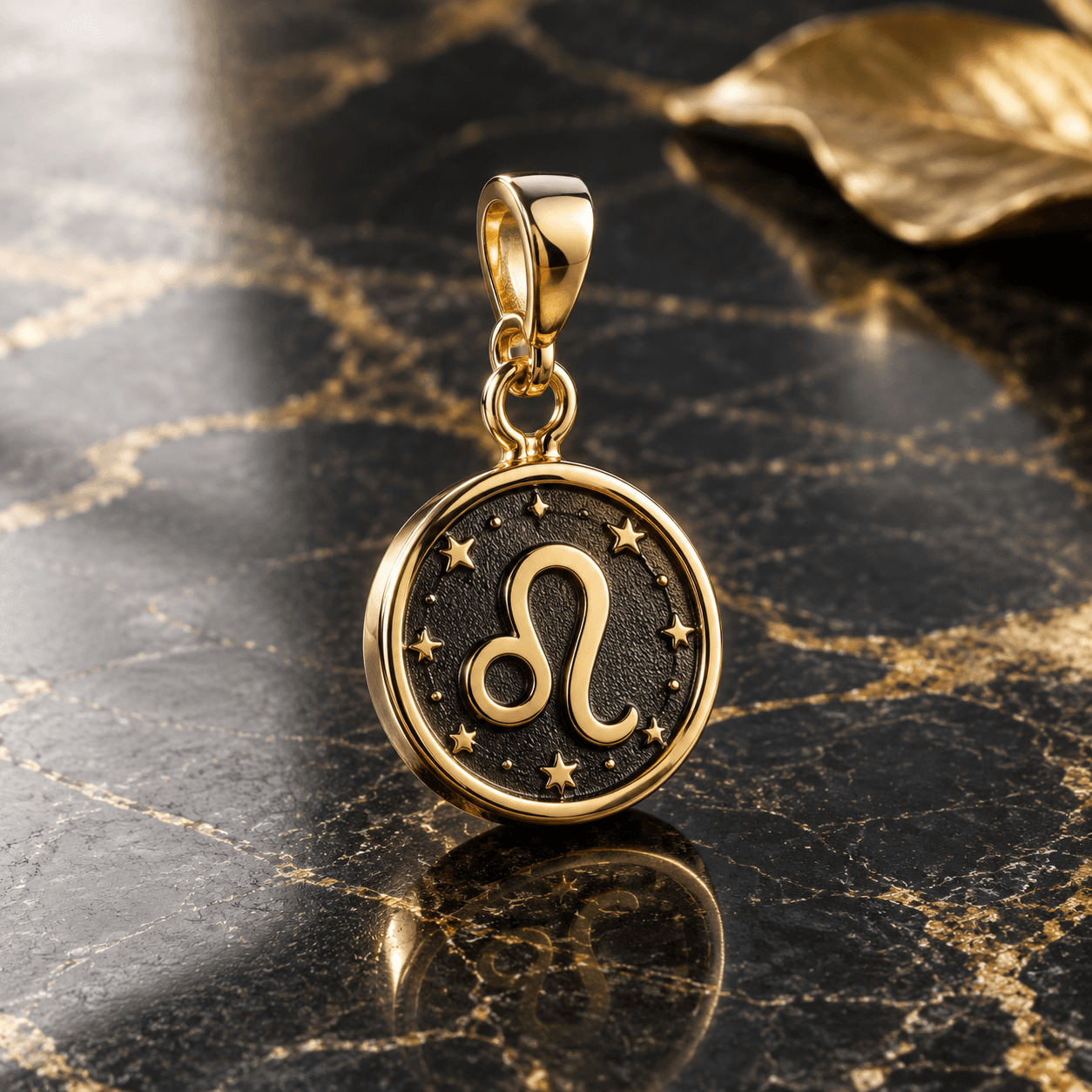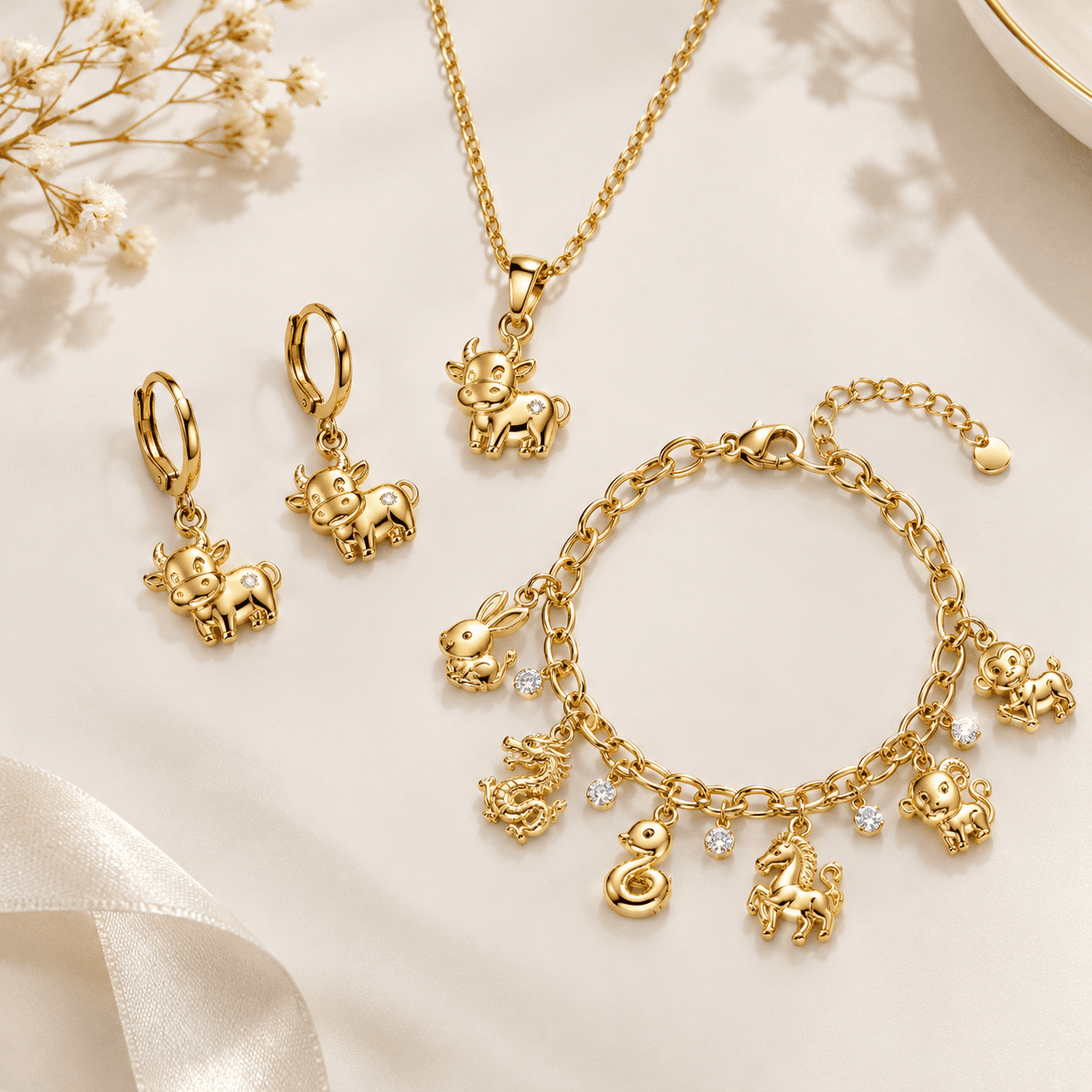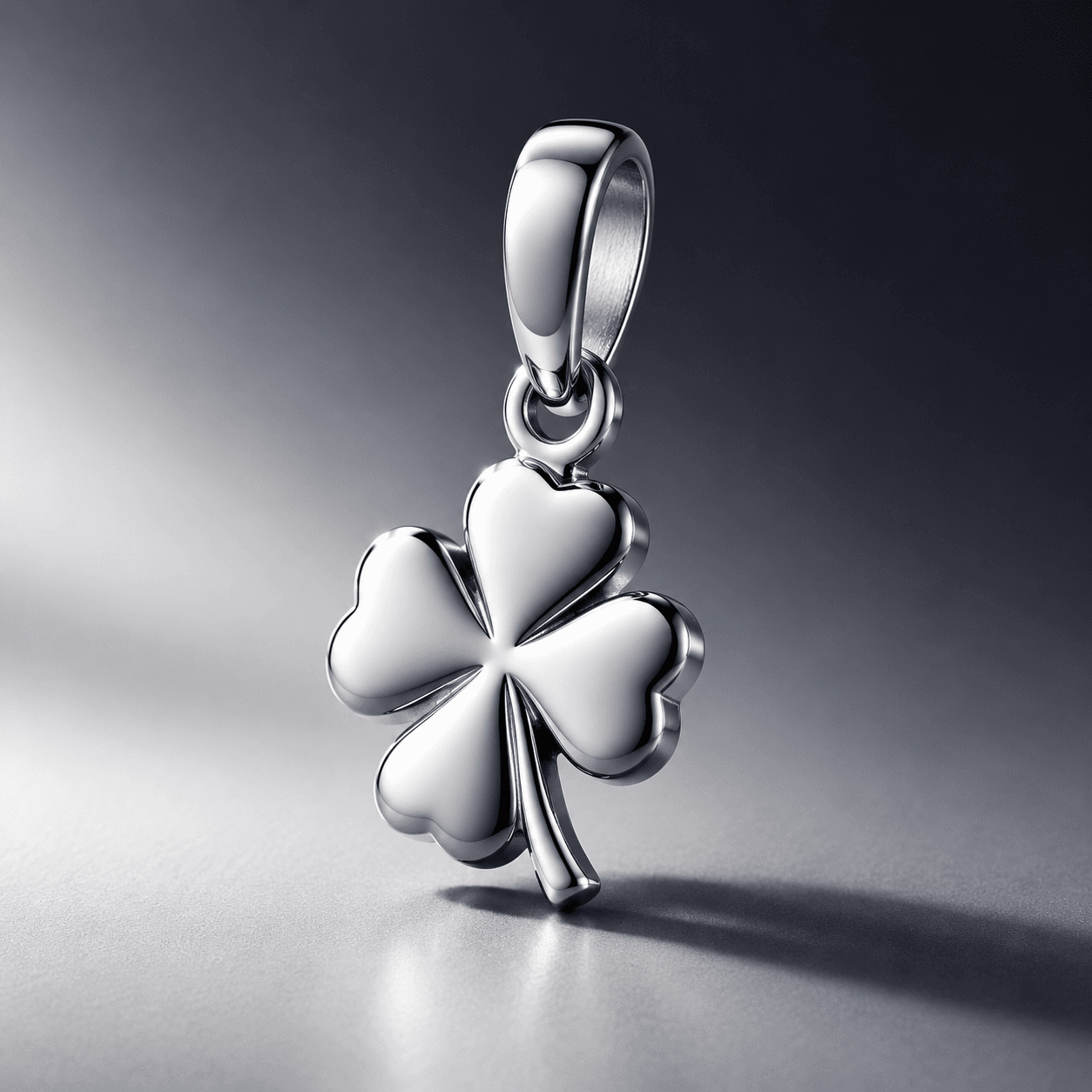
For procurement teams sourcing zodiac charms for North American jewelry programs, an attractive sample is only the beginning of supplier qualification. Reliable purchasing decisions require traceable material specifications, relevant laboratory documentation, measurable durability criteria, and a quality management process that continues from sample approval through bulk production. A supplier's general claim of compliance is not sufficient evidence for an internal audit or product release.
This checklist provides a structured approach to evaluating 316L stainless steel zodiac charms wholesale suppliers. It covers RoHS and REACH documentation, SGS testing, nickel release, salt spray performance, coating consistency, United States and Canadian market considerations, and incoming inspection. Use it during RFQ review, factory audits, sample development, and final shipment approval to identify documentation gaps before they become costly sourcing problems.
316L Stainless Steel Zodiac Charms Wholesale: Compliance Checklist
Begin with a documented specification for every zodiac design and finish. A complete specification should identify the 316L stainless steel base, product dimensions, attachment structure, surface finish, decorative treatments, logo requirements, applicable test criteria, and approved packaging. Procurement, quality assurance, product development, and the supplier should work from the same controlled revision.
Checklist 1: Verify the supplier and material specification
- Confirm that the product specification explicitly identifies 316L stainless steel as the base material.
- Request material declarations and available traceability records for the relevant production batch.
- Confirm that the tested sample, approved reference sample, and production SKU correspond to the same design and material specification.
- Document the zodiac symbol, dimensions, thickness, weight tolerance, hole geometry, and attachment requirements.
- Identify every applicable finish, including PVD, gold plated, silver finish, or rose gold plating, and specify whether enamel or crystal inlay is included.
- Establish who approves engineering changes, process adjustments, and replacement samples.
Do not rely on the product name alone to establish material identity. The procurement file should connect the declared material to the actual product and the evidence supplied for that product. Where material verification is necessary, agree on an appropriate identification or laboratory testing method with the supplier and qualified testing provider.
Checklist 2: Evaluate the manufacturer's documentation
- Verify the legal identity of the manufacturing or supplying entity and the scope of its production responsibilities.
- Request current, relevant test reports and confirm the product, finish, sample description, and test methods covered.
- Record report numbers, issue dates, laboratory identity, and any limitations stated in the reports.
- Confirm that documentation can be retrieved and matched to the production order during an audit.
- Establish a review process for expired, superseded, incomplete, or product-mismatched documents.
A credible stainless steel charms manufacturer should be able to explain what its reports establish, what they do not establish, and when additional testing is necessary. A report for one product configuration does not automatically establish compliance for every zodiac symbol, finish, decorative treatment, or future production batch.
Why Compliance Verification Matters for Wholesale Buyers
Reduce regulatory and documentation exposure
North American buyers frequently coordinate product development across multiple sales channels, distributors, and retail accounts. Inconsistent records can delay purchase orders, complicate customer questionnaires, and create uncertainty when a product complaint requires investigation. A standardized compliance file gives procurement teams a defensible basis for supplier approval and product release.
RoHS, REACH, nickel release, and salt spray testing address different questions. They should not be treated as interchangeable certificates or as proof that a product meets every requirement in every destination market. The correct approach is to define the applicable requirement, select suitable evidence, and assess whether that evidence covers the actual item being purchased.
Improve finish consistency and product durability
Zodiac charms often feature small engraved lines, detailed silhouettes, colored enamel, crystal inlay, and multiple surface finishes. These features can introduce different quality risks. Fine details may lose definition during polishing, decorative filling may vary between batches, and coating performance may depend on preparation and processing controls.
For PVD plated stainless steel charms, procurement specifications should address coating appearance, color consistency, adhesion or wear performance where applicable, and corrosion resistance under defined conditions. Buyers should establish acceptance criteria before production rather than relying on subjective descriptions such as premium finish or long-lasting color.
Support scalable private-label programs
For private label charms, a controlled specification and repeatable approval process are particularly important. A coordinated zodiac range may contain twelve designs, several finish options, and different packaging configurations. Managing these variants through one documentation framework helps buyers maintain consistency while planning launches, replenishment, and bulk charm orders.
Lancy Jewelry supports OEM and ODM development for 316L stainless steel charms, with capabilities including CNC processing, laser cutting, laser marking, welding, polishing, PVD plating, enamel color filling, crystal setting, and private-label packaging. Its stated testing and certification support includes SGS-related RoHS, REACH, nickel release EN 1811, and 240-hour salt spray documentation. Buyers should confirm the applicable report scope and current supporting records for the specific product and finish under review.
Detailed Compliance Guide for Procurement Teams
1. RoHS: Check scope, analytes, and evidence
RoHS requirements originate in European Union legislation addressing specified hazardous substances in products within its scope. It is not a universal certification for all jewelry, and an RoHS report should not be interpreted as blanket approval for every market or every product category.
- Ask the supplier to identify the applicable RoHS framework and explain why it is relevant to the product or customer requirement.
- Review the substances assessed, analytical methods, results, and applicable limits stated in the report.
- Verify whether the sample represents the base material, the finished component, or selected parts of the product.
- Determine whether plating, decorative elements, markings, or other product components require separate assessment.
- File the report alongside the SKU specification and purchasing records.
For United States and Canadian procurement, do not assume that an RoHS report independently establishes compliance with domestic consumer-product requirements. Ask the compliance team to identify the applicable rules for the intended product, intended user, and distribution channel.
2. REACH: Assess chemical restrictions and supporting records
REACH is an EU chemicals regulation that addresses registration, evaluation, authorisation, and restriction obligations within its legal scope. For jewelry procurement, relevant questions may include restricted substances, applicable chemical limits, and communication obligations associated with substances of very high concern. The correct obligations depend on the product and the role of the businesses placing it on the market.
- Request the relevant REACH test report, declaration, or other supporting compliance documentation.
- Confirm the assessed product configuration, material coverage, and test date.
- Check that the evidence addresses applicable restrictions rather than only a selected list of substances.
- Ask whether separate assessments are needed for PVD coatings, enamel, crystal inlay, or other finished-product components.
- Determine whether any applicable substance communication or reporting obligations require additional information.
REACH is particularly relevant when a North American brand also sells into the European Union. Build destination-specific requirements into the supplier agreement instead of assuming that one laboratory report automatically covers every jurisdiction.
3. SGS documentation: Verify the report, not just the name
SGS is a testing, inspection, and certification organization. However, the presence of its name on a supplier presentation does not by itself establish that every SKU has been tested or certified. Procurement teams must establish exactly which service was performed and which product configuration it covered.
- Obtain the actual report or verifiable supporting document rather than accepting a logo or unsupported statement.
- Check the report reference, laboratory details, dates, sample description, and recorded results.
- Confirm that the test method is appropriate for the specific requirement.
- Identify exclusions, deviations, qualifications, and any recommended follow-up testing.
- Verify whether the evidence remains representative after a material, finish, supplier, or process change.
Separate test reports, declarations, inspections, and formal certifications in the compliance register. These documents can serve different purposes and should not be described as equivalent. If an internal audit requires independent verification, contact the issuing organization through an appropriate official channel.
4. Nickel release: Focus on exposure and test applicability
Nickel content and nickel release are different measurements. A material may contain nickel without releasing it at the same rate under every use condition. Nickel release testing evaluates the amount released under a specified test procedure and is therefore especially important when assessing skin-contact products against applicable requirements.
EN 1811 is a reference test method used in the European regulatory context for nickel release from certain products intended for direct and prolonged skin contact. Its relevance depends on the product category and applicable legal requirements. It should not be presented as a universal North American jewelry certification or a substitute for identifying the correct destination-market rules.
- Confirm whether the charm's intended use and contact characteristics make nickel release testing relevant.
- Request the EN 1811 report where appropriate and review the exact sample tested.
- Check whether the test covers the finished surface and relevant contact areas.
- Ask whether a separate method or additional assessment is needed for coated products, wear conditions, or other configurations.
- Establish retesting triggers for changes that could affect release performance, including changes to finishing or surface preparation.
For United States and Canadian sales, have a qualified compliance professional determine the applicable federal, state, provincial, or other requirements. Do not rely on a generic nickel-free statement without evidence that supports the exact claim being made.
5. Salt spray: Define what 240 hours actually proves
A stated 240-hour salt spray result can provide useful comparative information about corrosion resistance under a defined accelerated test. It does not mean that a charm will remain corrosion-free for 240 hours in everyday use, nor does it guarantee a particular number of years of service.
- Request the test method, exposure duration, sample description, and recorded observations.
- Verify whether the tested sample includes the actual production finish and decorative treatments.
- Agree on acceptance criteria for corrosion, visible discoloration, coating damage, and other relevant defects.
- Confirm whether edges, recesses, laser-marked areas, attachment holes, and other critical features are represented.
- Keep salt spray results separate from wear, abrasion, chemical exposure, and color-retention assessments.
Salt spray testing is most useful when the method and pass criteria are documented and consistently applied. Procurement teams should not compare test durations across suppliers without first confirming that the test conditions and evaluation criteria are equivalent.
6. United States and Canadian market considerations
For US-bound products, evaluate the requirements that apply to the specific product category and intended user. Ordinary adult fashion jewelry is not generally approved through a universal FDA jewelry certification process. The US Consumer Product Safety Commission and applicable federal and state requirements may be relevant, while the Federal Trade Commission may be relevant to advertising, labeling, and substantiation of product claims. Particular product claims or specialized uses may require additional review.
Children's products require special attention. Where zodiac charms are marketed for children or intended for use in children's products, assess applicable children's product rules, including relevant lead limits, applicable testing and certification duties, and any other requirements triggered by the product's design and intended use. Do not assume that adult-jewelry documentation automatically covers a children's product.
For Canada, assess applicable requirements under the Canada Consumer Product Safety Act and relevant regulations, including any requirements that apply to chemical hazards, product safety, labeling, or the intended user. Confirm whether the item falls within a specific regulated category and whether additional documentation is necessary.
- Identify the destination country and intended user for each product SKU.
- Review applicable federal and subnational requirements with a qualified compliance specialist.
- Maintain substantiation for material, durability, and safety claims made on product pages or packaging.
- Verify required product identification, warnings, records, and certificates before market release.
- Reassess requirements whenever the product's intended use, customer group, or sales destination changes.
7. Sample approval and production controls
Laboratory documentation addresses only part of product quality. Buyers should also establish measurable inspection requirements for the finished zodiac charm. These requirements help convert a promising sample into a repeatable commercial product.
- Approve a signed or otherwise controlled reference sample for each design and finish.
- Define tolerances for dimensions, weight, hole diameter, profile, and visible design details.
- Set written acceptance criteria for plating color, polishing, enamel fill, crystal setting, and laser marking where applicable.
- Check that every bail or jump ring is correctly formed, securely connected, and mechanically plausible.
- Agree on sampling plans, defect classifications, inspection records, and the process for handling nonconforming goods.
- Require notification and approval before changes to materials, processing, finish specifications, or production location.
During supplier qualification, review how the factory controls CNC processing, laser cutting, welding, polishing, marking, and finishing. The purpose is to understand whether production controls can preserve the approved geometry, surface appearance, and attachment integrity across repeat orders.
8. Establish a practical supplier audit file
Maintain a single controlled record for each approved zodiac charm SKU. The file should contain the technical specification, approved sample reference, applicable declarations and test reports, inspection criteria, production-order identification, and a change history. Link the file to the purchase order and the shipment inspection record so that the team can retrieve the complete evidence trail when required.
For recurring orders, risk-based verification is more useful than repeating every test automatically without considering the product. Establish review intervals and retesting triggers based on regulatory obligations, product risk, previous results, changes in materials or finishes, complaints, and customer requirements. Any decision to rely on existing reports should be documented and approved by the responsible compliance function.
How to Compare Wholesale Zodiac Charm Suppliers
Use a consistent supplier scorecard rather than selecting a factory solely on quoted unit price. An effective scorecard separates mandatory compliance requirements from commercial performance and technical capability.
- Compliance evidence: completeness, relevance, traceability, and verification of applicable reports.
- Material and finish control: documented 316L stainless steel specifications, finish consistency, and change control.
- Product engineering: dimensional accuracy, defined attachment geometry, and reliable decorative details.
- Quality assurance: incoming checks, in-process inspections, final inspection, and corrective-action records.
- Commercial execution: MOQ flexibility, sample development lead time, production capacity, and realistic delivery commitments.
- Private-label support: logo engraving, packaging specifications, SKU control, and repeat-order consistency.
For a new program, request samples that represent the intended production specification rather than evaluating a generic showroom sample. A supplier that can explain its testing limitations, disclose documentation gaps, and propose a clear corrective-action plan is easier to qualify than one that relies on broad assurances.
Frequently Asked Questions
What compliance documents should buyers request for 316L stainless steel zodiac charms?
Start with a material specification and declaration, relevant RoHS and REACH documentation where applicable, nickel release evidence where required, and suitable corrosion-resistance test reports. Review the actual reports, product coverage, methods, and dates. Additional evidence may be necessary depending on the destination market, intended user, finish, and product claims.
Does an SGS report guarantee that every wholesale charm is compliant?
No. A report supports only the findings and scope documented for the tested sample and method. Buyers must verify that the sample represents the purchased product, assess applicable legal requirements, and maintain production traceability and change control. A supplier's SGS-related documentation should be reviewed individually rather than treated as universal approval.
Does a 240-hour salt spray test guarantee long-term corrosion resistance?
No. It indicates performance under defined accelerated test conditions and acceptance criteria. Actual durability also depends on the finish, processing, use conditions, handling, maintenance, and other environmental factors. Ask for the test method and observations, and establish separate criteria for appearance, wear, and coating performance where needed.
What should North American buyers check before ordering private-label zodiac charms?
Confirm the 316L stainless steel specification, intended user, destination-market requirements, relevant testing, approved sample, finish standards, packaging, MOQ, and change-control process. For US and Canadian distribution, obtain a product-specific compliance review and verify any requirements triggered by children's use, labeling, advertising claims, or the intended application before approving bulk production.
Partner With Lancy Jewelry for Compliance-Focused Charm Production
Choosing a qualified manufacturing partner means combining documented testing with controlled production, clear specifications, and practical communication. Lancy Jewelry supports boutique jewelry brands, charm bar retailers, gift companies, distributors, and private-label buyers seeking OEM and ODM 316L stainless steel charms. Its production capabilities include precision processing, laser marking, polishing, PVD plating, enamel color filling, crystal setting, and private-label packaging.
When evaluating Lancy for a zodiac program, share your destination markets, target user, selected designs, finish requirements, anticipated order volume, packaging needs, and compliance documentation expectations. The team can use these details to clarify sample development requirements and identify the product-specific records that need to be reviewed before production approval. Confirm applicable MOQ, testing scope, lead times, and final acceptance criteria during the RFQ process.
Explore the special symbols collection to review related decorative design categories, learn about OEM manufacturing services, browse available products, or submit an inquiry through Request a Quote. Build your sourcing decision around verifiable evidence, defined quality standards, and a repeatable approval process—not assumptions based on appearance alone.