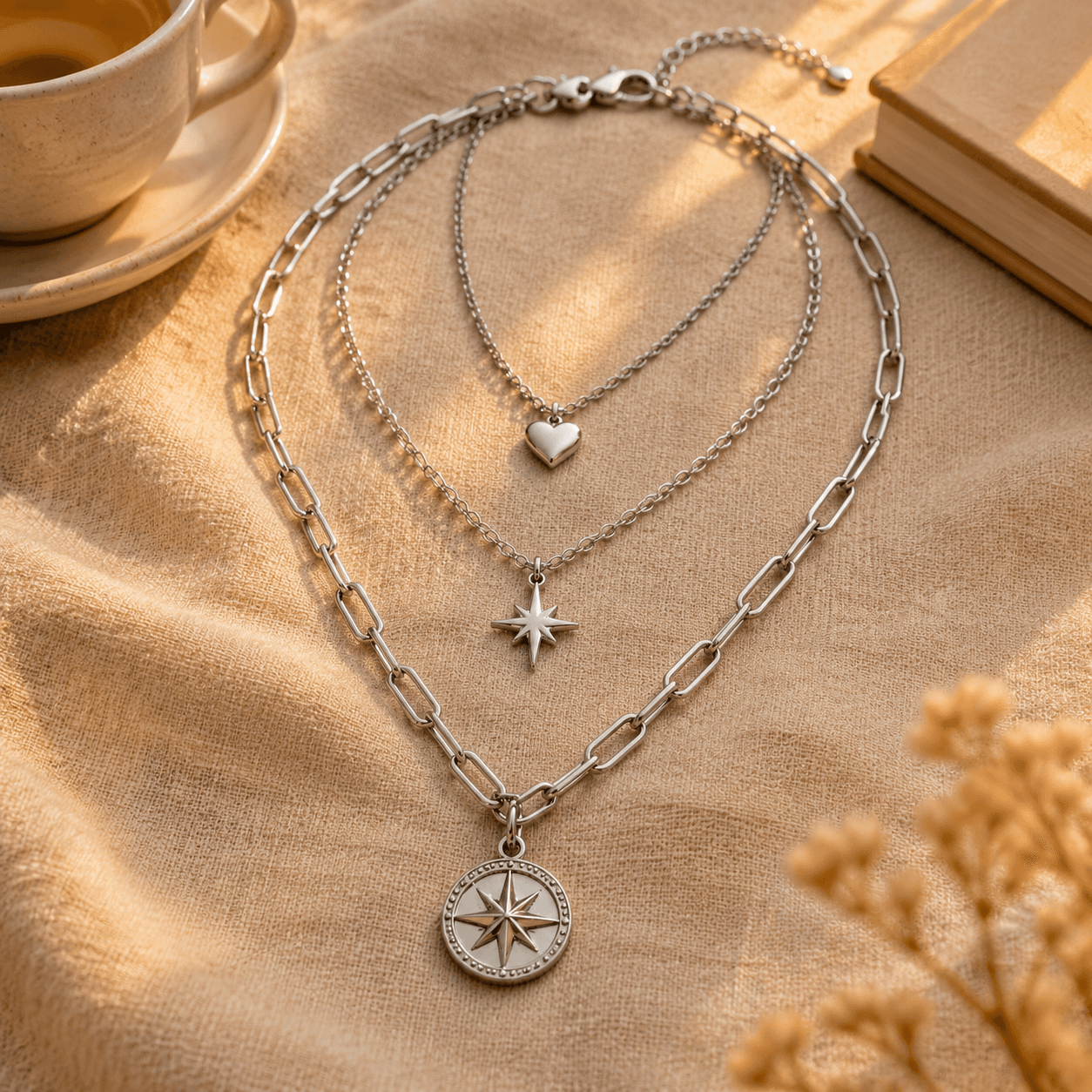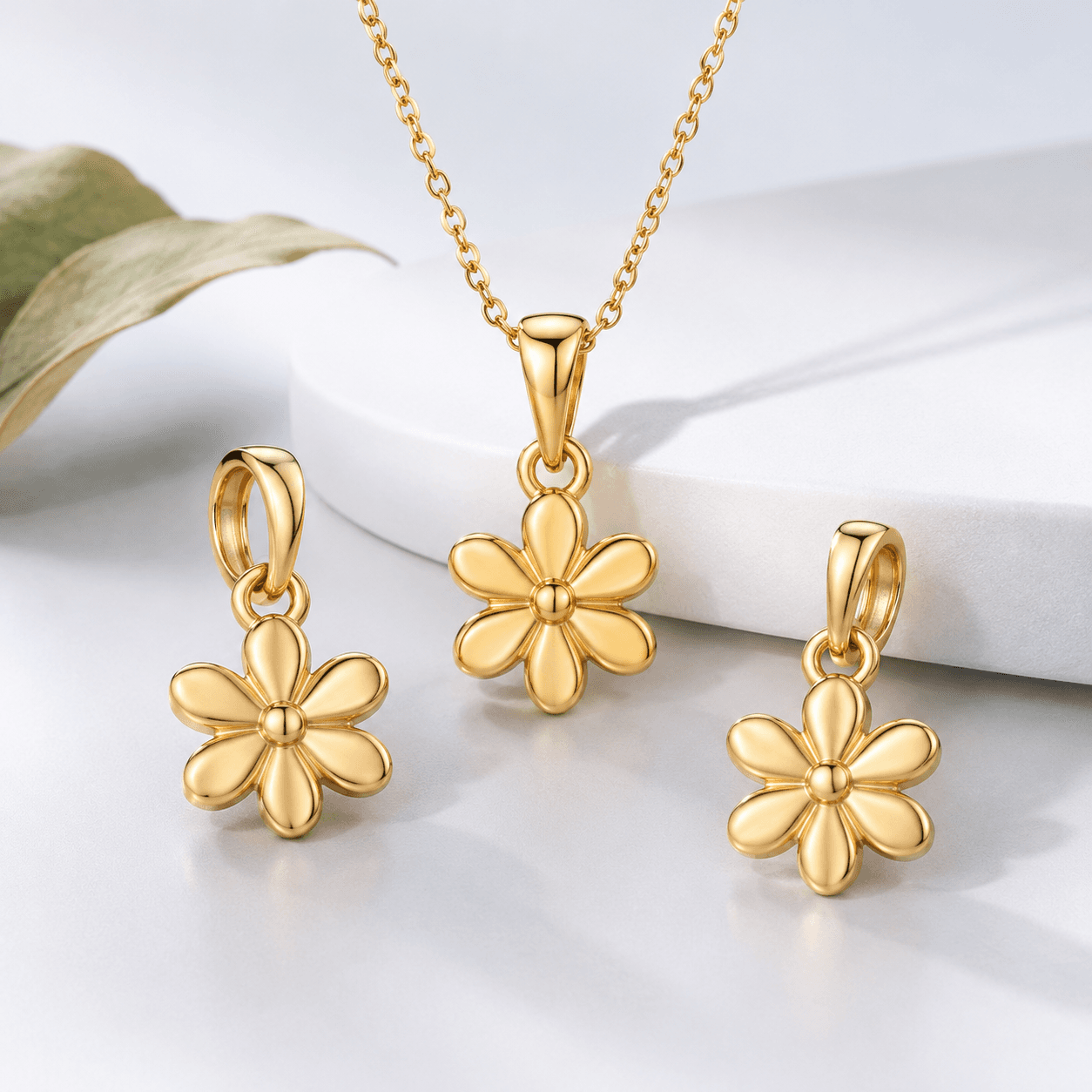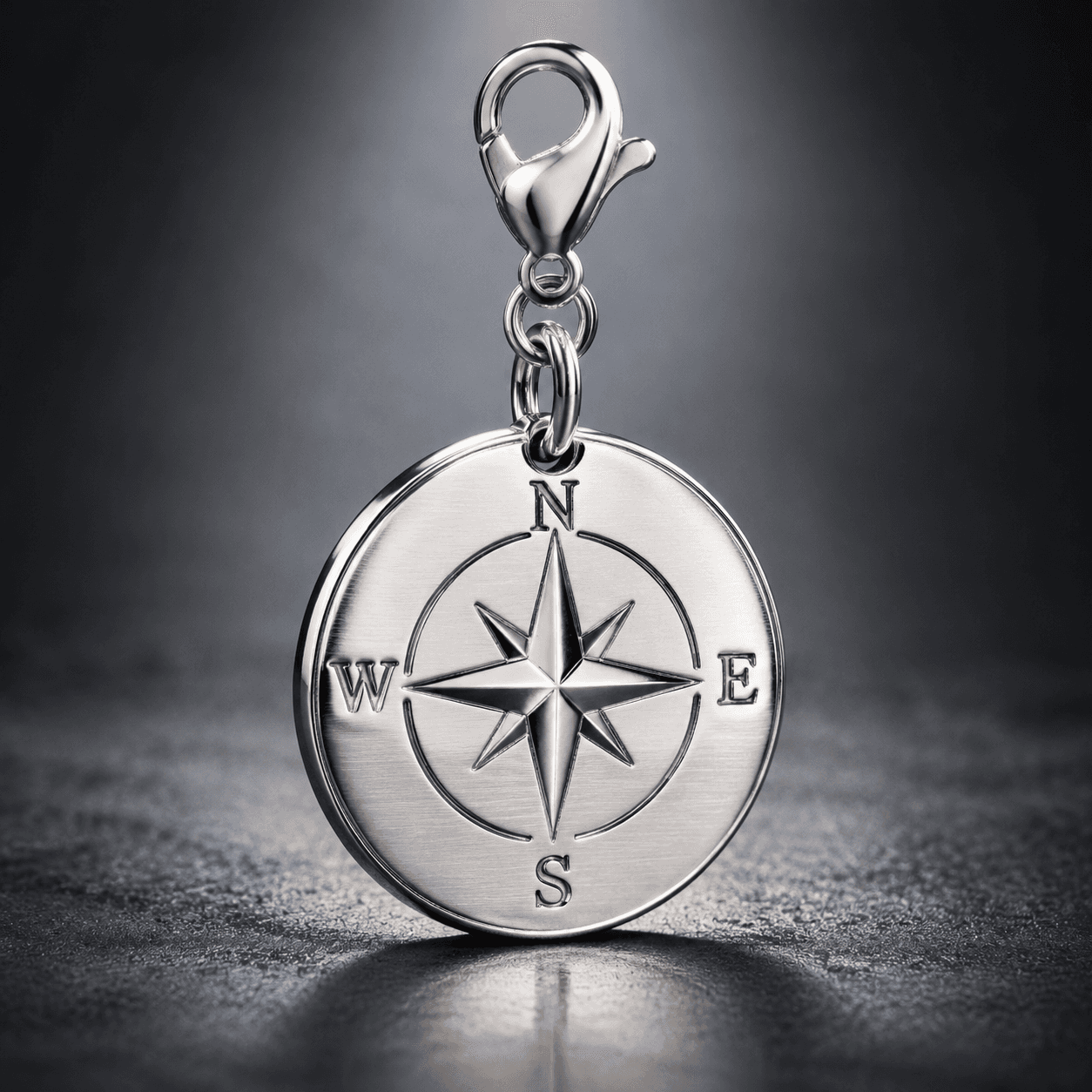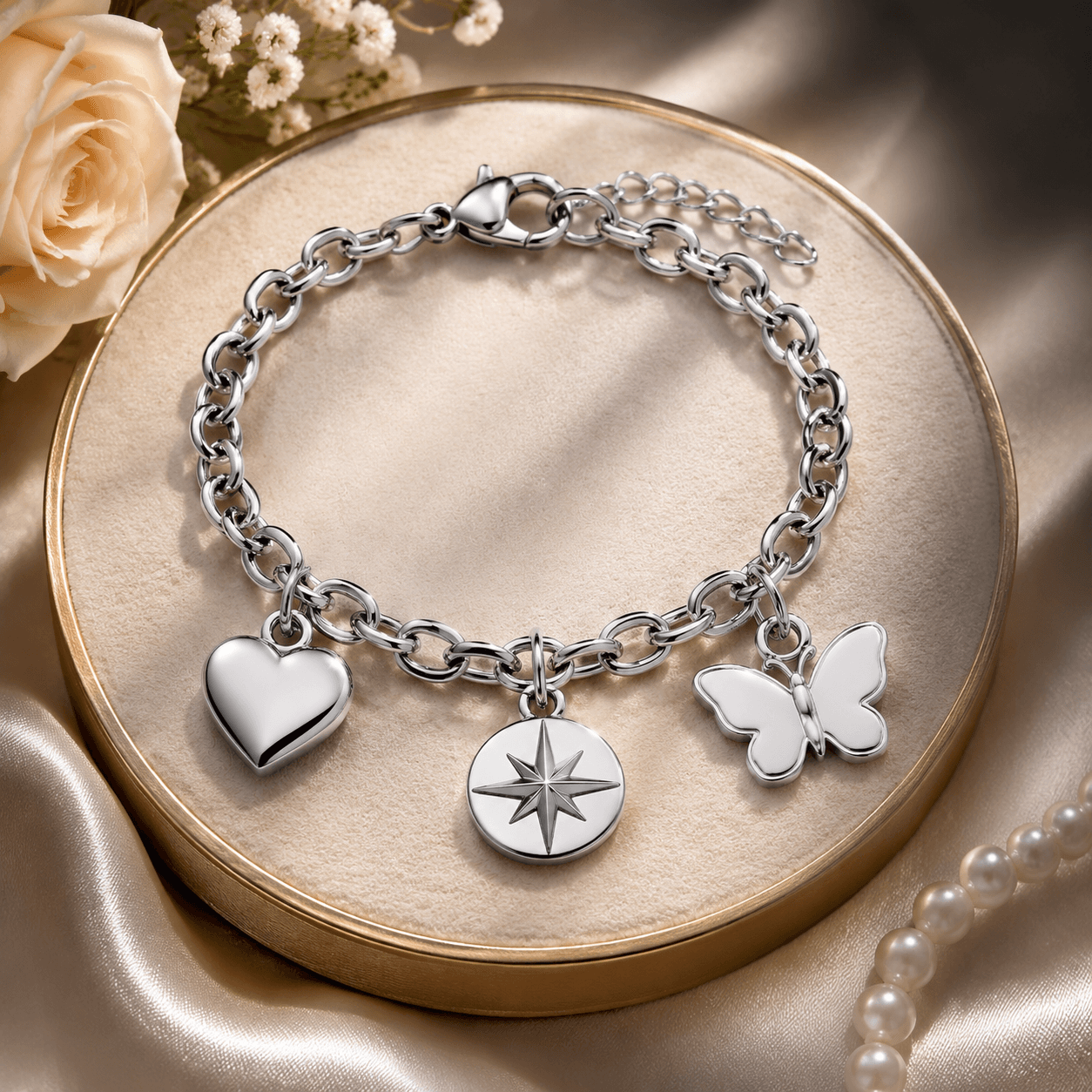
Finding the right supplier for custom metal charms involves more than comparing quotations. For jewelry designers, boutique brands, and private-label buyers, the real challenge is finding a manufacturing partner that can translate creative concepts into consistent, durable products while maintaining dependable production standards. A charm may look impressive in a product photograph, but its long-term performance depends on material specifications, manufacturing precision, surface finishing, attachment construction, and quality control.
Whether you are developing a new collection for the North American market or expanding an established product range, choosing the right manufacturing partner can significantly influence customer satisfaction and repeat purchasing. This guide explains where to order custom metal charms, how to compare suppliers, which technical requirements deserve attention, and how to evaluate product durability before committing to bulk production.
Where to Order Custom Metal Charms: Understanding Your Supplier Options
Custom charms can be sourced through different types of manufacturing and supply partners. However, not every supplier offers the same level of customization, production control, material transparency, or technical support. Understanding these differences helps jewelry designers select a sourcing channel that matches their commercial requirements.
1. Direct Manufacturers
A direct manufacturer manages product development and production through its own manufacturing operations. This sourcing model is particularly useful when your project requires custom dimensions, original artwork, logo engraving, specialized surface treatments, or coordinated collection development.
A qualified stainless steel charms manufacturer should be able to explain its material specifications, production capabilities, finishing processes, inspection procedures, and sampling arrangements. Direct communication also makes it easier to resolve design questions before production begins.
2. Trading and Sourcing Companies
Trading companies coordinate orders between buyers and manufacturing facilities. They can be convenient for businesses that need sourcing assistance or consolidated communication. However, buyers should establish whether the company has direct technical access to the production facility and whether manufacturing specifications can be independently verified.
Ask who controls material purchasing, production scheduling, quality inspections, and corrective actions. These responsibilities should be clearly documented rather than assumed.
3. Ready-Stock Wholesalers
Ready-stock suppliers are suitable for buyers who prioritize immediate assortment selection and relatively straightforward purchasing. Their limitations may include restricted design choices, fewer opportunities for exclusive product development, and limited control over product specifications.
For businesses building a recognizable private-label assortment, a manufacturing partner with OEM development capabilities is generally a more suitable long-term option.
Supplier Comparison: Which Sourcing Model Is Right?
| Evaluation factor | Direct manufacturer | Trading company | Ready-stock wholesaler |
|---|---|---|---|
| Custom design development | High potential | Depends on factory access | Usually limited |
| Production transparency | Direct communication | Requires verification | Varies by supplier |
| Logo customization | Usually available | Depends on production partner | Limited options |
| Sampling support | Can support technical samples | Depends on factory | Usually focuses on existing products |
| Collection development | Suitable for coordinated series | Depends on capabilities | Limited flexibility |
| Production consistency | Can be controlled through factory QC | Requires documented oversight | Depends on inventory management |
For designers developing distinctive collections, direct manufacturing offers the strongest opportunity to control specifications from concept to finished product. Nevertheless, the supplier's actual capabilities must be verified through documentation and physical samples.
Why Supplier Quality and Durability Matter
A successful charm collection must maintain its appearance and functional performance throughout normal customer use. Surface appearance, attachment strength, corrosion resistance, and finishing consistency all contribute to perceived product quality.
1. Material Specifications and Long-Term Performance
316L stainless steel is an important material choice for manufacturers producing durable everyday jewelry accessories. Its corrosion resistance, strength, and suitability for precision manufacturing make it useful for charms intended for repeated handling and regular wear.
When evaluating 316L stainless steel charms, request clear confirmation that the specified material is used as the base throughout the approved product design. Do not rely exclusively on general descriptions such as premium metal or stainless finish. Material identification and supporting documentation provide a stronger basis for purchasing decisions.
Buyers should also consider the intended environment. Products exposed to perspiration, humidity, cosmetics, and frequent handling require appropriate material selection, surface preparation, and finishing controls.
2. Surface Finishing and Wear Resistance
Finishing quality directly affects the appearance and durability of customized charms. Depending on the design, available treatments may include PVD gold plating, rose gold plating, silver finish, enamel color filling, and crystal inlay.
For gold plated products, buyers should request information about the PVD process, coating specifications, surface preparation, and inspection criteria. A consistent coating depends on controlled preparation and processing, not simply the color selected in the design brief.
For enamel designs, evaluate color uniformity, filling precision, edge definition, and adhesion. For crystal inlay designs, inspect setting alignment, retention, and the consistency of the surrounding finish.
3. Certifications and Independent Testing
Third-party testing provides useful evidence when assessing a supplier's quality management and product suitability. Lancy Jewelry supports sourcing evaluation with SGS-certified testing documentation covering the following areas:
- RoHS: Evaluates applicable restrictions on specified hazardous substances.
- REACH: Addresses relevant chemical safety requirements for products entering the European market.
- Nickel Release EN1811: Evaluates nickel release under the applicable test method, an important consideration for jewelry intended for prolonged skin contact.
- Salt Spray 240H: Provides corrosion-resistance testing evidence under specified accelerated test conditions.
These documents should be reviewed for product identification, test scope, applicable standards, and report validity. Buyers should confirm that the tested configuration is representative of the product being purchased. A test report for one finish or product configuration should not automatically be treated as evidence for every customized variation.
For North American buyers, FDA considerations should also be understood correctly. Ordinary jewelry is not generally subject to an FDA jewelry approval or certification process. Relevant obligations depend on the product's intended use, claims, components, and applicable consumer product requirements. Buyers should not accept an unsupported FDA-approved claim as a substitute for material documentation, chemical testing, or appropriate market compliance review.
How to Evaluate and Order Custom Stainless Steel Charms
Once you have identified potential manufacturers, use a structured evaluation process. The following steps help reduce design misunderstandings, quality risks, and unnecessary production revisions.
Step 1: Define Your Design and Customization Requirements
Start with a clear creative brief. A manufacturer cannot accurately estimate production feasibility or pricing without understanding the design and its functional requirements.
Your brief should include:
- Charm dimensions and target thickness.
- Front and back design references.
- Required attachment mechanism, including bail or jump ring dimensions.
- 316L stainless steel base material specifications.
- Requested surface finish, such as PVD gold plating or silver finish.
- Enamel colors, crystal placement, and decorative details.
- Logo engraving location and artwork requirements.
- Individual packaging and private-label presentation requirements.
Provide vector artwork when possible. Clear technical drawings help the production team evaluate proportions, engraving depth, cutout positions, and attachment construction.
Step 2: Assess Manufacturing Equipment and Technical Capabilities
Ask whether the supplier has the equipment and technical experience required for your design. Manufacturing capabilities should correspond to the actual customization requirements rather than a generic list of services.
For example, CNC equipment supports controlled dimensional processing, while laser cutting enables accurate outline development. Laser marking supports detailed logo engraving, welding supports appropriate structural connections, and polishing prepares surfaces for subsequent finishing operations.
A capable OEM charms manufacturer should also explain how these processes are coordinated and which operations are inspected before a product moves to the next production stage.
Step 3: Request Physical Samples Before Bulk Production
Sample development is one of the most important stages in custom charm sourcing. A digital rendering can communicate the creative direction, but a physical sample reveals details that are difficult to assess on screen.
Inspect the sample against an agreed specification:
- Dimensions: Measure overall height, width, thickness, and attachment opening.
- Surface appearance: Check polishing uniformity, plating coverage, and visible surface defects.
- Design accuracy: Compare engraving, cutouts, enamel colors, and decorative positioning with the approved artwork.
- Mechanical construction: Verify that the bail or jump ring passes through a properly designed opening and remains securely attached.
- Handling: Check edges, alignment, and overall construction for functional consistency.
- Packaging: Confirm that the finished product is protected and presented according to your requirements.
Request written confirmation of any revisions. Once the final sample is approved, retain it as the reference standard for subsequent production inspections.
Step 4: Compare Quality Testing and Inspection Procedures
Do not evaluate a supplier only by whether it provides testing certificates. Ask how product quality is maintained during routine manufacturing.
A useful inspection framework should include incoming material verification, dimensional inspection, appearance inspection, finishing checks, and final product review. Where relevant, request documented testing for coating durability, corrosion resistance, and nickel release.
For wear-resistance evaluation, clarify the test method, sample preparation, testing conditions, acceptance criteria, and reporting process. Repeated handling, abrasion, perspiration exposure, and environmental conditions may affect products differently. No single laboratory result guarantees unlimited service life.
For attachment components, establish appropriate mechanical inspection criteria. A charm should have a functional connection point with sufficient structural integrity for its intended application. The complete attachment assembly should be evaluated rather than judging the decorative front alone.
Step 5: Confirm MOQ, Pricing, and Production Arrangements
Commercial terms should be reviewed alongside technical quality. Request a detailed quotation that identifies the product specifications, sample charges, tooling requirements where applicable, production MOQ, finishing options, packaging costs, lead times, and shipping arrangements.
Low MOQ support can be especially valuable for boutique brands introducing a new collection. It allows buyers to evaluate market response before committing to larger production volumes. However, the MOQ should be confirmed for each design and finishing configuration because customization requirements can influence production economics.
Also establish how the manufacturer handles specification changes, rejected samples, production deviations, and replacement arrangements. Written terms provide a clearer foundation for cooperation than informal assurances.
Step 6: Verify Production Consistency Before Reordering
After receiving the first order, compare production samples against the approved reference sample. Check dimensions, finish color, engraving clarity, decorative details, attachment construction, and packaging.
For repeat orders, maintain a controlled specification sheet containing approved artwork, measurements, finish references, inspection criteria, and packaging instructions. This creates a repeatable quality benchmark and helps reduce differences between production batches.
Comparing Quality Requirements Across Customization Options
Different decorative techniques introduce different inspection priorities. Jewelry designers should select evaluation criteria based on the actual construction of each charm rather than applying one general appearance standard to every product.
| Customization | Primary quality concern | Recommended inspection |
|---|---|---|
| Laser engraving | Detail clarity and positioning | Inspect line definition, depth consistency, and artwork accuracy |
| PVD gold plating | Coating consistency and wear resistance | Review coverage, color consistency, and relevant durability testing |
| Silver finish | Surface uniformity | Check polishing quality, coverage, and visual consistency |
| Rose gold plating | Color stability and coating uniformity | Compare approved color references and inspect surface coverage |
| Enamel color filling | Color accuracy and adhesion | Inspect filling boundaries, bubbles, gaps, and surface defects |
| Crystal inlay | Setting security and alignment | Check positioning, retention, and surrounding surface finish |
These checks are particularly useful when developing coordinated charm collections. Establishing clear acceptance criteria before production makes it easier to maintain a consistent appearance across multiple designs.
What North American Buyers Should Prioritize
The US and Canadian markets offer opportunities for boutique jewelry brands, charm bar retailers, gift companies, and private-label businesses. However, sourcing expectations increasingly extend beyond attractive designs and competitive quotations.
Consumer Expectations and Product Presentation
North American customers often value personalization, meaningful symbols, initials, birthstone themes, zodiac motifs, and gift-oriented designs. Buyers can use these preferences to organize collections around occasions, customer interests, and seasonal merchandising opportunities.
Designers should prioritize clear engraving, comfortable handling, reliable attachment construction, and coordinated finishing. Packaging is equally important for boutique retail, gifting programs, and private-label launches.
Compliance and Documentation
For US and Canadian distribution, buyers should identify applicable product safety, labeling, chemical disclosure, and consumer protection obligations based on the destination market and product claims. Nickel release testing is particularly relevant when assessing products intended for prolonged skin contact. European documentation can provide useful technical evidence, but it should not be assumed to replace every North American regulatory requirement.
Request accessible testing reports, accurate product specifications, and documentation that identifies the relevant product configuration. If your business makes specific health, hypoallergenic, or durability claims, ensure those claims are supported by appropriate evidence and reviewed for the intended market.
Production Reliability and Long-Term Cooperation
North American businesses often need suppliers that can support initial product development, controlled launch quantities, and repeat production. A manufacturer that provides technical communication, documented sample approval, and consistent inspection procedures can help simplify this process.
Why Choose Lancy Jewelry for Custom Charm Development?
Lancy Jewelry specializes in B2B OEM/ODM 316L stainless steel charms manufacturing for boutique brands, charm bar retailers, gift companies, distributors, and private-label buyers.
Our modern manufacturing facility combines CNC processing, laser cutting, laser marking, welding, and polishing capabilities to support customized product development. We work with buyers to turn design concepts into practical manufacturing specifications, with attention to dimensions, surface finishes, decorative details, and attachment construction.
Our customization capabilities include:
- OEM and ODM development: Support for original designs, coordinated product series, and customized specifications.
- Material consistency: A dedicated focus on 316L stainless steel charms.
- Surface finishing: PVD gold plating, silver finish, and rose gold plating options.
- Decorative customization: Enamel color filling, crystal inlay, and precision logo engraving.
- Sample development: Physical sample support for reviewing design details before bulk production.
- Commercial flexibility: Low MOQ support for selected custom projects, subject to design and production requirements.
- Private-label packaging: Customized packaging solutions for boutique retail and gift programs.
Our SGS-certified testing documentation covers RoHS, REACH, Nickel Release EN1811, and Salt Spray 240H. These quality references support informed sourcing decisions and help buyers assess relevant product requirements.
We believe a successful manufacturing partnership should be built on transparent specifications, practical engineering communication, documented sample approval, and repeatable production standards. Rather than relying on broad quality promises, we encourage buyers to evaluate the actual product, review relevant documentation, and establish measurable acceptance criteria.
Frequently Asked Questions About Ordering Custom Metal Charms
1. Where can I order custom metal charms for my jewelry brand?
You can order through a direct manufacturer, a trading company, or a ready-stock wholesaler. For original designs, logo engraving, customized finishes, and coordinated collections, a direct OEM manufacturer is often the most suitable option. Look for a supplier with verified 316L stainless steel production capabilities, physical sample support, and documented quality procedures.
2. How do I verify the quality of 316L stainless steel charms?
Request material specifications and supporting documentation, then inspect a physical sample. Review dimensions, surface finish, attachment construction, and decorative details. Where appropriate, examine relevant RoHS, REACH, EN1811 nickel release, and corrosion-resistance testing documentation. Confirm that reports cover the applicable product configuration.
3. Can I order custom charms with low MOQ?
Yes. Some manufacturers offer low MOQ support for selected custom projects. The actual minimum depends on design complexity, finishing requirements, production processes, and packaging specifications. Provide your artwork and expected quantity when requesting a quotation so the supplier can confirm realistic production terms.
4. What should I request before approving bulk production?
Request an approved physical sample, a complete technical specification, confirmed pricing, production MOQ, finishing details, packaging requirements, and applicable quality documentation. Agree on measurable inspection criteria and retain the approved sample as the reference standard for bulk production and future repeat orders.
Partner With Lancy Jewelry for Your Next Custom Charm Collection
Choosing where to order custom metal charms is ultimately a decision about manufacturing capability, material consistency, product durability, and long-term sourcing reliability. The right supplier should understand your creative requirements while providing the technical discipline needed to produce repeatable commercial results.
Whether you are launching a new boutique collection, developing personalized gift accessories, or expanding an existing private-label assortment, Lancy Jewelry can support your project from initial design discussion through sample development and bulk manufacturing.
Explore our 316L stainless steel product catalog to review available product directions. Learn more about our OEM and ODM manufacturing services, or contact our team to discuss your design requirements.
For a project-specific quotation, prepare your artwork, preferred dimensions, finish selection, estimated order quantity, and packaging requirements. Submit your RFQ and quotation request to begin a practical discussion with Lancy Jewelry.
Build your next charm collection with a manufacturing partner that puts material transparency, technical precision, and consistent quality at the center of every order.