Choosing a reliable supplier is one of the most important decisions when developing a custom jewelry charm collection. For jewelry designers and boutique buyers, the right manufacturing partner must do more than produce an attractive sample. It should understand creative requirements, maintain consistent finishing quality, support practical order quantities, and deliver dependable production results. In North America, where customers often expect attractive finishes, comfortable everyday wear, and clear product information, evaluating manufacturing capabilities before placing a wholesale order can reduce sourcing risks significantly.
This guide explains how to compare stainless steel charm suppliers, assess different finishing techniques, review material documentation, and select an OEM partner capable of supporting long-term collection development.
How to Choose Stainless Steel Custom Wholesale Jewelry Charms Suppliers
When evaluating a stainless steel charms manufacturer, buyers should consider four connected areas: material consistency, surface finishing, customization capabilities, and production management. A supplier may offer attractive samples but still struggle to reproduce the same color, polishing quality, or dimensions across a larger order.
Understand Your Collection Requirements First
Before requesting quotations, prepare a clear product brief. Identify the charm shape, approximate dimensions, thickness, front and back design, attachment method, surface finish, and any decorative details. If the collection includes multiple designs, organize them into a coordinated product series.
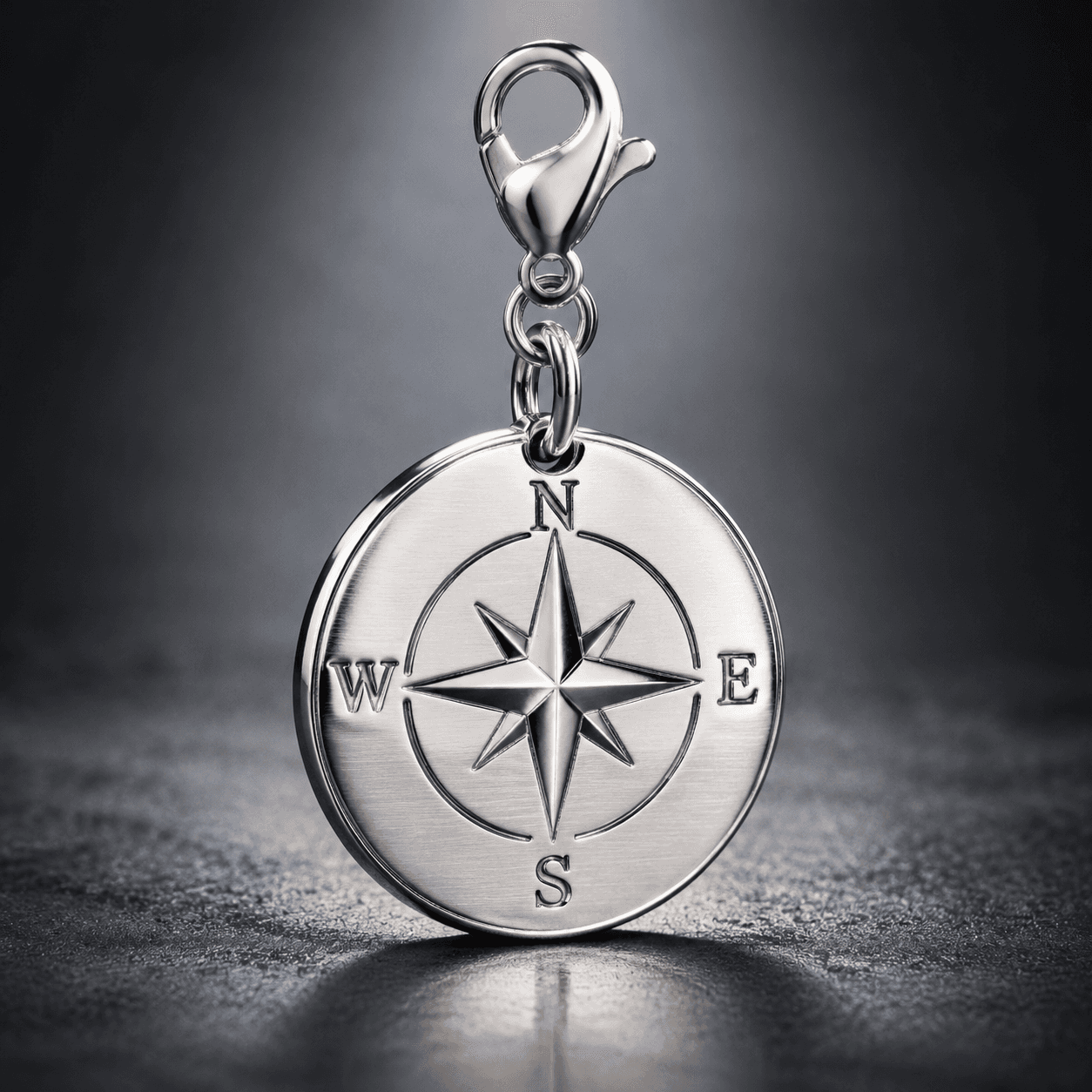
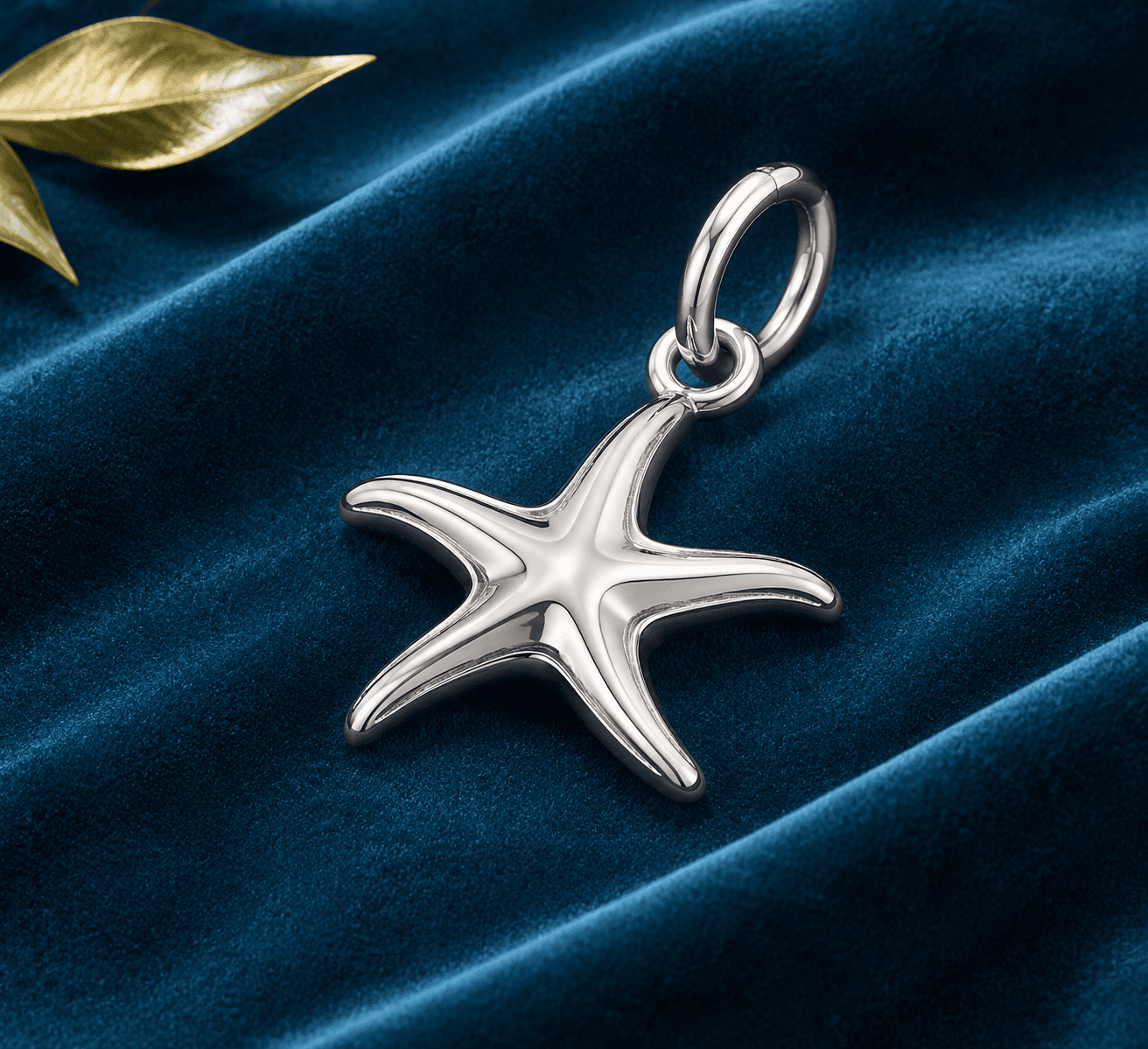
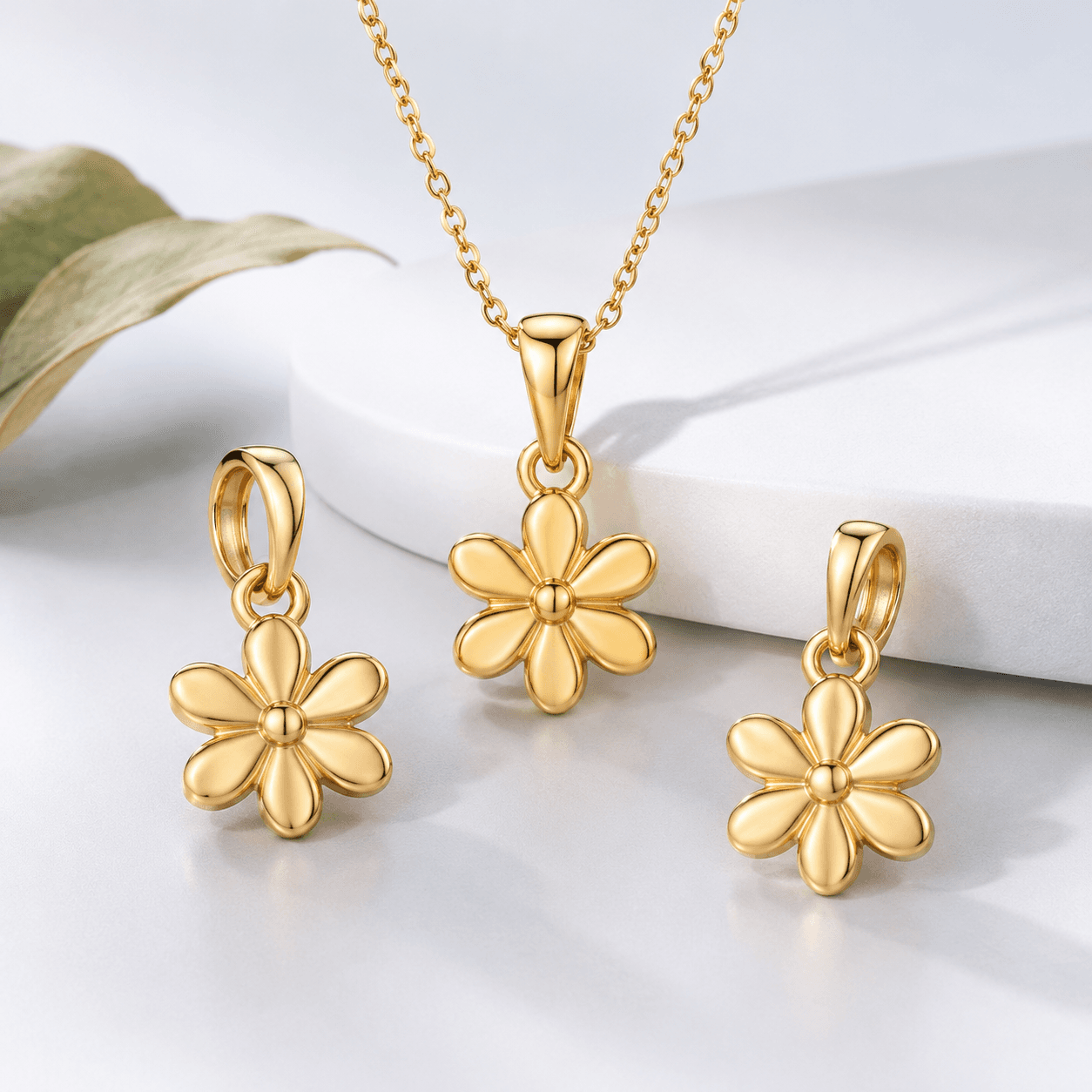
For 316L stainless steel charms, the design process should consider both appearance and physical construction. A small charm with a detailed opening, for example, needs sufficient structural support around its attachment point. Designers should also specify whether the desired appearance is a polished silver finish, gold plated surface, rose gold plating, enamel color filling, or crystal inlay.
A complete brief helps suppliers evaluate technical feasibility and provide more accurate pricing and sample timelines.
Compare Suppliers Beyond Quoted Prices
| Evaluation factor | What to examine | Why it matters |
|---|---|---|
| Material control | 316L stainless steel specifications and documentation | Supports consistent product quality |
| Finishing | PVD coating, electroplating, polishing, and surface preparation | Determines appearance and finish consistency |
| Customization | Laser marking, engraving, enamel, and crystal setting | Supports distinctive collection development |
| Sampling | Prototype accuracy and revision procedures | Reduces production misunderstandings |
| Order management | MOQ, lead times, inspection, and packaging | Improves purchasing predictability |
Benefits of Choosing a Qualified Stainless Steel Charm Supplier
Consistent Material and Product Quality
A professional supplier should be able to explain how material specifications are controlled throughout production. Lancy Jewelry focuses exclusively on 316L stainless steel charms as its base product material. This provides buyers with a defined material direction when planning collections for everyday jewelry applications.
Ask for material documentation and clarify how incoming material is checked. A reliable manufacturing process should connect material identification, machining, finishing, assembly, and final inspection rather than treating these activities as separate tasks.
More Flexible Creative Development
Experienced manufacturers can help designers translate creative concepts into practical production specifications. Custom shapes, engraved logos, decorative patterns, enamel color filling, and crystal inlay can create visual variety without changing the underlying 316L stainless steel base.
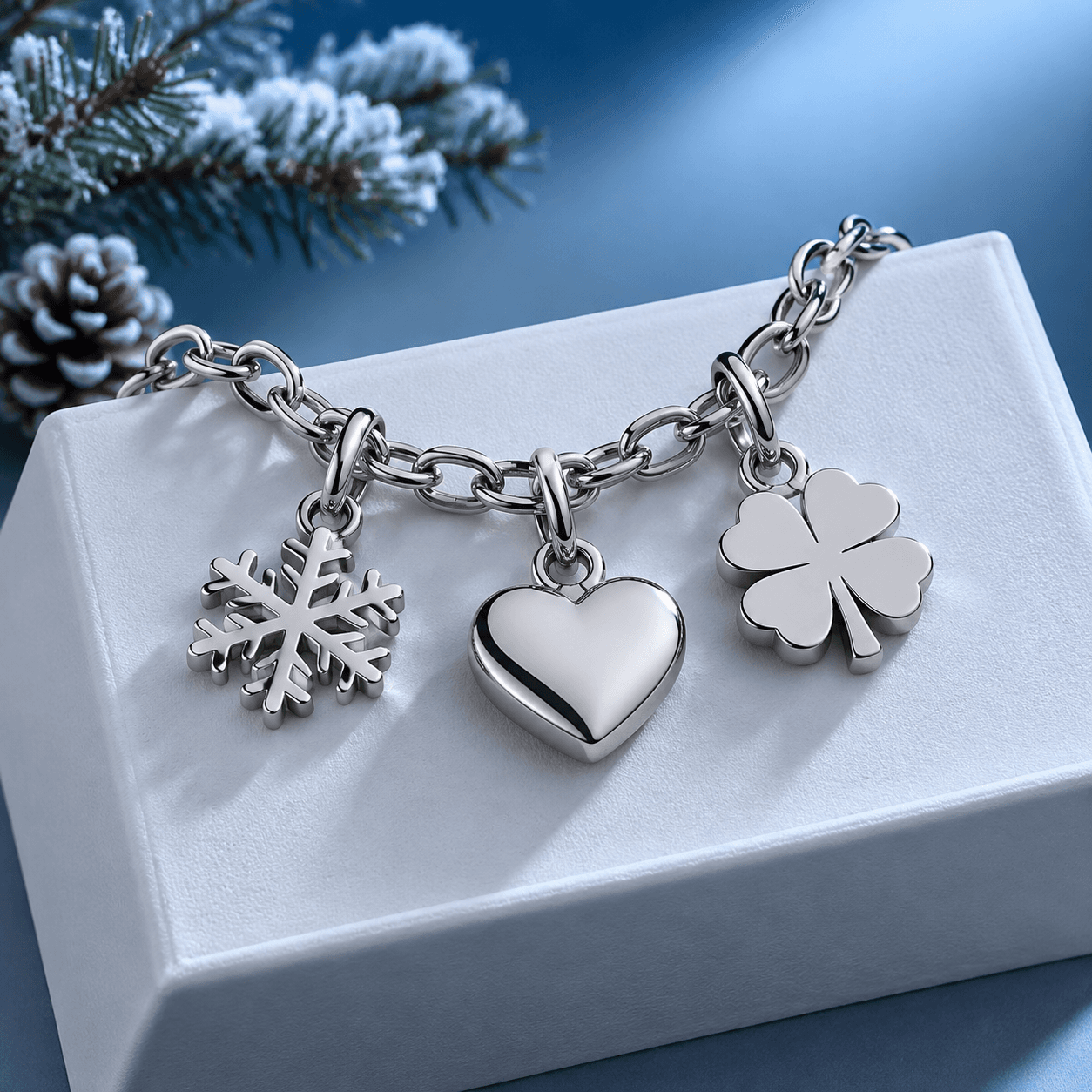
For boutique brands, this flexibility is valuable when developing coordinated collections around themes such as birthdays, initials, symbols, nature, or seasonal gifts. A capable OEM charms manufacturer should discuss design limitations early and suggest adjustments that preserve the intended appearance while maintaining realistic production requirements.
Documented Testing and Compliance Support
North American buyers should consider both product quality and the regulatory requirements relevant to their intended market and product claims. Lancy Jewelry has SGS certification and testing documentation covering RoHS, REACH, Nickel Release EN1811, and a 240-hour salt spray test.
These documents can support supplier evaluation, but buyers should confirm the specific product, sample, test method, report validity, and applicable market requirements. A factory certificate or test report should not automatically be interpreted as proof that every finished product satisfies every regulatory obligation.
In the United States, FDA requirements should be assessed according to the product's intended use and applicable regulations. Ordinary fashion jewelry should not be described as FDA approved simply because a supplier provides material or chemical testing documents. Canadian buyers should separately review applicable Canadian consumer product and chemical safety obligations. Clear product descriptions, accurate material information, and appropriate supporting documentation are important throughout the sourcing process.
Detailed Guide: Comparing Finishing Techniques
Surface finishing has a major influence on how a charm looks, feels, and performs during normal use. Two products made from the same 316L stainless steel can have noticeably different appearances because of differences in polishing, coating, and final surface treatment.
1. PVD Coating
Physical Vapor Deposition, commonly abbreviated as PVD, is a controlled coating process used to create decorative surface finishes. In jewelry manufacturing, it is commonly selected for gold plated and rose gold plating appearances. The process deposits a thin coating under controlled conditions, allowing manufacturers to develop consistent decorative colors when the preparation and processing parameters are properly managed.
For buyers, the most important questions are not simply whether a supplier offers PVD. Ask how the surface is prepared, how coating parameters are controlled, and how finished products are inspected. Coating adhesion, color consistency, surface cleanliness, and wear-test results should all be considered.
2. Traditional Electroplating
Electroplating uses an electrical current to deposit a coating onto a prepared conductive surface. It is another finishing route that may be used to achieve decorative colors. The final result depends on surface preparation, bath control, coating thickness, process stability, and post-treatment.
When comparing electroplating and PVD, buyers should avoid assuming that one process automatically guarantees better performance in every application. The actual result depends on the coating system, manufacturing controls, product geometry, and intended use. Request samples and relevant testing information instead of making decisions based only on the process name.
| Comparison point | PVD coating | Electroplating |
|---|---|---|
| Process | Vacuum-based physical deposition | Electrical deposition from a controlled solution |
| Color options | Decorative gold and rose gold appearances | Various decorative plated finishes |
| Process control | Requires controlled vacuum and coating parameters | Requires bath chemistry and electrical control |
| Quality factors | Preparation, adhesion, coating uniformity | Preparation, thickness, bath stability |
| Buyer verification | Request finish samples and relevant test results | Request finish samples and relevant test results |
3. Mechanical Polishing
Polishing improves surface smoothness and creates the desired reflective appearance. It is especially important for charms with curved edges, recessed details, and small decorative features. Uneven polishing can create visible differences between products, while excessive polishing may soften fine design details.
Ask the supplier how polishing is controlled across different shapes and sizes. Inspect the front, back, edges, and attachment area of samples. A professional production team should pay attention to smooth edges, consistent reflection, and clean transitions between design elements.
4. Surface Preparation and Final Treatment
Surface preparation affects the success of subsequent finishing operations. Cleaning, deburring, polishing, and other controlled treatments help prepare the product for coating or decorative detailing. Final inspection should check for uneven color, visible contamination, surface marks, rough edges, and defects around attachment points.
For collections combining polished areas, enamel, and crystal inlay, ask whether the manufacturing sequence protects completed decorative details during later processing. The order of operations can influence the appearance and consistency of the finished charm.
Finishing Selection: A Practical Comparison
| Desired appearance | Recommended process to evaluate | Important inspection point |
|---|---|---|
| Bright silver finish | Mechanical polishing and suitable surface treatment | Reflection and surface smoothness |
| Gold plated appearance | PVD coating or an appropriate electroplating process | Color consistency and coating adhesion |
| Rose gold appearance | Controlled decorative coating process | Color uniformity across the collection |
| Colored decorative details | Enamel color filling | Color accuracy and clean boundaries |
| Reflective decorative accents | Crystal setting | Secure setting and alignment |
Step-by-Step Supplier Evaluation for Jewelry Designers
Step 1: Verify Manufacturing Capabilities
Determine whether the supplier manufactures products directly or relies heavily on external production partners. Ask about available equipment, production processes, quality inspection, and customization experience.
Lancy Jewelry operates a modern manufacturing facility with CNC machining, laser cutting, laser marking, welding, and polishing capabilities. These processes support custom product development, precise decorative details, and coordinated charm collections.
Step 2: Evaluate Samples Carefully
Request a sample before approving a larger order. Compare the physical product against your original brief, checking dimensions, thickness, weight, attachment construction, surface finish, and decorative details.
For multiple designs, request representative samples from different product shapes and finishing options. Record any revisions in writing and establish which approved sample will serve as the production reference.
Step 3: Review MOQ and Wholesale Pricing
Understand how the supplier calculates MOQ. Some manufacturing projects have separate minimum quantities for each design, color, or finishing option. Others may provide more flexible arrangements for coordinated collections.
Ask for a quotation that identifies tooling or development costs, sample charges, unit pricing, packaging, and shipping arrangements. A clear quotation makes it easier to compare suppliers on the same commercial basis.
For businesses planning wholesale stainless steel charms, also discuss how repeat orders are managed. Consistent specifications and approved production references help maintain collection continuity.
Step 4: Confirm Quality Control Procedures
Ask how incoming materials, work-in-progress products, coating results, and finished charms are inspected. Discuss acceptable color variation, dimensional tolerances, surface defects, and attachment strength.
Request relevant testing documents where appropriate and confirm whether testing applies to the exact product and finish being purchased. Agree on inspection requirements before production starts rather than waiting until goods are ready for shipment.
Step 5: Evaluate Communication and Packaging
A good supplier should respond clearly to technical questions, identify potential production problems, and provide realistic development schedules. Communication is particularly important when a collection contains multiple designs or several decorative finishes.
Private-label packaging is another consideration. Discuss packaging dimensions, branding requirements, product protection, labeling, and packing quantities. Boutique-ready packaging can reduce additional handling and simplify retail preparation.
Why Work With Lancy Jewelry?
Lancy Jewelry supports boutique brands, charm bar retailers, gift companies, distributors, and private-label buyers seeking a dedicated 316L stainless steel manufacturing partner.
Our OEM and ODM services cover design development, logo engraving, PVD plating, enamel color filling, crystal setting, and private-label packaging. With CNC, laser cutting, laser marking, welding, and polishing capabilities, our production team can support different design requirements within a coordinated manufacturing process.
We also understand that sourcing needs vary between established distributors and growing boutique businesses. Low MOQ support, sample development, and coordinated series planning help buyers assess new concepts before committing to larger production programs.
To understand the available product range, visit our stainless steel charms and accessories catalog. For customized designs and manufacturing requirements, explore our OEM and ODM services. Buyers ready to discuss specifications and quantities can submit an RFQ or contact our team.
Frequently Asked Questions
1. What should I check before choosing a stainless steel charm supplier?
Evaluate the supplier's 316L stainless steel documentation, manufacturing capabilities, finishing processes, sample quality, certifications, MOQ, lead times, and quality control procedures. Also confirm whether the supplier can support your required customization and private-label packaging.
2. Is PVD coating better than electroplating for custom jewelry charms?
Both processes can create decorative finishes, but their performance depends on process controls, surface preparation, coating specifications, and intended product use. PVD is often considered for decorative gold and rose gold finishes. Buyers should compare actual samples, coating consistency, adhesion, and relevant wear-test results before selecting a process.
3. Can I request custom logos and multiple finishes for one charm collection?
Yes. Depending on the design and manufacturing requirements, custom stainless steel charms can incorporate laser logo engraving, polished surfaces, PVD finishes, enamel color filling, and crystal inlay. Discuss design feasibility, sample requirements, and separate color or finish MOQs with the manufacturer before approving production.
4. What certifications and testing documents should North American buyers request?
Request relevant material documentation and applicable test reports, including information on RoHS, REACH, Nickel Release EN1811, and corrosion testing where appropriate. Confirm the tested product and finish, report validity, and requirements applicable to your destination market. Do not assume that a general certificate automatically establishes compliance with every US or Canadian requirement.
Partner With Lancy Jewelry for Your Next Charm Collection
Finding the right manufacturing supplier requires a balanced evaluation of design flexibility, material consistency, finishing expertise, testing documentation, and commercial support. By reviewing these factors systematically, jewelry designers and sourcing managers can make better decisions and reduce uncertainty throughout product development.
Lancy Jewelry welcomes inquiries from boutique brands, distributors, gift companies, and private-label buyers looking for custom 316L stainless steel charms. Whether you are developing a small coordinated collection or planning repeat bulk orders, our OEM and ODM team can discuss your specifications, finishing preferences, sampling requirements, and packaging needs.
Prepare your designs, target quantities, preferred finishes, and delivery expectations, then request a quotation from Lancy Jewelry. Let us help turn your charm concepts into a practical, production-ready collection.