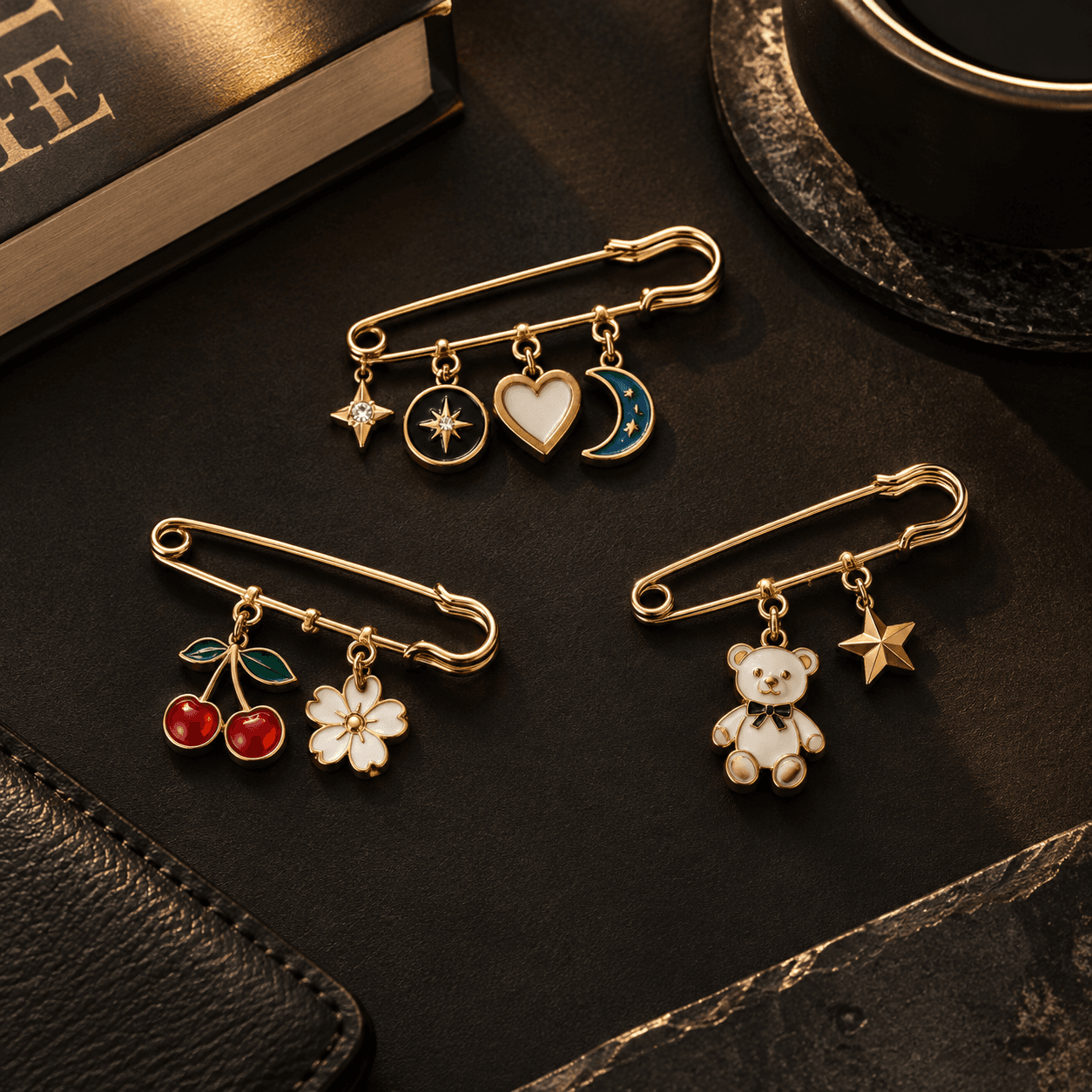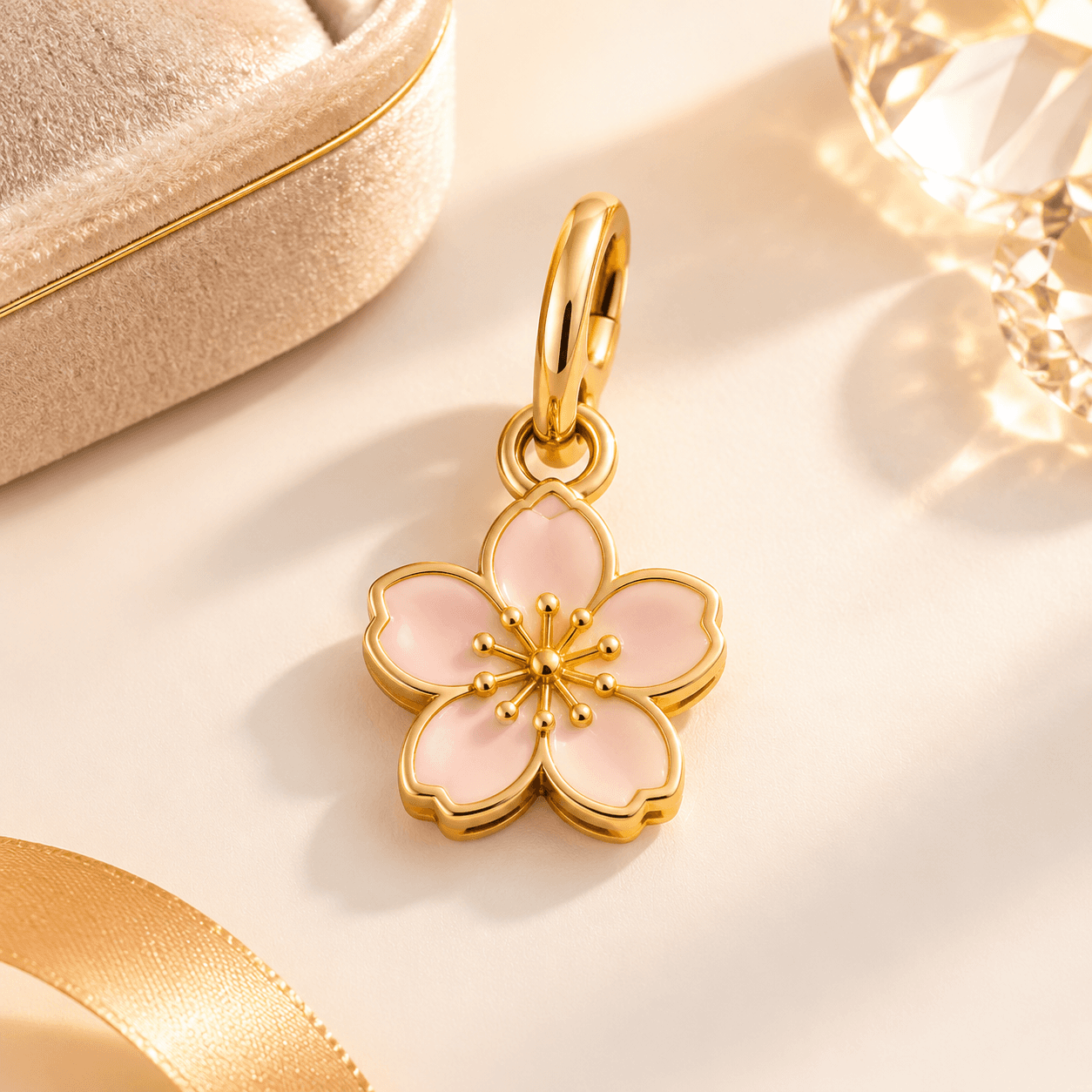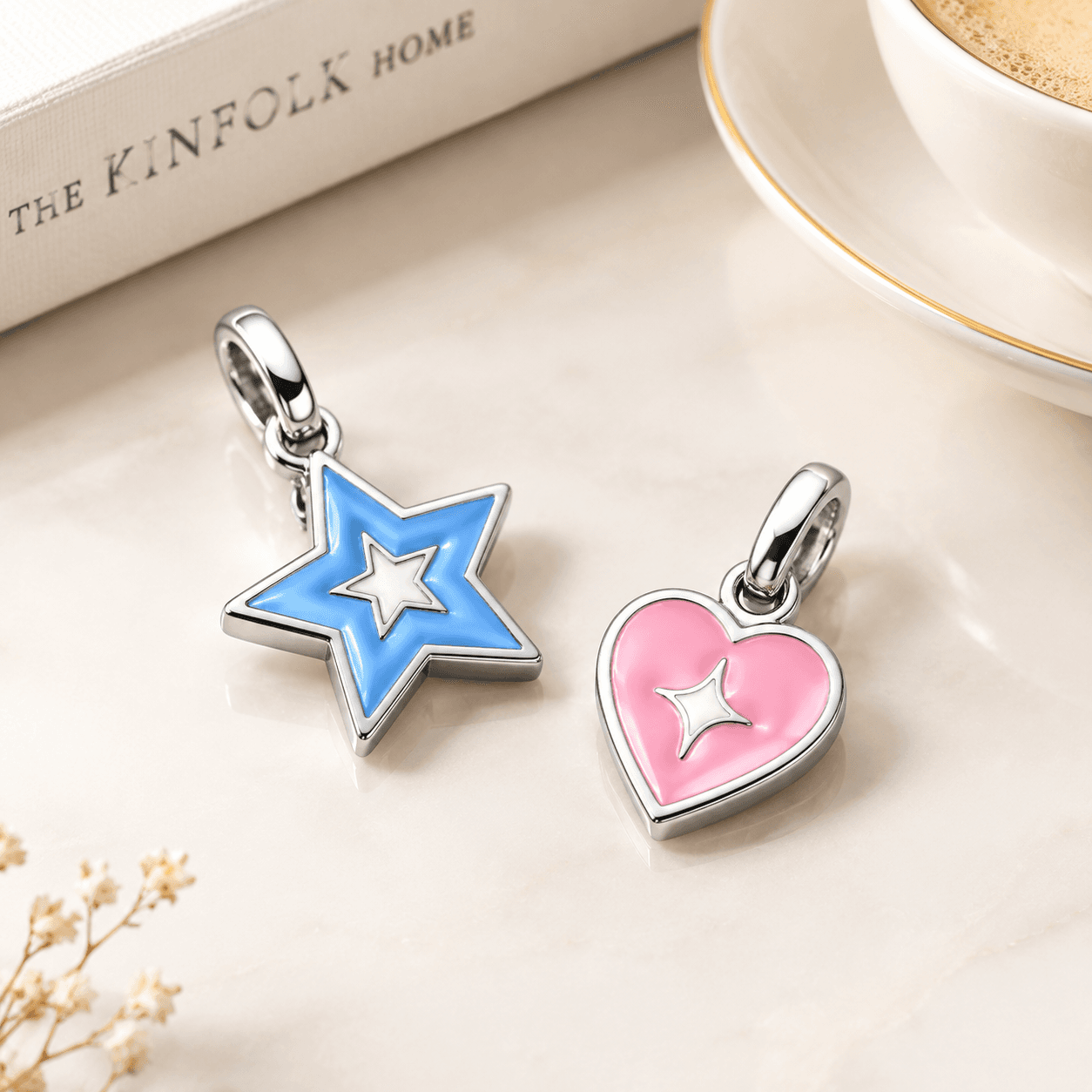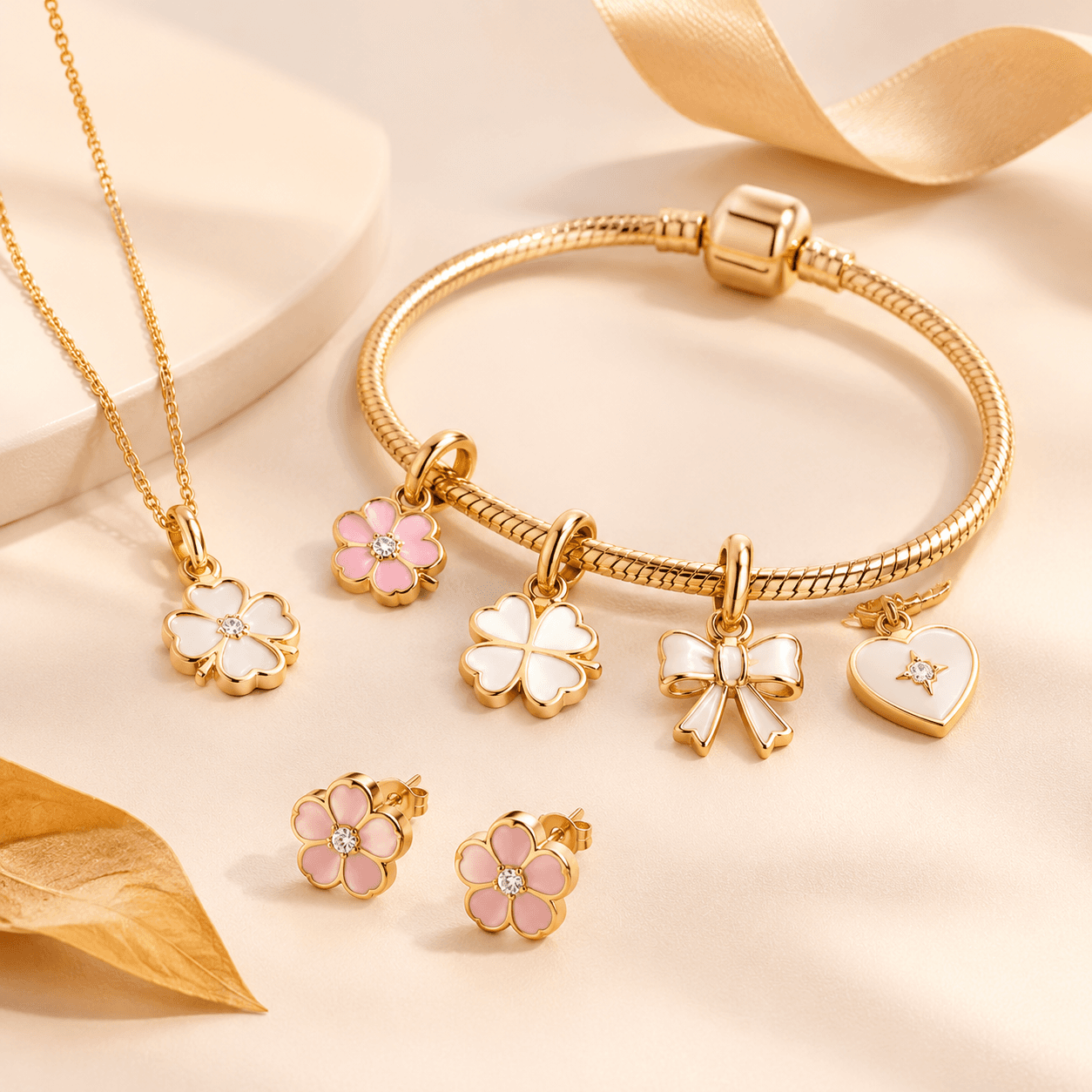
Custom enamel charms are not defined by color alone. Their commercial performance depends on the relationship between the base metal's chemistry, surface preparation, enamel formulation, thermal processing, and final inspection. For jewelry designers and sourcing managers, understanding these variables is essential to developing distinctive products without sacrificing repeatability across production batches.
For brands planning a coordinated collection, the right manufacturing partner must translate creative specifications into measurable engineering requirements. This guide examines 316L stainless steel properties, enamel application methods, finish compatibility, and quality controls so buyers can make informed decisions before approving samples or committing to bulk production.
Stainless Steel Custom Enamel Charms Manufacturing: A Materials Science Guide
Why 316L stainless steel matters
316L stainless steel is an austenitic stainless steel grade characterized by chromium, nickel, and molybdenum additions, together with a relatively low carbon content. Chromium supports the formation of a passive oxide film, which helps the material resist corrosion. Molybdenum improves resistance to localized corrosion in chloride-containing environments, while nickel helps stabilize the austenitic microstructure.
The designation 316L indicates a low-carbon variant of the 316 family. Lower carbon content reduces the tendency toward chromium carbide precipitation during certain thermal exposures, helping preserve corrosion resistance around affected regions. This characteristic is relevant when production involves welding or other operations that introduce localized heat.
For charm manufacturing, these properties provide a useful foundation for everyday jewelry and decorative accessories. They do not eliminate the need for sound design, controlled processing, suitable cleaning, or finished-product testing. Performance ultimately depends on the actual material, manufacturing conditions, surface finish, and intended environment.
Understanding composition and process interactions
Material chemistry is only the first part of the engineering decision. Machining, laser cutting, polishing, marking, and localized heating can affect surface condition and dimensional consistency. Enamel introduces another variable because the coating must adhere to a prepared surface and tolerate the stresses associated with processing and use.
Buyers should request traceable material specifications and establish acceptance criteria for the finished component. Where applicable, material documentation and supplier declarations should identify the specified grade rather than relying solely on a generic stainless steel description.
How enamel changes the manufacturing equation
Enamel creates a colored surface through a controlled filling or coating process. The result depends on cavity geometry, surface cleanliness, material compatibility, application consistency, curing or firing conditions, and the accuracy of the color reference. Different enamel systems have different processing requirements, so the production route must be selected for the actual design rather than assumed from appearance alone.
For Lancy Jewelry, the base material remains 316L stainless steel. Color development, PVD finishing, and crystal inlay can be considered as design features within an approved manufacturing specification. The appropriate sequence must be validated against the selected process and the complete component geometry.
Benefits of Custom Enamel Charms for B2B Buyers
Design flexibility with controlled production
Enamel allows designers to introduce solid colors, contrasting fields, small decorative accents, and coordinated palettes across a product family. Combined with laser marking, precision-cut contours, and polished surfaces, it supports recognizable visual details while retaining a consistent underlying material specification.
Design flexibility is commercially valuable only when the manufacturing method can reproduce it. Buyers should distinguish between a color that looks correct on a single prototype and a process capable of maintaining acceptable color, coverage, and placement throughout repeat orders.
Material consistency and documented quality controls
316L stainless steel provides a defined material basis for a product line. Its corrosion-resistant passive surface and established industrial processing characteristics support the development of durable decorative components when manufacturing and finishing are properly controlled.
Lancy Jewelry reports SGS certification or testing coverage for RoHS, REACH, nickel release under EN 1811, and salt spray testing for up to 240 hours. Buyers should confirm the applicable report, product scope, test conditions, and validity for the specific item being sourced. A test result should not be interpreted as a universal guarantee of every finished design or every production batch.
Repeatability for private-label collections
For private-label buyers, consistent specifications reduce the risk of mismatched colors, changing surface appearance, and variation between initial samples and later shipments. A documented reference sample, approved artwork, defined dimensions, and a written inspection plan help convert a design concept into a repeatable product.
Working with a stainless steel charms manufacturer that offers OEM and ODM development also helps buyers coordinate technical drawings, color approvals, logo engraving, and packaging requirements. These controls are particularly useful when a collection contains several related designs or when launch schedules depend on staged product releases.
Detailed Analysis: Comparing Enamel Manufacturing Options
Compare enamel application methods before selecting a process
There is no single enamel method suitable for every charm. Geometry, color count, target appearance, required production volume, and processing constraints determine the best route. The following comparison describes common manufacturing approaches at a general level; the exact process must be confirmed with the production team.
| Evaluation factor | Recessed color filling | Surface coating application | Multi-color segmented filling |
|---|---|---|---|
| Design geometry | Best suited to designs with defined recessed areas | Useful for broader surface coverage where the selected system permits | Suitable for designs with distinct color zones and clear boundaries |
| Color placement | Controlled by cavity shape and filling accuracy | Controlled by masking, application, and surface geometry | Depends on boundary definition and individual color application |
| Primary process risk | Incomplete filling, trapped air, or uneven leveling | Uneven coverage, surface defects, or adhesion problems | Color bleeding, boundary inconsistency, or variation between zones |
| Key design requirement | Appropriate recess depth and edge geometry | A suitable surface and validated coating process | Clear separation lines and adequate space for each color |
| Sample approval priority | Fill uniformity and edge quality | Coverage, adhesion, and appearance | Color separation and repeatable alignment |
These approaches are not interchangeable in every application. Before finalizing artwork, designers should review minimum feature sizes, narrow channels, sharp internal corners, and the amount of space available for each color. Designs with numerous tiny color regions may require simplification to improve manufacturability and reduce inspection complexity.
Compare surface finishes and decorative combinations
| Finish option | Visual result | Important manufacturing consideration | Buyer approval criterion |
|---|---|---|---|
| Polished stainless steel | Bright metallic appearance | Surface preparation influences reflectivity and visible defects | Consistent polish and clean edges |
| Silver finish | Cool-toned metallic appearance | Specify the intended surface appearance and process | Uniform color and surface quality |
| PVD gold plated | Warm gold-toned appearance | Confirm process sequence and adhesion requirements | Approved color reference and finish consistency |
| Rose gold plating | Pink-gold appearance | Color variation must be evaluated against a reference sample | Consistent hue across related components |
| Enamel with metallic details | Contrast between colored areas and exposed metal | Masking, cavity geometry, and process order require coordination | Clean boundaries and uniform color filling |
| Enamel with crystal inlay | Color combined with reflective accents | Seat dimensions and setting security require separate checks | Secure setting, clean edges, and balanced appearance |
PVD is a physical vapor deposition process used to apply a thin functional or decorative film. Its performance depends on substrate preparation, coating parameters, geometry, and the conditions of use. A PVD finish should therefore be assessed as part of the complete finishing system rather than treated as an automatic guarantee of wear resistance.
When enamel and PVD are combined, production sequencing matters. The selected enamel system, coating process, masking requirements, and any thermal exposure must be assessed together. A sample that passes visual inspection before final processing is not sufficient evidence that the completed component will retain its intended appearance.
Compare design priorities against production risk
| Design priority | Potential risk | Recommended buyer action |
|---|---|---|
| Very small decorative features | Inconsistent filling or difficult inspection | Review feature dimensions and approve a physical sample |
| Multiple adjacent colors | Color bleeding or inconsistent boundaries | Provide a numbered color map and boundary tolerances |
| Deep recessed details | Incomplete filling or uneven leveling | Confirm cavity depth and application feasibility |
| Combined metallic and enamel finishes | Process incompatibility or finish damage | Validate the complete processing sequence |
| Frequent repeat orders | Color drift and specification changes | Retain an approved master sample and color records |
How to Specify and Source Custom Enamel Charms
Step 1: Define the material and product geometry
Begin with the required 316L stainless steel grade, overall dimensions, thickness, attachment point, and intended application. The jump ring or bail must pass through a real hole or loop and remain mechanically plausible. The attachment opening should be sized for the intended use, and sufficient material must remain around it to support the design.
Provide vector artwork or a dimensioned technical drawing where possible. Specify front and back details, edge treatment, relief depth, engraving positions, and any critical dimensional tolerances. This information reduces ambiguity during quotation and sample development.
Step 2: Create a controlled color specification
Do not rely on descriptive color names alone. Supply Pantone references or other agreed color standards, identify each color region, and state which surfaces remain exposed metal. If the design includes several colors, number the regions and provide a matching color legend.
Color references are starting points rather than proof of an exact visual match across every process. Surface reflectivity, lighting, coating sequence, and the selected enamel system can influence perceived appearance. Approve the physical sample under consistent lighting before mass production.
Step 3: Confirm the manufacturing sequence
Ask the factory to explain how cutting, machining, laser marking, polishing, enamel filling, PVD finishing, and crystal setting will be coordinated for the proposed design. Not every operation applies to every charm, and the correct order depends on the material, decorative system, and geometry.
For example, a design requiring crisp exposed-metal borders may need a different masking and finishing strategy from a design dominated by broad colored areas. A process review should identify which steps may affect enamel adhesion, color stability, dimensional fit, and final appearance.
Step 4: Establish sample acceptance criteria
Sample development should verify more than the overall look. Use a written checklist covering dimensions, hole position, attachment security, enamel coverage, color boundaries, finish uniformity, engraving legibility, and visible defects. For designs with crystal inlay, inspect seating, alignment, and retention as well.
Record approved sample details and keep reference images or a retained master sample where practical. Any later design or process change should trigger an assessment of whether renewed approval or testing is necessary.
Step 5: Evaluate quality evidence and compliance needs
Confirm which tests are appropriate for the target market and finished product. Depending on the application, buyers may need documentation relating to restricted substances, nickel release, corrosion performance, or other applicable product requirements. Verify test methods, sample identification, dates, and report scope instead of relying on a general certification statement.
Salt spray results are comparative indicators under specified test conditions; they do not directly predict every real-world exposure or establish an unlimited service life. Likewise, nickel release testing evaluates a defined test scenario and should be interpreted according to the applicable standard and product configuration.
Step 6: Align MOQ, pricing, and bulk production controls
Request an RFQ that separates tooling or setup costs, sample charges, unit pricing, packaging, testing, and shipping assumptions where applicable. Confirm the MOQ for each design and color combination rather than assuming one minimum applies to an entire collection. Multiple colors, intricate artwork, special finishes, and separate packaging configurations can change setup requirements and production economics.
For low MOQ charm production, prioritize designs that share practical production parameters while retaining their individual visual identity. A coordinated series can simplify artwork management, sample approval, and stock planning, although each distinct design still needs its own specifications and acceptance criteria.
Before authorizing bulk charm orders, confirm the approved sample, production tolerances, color references, inspection method, packaging artwork, labeling requirements, lead-time assumptions, and change-control procedure in writing. These details create a more reliable basis for supplier evaluation and future reorders.
Why Work With Lancy Jewelry?
Lancy Jewelry supports B2B customers with OEM and ODM development focused on 316L stainless steel charms. Its manufacturing capabilities include CNC processing, laser cutting, laser marking, welding, polishing, enamel color filling, PVD finishing, crystal setting, logo engraving, and private-label packaging, subject to design and process feasibility.
For jewelry designers and sourcing teams, this combination supports a practical development path from artwork review to sample approval and repeat production. Buyers can discuss coordinated product series, finish selection, logo placement, packaging requirements, and production quantities with the factory team before confirming an order.
Reported SGS certification or testing coverage includes RoHS, REACH, nickel release under EN 1811, and salt spray testing for up to 240 hours. Request the relevant documentation and confirm its scope against your product and destination-market requirements.
Review the Lancy product catalog to explore available product directions, learn about OEM custom manufacturing services, or use the RFQ and quotation page to submit your project requirements.
Frequently Asked Questions
Is 316L stainless steel suitable for custom enamel charms?
Yes. 316L stainless steel provides a corrosion-resistant base when the specified material, surface preparation, and manufacturing process are properly controlled. Enamel adhesion and finished-product performance still depend on the selected enamel system, geometry, and process validation. Approve a representative sample before production.
What information should buyers provide for an enamel charm quotation?
Provide artwork, dimensions, thickness, color references, attachment requirements, desired surface finish, logo details, estimated quantity, packaging specifications, target market, and required delivery timing. Include the desired MOQ and any testing or documentation requirements so the factory can assess feasibility and prepare a more accurate RFQ response.
Can enamel charms combine PVD finishes and crystal inlay?
Potentially, yes, if the geometry and processing sequence support the combination. Enamel, PVD finishing, and crystal setting introduce different technical requirements, so the proposed construction should be reviewed and sampled as a complete assembly. Confirm appearance, boundary quality, setting security, and finish performance before authorizing bulk production.
How can buyers maintain consistent color across repeat orders?
Use documented color references, an approved physical master sample, defined inspection lighting, written acceptance criteria, and controlled process records. Ask the supplier to notify you of changes to materials, enamel systems, finishing parameters, or production methods that could affect appearance. Reapproval may be necessary when a change materially affects the finished product.
Partner With Lancy Jewelry for Your Custom Enamel Charm Project
Successful custom enamel charms start with a clear specification and a manufacturing process designed around the material's actual properties. By evaluating 316L stainless steel chemistry, enamel geometry, finishing compatibility, testing requirements, and production controls together, buyers can reduce avoidable development risks and build more consistent collections.
Lancy Jewelry works with boutique jewelry brands, charm bar retailers, gift companies, distributors, and private-label buyers seeking OEM or ODM development. Share your artwork, target dimensions, color plan, finish preferences, estimated quantity, and packaging needs to begin a technical review. The team can assess design feasibility, discuss sample development, and clarify MOQ and quotation requirements before you commit to production.
Start your project through the Lancy Jewelry contact page and prepare a complete RFQ to support efficient evaluation, transparent specifications, and a production plan aligned with your business goals.