Designing a successful charm bracelet collection requires more than choosing attractive motifs. For boutique jewelry brands, charm bar retailers, gift companies, and private-label buyers, the real challenge is balancing creative flexibility with material consistency, dependable attachment hardware, surface durability, and commercially viable production. A well-planned custom stainless steel charm bracelet program begins with clear specifications and ends with documented quality checks that help protect the customer experience.
This step-by-step buyer guide explains how jewelry designers and sourcing managers can evaluate 316L stainless steel charms, select appropriate finishes, develop custom details, and verify manufacturing quality before approving bulk orders. It also outlines practical considerations for the US and Canadian markets, where buyers may need to address material disclosures, product safety documentation, and consumer expectations for everyday wear.
Custom Stainless Steel Charm Bracelet Tutorial: A Buyer’s Guide to Quality
Start with a collection plan, not individual designs
Before requesting samples, define the purpose of the collection. Will it serve a charm bar, a seasonal gift program, a personalized jewelry line, or a permanent boutique assortment? The answer influences charm dimensions, motif selection, attachment design, finish options, packaging, and the quantity required for each SKU.
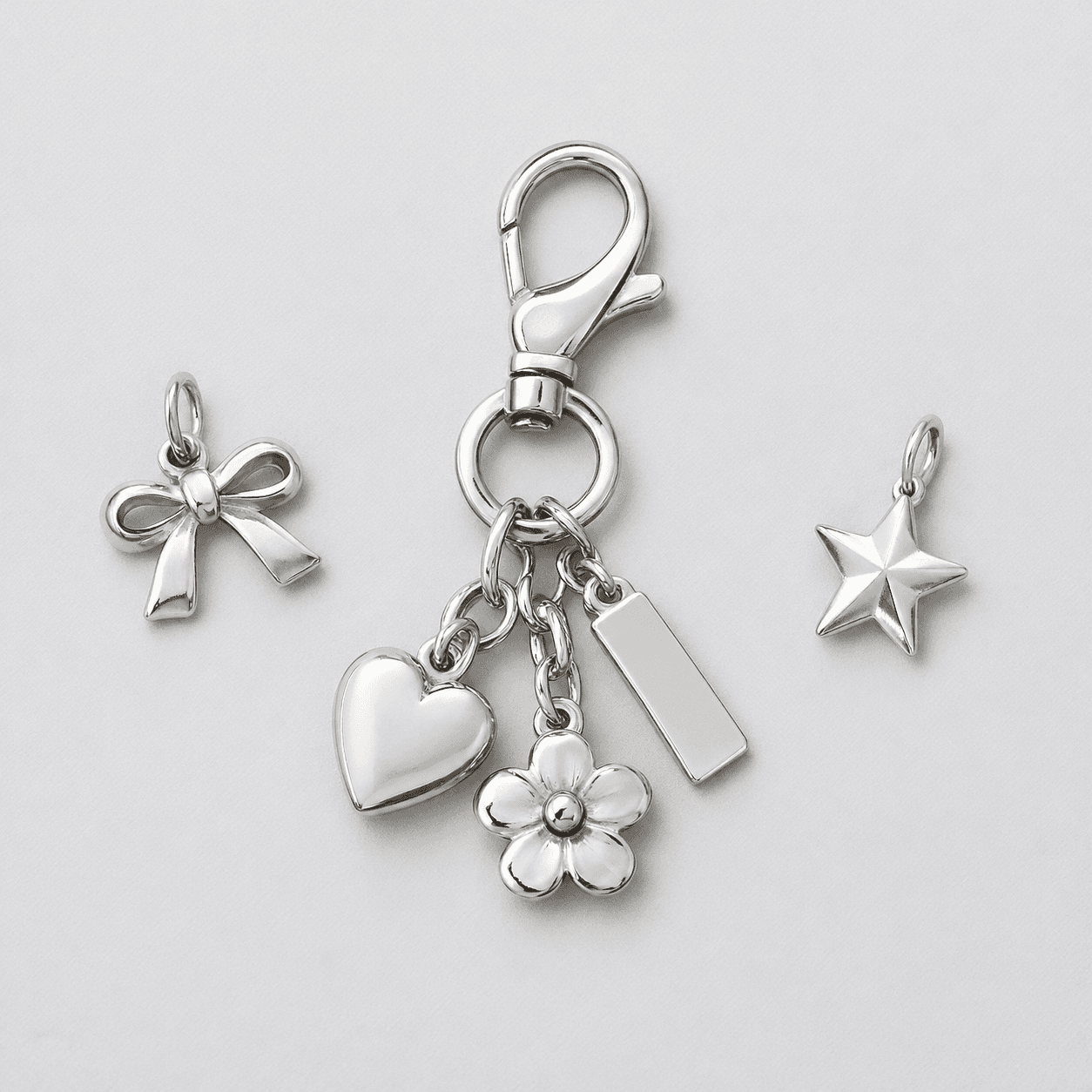
For a coordinated assortment, group designs into recognizable themes such as initials, birth months, zodiac signs, hearts, botanical motifs, or ocean life. Establish shared dimensions and finishing requirements where possible. This gives customers meaningful choices while helping buyers maintain visual consistency across a collection.
When evaluating a stainless steel charms manufacturer, ask whether the supplier can support custom development, repeatable specifications, and production planning across multiple related designs. These capabilities matter when a successful initial assortment needs replenishment or expansion.
Why material selection and quality control matter
Benefits of 316L stainless steel charms
316L stainless steel is widely used for jewelry components because it combines useful corrosion resistance, mechanical strength, and a polished appearance. Its performance makes it a practical base material for many everyday jewelry applications. However, actual durability depends on the finished product, its construction, the surrounding environment, and how it is worn and maintained.
For custom collections, a consistent 316L stainless steel base also provides a defined starting point for quality specifications. Buyers can establish measurable requirements for dimensions, surface condition, attachment strength, finish appearance, and applicable material testing instead of relying solely on visual inspection.
Certifications and testing documentation
Lancy Jewelry reports SGS-certified testing coverage for RoHS, REACH, nickel release under EN1811, and salt spray testing up to 240 hours. Buyers should request the applicable reports, confirm the tested product or sample identification, and check whether the testing scope matches the intended component, finish, and target market.
Each test addresses a different concern. RoHS and REACH relate to chemical restrictions and regulatory obligations within their applicable scopes. EN1811 evaluates nickel release under a defined test method. Salt spray testing assesses corrosion behavior under specified laboratory conditions. A 240-hour salt spray result does not automatically guarantee a particular service life or prove resistance to every real-world exposure.
These documents support a more disciplined sourcing decision, but buyers should not treat a certification reference as a substitute for checking the specific finished product. Request current, relevant evidence before approving production.
Step-by-step guide to developing a durable custom charm bracelet collection
Step 1: Define the target customer and product requirements
Write a short product brief before discussing manufacturing details. Include the intended retail channel, customer profile, collection theme, target retail positioning, launch schedule, and expected order quantities. For US and Canadian boutiques, personalization, gifting, meaningful symbols, and coordinated collections can provide useful creative directions, but validate these assumptions against your own sales data and audience.
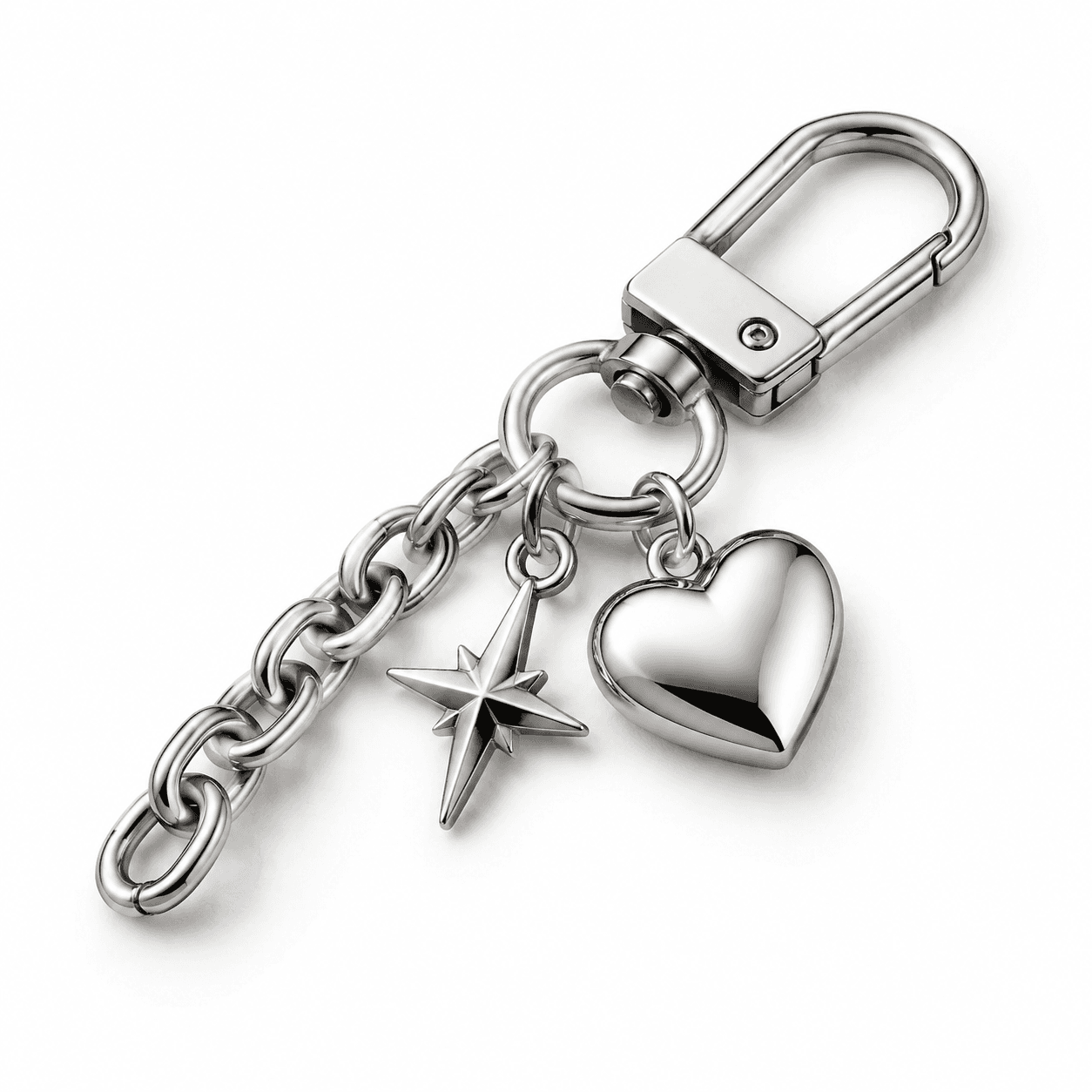
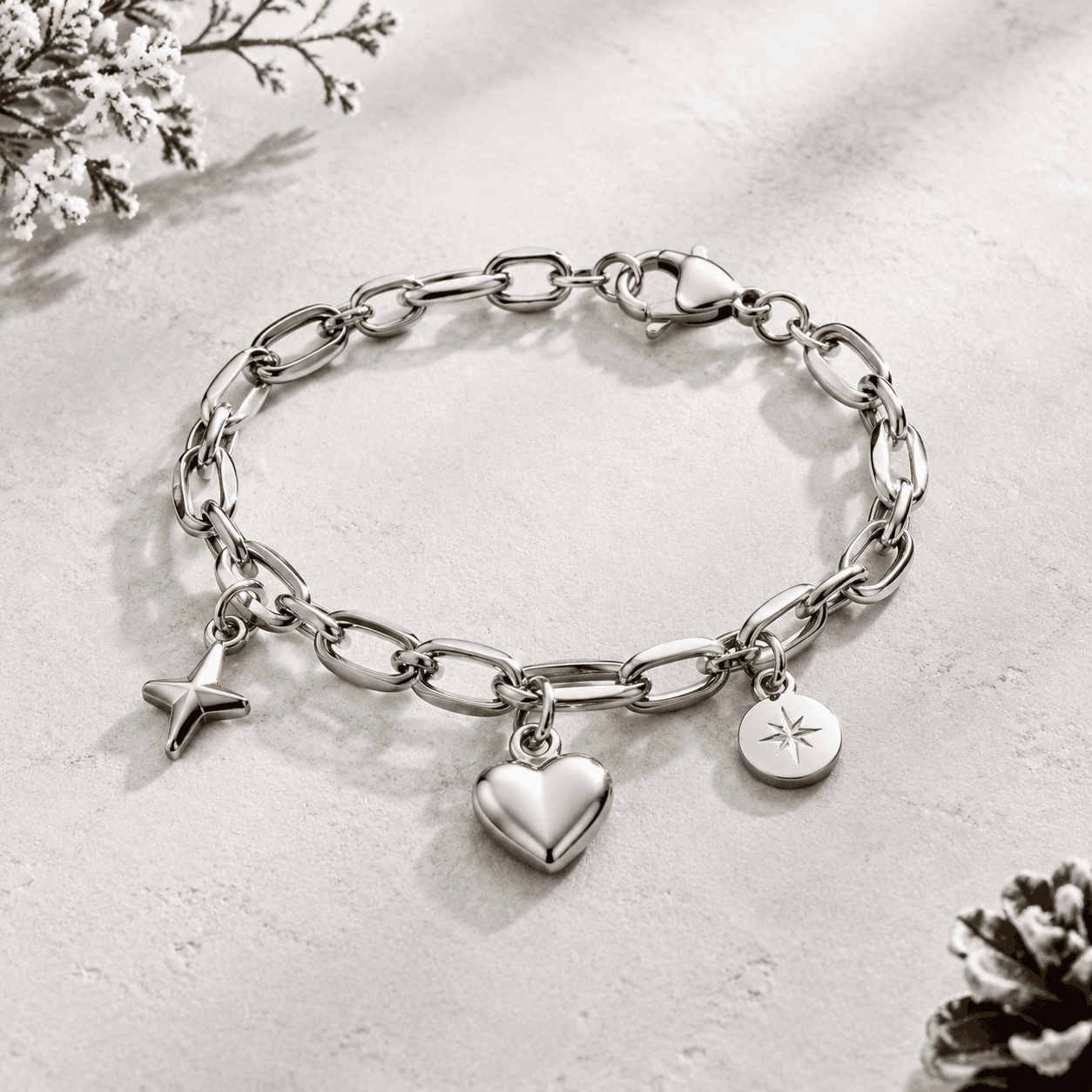
Specify whether the charms are intended for necklaces, bracelets, bangles, or a charm bar assortment. Do not assume that one attachment format will suit every application. Bracelet charms often need compact proportions, a secure opening or loop, and enough clearance to move without catching on adjacent components.
Record the required base material as 316L stainless steel. Also identify any proposed finish, enamel color, crystal inlay, engraving, packaging, and labeling requirements. A complete brief reduces ambiguity during quotation and sampling.
Step 2: Choose charm dimensions and mechanically sound attachments
Establish the overall height, width, thickness, weight target, and attachment opening for each design. A typical bracelet charm may fall within approximately 10–16 mm, although the best size depends on its shape, visual complexity, and intended placement. Treat this as a starting range rather than a universal specification.
Ask the supplier to confirm that the jump ring, bail, or other connector passes through a real hole or loop and can move as intended. Inspect the connection for sharp edges, narrow contact points, weak welds, and areas where neighboring charms could become trapped. If the charm will be used frequently, attachment integrity deserves the same attention as front-facing decoration.
For a collection containing several motifs, use a common attachment specification wherever practical. Standardization can simplify inventory planning and help keep the customer experience consistent. Nevertheless, verify each design individually because small decorative features may affect balance, clearance, or connector strength.
Step 3: Select the finish and decorative details
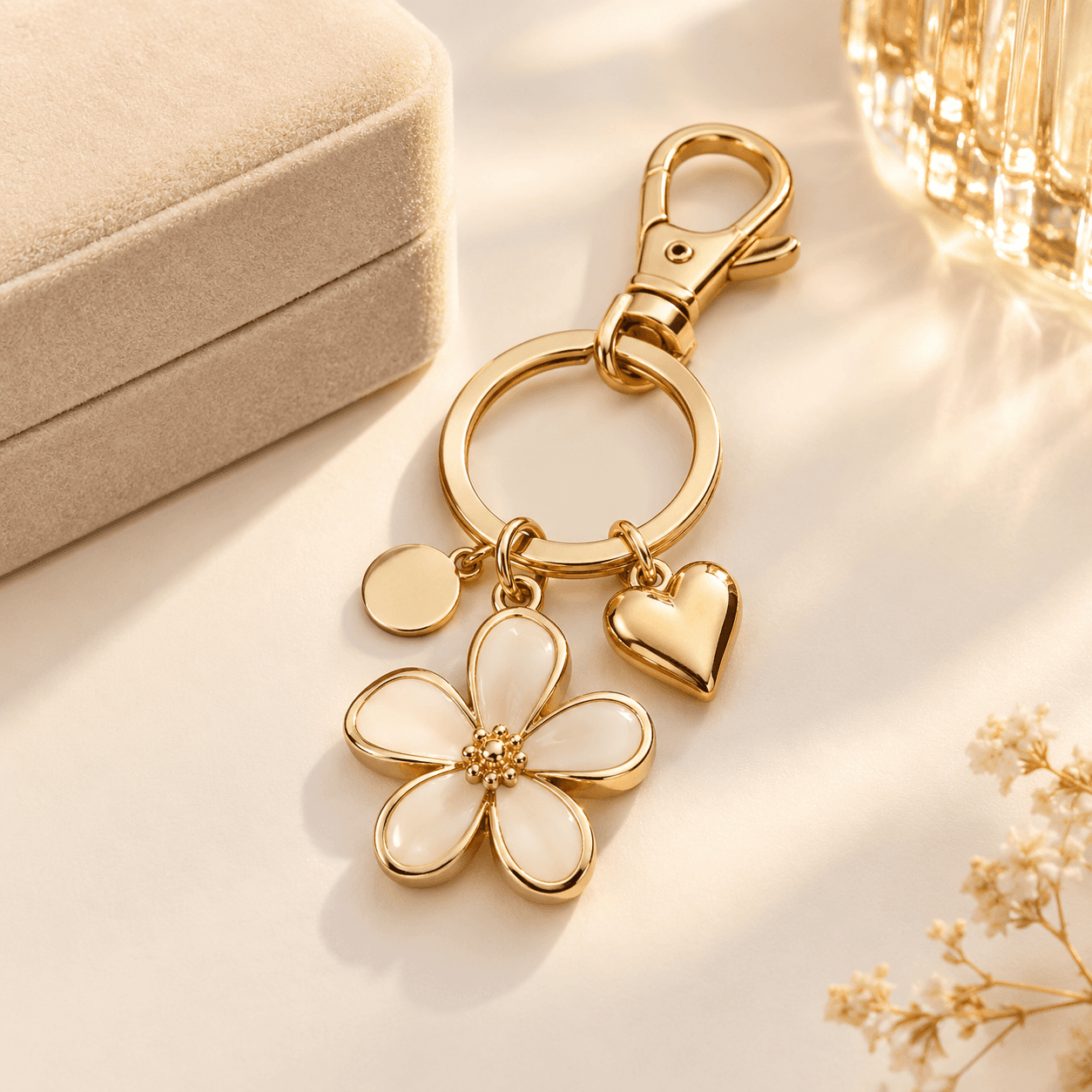
Choose the finish according to the intended aesthetic, usage conditions, and target price. Available options may include a silver finish, PVD gold plating, rose gold plating, enamel color filling, and crystal inlay. These are finishing or decorative options applied to the 316L stainless steel base, not alternative base materials.
PVD is a physical vapor deposition process used to apply a surface coating. Its performance depends on the coating system, preparation, process control, geometry, and subsequent use. Do not assume that every gold plated finish has identical wear resistance. Request finish-specific samples and written acceptance criteria before making claims about longevity.
For enamel designs, check color uniformity, filling boundaries, surface level, and any exposed areas around recessed details. For crystal inlay, inspect alignment, seating, edge finish, and retention. Request close-up photographs or physical samples when these features are central to the design.
Step 4: Prepare accurate OEM or ODM specifications
Provide vector artwork or clear dimensioned drawings wherever possible. Identify the front and back design, engraving location, lettering size, required relief or recessed areas, finish, color references, and connector dimensions. For logo engraving, confirm the artwork version and minimum legible detail before authorizing tooling or samples.
An OEM program typically follows buyer-defined designs and specifications, while ODM development may involve more supplier participation in product design and development. Clarify responsibilities at the start, including artwork ownership, revision approvals, sample charges, tooling costs, and the process for approving changes.
Ask the supplier to consolidate all requirements into a written specification sheet. This should identify the material grade, dimensions and tolerances, finish, decorative details, attachment requirements, packaging, inspection criteria, and approved sample reference. A documented specification makes later quality disputes easier to investigate.
Step 5: Request sample development and inspect the first article
Approve a physical sample before placing a substantial production order. Sample development lets buyers assess details that may be difficult to judge from renderings, including the weight in hand, edge smoothness, visual balance, engraving clarity, finish tone, and actual connector movement.
Use a repeatable inspection checklist. Measure critical dimensions with suitable measuring equipment, examine both sides under consistent lighting, inspect decorative details at close range, and test the attachment through normal intended movements. Record defects with photographs and written descriptions instead of relying on general comments such as “finish needs improvement.”
For colored or plated samples, document the approved reference under consistent lighting. Record acceptable color variation and identify the viewing conditions used for evaluation. Keep an approved sample or agreed reference record for comparison with the first production batch and later replenishment orders.
Step 6: Establish measurable durability and wear-resistance tests
Agree on the tests that are appropriate for the design, finish, intended use, and regulatory requirements. Not every test applies to every charm, and a test result is meaningful only when the method, conditions, and acceptance criteria are understood.
- Surface inspection: Check for scratches, pits, burrs, uneven polishing, coating defects, and visible contamination.
- Dimensional verification: Measure critical dimensions and attachment openings against the approved drawing and tolerances.
- Attachment testing: Apply an agreed method and force range to evaluate connector retention and structural integrity without damaging the approved sample through uncontrolled testing.
- Finish abrasion assessment: Define a repeatable rubbing or abrasion procedure appropriate to the coating, then compare results against agreed limits.
- Corrosion assessment: Review applicable salt spray results and any additional corrosion evaluation needed for the intended environment.
- Nickel release assessment: Request relevant EN1811 documentation where applicable and confirm the report covers the product configuration under review.
- Decorative retention: Evaluate enamel integrity and crystal seating using a documented method suitable for the component.
Set pass-or-fail criteria before testing. For example, define which visible finish changes are acceptable, what constitutes attachment failure, and how dimensions are measured. Do not create a universal wear-life claim from a single laboratory test; laboratory performance and actual customer use are not identical.
Step 7: Confirm US and Canadian compliance considerations
For North American sales, identify the legal requirements that apply to the finished jewelry product, its intended users, and its distribution channels. In the United States, the Federal Trade Commission provides guidance on jewelry marketing and material representations. Certain products and claims may also be subject to applicable Consumer Product Safety Commission requirements, including requirements relevant to children's products where appropriate.
FDA jurisdiction should be assessed carefully rather than assumed. Ordinary jewelry is not automatically an FDA-regulated product simply because it is sold in the United States. Specific intended uses or associated claims may change the regulatory analysis. Do not use an FDA reference as a blanket certification for a charm bracelet.
In Canada, confirm applicable consumer product safety obligations and relevant restrictions for the product category and intended user. For both markets, review labeling, country-of-origin statements, material descriptions, advertising claims, and any requirements associated with children's jewelry. Seek qualified compliance advice where classification or testing obligations are uncertain.
Ask your supplier for traceable test reports and accurate material declarations. Avoid unsupported claims such as “allergy-proof,” “never tarnishes,” or “guaranteed for life.” Use precise descriptions that can be substantiated by the product specifications and available evidence.
Step 8: Set the MOQ, packaging, and bulk-order inspection plan
Once the sample is approved, request a detailed quotation covering the unit price, MOQ, tooling or setup charges, packaging, sample lead time, production lead time, and shipping assumptions. Ask how pricing changes with different quantities or finish combinations. A low MOQ can help a boutique test demand, but the economics depend on the number of designs, production complexity, and setup requirements.
Plan SKUs carefully. If every charm has a different finish, color, engraving, or packaging configuration, the number of production variables increases. Group compatible designs into coordinated series and reserve more complex variations for items with a clear commercial purpose.
Before bulk production, define an inspection plan covering incoming materials, in-process finish checks, final dimensions, appearance, attachment integrity, and packaging accuracy. Specify the sampling method and defect acceptance limits in writing. For repeat orders, compare the batch against the approved sample and previous inspection records rather than relying only on the supplier's visual judgment.
Private label charms programs should also confirm logo placement, packaging artwork, SKU labels, barcode requirements where applicable, and pack-out quantities. Packaging approval belongs in the same release process as product approval because labeling or packing errors can delay an otherwise acceptable shipment.
Step 9: Build a practical maintenance and longevity policy
Product longevity depends on design, finish quality, wearing conditions, and care. Recommend that end customers keep jewelry away from harsh chemicals, avoid unnecessary abrasion, remove items before activities likely to damage them, and clean them gently with a soft cloth. Follow finish-specific care instructions where these differ from general recommendations.
From a B2B perspective, document the limits of any durability commitment. A supplier may agree to defined workmanship remedies or a written warranty, but buyers should confirm the duration, covered defects, exclusions, claim procedure, and evidence required. A 240-hour salt spray test is not itself a lifetime guarantee, and PVD does not eliminate all possible wear.
Retain sample approvals, inspection records, test reports, purchase specifications, and corrective-action notes. These records help identify whether a later issue is related to design, finishing, attachment construction, handling, or changes between production batches.
Key benefits of a structured custom charm sourcing process
More creative freedom with controlled specifications
Designers can develop coordinated motifs, initials, engraved logos, enamel accents, and crystal inlay while retaining clear requirements for the 316L stainless steel base. A documented development process gives creative teams room to explore without leaving critical construction details undefined.
More consistent quality across repeat orders
Approved samples, dimensional tolerances, finish references, and defined inspection methods reduce ambiguity between development and mass production. Relevant SGS-certified testing documentation for RoHS, REACH, EN1811 nickel release, and salt spray up to 240 hours provides additional evidence for evaluating the product, subject to the scope of each report.
Better inventory and commercial planning
Coordinated series planning helps buyers balance variety with SKU complexity. Working with an experienced ODM charm supplier can also help teams assess feasibility early, prioritize samples, and prepare for repeat orders with clearer specifications. These practices support more predictable purchasing decisions, although final costs and lead times must be confirmed for each project.
Frequently asked questions
1. Is 316L stainless steel suitable for everyday charm bracelets?
316L stainless steel offers useful corrosion resistance and mechanical strength for many everyday jewelry applications. Actual performance depends on the finished component, construction, coating, exposure, and care. Buyers should review relevant testing evidence and inspect an approved sample before making durability claims.
2. How can buyers evaluate the durability of PVD gold plated charms?
Request a sample with the proposed finish, confirm the coating specification, inspect the surface, and agree on a repeatable abrasion or wear assessment. Review applicable corrosion test reports and define acceptance criteria before production. Results should be tied to the tested configuration rather than generalized to every finish.
3. What should a buyer include in an RFQ for custom stainless steel charms?
Include artwork, dimensions, material grade, finish, decorative details, attachment requirements, logo specifications, packaging needs, estimated quantities, target delivery dates, and testing expectations. Ask for MOQ, sample costs, tooling charges, production lead times, and applicable quality documentation so quotations can be compared accurately.
4. Can Lancy Jewelry support private-label charm collections with a low MOQ?
Lancy Jewelry supports OEM and ODM development, logo engraving, PVD plating, enamel color filling, crystal setting, private-label packaging, and sample development for 316L stainless steel charms. Low MOQ support is available subject to design complexity, finish requirements, and order configuration. Submit your specifications to confirm project feasibility and the applicable quantity requirements.
Partner with Lancy Jewelry for your next charm collection
Developing a durable charm collection is easier when design decisions, material specifications, finish requirements, and testing criteria are established before production. Lancy Jewelry works with boutique brands, charm bar retailers, gift companies, distributors, and private-label buyers on custom 316L stainless steel charms, from initial design review through sample approval and bulk production planning.
Our manufacturing capabilities include CNC processing, laser cutting, laser marking, welding, and polishing, together with PVD plating, enamel color filling, crystal setting, logo engraving, and private-label packaging. For sourcing teams, the objective is to combine creative flexibility with clearly documented product requirements and repeatable inspection standards.
Explore the Lancy product catalog to review available design directions, visit our OEM and ODM manufacturing service page to discuss custom development, or contact our team to share your project requirements. You can also submit an RFQ and quotation request with your target quantities, artwork, finishes, and packaging specifications.
Provide your proposed collection theme, dimensions, target finish, estimated MOQ, and required delivery window. Our team can review the brief, clarify manufacturing details, and help define the next steps for sample development and production evaluation.