The allure of enamel charms lies at the intersection of chemistry, engineering, and design. For global brands building boutique charm programs, understanding the material science behind 316L stainless steel and enamel coatings is not optional — it’s foundational. This deep-dive reads like a technical playbook for jewelry designers, sourcing managers, and product developers who need reliable, scalable, and compliant material choices for enamel charms that perform as intended across markets and applications.
Stainless Steel Custom Enamel Charms: A Materials Guide
At the heart of every high-performance enamel charm is 316L stainless steel. This alloy, combined with enamel chemistry and controlled finishing, delivers corrosion resistance, form stability, and a surface ready for precise decoration. Lancy Jewelry, as a modern OEM/ODM charms manufacturer, operates a facility equipped with CNC, laser cutting, laser marking, welding, and polishing to support complex shapes and logos on 316L bases. Our SGS-certified (RoHS, REACH, Nickel Release EN1811, Salt Spray 240H) processes guarantee that the final product meets broad regulatory expectations across the US, EU, UK, AU, CA, and beyond. When you’re exploring enamel charms, the material story matters as much as the aesthetic story, because how the metal responds to enamel, plating, and finishes determines yield, consistency, and long-term performance.
316L Stainless Steel: Alloy Composition and Properties
316L stainless steel is a low-carbon variant of 316, designed to improve weldability and reduce carbide precipitation during heat treatments. The typical composition ranges include:
- Chromium (Cr): ~16–18%
- Nickel (Ni): ~10–14%
- Molybdenum (Mo): ~2–3%
- Carbon (C): ≤ 0.03% (low carbon)
- Iron (Fe) and trace elements
The presence of Cr provides passivity and corrosion resistance, especially important in environments with humidity, sweat, and occasional exposure to cosmetics or cleaners. Ni adds ductility and a stable austenitic structure, which helps maintain form after forming operations such as stamping and laser marking. Mo enhances resistance to chlorides and pitting, a common concern for products worn daily and exposed to salt spray or humid climates — a key consideration for cross-market charm programs.
Why 316L Is the Preferred Base for Enamel Charms
For charm applications, 316L offers several advantages: predictable mechanical properties, excellent polishability, and compatibility with a wide range of surface treatments, including PVD plating and enamel bonding. The low carbon content reduces sensitization risks during welding, enabling seamless production of integrated charm components such as logo plaques, bail attachments, and decorative elements. In practice, 316L’s chemistry supports stable crystal inlays and enamel deposition without compromising the underlying metal during subsequent finishing steps.
Enamel Chemistry: Hard vs Soft Enamel on 316L
Enamel finishes are generally categorized as hard enamel (cloisonné-like, flush with the metal surface) and soft enamel (concave raised design with enamel recesses). The interaction between enamel and 316L stainless steel hinges on several factors:
- Surface preparation: The steel must be clean and free of organics to ensure enamel adhesion. A properly etched and primed surface (often with a micro-roughness that increases mechanical interlock) improves enamel retention and reduces hairline cracking potential during firing.
- Enamel particle size and viscosity: Smaller particles and carefully controlled viscosity yield smoother fills and reduce voids that can lead to pinholes or delamination under thermal cycling.
- Thermal profile: Enameling involves high-temperature firing. 316L’s response to heat is stable, but control of peak temperatures and dwell times is critical to preserve metallic luster while preventing micro-cracking in the enamel layer.
- Adhesion promoters: In some processes, a thin bonding layer or specialized clear topcoat is used to minimize micro-motions between enamel and metal, especially for parts with defined topography like logos or raised elements.
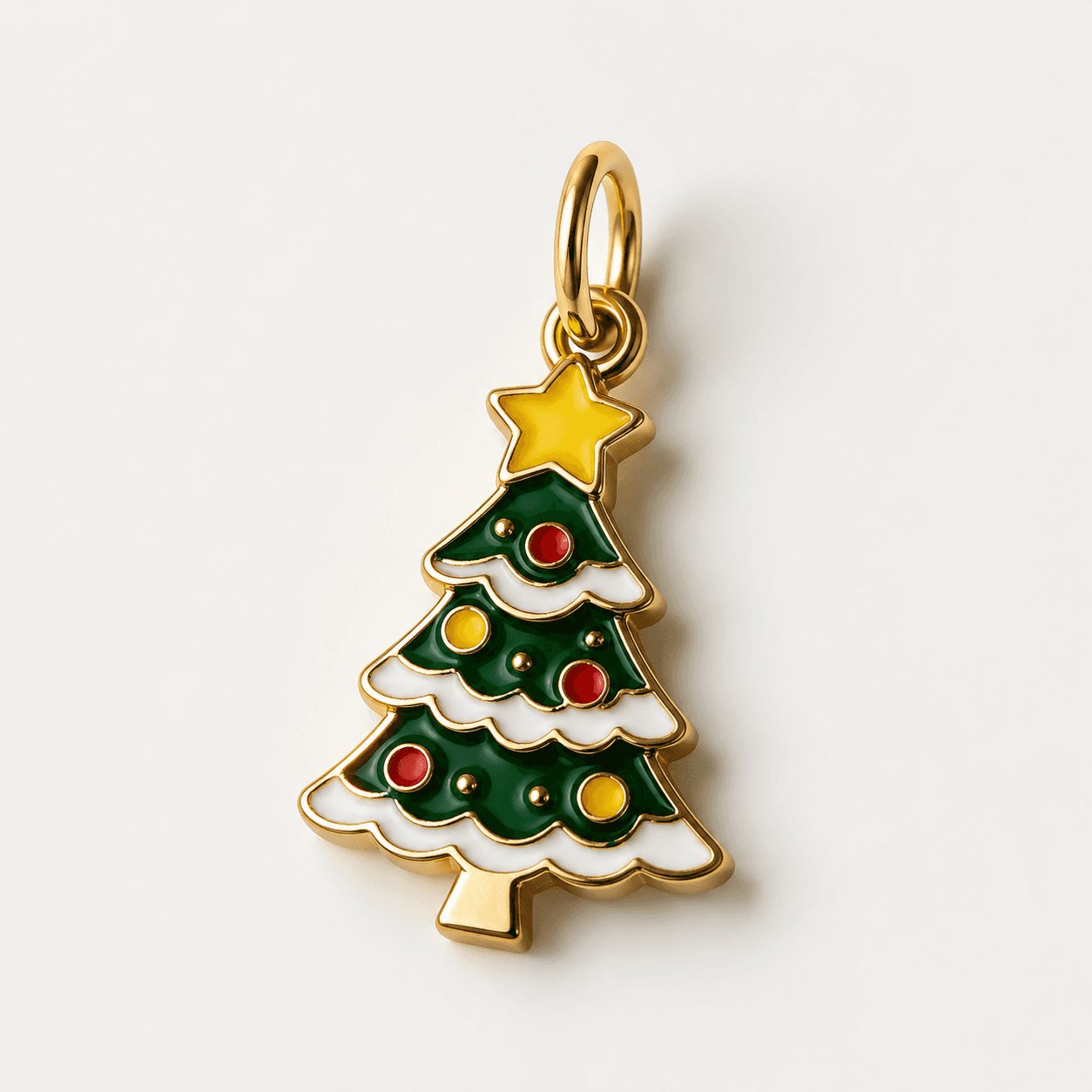
For designers, the choice between hard and soft enamel on 316L is often a function of brand identity, color brightness, and durability expectations. Hard enamel tends to offer a smooth, glassy finish with excellent color fidelity, while soft enamel provides a tactile texture and deeper recesses that may better suit certain design aesthetics.
Plating and Finishes: PVD and Beyond
PVD plating is a common route for achieving durable gold, silver, or rose-gold finishes on 316L stainless steel charms. PVD creates a hard, adherent coating with excellent wear resistance and color stability, important for frequently handled items like charm bars, gift programs, and retail fixtures. In practice, the substrate must be properly prepared to ensure uniform adhesion of the PVD layer, and the compatibility of the enamel with the plating chemistry must be validated to prevent color shifting or diffusion at the interface.
Other finishes, such as silver finish or rose gold plating, can be applied as topcoats after enamel decoration, provided the process ensures consistent layer thickness and minimal chipping at the edges. Protective clear coatings may also be employed to mitigate abrasion in high-wear usage scenarios while preserving enamel brightness.
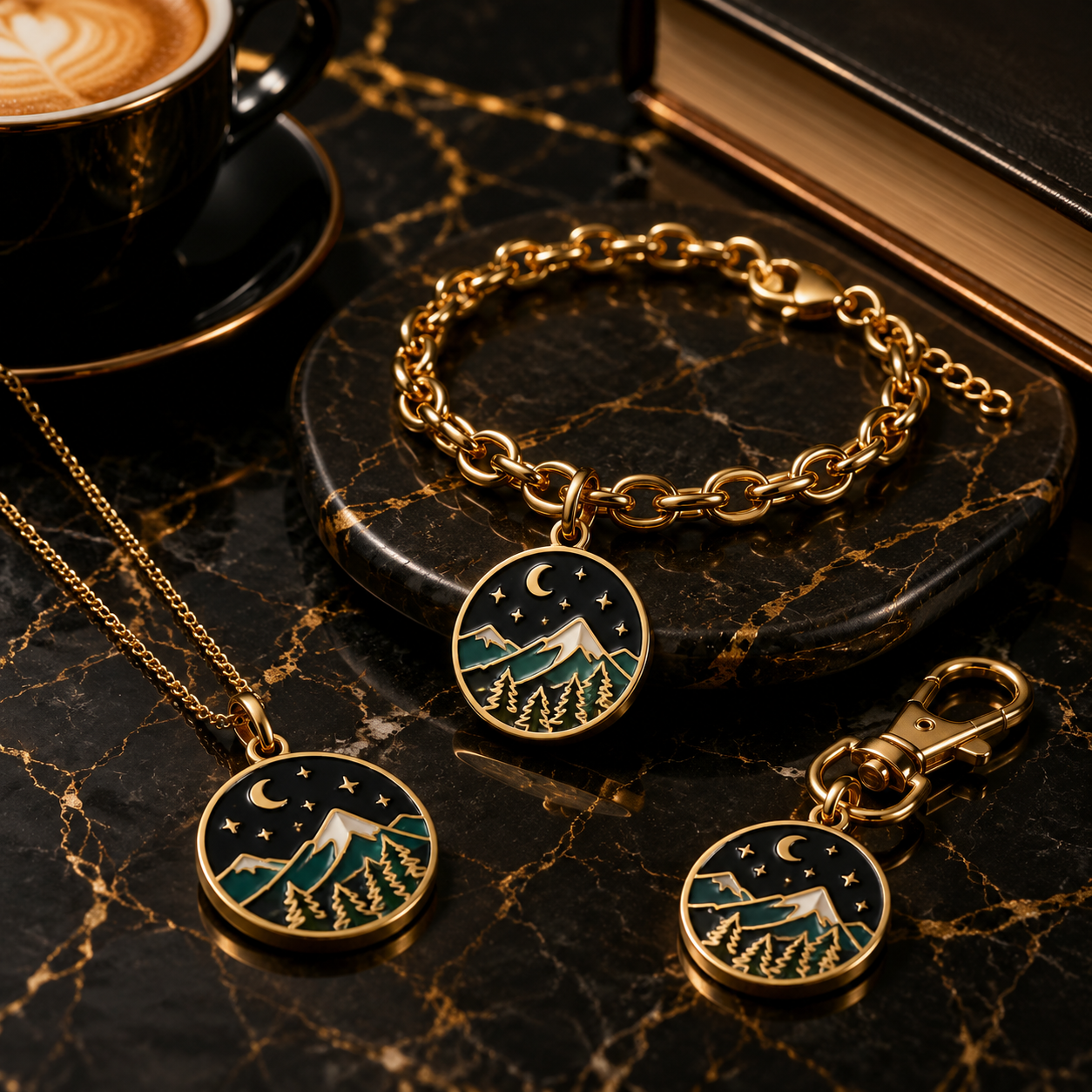
Crystal Inlays and Decorative Elements
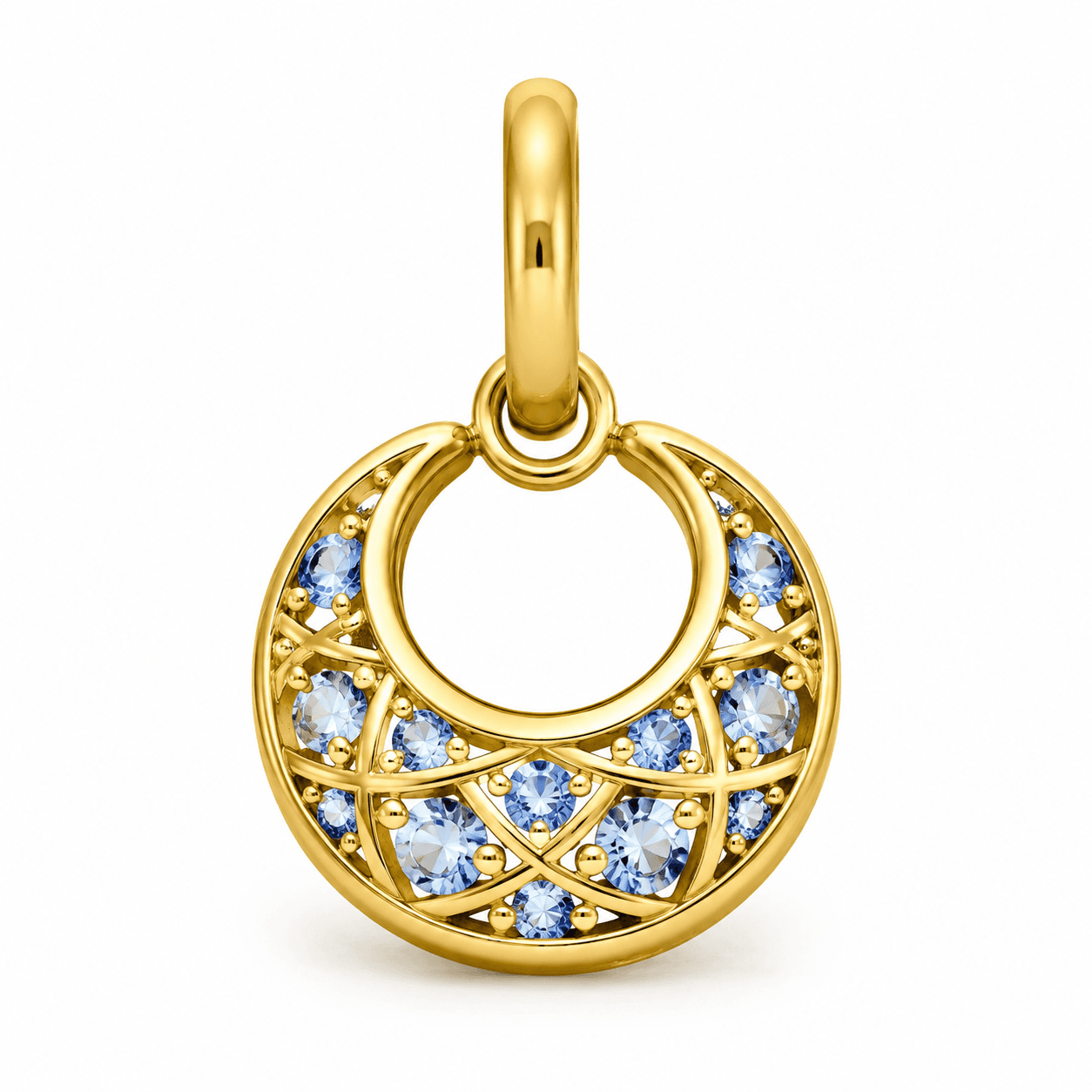
Crystal inlays add sparkle and dimensionality to 316L enamel charms. When incorporating crystals, manufacturers must consider the bonding matrix, crystal size, and seating depth to avoid loosening during wear or cleaning. The stainless steel substrate provides a stable anchor for crystals, while enamel and plating processes must be harmonized to reduce thermal stress and mechanical interference with stone seating.
Quality Systems and Certifications
Compliance is a cornerstone of global jewelry programs. Lancy Jewelry maintains SGS certification across RoHS and REACH, plus Nickel Release EN1811 testing and Salt Spray (accelerated corrosion) 240H. These certifications translate into confidence for boutique brands and private-label buyers seeking health-safety compliance, cross-border acceptance, and durable product performance across daily wear. For designers and sourcing teams, this means fewer escalation cycles and clearer documentation when sharing specs in RFQs and vendor packs.
Benefits and Why It Matters for Global Programs
Material science underpins the practical benefits you care about when selecting 316L stainless steel enamel charms for a private-label program or wholesale orders. The core advantages include predictable performance, scalable production, and a robust pathway to compliant, boutique-ready outcomes.
Key Benefits
- Consistent plating quality across lots helps maintain brand aesthetics in large productions, reducing rework and returns.
- 316L stainless steel offers excellent corrosion resistance and color stability under enamel and PVD finishes, supporting wear in diverse climates.
- Low carbon content in 316L reduces heat-affected zone concerns during welding and assembly, yielding stable component geometry for logo engraving and attachment features.
- SGS-certified processes provide regulatory confidence for US, EU, UK, AU, CA, and other markets, easing documentation for retailers and distributors.
- Low MOQ support and efficient sample development enable quick iterations for concept validation and seasonal collections.
- Private-label packaging and branding options streamline the handoff between factory and brand, supporting a cohesive product story.
Why Certification Matters in a Global Market
Certifications translate into quality assurance at scale. RoHS and REACH compliance ensures restricted substances are managed, while Nickel Release EN1811 testing reduces risk of nickel-related sensitivities in skin-contact components. Salt spray testing simulates long-term exposure to humid, marine, or coastal environments, providing confidence that enamel fills and plating will endure the life of the product. For designers and sourcing managers, these certifications mean fewer compliance inquiries and faster RFQ processing, enabling more efficient supplier selection.
Detailed Analysis and Practical Guide
This section outlines concrete steps to design, validate, and produce enamel charms on 316L stainless steel that meet international standards and brand expectations. Each subsection is focused on decisions that impact feasibility, cost, and performance in real-world programs.
1) Define Alloy Tolerances and Material Traceability
Start with a clear specification of 316L chemistry tolerances, surface roughness targets, and traceability requirements for incoming material and finished parts. Provide a material certificate that confirms Cr, Ni, and Mo ranges align with your supplier’s batch records. For OEM/ODM engagements, insist on traceable lot numbers and documented pass/fail criteria for each batch, especially when the product will be colored via PVD or decorated with enamel.
2) Establish Enamel Process Windows
Enamel process windows should define the maximum enamel thickness, firing temperature, and dwell times. Hard enamel requires precise control to avoid cracking, while soft enamel requires a deeper recess and careful color filling. Coordinate with the enamel supplier to align color recipes with the base metal's finish and anticipate edge bevels, prongs, or logo engravings that may affect enamel integrity.
3) Plan PVD and Topcoat Strategies
When selecting PVD finishes, align color chemistry with enamel tones. For example, gold- or rose-gold hues should avoid aggressive color diffusion into enamel. Establish a final passivation or protective clear coat if required to improve abrasion resistance, particularly for items in high-touch settings such as charm bars or gift program kits. Validate adhesion through cross-cut tests and ensure that any topcoat does not adversely impact color brightness or enamel surface.
4) Assess Attachment Points and Assembly
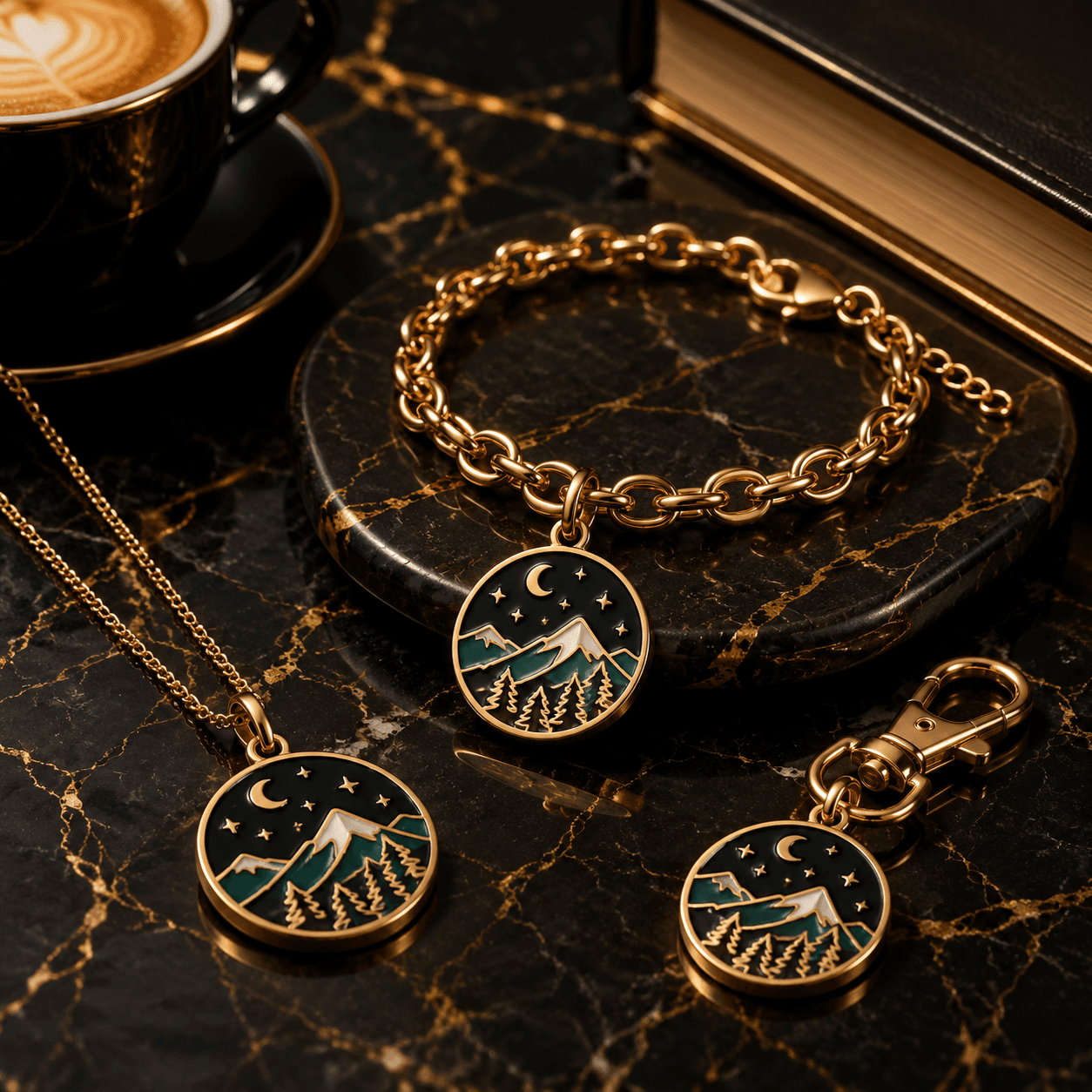
Charms often require bails, jump rings, or small clasps to enable connection with chains, bags, or keys. The 316L base must accommodate these connectors without compromising structural integrity. When designing logos or decorative motifs, consider the geometry around holes and loops to prevent enamel chipping near attachment points. CNC finishes should produce consistent edge widths and reliefs, aiding both engraving readability and assembly tolerance.
5) Design for Manufacturability and Scale
Leverage a modular design approach to enable private-label packaging and easy customization of motifs, sizes, and finishes. Maintain standard tooling wherever possible to reduce unit costs, while reserving room for limited runs of unique designs in small MOQ windows. A well-planned design often translates into shorter sample development cycles and faster time-to-market for private-label lines.
6) Quality Assurance and Sampling
Implement a robust QA plan that includes sample development, dimensional checks, color uniformity, enamel surface smoothness, and plating thickness verification. Documentation should capture part revision numbers, color IDs, and finish codes to ensure resale partners and distributors receive consistent product batches. A strong QA process also reduces after-sales issues related to enamel chipping or plating wear over time.
7) Private-Label Packaging and Brand Alignment
Consider private-label packaging early in the design process. Packaging should reflect the product’s boutique positioning and provide space for branding elements like your logo and serial numbers. The packaging strategy can be a differentiator in gift programs and charm bar storefronts. Lancy Jewelry supports private-label packaging options to help you present a seamless brand experience from production to retail display.
For a streamlined path from concept to market, you can explore our OEM service offerings and initiate a formal RFQ or inquiry through the site. See our OEM service page for detailed capabilities and a simple quote workflow, or contact our team to discuss private-label opportunities and low MOQ charm production.
FAQ
1) Why choose 316L stainless steel for enamel charms?
316L provides a stable austenitic matrix with exceptional corrosion resistance, good formability for complex shapes, and compatibility with enamel decoration and PVD finishes. It supports reliable long-term wear in global markets while maintaining a bright, marketable aesthetic when finished with enamel and color coatings.
2) What finishes pair best with enamel on 316L?
Hard enamel with a PVD topcoat or gold/rose-gold plating on 316L can deliver a premium look with strong color fidelity. For brands seeking a silver-look, a high-polish silver finish combined with clear protective coating can maintain brightness while resisting wear. Always validate adhesion and color stability in a controlled firing profile before full-scale production.
3) How does MOQ and sample development work for OEM/ODM projects?
Many programs leverage a low MOQ for initial samples to validate aesthetics, fit, and color. This approach reduces risk during concept validation and marketing testing. With Lancy Jewelry, you can request sample development under our OEM/ODM framework, which helps you iterate designs quickly before committing to larger bulk orders. To begin, submit your RFQ or inquiry via the cart page and we will guide you through the steps to finalize specifications.
4) How is plating consistency ensured across batches?
Plating consistency relies on controlled process parameters, substrate preparation, and strict process controls. Regular in-process inspections of coating thickness, color uniformity, and adhesion help maintain repeatable finishes across lots. SGS-certified facilities add another layer of assurance for cross-market programs and retailer confidence.
Call to Action: Partner With Us
Ready to translate design concepts into scalable, boutique-ready enamel charms? Lancy Jewelry offers OEM and ODM capabilities, low MOQ programs, and robust sample development for 316L stainless steel charms with enamel and PVD finishes. Let us help you define material specs, establish color libraries, and plan production for global markets. Explore our OEM Service page to review capabilities, or request a formal quote through Request a Quote. For direct discussions about private-label packaging or brand-specific requirements, contact our team via Contact.