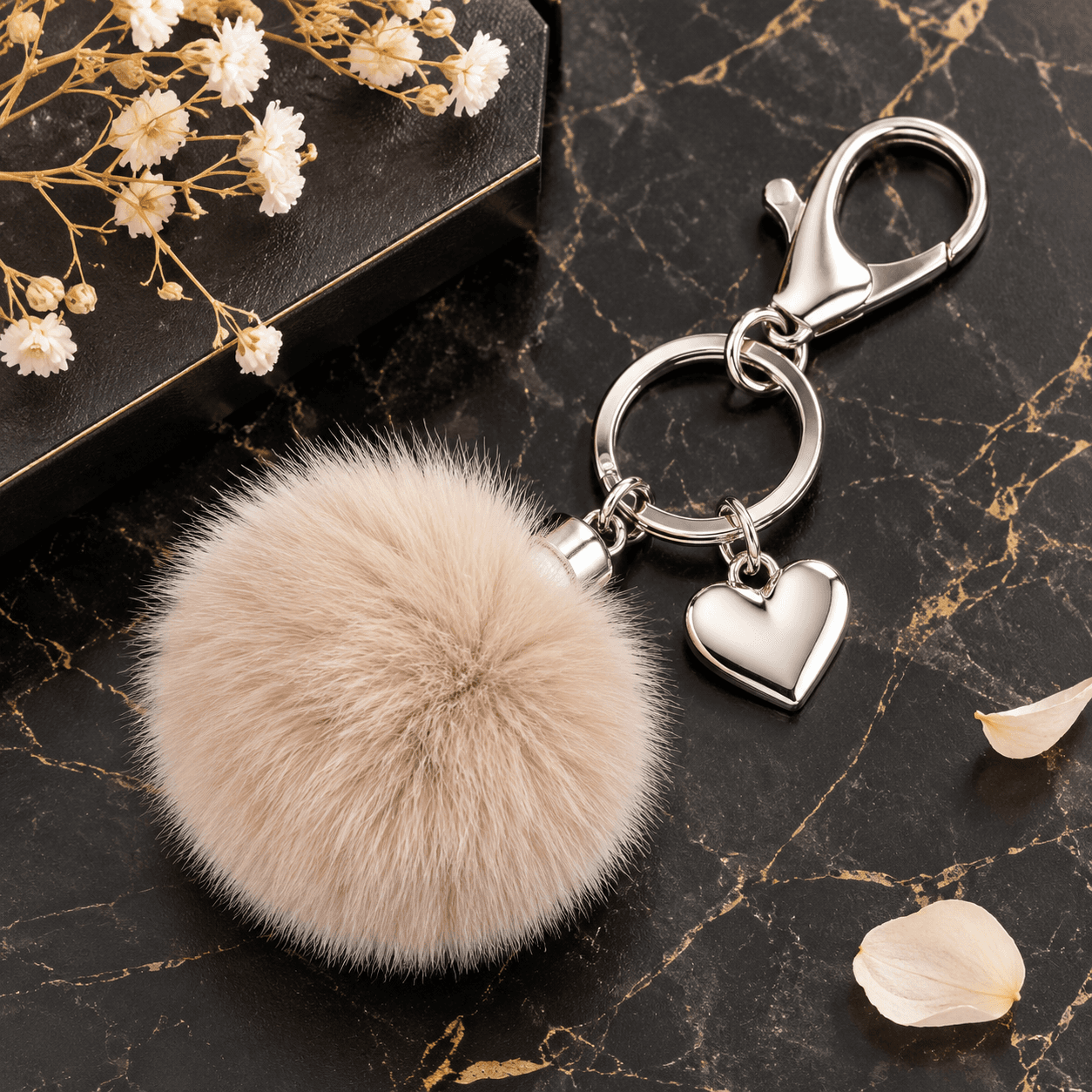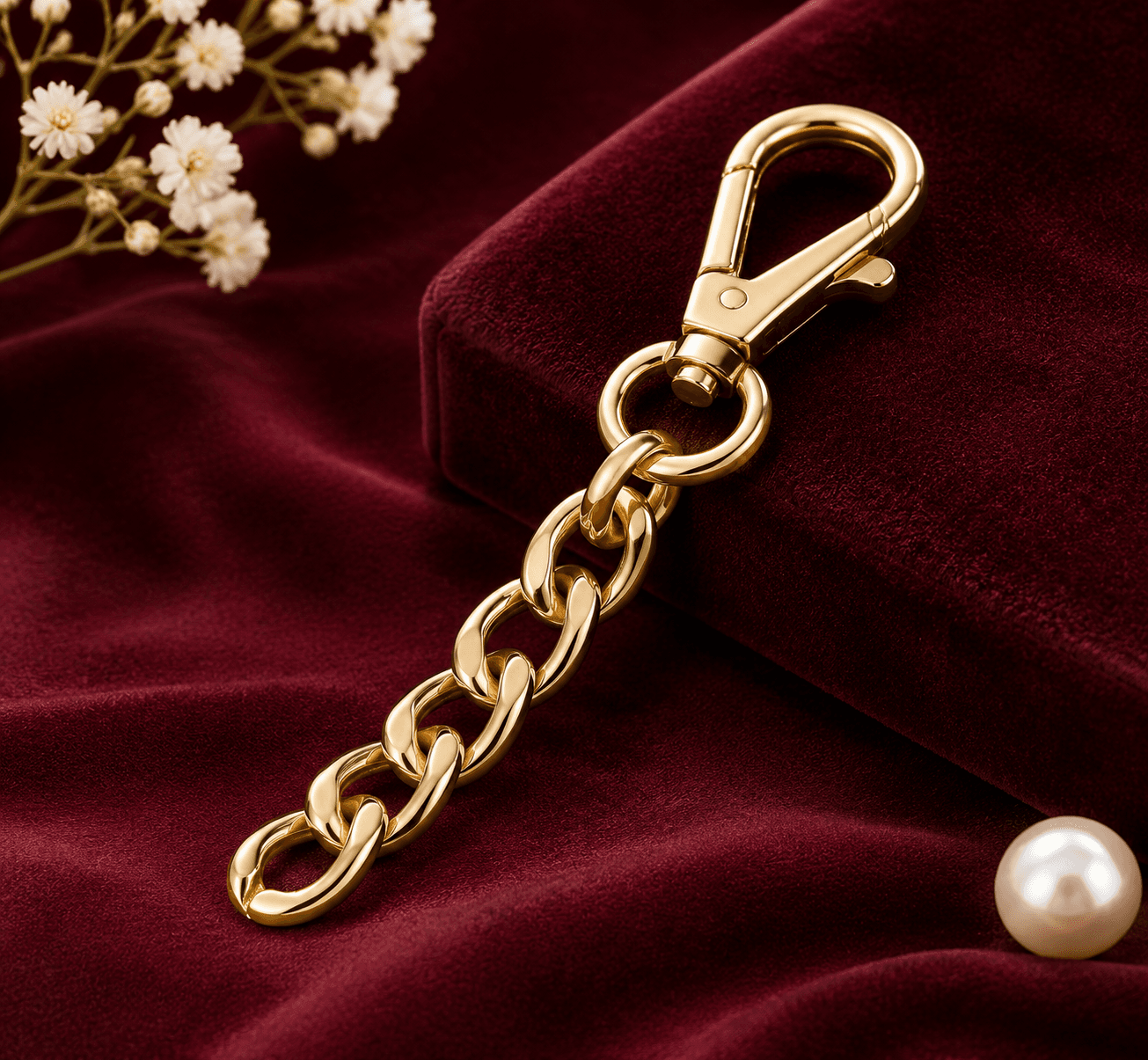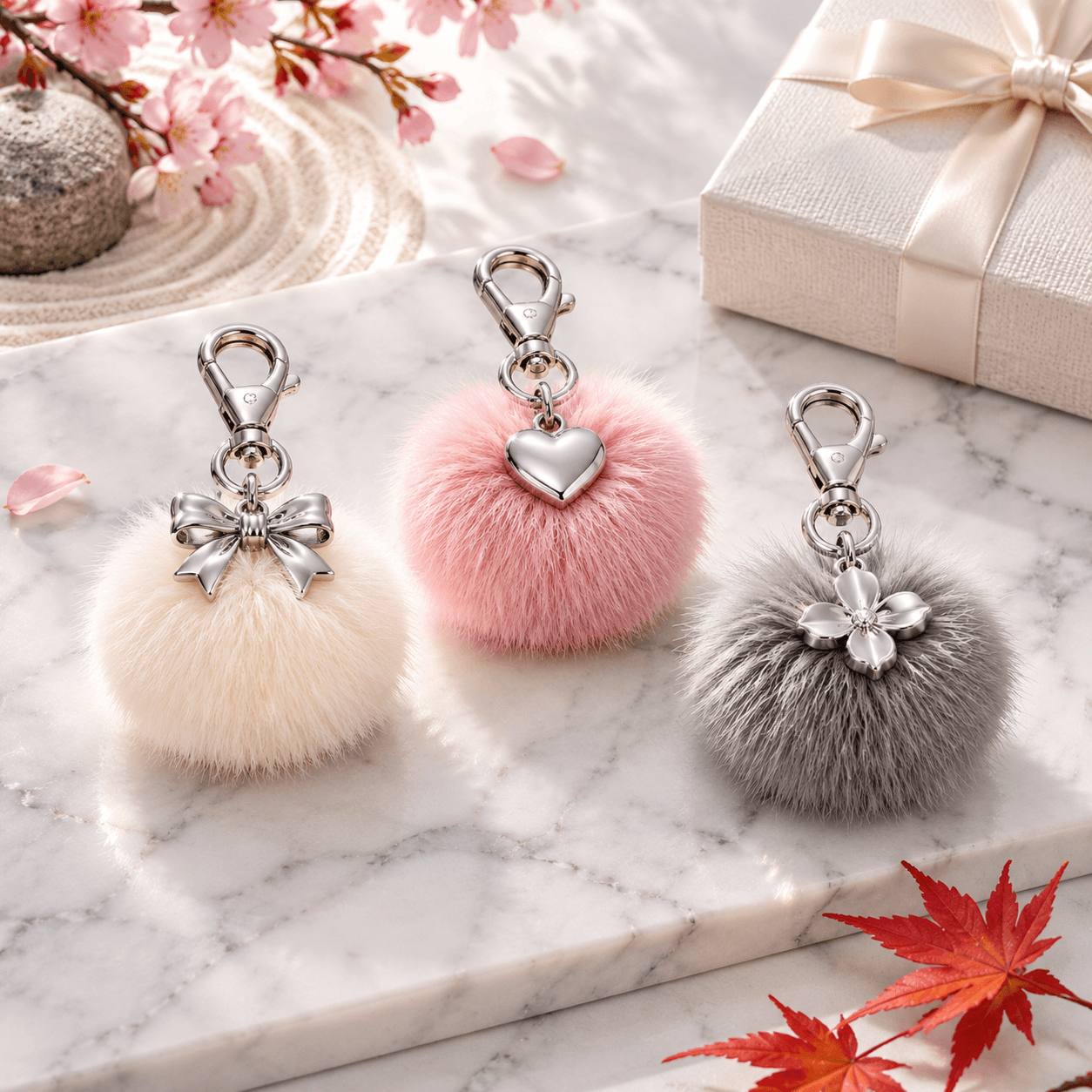
Choosing a wholesale supplier for stainless steel fur bag charms requires more than comparing unit prices, reviewing product photographs, or checking production lead times. For procurement teams serving boutique retailers, gift companies, and private-label programs across the United States and Canada, supplier qualification directly affects product safety, customer satisfaction, inventory reliability, and long-term brand reputation.
Bag charms are exposed to repeated handling, friction, environmental moisture, and occasional impact during everyday use. When decorative elements include PVD finishes, enamel color filling, crystal inlay, and functional attachment hardware, every component introduces a quality-control consideration. A supplier that cannot demonstrate consistent material traceability, documented testing, and repeatable production standards creates unnecessary sourcing risk.
This guide provides an advanced procurement checklist for evaluating manufacturers. It covers technical documentation, durability testing, factory audits, regulatory considerations, and commercial qualification. The objective is straightforward: establish measurable acceptance criteria before approving samples or placing bulk orders.
How to Vet Stainless Steel Fur Bag Charms Wholesale Suppliers
When sourcing stainless steel fur bag charms wholesale, procurement teams should evaluate the complete manufacturing system rather than an individual finished sample. A qualified stainless steel charms manufacturer must demonstrate control over raw material identification, machining, surface finishing, assembly, inspection, and shipment documentation.
For Lancy Jewelry, the manufacturing scope is centered on 316L stainless steel charms, with OEM and ODM development, PVD plating, logo engraving, enamel color filling, crystal setting, and private-label packaging.
1. Verify the Manufacturer's Actual Production Capabilities
Start by establishing whether the supplier operates its own manufacturing facility or primarily coordinates production through external factories. This distinction matters because production ownership influences traceability, corrective-action speed, quality consistency, and accountability.
Request evidence of the following capabilities:
- In-house CNC processing and precision component machining.
- Laser cutting for accurate decorative profiles.
- Laser marking for permanent logo and identification requirements.
- Controlled welding and joining operations where applicable.
- Mechanical polishing and surface preparation.
- PVD finishing and color consistency controls.
- Enamel filling and crystal setting procedures.
- Final assembly, dimensional inspection, and packaging verification.
Do not accept a general statement that a factory provides comprehensive manufacturing services as sufficient evidence. Ask for process descriptions, equipment photographs, inspection records, and examples of production documentation.
2. Confirm the 316L Stainless Steel Specification
Material verification is a mandatory supplier qualification step. A product description stating 316L stainless steel does not independently establish the composition of the actual production batch.
Require a documented material specification and request traceability between incoming material records and finished production lots. Where appropriate, ask for laboratory composition verification using a suitable analytical method, such as X-ray fluorescence screening, with additional testing when the application or specification requires it.
Your procurement checklist should include:
- Written confirmation that 316L stainless steel is the base material.
- Documented material grade and applicable specification.
- Incoming inspection procedures and batch identification.
- Supplier declarations and relevant composition reports.
- Traceability records connecting production batches with incoming material.
- Defined procedures for handling nonconforming incoming material.
Pay particular attention to traceability gaps between sample development and mass production. A technically acceptable prototype does not guarantee that subsequent production batches use the same verified specification.
3. Evaluate the Complete Charm Construction
A bag charm is a functional decorative accessory, not simply a decorative surface. Its attachment point, jump ring, bail, connecting loop, and other functional features must remain secure during repeated use.
Ask the supplier to demonstrate that all connecting components are mechanically appropriate for the intended application. Review hole dimensions, loop geometry, connector closure, edge finishing, and the relationship between the charm's weight and attachment hardware.
For coordinated bag charm programs, verify that each design maintains a consistent attachment specification across the collection. This is especially important when several shapes, sizes, and decorative treatments are developed under one private-label program.
Why Supplier Quality and Durability Verification Matter
Wholesale purchasing decisions have consequences beyond the initial production run. Poor finishing, premature discoloration, weak connectors, or inconsistent dimensions can lead to customer complaints, returns, replacement costs, and interrupted retail programs.
A documented quality system gives procurement managers objective evidence for supplier approval and ongoing performance monitoring.
Key Benefits of Documented Certifications and Testing
For North American buyers, the following supplier qualifications deserve particular attention:
- RoHS documentation: Provides evidence relating to applicable restrictions on specified hazardous substances in relevant electrical and electronic equipment contexts. Do not assume that RoHS documentation alone establishes jewelry compliance.
- REACH documentation: Helps buyers evaluate relevant substance restrictions and chemical compliance obligations for products entering applicable European markets. Request product-specific evidence rather than relying on a generic certificate.
- Nickel release EN1811 testing: Provides evidence concerning nickel release under the applicable test method. Request reports that identify the tested product, surface condition, and relevant test details.
- Salt spray testing: Evaluates corrosion resistance under defined accelerated laboratory exposure conditions. A 240-hour result can provide useful comparative evidence when the test method and acceptance criteria are clearly documented.
Lancy Jewelry maintains SGS-certified testing documentation covering RoHS, REACH, Nickel Release EN1811, and Salt Spray 240H. Procurement teams should request the relevant reports and confirm their product scope, issue dates, laboratory information, and tested configurations before treating them as evidence for a particular purchase order.
Certification is not a substitute for production inspection. A report covering one sample or configuration should not automatically be interpreted as covering every future design, finish, or production batch.
4. Assess PVD Plating and Surface Wear Resistance
Surface durability is particularly important for gold plated and rose gold plating options. Bag charms experience contact with other accessories, clothing, storage surfaces, and handling during retail display and everyday use.
Ask suppliers to explain their complete PVD finishing process, including surface preparation, cleaning, process controls, and final inspection.
Use this checklist:
- Request a written description of the PVD process and its quality-control stages.
- Establish the agreed color reference and acceptable color variation.
- Ask whether coating thickness is measured and how measurement results are recorded.
- Request suitable adhesion and abrasion testing for the intended product application.
- Evaluate resistance to perspiration, moisture, and routine handling where relevant.
- Inspect edges, recessed details, holes, and contact areas for inconsistent coverage.
- Define the acceptable appearance after agreed durability tests.
Salt spray testing and abrasion testing measure different performance characteristics. A successful salt spray result does not independently establish resistance to friction or everyday surface wear. Require separate evidence for each relevant performance requirement.
5. Verify Enamel and Crystal Inlay Quality
Decorative treatments introduce additional inspection requirements. Enamel stainless steel charms should be checked for consistent color filling, clean boundaries, uniform coverage, and secure finishing around recessed areas.
For crystal inlay designs, inspect seating accuracy, alignment, surface cleanliness, and retention. Ask the manufacturer to explain its inspection procedures and how defective settings are identified before shipment.
Recommended acceptance checks include:
- Visual comparison against an approved color master.
- Inspection for visible gaps, bubbles, uneven filling, and surface contamination.
- Dimensional verification of decorative recesses.
- Crystal alignment and seating inspection.
- Appropriate retention testing based on the component design.
- Final appearance comparison against the approved reference sample.
Require a written record of approved decorative specifications. Verbal descriptions of color or appearance are inadequate for controlling repeat production.
Detailed Supplier Evaluation Checklist for Procurement Teams
Once the technical scope is established, move to a structured supplier qualification process. The following checklist can be incorporated into an internal vendor approval procedure or RFQ evaluation template.
Stage 1: Documentation and Compliance Review
Objective: Determine whether the supplier can support the documentation requirements of your target markets.
- [ ] Obtain the company's legal manufacturing and business information.
- [ ] Confirm the actual manufacturing location and production ownership.
- [ ] Request the 316L stainless steel specification and material traceability procedure.
- [ ] Obtain relevant SGS reports and confirm their scope.
- [ ] Request RoHS and REACH documentation where applicable.
- [ ] Obtain Nickel Release EN1811 test documentation where relevant.
- [ ] Request Salt Spray 240H results and identify the exact test method.
- [ ] Review product-specific declarations and chemical compliance documentation.
- [ ] Confirm that the supplier can maintain batch-level quality records.
- [ ] Verify that documentation can be updated when product specifications change.
Procurement decision: Do not approve a supplier solely because it presents multiple certificates. Every document must be relevant to the product, production process, and intended destination market.
Stage 2: Factory Audit and Process Control
Objective: Establish whether manufacturing operations are controlled, repeatable, and auditable.
- [ ] Review CNC, laser cutting, laser marking, welding, and polishing capabilities.
- [ ] Inspect incoming material identification and storage procedures.
- [ ] Review production work instructions and process checkpoints.
- [ ] Confirm that PVD finishing specifications are documented.
- [ ] Inspect enamel filling and crystal setting procedures.
- [ ] Review equipment maintenance and calibration records where applicable.
- [ ] Verify that defective products are identified and segregated.
- [ ] Review corrective-action records and root-cause investigation procedures.
- [ ] Confirm that final inspection records are maintained.
- [ ] Evaluate packaging protection and shipment traceability.
During an audit, select a finished product and trace it backward through its production history. A mature manufacturer should be able to connect the finished item to its material records, process documentation, inspection results, and shipment information.
Stage 3: Sample Development and Durability Testing
Objective: Establish whether the supplier can translate an approved design into repeatable commercial production.
- [ ] Request a production-representative sample rather than an unverified showroom sample.
- [ ] Confirm the sample uses the agreed 316L stainless steel specification.
- [ ] Approve the charm's dimensions, weight, shape, and attachment structure.
- [ ] Verify the agreed PVD color and surface appearance.
- [ ] Inspect enamel filling and crystal inlay where applicable.
- [ ] Conduct appropriate abrasion and adhesion assessments.
- [ ] Review corrosion-related test evidence.
- [ ] Evaluate connector strength and mechanical integrity.
- [ ] Record the approved sample's specifications and inspection results.
- [ ] Obtain written confirmation that mass production will follow the approved reference.
For advanced sourcing programs, develop an inspection matrix linking each product characteristic to a test method, sampling frequency, acceptance limit, and responsible department.
Stage 4: Mass Production and Shipment Approval
Objective: Prevent differences between approved samples and delivered wholesale orders.
- [ ] Establish an agreed production schedule and critical milestones.
- [ ] Confirm the approved specification revision before production starts.
- [ ] Review first-article inspection results.
- [ ] Define in-process inspection checkpoints.
- [ ] Set measurable dimensional and visual acceptance criteria.
- [ ] Establish an agreed AQL sampling plan where appropriate.
- [ ] Require final inspection before shipment.
- [ ] Verify packaging, labeling, and order quantities.
- [ ] Retain representative production samples and inspection records.
- [ ] Agree on procedures for defects, corrective action, and replacement claims.
Do not allow a supplier to substitute a component, change a finishing specification, or revise an attachment design without written buyer approval.
6. Understand North American Regulatory Considerations
North American procurement teams should distinguish between general product quality documentation and legally applicable product safety obligations.
United States: The Consumer Product Safety Commission (CPSC) states that there are no mandatory federal requirements specifically for jewelry as a general product category, although ASTM F2999 for adult jewelry and ASTM F2923 for children's jewelry provide recognized industry consensus standards. Children's products also have additional applicable requirements, including lead restrictions and certification obligations where relevant.
California deserves specific attention. Its Metal-Containing Jewelry Law establishes lead and cadmium restrictions for applicable jewelry products and includes supplier certification requirements. The scope includes certain removable charms and decorative components. Buyers should obtain product-specific compliance documentation and determine which requirements apply to their product category and intended users.
Canada: The Children's Jewellery Regulations under the Canada Consumer Product Safety Act establish limits for lead and cadmium in children's jewellery. Health Canada specifies a maximum of 90 mg/kg total lead and, for qualifying small items, a maximum of 130 mg/kg total cadmium. These requirements also apply to relevant coatings and components. Adult and children's product classifications must be established correctly before importing or selling.
FDA considerations: The FDA is not the primary federal authority for ordinary decorative jewelry. Its jurisdiction generally concerns categories such as food, drugs, biologics, and medical devices. Procurement teams should therefore avoid treating an FDA certificate as a universal jewelry compliance requirement. The appropriate product-safety and consumer-protection framework should be identified according to the product's intended use and market.
Useful official references for procurement and compliance teams include:
- CPSC Jewelry Requirements and FAQ
- California Metal-Containing Jewelry Law
- Health Canada Children's Jewellery Safety
- FDA Regulatory Responsibilities
Regulatory requirements can vary according to product classification, age grading, design, sales location, and intended use. Have qualified compliance professionals review the final product and its documentation before commercial release.
7. Evaluate Commercial Reliability and MOQ Flexibility
Technical compliance is only one part of supplier qualification. Boutique brands and gift companies also need predictable production planning, responsive communication, and commercial flexibility.
When evaluating wholesale stainless steel charms suppliers, review:
- MOQ requirements for new designs and repeat orders.
- Sample development costs and approval timelines.
- Bulk production capacity and realistic delivery schedules.
- Pricing transparency for different finishes and decorative treatments.
- Private-label packaging and logo engraving capabilities.
- Communication speed and engineering support.
- Production reservation and order change procedures.
- Defect resolution, replacement, and after-sales policies.
Low MOQ support can be valuable when testing a new bag charm collection. However, a low initial quantity should not come at the expense of traceability, inspection, or documented specifications.
Ask for a written commercial agreement covering the approved product specification, sampling arrangements, production tolerances, delivery obligations, quality acceptance criteria, and responsibilities when nonconformities occur.
How to Compare and Score Potential Suppliers
For procurement teams assessing several candidates, a weighted supplier scorecard creates a consistent evaluation framework. It prevents price from dominating decisions before technical and compliance risks have been addressed.
| Evaluation Category | Suggested Weight | Evidence Required |
|---|---|---|
| Material verification | 20% | 316L specifications and traceability |
| Quality and durability | 20% | Testing reports and inspection procedures |
| Regulatory documentation | 15% | Applicable compliance reports and declarations |
| Manufacturing capability | 15% | Equipment, process records, and factory audit |
| Sample development | 10% | Prototype quality and revision control |
| Commercial reliability | 10% | MOQ, capacity, and delivery performance |
| Communication and service | 10% | Response quality and corrective-action support |
Score each category using a consistent internal scale, such as 1 to 5. Define minimum qualification requirements separately from the overall score. For example, an unresolved material traceability issue should prevent approval regardless of a supplier's commercial rating.
For established vendors, repeat the assessment periodically and after significant changes to the product specification, production location, finishing process, or critical components.
Common Supplier Vetting Mistakes to Avoid
Relying on Photographs Instead of Physical Samples
Product photographs cannot verify attachment strength, surface consistency, dimensions, or actual finishing quality. Always obtain and inspect representative physical samples before approving a new design.
Accepting Generic Certificates
A certificate that does not identify the tested product, relevant standard, laboratory, or testing scope provides limited purchasing assurance. Request reports that can be connected to the actual production specification.
Ignoring Component-Level Risks
Even when the primary charm meets the agreed specification, connecting components and decorative details can introduce mechanical or chemical compliance concerns. Include the complete assembled product in the evaluation plan.
Failing to Control Repeat Production
Approved samples must become controlled production references. Without specification revision control, inspection records, and documented change approval, repeat orders can gradually depart from the original requirements.
Frequently Asked Questions
1. What documents should a wholesale stainless steel charms supplier provide?
Request a 316L stainless steel specification, material traceability records, applicable SGS laboratory reports, RoHS and REACH documentation where relevant, Nickel Release EN1811 results, Salt Spray 240H reports, product drawings, inspection records, and written quality procedures. Ensure that each document corresponds to the actual product and intended market.
2. Is Salt Spray 240H testing enough to guarantee long-lasting PVD plating?
No. Salt spray testing evaluates corrosion-related performance under specified laboratory conditions. It does not independently establish abrasion resistance, adhesion, or long-term color retention. Request separate testing appropriate to the intended use and define measurable acceptance criteria for each performance characteristic.
3. What should North American buyers check before importing bag charms?
Confirm the product's intended user category, applicable CPSC requirements, relevant ASTM standards, California lead and cadmium restrictions, and Canadian Children's Jewellery Regulations when applicable. Also review material composition, nickel release, product labeling, and documentation obligations. The FDA is generally not the primary regulator for ordinary decorative jewelry.
4. Can buyers request low MOQ and private-label stainless steel charms production?
Yes. Qualified OEM and ODM manufacturers may support lower-quantity sampling and production programs, subject to design complexity, finishing requirements, and production capacity. Buyers should confirm MOQ, sample charges, logo engraving, packaging specifications, lead times, and quality acceptance requirements before placing an order.
Partner With Lancy Jewelry for Reliable Wholesale Charm Manufacturing
Supplier qualification should result in a manufacturing partnership built on documented specifications, repeatable production, and measurable product quality. For boutique jewelry brands, charm bar retailers, gift companies, and private-label buyers, these controls are essential to developing collections that can be reordered with confidence.
Lancy Jewelry is a B2B OEM/ODM manufacturer specializing in 316L stainless steel charms. Our modern production facility supports CNC processing, laser cutting, laser marking, welding, and polishing, alongside PVD finishing, enamel color filling, crystal setting, and custom logo engraving.
Our SGS-certified testing documentation covers RoHS, REACH, Nickel Release EN1811, and Salt Spray 240H. We also support sample development, low MOQ programs, coordinated collection planning, and private-label packaging.
Whether you are developing a new bag charm collection or qualifying a long-term manufacturing partner, our team can help translate your product requirements into a controlled production specification.
Explore our 316L stainless steel charms collection to review available product directions. For tailored manufacturing requirements, visit our OEM and ODM manufacturing service.
Ready to evaluate a new supplier or develop a private-label collection? Contact Lancy Jewelry with your drawings, reference specifications, target quantities, preferred finishes, and quality requirements. You can also submit an RFQ to discuss pricing, MOQ, sample development, and bulk production planning.
Make supplier approval a documented decision, not a purchasing assumption. Choose a manufacturing partner that can demonstrate its capabilities, verify its materials, control its processes, and support your business as your collection grows.