Stainless Steel Bulk Charm Assortments: A Quality Checklist for North American Buyers
When procurement teams evaluate a bulk bag of lucky symbol charm assortments, the purchase decision is rarely about the charms alone. It is about repeatable quality, documented compliance, and the confidence that every 316L stainless steel charm in the bag will meet the same finish, dimension, and attachment standards. For US and Canadian buyers, a weak checklist can turn a promising charm program into returns, chargebacks, and audit findings. This guide gives sourcing teams a practical, factory-direct checklist for vetting a stainless steel charms manufacturer before placing bulk charm orders.

Bulk Bag Quality Checklist for 316L Stainless Steel Lucky Symbol Charm Assortments
Use the following checklist as a pre-qualification and incoming-inspection framework. It is designed for procurement teams that need comparable, auditable answers from each supplier, not general marketing claims.
1. Confirm Base Material and Factory Capability
- ☐ Confirm the base material is 316L stainless steel for every charm style in the bulk bag. Request written material declarations and lot traceability from the manufacturer.
- ☐ Ask for SGS-certified test reports covering RoHS, REACH, Nickel Release EN1811, and Salt Spray 240H. Verify that report dates, style references, and production lots match the quotation.
- ☐ Review the production process for CNC, laser cutting, laser marking, welding, and polishing. A factory that controls these steps can hold tighter tolerances and repeatable surface quality.
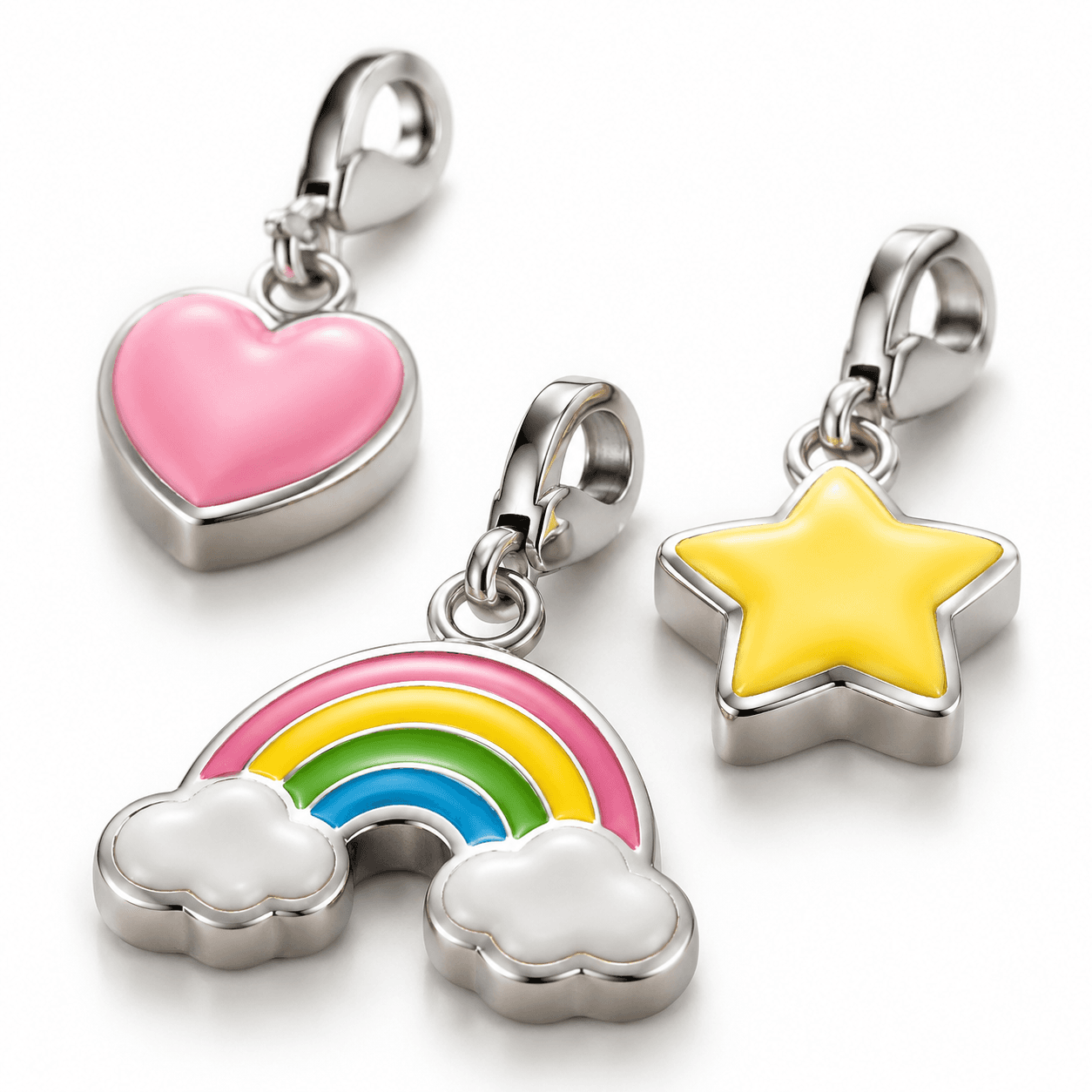
- ☐ Confirm which finishes are available: PVD gold plating, silver finish, rose gold plating, enamel color filling, and crystal inlay. Require a finish control plan for each option.
- ☐ Ask how OEM and ODM development is handled, including drawing review, logo engraving approval, and pre-production samples.
2. Inspect Finish Consistency Across the Bag
- ☐ Compare plating color across multiple pieces and multiple production lots under neutral daylight or a color-matching lamp. PVD gold plating should not show visible batch-to-batch shifts.
- ☐ Check polished edges, recessed areas, and logo engraving for burrs, scratches, or polishing compound residue.
- ☐ Inspect enamel fill for bubbles, gaps, and color bleed. Confirm crystal inlay is seated securely with no loose stones.
- ☐ Review Salt Spray 240H results for PVD plated stainless steel charms, especially for bag charms and keychain applications that see frequent abrasion.
- ☐ Use a packaging card, jump ring, or neutral ruler grid as a scale reference when comparing charm size across the assortment.
3. Check Attachment Hardware and Physical Logic
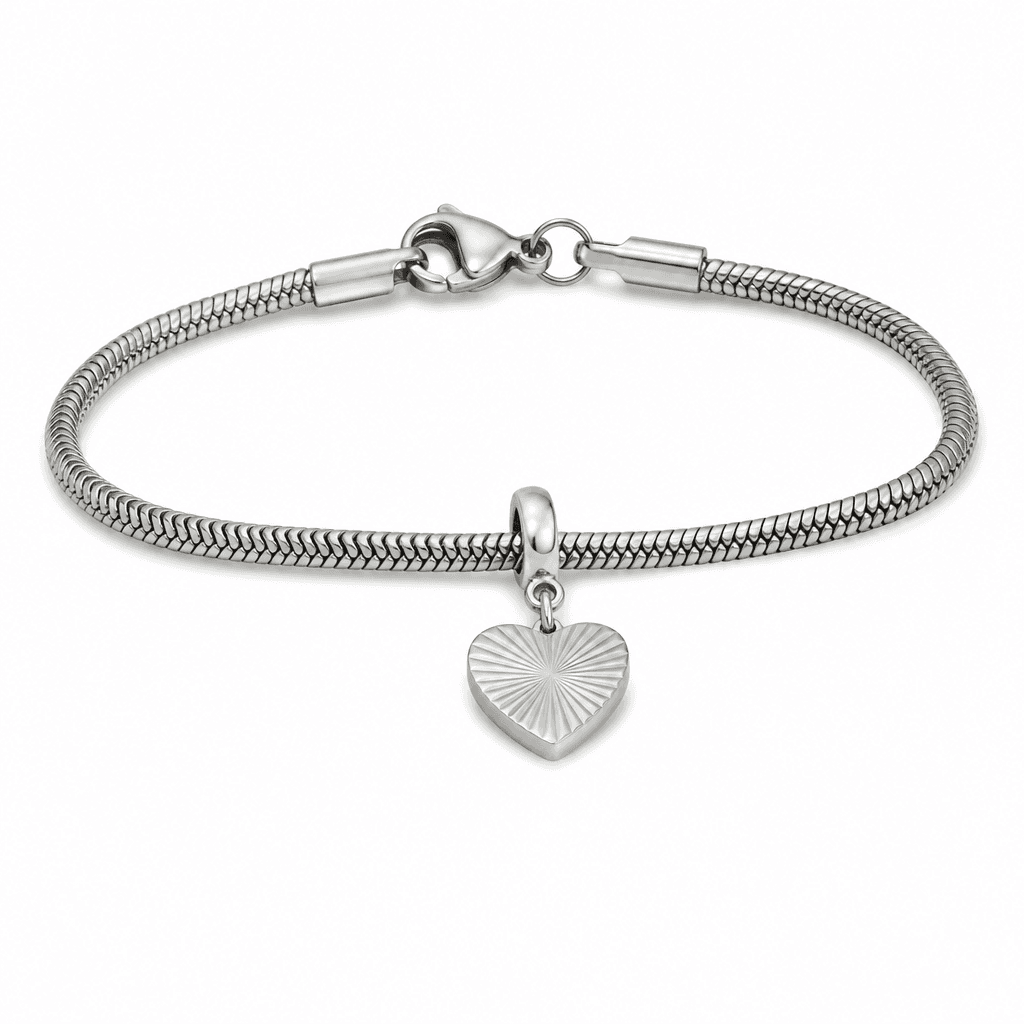
- ☐ Confirm each charm has a visible bail or jump ring. Hardware must pass through a real hole or loop and must be fully closed where applicable.
- ☐ Inspect jump ring gauge, closure alignment, and solder or weld quality. Reject charms with open rings, fused links, or disconnected hardware.
- ☐ Perform a manual pull and function check on a sample from each lot. Record pass/fail results by SKU and lot number.
- ☐ Verify that any key ring, clasp, or chain accessory shown with the charm is mechanically plausible and not merely decorative in the product image.
4. Review Packaging and Private Label Readiness
- ☐ Confirm bulk bag inner separation, labeling, and count accuracy. Each bag should state SKU, finish, quantity, and lot code.
- ☐ Review private label packaging options, including display cards, trays, barcodes, and retail-ready labels.
- ☐ Check that packaging protects PVD plating, enamel, and crystal inlay during transit and does not create unnecessary surface abrasion.
- ☐ Request a packaging mock-up before mass production if the charm program will launch in boutique retail or charm bar environments.
Why Quality and Durability Checks Matter for North American Buyers
North American procurement teams are accountable for supplier documentation, product safety, and brand risk. A low-cost bulk bag can become expensive if the supplier cannot provide consistent test reports, traceable lots, or replacement support. The checklist above is not bureaucracy; it is a risk-control tool for US and Canadian retail channels.
Compliance and Documentation
Request SGS-certified reports for RoHS, REACH, Nickel Release EN1811, and Salt Spray 240H. For US and Canadian programs, also clarify lead and cadmium screening requirements, California Proposition 65 considerations, and any customer-specific restricted substance list. If charms are bundled with food, cosmetics, or other regulated gift items, keep FDA considerations and food-contact compliance separate from the jewelry documentation. The stainless steel charm should be evaluated as a jewelry component, while the food or cosmetic item follows its own regulatory pathway.
Wear Resistance and Longevity
PVD plating quality is a major differentiator in 316L stainless steel charms. A properly controlled PVD process supports color consistency, abrasion resistance, and corrosion resistance. Salt Spray 240H testing gives buyers a practical durability reference, especially for bag charms, keychain charms, and charm bar accessories. Enamel color filling and crystal inlay also need wear checks: enamel should resist chipping, and crystals should remain secure after handling and transit.
Supplier Vetting and Audit Readiness
A stainless steel charms manufacturer should answer RFQs with clear specifications, lead times, MOQ thresholds, and sample development steps. Procurement teams should verify lot control, incoming inspection records, and corrective-action response times. Low MOQ support is useful for market testing, but it should not come at the cost of documented quality. The best suppliers make the audit trail easy to follow from quotation to bulk charm orders.
Step-by-Step Procurement Guide
Step 1: Pre-Qualify the Supplier
Start with a written RFQ that requires material confirmation, finish options, test reports, MOQ, lead time, and packaging choices. Ask for references or sample reports that show experience with boutique brands, gift companies, or private-label buyers. Confirm that the factory can support OEM logo engraving and ODM concept development without vague promises.
Step 2: Approve Sample Development
Order pre-production samples in the actual finish and size. Evaluate the front design, bail or jump ring, engraving depth, enamel fill, and crystal setting. Measure the charm against the approved drawing and record the sample date. Sample development should produce a signed golden sample that becomes the reference for bulk production.
Step 3: Lock Bulk Production Standards
Before mass production, agree on AQL sampling, finish tolerances, plating color limits, and packaging requirements. Require lot-specific photos or measurement reports for PVD plated stainless steel charms. Confirm how the supplier handles rework, replacement, and shipment schedules if a lot fails inspection.
Step 4: Perform Incoming Inspection
At receiving, inspect a statistically valid sample from each bag. Check material declarations, quantity, finish consistency, attachment function, and packaging labels. Document defects by category: plating, enamel, crystal, hardware, dimension, and packaging. Keep the inspection record linked to the supplier lot code for future audits.
Step 5: Plan Packaging and Launch
For boutique and charm bar programs, packaging is part of the product experience. Confirm private label packaging, display tray compatibility, and retail labeling before the launch date. A well-planned bulk bag should move cleanly from factory to warehouse to store without extra sorting or rework.
FAQ
How can I verify 316L stainless steel in a bulk charm order?
Request a written material declaration, lot traceability, and SGS-certified reports that match the quoted style. Compare the report references with the production lot and keep the documentation in your supplier file.
What PVD plating tests should I request for North American retail?
Ask for Salt Spray 240H results, RoHS and REACH reports, and Nickel Release EN1811 documentation. Confirm that the test report covers the same finish and base material as the bulk charm order.
What packaging checks matter for bulk charm bags?
Check SKU labels, quantity counts, lot codes, inner separation, and protection for PVD plating, enamel, and crystal inlay. If you need private label packaging, approve a mock-up before mass production.
Can Lancy support low MOQ and OEM sample development?
Yes. Lancy Jewelry supports low MOQ production, OEM and ODM development, logo engraving, PVD plating, enamel color filling, crystal setting, and private-label packaging for boutique brands and sourcing teams.
Partner With a Factory-Direct Charm Supplier
Lancy Jewelry is a B2B OEM/ODM 316L stainless steel charms manufacturer serving boutique brands, charm bar retailers, gift companies, and private-label buyers. Our modern facility includes CNC, laser cutting, laser marking, welding, and polishing, with SGS-certified support for RoHS, REACH, Nickel Release EN1811, and Salt Spray 240H. If you are building a bulk charm program for the US or Canadian market, review our OEM service, browse all products, or request a quote. You can also contact our sales team to discuss sample development, MOQ, and private-label packaging.