Finding a reliable stainless steel beaded bag charms supplier in China involves more than comparing product photographs and unit prices. For jewelry designers and boutique buyers in North America, the right manufacturing partner must understand material chemistry, surface finishing, decorative customization, and consistent production quality. A well-developed bag charm collection needs attractive visual details, dependable attachment hardware, and materials suitable for everyday accessory applications.
316L stainless steel is an important material to evaluate when developing these products. Its chromium-rich composition, corrosion resistance, and suitability for different surface treatments make it a practical foundation for contemporary charm collections. However, not every supplier offers the same level of material documentation, processing control, or customization support. This guide explains what buyers should examine before selecting a manufacturing partner and how to compare suppliers using measurable criteria.
Stainless Steel Beaded Bag Charms Supplier China: What Should Buyers Evaluate?
A professional supplier should offer more than finished decorative components. Jewelry designers need a partner capable of translating a creative concept into a repeatable production specification. This includes selecting appropriate 316L stainless steel components, developing decorative details, checking attachment structures, and maintaining consistent finishing across production batches.
Understanding the Structure of a Beaded Bag Charm
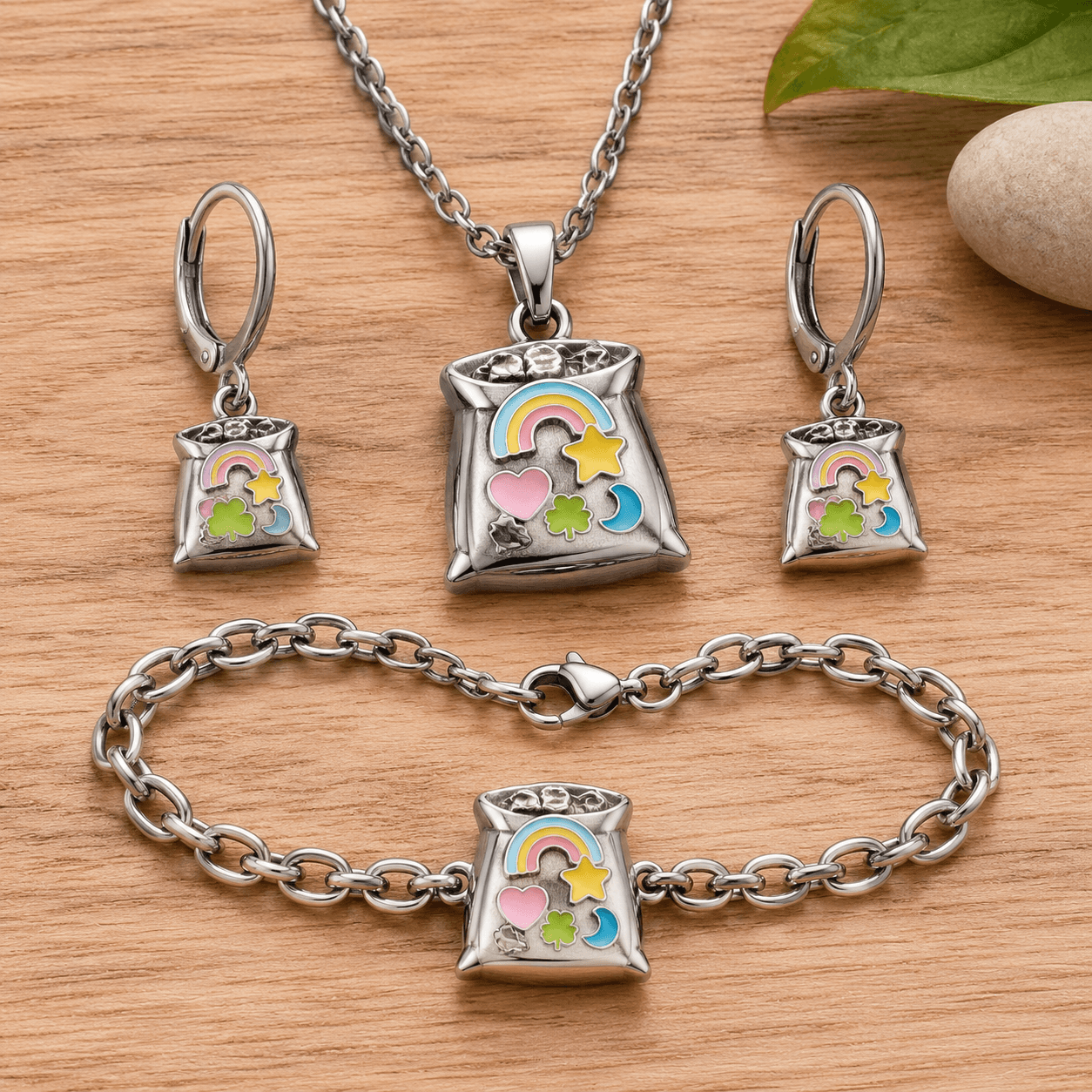
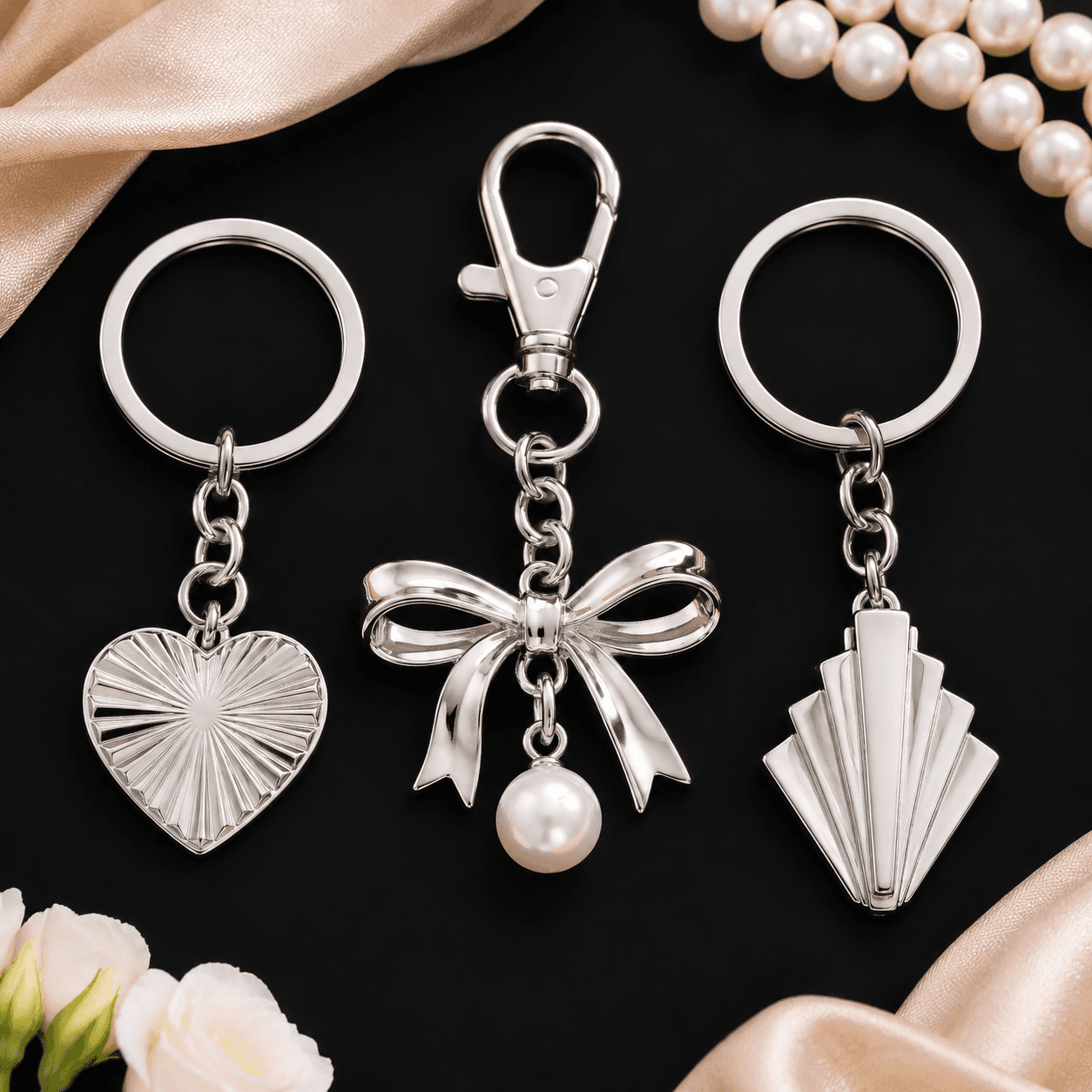
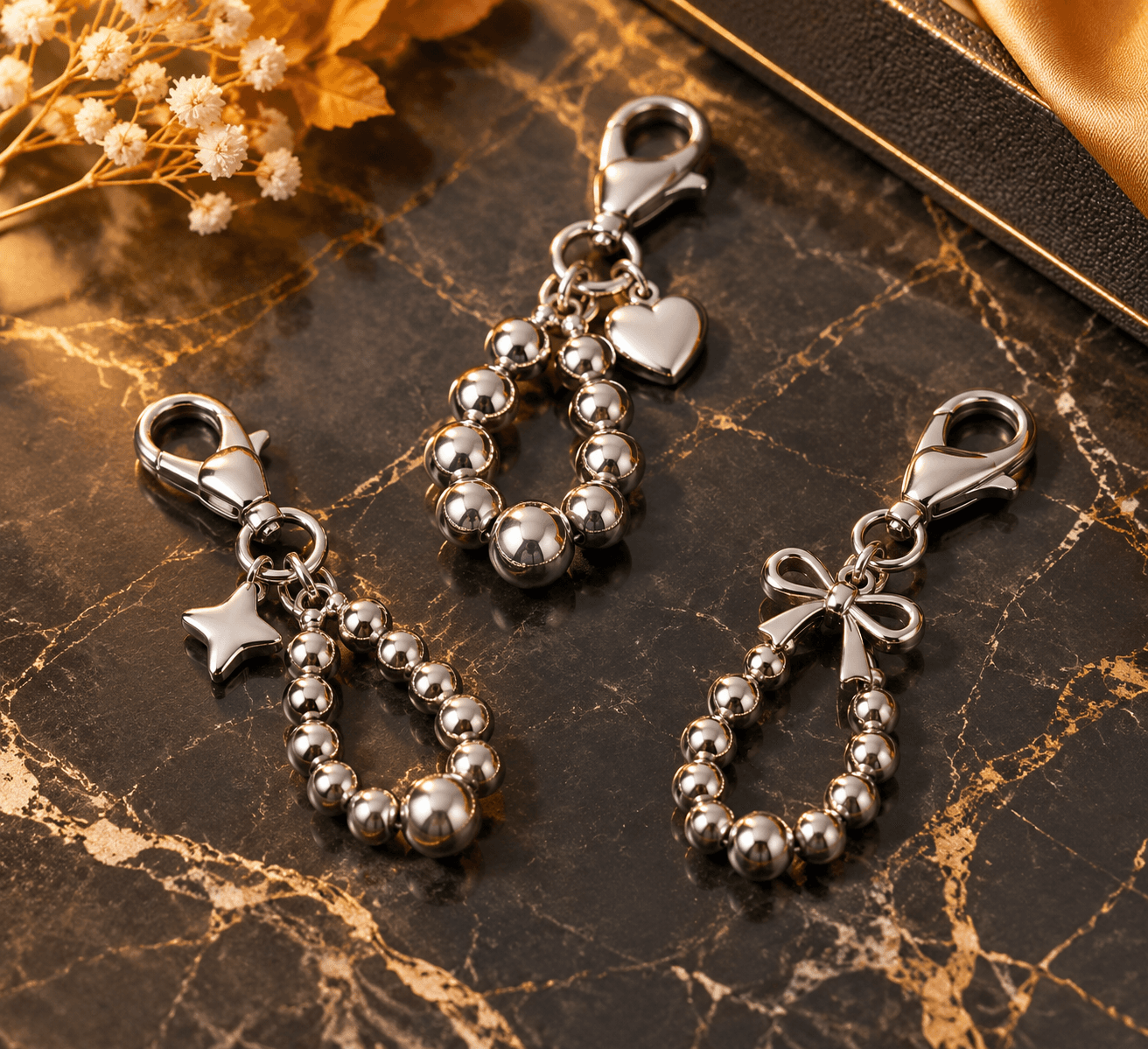
A beaded bag charm typically combines decorative elements, connecting components, and an attachment mechanism. For a collection developed around 316L stainless steel charms, the main decorative charm should be manufactured from 316L stainless steel. Its design can incorporate engraved details, enamel color filling, crystal inlay, and different surface finishes.
When evaluating a sample, inspect the complete structure rather than focusing only on the front decoration. Check whether the jump rings are securely closed, whether connecting loops have sufficient strength, and whether the attachment hardware is mechanically appropriate for the intended application. A visually attractive component is not commercially successful if its connection points fail during normal handling.
Why Supplier Capabilities Matter
Some suppliers concentrate on ready-made products, while others provide engineering and customization support. For boutique brands, the second approach can be particularly valuable because it allows designers to develop coordinated collections instead of selecting unrelated stock components.
Look for a stainless steel charms manufacturer with documented production processes, sample development capabilities, finishing controls, and experience handling customized specifications. Ask whether the supplier can manage logo engraving, decorative color filling, crystal setting, and private-label packaging within one coordinated production program.
Why 316L Stainless Steel Matters for Beaded Bag Charms
Material selection affects corrosion behavior, appearance retention, manufacturing consistency, and product positioning. Understanding the chemistry of 316L stainless steel helps buyers make decisions based on engineering characteristics rather than marketing descriptions alone.
Composition and Material Chemistry
316L stainless steel is a low-carbon grade within the austenitic stainless steel family. Its principal elements include iron, chromium, nickel, and molybdenum. Chromium supports the formation of a thin passive surface layer that helps protect the material from corrosion. Molybdenum improves resistance to certain localized corrosion conditions, while the low-carbon designation helps reduce the risk of sensitization during appropriate welding processes.
The exact composition should be verified against the applicable material specification and supplier documentation. Buyers should request material certificates or traceable test documentation when material identity is an important purchasing requirement. A product description that simply says stainless steel does not establish that the finished charm uses the specified 316L grade.
316L Material Properties Compared with Other Purchasing Considerations
For sourcing purposes, it is useful to separate the intrinsic properties of the base material from the performance of the finished product. Surface treatments, mechanical construction, polishing, and environmental exposure all influence the final result.
| Evaluation factor | 316L stainless steel consideration | What buyers should verify |
|---|---|---|
| Corrosion resistance | Chromium supports a protective passive surface layer, while molybdenum contributes additional corrosion resistance. | Request relevant corrosion testing and inspect finished samples. |
| Carbon content | The low-carbon designation helps reduce sensitization risks during suitable welding operations. | Ask about material specifications and welding quality controls. |
| Mechanical performance | The austenitic structure provides useful strength and ductility for detailed charm manufacturing. | Check thin sections, loops, edges, and connection points. |
| Surface appearance | Polishing creates a smooth surface suitable for different finishing treatments. | Inspect surface uniformity, scratches, and edge finishing. |
| Nickel release | Material composition alone does not establish the nickel release performance of a finished item. | Request appropriate finished-product testing, including EN1811 where relevant. |
| Production consistency | Material traceability supports repeatable manufacturing specifications. | Confirm incoming inspection and batch documentation. |
Understanding PVD and Decorative Finishes
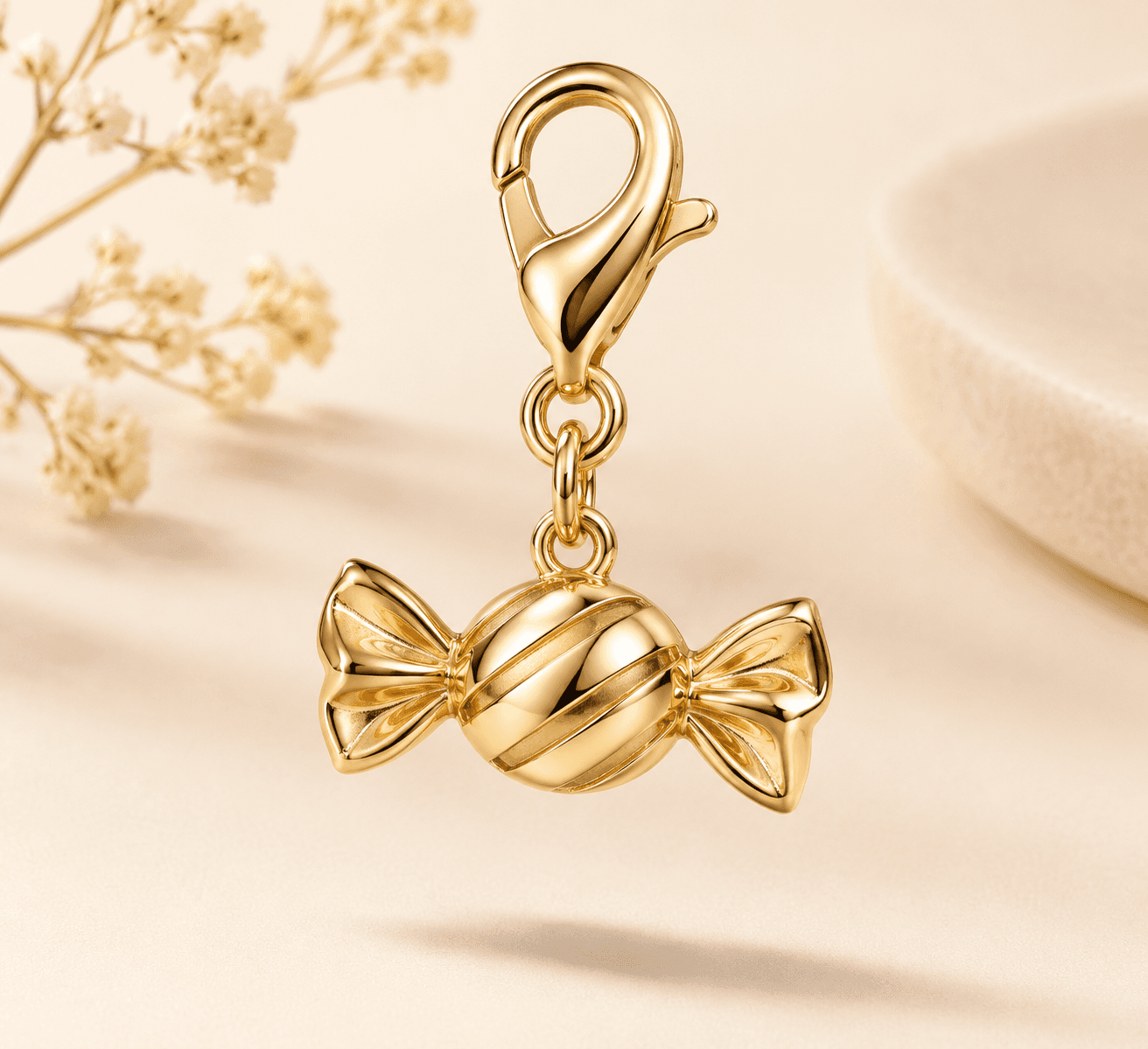
PVD is a physical vapor deposition process used to create a functional and decorative surface coating. For bag charm collections, PVD gold plating and rose gold plating provide different visual directions while retaining 316L stainless steel as the base material. A silver finish is another option for clean, contemporary designs.
However, buyers should not assume that every PVD finish performs identically. Coating preparation, surface cleanliness, process parameters, coating thickness, and inspection standards influence the result. Ask suppliers how they control finish consistency and whether they can provide samples from different production batches.
Enamel and crystal inlay can add further visual differentiation. These features require careful positioning and consistent filling or setting processes. Inspect color uniformity, decorative edges, crystal security, and the transition between the decoration and the surrounding stainless steel surface.
Benefits of Choosing a Qualified 316L Charm Manufacturing Partner
A capable manufacturing partner can help designers move from initial sketches to commercially practical products. The greatest benefit is not simply access to customization. It is the ability to combine creative flexibility with material verification, production repeatability, and clear communication.
Key Benefits for North American Buyers
- More controlled material selection: A supplier with traceable 316L specifications can help buyers establish consistent material requirements for new collections.
- Flexible product development: Logo engraving, enamel color filling, crystal inlay, and multiple surface finishes create opportunities for distinctive designs.
- Better collection coordination: Coordinated dimensions, decorative themes, and finishes make it easier to plan a complete boutique-ready range.
- Practical purchasing flexibility: Low MOQ charm production can help smaller brands evaluate new designs before committing to larger bulk charm orders.
- More reliable quality evaluation: Documented inspection procedures and relevant testing provide a stronger basis for purchasing decisions.
- Private-label support: Custom packaging and branding services can simplify the process of preparing products for retail distribution.
Certifications and Testing Buyers Should Request
Testing documentation is an important part of supplier evaluation. Lancy Jewelry works with SGS testing documentation covering RoHS, REACH, Nickel Release EN1811, and Salt Spray 240H requirements. Buyers should request relevant reports and confirm that the tested samples, material specifications, and product configurations correspond to the products they intend to purchase.
Each test addresses a different concern. RoHS and REACH documentation relates to applicable restricted substances and chemical compliance requirements. EN1811 addresses nickel release under its specified test conditions. Salt Spray 240H evaluates corrosion behavior under a defined laboratory exposure method.
These tests should not be treated as universal guarantees of product performance. Actual requirements depend on the product, market, intended use, and applicable regulations. Buyers should also verify report dates, scope, sample identification, and whether subsequent changes to the product affect the relevance of existing documentation.
How to Compare Stainless Steel Beaded Bag Charms Suppliers in China
A structured supplier assessment helps reduce uncertainty before placing an OEM order. The following comparison framework focuses on the factors most relevant to jewelry designers and sourcing managers.
Step 1: Compare Manufacturing Capabilities
Ask suppliers which production operations they perform directly and which are managed through external partners. Manufacturing equipment and process knowledge affect development speed, dimensional accuracy, and quality control.
| Capability | What it contributes | Buyer verification question |
|---|---|---|
| CNC processing | Controlled machining of specified product features. | Can you maintain the required dimensions across repeated batches? |
| Laser cutting | Precise cutting of defined charm shapes. | Can you provide samples with clean edges and accurate outlines? |
| Laser marking | Detailed logos, text, and decorative markings. | Can you reproduce the approved artwork consistently? |
| Welding | Joining specified structural components. | How are joints inspected for strength and appearance? |
| Polishing | Surface refinement and preparation for finishing. | How do you inspect surface uniformity before finishing? |
Lancy Jewelry operates a modern production facility equipped with CNC processing, laser cutting, laser marking, welding, and polishing capabilities. These operations support custom product development and coordinated production requirements.
Step 2: Compare Customization Options
Jewelry designers should prepare a clear design brief before requesting quotations. Include the charm dimensions, desired silhouette, logo position, finish, enamel colors, crystal placement, and attachment requirements. If the product will be used as a bag charm, specify the expected hardware configuration and intended loading conditions.
Compare suppliers based on their ability to interpret drawings and identify manufacturing limitations. A reliable ODM charm supplier should be able to discuss practical adjustments without changing the core creative direction of the design.
Step 3: Evaluate Sample Development
Never rely exclusively on digital renderings when assessing a new charm. Request a physical sample and inspect its dimensions, weight, surface finish, decorative alignment, and attachment structure. If the design includes multiple finishes or decorative treatments, request representative samples of each configuration.
Record approved sample specifications so that the final production order has a clear reference. This should include material grade, dimensions, finish requirements, artwork files, and acceptable tolerances. Sample approval is particularly important when a collection contains several coordinated designs.
Step 4: Compare MOQ, Pricing, and Production Planning
The lowest quotation is not necessarily the most economical purchasing decision. Buyers should compare unit pricing alongside tooling requirements, sample charges, packaging costs, production lead times, and inspection arrangements.
| Commercial factor | Questions to ask | Why it matters |
|---|---|---|
| MOQ | Does the minimum order quantity apply per design, finish, or total order? | Determines collection planning flexibility. |
| Sample costs | Are development and revision charges clearly defined? | Helps control initial development expenses. |
| Unit quotation | Does the price include the agreed finishing and packaging? | Prevents unexpected purchasing costs. |
| Lead time | Are sampling and bulk production timelines separated? | Supports launch and inventory planning. |
| Quality inspection | Which inspection stages and acceptance criteria are used? | Reduces the risk of inconsistent deliveries. |
Step 5: Review North American Compliance Considerations
US and Canadian buyers should evaluate the regulations applicable to their actual product category and intended use. In the United States, ordinary fashion jewelry is not automatically FDA-approved or FDA-certified. FDA requirements may become relevant when a product falls within a regulated category or makes claims that bring it under FDA oversight. Buyers should not treat an ordinary jewelry test report as FDA approval.
For US distribution, consider applicable Consumer Product Safety Commission requirements, including lead restrictions and testing obligations where relevant. Children's products may be subject to additional requirements, including third-party testing and certification. Canadian buyers should separately review applicable Canadian consumer product and chemical safety requirements.
Retail claims should be accurate and supported by suitable documentation. For example, avoid describing a product as hypoallergenic, completely nickel-free, or guaranteed corrosion-proof without adequate evidence. Ask your supplier for the test information needed to substantiate the specific claims you intend to make.
How Lancy Jewelry Supports Custom Beaded Bag Charm Development
Lancy Jewelry focuses on 316L stainless steel charms for boutique jewelry brands, charm bar retailers, gift companies, and private-label buyers. Our OEM and ODM services support the development of coordinated collections with different decorative details and surface finishes.
Our production capabilities include CNC processing, laser cutting, laser marking, welding, and polishing. Buyers can discuss custom silhouettes, logo engraving, PVD gold plating, rose gold plating, silver finish, enamel color filling, and crystal inlay. Private-label packaging and sample support are also available.
For designers developing beaded bag charm programs, we recommend beginning with a defined collection specification. Establish the primary decorative theme, charm dimensions, attachment structure, finish direction, and packaging requirements. This approach helps make sampling more efficient and reduces unnecessary revisions.
Our team can also discuss low MOQ requirements and production planning for different designs. The final MOQ, quotation, and lead time depend on the product structure, finishing requirements, and order specifications.
Frequently Asked Questions
1. Why should buyers choose 316L stainless steel for beaded bag charms?
316L stainless steel offers a useful combination of corrosion resistance, mechanical performance, and finishing versatility. Its chromium and molybdenum content contributes to its corrosion-resistant properties. Buyers should still verify the material specification and evaluate finished-product testing rather than relying only on a material description.
2. Can a China supplier customize stainless steel beaded bag charms?
Yes. A qualified OEM manufacturer can support custom shapes, dimensions, logo engraving, PVD finishes, enamel color filling, crystal inlay, and private-label packaging. The available options depend on the design, production process, and order requirements. Request samples before approving bulk production.
3. What certifications or test reports should North American buyers request?
Relevant documentation may include RoHS, REACH, Nickel Release EN1811, and Salt Spray testing. US and Canadian buyers should also identify applicable local requirements based on the product category and intended customer. Always verify the testing scope and product identification before relying on a report.
4. What information should I include in an RFQ for custom bag charms?
Include design drawings or reference artwork, dimensions, required 316L stainless steel specifications, surface finish, enamel colors, crystal details, attachment hardware, packaging requirements, estimated order quantity, target delivery date, and destination market. Clear specifications help suppliers provide more accurate quotations and development schedules.
Partner With Lancy Jewelry for Your Next Charm Collection
Choosing a manufacturing partner is an important decision for any boutique jewelry business. Material verification, manufacturing capability, sample quality, finishing consistency, and communication should all be considered before placing an order.
Lancy Jewelry is ready to support your next 316L stainless steel charm development project with OEM and ODM manufacturing, custom logo services, decorative finishing, sample development, and private-label packaging. Whether you are launching a new boutique collection or expanding an established gift accessory program, our team can help turn your design specifications into production-ready products.
Explore our stainless steel charm product catalog to review available product directions, learn more about our OEM manufacturing services, or contact Lancy Jewelry to discuss your requirements. For a tailored quotation, prepare your design details, target quantity, preferred finishes, and delivery market so our team can evaluate your RFQ.