Stainless Steel Charms for Cord-Style Jewelry: Durability Buyer Guide
For jewelry designers and sourcing teams, cord-style charm programs succeed or fail at the connection point. The cord may set the visual tone, but the charm and its attachment hardware must survive daily wear, repeated handling, and retail presentation. This buyer guide compares 316L stainless steel charms, attachment styles, finish durability, and testing standards so you can specify a program that looks boutique-ready and performs in the real world. Lancy Jewelry supports boutique brands and private-label buyers as a B2B OEM/ODM stainless steel charms manufacturer, with low MOQ support, sample development, and consistent plating quality.
Why 316L Stainless Steel Charms Matter for Cord-Style Jewelry
316L stainless steel charms are a practical base for cord-style collections because the material is durable, corrosion resistant, and suitable for fine detail. For designers, the goal is not only a good-looking charm on a sample card. The charm must hold its shape, keep its finish, and attach securely when the wearer moves, dresses, travels, and stores the piece. Lancy focuses on 316L stainless steel charms as the base material, so buyers can plan charm bars, gift programs, and private-label series around a consistent production standard.
Material properties designers should specify
When writing a charm brief, specify 316L stainless steel as the base, then define the finish, size, attachment type, and logo method. Size matters for cord-style use: a small 8-12 mm charm may suit a delicate cord, while a 16-18 mm charm may need a larger bail or stronger jump ring. For global programs, keep attachment hardware consistent across markets so assembly teams do not need separate components for each region. Request material and finish certificates with your sample, and confirm that the charm has no sharp edges around the hole, bail, or connector loop.
Attachment choices that protect wearability
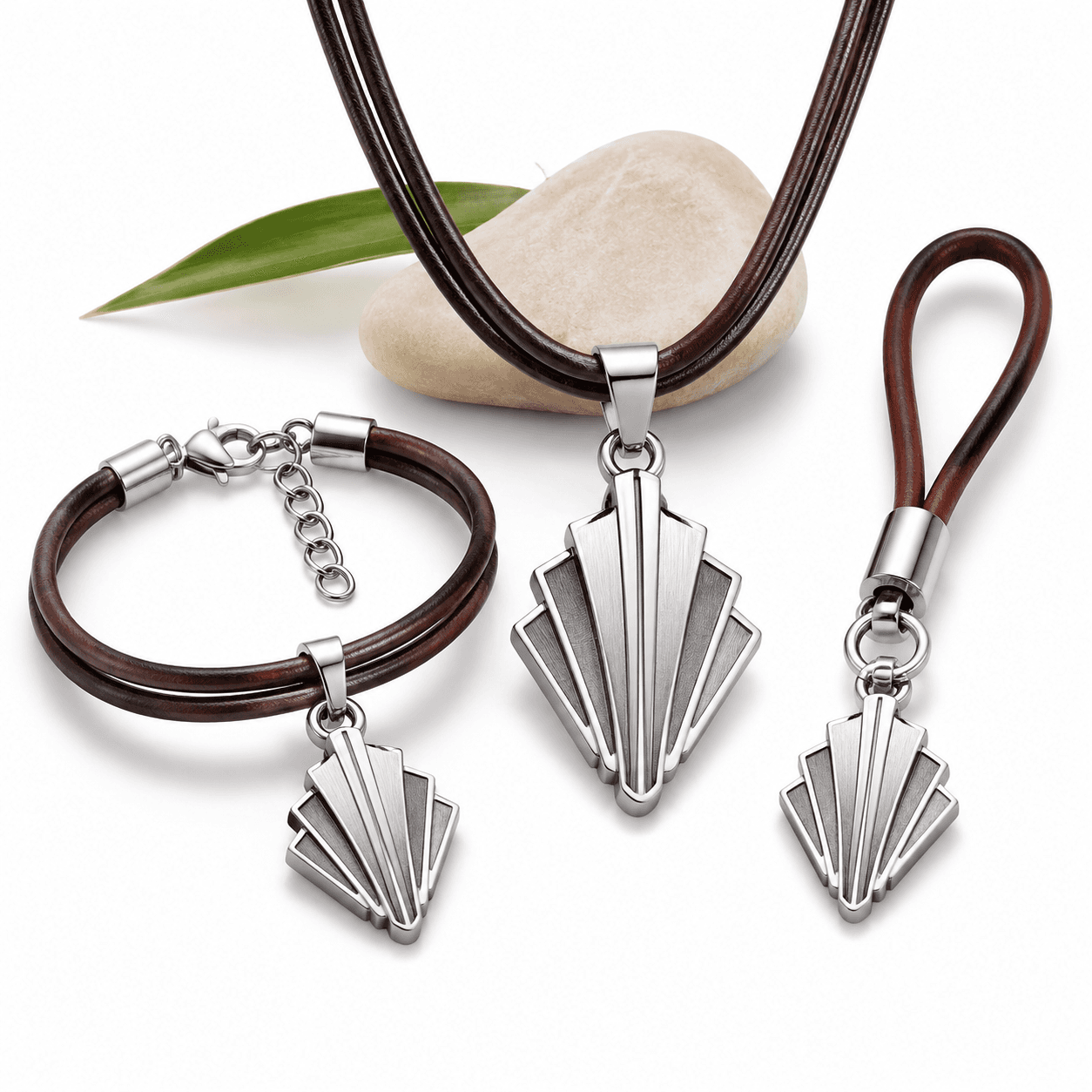
The attachment is a functional part, not a decoration. A charm that hangs from a cord should sit naturally, move without catching, and stay closed during normal use. Compare closed jump rings, bails, and clasps during sample development, and test each option with the actual cord diameter you plan to use. The table below gives a practical starting point for designers comparing cord-style charm attachments.
| Attachment style | Best for | Durability check | Buyer note |
|---|---|---|---|
| Closed jump ring | Lightweight charms on fixed cord positions | Ring must be fully closed and welded where specified | Confirm opening and closure method during sample development |
| Bail | Charms that need to slide or sit flat on a cord | Bail opening must clear the cord diameter without sharp edges | Match bail size to cord thickness and request a physical sample |
| Lobster clasp or trigger clasp | Interchangeable charm-bar programs | Gate spring, lever, and loop must move smoothly | Test repeated open-close cycles before bulk orders |
Benefits: Durability, Compliance, and Brand Readiness
Durability is not only about scratches. For a charm program, durability includes finish adhesion, corrosion resistance, connector strength, and color consistency from sample to bulk order. These factors affect returns, customer reviews, and the long-term reputation of a boutique brand. A well-planned 316L stainless steel charm line can support seasonal launches, charm bar events, gift-with-purchase programs, and private-label packaging without forcing buyers into high inventory risk.
Testing standards buyers should request
For B2B programs, request test reports that match your target markets. Lancy is SGS certified for RoHS, REACH, Nickel Release EN1811, and Salt Spray 240H. These checks help buyers review restricted substances, nickel release, and corrosion resistance before approving bulk orders. Ask for reports by finish and SKU family, because PVD gold plated, rose gold plating, silver finish, enamel, and crystal inlay may require different process controls. A responsible stainless steel charms manufacturer should be able to explain which test applies to which finish and how sample results relate to production batches.
| Test | What it checks | Why buyers care |
|---|---|---|
| RoHS | Restricted substances | Supports EU and global retail compliance planning |
| REACH | Chemical safety requirements | Helps with market entry and customer confidence |
| Nickel Release EN1811 | Nickel release on skin-contact items | Important for wearer comfort and regulatory checks |
| Salt Spray 240H | Corrosion resistance | Useful for humid climates and daily-wear collections |
Finish durability and wear resistance
Finish choice changes the buyer risk profile. PVD gold plated charms usually offer strong wear resistance when the process is controlled, while rose gold plating requires careful color matching across batches. Silver finish is a clean option for classic collections, enamel adds color depth for symbols and zodiac designs, and crystal inlay adds sparkle for birthstone and special symbol charms. The table below compares common finish options for 316L stainless steel charms.
| Finish option | Visual effect | Wear resistance | Best use | Buyer checks |
|---|---|---|---|---|
| PVD gold plated | Warm gold tone | High for daily-wear charms when process is controlled | Signature collections and gift programs | Plating consistency, color matching, abrasion checks |
| Rose gold plating | Soft pink tone | Moderate to high depending on process | Romantic and seasonal series | Batch color matching and surface uniformity |
| Silver finish | Clean neutral look | Good for classic collections | Everyday charm bars and alphabet series | Polish quality and tarnish resistance |
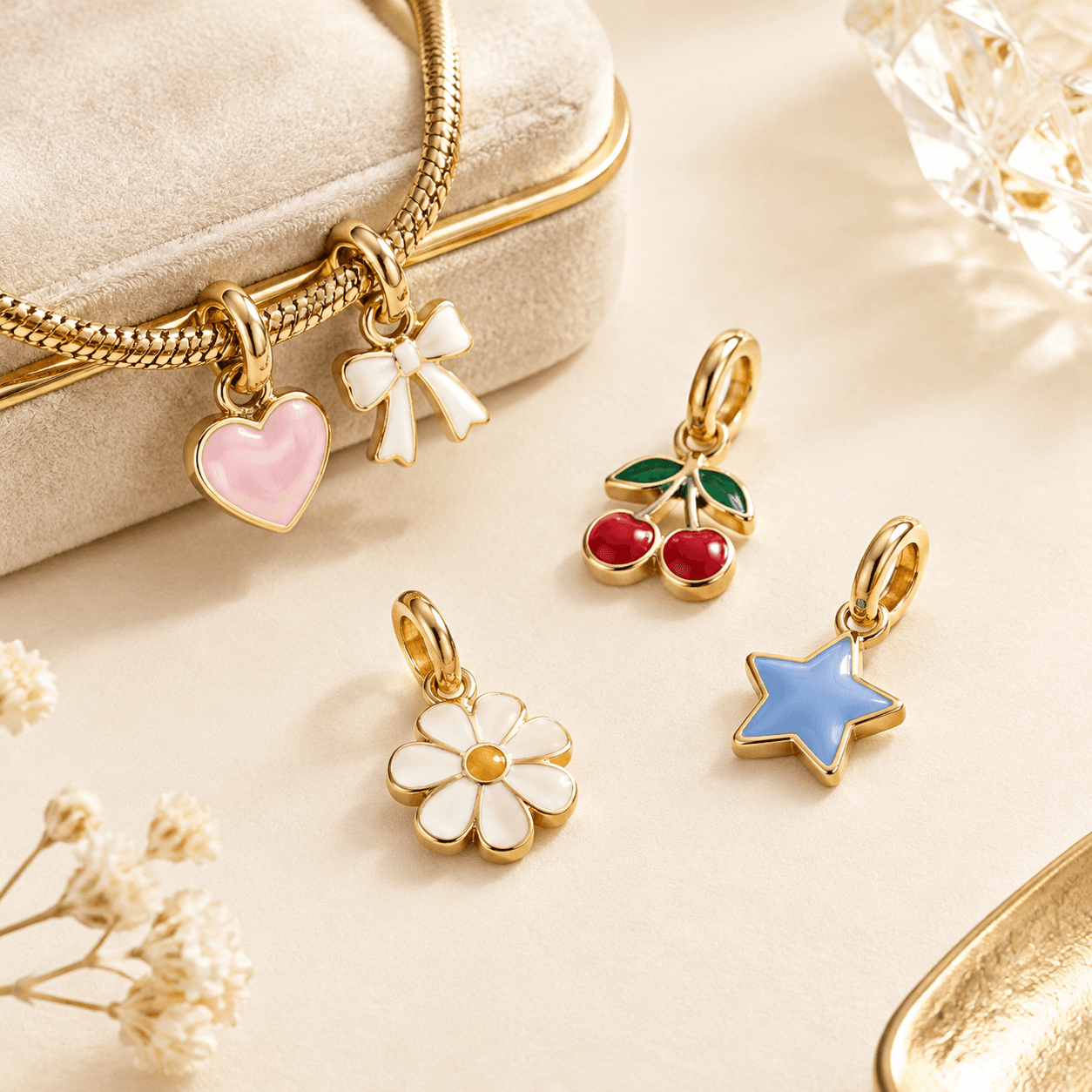
| Enamel | Color-filled designs | Good when enamel is fully cured and recessed | Symbol, zodiac, and ocean life charms | Color depth, edge coverage, and cure checks |
| Crystal inlay | Sparkle and detail | Good when settings are tight and crystals are secured | Birthstone and special symbol charms | Crystal security, setting symmetry, and surface finish |
Buyer Guide: Comparing Options Side by Side
Step 1: Define the cord-style use case
Start with the wearer and the sales channel. A charm bar program needs charms that are easy to attach and explain at the counter. A gift company may need a compact series with packaging cards. A private-label buyer may need logo engraving, custom backing cards, and a planned SKU range. Write down the cord diameter, charm weight, target price band, and market. Then decide whether the charm should be fixed, sliding, or interchangeable. This decision narrows the attachment and finish options before you request quotes.
Step 2: Compare attachment and finish combinations
Do not compare finishes in isolation from attachments. A PVD gold plated charm with a heavy bail may feel different from the same charm with a closed jump ring. For cord-style jewelry, the charm should hang straight, avoid twisting, and keep the front design visible. During sample development, test the charm on the intended cord type and thickness. Check that the connector passes through a real loop or hole, that the closure is fully closed, and that no sharp edge can rub against the cord. The best combination is the one that supports the design intent and the wearer experience.
Step 3: Validate sample performance
Approve samples with a checklist, not a quick look. Check front design clarity, back finish, edge smoothness, attachment alignment, and color consistency against your reference. For PVD gold plated and rose gold plating, compare samples under daylight and retail lighting. For enamel, confirm that color is fully filled and cured. For crystal inlay, check that each crystal sits securely. If you plan custom logo charms, review engraving depth and legibility on the finished surface. A sample that passes these checks reduces surprises in bulk orders.

Step 4: Plan OEM/ODM production and packaging
Once the sample is approved, confirm the production plan. Lancy supports OEM/ODM development, logo engraving, PVD plating, enamel color filling, crystal setting, private-label packaging, and sample support. Discuss MOQ by design and finish, because mixed SKU programs may need different planning from single-style bulk orders. If you are building a boutique-ready series, request a packaging mockup early so the charm, backing card, and barcode label work together. For distributors and wholesale stainless steel charms buyers, a clear SKU plan and consistent finish standards make reordering easier.
FAQ
How do I choose the right attachment for cord-style charms?
Match the attachment to how the charm will be worn. Use a closed jump ring for fixed positions, a bail for charms that should slide or sit flat, and a clasp for interchangeable charm-bar programs. Always test the attachment with the actual cord diameter and confirm that the closure is fully closed.
Which finish is most durable for daily-wear charm collections?
PVD gold plated charms are often a strong choice for daily-wear programs when the plating process is controlled. Rose gold plating, silver finish, enamel, and crystal inlay can also work well when the finish is matched to the design and tested correctly. Request finish-specific test reports and compare samples under real lighting.
Can Lancy support custom logos and private-label packaging?
Yes. Lancy supports OEM/ODM development, logo engraving, private-label packaging, and sample support for 316L stainless steel charms. Buyers can request packaging mockups and branding details during sample development before placing bulk orders.
What should buyers confirm before approving a bulk order?
Confirm the approved sample, attachment style, finish, size, logo placement, packaging, test reports, and MOQ. Ask for a production timeline and a clear reorder specification so future batches match the approved standard.
Partner With Lancy for 316L Stainless Steel Charms
If you are planning a cord-style charm program for boutique retail, gifting, or private label, start with a clear brief and a physical sample. Lancy Jewelry provides factory-direct support for 316L stainless steel charms, PVD plating, enamel, crystal inlay, logo engraving, and private-label packaging. Review All Products, explore OEM Service, or Request a Quote for your RFQ. You can also Contact the sales team to discuss MOQ, sample development, and bulk order planning.