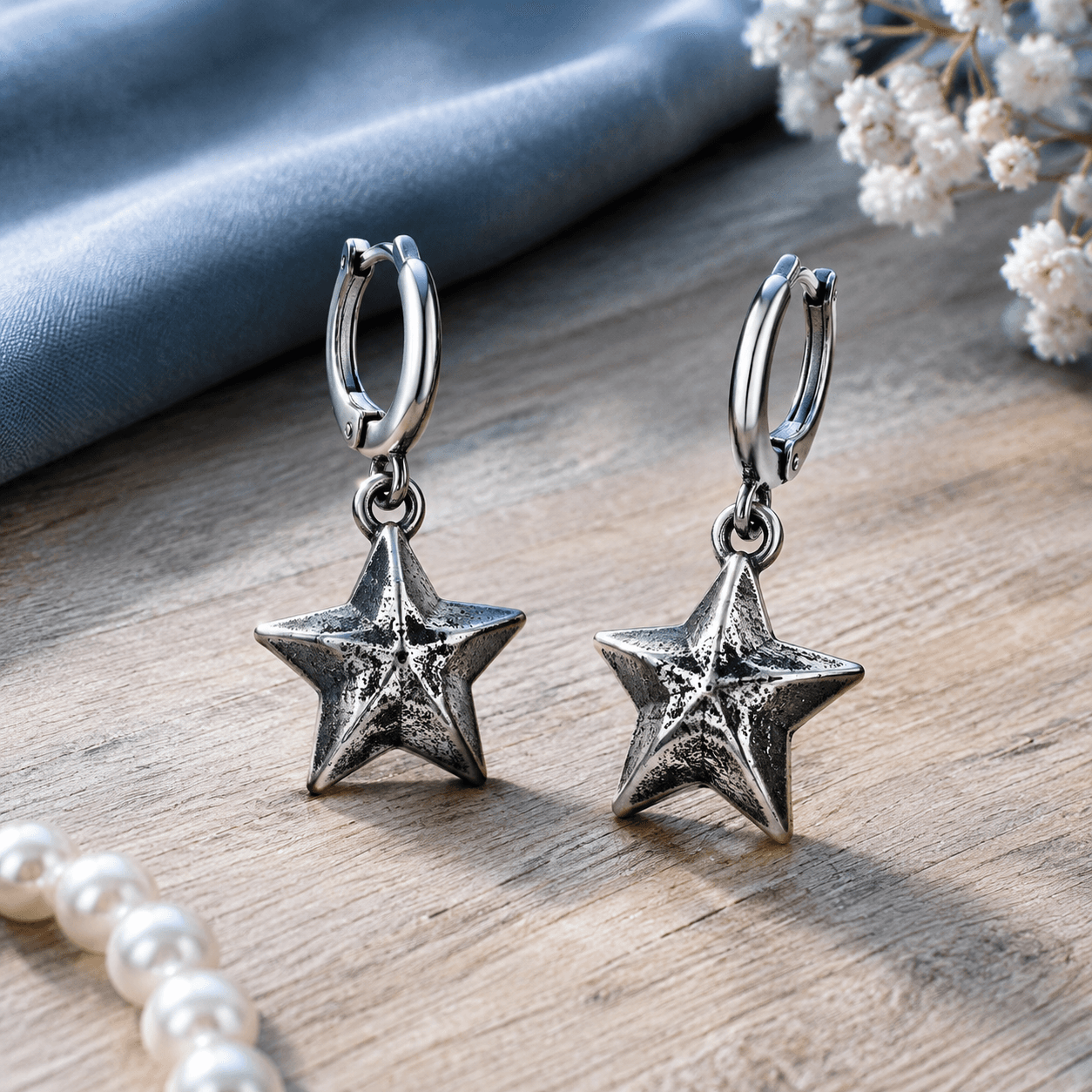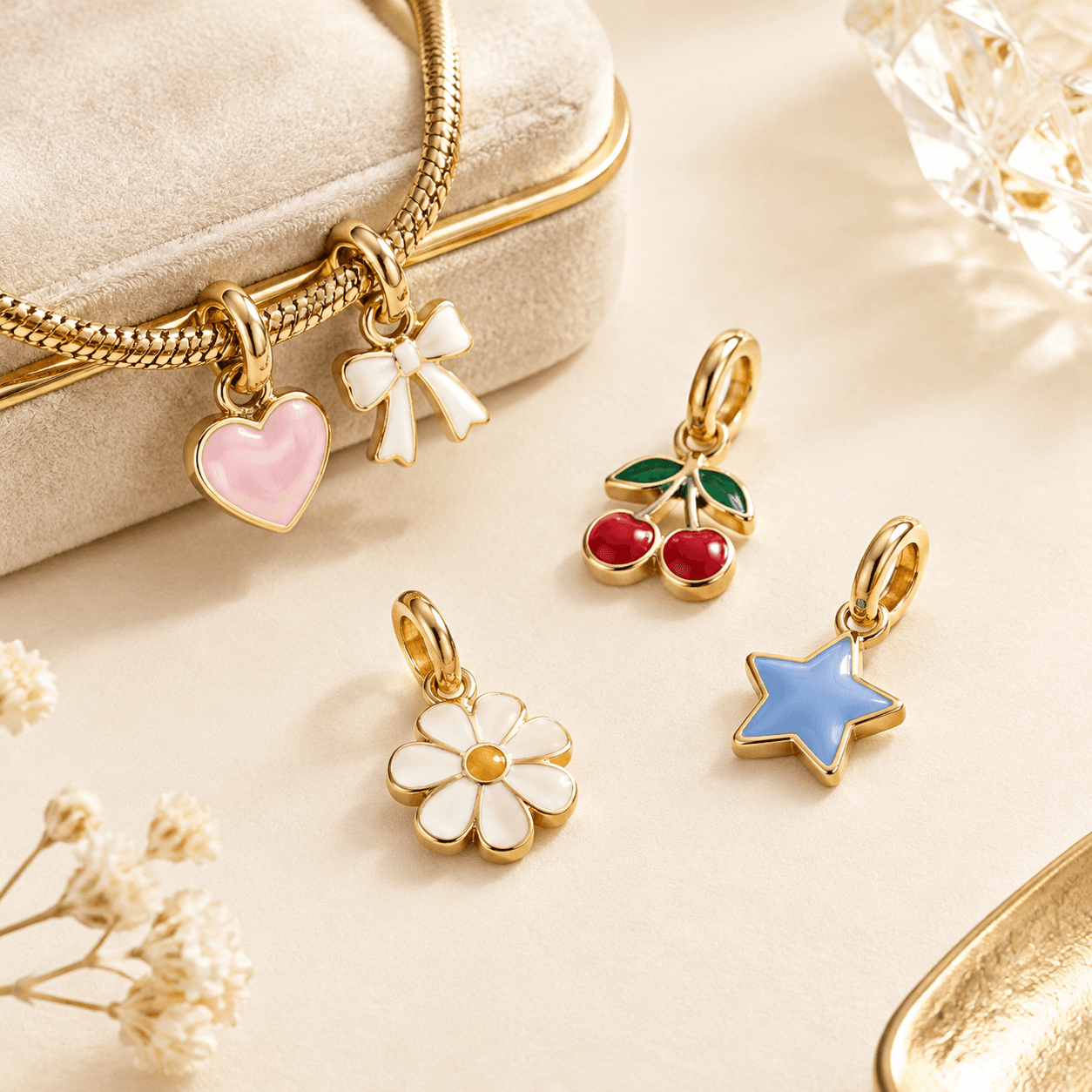
For jewelry designers and private-label buyers, custom enamel charms must deliver more than an attractive color palette. The underlying 316L stainless steel determines the foundation of corrosion resistance, mechanical stability, and manufacturing consistency, while surface preparation, enamel application, and finishing determine the final appearance and long-term performance. A successful sourcing decision requires evaluating these elements as one integrated manufacturing system.
This guide explains the material science behind custom enamel 316L stainless steel charms, compares practical decoration and finishing options, and establishes a technical framework for supplier qualification. It is designed for buyers developing coordinated product ranges, planning wholesale stainless steel charms, or commissioning OEM collections for international markets. The objective is straightforward: reduce development uncertainty, establish measurable specifications, and make purchasing decisions based on repeatable production performance rather than appearance alone.
316L Stainless Steel Custom Enamel Charms: Material and Design Fundamentals
What defines 316L stainless steel?
316L stainless steel is an iron-based material characterized by chromium, nickel, and molybdenum, with a controlled low carbon content. The designation L indicates a lower maximum carbon level than the corresponding standard-carbon grade. Exact composition limits depend on the applicable material specification and product form, so buyers should request documentation identifying the grade and the governing standard.
Chromium is central to corrosion resistance. In an oxygen-containing environment, chromium supports the formation of a thin, adherent passive oxide film that helps protect the underlying surface. If the film is locally damaged, it can reform when suitable conditions are present. Nickel contributes to the material's austenitic structure and supports its overall mechanical and corrosion-related characteristics. Molybdenum improves resistance to localized corrosion, particularly pitting in chloride-containing environments, compared with many common stainless steel grades.
The low carbon limit helps reduce the risk of chromium carbide precipitation during certain elevated-temperature exposures, which can otherwise compromise corrosion resistance near grain boundaries. This characteristic is relevant to manufacturing processes involving heat, although actual outcomes depend on processing conditions, material condition, and subsequent finishing.
These properties make 316L stainless steel a practical foundation for small decorative components that require precise geometry and consistent finishing. They do not make a finished charm immune to corrosion, scratches, chemical exposure, or manufacturing defects. Material selection establishes the baseline; processing and quality control determine whether that baseline is maintained.
Why the base material matters for enamel designs
Enamel decoration depends on a stable substrate, clean surface conditions, accurately formed recesses or boundaries, and a controlled application process. The base material does not determine enamel performance on its own. Surface contamination, polishing residues, coating chemistry, firing or curing requirements, and the geometry of each colored area can all influence adhesion and appearance.
For jewelry designers, the important question is not simply whether a supplier can produce a particular color. It is whether the supplier can reproduce that color within a defined design, maintain clean boundaries, and preserve the intended appearance across approved samples and production batches.
Clarifying the meaning of sterling in a product brief
Some purchasing briefs use traditional material terminology when the intended requirement is a particular visual effect. Buyers should separate the requested appearance from the required base material before requesting quotations. Lancy Jewelry focuses on 316L stainless steel charms, with decoration and surface finishes selected to meet the approved specification. A silver finish can provide a bright, cool-toned appearance without changing the stated base-material requirement. Clear material declarations prevent misunderstandings during sampling, documentation, and bulk production.
Benefits of Custom Enamel 316L Stainless Steel Charms
Corrosion resistance and structural reliability
The chromium-rich passive film provides a foundation for corrosion resistance, while molybdenum contributes additional resistance to localized attack. These characteristics are valuable for decorative components handled regularly by consumers. Nevertheless, sweat, salt exposure, cleaning products, prolonged moisture, surface damage, and contact with dissimilar materials can influence actual performance. Product claims should reflect tested results rather than assumptions based on the material designation alone.
Design flexibility without changing the base material
Enamel enables designers to create distinct color fields, contrasting outlines, miniature motifs, and coordinated seasonal themes. PVD gold plating and rose gold plating offer additional visual directions, while a silver finish supports a cooler metallic presentation. Crystal inlay can introduce localized highlights when the design and setting geometry permit reliable retention.
These techniques can be organized into a product architecture in which the base material remains consistent while the decorative treatment varies. This approach simplifies technical documentation and supports a recognizable finish standard across a boutique-ready series.
Repeatability for commercial collections
For B2B buyers, repeatability is a commercial advantage. A charm that looks excellent in one prototype but varies significantly in subsequent batches can disrupt merchandising, packaging, launch schedules, and customer expectations. Standardized drawings, approved color references, process instructions, and inspection criteria reduce this risk.
Lancy Jewelry supports OEM and ODM development, logo engraving, laser marking, enamel color filling, PVD plating, crystal setting, sample development, and private-label packaging. Its modern manufacturing facility uses CNC machining, laser cutting, laser marking, welding, and polishing to support production requirements across suitable charm designs.
Testing and compliance documentation
Lancy Jewelry reports SGS-certified testing covering RoHS, REACH, Nickel Release EN1811, and Salt Spray 240H. Buyers should request the applicable reports, verify the tested product or material scope, and confirm that the documents cover the actual specification being purchased. A report for one configuration should not automatically be treated as proof for every finish, color, or construction.
RoHS and REACH address distinct regulatory requirements. Nickel Release EN1811 provides a test framework for nickel release from relevant articles, while salt spray testing evaluates corrosion behavior under specified test conditions. A 240-hour result is not a universal prediction of service life, and passing one test does not establish compliance with every market requirement. Importers should confirm current legal obligations in their destination markets and retain relevant technical records.
Detailed Buyer Analysis: Material Chemistry, Enamel, and Finish Selection
Comparison 1: Decorative treatments for 316L stainless steel charms
The following comparison evaluates practical options using the same 316L stainless steel base. Actual performance depends on the selected materials, design geometry, application parameters, and verification procedures.
| Decoration or finish | Visual result | Primary technical considerations | Suitable commercial application |
|---|---|---|---|
| Colored enamel | Defined color fields and graphic contrast | Surface cleanliness, color matching, boundary precision, adhesion, and resistance to chipping | Signature motifs, themed collections, and colorful gift accessories |
| PVD gold plating | Warm gold-toned metallic appearance | Surface preparation, coating uniformity, adhesion, thickness specification, and wear testing | Coordinated gold-tone collections and private-label ranges |
| Rose gold plating | Soft pink-gold metallic appearance | Color consistency, coating coverage, adhesion, and batch-to-batch shade control | Romantic themes and coordinated color stories |
| Silver finish | Bright, cool-toned metallic appearance | Surface smoothness, reflectivity, finish uniformity, and cleaning requirements | Minimalist designs and versatile everyday collections |
| Crystal inlay | Localized sparkle and dimensional detail | Setting geometry, retention, alignment, edge protection, and mechanical inspection | Accented motifs and higher-detail decorative series |
These treatments are not interchangeable from a process-control perspective. Enamel requires controlled color placement and suitable curing or firing conditions according to the chosen system. PVD processes require suitable substrate preparation and controlled deposition. Crystal inlay introduces a retention interface that must be evaluated separately from the surface finish.
Comparison 2: Enamel design configurations
| Design configuration | Manufacturing complexity | Main quality risk | Buyer recommendation |
|---|---|---|---|
| Single-color recessed enamel | Low to moderate | Uneven fill, surface contamination, or inconsistent color | Begin with a clearly defined color reference and a simple cavity geometry. |
| Multiple separated color fields | Moderate | Color crossover, boundary irregularity, and variation in fill height | Specify the color sequence, separation lines, and acceptable edge tolerances. |
| Enamel combined with PVD | Moderate to high | Process sequencing issues, masking defects, or inconsistent interfaces | Approve the full process sequence and inspect the combined finish rather than each treatment in isolation. |
| Enamel combined with crystal inlay | High | Interference between settings and colored areas, uneven alignment, or weak retention | Validate clearances, setting dimensions, and assembly sequence in the physical sample. |
Complexity does not automatically indicate superior value. The correct design is the one that meets the intended visual standard, can be manufactured consistently, and remains commercially viable at the target order quantity.
Understanding metal chemistry and surface condition
The passive film on 316L stainless steel is extremely thin, but its integrity is important. Aggressive cleaning, embedded contaminants, unsuitable finishing methods, or exposure to corrosive environments can influence surface behavior. The visible finish and the underlying corrosion mechanism should therefore be assessed separately.
For enamel production, a clean, reproducible surface is essential to obtaining reliable results. Oils, polishing compounds, particulate contamination, and residues may interfere with wetting or adhesion. A manufacturer should establish appropriate cleaning, handling, and inspection controls rather than relying solely on the nominal base-material grade.
For PVD finishes, the final appearance depends on substrate preparation, the deposition process, coating architecture, and process control. A smooth substrate generally supports a more uniform visual result, but appearance alone cannot establish coating adhesion or durability. Buyers should specify relevant acceptance criteria and request test evidence for the finished configuration.
Step 1: Translate the creative concept into a technical brief
Begin with the intended application, overall dimensions, front and back artwork, thickness, attachment geometry, color references, surface finish, logo requirements, and expected sales channel. Include a dimensioned drawing where available. If the charm will be used in a coordinated jewelry range or charm bar program, identify the required opening dimensions and attachment arrangement so the physical interface can be checked during sampling.
Do not leave essential decisions to interpretation. Terms such as bright gold, pale pink, deep blue, or smooth enamel describe visual direction but do not provide a complete production specification. Establish a reference sample, a color standard, or an agreed digital color target with an understanding that screen appearance may differ from the finished physical product.
Step 2: Confirm the 316L stainless steel specification
Request confirmation of the base-material grade and relevant material documentation. Clarify whether the supplied evidence identifies the actual production material, a representative material batch, or a broader manufacturing capability. Where chemical composition or material identity is commercially critical, define the appropriate verification method before production begins.
Ask the supplier to identify the manufacturing stages that may affect the surface or geometry. Laser cutting, CNC operations, welding where applicable, polishing, and finishing can introduce different inspection needs. A documented process plan helps connect the raw material requirement with the final decorative component.
Step 3: Approve enamel colors and boundaries
For each color, record the reference, placement, boundary definition, and acceptable visual variation. Determine whether adjacent colors must remain separated by a visible metal outline or whether a flush transition is intended. Specify acceptable limits for bubbles, pits, contamination, incomplete filling, uneven edges, and visible surface defects.
Evaluate color under consistent lighting and compare samples against the same reference. Where the product contains several color fields, assess the entire motif rather than approving each color independently. Small differences can become more noticeable when multiple charms are displayed together in a retail assortment.
Step 4: Define the finish and process sequence
Specify whether the design uses enamel alone or combines enamel with PVD gold plating, rose gold plating, a silver finish, or crystal inlay. Establish which areas receive each treatment and which areas must remain untreated. Ask the manufacturer to confirm the proposed process order, masking requirements, and inspection checkpoints.
The sequence can affect both visual quality and process risk. If several treatments are combined, a prototype should demonstrate the complete intended construction. A sample that validates only the enamel color but not the final plated surface is insufficient evidence for approving a combined-finish product.
Step 5: Evaluate the physical sample
Inspect dimensions, edge quality, thickness, attachment points, surface uniformity, color placement, and finish transitions. Check the complete attachment mechanism to confirm that any jump ring or bail passes through the intended opening and closes correctly. Decorative features must not obstruct the opening or create a fragile section near the connection point.
For designs with crystal inlay, examine alignment and retention. For enamel, look for incomplete filling, contamination, irregular boundaries, and visible damage. For PVD finishes, inspect coverage, color consistency, and signs of handling damage. Record findings against a written checklist so revisions are traceable and approval is based on explicit criteria.
Step 6: Establish production acceptance criteria
Before issuing a bulk order, agree on inspection sampling, defect classifications, packaging requirements, and the process for approving any material or finish changes. The production reference should include the approved drawing, sample, color specifications, finish details, and any applicable testing requirements.
Buyers should also define how deviations are handled. Changes to enamel formulation, coating parameters, polishing methods, or setting geometry may affect the finished product. Require advance communication and approval for changes that could alter appearance, function, or compliance status.
Step 7: Plan MOQ, sampling, and wholesale economics
Low MOQ support can help buyers validate a concept before committing to a wider collection. However, a minimum order quantity is influenced by design complexity, setup requirements, the number of colors, finishing steps, and packaging specifications. Request a quotation that separates development charges, sample costs, production pricing, and any quantity-dependent conditions.
For wholesale stainless steel charms, compare the complete commercial specification rather than unit price alone. Include inspection requirements, packaging, documentation, lead-time assumptions, and expected replenishment needs. A slightly more expensive design may offer better commercial value if it reduces defects, simplifies assortment planning, or improves repeat-order consistency.
Lancy Jewelry supports sample development and OEM/ODM production planning for boutique brands, charm bar retailers, gift companies, distributors, and private-label buyers. Buyers can review the OEM service to discuss custom manufacturing requirements and prepare a structured RFQ.
Supplier Evaluation: Questions B2B Buyers Should Ask
Assess technical capability, not just catalog breadth
A reliable stainless steel charms manufacturer should be able to explain how it controls material identity, surface preparation, dimensional accuracy, decoration, and final inspection. Ask who approves color references, how production samples are retained, and what happens when an inspection result falls outside the agreed limits.
For advanced designs, request a review of the attachment geometry and the interaction between enamel boundaries and plated surfaces. The supplier should identify foreseeable manufacturing risks before tooling or production commitments are finalized. This technical discussion is particularly important when a design contains several small decorative fields or combines multiple finishing processes.
Use a supplier comparison matrix
| Evaluation area | Evidence to request | Decision criterion |
|---|---|---|
| Material identity | Grade declaration and relevant supporting documentation | The production material is clearly identified as 316L stainless steel. |
| Design engineering | Dimensioned drawings and sample review | Attachment points and decorative details are manufacturable. |
| Enamel control | Color references and approved physical samples | Colors and boundaries can be evaluated against documented criteria. |
| Finish performance | Relevant test methods, reports, and inspection records | Evidence matches the ordered finish and intended requirements. |
| Production consistency | Inspection plan and change-control procedure | Repeat orders follow the approved specification. |
| Commercial readiness | MOQ, sampling schedule, quotation, and packaging details | Costs and responsibilities are clear before commitment. |
Use the same questions and acceptance criteria for every candidate supplier. This makes differences in technical capability, documentation, and commercial support easier to evaluate. A supplier that identifies process risks early can help prevent avoidable redesigns and costly corrections after production has started.
Frequently Asked Questions
Is 316L stainless steel suitable for custom enamel charms?
Yes. 316L stainless steel provides a corrosion-resistant foundation and supports detailed decorative manufacturing. Successful enamel application still depends on suitable surface preparation, the selected enamel system, controlled processing, design geometry, and inspection of the finished charm. Buyers should evaluate the complete construction rather than assume the base-material grade guarantees every performance result.
Can custom enamel charms combine PVD gold plating and crystal inlay?
Yes, selected designs can combine enamel, PVD gold plating, rose gold plating, a silver finish, and crystal inlay where the geometry and process sequence permit. The manufacturer should validate masking, clearances, setting retention, and finish boundaries through a physical sample. The approved sample should represent the complete intended production specification.
What should buyers include in an OEM charm RFQ?
Provide the target dimensions, artwork, 316L stainless steel requirement, enamel colors, requested finish, attachment geometry, logo details, packaging requirements, destination market, estimated quantity, and desired delivery schedule. Include reference images or drawings and specify the documentation and testing evidence required. Ask for separate pricing for sampling and production where applicable.
How can buyers verify finish quality and regulatory documentation?
Request documents relevant to the exact product configuration, confirm the scope of each report, and inspect an approved production sample. Lancy Jewelry reports SGS-certified testing covering RoHS, REACH, Nickel Release EN1811, and Salt Spray 240H. Buyers should verify current destination-market requirements and determine whether additional tests are necessary for their product and intended use.
Partner With Lancy Jewelry for Custom Enamel Charms
Custom enamel development succeeds when creative direction is supported by precise engineering, controlled material selection, repeatable finishing, and clear commercial specifications. For boutique brands and sourcing teams, the strongest purchasing process starts with a defined brief, continues through documented sample approval, and ends with measurable production acceptance criteria.
Lancy Jewelry provides B2B OEM/ODM development for 316L stainless steel charms, including enamel color filling, PVD plating, logo engraving, crystal setting, and private-label packaging. Its manufacturing capabilities support the development of coordinated product ranges with consistent technical specifications and clear approval procedures.
Prepare your artwork, dimensions, finish requirements, target quantity, and packaging preferences before requesting a quotation. For catalog inspiration, visit All Products. To discuss custom development, review our OEM service or submit your requirements through Request a Quote. For direct assistance, use the Contact page.
Specify the material, define the finish, approve the sample, and document the quality standard before production. This disciplined approach gives your next custom enamel charm collection a stronger technical foundation and a clearer path from design concept to wholesale launch.