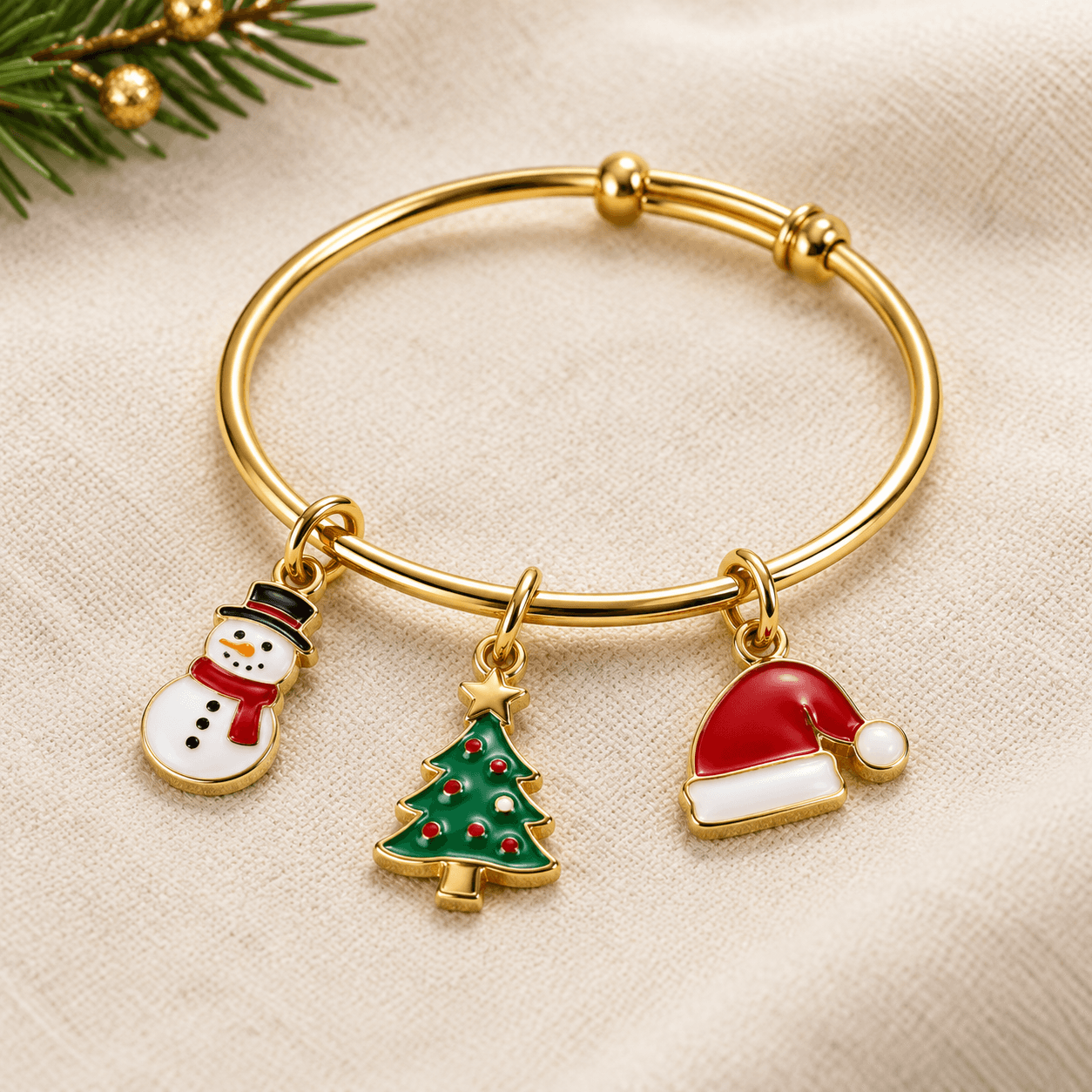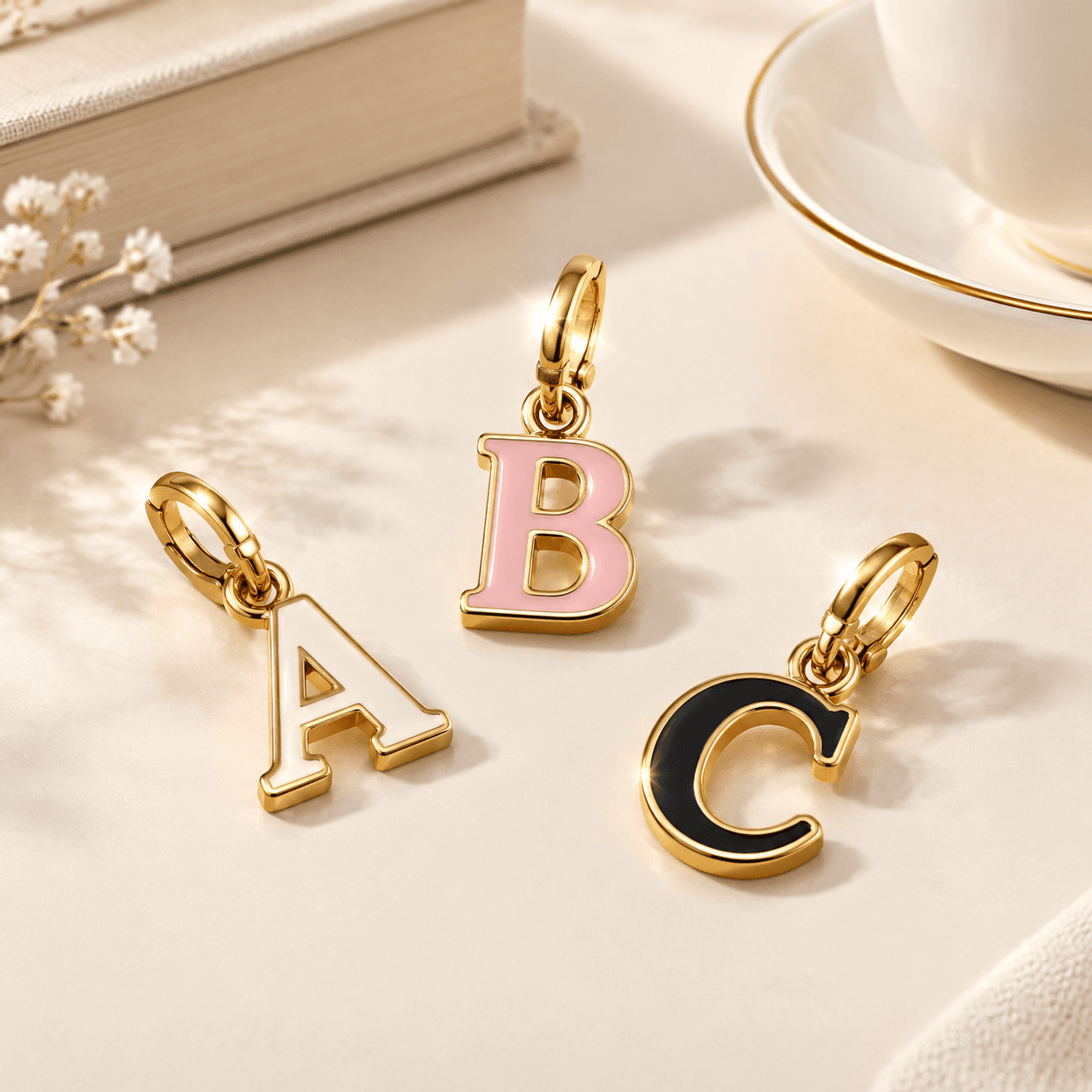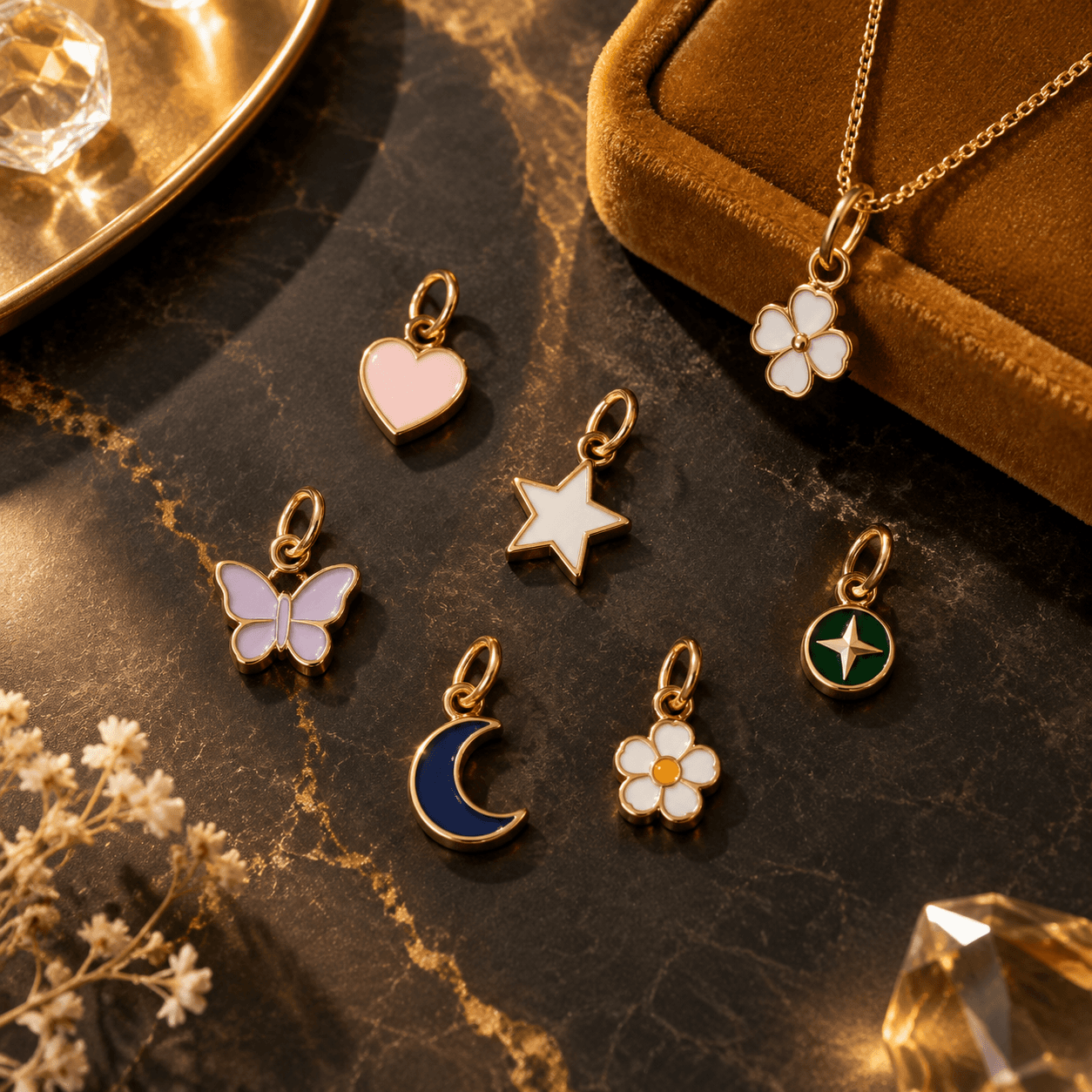
For jewelry designers sourcing small enamel charms in bulk, the finishing process can determine whether a creative concept becomes a consistent, retail-ready product. Color accuracy, surface smoothness, coating durability, and attachment quality all influence the final result. These factors become especially important when a collection includes multiple colors, gold plated details, or several coordinated designs. Understanding how enamel, PVD coating, electroplating, polishing, and surface preparation work together helps buyers write clearer specifications, evaluate samples, and reduce avoidable production problems. This guide explains the main finishing options for 316L stainless steel charms and offers a practical purchasing framework for North American boutique brands, gift companies, and private-label buyers.
Stainless Steel Small Enamel Charms Bulk: Understanding the Finishing Options
Small enamel charms combine a defined metal outline with colored decorative areas. Their compact dimensions make finishing accuracy particularly important: a slight change in color placement, edge definition, or surface gloss can noticeably affect the overall appearance. For bulk orders, buyers should evaluate the base material, decorative finish, surface preparation, and final inspection requirements as separate but connected factors.
How Enamel Finishing Works
Enamel color filling adds visual contrast to recessed or otherwise designated areas of a charm. Designers can use a single accent color, several coordinated shades, or a repeated color palette across a collection. The available design depends on the charm geometry, the depth and width of each color area, and the finishing process selected by the manufacturer.
For small designs, clean boundaries are essential. Narrow outlines, tiny lettering, and closely spaced color zones can be difficult to reproduce consistently if the artwork is too detailed for the finished dimensions. Simplifying small features before sampling can improve readability and production repeatability.
Comparing the Main Finishing Techniques
| Technique | Primary purpose | Buyer considerations |
|---|---|---|
| Enamel color filling | Adds defined decorative color | Check color accuracy, fill coverage, edge definition, and small-area consistency. |
| PVD coating | Creates a decorative surface finish, including gold plated and rose gold plating options where specified | Confirm the target color, gloss level, coating coverage, and durability test criteria. |
| Electroplating | Deposits a decorative finish through an electrochemical process | Specify the required appearance, process controls, adhesion expectations, and applicable testing. |
| Mechanical polishing | Improves smoothness and surface reflectivity | Inspect edges, recesses, front surfaces, and consistency between production units. |
| Surface preparation | Prepares the surface for subsequent finishing | Check cleanliness, surface uniformity, and suitability for the planned coating or color process. |
These techniques are not always competing alternatives. A charm may require polishing and surface preparation before receiving a decorative coating, while enamel may provide the main color detail. The correct sequence depends on the design, process compatibility, and approved sample. Lancy Jewelry focuses on 316L stainless steel charms as the base material, with finishing options selected according to the project specification.
Benefits of Choosing the Right Finish for Bulk Orders
More Consistent Collection Presentation
When a collection includes several related designs, a shared finishing specification helps maintain a coherent appearance. Buyers should define the desired color, gloss level, enamel shades, and edge treatment before production begins. Reference samples and documented tolerances make these expectations easier to communicate between designers, purchasing teams, and the manufacturer.
Consistency matters particularly for boutique collections sold in coordinated groups. A gold plated initial charm, an enamel heart, and a symbolic decorative charm may have different shapes, but their surface color and perceived quality should work together when displayed side by side.
Greater Design Flexibility
Combining enamel with a carefully selected surface finish creates options for seasonal collections, personalization programs, and coordinated gift accessories. Designers can use contrasting color fields, polished borders, selective decorative details, and consistent hardware proportions to distinguish products without making every design mechanically complex.
For small charms, prioritize a clear focal point. One strong color accent and a readable silhouette often communicate more effectively than many narrow color sections. Ask for sample development before committing to intricate artwork across a large order.
Material and Compliance Considerations
Material selection should be confirmed independently from decorative appearance. Lancy Jewelry manufactures charms with 316L stainless steel as the base material. A gold plated or rose gold plating finish describes the surface appearance; it does not change the specified base material.
Lancy Jewelry reports SGS-certified testing for RoHS, REACH, nickel release under EN1811, and a 240-hour salt spray test. Buyers should request the relevant documentation and verify its scope, sample identification, test conditions, and applicability to the intended product and finish. A certification or test report should not be assumed to cover every design, coating, or production batch automatically.
For the US and Canadian markets, product compliance planning should also consider the intended use, target consumer, applicable chemical restrictions, and the claims made in product listings. The US Food and Drug Administration (FDA) regulates specific product categories and substances, but it is not a general certification authority for ordinary fashion jewelry finishes. Do not advertise a charm as FDA approved unless a specific applicable requirement and supporting authorization justify that claim. For North American sales, review relevant federal and state requirements, including applicable restrictions on lead, cadmium, and nickel exposure, and confirm the requirements for each destination market.
A Practical Guide to Comparing Finishes and Specifying Bulk Production
Step 1: Define the Design and Material Requirements
Start with a technical brief covering the charm's dimensions, outline, attachment hole, enamel layout, surface color, and intended application. Identify 316L stainless steel explicitly as the base material and state whether the design requires a silver finish, gold plated appearance, rose gold plating, or a combination of decorative elements.
Provide vector artwork whenever possible. Mark the areas that require enamel, identify each color with a reference standard or approved physical sample, and indicate which surfaces should remain polished. If a design includes lettering or narrow outlines, request confirmation that the details can be manufactured reliably at the proposed size.
Step 2: Compare PVD Coating and Electroplating
PVD and electroplating are different processes, and neither should be selected solely because its name sounds more durable. The actual result depends on the coating system, process controls, surface preparation, geometry, and intended use. Buyers should compare finished samples under the same lighting and evaluate the documented test results against their commercial requirements.
| Evaluation point | PVD coating | Electroplating |
|---|---|---|
| Appearance | Can provide a controlled decorative color when the process is properly specified. | Can provide a range of decorative surface colors depending on the plating system. |
| Process considerations | Requires appropriate surface preparation, process control, and coating coverage. | Requires suitable preparation, bath control, and consistent deposition. |
| Durability assessment | Must be validated for the actual substrate, finish, geometry, and use conditions. | Must be validated for the selected coating system and intended use. |
| What to request | Approved color sample, coating specification where available, and relevant test results. | Approved color sample, plating specification where available, and relevant test results. |
Neither process guarantees identical wear performance across every product. Recessed areas, sharp edges, contact points, and frequent friction can influence the finished result. Request evidence that reflects the actual charm design rather than relying only on general statements about a finishing method.
Step 3: Evaluate Polishing and Surface Preparation
Polishing influences reflectivity, visual smoothness, and how the decorative finish appears. Before approving a sample, inspect the main face, perimeter, recessed details, and attachment opening. Look for uneven gloss, visible scratches, rough edges, or polishing marks that could interfere with coating or enamel quality.
Surface preparation is equally important because contamination or inconsistent surface conditions can affect subsequent finishing. Ask the manufacturer to explain its inspection checkpoints and how it controls the surface before coating or color application. For repeat orders, retain the approved sample as a visual reference and document acceptable variations.
Step 4: Review Enamel Color and Fill Quality
Compare the sample against the agreed artwork and color references. Check whether each color area is fully filled, whether boundaries are clean, and whether the surface is level with the intended design. Inspect small corners and narrow channels carefully, because these areas can reveal inconsistent application more readily than larger color fields.
For multicolor designs, use a written color schedule. Assign a unique reference to each color and record its placement on the artwork. If several charms share a collection palette, confirm whether the same approved color standards can be applied across the full series.
Step 5: Assess the Attachment Mechanism
A visually attractive charm still needs functional hardware. Specify the hole or loop dimensions, the intended jump ring arrangement, and the expected connection method. The attachment must pass through a real hole or loop, close correctly where applicable, and remain mechanically plausible without obstructing the design.
Check the connection during sample review and confirm that the opening, edges, and surrounding finish meet the agreed requirements. If the charm will be used in a charm bar or gift program, practical attachment and removal should also be considered during product development.
Step 6: Approve Samples Before Confirming Bulk Quantities
Sample approval is a critical control point for wholesale stainless steel charms. Compare the approved sample with the production specification, including dimensions, color references, plating appearance, polish, enamel coverage, and attachment details. Record any approved deviations in writing instead of relying on informal messages or memory.
Before production starts, agree on inspection criteria and the handling of nonconforming pieces. Depending on the order, these criteria may cover visual defects, dimensional tolerances, finish consistency, coating adhesion, and selected performance tests. Ensure that the final requirements are practical, measurable, and relevant to the product's intended use.
Step 7: Confirm MOQ, Lead Time, and Packaging
For a bulk order, request a quotation that separates development costs, unit pricing, tooling or setup charges where applicable, packaging, and shipping assumptions. Confirm the MOQ for each design, finish, and enamel color combination rather than assuming one minimum applies to an entire collection.
Low MOQ charm production can help smaller brands test a new collection before expanding it, but feasibility depends on the complexity of the artwork, the number of finishes, production setup, and required inspection. Ask the supplier to identify which specifications can be shared across designs and which require separate setups.
Lancy Jewelry supports OEM and ODM development, logo engraving, laser marking, PVD plating, enamel color filling, polishing, crystal setting, and private-label packaging. Its modern facility includes CNC equipment, laser cutting, welding, and finishing capabilities. Buyers can explore the OEM service to discuss customization requirements or review the product catalog for collection planning.
Common Sourcing Mistakes to Avoid
Choosing by Color Alone
A finish that looks correct in a digital image may appear different under retail lighting or beside other products. Request physical samples and evaluate them under consistent lighting before confirming the production reference.
Overcomplicating Small Artwork
Very narrow color zones, tiny lettering, and multiple adjacent shades can increase production complexity. Ask the manufacturer to review artwork at actual size and recommend practical adjustments before sampling.
Assuming a Finish Test Covers Every Risk
Salt spray testing, coating adhesion checks, and nickel release testing address different questions. A 240-hour salt spray result does not independently establish skin-contact safety, universal corrosion resistance, or the durability of every decorative finish. Confirm which tests are relevant to the product and intended market.
Leaving Acceptance Criteria Undefined
Terms such as premium finish or perfect color are difficult to enforce without agreed references. Use approved samples, measurable tolerances, clear defect categories, and documented inspection procedures to reduce disagreement during bulk production.
Frequently Asked Questions
What is the best finish for small enamel charms in bulk?
There is no single best finish for every design. Enamel provides decorative color, while PVD coating or electroplating can provide the specified surface appearance. Polishing and surface preparation support the final result. Choose the process based on artwork, desired appearance, budget, use conditions, and verified sample performance.
Can 316L stainless steel charms combine enamel and gold plated finishes?
Yes, a design can combine enamel color filling with a specified gold plated appearance when the manufacturing sequence and process compatibility are confirmed. Request a sample to check color boundaries, coating coverage, surface consistency, and the final appearance of the complete design.
How can buyers maintain consistent quality across bulk orders?
Use approved physical samples, documented artwork, fixed color references, clear dimensional tolerances, and written inspection criteria. For repeat production, confirm that the supplier uses the same approved specifications and identifies any process changes that could affect appearance or performance.
What information should I include in an RFQ for custom enamel charms?
Include the design artwork, target dimensions, 316L stainless steel base material, required finish, enamel colors, attachment details, estimated quantity, packaging needs, destination market, and target delivery schedule. Request MOQ, sample development costs, production lead time, available test documentation, and the proposed quality-control process.
Partner With Lancy Jewelry for Custom Charm Development
Successful bulk sourcing starts with a clear design brief and a manufacturer that can translate creative requirements into repeatable production specifications. Lancy Jewelry supports boutique brands, jewelry designers, charm bar retailers, gift companies, and private-label buyers with OEM and ODM development for 316L stainless steel charms.
From initial artwork review to sample development, PVD coating, enamel color filling, polishing, and private-label packaging, the goal is to help buyers evaluate options before committing to larger quantities. Share your design files, target finishes, expected volume, and quality requirements so the team can assess feasibility and prepare a project-specific quotation.
For your next collection, contact Lancy Jewelry to discuss your requirements, or submit an inquiry through the Request a Quote page. A detailed RFQ makes it easier to align finishing expectations, MOQ, sample approval, and bulk production planning from the beginning.