Stainless Steel Wholesale Charms Jewelry Making: Supplier Checklist
Choosing the right supplier is one of the most important decisions for jewelry designers who want to develop unique charm collections. A reliable partner helps transform creative concepts into production-ready pieces while maintaining consistent quality, practical pricing, and smooth communication. For brands building seasonal collections, gift programs, or boutique accessory lines, supplier selection directly influences development speed and customer satisfaction.
This sourcing guide provides a practical checklist for evaluating suppliers of stainless steel wholesale charms jewelry making projects. It focuses on customization possibilities, production capabilities, quality management, and partnership building so buyers can make informed decisions when working with an experienced manufacturer.
Stainless Steel Wholesale Charms Jewelry Making Supplier Checklist
1. Confirm the supplier’s material expertise
The first step is checking whether a supplier specializes in the material requirements of your collection. Lancy Jewelry focuses on 316L stainless steel charms, providing a stable base material for boutique brands and private-label buyers who need dependable production results.
When reviewing a supplier, ask about their material specifications, finishing processes, and quality controls. A professional supplier should clearly explain how they manage surface treatment, polishing, engraving, and decorative processes such as PVD, enamel color filling, and crystal inlay.
For jewelry designers, understanding material properties helps create products that match the intended market position. Consistent 316L stainless steel production supports repeat orders, collection expansion, and reliable product presentation across different markets.
2. Review customization and development capabilities
Creative flexibility is essential for brands that want customized charm collections. A capable OEM charms manufacturer should support the full development process, from early concepts and drawings to samples and final production.
Use this checklist when evaluating customization support:
- □ Can the supplier develop custom shapes, symbols, and decorative details?
- □ Can they support logo engraving and private label requirements?
- □ Do they provide sample development before bulk production?
- □ Can they recommend production solutions while protecting the original design direction?
Lancy Jewelry supports OEM and ODM development with manufacturing processes including CNC machining, laser cutting, laser marking, welding, and polishing. These capabilities allow buyers to create customized charm programs with practical production support.
3. Evaluate finishing options for collection planning
A strong supplier should provide multiple finishing options to help designers build coordinated collections. Different finishes can create different visual effects while maintaining the same 316L stainless steel base.
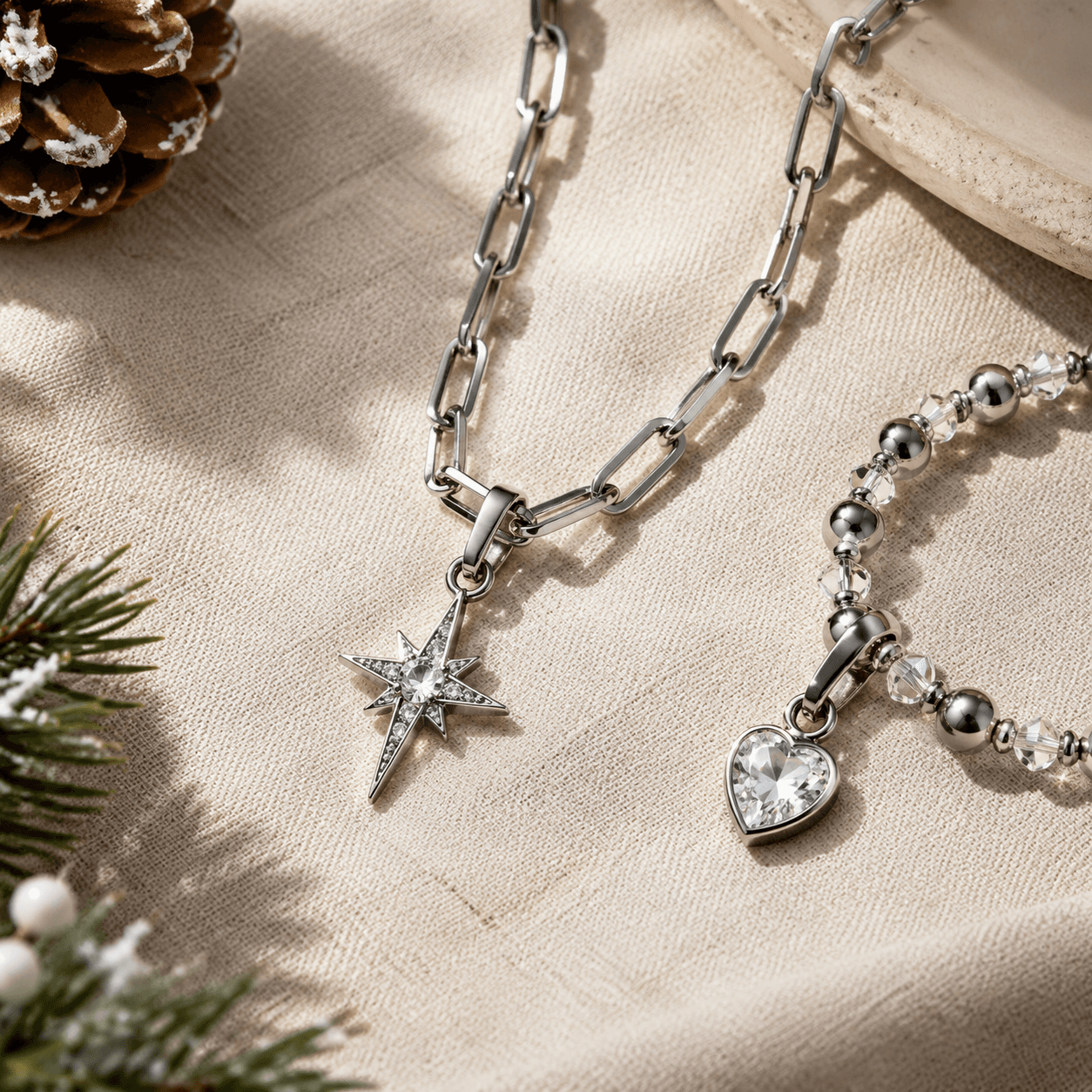
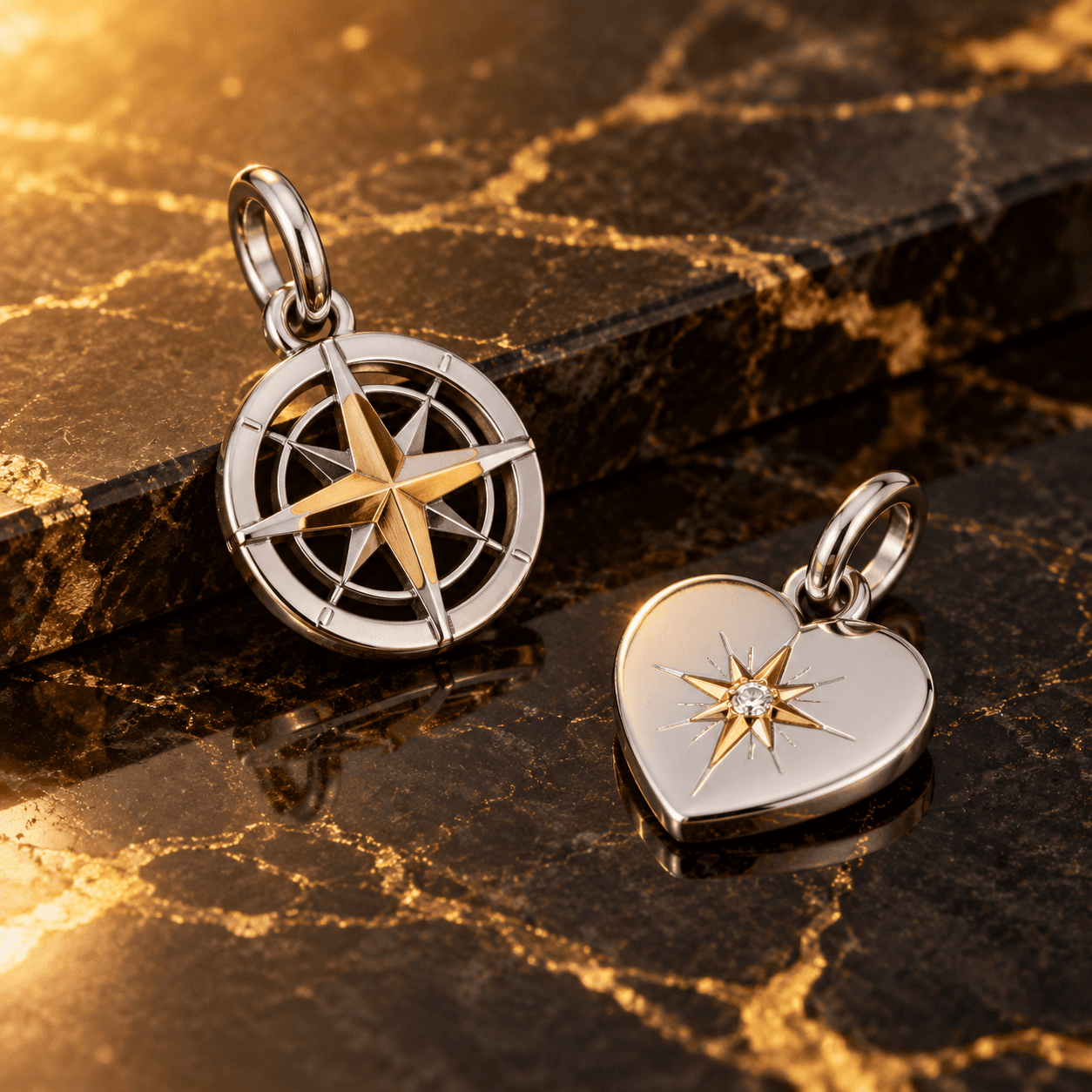
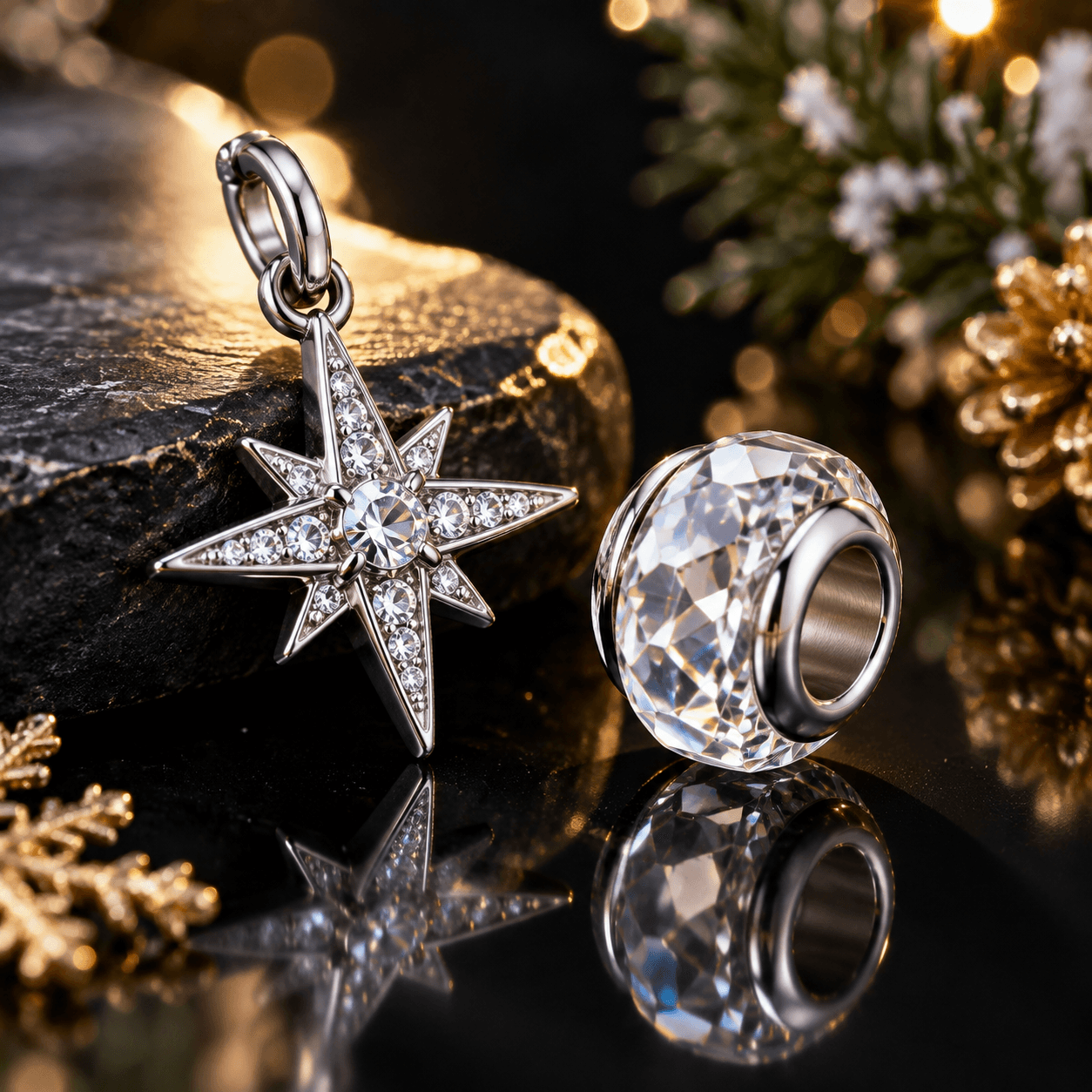
Common customization options include PVD gold plated finishes, silver finish surfaces, rose gold plating, enamel details, and crystal inlay decoration. When discussing finishes, ask suppliers about color consistency, surface protection, and inspection methods.
Collection planning becomes easier when a supplier can support multiple design directions under one manufacturing system. This allows buyers to develop matching charm series for different customer groups while maintaining efficient production management.
Why Supplier Selection Matters for Boutique Jewelry Brands
Quality consistency supports long-term growth
For boutique brands, product consistency is critical. A supplier should not only deliver attractive samples but also maintain stable quality during repeat production. This is especially important for bulk charm orders where every piece needs to meet the same design and finishing expectations.
Lancy Jewelry operates with quality-focused manufacturing processes and provides SGS certified testing results covering RoHS, REACH, Nickel Release EN1811, and Salt Spray 240H. These certifications help buyers evaluate production standards and make decisions with greater confidence.
Reliable communication improves project efficiency
Supplier relationships depend on clear communication. Successful projects usually involve regular discussions about drawings, sample adjustments, packaging requirements, timelines, and production details.
When selecting an ODM charm supplier, consider communication quality as part of the evaluation process:
- □ Does the supplier respond clearly to technical questions?
- □ Can they explain production limitations and possible solutions?
- □ Do they provide updates during sample and production stages?
- □ Are expectations for MOQ, delivery, and quality inspection clearly discussed?
A supplier that communicates effectively becomes more than a production source. They become a development partner who helps improve product planning and reduce unnecessary delays.
Detailed Guide: How to Evaluate a Charm Supplier Step by Step
Step 1: Check manufacturing capability
Before placing an order, review the supplier’s factory capability and production experience. A professional charm factory should have equipment and processes that support detailed designs, accurate finishing, and repeatable manufacturing.
Important areas to review include:
- □ Production equipment and technical processes
- □ Experience with customized stainless steel charms
- □ Ability to handle different collection sizes
- □ Quality inspection procedures
Modern manufacturing equipment such as CNC machines, laser cutting systems, laser marking equipment, welding tools, and polishing facilities can help support detailed charm production requirements.
Step 2: Discuss MOQ and order planning
Order flexibility is an important consideration for growing brands. Buyers should discuss MOQ requirements early because production quantities affect development planning, inventory management, and collection launches.
A supplier offering low MOQ charm production support can help boutique brands test new concepts while managing inventory more efficiently. Clear communication about quantities, packaging, and production schedules helps create realistic project plans.
Step 3: Request samples before bulk production
Sample development is a valuable step for checking design accuracy and finishing quality. Before approving bulk orders, review sample details including shape accuracy, logo placement, surface treatment, color application, and attachment structure.
During sample review, ask:
- □ Does the sample match the approved design information?
- □ Are the connection points practical and secure?
- □ Are finishing details consistent with the collection plan?
- □ Can the supplier adjust details based on feedback?
A structured sample process reduces risks and creates a stronger foundation for future production.
Step 4: Review private label support
Many boutique brands need customized packaging and brand presentation. A supplier offering private label charms services should understand packaging requirements, labeling processes, and collection consistency.
Discuss packaging options, product presentation, and shipping preparation before production begins. A complete private-label approach helps brands create a professional customer experience from product development to final delivery.
Step 5: Build a long-term supplier relationship
The best supplier partnerships are built through transparency and shared planning. Instead of viewing production as a single transaction, successful buyers often create ongoing relationships that support new collections and future improvements.
Regular communication about upcoming trends, product ideas, forecast planning, and improvement opportunities allows both sides to work more efficiently. A dependable partner can support new releases, seasonal programs, and expanding product categories.
FAQ About Stainless Steel Charm Supplier Sourcing
What should I check before choosing a stainless steel charms supplier?
Review the supplier’s material expertise, customization ability, production equipment, quality certifications, communication process, MOQ requirements, and sample development support. These factors help determine whether the supplier can support long-term collection growth.
Can a supplier support custom logo charms and private label projects?
Yes. A professional supplier with OEM and ODM capabilities can support custom logo engraving, product development, finishing options, and private-label packaging requirements. Buyers should confirm these services during the early project discussion.
Why is sample development important before ordering?
Sample development allows buyers to review design accuracy, finishing quality, and production details before moving into bulk charm orders. It helps identify adjustments early and improves production confidence.
How can buyers create better supplier partnerships?
Strong partnerships come from clear communication, realistic planning, detailed feedback, and mutual understanding of project goals. Sharing collection plans and requirements early helps suppliers provide better support.
Partner With Lancy Jewelry for Custom Charm Development
Finding the right supplier is the foundation of successful charm collection development. Lancy Jewelry supports boutique brands, gift companies, distributors, and private-label buyers with professional OEM and ODM manufacturing services based on 316L stainless steel charms.
From custom design support and sample development to PVD finishing, enamel details, crystal inlay, and private-label packaging, Lancy Jewelry helps buyers create market-ready collections with reliable factory support.
Explore our product catalog at /products, learn more about custom manufacturing at /oem, or submit an RFQ through /cart to discuss your next charm project.