Wholesale and Retail Stainless Steel Charms: Margin Guide
For retail store owners, understanding the difference between wholesale and retail pricing is essential for building a profitable charm business. Stainless steel charms can offer strong value positioning because they combine durable product performance, attractive finishes, and flexible collection planning for different customer groups. A clear margin strategy helps retailers balance competitive pricing, customer appeal, and healthy business returns.
This guide explains how profit margins are created between sourcing and retail sales, what factors influence pricing, and how boutique retailers can improve their results through smart inventory decisions. By working with an experienced stainless steel charms manufacturer, buyers can better understand production value, customization options, and long-term product planning.
How Much Profit Margin Exists Between Wholesale and Retail Stainless Steel Charms
Understanding the basic wholesale-to-retail pricing structure
The margin between wholesale and retail pricing depends on many factors, including product complexity, order quantity, customization requirements, packaging needs, and market positioning. Retail owners usually purchase products at a factory or supplier price and create a retail price that covers operating costs while providing room for profit.
For 316L stainless steel charms, pricing is influenced by manufacturing processes such as CNC shaping, laser cutting, laser marking, welding, polishing, PVD plating, enamel color filling, and crystal inlay. These processes affect the final product value and allow retailers to create collections with different price points.
Why markup strategy matters for charm retailers
A successful markup strategy is not only about increasing the selling price. It requires understanding customer expectations, product presentation, collection design, and inventory turnover. Retailers need enough margin to support marketing, displays, packaging, staff costs, and future purchasing decisions.
Many boutique businesses organize charms into themed collections to encourage repeat purchases. A well-planned selection can improve customer engagement because shoppers often prefer products that provide personalization options, seasonal appeal, and gifting opportunities.
Benefits of Choosing a Professional Manufacturing Partner
Consistent quality supports stronger retail value
Product consistency plays an important role in maintaining customer trust. When every batch has stable finishing quality, retailers can build reliable collections and reduce concerns about product variations.
Lancy Jewelry is a B2B OEM/ODM manufacturer focused on 316L stainless steel charms for boutique brands and private-label buyers. The factory uses modern production equipment, including CNC, laser cutting, laser marking, welding, and polishing processes to support customized charm development.
Lancy Jewelry provides SGS certified production standards covering RoHS, REACH, Nickel Release EN1811, and Salt Spray 240H testing. These certifications help buyers evaluate product reliability when planning collections for international markets.
Flexible sourcing options improve business planning
Retail businesses often need different purchasing approaches depending on their sales stage. New collections may require smaller trial quantities, while successful products may require larger repeat orders.
Support for low MOQ charm production, sample development, and bulk charm orders allows retailers to manage inventory risk while testing customer demand. This approach helps buyers create practical product strategies instead of committing resources before understanding market response.
Detailed Analysis: How Retailers Can Improve Stainless Steel Charm Margins
Step 1: Calculate the complete product cost
The first step in margin planning is understanding the complete cost structure. Wholesale pricing may include product manufacturing, finishing, quality control, packaging preparation, and customization requirements.
Retailers should evaluate the total value of each charm rather than only comparing unit prices. A product with customized details, durable finishing, and professional packaging may create stronger customer interest and support better retail positioning.
Step 2: Choose collections based on customer demand
Successful charm displays usually combine popular themes with practical purchasing opportunities. Retail owners can develop collections around occasions, personal expression, gifting, and seasonal shopping trends.
Categories such as symbols, initials, nature themes, birth month concepts, and decorative designs can help create organized displays. A balanced collection improves customer browsing and encourages multiple-item purchases.
Step 3: Use customization to increase product value
Customization can help retailers create unique product programs. Through OEM and ODM services, buyers can request custom designs, logo engraving, specific finishes, and private-label packaging solutions.
Custom logo charms and private label charms allow businesses to develop recognizable product lines while maintaining control over their customer experience. These services are especially useful for boutique brands that want collections designed around their own market needs.
Step 4: Build pricing around perceived value
Retail pricing should reflect more than manufacturing cost. Customers consider design quality, finishing details, packaging presentation, and brand experience when deciding whether a product provides good value.
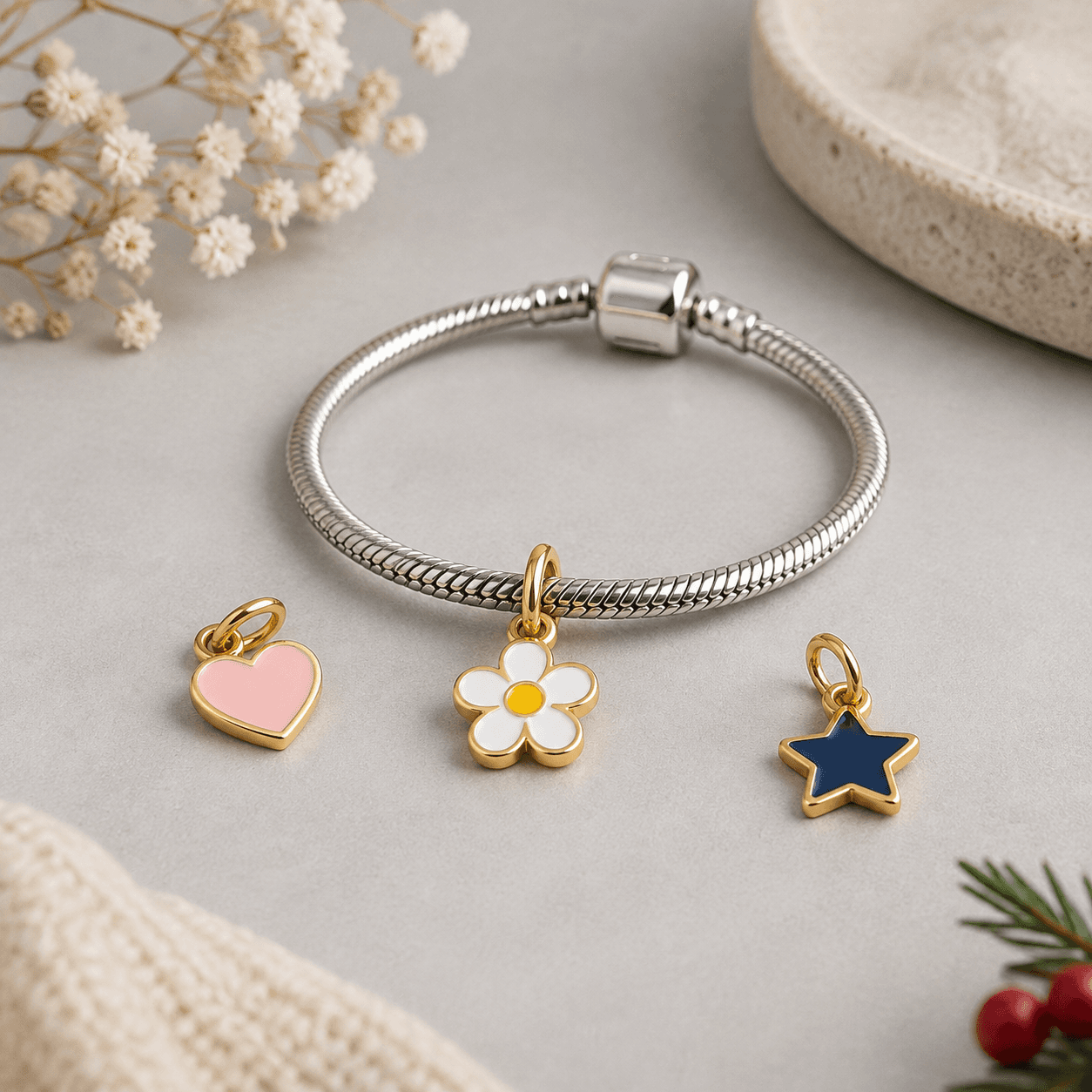
Options such as PVD plated stainless steel charms, enamel stainless steel charms, and crystal inlay designs can create different collection levels. Retailers can organize products into entry, standard, and premium groups to serve different customer preferences.
Step 5: Monitor inventory turnover
Profitability depends on how efficiently inventory moves. Products that remain in stock for too long can reduce cash flow and limit opportunities for new collections.
Retailers can improve turnover by reviewing customer feedback, tracking seasonal demand, refreshing displays, and working with suppliers that support flexible production. A reliable ODM charm supplier can help businesses adjust collections according to changing market needs.
Practical Margin Improvement Strategies for Retail Buyers
Create a balanced product mix
A strong charm collection usually includes different design styles, finishes, and price levels. This gives customers more choices while allowing retailers to manage average order value.
For example, a display may include simple designs for everyday purchases and more detailed options featuring enamel, PVD finishes, or crystal inlay for customers looking for additional decoration.
Use professional packaging and presentation
Packaging influences the customer experience. Private-label packaging helps retailers present products professionally and create a complete purchasing experience.
When packaging, displays, and product quality work together, customers can better understand the value behind the purchase. This supports stronger pricing confidence and repeat buying behavior.
Work with a factory that understands B2B needs
Retail success depends on dependable supply support. A factory partner should understand product development timelines, quality requirements, and international buyer expectations.
Lancy Jewelry supports global buyers with OEM/ODM development, sample support, flexible MOQ options, and production solutions designed for boutique and private-label programs. Buyers can submit an RFQ to discuss project requirements or explore available collections through the product catalog.
FAQ About Wholesale and Retail Stainless Steel Charms Margins
What factors influence stainless steel charm wholesale pricing?
Wholesale pricing depends on design complexity, production processes, finishing options, order quantity, customization requirements, and packaging needs. Working with a professional manufacturer helps buyers understand these factors clearly.
How can retailers increase charm profit margins?
Retailers can improve margins through better collection planning, appropriate pricing, attractive displays, customized products, and efficient inventory management. Choosing products with strong customer appeal also helps improve sales performance.
Why do buyers choose OEM or ODM charm services?
OEM and ODM services allow buyers to develop customized collections, including design adjustments, logo engraving, finishing choices, and private-label packaging. These options help businesses create products aligned with their target customers.
What should buyers consider before placing bulk orders?
Before placing bulk orders, buyers should review samples, confirm product specifications, evaluate quality standards, and understand production timelines. Sample development provides an important opportunity to confirm design expectations before larger purchasing decisions.
Partner With Lancy Jewelry for Wholesale Charm Solutions
Building profitable charm collections requires more than finding a product supplier. Retailers need a manufacturing partner that understands quality control, customization, pricing value, and market requirements.
Lancy Jewelry provides factory-direct solutions for businesses seeking reliable 316L stainless steel charm production. With OEM/ODM capability, PVD finishing, enamel application, crystal inlay options, private-label packaging, and sample development support, Lancy helps buyers create boutique-ready collections.
Contact Lancy Jewelry through the contact page to discuss your sourcing needs, request product information, and explore opportunities for long-term collaboration.