Hook: In the world of boutique-brand charm programs, the choice of base material drives performance, longevity, and consumer confidence. For bracelet charms, the 316L stainless steel family offers a unique combination of corrosion resistance, mechanical strength, and finish stability that designers leverage across global markets. This deep-dive explains the material science behind 316L stainless steel charms and translates chemistry into practical manufacturing guidance for OEM/ODM collaborations with Lancy Jewelry.
Stainless steel charms for bracelets: material science at the core
316L stainless steel charms are forged from an austenitic stainless steel alloy with a characteristic chromium-nickel-molybdenum matrix. The 316L designation denotes a low-carbon variant, which reduces carbide precipitation during welding and improves weldability—an important factor when integrating complex charm geometries with laser marks, engraved logos, or enamel fills. The alloy composition typically includes about 16-18% chromium, 10-14% nickel, and 2-3% molybdenum, with carbon content kept at a minimum (the L stands for low carbon). This chemistry yields a combination of corrosion resistance, pitting resistance in chloride environments, and good formability that is well suited to high-precision charm production.
For designers, this chemistry translates into predictable behavior during finishing, plating, and assembly. The chromium-rich oxide layer provides passivation that reduces rusting risk, while the molybdenum enhances resistance to chlorides—an important consideration for consumer wearers in coastal regions or with frequent exposure to sweat and humidity. Lancy Jewelry leverages CNC machining, laser cutting, laser marking, welding, and polishing to shape 316L charms with tight tolerances that ensure seamless logo engraving and consistent surface textures across batches.
alloy chemistry and its practical implications
The interplay of chromium, nickel, and molybdenum in 316L determines corrosion resistance, heat tolerance, and magnetic neutrality. Higher chromium content forms a stable passive film on the surface, while nickel stabilizes austenite to maintain ductility at room and elevated temperatures. Molybdenum boosts pitting resistance in chloride environments, a crucial feature for long-term jewelry wear. From a production perspective, this means:
- Better weldability and formability for complex charm shapes.
- Stable engraving and enameling surfaces without compromising the base metal.
- Consistent performance across coastal markets (US, EU, UK, AU, CA, DE, FR, SP, NE, RU) where environmental exposure varies widely.
When designing 316L charms for bracelet applications, consider how alloy chemistry interacts with surface finishes and decorative treatments. A high-quality base is a prerequisite for reliable PVD plating, enamel color filling, and crystal inlays—each demanding uniform substrate quality and controlled surface roughness.
Benefits and why it matters for designers
Choosing 316L stainless steel charms offers designers a stable platform for customization, especially when paired with reliable manufacturing, finishing, and packaging options. The following benefits are key for cross-market programs and private-label collaborations. Note that Lancy Jewelry carries SGS certification covering RoHS, REACH, Nickel Release EN1811, and Salt Spray 240H, underscoring a robust quality-management framework across the supply chain.
Key benefits
- Finish versatility: PVD plated stainless steel charms in gold, silver, or rose gold; enamel fills and crystal inlays expand design latitude while maintaining substrate integrity.
- Consistent plating quality: Advanced plating controls ensure uniform thickness and color stability across high-volume runs.
- Low MOQ charm production: Flexible production scales to designer budgets without sacrificing performance or aesthetics.
- Private-label packaging: Ready-to-brand packaging supports boutique-label programs and fast market entry.
- Sample development: Rapid prototyping accelerates concept validation, lead times, and design refinement.
These advantages align with the needs of global design teams seeking reliable, scalable manufacturing partners. The combination of 316L substrate, varied finishes, and strong QA capabilities translates into a compelling value proposition for OEM charms manufacturer collaborations and private-label explorations.
For designers evaluating production options, consider requesting a sample development cycle to verify fit, finish, and wear performance before committing to bulk charm orders. See how a trusted supplier like Lancy Jewelry can support the entire lifecycle from concept to market with OEM service and Request a Quote.
Detailed analysis and practical guide
This section translates material science into actionable steps for design teams and sourcing managers. Each step emphasizes how 316L chemistry informs choice, tolerances, and finishing parameters, ensuring that your bracelet charms meet worldwide expectations.
Step 1: Define alloy-related design constraints
Begin with a clear brief on corrosion environment, wear patterns, and expected lifetime. Because 316L offers robust corrosion resistance, you can confidently enable intricate engraving, logo marks, and delicate enamel fills. Align your CAD models with 316L’s ductility and machinability to reduce spring-back or stress risers in thin charm walls. If your design includes logos or alphanumeric marks, plan engraving depth and line weight to maintain legibility after plating.
Step 2: Choose finishes that suit market needs
PVD plating enables durable color finishes including gold, silver, and rose gold. Enamel filling can add vivid hues, while crystal inlays provide sparkle for premium lines. Each finish interacts with the 316L substrate differently: PVD adheres to a clean, pre-treated surface; enamel relies on secure resin deposition and precise venting; crystal inlays require controlled seating and gap management. Coordinate with your supplier to specify plating thickness, enamel color codes, and crystal settings tolerances to ensure a consistent, boutique-ready appearance across runs.
Step 3: Tolerances, geometry, and attachment points
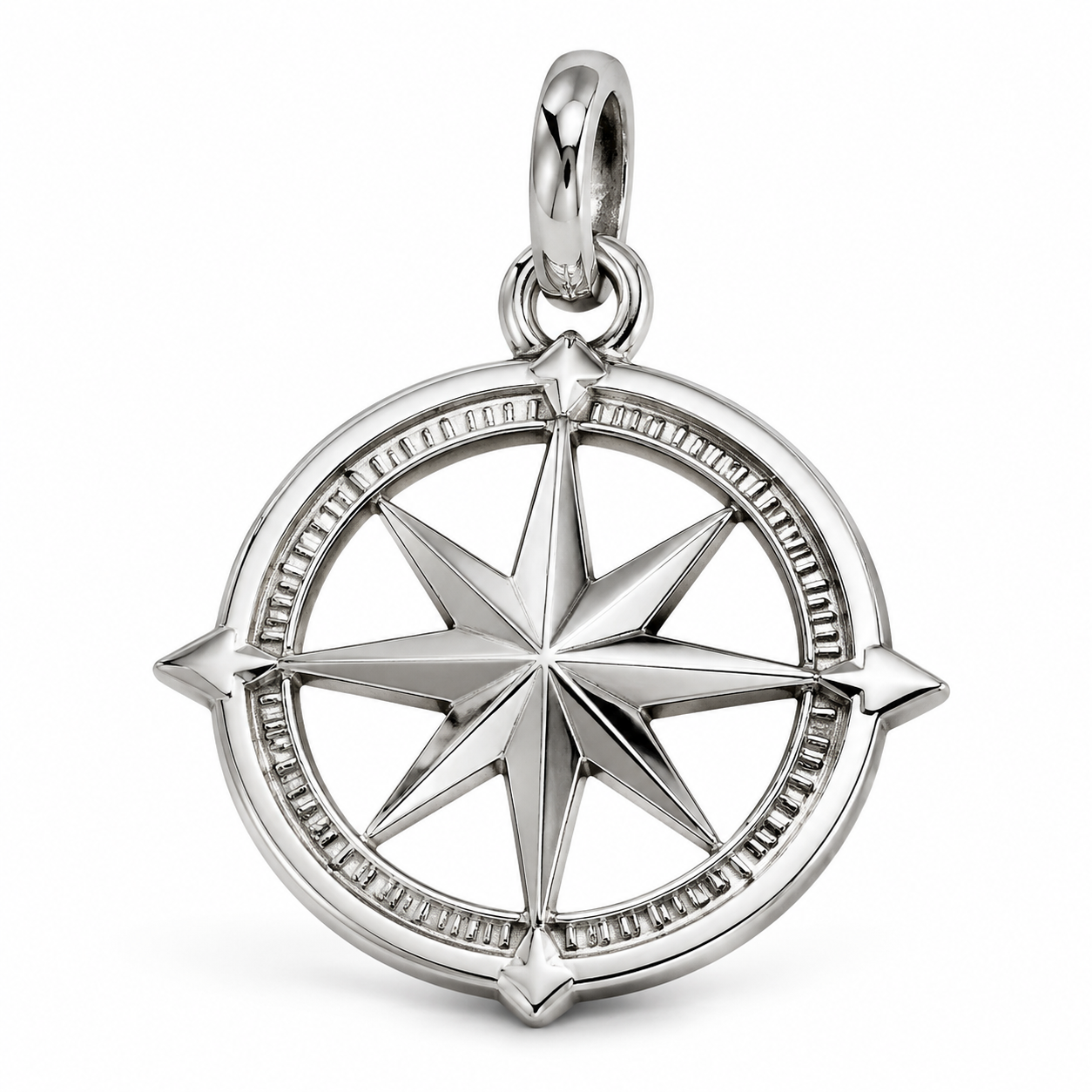
A charm’s silhouette, loop geometry, and bail size must be harmonized with standard jump rings and chains. The 316L substrate responds predictably to laser marking and CNC finishing, which helps maintain consistent logo placement and edge detailing. Define tolerances for hole diameters, bail inner width, and surface roughness to ensure reliable assembly with existing charm chains or compatibility with catalog accessories.
Step 4: Finishing process control and QA
Quality assurance hinges on surface cleanliness, plating adhesion, and corrosion resistance. SGS-certified testing confirms RoHS/REACH compliance and Nickel Release metrics, ensuring jewelry remains skin-friendly where nickel content is a concern. Salt spray testing provides accelerated wear evaluation, while visual inspections verify uniformity in color, texture, and clarity of enamel or crystal inlays. Your supply partner should provide batch traceability, process controls, and material certificates to support global commerce.
Step 5: Private-label packaging and branding strategy
For private-label programs, packaging design and branding are critical. Standardized packaging options reduce lead times, while customized packaging can reinforce brand identity. Lancy Jewelry offers private-label packaging as part of the service mix, enabling boutique brands to present a cohesive collection to retailers and end customers. When planning SKUs, align packaging with MOQ planning and sample development cycles to maintain momentum across product drops.
Step 6: Design collaboration and logo/logo-larger-scale customization
Logo engraving and logo-resizing on 316L charms require careful consideration of line weight and surface area. High-contrast engravings maintain legibility after plating, while multi-color enamel schemes can be synchronized with branding guidelines. The capability to produce custom logo charms expands the designer’s toolkit for exclusive lines and limited-edition releases. To begin collaboration, explore the OEM charms manufacturer pathway with our team and reference sample development milestones as you iterate designs.
Direct access to an integrated supply chain—machining, finishing, and packaging—reduces risk and accelerates time to market. For practical steps toward production, connect with our team through OEM service and initiate bulk charm orders after validating samples. You can also browse the broader catalog at All Products to align with existing collections while pursuing private-label opportunities.
FAQ
Q1: What makes 316L stainless steel a good base for bracelet charms?
A1: 316L offers excellent corrosion resistance, biocompatibility, and formability, with a low carbon content that reduces sensitization during welding. This makes it ideal for reliable, long-lasting charms that hold detail through engraving, enamel filling, and crystal settings.
Q2: What finishes are commonly available for 316L stainless steel charms?
A2: Finishes include PVD gold plating, silver finish, rose gold plating, enamel color filling, and crystal inlay. Each finish requires careful substrate preparation to ensure color stability and adhesion throughout the product lifecycle.
Q3: Do you offer private-label packaging and low MOQ options?
A3: Yes. Lancy Jewelry provides private-label packaging and scalable MOQ options designed for boutique brands and private-label buyers. For concept validation, we support sample development and a smooth transition to bulk charm orders.
Q4: How long does the sample development process typically take?
A4: Turnaround varies by design complexity, but our integrated factory capabilities (CNC, laser, welding, polishing) enable efficient iterations. We encourage early alignment on logo placement, enamel palette, and plating finish to minimize revisions.
Partner with us
Ready to design and produce 316L stainless steel charms for bracelets with a trusted OEM/ODM partner? Lancy Jewelry welcomes collaboration with designers and private-label teams worldwide. Our modern facility and SGS-certified quality program support consistent, boutique-ready output from concept through production. To start, explore our OEM service, request a formal quote via Request a Quote, or contact our team directly through Contact. For catalog exploration, browse All Products.