How Designers Master 316L Stainless Steel Enamel Bracelet Charms: A Practical, Materials-First Guide
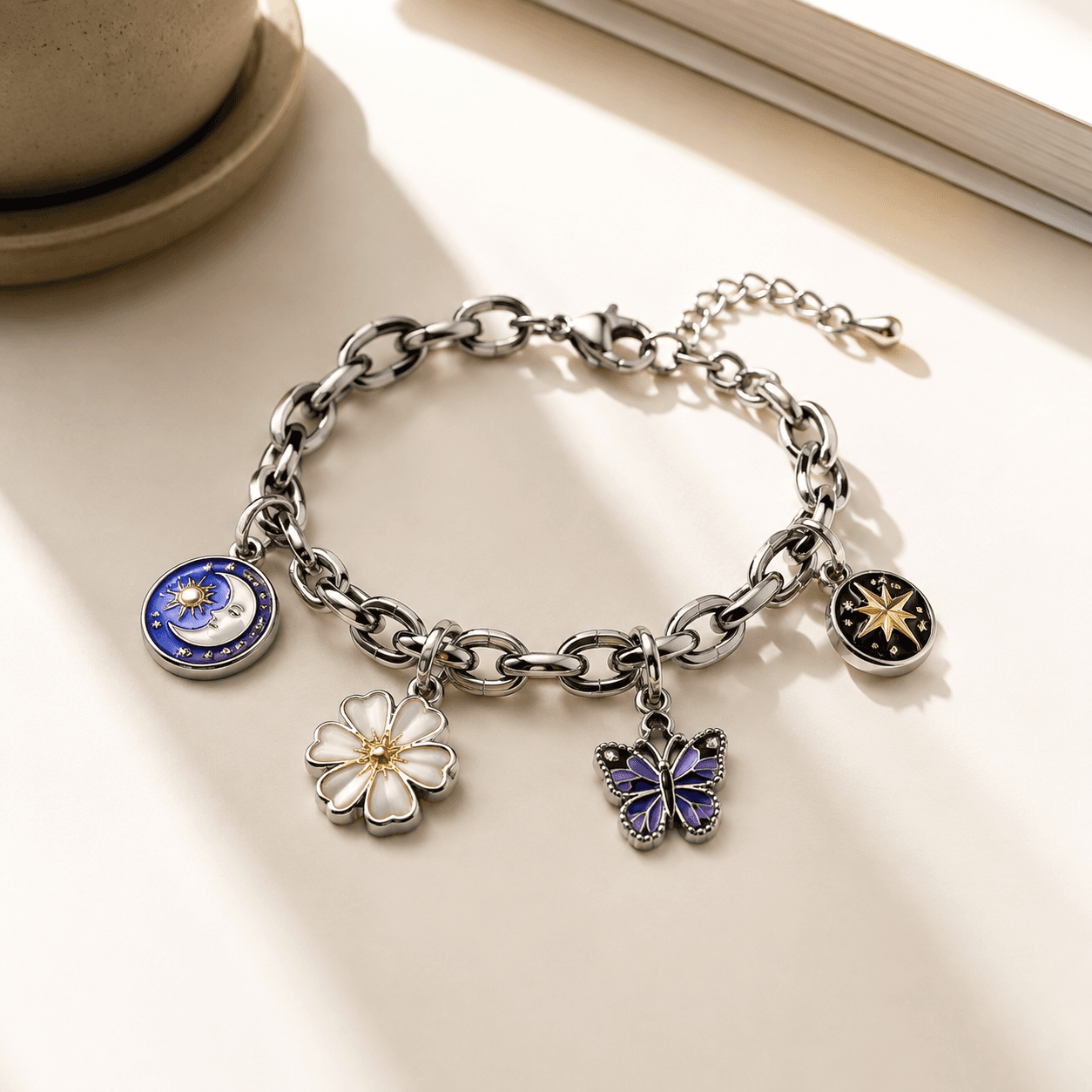
For designers shaping private-label programs in modern boutique jewelry, 316L stainless steel enamel bracelet charms offer a reliable path from concept to market. This guide presents a practical, materials-first perspective, covering alloy basics, enamel behavior, finishing options, and how OEM/ODM partnerships can accelerate private-label launches while maintaining consistent quality across markets. We highlight alloy composition, surface preparation, enamel chemistry, and traceability that matter to sourcing managers evaluating bulk orders and low MOQ programs with a trusted partner like Lancy Jewelry.
316L stainless steel enamel bracelet charms: Main topic and keyword context
This section frames the core material science, design flexibility, and manufacturing discipline that yield reliable enamel performance on 316L bases. The emphasis is on how 316L properties translate into enamel adhesion, plating reliability, and long-term aesthetics across the US, EU, UK, AU, CA, DE, FR, SP, NE, and RU markets.
1) Why 316L stainless steel matters for enamel charms
316L stainless steel offers corrosion resistance and stable formability, which translates into durable silhouettes and consistent enamel results under daily wear. For designers, 316L charms provide predictable mechanical behavior, suitability for intricate shapes, and strong compatibility with surface treatments such as PVD plating and enamel inlay. The chemistry supports dense, uniform oxide layers during passivation, aiding enamel adhesion and long-term performance when paired with well-controlled firing cycles and finishing.
2) Alloy composition and metal chemistry basics
316L is an austenitic stainless steel alloy primarily composed of iron, chromium, nickel, and molybdenum. The low carbon content minimizes sensitization and improves weldability and formability, while molybdenum enhances corrosion resistance in chloride environments. For enamel charm production, this chemistry yields a stable substrate that resists pitting and staining, preserving the bright, uniform look of enamel fills and the metallic luster of finishes applied by PVD. Designers should recognize that trace elements and processing can influence hardness, grain structure, and heat treat response, all of which affect enamel flow and bonding quality.
3) Enamel chemistry and enamel-to-metal bonding on 316L
Enamel fills rely on a ceramic-like glassy matrix that fuses into the substrate during firing. With 316L, enamel bonding is influenced by surface roughness, oxides on the passivated layer, and pre-treatment steps such as cleaning and micro-etching. A well-controlled enamel process yields vibrant color, crack resistance, and uniform thickness. Key material science considerations include enamel viscosity, thermal expansion compatibility between enamel and stainless steel, and the mitigation of enamel crazing through proper firing cycles and controlled cooling. Designing with enamel means selecting color families, addressing shading consistency across batches, and coordinating with enamel suppliers and plating houses for harmonized results.
4) PVD plating: finishes that complement enamel and protect substrates
PVD plating provides durable gold, rose gold, or silver finishes that are mechanically bonded to the 316L substrate. The chemistry of PVD creates hard, wear-resistant surfaces that resist scratching and tarnish, which is essential when enamel elements are exposed to daily use. For designers, understanding the interplay between PVD thickness, color tone, and enamel adhesion is important. Too-thick or mismatched plating can affect heat transfer during enamel curing, while insufficient surface preparation can lead to enamel delamination. A reliable OEM/ODM partner will optimize pretreatment, plating schedules, and color-matching to ensure enamel looks consistent across lots and across markets.
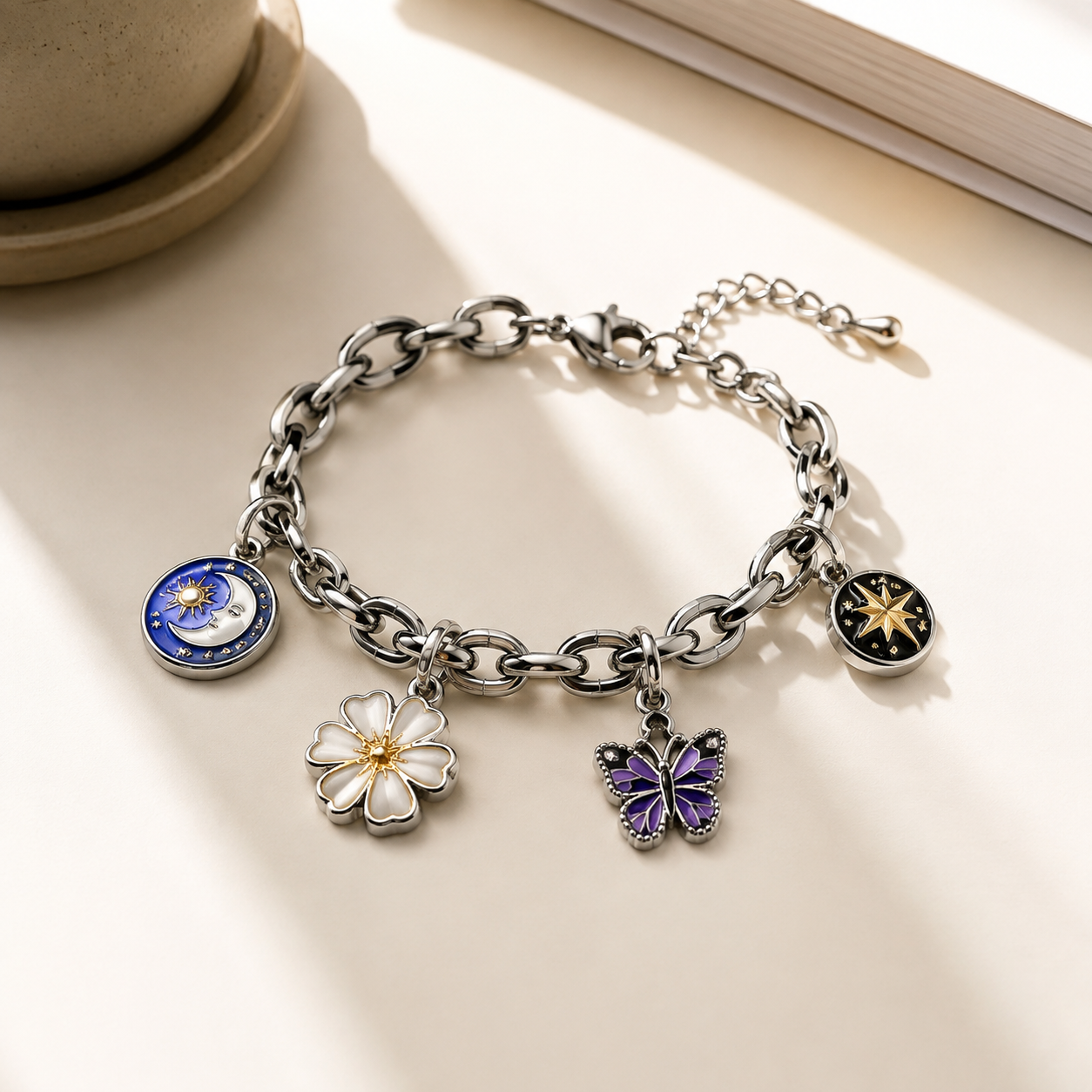
5) Surface preparation and finishing workflow
Surface preparation is the quiet workhorse of successful enamel charms. It includes degreasing, micro-etching or cleaning to create a consistent surface, followed by passivation to form a stable oxide layer. Then a precise PVD finish is deposited with attention to adhesion and thickness uniformity. Enamel filling follows, using color-filled processes that require good wetting and proper curing. Finally, the piece is inspected for edge coverage, edge sealing, and color uniformity. The workflow matters because tiny variations in preparation can cascade into enamel miscoloration, micro-cracks, or adhesion issues that challenge wholesale or private-label programs.
6) The role of the supply chain in cross-market applicability
Global markets demand consistent color, brightness, and finish across batches. Cross-market programs benefit from traceable processes and disciplined QA. Lancy Jewelry, with CNC, laser cutting, laser marking, welding, and polishing capabilities, aligns with these expectations by offering traceable processes and strict quality control for 316L stainless steel charms.
Benefits / Why it matters
Understanding the material science behind 316L stainless steel enamel bracelet charms helps designers create products that perform predictably from development through private-label rollout. The following benefits are relevant to sourcing managers evaluating OEM/ODM partnerships, private-label programs, or wholesale opportunities.
Key benefits
- Corrosion resistance and long-term color stability: 316L’s low carbon content reduces sensitization and improves durability, essential when enamel is embedded in wear-prone accessories.
- Consistent plating quality: PVD finishes offer repeatable color tones and wear resistance, ensuring uniform appearance across production lots for global campaigns.
- Enamel compatibility and design flexibility: The enamel process works well with 316L substrates, enabling vibrant fills on intricate silhouettes without compromising metal integrity.
- Quality assurance and regulatory readiness: Robust QA programs with traceability provide reliability across markets with tests for regulatory compliance and product performance.
- OEM/ODM and private-label readiness: A factory-direct supply chain supports low MOQ charm production, sample development, and bulk orders with private-label packaging and custom logo options.
Detailed analysis / Practical guide for designers
This section translates material science concepts into actionable steps for designers, engineers, and sourcing managers working on 316L enamel bracelet charms. It integrates process control, design decisions, and supplier collaboration to maximize yield and reduce time-to-market.
Step 1: Establish material and finish strategy
Define 316L as the base, target enamel enclosure types, and the finishing approach such as PVD color, silver finish, or rose gold plating. Decide on enamel color families and fill methods. Align with your supplier in the factory—Lancy Jewelry offers CNC, laser cutting, laser marking, welding, and polishing to realize complex shapes with precise edge definition.
Step 2: Surface prep and adhesion planning
Collaborate with the enameling team early to determine surface roughness tolerances, cleaning protocols, and passivation processes. Document intended enamel thickness and ensure the substrate tolerates thermal cycles during firing. Predefine acceptance criteria for edge coverage, edge sealing, and color uniformity to minimize rework and ensure consistent appearances in private-label runs.
Step 3: Finishing and enclosure considerations
Plan the sequence base shaping, surface finishing, PVD plating, enamel inlay, and final QA. For designers, crucial decision points are color availability, plating color stability under enamel curing, and the potential need for crystal inlays or decorative accents. Consider how facial geometry interacts with enamel fill gaps and whether micro-features may trap air or moisture during curing. A capable partner will provide color-matched finishes and robust process documentation to support global distribution.
Step 4: Quality control and regulatory readiness
Implement a QA plan that includes visual inspection, dimensional checks, and functional assessments such as bail loops and clasps. Enforce salt spray tests, nickel-release measurements, and RoHS/REACH data. Structured QA aids cross-border sales and private-label programs, reducing risk for distributors and boutique retailers alike.
Step 5: Private-label packaging and branding
Package design should align with brand guidelines while protecting product integrity. Work with your supplier on MOQs, label placement, packaging materials, and SKU-level traceability. A reliable partner can support private-label packaging options and scalable branding for seasonal collections.
Step 6: Sample development and time-to-market
Sample development accelerates design validation. The ability to produce and ship samples quickly reduces cycle time and enables rapid decision-making. Lancy Jewelry emphasizes fast sample development for enamel color iterations, edge finishes, and logo engraving before bulk orders. This capability is essential for private-label launches or limited-edition runs for gift programs.
Step 7: Sourcing and supplier collaboration best practices
Establish clear communication channels and milestone-based production plans. Share your BOM, color prescriptions, and finish standards with the supplier early. Use supplier portals to track RFQ activity, order progress, and QC results. If evaluating multiple suppliers, prioritize those with integrated equipment like CNC, laser cutting, and polishing to ensure process consistency across lines.
FAQ: Frequently asked questions
Q1: What makes 316L stainless steel suitable for enamel charms?
A1: 316L stainless steel provides corrosion resistance, formability, and stable enamel bonding conditions. Its low carbon content reduces sensitization risk, and its alloy composition supports durable, uniform plating and reliable enamel bonding across a range of designs and sizes.
Q2: What finishes work well with enamel on 316L stainless steel?
A2: Finishes such as PVD gold plating, rose gold plating, and silver finishes are suitable. Ensure proper pretreatment and enamel curing schedules to maintain color stability and adhesion, with ongoing color-matching across production lots.
Q3: How long does sample development typically take for enamel charms?
A3: Timelines vary with design complexity, color palette, and finish options. With an experienced partner, initial samples can be produced within a few weeks, followed by iterative refinements. Defining private-label packaging and logo engraving early helps minimize iterations and speeds time-to-market for private-label runs or wholesale launches.
Q4: What certifications should buyers look for to ensure quality?
A4: Look for facilities with robust QA programs and traceability, including standard regulatory testing and documentation. Certifications that demonstrate regulatory compliance and reliability across markets help reduce risk for distributors and boutique brands.
Call to action: Partner with us
If you are a jewelry designer or sourcing manager seeking a trusted 316L stainless steel charms manufacturer for enamel bracelet charms, Lancy Jewelry offers strong OEM/ODM capabilities, low MOQ charm production, private-label packaging, and comprehensive sample development support. Our modern facility—equipped with CNC, laser cutting, laser marking, welding, and polishing—delivers consistent plating quality and enamel performance on every charm. Explore our OEM services and product catalog, review QA standards, and engage in a collaboration that scales with your private-label ambitions. To begin, visit /oem to discuss customization options, or browse all products at /products to understand our breadth of stainless steel charm offerings. For quotes and fast RFQ responses, initiate inquiries at /cart or contact our sales team through /contact. Partner with us to secure a reliable supply chain for worldwide markets and create enamel charms with proven performance.