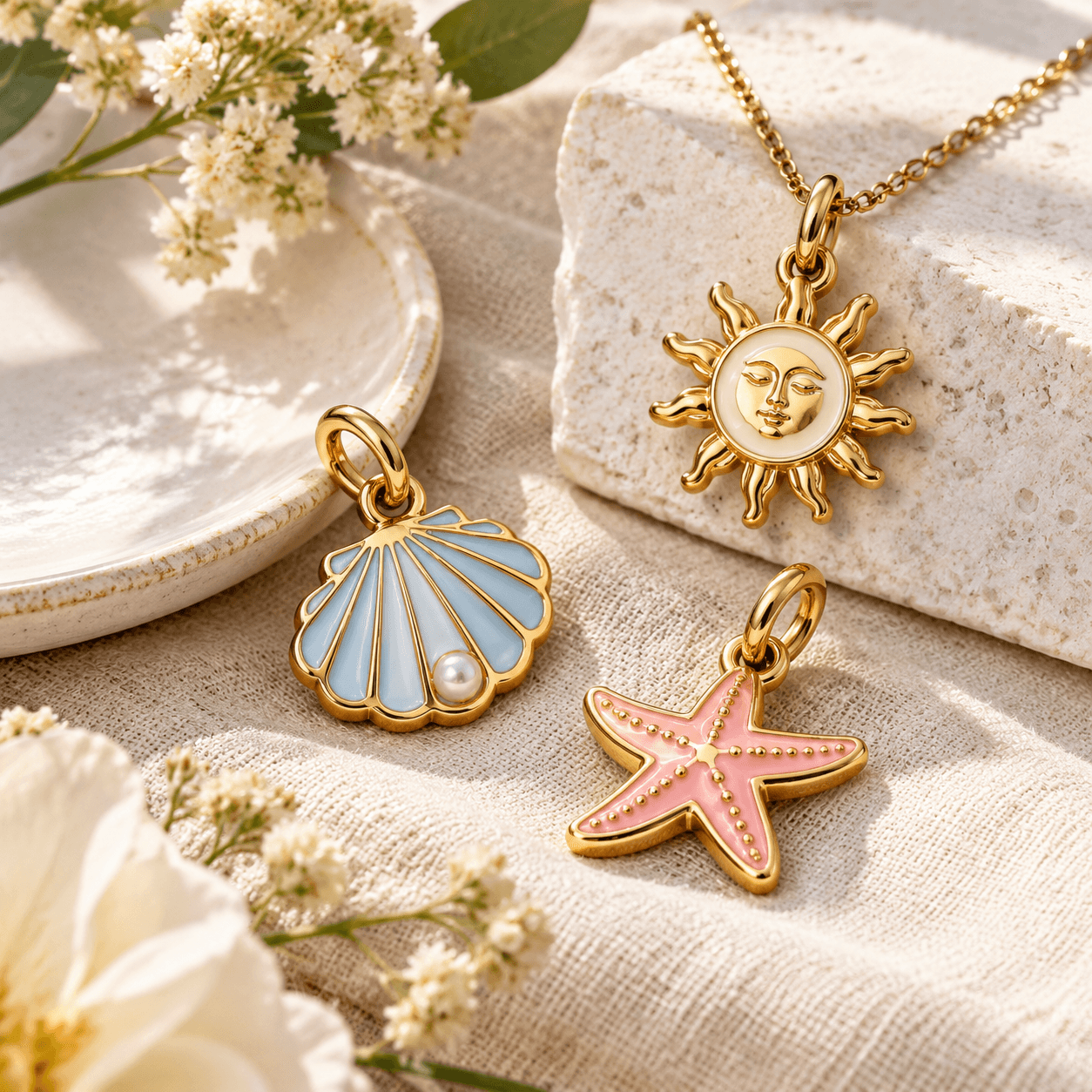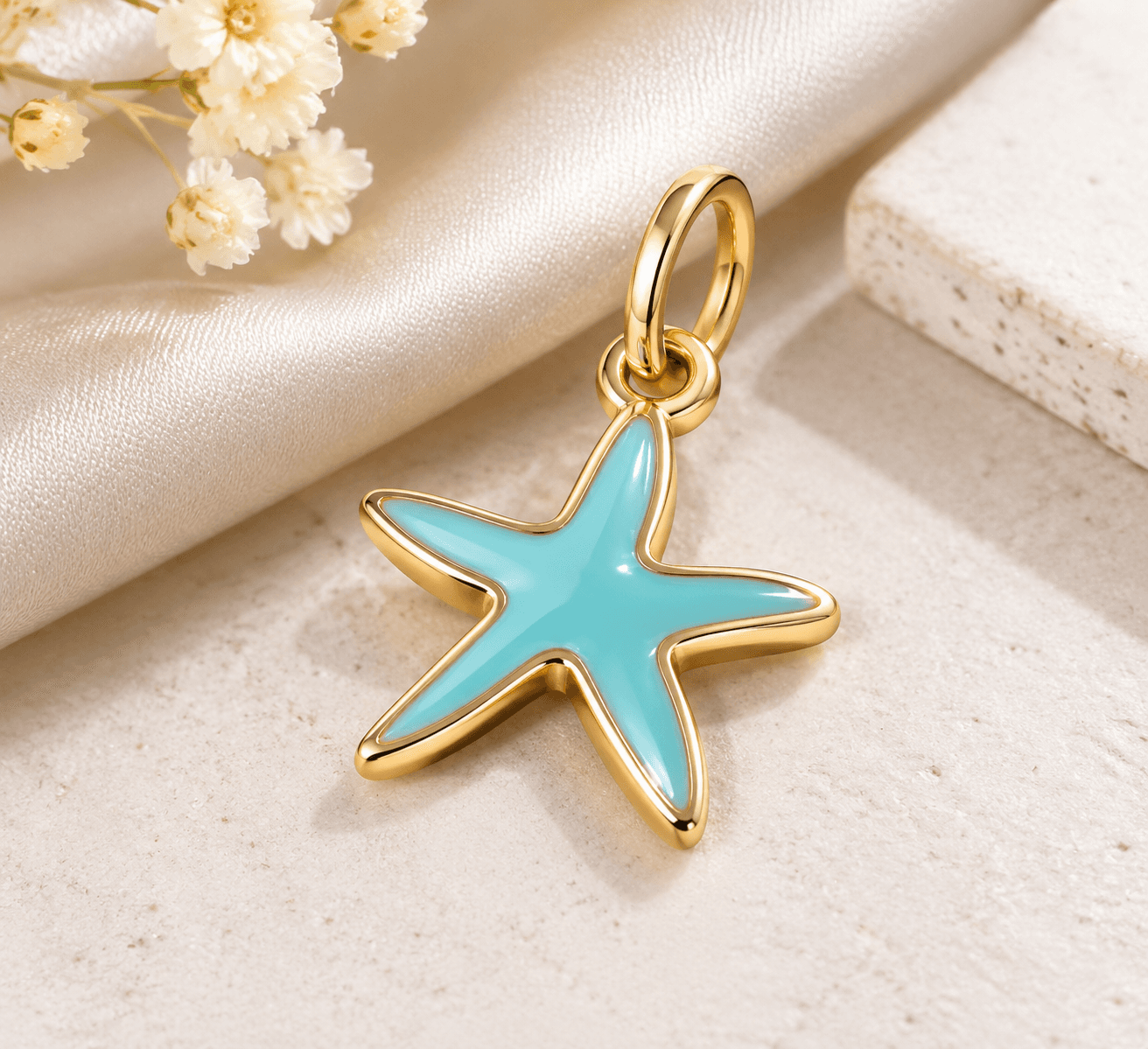
For procurement teams, the real challenge in sourcing custom enamel charms is not finding a factory capable of producing an attractive sample. It is proving that the supplier can consistently reproduce the same dimensions, enamel coverage, surface finish, attachment geometry, and corrosion resistance throughout commercial production. A polished sample can conceal inconsistent processes, inadequate material documentation, and weak quality controls. A disciplined factory-vetting process exposes these risks before your company commits to bulk orders.
This advanced checklist is designed for North American procurement teams evaluating stainless steel custom enamel charms factories. It covers material verification, enamel quality, wear resistance, laboratory documentation, supplier audits, production traceability, and commercial risk management. Use it during RFQ evaluation, sample development, factory assessment, and pre-production approval.
How to Vet Stainless Steel Custom Enamel Charms Factories
1. Verify the base material before reviewing the finish
Material verification must be the first qualification gate. A decorative finish cannot compensate for an undocumented or inconsistent base material. Require the supplier to identify 316L stainless steel explicitly in its quotation, technical specification, sample records, and purchase documentation.
- ☐ Confirm that 316L stainless steel is the specified base material for every proposed charm design.
- ☐ Request material certificates or traceable material documentation identifying the relevant grade.
- ☐ Check whether the documentation corresponds to the actual production material rather than an unrelated reference sample.
- ☐ Require written confirmation that material substitutions cannot occur without prior buyer approval.
- ☐ Ask how incoming material batches are identified, inspected, and recorded.
- ☐ Confirm that production records can connect material batches with finished-product inspection records.
Procurement teams should distinguish between a supplier's general material capability and documented evidence for the specific order. A factory may demonstrate experience with 316L stainless steel charms, but that alone does not establish traceability for an individual production batch.
2. Examine the enamel application process
Enamel quality depends on controlled preparation, accurate color filling, suitable curing or processing parameters, and careful finishing. Small process variations can create visible differences between samples and commercial production.
- ☐ Request close-up photographs of enamel surfaces under consistent lighting.
- ☐ Inspect color uniformity across recessed areas, corners, and narrow design details.
- ☐ Check for pinholes, bubbles, incomplete filling, contamination, uneven edges, and visible surface defects.
- ☐ Confirm that enamel boundaries are clean and that excess material does not obscure design details.
- ☐ Request documented color references and an approved master sample for each color combination.
- ☐ Ask whether the factory controls enamel application parameters and records relevant production adjustments.
- ☐ Verify that rejected enamel components are identified and segregated rather than mixed into acceptable production.
For multicolor designs, assess every color independently. A satisfactory result in one recessed area does not prove that the entire design has consistent filling quality. Buyers should also specify acceptable color variation, surface appearance, and defect limits in the approved product specification.
3. Evaluate dimensional accuracy and attachment construction
A charm is a functional accessory as well as a decorative component. Its dimensions, edge finishing, hole geometry, and attachment mechanism must remain consistent during handling and normal use.
- ☐ Establish approved length, width, thickness, and weight specifications.
- ☐ Define dimensional tolerances for critical features rather than relying on visual judgment.
- ☐ Inspect bail and jump ring construction for correct positioning and secure attachment.
- ☐ Verify that connectors pass through actual holes or loops and do not interfere with the charm design.
- ☐ Check for sharp edges, burrs, incomplete polishing, and inconsistent surface transitions.
- ☐ Request inspection records covering attachment strength and dimensional consistency.
For procurement programs involving multiple designs, create a separate approved specification for each SKU. A shared general specification may overlook important differences in small decorative details and attachment geometry.
Why Supplier Verification Matters for North American Buyers
4. Reduce quality claims and production variability
Consistent production quality affects more than initial appearance. It influences customer satisfaction, return rates, retailer confidence, and the long-term cost of operating a private-label jewelry program.
Working with a qualified stainless steel charms manufacturer provides a clearer framework for managing technical specifications, approved samples, material records, and production inspections. Buyers can establish objective acceptance criteria before manufacturing begins instead of negotiating defect responsibility after delivery.
For North American distributors and boutique retailers, this is particularly important when the same product series is reordered across multiple purchasing cycles. Consistent color, dimensions, plating appearance, and attachment construction help maintain a recognizable assortment and reduce unnecessary product variation.
5. Review independent testing and certification documentation
Certifications and laboratory reports should be treated as evidence to verify, not marketing statements to accept without examination. Lancy Jewelry provides SGS-related testing documentation covering RoHS, REACH, Nickel Release EN1811, and 240-hour salt spray testing.
During supplier qualification, request the underlying reports and review their scope carefully.
- ☐ RoHS: Review the report for applicable restricted-substance requirements and confirm that the tested product or material is relevant to the proposed order.
- ☐ REACH: Check the applicable substance requirements, report date, tested sample identification, and product relevance.
- ☐ Nickel Release EN1811: Examine the reported results and determine whether the tested construction and finish represent the intended skin-contact product.
- ☐ Salt Spray 240H: Review the exposure conditions, evaluation criteria, test observations, and reported outcome rather than treating the duration alone as proof of corrosion resistance.
Do not assume that one laboratory report automatically covers every design, finish, enamel color, or subsequent production batch. Ask the supplier to explain the tested configuration and identify circumstances that would require additional verification.
6. Establish wear-resistance requirements
Wear resistance is a combination of material selection, surface preparation, finish application, handling, and actual usage conditions. A supplier should be able to explain how these factors are controlled and how performance is evaluated.
- ☐ Request evidence of corrosion-resistance testing relevant to the specified product construction.
- ☐ Define the expected appearance of the enamel after appropriate handling and use simulations.
- ☐ Request finish adhesion and abrasion assessment methods where relevant to the selected surface treatment.
- ☐ Examine whether polishing and finishing operations create consistent surfaces across production batches.
- ☐ Ask how the factory evaluates discoloration, surface damage, enamel separation, and attachment deterioration.
- ☐ Define measurable acceptance criteria for every test before approving the sample.
A 240-hour salt spray result should not be presented as a guaranteed number of years of product life. Laboratory exposure is a controlled test condition, not a direct prediction of every customer's wearing environment. Require the supplier to distinguish demonstrated test results from performance expectations.
Detailed Factory Evaluation and Procurement Checklist
7. Audit manufacturing equipment and process control
Production capability should be supported by identifiable equipment, documented workflows, trained operators, and measurable inspection procedures. A factory tour or audit should examine how each production stage contributes to repeatability.
For 316L stainless steel charms, review the following manufacturing capabilities:
- ☐ CNC equipment for controlled machining and dimensional accuracy.
- ☐ Laser cutting for accurate outlines and detailed product geometry.
- ☐ Laser marking for precise logo engraving and identification.
- ☐ Welding processes with defined inspection criteria for relevant connections.
- ☐ Polishing operations with controlled surface appearance and finishing standards.
- ☐ Enamel color filling processes with documented inspection checkpoints.
- ☐ PVD plating controls for products requiring gold plated or rose gold plating finishes.
Do not evaluate equipment availability in isolation. Ask operators how process settings are maintained, how deviations are recorded, and who authorizes corrective actions. A factory with modern machinery still needs a functioning quality management process.
8. Inspect the supplier's quality-control checkpoints
Effective quality assurance must cover incoming materials, production operations, and finished goods. Final inspection alone is insufficient because some defects become expensive or difficult to correct after subsequent processing.
Require the supplier to explain its inspection framework:
- ☐ Incoming inspection: verification of material identity, condition, and supporting documentation.
- ☐ First-piece inspection: approval of initial production dimensions, geometry, and appearance.
- ☐ In-process inspection: monitoring of cutting, welding, polishing, enamel filling, and plating operations where applicable.
- ☐ Final inspection: verification of appearance, dimensions, attachment integrity, and order specifications.
- ☐ Packaging inspection: checking product protection, labeling, quantity, and private-label packaging requirements.
- ☐ Nonconformance management: recording defects, identifying causes, and documenting corrective actions.
Ask for sample inspection records with sensitive commercial information removed. The objective is to verify that the supplier uses repeatable inspection procedures rather than relying entirely on individual operator judgment.
9. Verify documentation and product traceability
Documentation is a core procurement control. It allows buyers to establish what was ordered, what was manufactured, what was tested, and what was ultimately approved.
Build a supplier documentation file containing the following:
- ☐ Business and manufacturing facility information.
- ☐ Product specifications identifying 316L stainless steel as the base material.
- ☐ Approved drawings, dimensions, color references, and master sample photographs.
- ☐ Relevant SGS testing reports and supporting laboratory documentation.
- ☐ Production inspection procedures and representative inspection records.
- ☐ Material batch identification and finished-product traceability records.
- ☐ Packaging specifications and order labeling requirements.
- ☐ Written defect handling, rework, replacement, and corrective-action procedures.
For US and Canadian procurement teams, retain documentation that supports internal product-safety reviews, importer responsibilities, and customer inquiries. Where products are intended for children or marketed with specific safety claims, determine the applicable requirements before production approval.
10. Consider US and Canadian regulatory responsibilities
Regulatory compliance should be evaluated according to product classification, intended customer, distribution channel, and applicable jurisdiction. Jewelry is not automatically subject to every requirement administered by the US Food and Drug Administration. FDA considerations become relevant when product claims, intended uses, or other regulated characteristics bring a product within its jurisdiction. Buyers should avoid unsupported medical, therapeutic, or food-contact claims.
For general consumer jewelry, procurement teams should also assess applicable requirements administered by the US Consumer Product Safety Commission, including relevant restrictions concerning lead and other regulated substances. Children's products may trigger additional requirements, testing obligations, and certification responsibilities. Canadian importers should separately review applicable federal consumer product and chemical-safety requirements.
- ☐ Identify the intended user group and product classification.
- ☐ Determine whether children's product requirements apply.
- ☐ Review applicable lead and restricted-substance requirements for the destination market.
- ☐ Verify nickel-release documentation against the relevant product construction and applicable requirements.
- ☐ Confirm importer, labeling, testing, and recordkeeping responsibilities.
- ☐ Obtain qualified regulatory advice when product claims or distribution circumstances create uncertainty.
SGS reports covering RoHS, REACH, EN1811, and salt spray testing provide useful technical evidence, but they should not be treated as automatic proof of compliance with every US or Canadian legal requirement. The buyer remains responsible for identifying applicable obligations and confirming that the documentation addresses them.
11. Test sample consistency before approving bulk production
Sample development should function as a formal qualification stage, not simply an opportunity to review product appearance. The approved sample must establish the manufacturing reference against which production will be evaluated.
Use this sample approval checklist:
- ☐ Confirm the sample uses the specified 316L stainless steel construction.
- ☐ Measure critical dimensions against the approved drawing.
- ☐ Inspect enamel color, coverage, edge definition, and surface condition.
- ☐ Examine the finish under consistent lighting conditions.
- ☐ Check logo engraving position, depth, and readability where applicable.
- ☐ Evaluate the attachment mechanism and connection integrity.
- ☐ Photograph the approved sample from consistent inspection angles.
- ☐ Record written approval from the authorized buyer before production release.
For complex designs, request samples representing different color combinations and finish configurations. A successful sample in one specification should not automatically authorize unrelated variations.
12. Assess MOQ, lead times, and commercial reliability
Technical capability must be matched with commercial execution. A supplier may produce excellent samples but still create procurement problems through unclear minimum order quantities, inconsistent lead times, or weak communication.
- ☐ Confirm MOQ requirements by design, finish, and enamel color.
- ☐ Request separate timelines for sampling, sample revisions, production, inspection, and shipment preparation.
- ☐ Establish how production delays and specification changes will be communicated.
- ☐ Confirm whether the factory supports repeat orders using approved technical records.
- ☐ Review private-label packaging capabilities and associated lead times.
- ☐ Agree on inspection responsibility, defect thresholds, and corrective-action timelines.
- ☐ Document payment terms, order milestones, and approval responsibilities.
Low MOQ support is valuable for boutique brands testing new collections, but minimum quantities should be evaluated alongside setup requirements, color complexity, and production economics. The lowest quotation is not necessarily the lowest-risk purchasing decision.
How to Compare and Select Qualified Suppliers
13. Use a weighted supplier evaluation scorecard
Procurement teams should replace subjective supplier impressions with a consistent qualification framework. The following scorecard provides a practical starting point for comparing shortlisted factories.
| Evaluation criterion | Suggested weight | Evidence required |
|---|---|---|
| Material verification | 20% | 316L documentation and traceability |
| Enamel and finish quality | 20% | Approved samples and inspection results |
| Testing and compliance | 20% | Relevant SGS reports and regulatory documentation |
| Manufacturing capability | 15% | Equipment, process controls, and audit findings |
| Quality management | 15% | Inspection records and corrective-action procedures |
| Commercial reliability | 10% | MOQ, lead times, communication, and packaging support |
Score each category using a consistent internal scale. For example, assign zero to five points based on the completeness and credibility of the available evidence, then calculate the weighted result. Missing material documentation, unresolved safety concerns, or refusal to provide relevant test evidence should be treated as qualification blockers regardless of the total score.
14. Establish measurable quality agreements
Before issuing a purchase order, translate the approved sample and technical requirements into written acceptance criteria. This prevents disagreements caused by vague descriptions such as premium quality, perfect finish, or excellent durability.
A practical quality agreement should identify:
- ☐ Base material and applicable material documentation.
- ☐ Product dimensions, tolerances, weight, and attachment specifications.
- ☐ Approved enamel colors and acceptable appearance variations.
- ☐ Applicable surface finish and inspection requirements.
- ☐ Testing methods, acceptance criteria, and report requirements.
- ☐ Inspection sampling procedures and defect classification.
- ☐ Corrective-action expectations and responsibilities for nonconforming goods.
- ☐ Conditions requiring buyer approval before production changes.
Any durability guarantee should be written in specific, measurable terms. Define the applicable product configuration, test conditions, exclusions, evidence requirements, and remedy process. Avoid accepting unsupported lifetime guarantees or promises based solely on a supplier's general experience.
Frequently Asked Questions
1. What certifications should procurement teams request from a stainless steel enamel charms factory?
Request relevant material documentation and applicable testing reports, including RoHS, REACH, Nickel Release EN1811, and corrosion-resistance testing where appropriate. Review the actual reports, sample identification, testing scope, dates, and results. Certification references alone do not establish compliance for every product configuration or destination market.
2. How can buyers determine whether enamel charms will maintain their appearance?
Evaluate enamel coverage, color consistency, surface preparation, edge quality, and finish adhesion. Request relevant wear-resistance and corrosion-resistance test evidence, establish written acceptance criteria, and compare production samples with an approved master sample. Test results should be interpreted according to their actual conditions rather than converted into unsupported product-life guarantees.
3. What should a US or Canadian buyer check before placing a bulk order?
Confirm 316L stainless steel documentation, relevant restricted-substance and nickel-release evidence, product specifications, traceability, quality inspection procedures, and applicable destination-market requirements. Determine whether additional children's product testing or certification applies. Approve the production sample and document defect handling before issuing the final purchase order.
4. Can a factory support custom enamel designs with low MOQ requirements?
Yes, depending on design complexity, enamel colors, production processes, and setup requirements. Ask for MOQ information by SKU and color, sample development timelines, customization options, and private-label packaging details. A qualified OEM/ODM supplier should clearly explain its commercial requirements before accepting the order.
Partner With Lancy Jewelry for Reliable OEM/ODM Manufacturing
Choosing the right manufacturing partner requires more than comparing sample photographs and quotations. Procurement teams need verified material specifications, transparent testing documentation, repeatable production processes, and clear accountability for finished-product quality.
Lancy Jewelry specializes in B2B OEM/ODM 316L stainless steel charms manufacturing for boutique jewelry brands, charm bar retailers, gift companies, distributors, and private-label buyers. Our modern manufacturing facility integrates CNC machining, laser cutting, laser marking, welding, and polishing capabilities to support controlled product development and production.
Our manufacturing services include custom logo engraving, PVD plating, enamel color filling, crystal setting, sample development, and private-label packaging. We also support low MOQ requirements for suitable projects, helping buyers develop coordinated product series and evaluate new collections before scaling commercial orders.
Our SGS-related testing documentation covers RoHS, REACH, Nickel Release EN1811, and 240-hour salt spray testing. Buyers can discuss the relevant reports and product specifications during supplier qualification to determine which evidence applies to their intended products and markets.
Whether you are developing a new enamel charm collection or expanding an established private-label program, our team can help translate your technical requirements into a structured manufacturing plan.
Explore our next steps:
- Browse the Lancy Jewelry product catalog to review available product categories.
- Explore OEM manufacturing services for custom designs, logo engraving, and private-label development.
- Submit an RFQ with your design references, estimated quantities, finish requirements, and target delivery schedule.
- Contact our team to discuss technical documentation, sample development, and production requirements.
Make supplier qualification a documented procurement decision. Partner with Lancy Jewelry to develop consistent 316L stainless steel enamel charms with clearly defined specifications, practical quality controls, and factory-direct B2B support.