In the boutique jewelry landscape, lead times are not just a timeline — they reflect the maturity of material science, process control, and supplier collaboration. For product developers working with stainless steel charms, the 316L alloy offers a precise balance of corrosion resistance, formability, and compatibility with high-end finishes like PVD plating and enamel. This deep-dive unpacks the material science behind 316L stainless steel, its chemistry, and how these properties translate into predictable prototyping cycles and scalable production for global markets. If you are steering a private-label program or coordinating an OEM/ODM initiative, understanding the chemistry and the workflow reduces risk, shortens iteration loops, and improves supply chain reliability. For context, Lancy Jewelry operates a modern facility with CNC, laser cutting, laser marking, welding, and polishing, and maintains SGS certifications (RoHS, REACH, Nickel Release EN1811, Salt Spray 240H) to ensure global compliance across regions.
Opportunity snapshot: When a brand prepares a new enamel charm line, the most consequential decisions occur at the intersection of alloy chemistry, enamel technology, and surface finishing. The choice of 316L stainless steel as the base material provides robust corrosion resistance and reliable compatibility with enamels and crystals, while enabling consistent plating results across batches. The result is a product family that can support low MOQ charm production, private-label packaging, and flexible sample development schedules, all critical for meeting the expectations of boutique brands and private-label buyers across the US, EU, UK, AU, CA, DE, FR, SP, NE, and RU markets.
Stainless Steel Custom Made Enamel Charms (316L): A Technical Deep Dive
Material science foundations: 316L stainless steel as a base
316L stainless steel is an austenitic alloy variant of the 316 family designed for enhanced corrosion resistance and formability. Its key alloying components are chromium (Cr), nickel (Ni), and molybdenum (Mo). The typical composition ranges you will see in 316L are approximately Cr 16-18%, Ni 10-14%, and Mo 2-3%. Carbon content is held to a maximum around 0.03-0.08% to preserve ductility and weldability. This combination delivers excellent resistance to chlorides and other aggressive environments — essential for jewelry that may encounter sweat, lotions, and casual exposure in a consumer setting. In practice, 316L also supports tight tolerance machining and multiple finishing options, which is vital for enamel filling, crystal inlays, and PVD plating processes.
Alloy composition, chemistry, and how they affect processing
Understanding the chemistry helps explain why certain finishes adhere better and why enamel application must consider thermal expansion and mechanical adhesion. Chrome-rich surfaces promote passive film formation that protects against corrosion but can influence plating adhesion dynamics. Nickel acts as an austenite stabilizer, improving formability and ductility, which is beneficial during the stamping and forming steps used to create charm silhouettes. Molybdenum adds pitting resistance in chloride-containing environments, a critical factor when the charm sees moisture or sweat. When enamel color fills are applied, the enamel must withstand curing temperatures and adhere to the stainless steel substrate without cracking. In practice, enamel developers select compatible enamel grades and curing cycles that align with the substrate’s thermal profile, ensuring a stable, durable decorative layer. The chemistry also informs cleaning and pre-treatment steps used to maximize adhesion for subsequent PVD plating or silver finish options.
Enamel and crystal integration with 316L
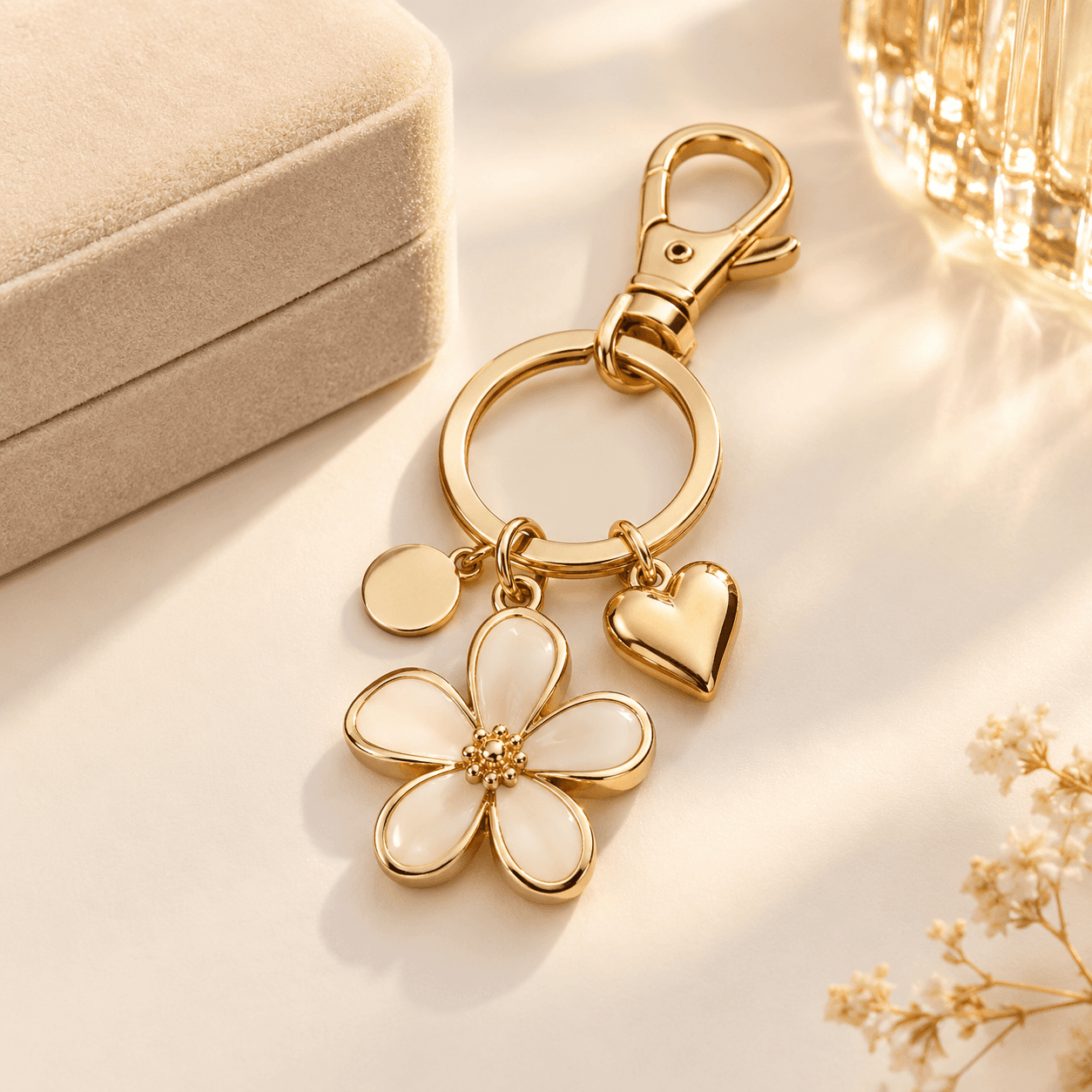
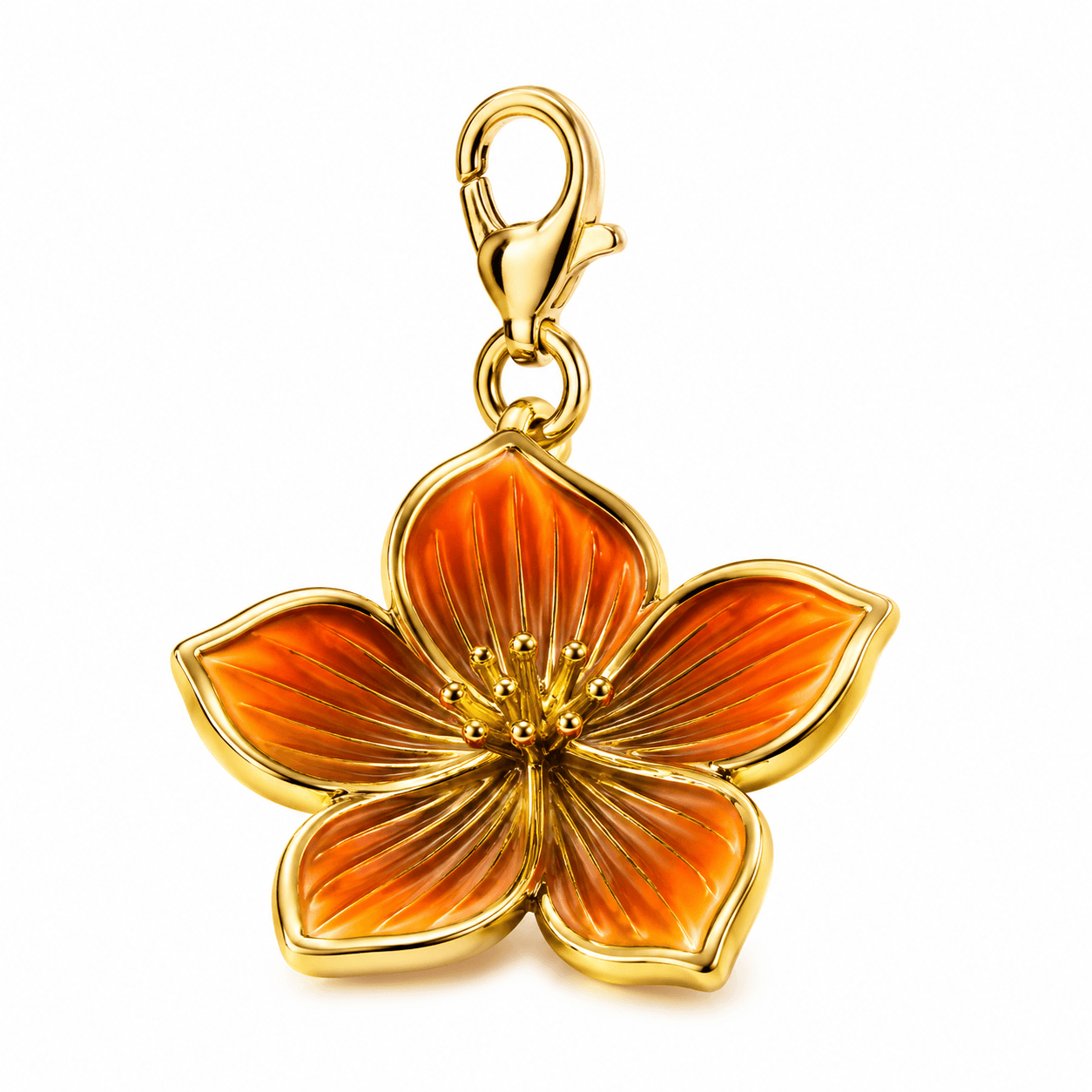
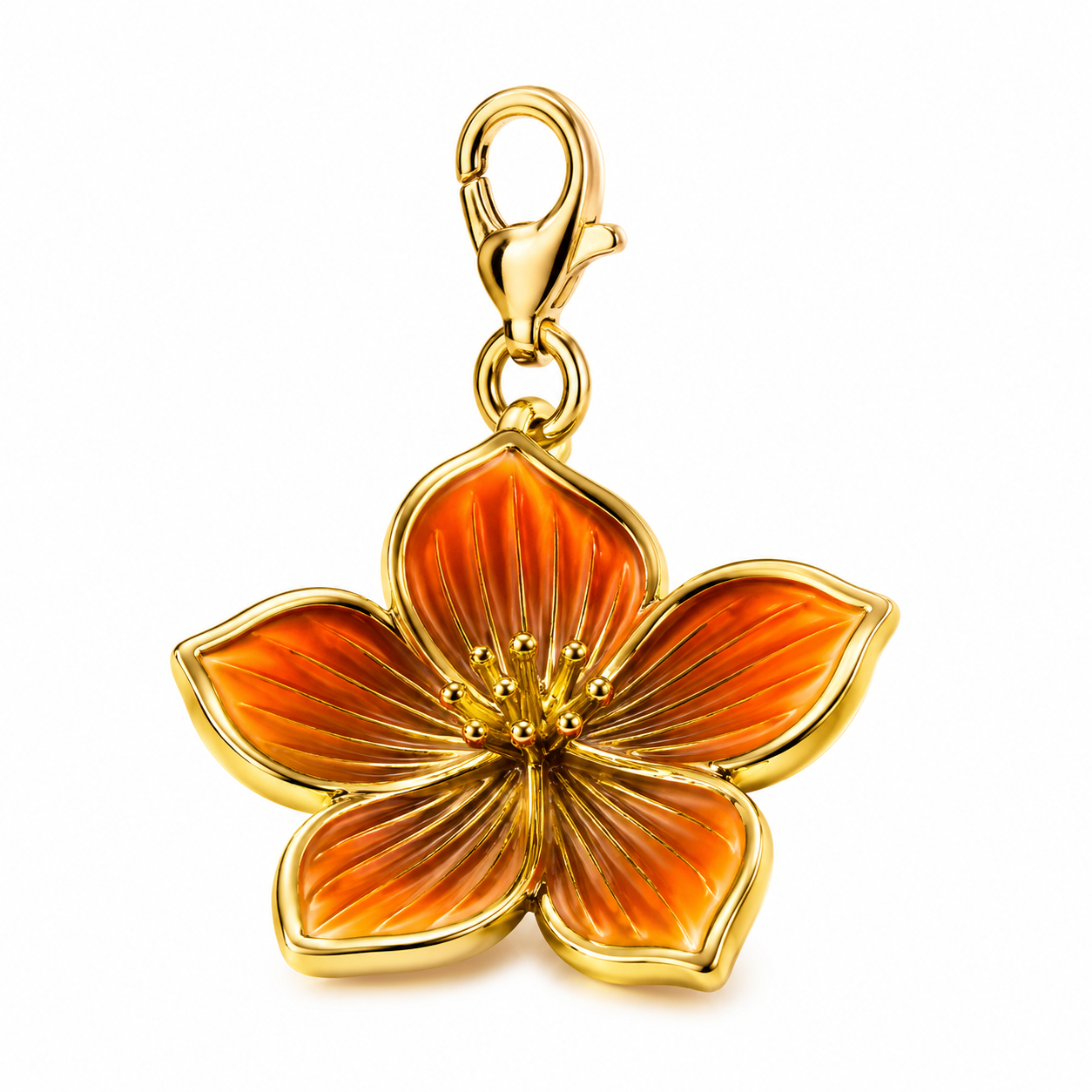
Enamel applications rely on a reliable interface between the stainless steel base and the enamel material. Thermal expansion coefficients must be matched closely enough to avoid micro-cracking during cooling after firing. Enamel color filling requires precise cavity design, surface preparation, and curing conditions. On the crystallization front, crystal inlay or inlay crystals must be anchored to the metal through durable mechanical interfaces or resin matrices designed for 316L. The stainless substrate’s surface finish (mirror, brushed, or satin) influences how enamel bonds and how light interacts with the finished surface. The result is a stable, boutique-ready charm with consistent color and brilliance across lots, crucial for wholesale stainless steel charms and private-label programs.
PVD plating and surface finishes for 316L charms
PVD (physical vapor deposition) plating is a widely used method to achieve durable gold plated, rose gold plated, or silver finish variants on 316L charms. The plating layer is thin (often less than a few microns) but highly resilient when applied to a clean, well-prepared surface. The process begins with meticulous cleaning, passivation, and a controlled pre-treatment to improve adhesion. PVD finishes on 316L stainless steel offer excellent color stability, abrasion resistance, and chemical resistance, which are essential for long product life in consumer environments. The combination of PVD with enamel or crystal accents requires careful process sequencing to prevent defects such as delamination or color migration. A typical production sequence involves substrate preparation, PVD deposition, enamel filling (if applicable), curing, and a final quality inspection. For private-label packaging, consistent finish across batches supports brand integrity and reduces rework in ODM programs.
Surface preparation, tolerances, and process controls
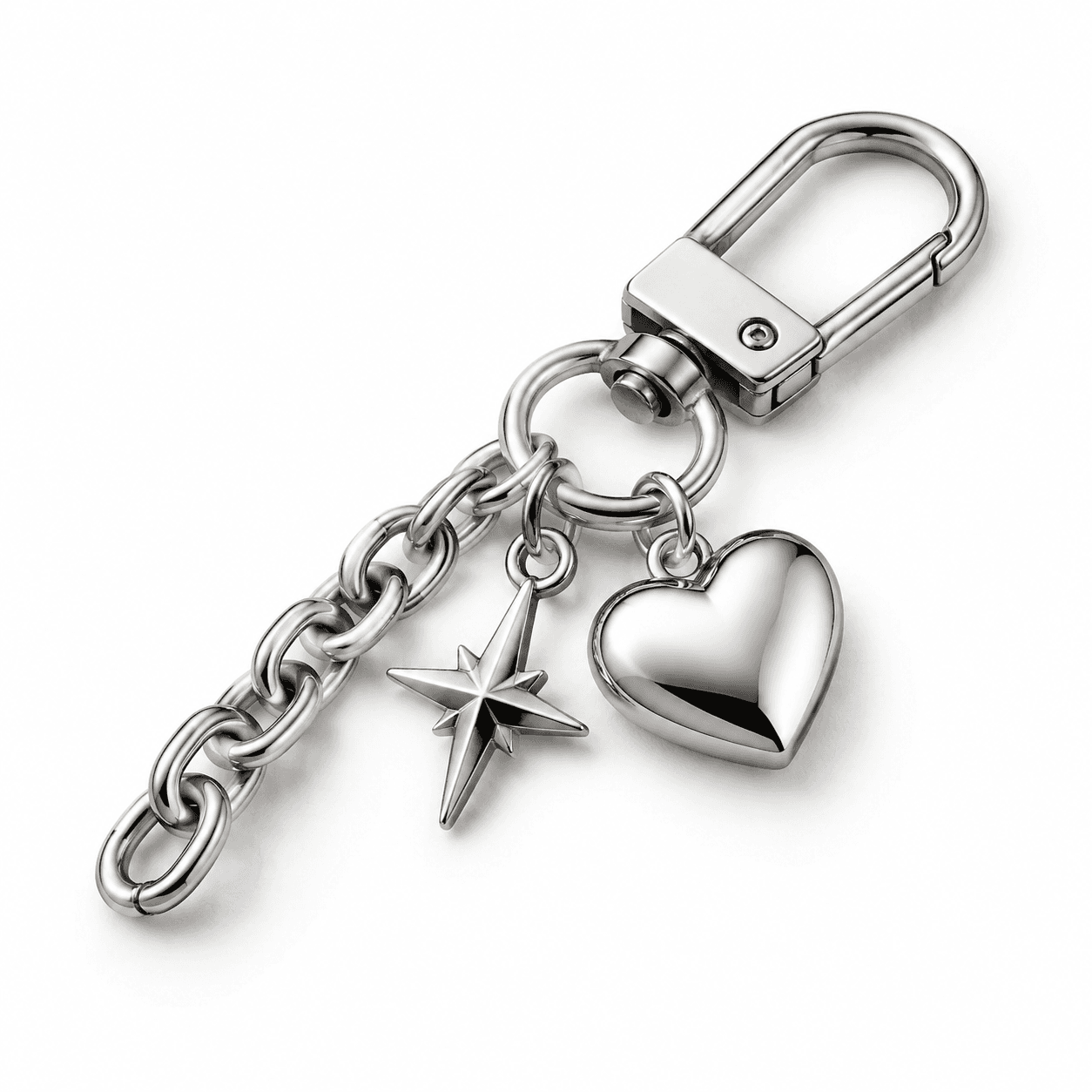
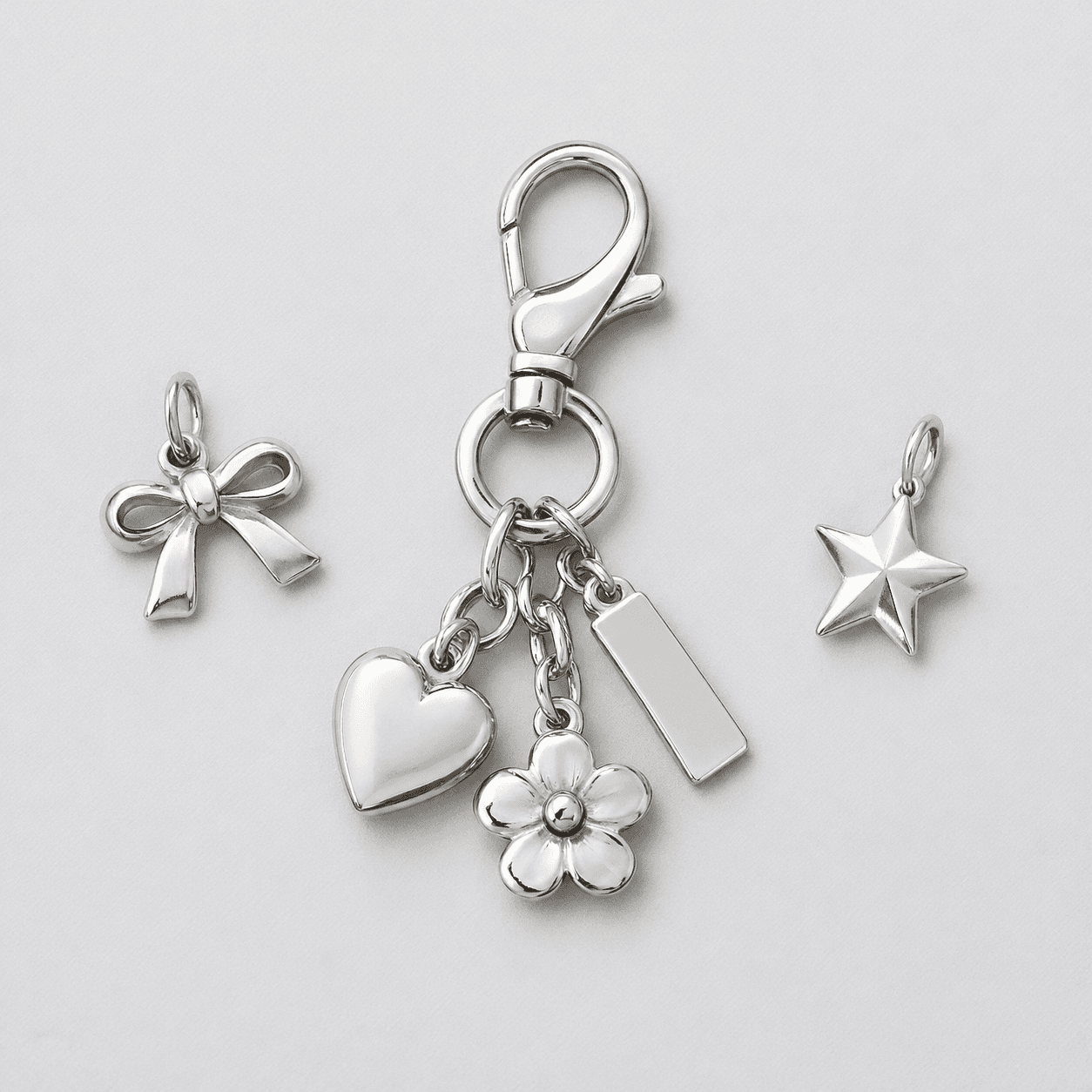
Precision tolerances (for charm silhouettes, hole diameters, and bail threads) are critical to ensure proper chain compatibility and tool-free assembly in production lines. Surface preparation steps include degreasing, passivation, and controlled oxidation prevention to maintain plating adherence. Tolerances often translate into more consistent jump ring fitment and connector compatibility, which directly affects the lead time for prototyping and mass production. The factory lifecycle (CNC, laser cutting, laser marking, welding, polishing) supports tight control of edges, corners, and internal cavities used for enamel fills, contributing to stable production runs and predictable lead times.
Quality and certifications that matter for global buyers
Global buyers require transparent material and process credentials. SGS-certified facilities, with RoHS and REACH compliance, plus EN1811 nickel release testing and Salt Spray 240H, provide confidence that enamel charms meet regulatory expectations in major markets. Nickel release testing is particularly relevant for items in contact with skin and for private-label products that aim to minimize nickel exposure. These certifications help justify lead times to procurement teams by reducing compliance-related risk and post-launch remediation.
Benefits/Why it matters
Key benefits for global brands and private-label programs
Choosing 316L stainless steel as the base material provides a robust, corrosion-resistant platform that responds well to PVD plating, enamel color fills, and crystal inlays. Consistency in plating quality across batches reduces rework, returns, and warranty costs for global brands. The base chemistry supports reliable enamel adhesion and predictable color outcomes, which is essential for catalog uniformity in wholesale stainless steel charms and for sustaining private-label packaging aesthetics. The combination of a modern manufacturing facility and SGS-certified quality controls translates into a repeatable, scalable supply chain from a boutique charm bar to a private-label program with low MOQ charm production.
Impact on lead times and operational efficiency
Lead times hinge on four pillars: design complexity, tool readiness, color palette breadth, and finishing queue. In practice, well-defined CAD drawings and optimized enamel cavities shorten prototype cycles, while established PVD schedules reduce plating bottlenecks. A structured sample development plan, supported by a low MOQ policy, helps buyers test designs quickly without committing to large initial orders. This combination yields faster time-to-market while maintaining the quality standards required by global retailers and gift companies.
Private-label packaging and customization flexibility
Private-label packaging is a strategic lever for brands seeking differentiation without sacrificing production efficiency. A private-label approach often aligns with the MOQ strategy and enables a faster transition from prototype to launch. The ability to offer branding-ready packaging alongside consistently finished 316L stainless steel charms enhances value for distributors and charm bar retailers seeking to expand assortments quickly.
Detailed analysis/Guide
Step 1: Design validation and material selection
Begin with a clear concept brief that translates to a CAD silhouette, bore sizes, and bail dimensions. Validate whether the design supports enamel pockets and crystal inlay without sacrificing structural integrity. For 316L, consider the stamping operations, including bending radii and edge breaking, to ensure no micro-cracks at high-stress points. Confirm that the color palette aligns with intended plating options (gold, rose gold, silver finishes) and whether the enamel layers require special retention features like undercuts or recessed walls. While 316L is forgiving, excessive thinning near the bail or sidewalls can compromise assembly and create lead-time bottlenecks during prototyping.
Design-to-prototype handoff
Provide a complete BOM, tolerance charts, and finish requirements. A robust prototype plan includes a first-fit test with sample charms attached to the intended jump rings or chain links to verify mechanical compatibility. This reduces back-and-forth during the sample development phase and accelerates the path to first production samples.
Step 2: Material testing and environmental screening
Material testing for 316L focuses on corrosion resistance, nickel release, and mechanical properties after enamel firing and PVD processing. EN1811 nickel release testing is essential to confirm skin-safety performance, while salt spray testing (Salt Spray 240H) assesses long-term corrosion resistance in harsh environments. Enamel fillers must be tested for adhesion after curing cycles to avoid delamination during wear. If color fidelity is critical, a small script of color-matching tests should be incorporated into the sample phase to confirm enamel shade stability across temperature and humidity variations.
Step 3: Tooling, fixtures, and process controls
Tooling readiness is the backbone of reliable lead times. The production flow typically includes CNC or laser-cut blanks, forming fixtures, enamel cavities, and plating jigs. Fixtures must accommodate consistent wall thickness, precise hole diameters for tassels or bail connections, and repeatable enamel fill alignment. Process controls cover cleaning, degreasing, passivation, curing, and plating cycles. Establishing standard operating procedures (SOPs) for each process step is critical to maintaining uniform quality, reducing rework, and stabilizing production calendars for wholesale stainless steel charms.
Step 4: Sample development cycle and iteration
The sample development phase often reveals subtle opportunities for optimization, such as tightening tolerances around the bail hole, adjusting enamel cavity depth for color saturation, or refining PVD thickness for consistent brightness. A staged approach—design freeze, pre-production samples, then final samples—helps lock down the design while preserving time buffers for cross-market testing. A recommended cadence is a 1- to 2-week loop per iteration, depending on complexity and the number of colors in the enamel palette.
Step 5: Production ramp and quality assurance
Once samples pass, ramping to mass production hinges on supply chain coordination for plating material availability, enamel supply, and packaging components. QA should verify dimensional tolerances, plating thickness uniformity, enamel adhesion integrity, and crystal setting security. The SGS framework supports traceability and regulatory compliance across markets, and the EN1811 nickel release data provides assurance to procurement teams evaluating private-label options or OEM partnerships.
Cross-market considerations and global scalability
Global buyers face regional regulatory variations and logistic timelines. Lead times are influenced by customs clearance, component availability, and the capacity of the manufacturing partner to scale from low MOQ charm production to larger bulk orders. Cross-market considerations include packaging language, labeling requirements, and branding guidelines, all of which can be harmonized through a strong OEM/ODM collaboration. For buyers pursuing private-label strategies, aligning packaging, branding assets, and compliance documentation early in the project reduces downstream risk and accelerates launch timelines across multiple markets.
FAQ
Q1: What factors most influence lead times for 316L stainless steel enamel charms?
A1: Lead times hinge on design complexity (enamel pockets, crystal inlays), tooling readiness, enamel color range, PVD finish choices, and the capacity of the plating line. Sample development cycles and the availability of private-label packaging also impact timelines. A well-scoped project with early design freeze and a defined enamel palette can shorten iterations significantly.
Q2: Do you support private-label packaging and branding?
A2: Yes. Private-label packaging is a core part of our service for private-label buyers and ODM programs. We work with brand guidelines to deliver packaging that complements the 316L stainless steel charm finishes, while maintaining efficiency in production and shipment.
Q3: What testing and certifications accompany 316L charm production?
A3: Our SGS-certified facility supports RoHS, REACH, Nickel Release EN1811 testing, and Salt Spray 240H. These certifications help ensure regulatory compliance in major markets and reduce post-launch risk for global campaigns.
Q4: What is the typical MOQ for OEM/ODM projects, and how flexible is it?
A4: We offer low MOQ charm production to facilitate prototyping and private-label launches. Final MOQs depend on design complexity, finish, and packaging options, but we collaborate closely with buyers to tailor orders that align with their development timelines and budget constraints. For precise figures, a RFQ is recommended via our contact channels.
Call to action: Partner With Us
If you are developing a new line of enamel charms and want reliable, consistent performance from a 316L stainless steel base, consider partnering with Lancy Jewelry. We offer OEM/ODM development, enamel and crystal finishing options, private-label packaging, and fast sample development to help you move from concept to market with confidence. Explore our OEM service and request a quote to start the collaboration today: OEM Service, or initiate a formal inquiry at Request a Quote. For direct engagement with our sales team, please contact us via Contact and reference your project scope, target markets, and timeline. To browse our product catalog, visit All Products and review compatible 316L stainless steel charm options across our collections.