Stainless Steel Italian Charm Bracelet: A Sourcing Guide
Effective sourcing for stainless steel charms begins with a clear understanding of the base material, finishes, and private-label capabilities that boutique jewelry brands, charm bars, gift companies, and distributors require. This guide from Lancy Jewelry outlines a practical, data‑driven approach to vendor evaluation, material validation, and production readiness for 316L stainless steel charms used in Italian charm bracelet programs. The framework is designed for US, EU, UK, AU, CA, and other markets, with emphasis on consistent quality, traceability, and scalable production.
1) Define precise material, finish, and design specs
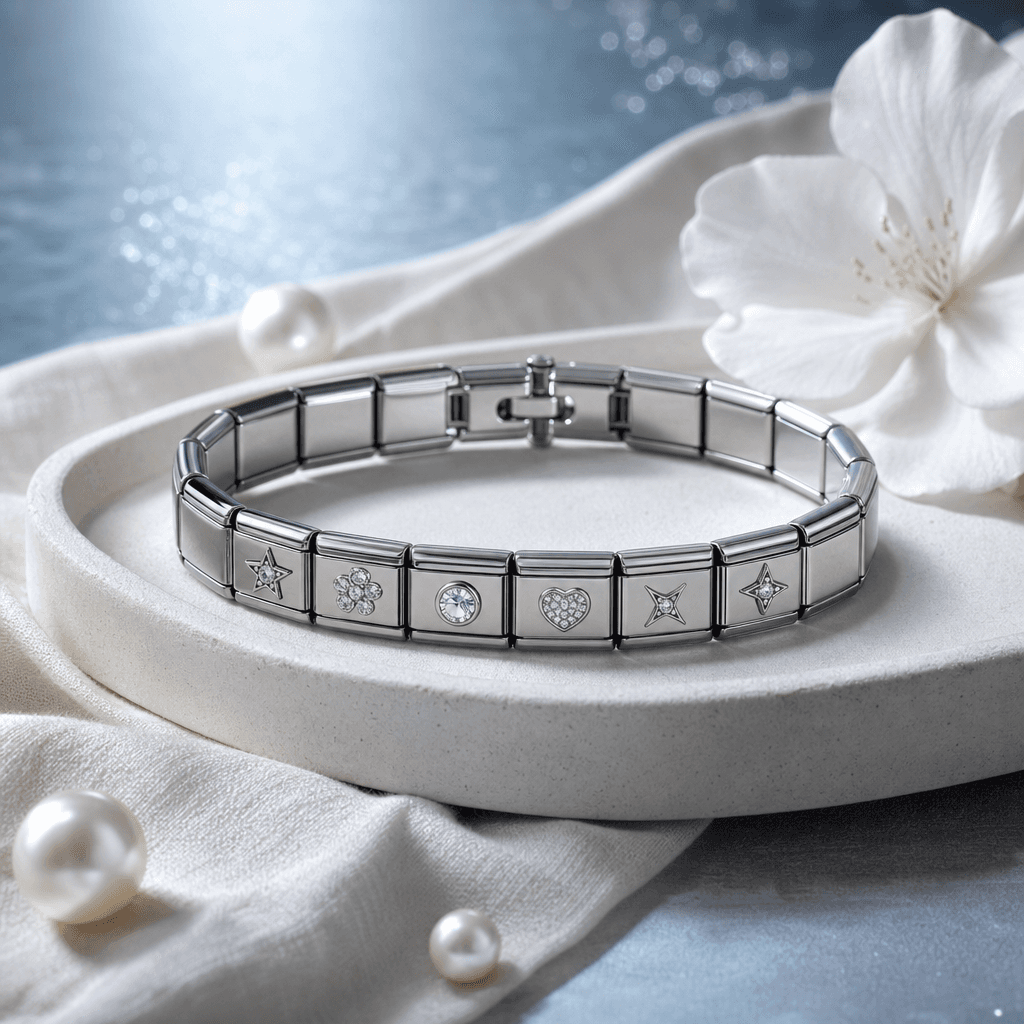
Start with a definitive spec for the stainless steel charm program. Key inputs include base material specification as 316L stainless steel, target charm sizes in the 8–18 mm range, bail geometry, and acceptable finishes such as PVD plated stainless steel charms in gold plated, silver finish, or rose gold plating. Include options for enamel color filling or crystal inlay where appropriate. Attach a technical data sheet covering chemical composition targets, mechanical properties, and surface finish tolerances. Explicitly require 316L stainless steel as the base material and avoid any non-stainless alternatives in supplier discussions. For private-label packaging, outline branding guidelines, logo engraving capabilities, and any serialization needs. Include a placeholder for sample development lead times and a basic 3D drawing package to accelerate early assessments. Ensure the brief allows for flexible usage contexts—such as charm bar accessories or gift programs—while avoiding forbidden contexts. A sample material test plan with plating compatibility, passivation steps, and adhesion tests adds reassurance for long-term performance. If a supplier offers PVD plating, request deposition thickness, color tolerance, and adhesion metrics to support consistent finishes across lots.
2) Build a supplier qualification checklist
Develop a framework to evaluate capability, capacity, and compliance. Core categories include manufacturing capability (CNC, laser cutting, laser marking, welding, polishing), finishing (PVD plating thickness, color consistency, enamel filling quality, crystal setting), packaging options (private-label packaging, labeling, and anti‑tamper features), and documentation readiness (material certificates, RoHS/REACH declarations, EN1811 nickel release data, salt spray results). A strong supplier provides a clear manufacturing process map, traceability for each lot, and a robust IP protection policy. Preference is given to partners who offer low MOQ charm production and flexible sample development timelines to support boutique brand exploration without sacrificing quality or lead time for initial orders.
3) Verify material chemistry and corrosion resistance
Request a supplier’s 316L specification sheet and verify composition against industry norms: balanced chromium for corrosion resistance, nickel for austenitic stability, trace molybdenum for pitting resistance, and controlled carbon for weldability. Confirm carbon content adheres to 316L standards and that the material is certified as 316L in lab reports. Nickel release compliance is important for sensitive customers; request EN1811 nickel release data or equivalent, and verify that the base metal integrates well with chosen finishes (PVD, enamel, crystal inlay) without compromising corrosion resistance or adhesion. If a supplier can demonstrate post‑finishing passivation, this adds confidence for long‑term performance in diverse environments.
4) Align on compliance and certifications
Compliance supports reliable market access. Verify RoHS and REACH conformity for finished parts and ensure third‑party test reports are available. Salt spray resilience is relevant for outdoor or humid settings; request Salt Spray 240H data or equivalent corrosion testing results. Obtain a current declaration of conformity and any SGS or similar third‑party certificates. For boutique‑label programs, confirm that packaging and engraving processes meet material safety and IP protection requirements. A mature partner should share an audit schedule and corrective action plan, demonstrating a proactive quality system.
5) Prototyping and sample development
Launch a structured sample development plan with a realistic timeline, sample quantities, and acceptance criteria for bail integrity, pendant silhouette, and front‑face details such as enamel filling or crystal settings. The supplier should support mockups, 3D drawings, and rapid iteration cycles. Expect reasonable lead times for first article samples and subsequent revisions, with cost estimates that reflect boutique‑friendly scale. When evaluating samples, review edge crispness, plating uniformity, and the stability of enamel or crystal elements. Documentation accompanying each sample should map back to the spec, including plating thickness targets and finish tolerances.
6) Production quality controls and QA readiness
Post‑sample production requires robust in‑process and final inspection protocols. Look for documented process controls, statistical sampling plans, and clear acceptance criteria for dimensional tolerances, plating uniformity, and integrity of enamel or crystal components. Request evidence of process capability studies (Cp, Cpk) for critical dimensions and surface finishes. Confirm the facility can perform post‑processing steps such as cleaning, passivation, and drying without affecting the finished appearance. An experienced OEM/ODM partner provides ongoing QA dashboards and batch traceability records for every order, including private-label packaging runs.
7) Packaging and private-label options
Private‑label packaging is a common value proposition for boutique brands. Define packaging configurations, branding placements, labeling requirements, and anti‑counterfeit measures if needed. Ensure the supplier can deliver consistent packaging quality and can engrave or laser‑mark logos as required. Confirm the ability to adjust packaging quantities and lead times for bulk orders without sacrificing quality. The partner should outline inventory strategies, warehousing options, and serialization capabilities if relevant to the program.
8) Commercial terms and conditions
Outline commercial terms aligned with your procurement strategy. Topics include MOQ tolerance for new designs, price protection for ongoing production, payment terms, lead times, and contingency planning. For private‑label collaborations, establish IP protections, NDAs, and brand usage rights. Ensure the supplier can support clear RFQ workflows and provide transparent quotes for OEM and ODM engagements.
9) Audits, risk management, and continuous improvement
Plan periodic factory audits, on‑site or remote, and request a quality‑management policy overview. Include risk assessment steps for supply continuity and potential changes in raw material pricing. A mature supplier maintains a continuous improvement program, reviews process performance regularly, and updates documentation to reflect regulatory or customer requirements. Clear escalation paths and corrective actions for any non‑conformance events are essential for a stable partnership.
10) Ongoing vendor management
After selection, establish a cadence for performance reviews, supplier scorecards, and requalification cycles. Maintain open communication with dedicated contacts for engineering, QA, and supply chain management. For global programs, align regional lead times and regulatory considerations across markets to ensure universal applicability and smooth execution of private-label programs in diverse regions.
Benefits of partnering with a credible supplier
A vetted supplier delivers consistent plating quality through reliable finishing processes, aligned private-label packaging, and robust sample development timelines. Documented material chemistry and third‑party compliance support global market access. For procurement teams, value increases with low MOQ charm production options, transparent lead times, and scalable capacity from pilot runs to bulk orders, all while maintaining traceability and performance. Certifications such as RoHS, REACH, EN1811 nickel release, and salt‑spray data should accompany major supplier engagements to minimize risk across different regulatory environments.
Detailed actions for global sourcing: step by step
- Define the spec sheet for 316L stainless steel charms, including size range, bail geometry, finish options, and packaging requirements. Partner with a supplier who can translate design concepts into production‑ready specs and provide a reliable sample development timeline.
- Evaluate manufacturing capabilities by verifying CNC, laser cutting, laser marking, welding, and polishing capabilities, plus finishing lines for PVD plating and enamel/crystal work. Confirm the ability to engraving logos for private-label branding and to deliver packaging concepts aligned with market strategy.
- Request material composition and test data for 316L stainless steel, including chromium, nickel, and molybdenum levels, along with passivation and corrosion‑resistance data. Ensure compliance with EN1811 nickel release testing and RoHS/REACH declarations.
- Inspect finishing quality for color tolerance, enamel adhesion, crystal settings, and plating thickness uniformity. Review plating process controls and how thickness is measured to ensure consistency across lots.
- Plan prototypes and sampling with defined acceptance criteria and multiple iteration cycles if needed. Track lead times for first article samples and revisions to minimize project delays.
- Confirm packaging and branding options for private-label programs, including logo engraving, packaging cards, and display‑ready presentation. Verify packaging costs and minimums align with SKU strategy.
- Negotiate commercial terms including MOQ flexibility, volume discounts for bulk orders, payment terms, and RFQ procedures. Ensure terms support long‑term growth and regional distribution.
- Schedule audits and risk planning with a documented audit plan, corrective action procedures, and a defined risk register for supply continuity and regulatory changes.
- Finalize contract and onboarding with IP protections, NDAs, and a clear onboarding process for engineers, QA teams, and logistics partners.
- Establish ongoing vendor management with quarterly performance reviews, updated scorecards, and periodic requalification to ensure continued alignment with market requirements and safety standards.
FAQ
- What makes 316L stainless steel suitable for Italian charm bracelets?
- 316L stainless steel offers strong corrosion resistance, good formability, and reliable mechanical properties ideal for intricate charm shapes. Its low carbon content reduces sensitization during welding and finishing processes, helping to maintain durability across plating and enamel applications.
- How do I verify plating quality and nickel release with a supplier?
- Request plating specifications, including thickness targets and adhesion standards, and obtain RoHS/REACH declarations. For nickel release, require EN1811 test results or equivalent third‑party testing and ask about post‑plating passivation and washing procedures to minimize nickel exposure.
- What is a typical MOQ for new stainless steel charm programs?
- MOQs vary by supplier and program complexity. Look for partners offering low MOQ charm production to support boutique labels, while preserving the ability to scale to bulk charm orders as the program grows.
- How can I request samples from a supplier?
- Initiate sample development with a defined scope (spec sheet, 3D drawings, finish options). Request a clear quote for samples, expected lead time, and the option to test prototype finishes before committing to larger runs.
Call to action: Partner with Lancy Jewelry
Ready to source a reliable OEM/ODM partner for 316L stainless steel charms with private-label packaging and low MOQ options? Explore Lancy Jewelry’s OEM service offerings, request a RFQ via the RFQ portal, or contact our team for a detailed supplier qualification discussion. Visit our catalog to review current charm collections and accessory components, or connect with us directly through sales to begin your private-label program. For quick reference, you can also review our OEM/ODM capabilities and private-label packaging solutions to accelerate your sourcing timeline and ensure cross-market suitability across the US, EU, UK, AU, CA, DE, FR, SP, NE, and RU regions.