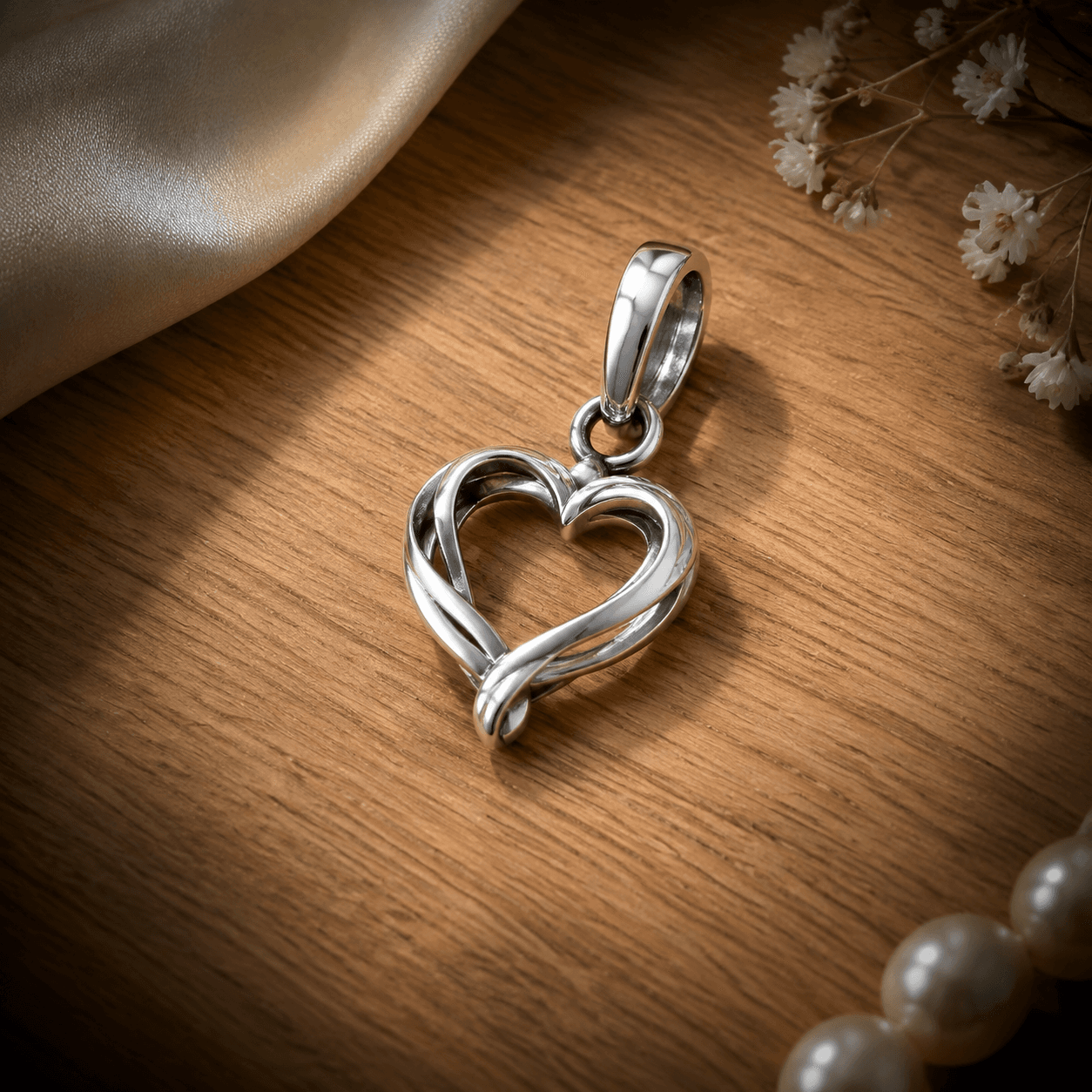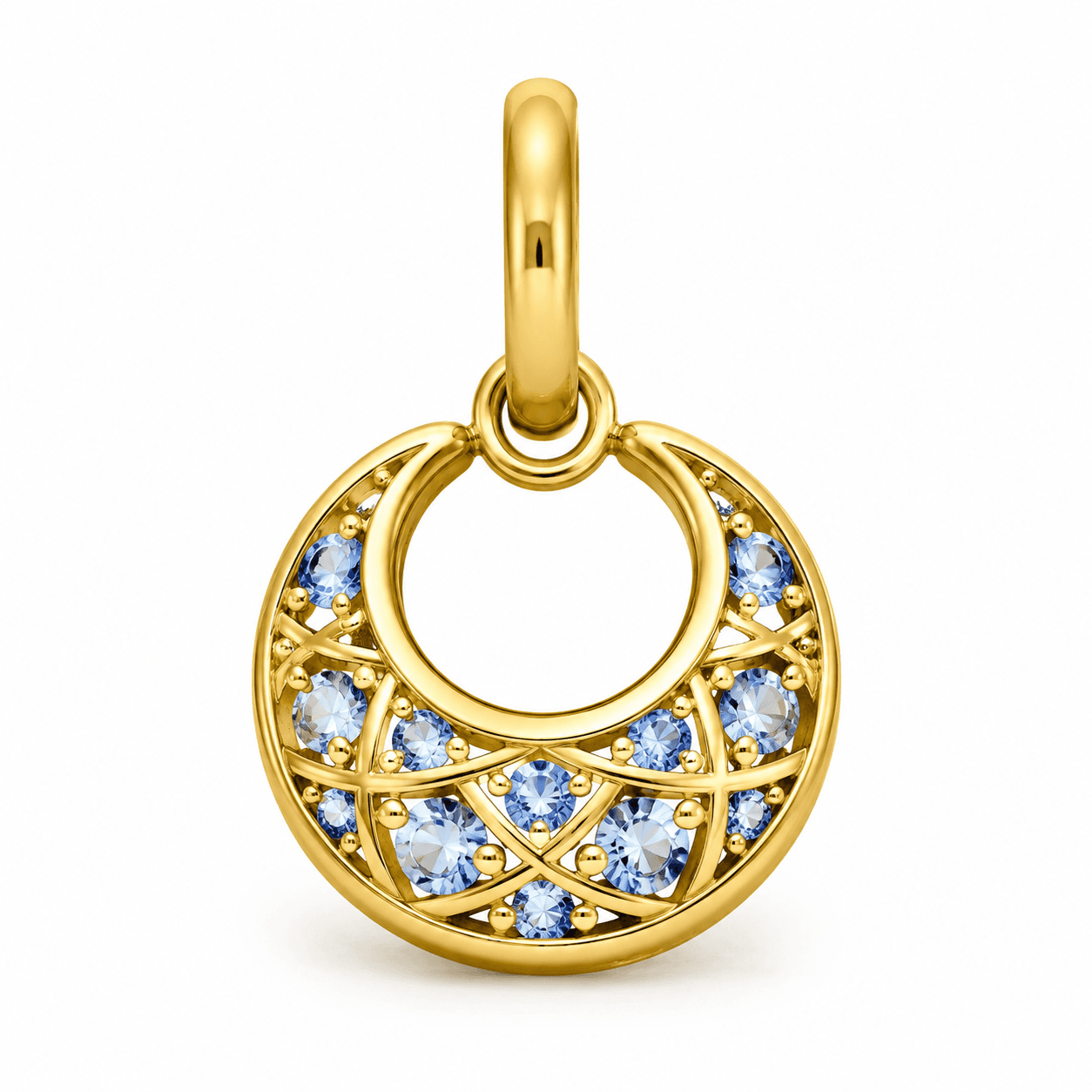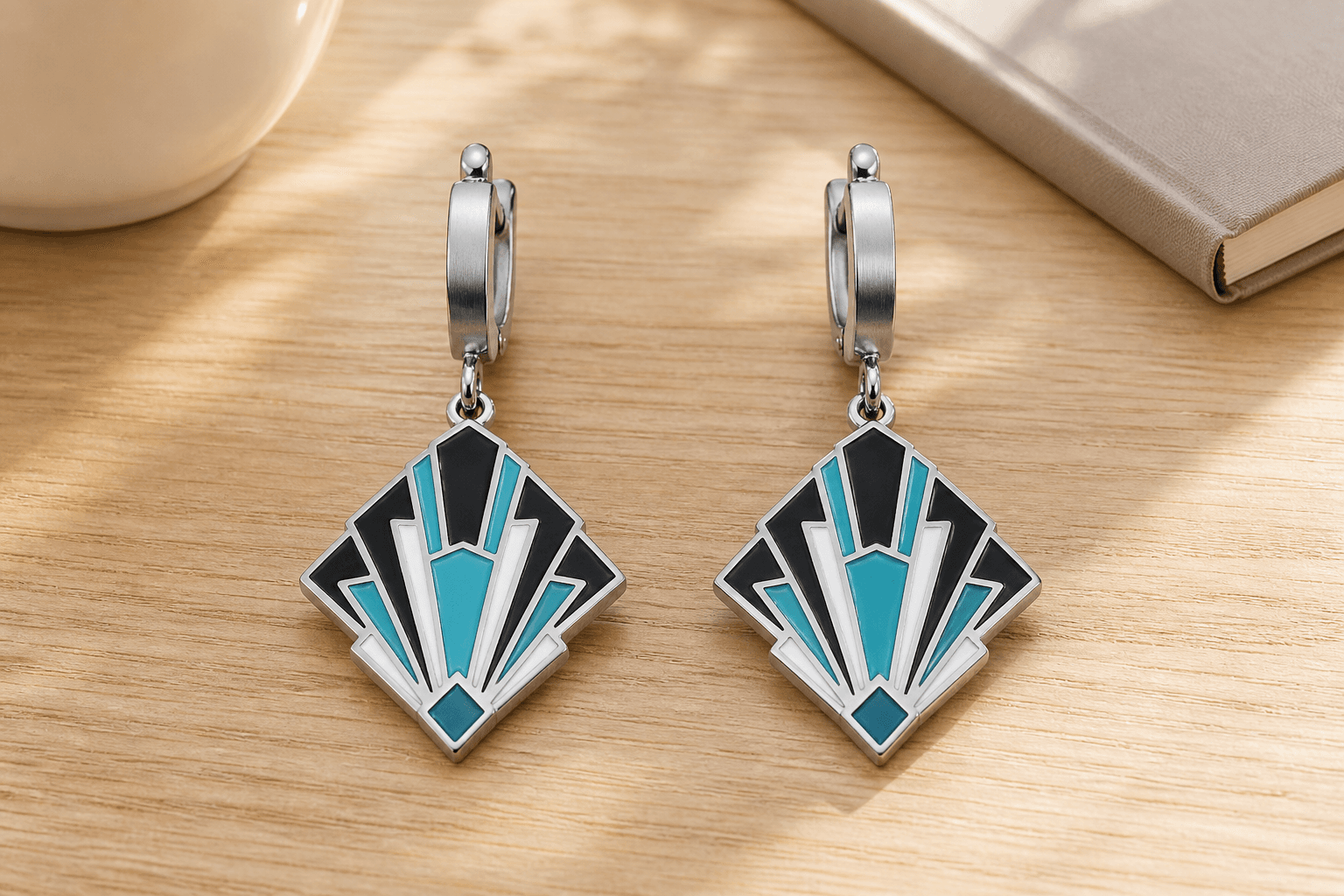
Enamel filled 316L stainless steel charms deliver vibrant color with durable wear for daily use. As a stainless steel charms manufacturer serving boutique brands and private-label buyers, Lancy Jewelry offers OEM/ODM development, logo engraving, enamel color filling, crystal setting, and private-label packaging. Our enamel color filling is paired with reliable surface finishes such as PVD plating, silver finish, and rose gold plating to produce boutique-ready charms with repeatable results. This article outlines the enamel filling workflow from concept to market-ready finish, so designers and sourcing teams can plan with confidence.
Enamel Filling Process for 316L Stainless Steel Charms
The enamel filling workflow is designed to be precise, repeatable, and suited for 316L stainless steel bases. The goal is to achieve vivid color within etched cavities while maintaining a smooth, burr-free surface suitable for ongoing finishing such as PVD plating and crystal inlay. By adhering to careful cavity planning, controlled enamel application, and reliable curing and finishing, we can support low MOQ charm production and consistent quality across batches.
Overview and key considerations
Enamel filling begins after the charm geometry is formed and the cavity is prepared. The enamel pigment or powder is selected for colorfastness and compatibility with stainless steel. The process emphasizes three pillars: exact cavity preparation, controlled enamel application, and dependable curing and finishing. Our facility follows validated cleaning, degreasing, and pre-treatment steps to ensure enamel adhesion, followed by a curing or fusing stage that locks color in place. This approach supports private-label programs, OEM/ODM partnerships, and scalable charm production.
Material and process prerequisites
For enamel filling on 316L stainless steel, the substrate must be clean and free of oils, oxidation, and residues. We perform meticulous cleaning and surface activation, then create clearly defined cavities through laser engraving or mechanical engraving. The enamel is selected for colorfastness, with appropriate firing or curing temperatures to prevent cracking or dulling. After filling, the piece receives a polishing and protective finish, often followed by PVD plating or electroplating to achieve the final look. This combination works well for markets across the US, EU, UK, AU, CA, and beyond.
Benefits/Why it matters
Key benefits
- Durable, fade-resistant color on 316L stainless steel bases with finishes like PVD gold plating, silver finish, or rose gold plating.
- Consistency across production runs, enabled by controlled curing, cleaning, and polishing steps.
- Full traceability and quality controls support reliable global sourcing.
- Flexible customization options for private-label programs, OEM/ODM partnerships, and low MOQ charm production.
Why it matters for partners
Enamel filling enhances color storytelling for collections such as birthstone, alphabet, and nature themes while keeping the base 316L stainless steel charms durable for daily wear. Finishing capabilities—paired with private-label packaging and sample development support—make it easier for designers and sourcing managers to plan wholesale stainless steel charms with consistent plating quality across seasons.
Detailed analysis / Guide
Step 1 — Design review and cavity planning
Begin by reviewing the charm design to confirm the enamel cavity geometry, relief depth, and border width. Clear cavity dimensions ensure enamel pigment can properly fill without overflow. If logos or engraving are required, coordinate with the laser marking team early to align branding with enamel areas. This step sets the foundation for a clean fill and reliable subsequent finishing. It also aligns with our OEM/ODM capabilities and private-label packaging considerations.
Step 2 — Substrate prep and engraving
Prepare the 316L stainless steel base by removing oils and oxides through a validated cleaning process. Engage precise engraving to define enamel cavities or dividers. The goal is uniform cavity depth and crisp edges so the enamel settles evenly. Any burrs are removed during finishing to prevent enamel biting or cracking. This step benefits from our CNC, laser cutting, and precision welding capabilities for tight tolerances.
Step 3 — Surface activation and degreasing
After engraving, perform surface activation to improve enamel adhesion. Degreasing and ultrasonic cleaning ensure the cavity walls are residue-free. A properly activated surface reduces pigment rejection and improves color consistency across batches. Our nickel-release and RoHS-compliant processes help ensure global acceptance of the finished product.
Step 4 — Enamel color selection and fill method
Choose enamel colors based on the design brief and market intent. We offer enamel powders and liquids suitable for stainless steel. Select the fill method—powder fill or liquid fill—based on cavity geometry and color density requirements. Powder-filled enamel often yields strong color retention after curing, while liquid fill can achieve smoother surfaces in intricate spaces. Color consistency across lots is monitored through our production controls.
Step 5 — Enamel filling technique
Apply enamel into the prepared cavities using calibrated tools. For powder enamel, dust the pigment and lightly press to ensure full seating without air pockets. For liquid enamel, deposit controlled amounts to avoid overflow. In both cases, avoid overfilling that could create an uneven surface once cured. Precision is key to achieving clean lines and a professional finish that stands up to polishing and subsequent plating.
Step 6 — Curing or fusing enamel
Enamel requires curing at temperatures suitable for the specific pigment system and the stainless steel substrate. We follow strict temperature-time profiles to cure enamel without discoloration or cracking. Some formulations may require multiple cure cycles for layered colors or to achieve full saturation. Post-curing, the enamel should appear vibrant, even, and flush with the surrounding metal edges.
Step 7 — Cleaning, polishing, and conditioning
Once cured, the charm undergoes careful cleaning to remove surface residues. A gentle polishing sequence smooths enamel edges and reveals a uniform surface while protecting the raised metal borders. This step ensures compatibility with subsequent finishing processes such as PVD plating, silver or rose gold finishes, or crystal inlay. The final result should be a visually clean, tactilely smooth charm ready for packaging.
Step 8 — Finishing (PVD plating, electroplating, or crystal inlay)
Depending on the design brief, apply finishing such as PVD coating (gold, rose gold, or other tones) or electroplating to the base metal. Enamel will retain color under these coatings if properly sealed. For some designs, crystal inlays or additional surface textures can be added for extra detail. Our finishing workflow emphasizes adhesion, color stability, and uniform coverage across the entire surface of the charm.
Step 9 — Quality control, packaging, and documentation
Perform final QC checks for color accuracy, enamel integrity, and finish uniformity. Verify burr-free edges, proper bonding of enamel, and finish consistency across the batch. Package the finished charms with private-label packaging options if requested, and record data for traceability and supplier documentation. This completes the process from design to market-ready product, supporting bulk charm orders and ongoing OEM/ODM collaboration.
FAQ
-
Q: Can enamel colors be customized for my private-label line?
A: Yes. We offer customized enamel color options within our OEM/ODM framework, with private-label packaging and low MOQ charm production programs. Colors are chosen for durability and colorfastness on 316L stainless steel.
-
Q: Is enamel filling designed to work with PVD plated finishes?
A: Yes. Enamel is suitable for use with PVD plating. After enamel curing, the final plating preserves color while delivering the desired metallic finish. We coordinate color and finish to meet boutique-quality expectations.
-
Q: How long does sample development take?
A: Sample development timelines depend on design complexity, cavity count, and color selection. We offer sample development services to support private-label launches and MOQ considerations, helping you prototype before full production.
-
Q: What certifications support the enamel process?
A: Our factory holds SGS certification with RoHS, REACH, Nickel Release EN1811, and Salt Spray 240H. These certifications support global marketplace acceptance and supplier reliability for cross-market programs.
Call to action
Partner with Lancy Jewelry for enamel-filled 316L stainless steel charms designed for boutique brands and private-label buyers. Explore our OEM/ODM services, request a quote, or start with a small sample development order to validate color, durability, and finish. Visit our OEM page to discuss manufacturing partnerships, or contact us directly to outline your private-label packaging and labeling needs. For catalog browsing and broader enamel stainless steel charm options, visit All Products at /products. To start an RFQ or inquire about MOQ and lead times, use /cart or reach out via /contact.