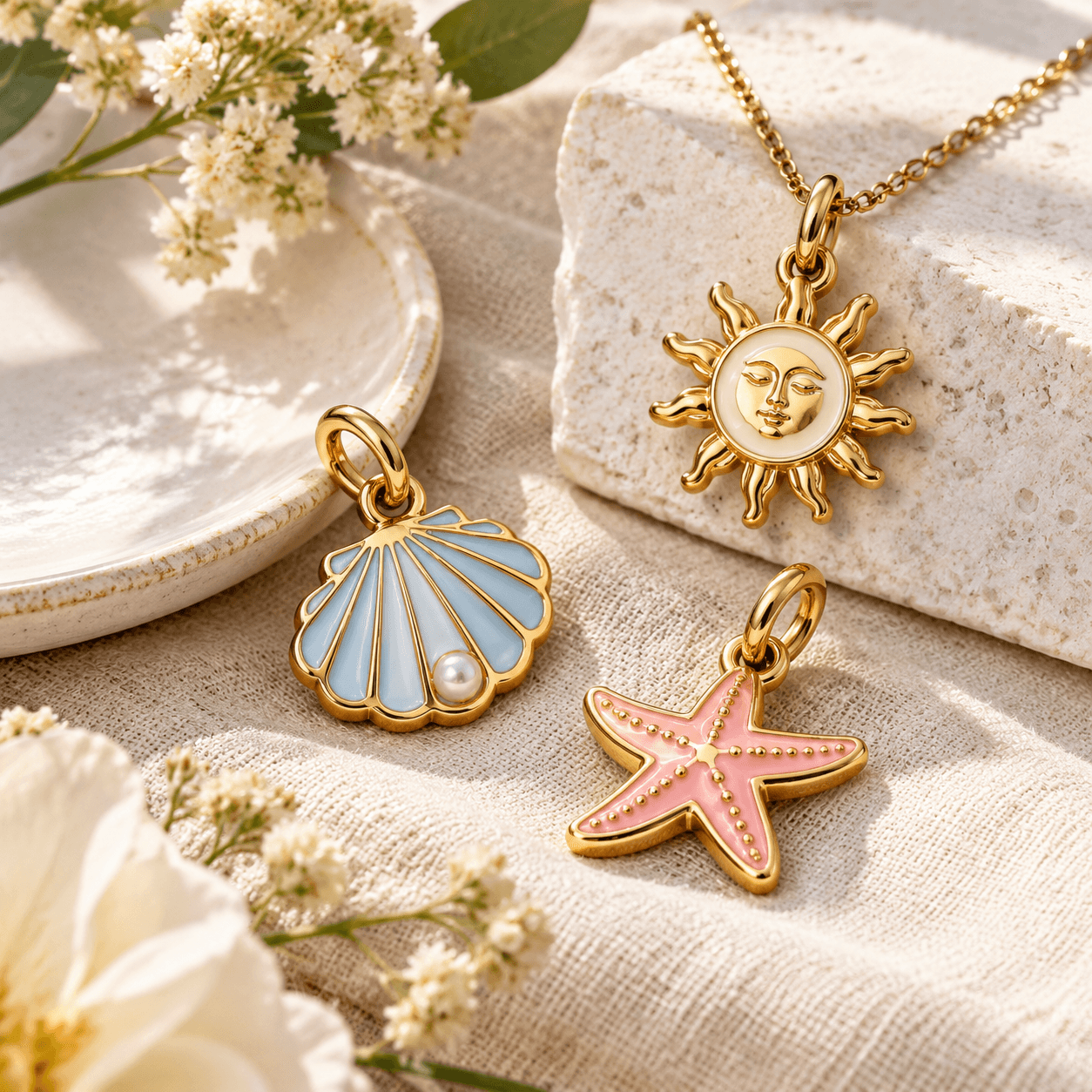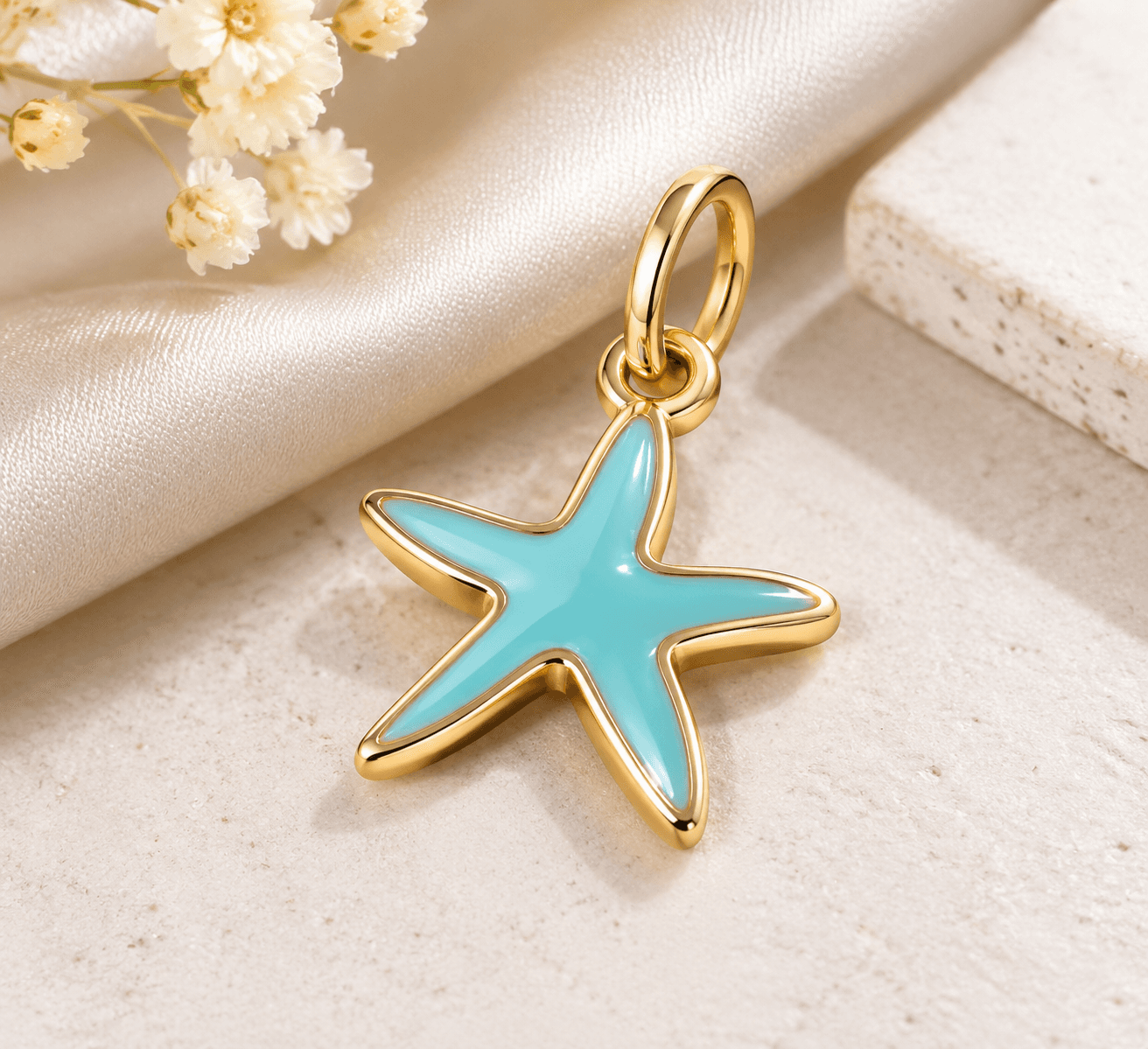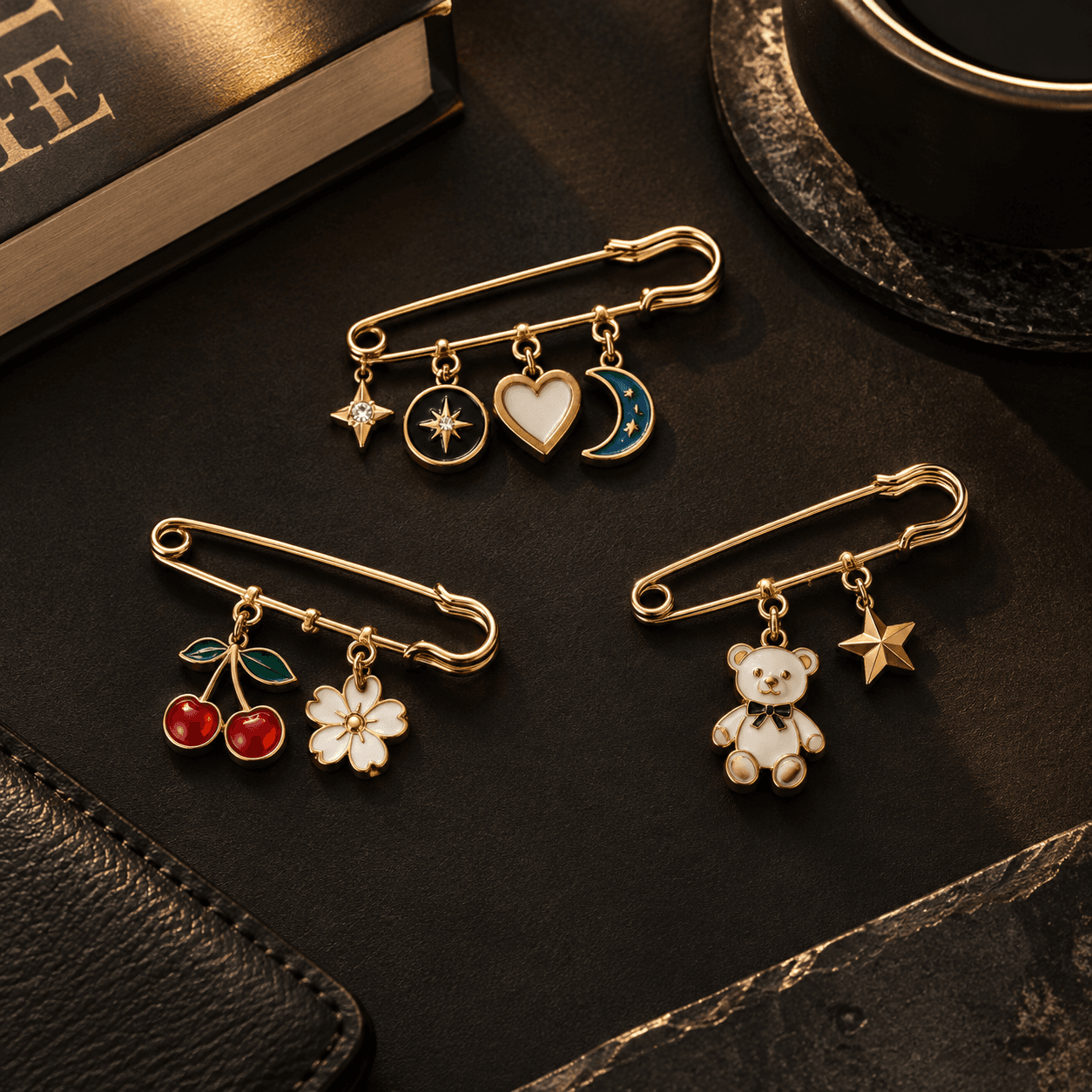
Custom enamel pins with dangling charms require more than an attractive front design. Product developers must evaluate surface preparation, coating consistency, enamel boundaries, connector geometry, dimensional tolerances, and production repeatability before approving a supplier. A small finishing defect can become a visible quality issue across thousands of units, while an unreliable connector can compromise the entire accessory concept. The most effective sourcing strategy begins with a clear product specification, a technically credible manufacturing partner, and a sample approval process that verifies appearance and function before bulk production.
For buyers developing boutique accessory programs, Lancy Jewelry specializes in OEM/ODM 316L stainless steel charms. This guide explains how to evaluate finishing technologies, plan prototypes, compare suppliers, and establish measurable quality requirements for charm-based designs. Where a project also requires a pin assembly, confirm the manufacturing scope separately; the focus here is the 316L stainless steel charm component and its finishing and attachment requirements.
Stainless Steel Custom Enamel Pins With Dangling Charms: A Sourcing Guide
Define the product architecture before requesting quotations
Start by separating the decorative concept into its functional components. Identify the primary decorative element, any dangling charm, the attachment point, the intended wearing or display method, and the required surface finish. If the complete concept includes a pin mechanism, specify whether that component falls within the supplier's manufacturing scope or must be sourced separately.
For the charm component, document the target dimensions, thickness, silhouette, hole diameter, edge profile, artwork, enamel colors, finish, and expected movement. A dangling element needs sufficient clearance to move without repeatedly striking adjacent surfaces. Its attachment opening must also accommodate the intended connector while retaining enough surrounding material for structural integrity.
Ask a prospective stainless steel charms manufacturer to review the drawings before quoting. A capable partner should identify manufacturing constraints, clarify unresolved dimensions, and recommend practical adjustments before tooling or sample work begins. This review is especially important when artwork combines narrow enamel channels, small lettering, polished borders, and multiple hanging elements.
Choose a material specification that supports repeatable production
Material selection should be established before finishing trials begin. Lancy focuses on 316L stainless steel charms as the base product material. Specify the material grade in the purchase documentation and request appropriate supporting documentation for the production lot and intended market.
Do not treat a finish name as a complete material specification. Gold plated, silver finish, rose gold plating, and colored enamel describe different appearance requirements, not substitutes for a defined base material. A complete specification records the substrate, surface preparation, coating system, color reference, and acceptance criteria separately.
Benefits: Why Finishing and Supplier Evaluation Matter
Key benefits for product developers
A disciplined sourcing process delivers four commercial advantages. First, it reduces the risk of approving an attractive prototype that cannot be reproduced consistently. Second, it identifies finishing limitations while design changes remain inexpensive. Third, it creates objective acceptance criteria for incoming inspections. Fourth, it helps purchasing teams estimate realistic sampling and production schedules instead of relying on unsupported delivery promises.
For private-label programs, repeatability matters as much as the first sample. A coordinated series may include several silhouettes, colors, and finish combinations. Without a shared specification, small differences in surface gloss, enamel appearance, or coating tone can make products look inconsistent when displayed together.
Evaluate documented testing and compliance
Ask suppliers to identify which tests apply to the exact product, finish, and destination market. Lancy reports SGS certification covering RoHS, REACH, Nickel Release EN1811, and Salt Spray 240H. Buyers should request relevant reports or supporting records, verify their scope and validity, and confirm whether the tested sample represents the intended production configuration.
These checks address different questions. RoHS and REACH documentation relates to applicable substance restrictions and chemical requirements. Nickel Release EN1811 addresses nickel release under the specified test method. Salt spray testing evaluates corrosion performance under defined conditions. A stated test duration alone does not establish suitability for every use environment, and results should not be interpreted beyond the scope of the applicable report.
For international distribution, confirm the requirements of each destination market and the obligations of the importer. A supplier's existing documentation is useful evidence, but it does not automatically establish compliance for every design, finish, or sales channel.
Detailed Sourcing Analysis: Compare Finishing Techniques
Side-by-side comparison of common finishing processes
Finishing methods should be selected according to the desired appearance, geometry, wear exposure, and production consistency. PVD coating, electroplating, mechanical polishing, and enamel filling perform different functions. They should not be evaluated as interchangeable treatments.
| Process | Primary purpose | Key strengths | Main evaluation points |
|---|---|---|---|
| PVD coating | Creates a controlled decorative surface coating | Supports coordinated metallic color programs and repeatable appearance when controlled correctly | Color consistency, coverage, surface preparation, adhesion, and wear testing |
| Electroplating | Deposits a finish through an electrochemical process | Supports specified decorative metallic finishes | Layer consistency, edge coverage, adhesion, process control, and chemical compliance |
| Mechanical polishing | Refines the surface and controls gloss | Improves reflectivity and visual clarity on exposed surfaces | Scratch control, edge definition, dimensional effects, and consistency between units |
| Enamel color filling | Adds color within designed recesses | Enables multi-color artwork and clearly separated decorative regions | Color matching, fill height, boundary cleanliness, curing, and adhesion |
PVD coating: control color and surface preparation
PVD is a coating process, not a shortcut around surface preparation. The final appearance depends on the condition of the underlying surface, cleaning quality, component geometry, coating parameters, and handling after processing. A highly reflective design can expose fine scratches and uneven polishing that would be less apparent on a satin surface.
Request samples that demonstrate the actual proposed finish on the intended charm geometry. Review the front, reverse, sidewalls, openings, and attachment areas under consistent lighting. For gold plated and rose gold plating requirements, establish a physical reference sample or a documented color target and agree on how production deviations will be assessed.
Where multiple colors are planned for a coordinated collection, ask the supplier to confirm whether the finish can be reproduced across different shapes and production batches. Do not assume that separate components will appear identical simply because the same finish description appears on their purchase orders.
Electroplating: assess coverage and process consistency
Electroplating can provide a specified decorative finish, but the geometry and preparation of each part influence the result. Recesses, sharp transitions, small openings, and narrow edges may require additional process attention. Ask how the supplier controls surface cleanliness, coating coverage, and handling between operations.
When comparing electroplating with PVD, define the performance criteria first. The relevant questions are whether the required appearance can be achieved, whether the finish meets the agreed durability tests, whether the process is suitable for the geometry, and whether production records support consistent output. Avoid selecting a process solely because its name sounds more advanced.
Polishing: establish the required gloss and edge quality
Polishing affects both appearance and downstream finishing performance. Uneven preparation may create visible differences in reflectivity, while excessive material removal can soften decorative borders or change fine details. For designs containing narrow outlines around enamel sections, the polishing specification should preserve the intended separation between the raised surface and the recessed color area.
Define whether each visible surface should be mirror polished, bright, or controlled to a less reflective finish. Request close-up sample photographs, but make final decisions using physical samples whenever possible. Photographs can conceal fine scratches, distort perceived gloss, and introduce color shifts caused by lighting or image processing.
Enamel filling: inspect boundaries, depth, and color
Enamel performance depends on recess geometry, application control, curing or setting requirements, and the condition of the surrounding surface. Specify each color using an agreed reference and identify which areas should remain exposed. Ask for consistent fill height and clean boundaries without visible overflow, contamination, bubbles, or incomplete coverage.
Complex artwork should be reviewed for manufacturability before sample production. Extremely narrow channels, tiny isolated color areas, and closely spaced borders can increase the difficulty of maintaining a clean result. Simplifying selected details may improve consistency without compromising the overall design intent.
Finishing process comparison by sourcing priority
| Buyer priority | Process to evaluate | Recommended verification |
|---|---|---|
| Consistent metallic color | PVD coating or specified electroplating | Compare approved physical references under the same lighting |
| High-gloss appearance | Mechanical polishing followed by the selected finish where applicable | Inspect scratches, reflected light, edges, and surface uniformity |
| Multicolor decoration | Recessed enamel filling | Check color references, fill height, boundaries, and adhesion |
| Corrosion performance | Complete material and finishing system | Review relevant test methods, conditions, and acceptance limits |
How to Evaluate a Supplier: A Step-by-Step Guide
Step 1: Issue a technically complete RFQ
A useful RFQ gives every shortlisted supplier the same information. Include drawings, dimensions, tolerances, quantities, target finishes, enamel color references, attachment requirements, packaging needs, destination markets, and target launch dates. State whether the order includes only the charm component or also requires separate pin hardware.
Request pricing at realistic quantity tiers, sample charges, tooling charges if applicable, production lead time, packaging options, inspection procedures, and shipping assumptions. Ask the supplier to list exclusions rather than leaving scope ambiguous. This makes quotations comparable and exposes cost drivers early.
Step 2: Evaluate engineering and manufacturing capability
Review the supplier's ability to execute the actual design, not simply the breadth of its catalog. Lancy Jewelry operates a modern manufacturing facility with CNC processing, laser cutting, laser marking, welding, and polishing capabilities. These processes can support the development and finishing of custom 316L stainless steel charms, subject to design review and production requirements.
During supplier assessment, ask how the team controls critical dimensions, protects finished surfaces during handling, and verifies attachment geometry. For a dangling charm, inspect the hole diameter, connector clearance, edge condition, and movement. A connector should pass through a real opening or loop, remain securely attached, and move without binding or unintended interference.
Step 3: Run sample development before approving bulk orders
Sample development should proceed through defined review gates. Start with design feasibility, then approve the geometry, review the first physical sample, confirm the finish, and validate the complete attachment arrangement. Where a design combines PVD, polished surfaces, and enamel, request samples that represent the intended production sequence rather than isolated demonstrations of individual processes.
Record corrections on a controlled drawing or sample approval sheet. Identify the approved dimensions, color references, finish, acceptable cosmetic limits, and functional requirements. Keep a dated reference sample when practical. Verbal approval and untracked image messages are insufficient controls for repeat production.
Step 4: Test the sample against agreed acceptance criteria
Build an inspection checklist before the sample arrives. At minimum, verify dimensions, overall silhouette, enamel boundaries, coating color, surface condition, attachment function, and packaging presentation. For relevant durability requirements, agree on test methods and pass criteria in advance.
For example, a salt spray test should specify the method, exposure conditions, evaluation procedure, and acceptance standard. Nickel release requirements should identify the applicable test method and relevant product configuration. A test report is meaningful only when its scope and conditions align with the product being purchased.
Step 5: Confirm production controls and delivery milestones
Before authorizing bulk orders, agree on the approved sample, inspection points, defect classification, corrective-action procedure, and change-control rules. Confirm whether a change in finish, enamel color, dimensions, or production process requires renewed approval.
Request a milestone schedule that distinguishes design review, sample preparation, sample approval, production, finishing, inspection, packaging, and dispatch. Lead times vary with design complexity, sample revisions, order volume, finishing requirements, and material availability. Obtain a project-specific schedule rather than relying on a generic promise of fast delivery.
Advanced Considerations: Tolerances, Quality, and Total Cost
Control critical dimensions and functional interfaces
Small dimensional differences can have a disproportionate effect on a compact charm. A hole that is too narrow may restrict movement, while excessive clearance can cause unwanted rotation or visible gaps. Specify the attachment interface separately from decorative dimensions, and identify which features are critical to function.
For multi-part designs, evaluate the full assembly during sample approval. Check that components do not collide during movement, that the connector is properly closed where applicable, and that the assembled product retains the intended orientation. A visually successful charm can still fail if the attachment system is difficult to assemble or unreliable during handling.
Compare suppliers using total landed cost
Unit price alone is an incomplete sourcing metric. Evaluate sample and tooling costs, finishing consistency, inspection expenses, packaging, freight, duties where applicable, rework risk, and the commercial impact of delayed launches. A lower quotation can become more expensive when defects require sorting, replacement production, or emergency shipping.
Use the same quantity assumptions and packaging scope for each quotation. Ask suppliers to identify minimum order quantities by design, finish, and color, because a collection containing several variations may be subject to different production constraints. A supplier offering flexible MOQ arrangements may help boutique buyers test demand before committing to larger volumes, but the actual terms must be confirmed for each project.
Build a supplier scorecard
| Evaluation category | Evidence to request | Suggested decision rule |
|---|---|---|
| Material control | Material specification and relevant supporting documentation | Reject unclear or unverified material declarations |
| Finishing quality | Representative physical samples and inspection records | Approve only against defined appearance criteria |
| Engineering | Drawing review, tolerance feedback, and functional sample | Require a resolved design before production release |
| Compliance | Applicable test reports and documentation | Verify relevance to the product and destination market |
| Delivery reliability | Written milestones, capacity assumptions, and escalation process | Require a feasible schedule with approval gates |
| Commercial clarity | Itemized quotation, MOQ, packaging scope, and payment terms | Compare like-for-like total project costs |
Why Consider Lancy Jewelry for OEM/ODM Charm Programs?
Lancy Jewelry supports product developers and private-label buyers seeking custom 316L stainless steel charms for coordinated accessory collections. Its manufacturing capabilities include CNC processing, laser cutting, laser marking, welding, and polishing, alongside development support for logo engraving, PVD plating, enamel color filling, crystal inlay, and private-label packaging, subject to design feasibility.
As an OEM charms manufacturer, Lancy can work with buyers to evaluate artwork, refine component geometry, coordinate finishing requirements, and develop samples before production approval. Low MOQ support can be discussed according to the design, finish, color requirements, and order structure. Buyers should provide a detailed brief so the team can assess feasibility and quote against a clearly defined scope.
For catalog exploration, visit All Products. To discuss custom development, review the OEM Service page. Buyers ready to submit dimensions, target quantities, finish requirements, and packaging specifications can use Request a Quote.
Frequently Asked Questions
1. What should buyers specify when sourcing custom enamel charms with dangling components?
Provide the base material, dimensions, thickness, artwork, enamel colors, finish, attachment geometry, tolerance requirements, packaging specifications, order quantities, and destination markets. If the overall concept includes a pin assembly, clarify whether that assembly is part of the requested manufacturing scope. Approve a physical sample before authorizing bulk production.
2. Is PVD coating better than electroplating for every custom charm?
No single process is best for every design. PVD coating and electroplating should be assessed against the required color, geometry, surface preparation, wear exposure, compliance requirements, and budget. Request representative samples and agree on relevant performance tests before choosing a process. The supplier should recommend a finish based on documented requirements rather than process terminology alone.
3. How can buyers reduce sample development and production delays?
Submit complete artwork and dimensional specifications, define critical tolerances, provide physical or documented color references, and identify packaging requirements at the RFQ stage. Consolidate feedback into one controlled revision, establish sample approval milestones, and require written confirmation before production begins. Complex enamel designs or multiple finish combinations may need additional review time.
4. What documentation should buyers request from a 316L stainless steel charms supplier?
Request the material specification, relevant test reports, finish and color references, inspection criteria, sample approval records, and a written production schedule. Depending on the product and destination market, relevant documentation may include RoHS, REACH, Nickel Release EN1811, and corrosion test records. Verify that each document applies to the intended product and configuration.
Partner With Lancy Jewelry for Your Next Charm Program
A reliable sourcing decision starts with measurable specifications, verified finishing performance, and a sample that represents the intended production result. Treat material documentation, coating quality, enamel control, attachment geometry, and lead-time planning as interconnected parts of one manufacturing decision.
Lancy Jewelry works with boutique brands, charm bar retailers, gift companies, distributors, and private-label buyers developing 316L stainless steel charm collections. Share your drawings, reference dimensions, finish preferences, expected quantities, target markets, and launch schedule to begin a practical feasibility review.
For a project-specific quotation and sample development discussion, visit Contact Lancy Jewelry or submit an RFQ through the Request a Quote page. Establish the technical requirements first, approve the sample against documented criteria, and move into bulk production with clear quality and delivery expectations.