Sourcing stainless steel car charms wholesale requires more than comparing unit prices. For boutique retailers, gift companies, distributors, and private-label buyers in the US and Canada, product durability, consistent finishes, reliable production capacity, and predictable margins determine whether a sourcing decision becomes a profitable long-term business relationship. A decorative car charm must maintain its appearance through everyday environmental exposure, handling, and storage. It also needs dependable attachment hardware and consistent production quality across repeat orders.
This buyer’s guide provides an actionable checklist for evaluating manufacturers, checking material documentation, reviewing durability testing, negotiating MOQ, and protecting wholesale margins. Whether you are developing a new car accessory collection or expanding an established gift program, use these practical criteria before approving samples or committing to bulk orders.
Stainless Steel Car Charms Wholesale: What Buyers Should Evaluate
1. Confirm the Product Material and Construction
The first sourcing checkpoint is material verification. Lancy Jewelry specializes in 316L stainless steel charms, providing a consistent material foundation for decorative accessory programs. Buyers should request clear material specifications and supporting documentation rather than relying exclusively on product descriptions.
Before approving a supplier, complete this checklist:
- [ ] Confirm that the charm base material is 316L stainless steel.
- [ ] Request material specifications and available supporting test documentation.
- [ ] Check the thickness, dimensions, and weight of the proposed design.
- [ ] Inspect edges, surface transitions, and polishing consistency.
- [ ] Verify that the attachment loop or jump ring is securely integrated.
- [ ] Confirm that the actual sample matches the approved technical drawing.
Construction deserves particular attention for car accessories. A decorative charm may experience movement, vibration, and repeated handling. Its connection points should be appropriately designed, securely finished, and suitable for the intended installation. Buyers should also define whether the product is intended for a rear-view mirror, an interior decorative display, or another specific application.
2. Evaluate Finishing and Surface Consistency
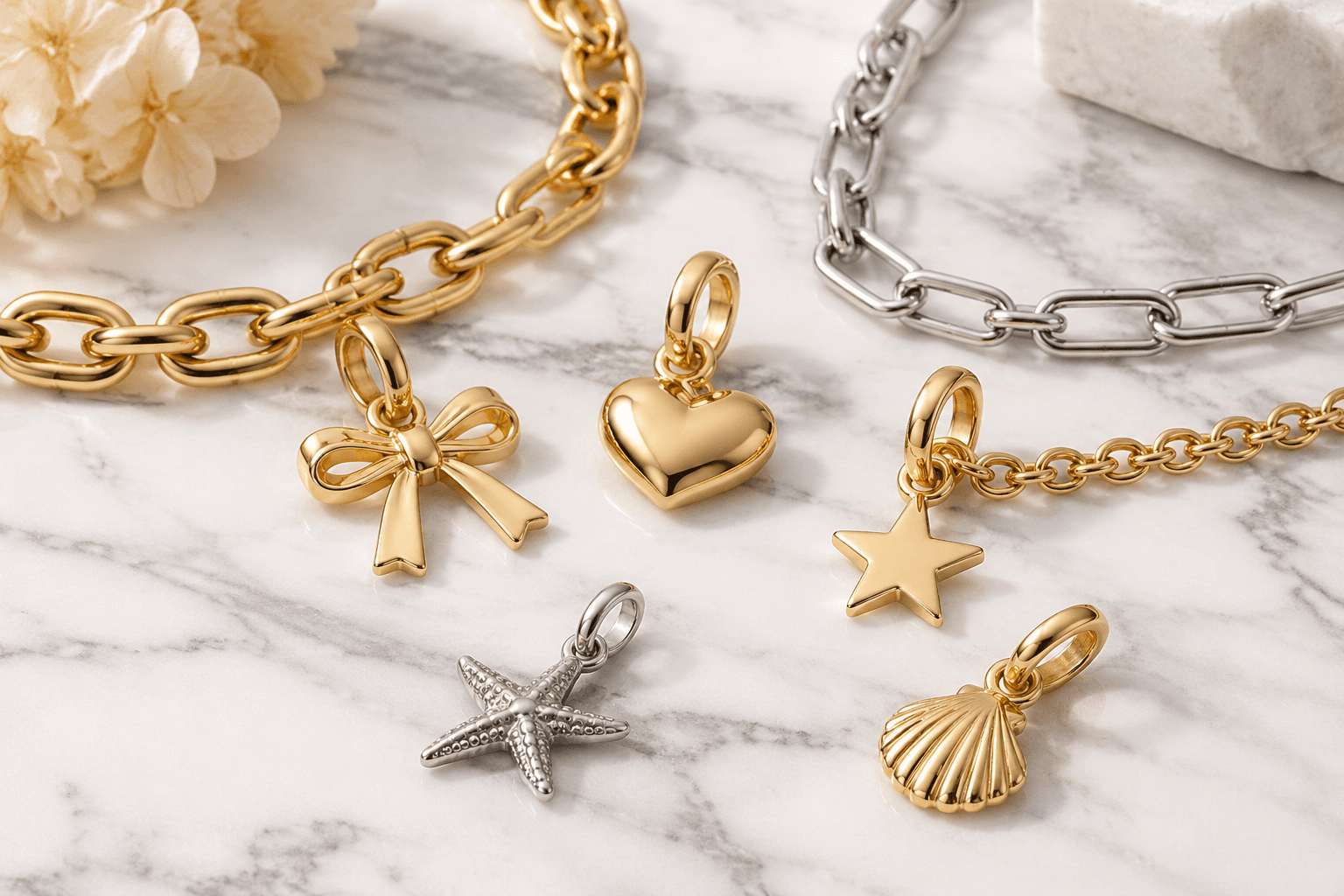
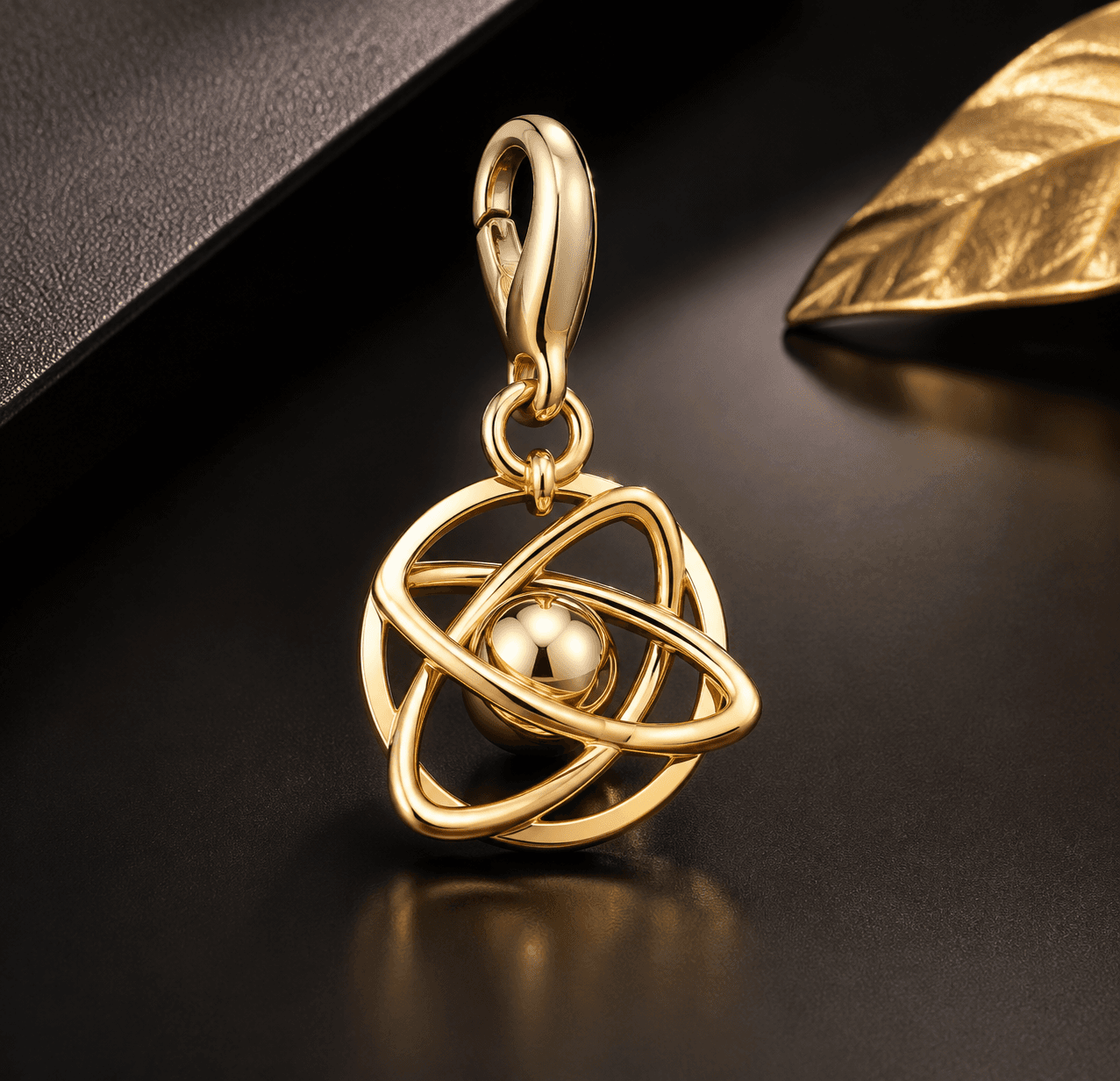
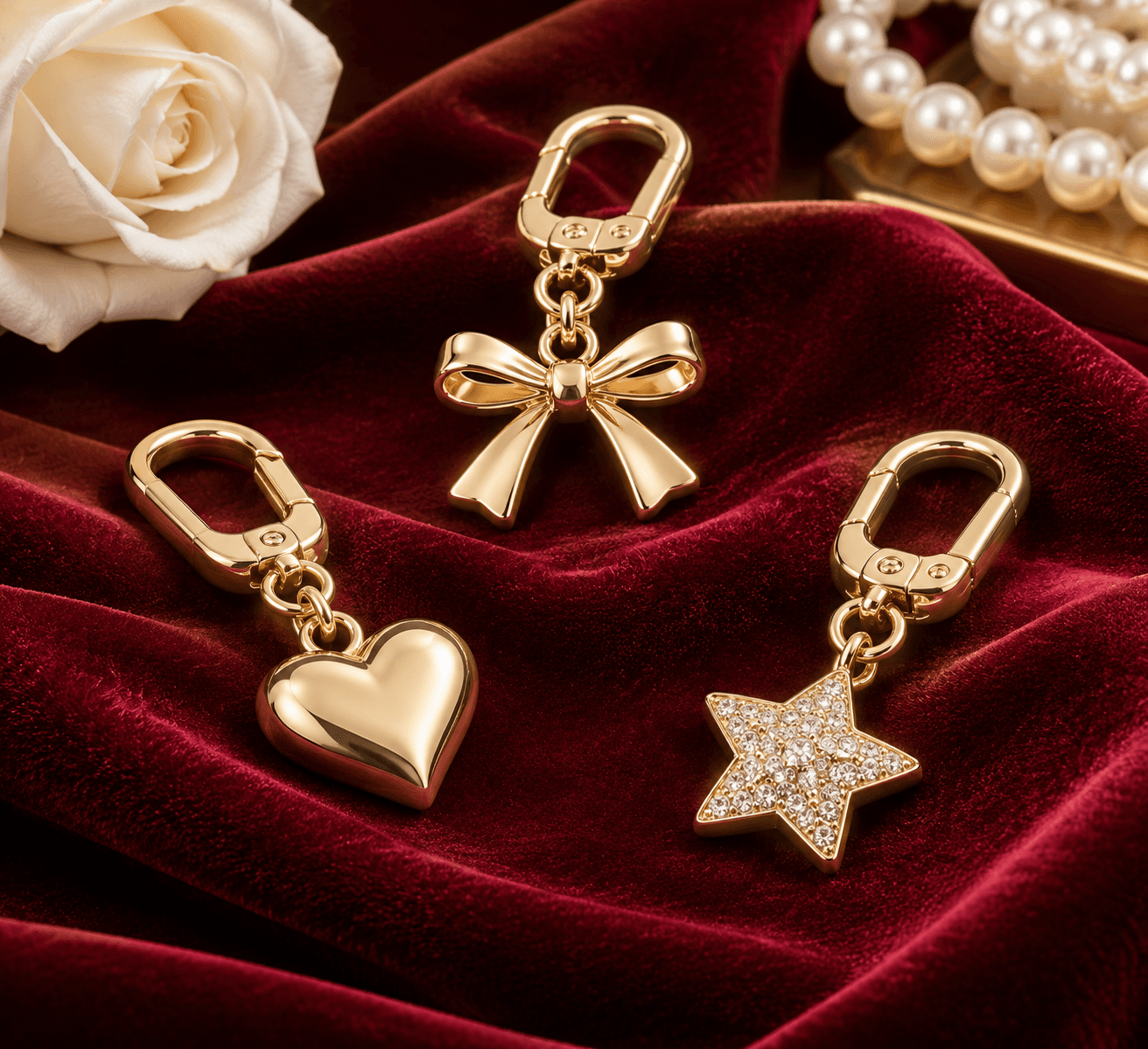
Finishing affects perceived value, customer satisfaction, and retail positioning. A well-developed stainless steel car charm collection can incorporate polished stainless steel, silver finish, gold plated, rose gold plating, enamel, or crystal inlay details.
However, buyers should evaluate each finish independently. A satisfactory sample does not automatically establish consistency across a production batch.
- [ ] Check color uniformity under natural and indoor lighting.
- [ ] Inspect plating coverage around edges, holes, and recessed areas.
- [ ] Look for visible scratches, uneven polishing, and surface defects.
- [ ] Check enamel filling for consistent color and clean boundaries.
- [ ] Inspect crystal inlay alignment and setting security.
- [ ] Compare production samples against an approved reference sample.
For PVD plated stainless steel charms, ask about process controls, coating consistency, and available durability test results. Request written acceptance criteria for color variation and surface appearance. Establishing these requirements before production reduces disagreements during final inspection.
3. Check Attachment Design and Functional Reliability
Car charms are decorative products, but their attachment mechanisms remain important quality components. A visually attractive charm can still generate returns if its loop is poorly finished or its connection opens during normal handling.
Review the following construction details:
- [ ] The bail or jump ring passes through a genuine hole or closed loop.
- [ ] The connector is properly closed and has no obvious gaps.
- [ ] The charm hangs in the intended orientation.
- [ ] The attachment point has no sharp edges or visible deformation.
- [ ] The selected connector suits the intended installation method.
- [ ] The complete assembly is checked for loose components.
Buyers should define the installation environment and communicate any relevant safety requirements. Products intended for vehicle interiors should not obstruct the driver's field of view, interfere with vehicle controls, or create avoidable distractions. Installation instructions should clearly explain appropriate placement and use.
Why Quality and Durability Matter for Wholesale Buyers
1. Better Product Longevity and Fewer Returns
Durability directly affects the economics of a wholesale accessory program. Premature finish deterioration, corrosion, loose decorative components, and inconsistent construction can increase customer complaints and replacement costs.
316L stainless steel provides a practical material foundation for decorative accessories requiring corrosion resistance and dependable everyday performance. Nevertheless, the finished product's performance also depends on manufacturing quality, surface treatment, construction, and environmental exposure.
Buyers should avoid accepting broad statements such as permanent color or lifetime durability without supporting evidence. Instead, request defined test methods, acceptance criteria, and written warranty conditions.
2. More Predictable Retail Quality
For retailers, consistent quality across a collection is as important as the quality of an individual item. Customers purchasing several designs expect similar surface appearance, attachment construction, and finishing standards.
A dependable stainless steel charms manufacturer should maintain documented production specifications, sample approvals, process inspections, and final quality checks. These controls help buyers plan product launches and reduce unexpected variations between initial and repeat orders.
3. Certification and Testing Documentation
Documentation provides buyers with a more objective basis for supplier evaluation. Lancy Jewelry has SGS certification and supporting testing coverage for RoHS, REACH, Nickel Release EN1811, and Salt Spray 240H.
Each document serves a different purchasing consideration:
- RoHS: Provides information about restricted substances within the scope of the applicable requirements.
- REACH: Addresses relevant chemical substance requirements for applicable European market obligations.
- Nickel Release EN1811: Provides a testing framework for assessing nickel release under the specified test conditions. Buyers should confirm whether the test scope applies to their intended product category and use.
- Salt Spray 240H: Provides corrosion-related test information under defined laboratory exposure conditions.
Importantly, a salt spray result does not establish an unlimited service life or guarantee identical performance in every environment. Buyers should review the actual report, test specimen, preparation method, acceptance criteria, and issue date. Certification and test documentation should also be matched to the specific product or production process being evaluated.
Detailed Sourcing Checklist: How to Select a Reliable Supplier
Step 1: Evaluate Manufacturing Capabilities
Choose an OEM charms manufacturer with capabilities that match your product development requirements. A supplier should be able to explain how designs move from technical drawings to samples and then into controlled production.
Lancy Jewelry operates a modern manufacturing facility with CNC processing, laser cutting, laser marking, welding, and polishing capabilities. Its OEM/ODM development services also support logo engraving, PVD plating, enamel color filling, crystal setting, and private-label packaging.
During supplier evaluation, ask these questions:
- [ ] Does the factory handle product development and production directly?
- [ ] Can it manufacture custom shapes and decorative details?
- [ ] Can it provide logo engraving and customized finishing?
- [ ] Does it support coordinated product series rather than isolated designs?
- [ ] Can it provide samples before bulk production?
- [ ] Are packaging and labeling requirements supported?
A manufacturer with integrated capabilities can simplify communication, shorten development cycles, and reduce coordination between separate production providers.
Step 2: Request Samples Before Confirming Bulk Orders
Sample development should be a mandatory sourcing stage, not an optional extra. A sample gives buyers the opportunity to inspect dimensions, appearance, weight, attachment design, and finishing before committing to production quantities.
Use this sample approval checklist:
- [ ] Confirm the approved drawing and product dimensions.
- [ ] Check the material specification and finish.
- [ ] Inspect the front design, reverse side, and outer edges.
- [ ] Test the attachment mechanism through appropriate handling checks.
- [ ] Review engraving, enamel, and decorative detailing.
- [ ] Photograph the approved sample for production reference.
- [ ] Record all changes before authorizing manufacturing.
For a coordinated collection, request representative samples covering different design shapes and finishing methods. This helps identify potential manufacturing challenges before expanding the order.
Step 3: Compare MOQ and Wholesale Pricing
Wholesale pricing should be evaluated against the complete commercial arrangement rather than unit price alone. A supplier offering a low quotation may have higher setup costs, limited customization, or less flexible ordering conditions.
Request a quotation that clearly separates the following costs:
- Unit price at different order quantities.
- Sample development and tooling charges, where applicable.
- Logo engraving and customized finishing costs.
- Packaging and labeling expenses.
- Production lead time and payment terms.
- Shipping arrangements and applicable order charges.
Low MOQ support is particularly useful for boutique retailers testing new designs. Instead of committing too much inventory to an unproven collection, buyers can evaluate demand and expand quantities as sales become more predictable.
For larger distributors, bulk pricing should be assessed against forecasted sales, inventory turnover, defect allowances, and reorder frequency.
Step 4: Calculate Your Wholesale and Retail Margins
Product cost is only one part of the landed cost. Buyers should calculate the complete cost per sellable unit before setting wholesale and retail prices.
A practical calculation is:
Landed unit cost = Product cost + Packaging cost + Freight allocation + Import charges + Quality inspection allocation.
Next, calculate gross margin:
Gross margin (%) = (Selling price - Landed unit cost) / Selling price × 100.
For example, assume a car charm has a landed unit cost of $4.00 and a wholesale selling price of $8.00. The gross margin is 50%, before other operating expenses. If the retail selling price is $16.00, the retailer's gross margin against the same $4.00 landed cost is 75%, assuming no additional costs.
These figures are illustrative. Actual profitability depends on freight, duties, operating costs, sales channels, and negotiated supplier terms.
Step 5: Establish Production Quality Controls
Before confirming an order, agree on measurable inspection requirements. Vague instructions such as premium quality or excellent finish are difficult to enforce consistently.
A practical quality agreement should cover:
- [ ] Approved material and product specifications.
- [ ] Permitted dimensions and weight tolerances.
- [ ] Surface appearance and finish acceptance criteria.
- [ ] Plating and decorative detail inspection requirements.
- [ ] Attachment strength and assembly inspection.
- [ ] Packaging specifications and quantity verification.
- [ ] Defect classification and corrective action procedures.
- [ ] Agreed inspection sampling and acceptance levels.
Where appropriate, request test reports for corrosion resistance, nickel release, and applicable chemical requirements. Discuss repeat testing when a material, finish, or manufacturing process changes.
Step 6: Review Supplier Reliability and Delivery Planning
Reliable production planning matters just as much as product quality. A supplier that cannot communicate production progress or manage repeat orders can create inventory shortages during important retail periods.
Ask potential suppliers to confirm:
- [ ] Sample development timelines.
- [ ] Standard production lead times.
- [ ] Capacity for seasonal and repeat orders.
- [ ] Material and finish consistency procedures.
- [ ] Pre-shipment inspection arrangements.
- [ ] Packaging and shipping documentation.
- [ ] Procedures for handling defects and production delays.
For US and Canadian buyers, build additional time into purchasing schedules for international freight, customs clearance, and distribution. Do not calculate retail launch dates using factory production time alone.
North American Market Considerations
Understand Customer Preferences
In the US and Canada, decorative car accessories can serve several retail channels, including gift stores, boutique accessory retailers, seasonal gift programs, and personalized merchandise businesses.
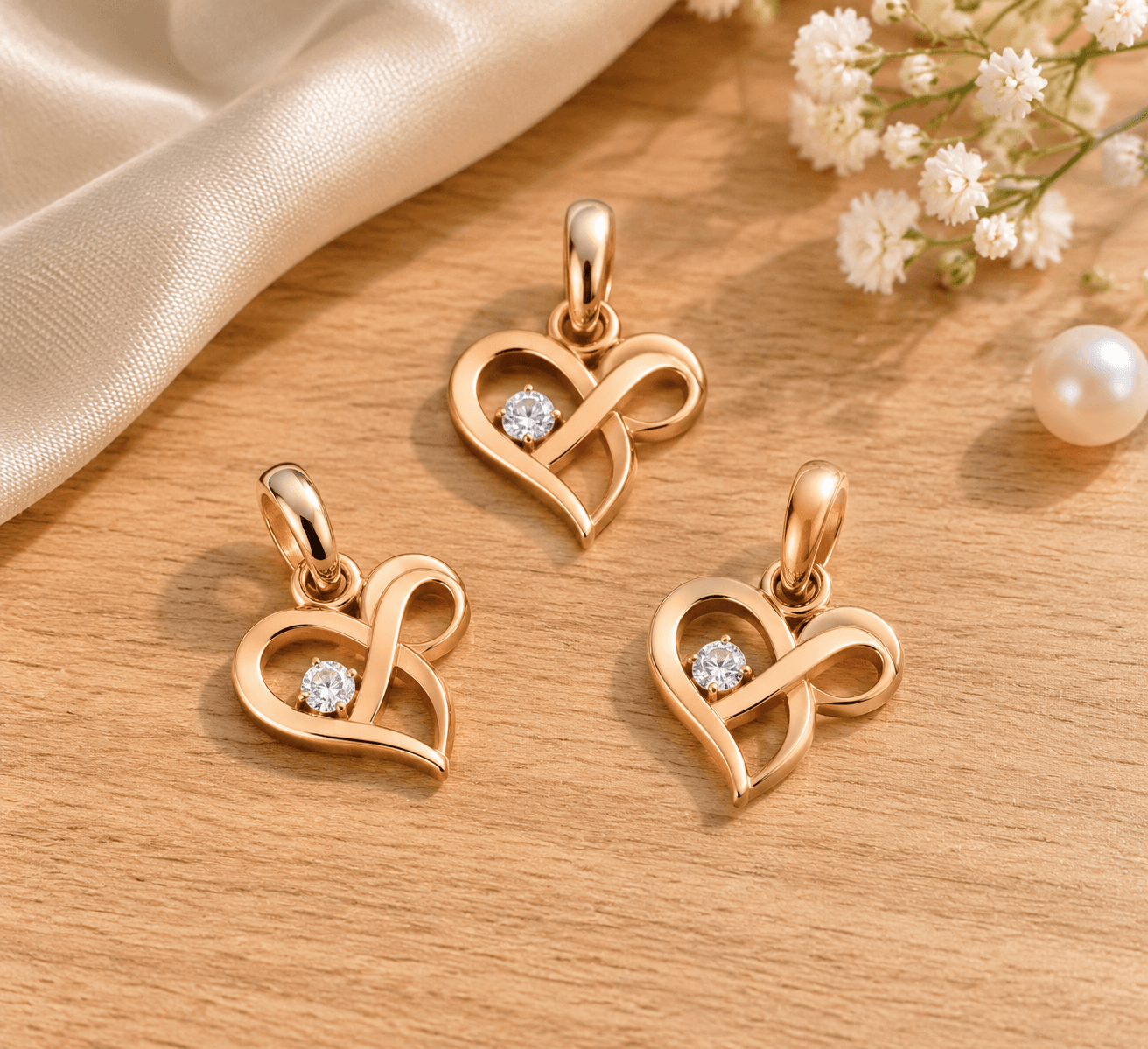
Buyers can develop collections around broadly recognizable themes such as hearts, initials, birthstones, zodiac signs, animals, flowers, and meaningful symbols. Coordinated designs allow retailers to create themed displays and encourage customers to purchase multiple items as gifts or personal accessories.
Consider offering a balanced product assortment with different price points, finish options, and personalization opportunities. A focused collection is often easier to merchandise and replenish than an unnecessarily large assortment of unrelated designs.
Review Applicable US and Canadian Requirements
For North American distribution, buyers should assess product classification, intended use, labeling, import documentation, and applicable consumer product requirements. Ordinary decorative car charms should not automatically be treated as FDA-regulated products. FDA requirements are relevant only where the product's intended use or associated claims bring it within the agency's jurisdiction.
Buyers should also review applicable CPSC requirements in the US and relevant Canadian consumer product and chemical safety obligations. Requirements can differ depending on whether an item is marketed for adults, children, or a specific regulated use. Obtain appropriate compliance advice for the actual product, market, and intended customer group.
Common Wholesale Sourcing Mistakes to Avoid
Even experienced purchasing teams can overlook important details when prioritizing low quotations or fast delivery. Avoid these common mistakes:
- Choosing only by price: Evaluate landed cost, finish consistency, inspection procedures, and after-sales support together.
- Skipping sample approval: Always approve a representative sample before authorizing bulk production.
- Accepting unsupported durability claims: Request relevant test reports and written warranty conditions.
- Ignoring attachment construction: Inspect the complete connector and its mechanical integrity.
- Ordering excessive inventory: Use MOQ flexibility to validate demand before expanding an assortment.
- Leaving specifications undocumented: Record dimensions, material, finish, packaging, and inspection criteria in writing.
- Overlooking shipping costs: Calculate landed cost rather than comparing factory quotations in isolation.
Frequently Asked Questions
What makes 316L stainless steel car charms suitable for wholesale programs?
316L stainless steel offers corrosion resistance, dependable construction, and a practical foundation for repeatable decorative accessory production. When combined with appropriate finishing and quality controls, it supports car charm collections intended for ongoing retail distribution. Buyers should still evaluate the finished product and request relevant test documentation.
What certifications should buyers request from a stainless steel car charms manufacturer?
Buyers can request relevant RoHS, REACH, Nickel Release EN1811, and Salt Spray 240H documentation. The correct evidence depends on the intended market, product category, and applicable requirements. Always check report scope, test conditions, and product relevance rather than relying on certification claims alone.
Can wholesale buyers order custom logo car charms with low MOQ?
Yes. OEM/ODM manufacturers may support custom shapes, logo engraving, PVD finishes, enamel detailing, and private-label packaging. MOQ depends on design complexity, production processes, and order specifications. Request a detailed quotation and sample development plan to establish the most practical starting quantity.
How can buyers verify the durability of PVD plated car charms?
Request samples and relevant coating or corrosion test documentation. Review finish uniformity, surface adhesion where applicable, edge coverage, and performance under defined test conditions. Also request written acceptance standards and warranty terms. Laboratory results provide useful evidence but should not be interpreted as a guarantee of unlimited service life.
Partner With Lancy Jewelry for Wholesale Car Charm Development
Selecting the right supplier means building a repeatable sourcing process around verified material specifications, controlled production, reliable finishing, and commercially practical order quantities. For boutique retailers, gift companies, and distributors, these factors help protect product margins while maintaining consistent retail quality.
Lancy Jewelry is a B2B 316L stainless steel charms manufacturer offering OEM/ODM development, sample support, custom logo engraving, PVD plating, enamel color filling, crystal setting, and private-label packaging. Our manufacturing capabilities include CNC processing, laser cutting, laser marking, welding, and polishing.
Whether you are developing an initial car charm collection or planning larger wholesale stainless steel charms orders, our team can help translate your product requirements into a practical manufacturing plan.
Ready to discuss your next collection?
- Explore our 316L stainless steel product catalog for collection and design options.
- Discover our OEM/ODM manufacturing services for custom product development.
- Submit your RFQ and wholesale quotation request with your designs, quantities, and finishing requirements.
- Visit our contact page to discuss samples, MOQ, production timelines, and private-label requirements.
Make your next sourcing decision with clear specifications, verified quality evidence, and a supplier committed to consistent manufacturing. Partner with Lancy Jewelry to develop a dependable wholesale car charm program.