In wholesale charm sourcing, material choice sets the baseline for margins, reliability, and brand perception. This technical deep dive explains why 316L stainless steel charms are the preferred base for boutique brands and private-label programs, and how robust chemistry, controlled manufacturing, and certified processes translate into predictable costs and performance at scale. We’ll detail alloy composition, corrosion resistance, plating compatibility, and the end-to-end workflow that an OEM/ODM partner like Lancy Jewelry applies to deliver private-label packaging, low MOQ options, and fast sample development for global markets.
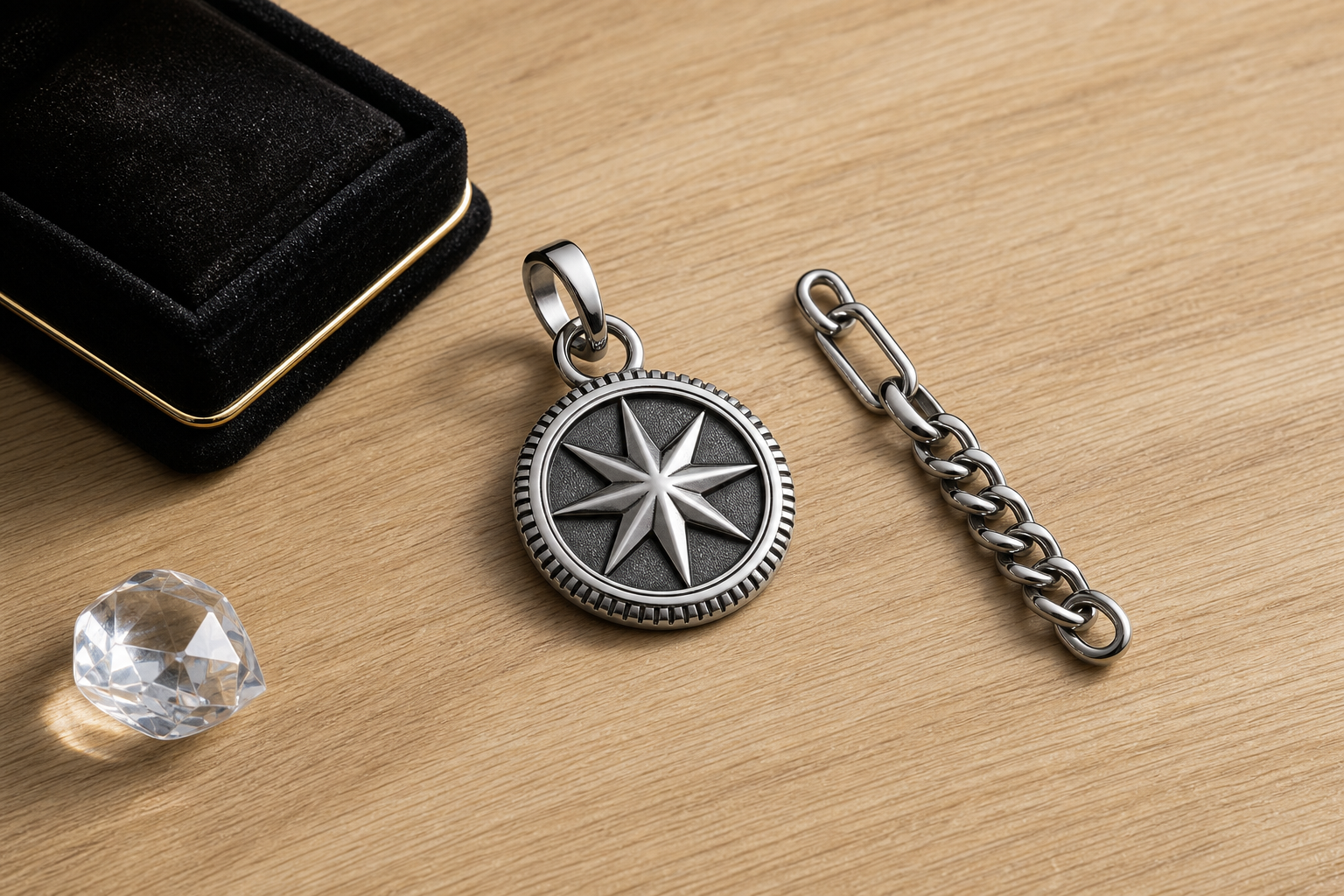
Stainless Steel Wholesale Jewelry Charm: Technical Deep Dive
1) Material science: 316L composition, microstructure, and corrosion resistance
The 316L alloy is characterized by a corrosion-resistant austenitic structure achieved through chromium and nickel enrichment with a molybdenum boost. Typical composition ranges for 316L stainless steel include chromium about 16–18%, nickel around 10–14%, and molybdenum in the 2–3% range. The low-carbon variant (the “L” in 316L) reduces carbide precipitation during welding and improves weldability and corrosion resistance in complex shapes such as small charms with multiple features. For wholesale charms, this balance of corrosion resistance, formability, and cost makes 316L a dependable base material across climates from coastal US markets to EU ports and Australian distribution hubs.
Key metal chemistry implications for charm production
- Corrosion resistance: The Mo-containing matrix helps resist chloride-induced pitting in salted environments and perspiration exposure common to wearable items.
- Formability and machining: The austenitic structure allows efficient CNC milling, laser cutting, and fine engraving without martensitic hardening that would undermine edge detail on small charms.
- Weldability and joining: Low carbon content minimizes sensitization during welding steps used in some OEM processes, supporting stable microstructure in assembled pieces such as jump rings and bail connections.
From a buyer’s perspective, these chemistry traits translate to stable material behavior during finishes, long-term wear, and lower return risk due to material degradation. This baseline is particularly important for private-label lines where consistent performance under varied handling, storage, and display conditions is non-negotiable.
2) Mechanical properties, workability, and surface finish compatibility
316L stainless steel provides a good combination of tensile strength, ductility, and impact resistance suitable for small decorative charms. For factory processes such as CNC milling and laser engraving, the alloy’s ductility allows fine detailing on front-facing designs, while maintaining dimensional stability through finishing operations. Workability also matters for PVD plating, enamel filling, and crystal inlay, where even coating, adhesion, and color retention depend on clean substrate surfaces and stable substrate chemistry.
In practice, suppliers must control grain structure, surface roughness, and cleanliness prior to finishing steps. Preparation stages often include degreasing, pickling, and thorough rinsing to ensure that plating adheres evenly across the entire charm and any recessed engravings or enamel cavities. A consistent surface baseline reduces rejection rates during quality checks in high-volume runs.
3) Plating chemistry: PVD plating and color options for 316L charms
PVD plating enables durable color finishes on 316L stainless steel charms, including gold plating, silver finish, and rose gold tones. The deposition method creates a hard, wear-resistant surface that resists chipping and tarnish, which is essential for mass-produced lines sold under private-label programs. When a charm is planned for PVD color, the substrate must be clean, corrosion-resistant, and free of inclusions that could disrupt coating adhesion. Lancy’s capability to apply PVD plating, combined with controlled post-plate finishing, yields consistent coloration across lots and between production runs.
For buyers, this means predictable color consistency for wholesale orders, with the potential for cross-market color alignment—important when supplying multiple boutique brands under private-label arrangements or selling through distributors that require uniform branding palettes.
4) Finishes and decorative options: Enamel, crystal inlay, and beyond
316L charms can accommodate enamel color filling and crystal inlays as decorative features. Enamel adds aesthetic variety and brand storytelling, while crystal inlays provide sparkle for gift programs or charm bar assortments. The key engineering consideration is enamel depth control and crystal seating depth to avoid protrusion that could snag on packaging or during wear. Properly cured enamel and securely set crystals enhance durability for bulk orders and reduce post-sale returns.
From the supplier side, robust process controls during enamel fill and crystal setting—paired with quality sampling and defect-tracking—support consistent aesthetics across large MOQ runs and across private-label lines that require brand-specific colorways.
5) Finite tolerance, quality control, and certification context
To ensure reliability across global markets, Lancy maintains SGS-certified processes including RoHS and REACH compliance, Nickel Release EN1811 testing, and Salt Spray 240H (which evaluates corrosion resistance). These certifications provide assurance to buyers that the charms meet cross-border chemical safety standards, minimize regulatory risk in US/EU/UK markets, and align with retailer expectations for travel-friendly, skin-safe jewelry components. For wholesale programs and bulk orders, certification documentation accelerates RFQ reviews and private-label onboarding, reducing time-to-market and post-sale risk.
6) Manufacturing capabilities in an OEM/ODM context
A modern facility with CNC, laser cutting, laser marking, welding, and polishing enables rapid translation from concept sketches to production-ready charms. OEM charms manufacturer and ODM charm supplier partnerships leverage such capabilities to deliver logo engraving, private-label packaging, and design customization without sacrificing economy of scale. The ability to support low MOQ charm production, combined with consistent plating quality and sample development, is central to profitable wholesale arrangements where brands require iterative design testing before large-scale commitments.
Benefits for wholesale buyers
Key benefits and value drivers
- Consistency across lots: With 316L substrate and controlled finishing, buyers experience uniform surface finish, color, and geometry across thousands of charms.
- Low MOQ and flexibility: Lancy offers low MOQ support for private-label launches, enabling clubs, gift programs, or seasonal lines to test-market products without tying up capital.
- Private-label packaging: Turnkey packaging solutions align with brand standards, reducing time-to-market and elevating perceived value in boutique channels.
- Fast sample development and lead times: Efficient prototyping accelerates RFQ responses and supplier qualification for new lines.
- Global certifications and reliability: SGS certifications (RoHS, REACH, Nickel Release EN1811, Salt Spray 240H) reinforce compliance credibility for cross-border sales and distributor networks.
From a commercial perspective, the combination of 316L chemistry, plating versatility, and supplier reliability translates into favorable margins for wholesale prospects. Buyers can forecast costs more accurately, negotiate favorable MOQ terms, and plan inventory for peak selling seasons with confidence that base charms will perform as expected under daily wear and display conditions.
For buyers evaluating producers, partnering with an OEM/ODM supplier that offers sample development, private-label packaging, and turnkey finishing options helps avoid siloed vendors and reduces logistical complexity when scaling from pilot orders to bulk charm orders. This is particularly important for gift companies and charm bar retailers that rely on consistent color stories and reliable replenishment planning.
Detailed analysis and practical guide for buyers
Step 1: Material selection and risk management for new lines
Start with a clear understanding of where the charms will be used (coastlines, humid climates, or dry indoor environments). 316L substrate provides broad resilience, but buyers should specify intended use scenarios in RFQ to ensure the selected finishes and enamel colors hold up under expected handling. Provide reference SKUs or sample IDs during discussions to align expectations on finish, branding, and packaging.
Step 2: Alloy chemistry and finish compatibility
Confirm that the 316L base material is consistent across all lots and that suppliers verify the absence of problematic inclusions that could affect finishing. When selecting PVD colors, request color stability data, adhesion tests, and scratch resistance metrics. For enamel or crystal options, obtain data on curing temperatures, enamel thickness tolerances, and crystal seating depths to ensure durability in retail environments.
Step 3: Finishing, plating, and color control
Establish acceptance criteria for surface finish, plating thickness, color uniformity, and abrasion resistance. Specify pass/fail thresholds for each batch, and require third-party lab or internal QC reports as part of the batch release documentation. If your program uses multiple finishes (e.g., gold-plated and silver-finish charms), ensure that color variance remains within defined ΔE tolerances across lots and production runs.
Step 4: Decoration options and process validation
For enamel-filled designs and crystal-inlay accents, validate process controls for color fill uniformity and crystal seating. Request process validation reports, including curing cycles, fill depths, and binding strength tests. For private-label programs, document approved color palettes, brand typography, and engraving tolerances to minimize rework during mass production.
Step 5: Quality control and risk management
Implement a multi-stage QC workflow: incoming material inspection, in-process checks for plating and engraving, and final visual and dimensional inspection before packaging. SGS-certified checks should be integrated into the QC plan to verify regulatory compliance and skin-safety standards. Use traceable lot numbers to facilitate recalls if necessary and to support detailed supplier performance reviews in quarterly business reviews.
Step 6: OEM/ODM collaboration and private-label packaging
Coordinate with the supplier on logo engraving, packaging design, and branding elements. Private-label packaging requires packaging mockups, tolerance checks, and packaging artwork approval cycles. An experienced OEM/ODM partner can translate design concepts into production-ready files, enabling rapid iterations without sacrificing quality or lead times. This collaborative approach is essential for wholesale partners seeking to scale line breadth quickly while maintaining consistent branding across markets.
Step 7: Sampling, MOQ negotiation, and bulk orders
For new lines, request a formal sample package that covers one or multiple finish options, with labeling and packaging proofs. Use sample development to validate design intent, finish quality, and compatibility with selected chain lengths and clasp types. When negotiating MOQs, consider phased strategies—starting with smaller runs to prove market response, then ramping up to larger batches as demand solidifies. A reliable supplier will offer transparent pricing schedules that reflect volume discounts and lead-time commitments for bulk orders.
FAQ
Q1: What makes 316L stainless steel a reliable base for wholesale charms?
A: 316L offers robust corrosion resistance, good formability for detailed engravings, and compatibility with durable finishes like PVD plating and enamel. Its low carbon design improves weldability and reduces sensitivity to heat during finishing, supporting stable production across high-volume runs.
Q2: What MOQs can I expect for new private-label charm lines?
A: MOQs vary by finish, decoration, and packaging options. With Lancy, buyers can start with low MOQs for pilot programs or private-label launches, with scalable ramp-ups as demand grows. This flexibility helps minimize upfront risk while preserving long-term supply reliability.
Q3: What certifications does Lancy hold that matter for cross-border sales?
A: Lancy holds SGS certifications including RoHS, REACH, Nickel Release EN1811, and Salt Spray 240H tests. These certifications support regulatory compliance across US, EU, UK, AU, and other markets, easing distributor qualification and retailer onboarding.
Q4: How does sample development support wholesale and ODM projects?
A: Sample development accelerates concept validation, pricing benchmarking, and packaging approvals. It enables brands to test finish options, logo engraving fidelity, and assembly fit with minimal risk before committing to larger production runs. Efficient sampling reduces time-to-market for new lines.
Call to action: Partner With Us
Ready to scale your charm program with a reliable 316L stainless steel base, private-label packaging, and OEM/ODM collaboration? Lancy Jewelry offers a modern manufacturing facility with CNC, laser cutting, laser marking, welding, and polishing capabilities, backed by SGS certifications for market-ready confidence. Explore OEM services, request a formal RFQ, or start with sample development to validate your private-label line. Reach out through our site to All Products browsing, request a quote, or contact our sales team to align on MOQ, lead times, and pricing for bulk orders. All Products | OEM Service | Request a Quote | Contact.