Choosing a wholesale supplier for stainless steel charms is more than comparing unit prices and production lead times. For jewelry designers and boutique brands in the United States and Canada, supplier selection directly affects product durability, customer satisfaction, collection consistency, and long-term purchasing costs. A charm that loses its finish, develops surface defects, or arrives with inconsistent dimensions can create returns and damage a retailer's reputation.
Before placing a bulk order, buyers should evaluate the manufacturer's material specifications, quality control procedures, surface treatment performance, customization capabilities, and documentation. This practical checklist explains how to assess potential partners, verify important quality indicators, and establish a reliable sourcing process for customized 316L stainless steel charms.
How to Choose Durable Stainless Steel Charm Wholesale Suppliers for Bulk Orders
A reliable stainless steel charms manufacturer should demonstrate control over the entire production process, from material selection and component fabrication to finishing, inspection, and packaging. Jewelry designers should look beyond attractive product photographs and request measurable evidence of manufacturing consistency.
1. Verify the Base Material Specification
Start by confirming that the supplier manufactures charms using 316L stainless steel. Material identification is particularly important when developing products intended for frequent handling and everyday jewelry applications.
316L stainless steel is valued for its corrosion resistance, strength, and suitability for detailed jewelry components. Its chromium and molybdenum content contributes to resistance against corrosion in ordinary wearing environments. However, actual performance depends on the material specification, manufacturing quality, surface condition, and exposure conditions.
Ask suppliers to provide material declarations, available test reports, and traceability information for production batches. Avoid relying exclusively on descriptions such as premium metal or high-quality stainless steel.
Buyer checklist:
- ☐ Confirm that 316L stainless steel is the specified base material.
- ☐ Request material declarations or supporting identification documentation.
- ☐ Confirm that the material specification applies to the entire charm base.
- ☐ Ask whether production batches can be traced through internal records.
- ☐ Check that the approved sample and bulk production use the same material specification.
2. Evaluate Manufacturing Capabilities
Manufacturing capabilities determine how accurately a supplier can translate a jewelry designer's concept into a finished product. For customized charms, important processes include CNC machining, laser cutting, laser marking, welding, polishing, and controlled finishing.
These capabilities support different design requirements. Laser cutting can produce defined outlines, while laser marking enables detailed logo engraving and decorative personalization. CNC processing supports dimensional consistency, and polishing helps create a controlled surface appearance.
For custom projects, ask whether the manufacturer manages these operations internally or coordinates them through external production partners. Understanding production responsibilities makes it easier to assess quality accountability and lead-time reliability.
Buyer checklist:
- ☐ Review the manufacturer's equipment and production capabilities.
- ☐ Ask how design files are translated into production specifications.
- ☐ Confirm available logo engraving and decorative customization methods.
- ☐ Request examples of comparable technical work without relying only on promotional photographs.
- ☐ Establish who is responsible for inspection at each production stage.
3. Request Evidence of Quality Control
A dependable supplier should have documented inspection procedures rather than relying entirely on final visual checks. Quality control should cover incoming material verification, dimensional inspection, surface finishing, attachment hardware, and finished-product appearance.
Ask for the manufacturer's inspection criteria and acceptance standards. These should identify measurable requirements, including dimensional tolerances, acceptable surface conditions, plating appearance, and functional attachment integrity.
For bulk orders, buyers should also clarify how samples are selected for inspection and how defective products are handled. A written quality agreement can reduce misunderstandings between the purchasing team and production facility.
Buyer checklist:
- ☐ Request a written quality inspection procedure.
- ☐ Confirm dimensional inspection methods and tolerances.
- ☐ Establish visual acceptance criteria for each finish.
- ☐ Check that jump rings, bails, and other attachment points are secure.
- ☐ Agree on defect classification and corrective action procedures.
Why Supplier Quality and Durability Matter
Supplier evaluation is an investment in the commercial performance of a jewelry collection. For North American boutique brands, durable products help reduce after-sales complaints, maintain consistent merchandising standards, and support repeat purchasing.
Key Benefits of Verified Manufacturing Standards
More Consistent Product Performance
Material verification and repeatable manufacturing processes help minimize differences between approved samples and delivered orders. This is especially important when designers release coordinated collections with several shapes, sizes, or decorative finishes.
Better Confidence in Surface Durability
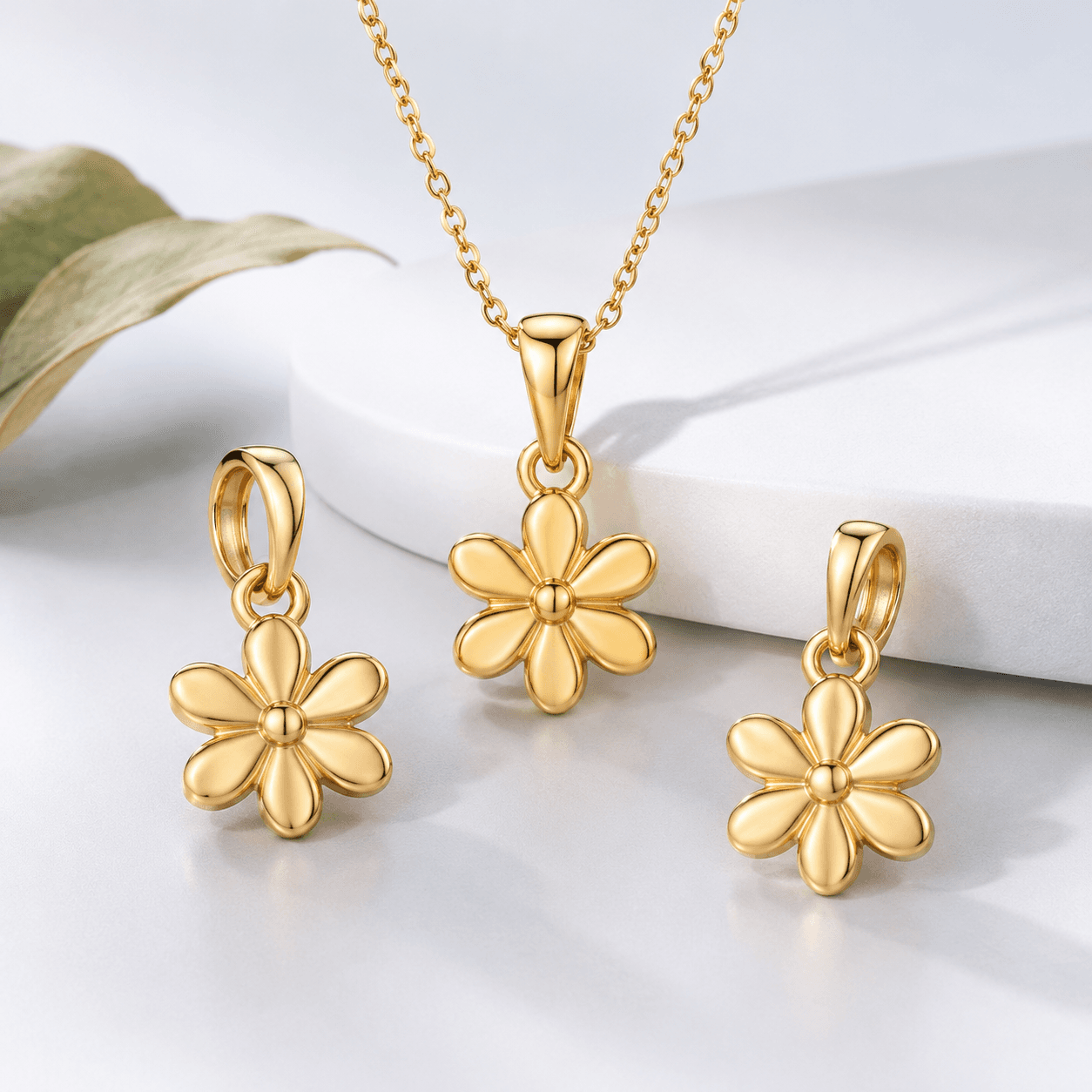
Surface treatments require appropriate process controls. PVD gold plating, silver finish, and rose gold plating should be evaluated for adhesion, appearance, and resistance to expected wearing conditions. Enamel and crystal inlay options also require inspection of color consistency, edge finishing, and setting security.
More Reliable Regulatory Documentation
For buyers serving the US and Canadian markets, documentation can support internal compliance reviews and purchasing decisions. Lancy Jewelry has SGS-certified testing documentation covering RoHS, REACH, Nickel Release EN1811, and Salt Spray 240H.
These testing references provide useful information about specific material, chemical, nickel-release, and corrosion-related performance criteria. Buyers should request the relevant reports and verify their scope, tested samples, methods, and validity for the intended products. A test report should not be interpreted as universal approval of every product or production batch.
US buyers should also distinguish between product testing and regulatory authorization. Ordinary jewelry should not be described as FDA-approved simply because a supplier provides material or safety documentation. The FDA is not a general jewelry product certification authority. Depending on product classification, intended use, marketing claims, and consumer age group, other requirements and agencies may be relevant. For example, children's products can involve additional applicable safety obligations. Buyers should review current federal and state requirements and obtain specialist advice where necessary.
Detailed Guide: A Practical Supplier Evaluation Checklist
Step 1: Inspect Surface Finishes and Wear Resistance
Surface quality is one of the most visible indicators of manufacturing consistency. A charm may have an accurately cut outline but still perform poorly if the surface treatment is uneven or insufficiently controlled.
When evaluating PVD plated stainless steel charms, ask the manufacturer how the surface is prepared, how coating parameters are controlled, and what inspection criteria are applied. PVD performance depends on the substrate preparation, coating process, thickness, adhesion, and final surface condition.
For durability evaluation, consider requesting relevant testing based on the intended application:
- ☐ Salt spray testing to assess corrosion behavior under a defined test environment.
- ☐ Adhesion evaluation to check whether the surface treatment remains properly bonded.
- ☐ Abrasion testing to assess resistance to repeated surface contact.
- ☐ Color consistency inspection to compare approved samples and production pieces.
- ☐ Wear simulation under conditions representative of the intended product application.
Salt spray testing deserves particular attention, but a 240-hour result should not be interpreted as a guaranteed number of years of real-world wear. Laboratory conditions and daily use are different. Perspiration, cosmetics, cleaning products, humidity, friction, and storage habits can all influence performance.
Step 2: Examine Enamel and Crystal Inlay Quality
Decorative features create opportunities for differentiation in boutique collections. However, they introduce additional inspection requirements that should be addressed before production approval.
For enamel stainless steel charms, inspect color uniformity, filling accuracy, surface smoothness, and the transition between decorative areas and surrounding metal. Uneven filling or visible surface irregularities can affect the perceived quality of an otherwise well-manufactured charm.
For crystal inlay designs, check alignment, setting security, spacing, and the consistency of decorative elements. Ask the supplier to explain its inspection method for identifying loose settings and visible defects.
Buyer checklist:
- ☐ Approve enamel color references before production.
- ☐ Check that decorative filling is even and clean.
- ☐ Inspect crystal positioning and setting security.
- ☐ Confirm that decorative components remain secure after appropriate handling tests.
- ☐ Include decorative details in the final sample approval record.
Step 3: Evaluate Customization and Design Development
Jewelry designers often require more than standard shapes. Initial charms, birthstone designs, zodiac symbols, botanical details, and personalized gift accessories can all benefit from flexible OEM and ODM development.
Ask whether the supplier can work from technical drawings, reference dimensions, sketches, or approved design files. Discuss minimum line thickness, engraving depth, edge finishing, attachment dimensions, and available surface treatments before confirming a design.
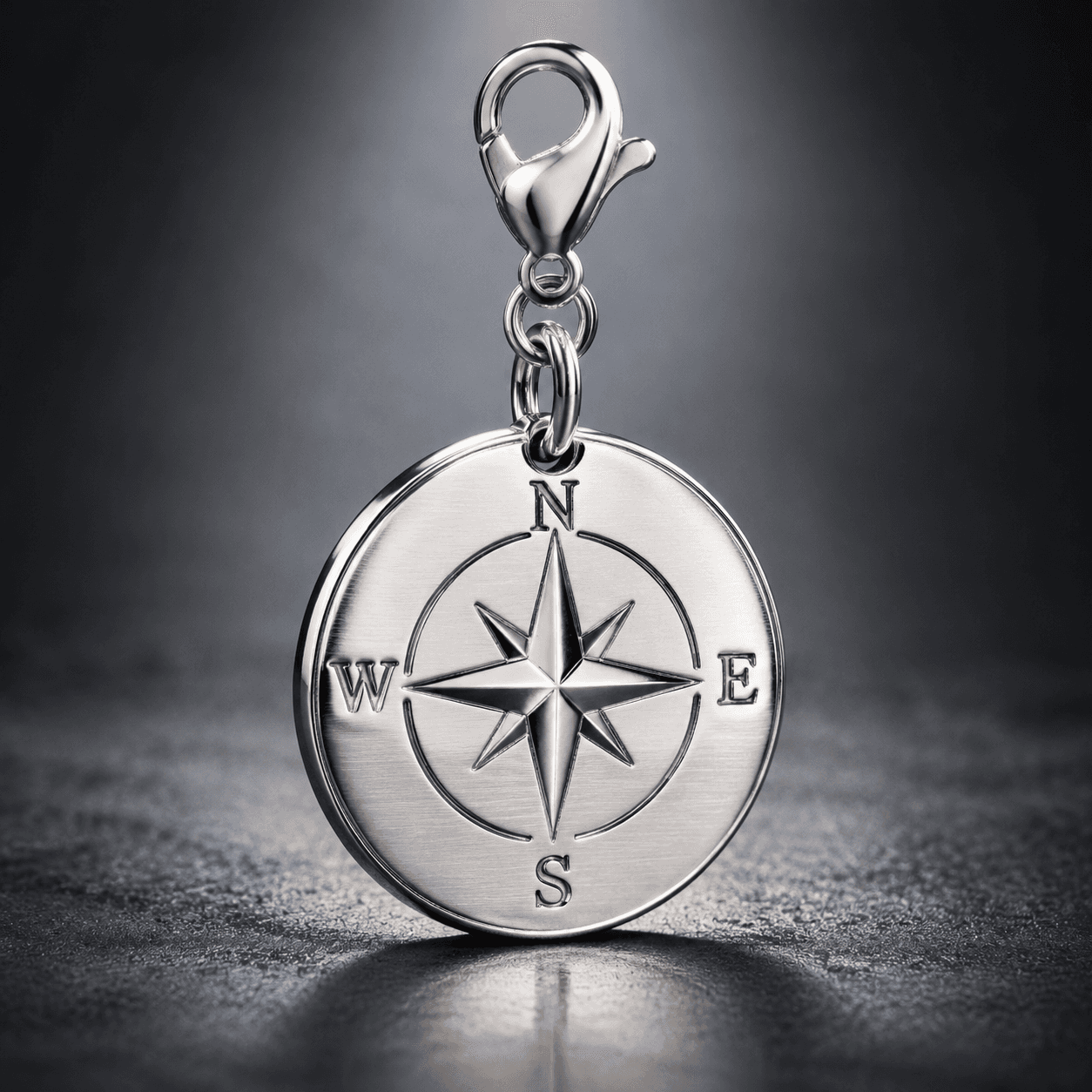
Custom logo charms are another important consideration for private-label programs. Confirm logo placement, marking size, legibility, and whether the selected surface treatment affects the final appearance of the engraving.
Buyer checklist:
- ☐ Confirm OEM and ODM design development support.
- ☐ Request technical feedback before finalizing complex designs.
- ☐ Discuss logo engraving and personalization requirements.
- ☐ Confirm available PVD, enamel, and crystal inlay options.
- ☐ Request a physical sample before approving bulk production.
Step 4: Test Sample Development Before Ordering in Bulk
Sample development is one of the most effective ways to identify production issues before committing to larger quantities. A professional manufacturer should be able to provide a sample for evaluation and explain how approved specifications will be transferred into mass production.
Do not assess a sample solely by its visual appearance. Review dimensions, weight, surface finish, attachment functionality, logo clarity, and decorative details. Where appropriate, perform preliminary wear and handling evaluations using agreed criteria.
Record the approved sample specifications, photographs, dimensions, finish references, and packaging requirements. These records become useful reference points during bulk inspection.
Buyer checklist:
- ☐ Obtain a production-representative sample.
- ☐ Compare the sample against the original design specifications.
- ☐ Check attachment mechanisms and functional details.
- ☐ Evaluate finish appearance under consistent lighting.
- ☐ Retain an approved reference sample for future orders.
Step 5: Compare MOQ, Pricing, and Production Capacity
Wholesale purchasing decisions should balance unit cost, minimum order quantity, manufacturing consistency, and delivery reliability. The lowest quotation is not necessarily the most economical option if it involves uncertain quality controls or repeated corrective work.
Request a quotation that separates development costs, unit pricing, finishing requirements, packaging, and shipping assumptions. For a multi-design collection, ask whether different designs can be planned under one coordinated purchasing program.
Low MOQ charm production can be useful for boutique brands testing new designs or launching seasonal collections. However, minimum quantities may vary according to design complexity, finishing requirements, and production setup.
Buyer checklist:
- ☐ Request an itemized RFQ quotation.
- ☐ Confirm MOQ for each design and finish.
- ☐ Compare sample fees and development lead times.
- ☐ Confirm bulk production capacity and delivery schedules.
- ☐ Review packaging, inspection, and shipping costs.
- ☐ Agree on procedures for changes after sample approval.
Step 6: Verify Private-Label Packaging and Order Management
For North American boutique retailers and gift companies, packaging influences both presentation and operational efficiency. Ask whether the supplier supports branded packaging cards, individual product protection, labeling, and coordinated assortment preparation.
Also confirm carton quantities, packing lists, product identification, and shipping documentation. These details can reduce receiving errors and make inventory management easier when a collection includes multiple charm designs.
Buyer checklist:
- ☐ Confirm private-label packaging specifications.
- ☐ Approve packaging artwork and product labels.
- ☐ Define individual and bulk packing requirements.
- ☐ Check carton labeling and shipment documentation.
- ☐ Confirm production milestones and order communication procedures.
Step 7: Establish a Long-Term Quality Agreement
For recurring bulk orders, a supplier relationship should be supported by documented expectations. Agree on material specifications, approved finishes, dimensional tolerances, inspection sampling, acceptable defect levels, and corrective action responsibilities.
Changes to product specifications should require documented approval. This is particularly important when a collection includes several finishes or decorative treatments. Even small changes to surface preparation or production settings can affect the appearance of the final product.
Discuss how the manufacturer handles nonconforming products, replacement arrangements, production delays, and repeat-order consistency. A clear agreement makes supplier performance easier to evaluate over time.
Common Supplier Selection Mistakes to Avoid
Even experienced jewelry buyers can overlook important details when purchasing customized products. Avoid these common sourcing mistakes:
- Choosing based only on price: Compare the complete specification, testing evidence, and quality control process rather than unit price alone.
- Accepting vague material descriptions: Request confirmation of the exact 316L stainless steel specification.
- Skipping physical samples: Product photographs cannot verify dimensions, attachment integrity, or actual finish quality.
- Assuming laboratory results guarantee lifetime durability: Review test conditions and understand the limitations of each result.
- Ignoring production consistency: Confirm that the approved sample represents the specifications used for bulk orders.
- Leaving packaging requirements until the end: Include private-label presentation and labeling in the original RFQ.
Frequently Asked Questions
1. Why should jewelry designers choose 316L stainless steel charms?
316L stainless steel offers a useful combination of corrosion resistance, strength, and suitability for detailed jewelry designs. It can support a range of decorative finishes, including PVD gold plating, silver finish, rose gold plating, enamel, and crystal inlay. Buyers should still verify the actual material specification and product testing documentation.
2. What quality tests should wholesale charm suppliers provide?
Useful documentation may include material identification, RoHS and REACH assessments where applicable, Nickel Release EN1811 testing, and salt spray testing. Additional evaluations can include coating adhesion, abrasion resistance, dimensional inspection, and decorative component security. The appropriate tests depend on the product design and intended market.
3. How can buyers evaluate a supplier before placing bulk orders?
Request material documentation, relevant test reports, production information, a physical sample, and a written quality inspection procedure. Compare the approved sample with the final production specifications, and establish clear expectations for MOQ, lead time, packaging, and defect handling before confirming the order.
4. Can a manufacturer support custom designs and low MOQ orders?
Many OEM and ODM manufacturers offer custom development and flexible MOQ arrangements, although availability depends on design complexity, production processes, and finishing requirements. Buyers should provide drawings, quantities, target finishes, and packaging expectations when requesting a quotation.
Partner With Lancy Jewelry for Reliable Wholesale Charm Production
Finding the right manufacturing partner requires a combination of material verification, technical evaluation, sample approval, and consistent quality management. For boutique jewelry brands, charm bar retailers, and private-label buyers, these steps help create collections that meet commercial requirements without sacrificing creative flexibility.
Lancy Jewelry specializes in OEM/ODM 316L stainless steel charms for B2B buyers. Our modern manufacturing facility incorporates CNC processing, laser cutting, laser marking, welding, and polishing to support customized product development. Available capabilities include logo engraving, PVD plating, enamel color filling, crystal setting, and private-label packaging.
Our SGS-certified testing documentation covers RoHS, REACH, Nickel Release EN1811, and Salt Spray 240H, providing buyers with relevant information for supplier qualification and product evaluation. We also support sample development and low MOQ discussions for boutique-oriented purchasing programs.
Whether you are developing a new decorative charm collection or organizing repeat bulk charm orders, our team can help translate your design requirements into practical manufacturing specifications.
Explore our stainless steel charms collection, learn more about our OEM and ODM manufacturing services, or contact Lancy Jewelry to discuss your project. For pricing, customization requirements, and production planning, prepare an RFQ with your preferred designs, estimated quantities, finishes, and packaging specifications.
Build your next collection with a manufacturing partner focused on material consistency, practical customization, and dependable production.