Layering stainless steel charms is more than arranging several decorative elements together. For jewelry designers, boutique brands, and private-label buyers, a successful layered collection must balance visual proportions, mechanical reliability, surface durability, and consistent manufacturing quality. A combination that looks attractive in a sample may develop problems during everyday wear if the charms have inconsistent dimensions, weak attachment points, or finishes that do not withstand repeated contact.
For B2B buyers, the challenge is to turn creative layering concepts into repeatable products that meet customer expectations across an entire collection. This guide explains the essential layering stainless steel charms rules through a practical quality checklist. It covers design planning, 316L stainless steel specifications, PVD performance, testing documentation, and supplier evaluation, helping buyers make more informed decisions before approving samples or placing bulk charm orders.
Layering Stainless Steel Charms Rules: The Essential Quality Checklist
1. Check charm proportions before combining designs
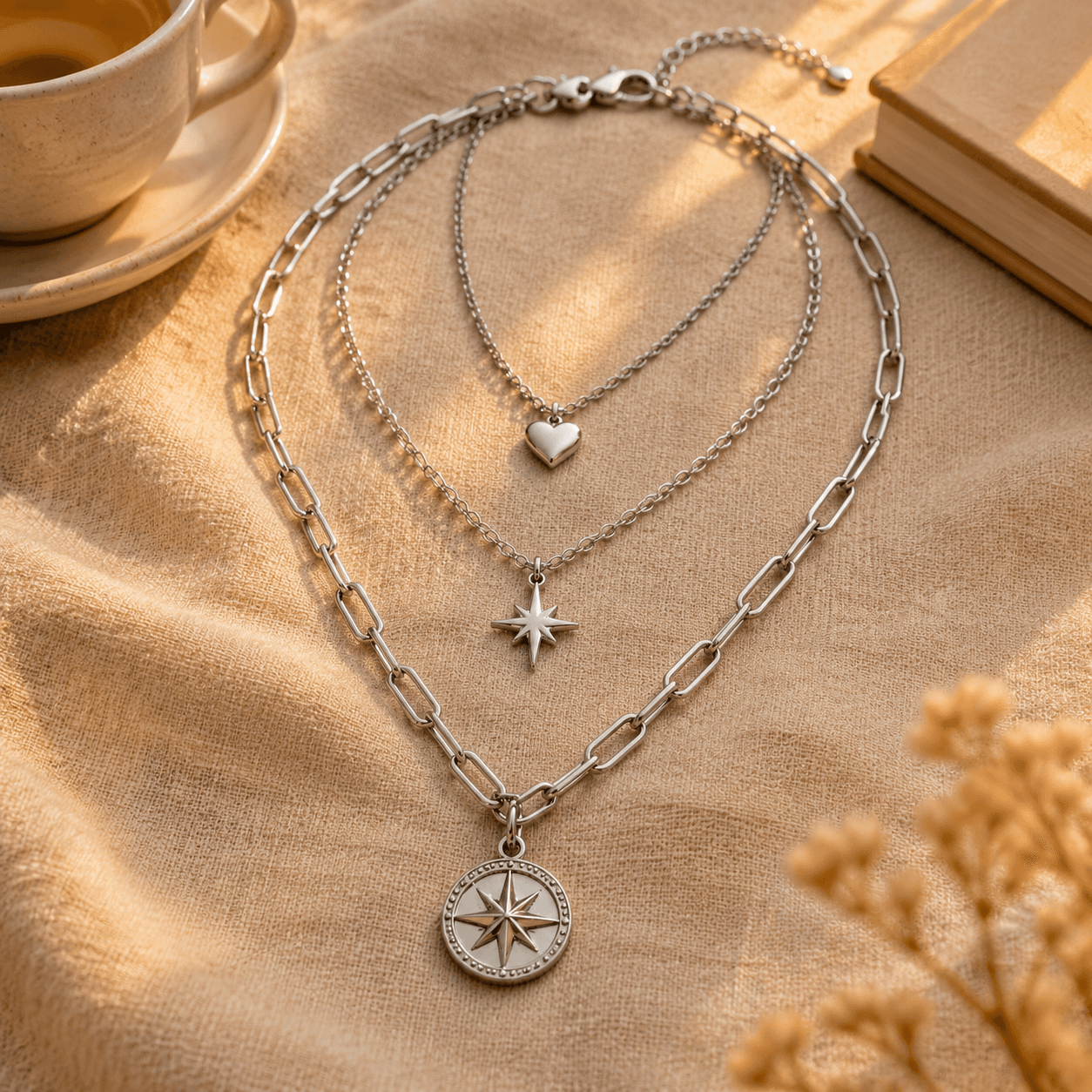
A balanced layered arrangement starts with controlled proportions. When several charms are placed together, their dimensions should create a clear visual hierarchy rather than competing for attention.
- ☐ Select one primary charm that establishes the visual direction.
- ☐ Add smaller supporting charms to create depth and variation.
- ☐ Check that neighboring charms have sufficient space to move naturally.
- ☐ Confirm that the combined weight remains comfortable for the intended application.
- ☐ Review the complete arrangement from front, side, and back views.
For standard jewelry applications, charm dimensions commonly fall within an 8–18 mm range, although the final specification should reflect the intended design. Smaller details can work well for delicate arrangements, while larger elements may serve as focal points. Designers should approve the actual dimensions rather than relying on product photographs alone.
2. Verify attachment mechanisms and movement
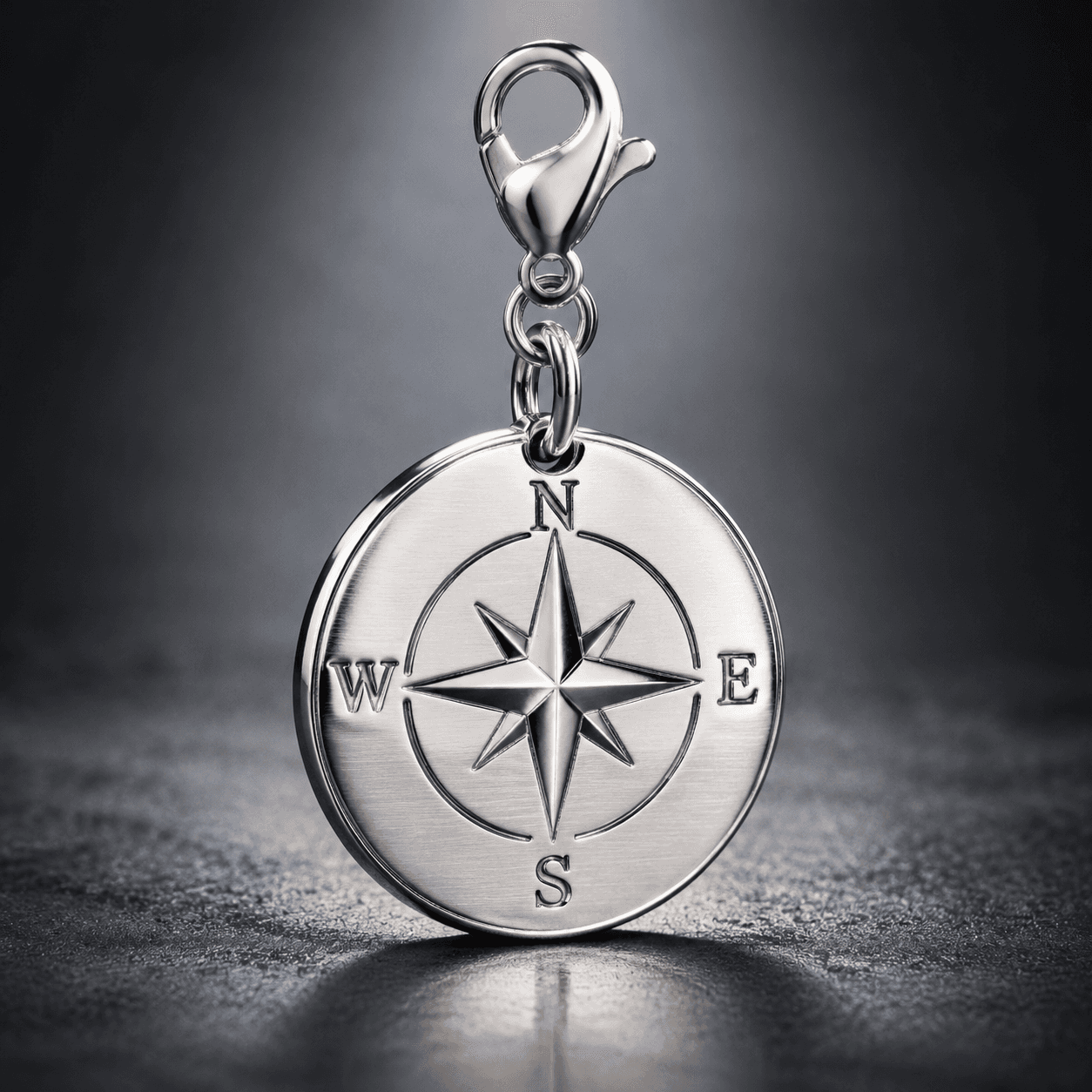
Attachment quality is essential when multiple charms share the same jewelry component. Each bail or jump ring must pass through a genuine hole or loop and remain securely closed where applicable.
- ☐ Check that every jump ring is properly closed.
- ☐ Confirm that the bail has enough clearance for natural movement.
- ☐ Inspect attachment points for sharp edges or visible deformation.
- ☐ Ensure neighboring charms do not become trapped against one another.
- ☐ Test the arrangement under repeated movement.
Ask the manufacturer to provide close-up sample photographs showing the attachment mechanism. A visually attractive front design is not sufficient if the connection cannot withstand normal handling.
3. Establish a consistent finish across the collection
Layered designs often combine different shapes, surface treatments, and decorative details. However, inconsistent finishes can make a coordinated collection appear poorly controlled.
- ☐ Specify the required finish for every SKU.
- ☐ Confirm color consistency between production samples.
- ☐ Inspect edges, recessed areas, and attachment points.
- ☐ Check that decorative enamel filling is even and clearly defined.
- ☐ Review crystal inlay positioning and setting security where applicable.
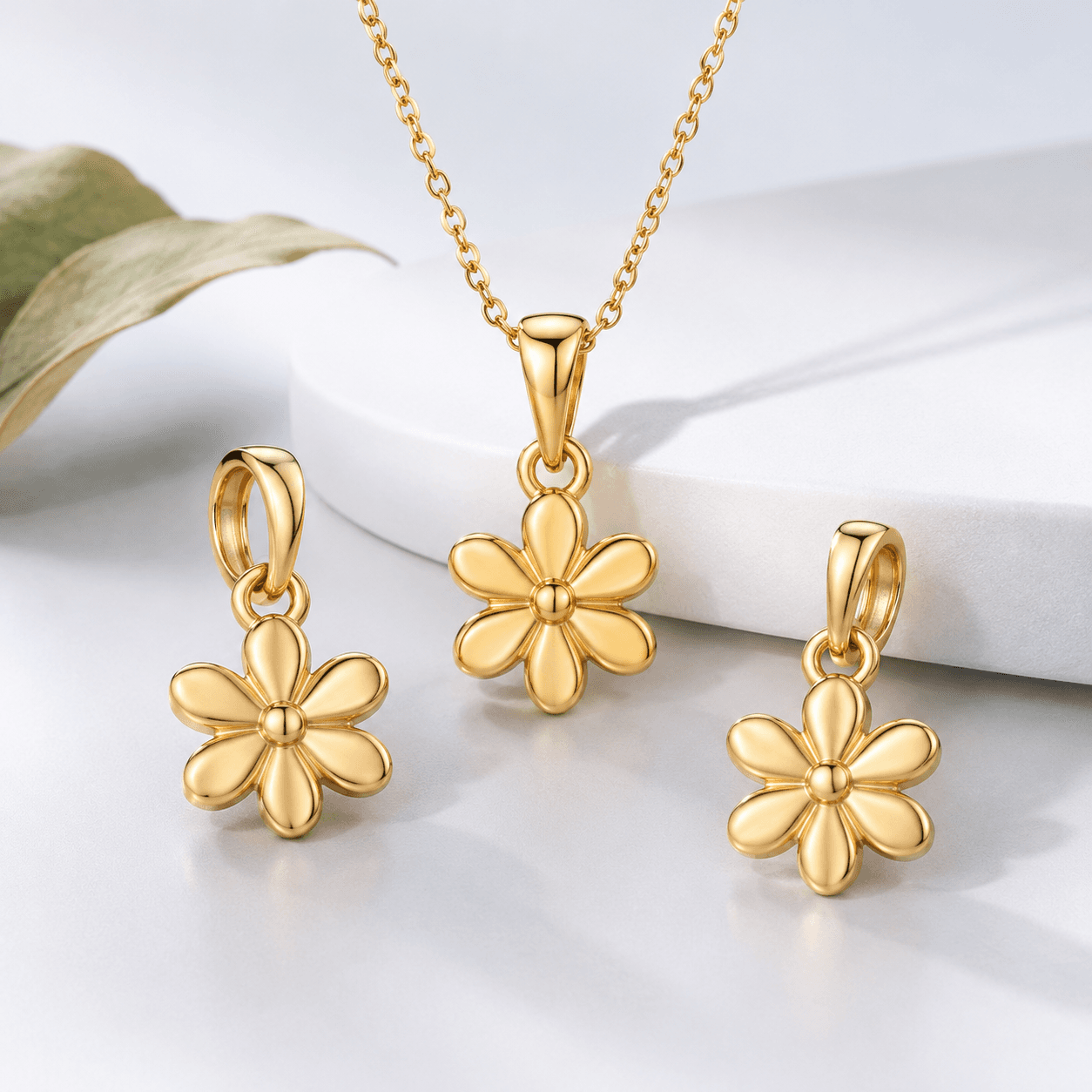
For collections using PVD gold plated, rose gold plating, or silver finish options, buyers should request approved reference samples and documented inspection criteria.
Why Layering Quality Matters for Boutique Jewelry Buyers
Better customer experience and product longevity
Layered jewelry designs are frequently selected for their personalization potential. Customers may combine symbolic details, initials, birthstone themes, and decorative shapes to create an individual arrangement. If the components have inconsistent finishes or unreliable attachment points, the complete design can lose its appeal during regular use.
Consistent manufacturing quality helps boutique brands reduce avoidable complaints, protect their product presentation, and maintain confidence when introducing additional designs. It also makes replenishment easier because new production batches can follow established specifications.
More flexible collection development
A well-planned charm collection allows designers to develop multiple combinations from a controlled range of individual components. One core design can support different visual themes through changes in shape, color filling, crystal placement, and surface finish.
This approach is useful for North American boutique retailers, charm bar businesses, and gift companies that want personalization options without maintaining an unnecessarily complicated product range.
Documented material and compliance quality
Material verification is an important part of supplier evaluation. Lancy Jewelry focuses on 316L stainless steel charms and provides testing support for relevant product requirements.
Available SGS certification and testing documentation covers RoHS, REACH, Nickel Release EN1811, and Salt Spray 240H. Buyers should request the applicable reports and confirm that the tested product configuration, finish, and production specifications correspond to the items being purchased.
These documents support a more structured sourcing process, but buyers should not treat a test report as a universal guarantee for every finished product or market. The applicable requirements depend on product construction, intended use, destination market, and current regulations.
Detailed Buyer Guide: How to Evaluate Layered Charm Quality
Step 1: Define the design and material specification
Before requesting a sample, prepare a technical brief describing the intended layered arrangement. Include dimensions, shapes, surface finishes, decorative details, and attachment requirements.
- ☐ Specify 316L stainless steel as the base material.
- ☐ Provide drawings or reference images for each individual charm.
- ☐ Record the required length, width, thickness, and hole diameter.
- ☐ Identify PVD, gold plated, rose gold plating, or silver finish requirements.
- ☐ Define enamel colors and crystal inlay positions where required.
- ☐ Specify logo engraving and private-label packaging requirements.
Clear specifications reduce misunderstandings between the design team and production department. They also establish a measurable reference for subsequent inspections.
Step 2: Evaluate 316L stainless steel characteristics
316L stainless steel is widely selected for jewelry applications because of its corrosion resistance, strength, and suitability for detailed manufacturing. Its low-carbon composition and chromium-based passive surface help support resistance to corrosion under appropriate conditions.
However, material selection alone does not determine the quality of a finished charm. Buyers should also consider polishing quality, edge finishing, surface preparation, dimensional accuracy, and the manufacturing process.
- ☐ Request material specification documentation.
- ☐ Confirm that the production base material is 316L stainless steel.
- ☐ Inspect the surface for scratches, pits, and uneven polishing.
- ☐ Check that small openings and detailed contours are cleanly finished.
- ☐ Confirm that the material specification remains consistent between samples and production orders.
Step 3: Review PVD finish and wear resistance
Surface finish is particularly important when several charms are worn close together. Repeated contact between components can create friction, while exposure to moisture, cosmetics, and environmental conditions can affect appearance over time.
PVD is a surface treatment process that can provide a durable decorative finish when properly controlled. Its performance depends on the preparation of the base surface, coating parameters, component geometry, and quality inspection.
- ☐ Request finish samples in the actual production configuration.
- ☐ Inspect color uniformity across flat and recessed surfaces.
- ☐ Ask about coating adhesion and wear-resistance evaluation.
- ☐ Check the finish after appropriate abrasion and handling tests.
- ☐ Establish acceptable limits for color variation and visible surface defects.
Do not rely on descriptions such as long-lasting or scratch-resistant without supporting evaluation criteria. Ask the supplier to explain the test method, sample preparation, acceptance standard, and results.
Step 4: Test mechanical reliability
Layered arrangements introduce additional movement and contact between individual components. Mechanical inspection should therefore cover both the individual charm and its complete attachment configuration.
- ☐ Inspect the strength and shape of each bail or jump ring.
- ☐ Check the closure of connection components.
- ☐ Perform appropriate repeated movement and handling tests.
- ☐ Evaluate whether adjacent charms create excessive friction.
- ☐ Inspect decorative settings for movement or looseness.
- ☐ Confirm that the complete arrangement maintains its intended appearance after testing.
For customized designs, buyers should agree on inspection methods and acceptance criteria before mass production. Test conditions should reflect the product's intended use rather than an arbitrary universal standard.
Step 5: Review chemical and corrosion-related testing
For North American buyers, compliance documentation should be considered during product development rather than after production is completed. Relevant evaluations may include nickel release, restricted substances, and corrosion resistance, depending on the product and destination requirements.
SGS-supported documentation available through Lancy includes the following testing areas:
- RoHS: Evaluates restricted substances within the applicable scope.
- REACH: Supports assessment of relevant chemical requirements for the European market.
- Nickel Release EN1811: Provides a recognized testing framework for nickel release from relevant consumer products.
- Salt Spray 240H: Evaluates corrosion performance under specified laboratory exposure conditions.
Salt spray testing is useful for comparative quality assessment, but a 240-hour result does not automatically translate into a fixed number of years of everyday wear. Similarly, nickel release results depend on the tested construction and applicable test conditions. Request current reports and verify their relevance to the final SKU.
For the US and Canadian markets, buyers should also review applicable consumer product safety, labeling, and chemical requirements. FDA oversight is not the general approval route for ordinary fashion jewelry. FDA requirements may become relevant when a product falls within a specific regulated use or makes regulated claims. Buyers should avoid unsupported statements about FDA approval or universal skin safety.
Step 6: Approve samples before bulk production
Sample development gives designers an opportunity to identify problems before committing to a commercial order. It is especially valuable when a collection includes several coordinated shapes, colors, and finishes.
- ☐ Approve the physical dimensions and overall proportions.
- ☐ Compare the actual finish against the approved reference.
- ☐ Inspect engraving depth, positioning, and readability.
- ☐ Review enamel color accuracy and filling quality.
- ☐ Verify crystal setting and attachment security.
- ☐ Test the complete layered arrangement.
- ☐ Sign off on packaging and final product specifications.
Keep an approved reference sample and written specification for future replenishment. This provides a practical quality benchmark for repeat production.
Step 7: Establish incoming quality control standards
After sample approval, convert the agreed specifications into a repeatable inspection checklist. A structured incoming quality control process can help identify inconsistencies before products reach retail inventory.
- ☐ Check material and SKU identification.
- ☐ Inspect dimensions and attachment openings.
- ☐ Review surface finish under consistent lighting.
- ☐ Check logo engraving and decorative details.
- ☐ Inspect connection components and closure quality.
- ☐ Compare production items with the approved sample.
- ☐ Record inspection findings and corrective actions.
Buyers should agree on sampling quantities, defect classifications, and acceptance thresholds with their manufacturer. A documented inspection plan is more useful than relying on subjective descriptions such as good quality.
How to Select the Right OEM Manufacturing Partner
Evaluate production capabilities, not just product photographs
A reliable stainless steel charms manufacturer should be able to support both creative development and repeatable production. For designers, this means finding a partner that understands how small dimensional changes, attachment details, and surface treatments affect the final layered arrangement.
Lancy Jewelry provides OEM and ODM development for boutique brands, charm bar retailers, gift companies, and private-label buyers. Its modern manufacturing facility uses CNC machining, laser cutting, laser marking, welding, and polishing to support custom product development.
Buyers can evaluate the following capabilities when reviewing a potential supplier:
- ☐ Custom shape and dimension development.
- ☐ Logo engraving and laser marking.
- ☐ PVD plating and finish development.
- ☐ Enamel color filling and crystal setting.
- ☐ Sample development and design adjustments.
- ☐ Private-label packaging and coordinated product series planning.
- ☐ Documented quality checks and relevant testing support.
Discuss MOQ and production planning early
For boutique brands, MOQ flexibility can influence whether a new collection is commercially practical. Instead of requesting pricing without specifications, provide the manufacturer with estimated quantities, the number of designs, finish requirements, and packaging expectations.
An ODM charm supplier can also help buyers organize related designs into a coordinated series. This can simplify assortment planning, support seasonal launches, and make future product extensions easier to manage.
When requesting an RFQ, include drawings, dimensions, material requirements, decorative specifications, target quantities, and expected delivery schedules. A complete inquiry allows the production team to assess technical feasibility and provide a more useful quotation.
Frequently Asked Questions
1. What are the most important rules for layering stainless steel charms?
Focus on balanced proportions, sufficient movement clearance, secure attachment points, consistent surface finishes, and comfortable combined weight. Every charm should be evaluated individually and as part of the complete arrangement.
2. Is 316L stainless steel suitable for layered jewelry designs?
Yes. 316L stainless steel offers useful corrosion resistance, strength, and manufacturing versatility for jewelry charms. However, finished-product quality also depends on surface preparation, polishing, plating, mechanical construction, and appropriate testing.
3. How can buyers evaluate PVD gold plated charms for durability?
Request production-representative samples and relevant coating adhesion, abrasion, and wear-resistance evaluation. Review the test method, acceptance criteria, and results, then compare production items against an approved reference sample.
4. What information should buyers include in an OEM charm inquiry?
Include design drawings, dimensions, 316L stainless steel requirements, finish specifications, logo details, decorative elements, estimated quantities, MOQ expectations, testing requirements, and packaging needs. This information helps the manufacturer evaluate development feasibility and prepare an accurate RFQ.
Partner With Lancy Jewelry for Custom Stainless Steel Charms
Successful layered charm collections require more than attractive designs. They need consistent material specifications, reliable connections, controlled surface finishes, and measurable quality standards throughout production.
Lancy Jewelry supports boutique brands and private-label buyers with custom stainless steel charms, OEM development, ODM design support, sample development, and wholesale production. From initial technical drawings to logo engraving, PVD finishes, enamel details, and private-label packaging, our team helps turn creative concepts into production-ready collections.
Whether you are developing a coordinated jewelry charm collection, expanding a charm bar assortment, or preparing bulk charm orders for a seasonal launch, clear specifications and early sample approval can help reduce sourcing risks.
Explore our stainless steel charm catalog to review available product directions, learn more about our OEM and ODM manufacturing services, or request a quote with your drawings and purchasing requirements. Partner with Lancy Jewelry to develop durable, consistent, and boutique-ready 316L stainless steel charms.