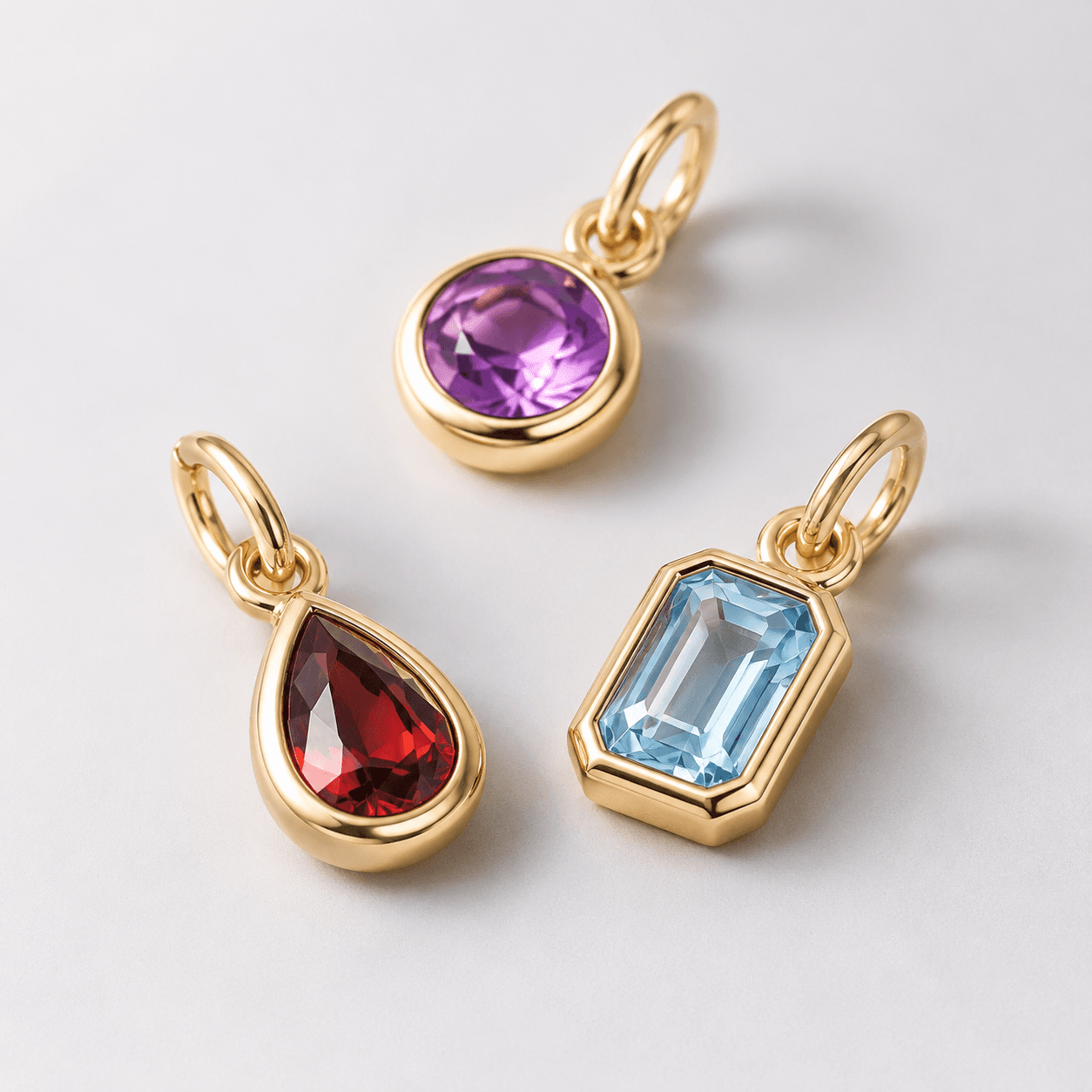
Birthstone necklace charms combine personal meaning, color design and precise decorative manufacturing. For jewelry designers developing distinctive monthly collections, understanding the relationship between 316L stainless steel, surface finishing and crystal setting is essential to creating consistent, production-ready designs. The right material specification influences appearance, durability, manufacturing accuracy and the long-term consistency of a coordinated charm collection.
Lancy Jewelry focuses exclusively on 316L stainless steel charms, supporting custom development through PVD gold plating, silver finish, rose gold plating, enamel color filling, crystal inlay and logo engraving. As a stainless steel charms manufacturer, Lancy helps boutique brands translate creative concepts into practical production specifications through OEM and ODM development, sample development and private-label support.
This material technology guide explains how to select birthstone colors, evaluate decorative structures, plan prototypes and establish quality requirements for wholesale stainless steel charms. Whether developing a twelve-month birthstone program, a personalized gift collection or a coordinated necklace charm assortment, designers can use these principles to improve design decisions before bulk production begins.
Understanding 316L Stainless Steel for Birthstone Necklace Charms
Material selection is the starting point for developing technically reliable birthstone necklace charms. Lancy uses 316L stainless steel as the exclusive base material for its charm manufacturing programs. This grade is an austenitic stainless steel containing chromium, nickel and molybdenum. Its alloying composition supports corrosion resistance and provides a stable foundation for precision forming, polishing, engraving and decorative finishing. The relatively low carbon content also helps maintain corrosion resistance after appropriate manufacturing processes.
For jewelry designers, the most important material characteristics are not simply appearance or nominal grade. They include dimensional stability, surface preparation, edge quality, polishing consistency and the performance of the finished decorative surface. A well-designed charm must maintain its silhouette, attachment geometry and visual proportions throughout production. The manufacturing specification should therefore identify the intended thickness, outer dimensions, hole diameter, edge profile and acceptable dimensional tolerances before tooling or sampling begins.
316L stainless steel also provides a practical foundation for coordinating different birthstone themes within one collection. A common base material makes it easier to standardize charm dimensions while introducing different colors and decorative treatments. Designers can develop January through December concepts with coordinated silhouettes, consistent attachment details and carefully differentiated color treatments. For sourcing teams, this approach supports repeatable OEM production, more efficient inspection and predictable wholesale assortment planning.
Birthstone Color Technology and Decorative Design Options
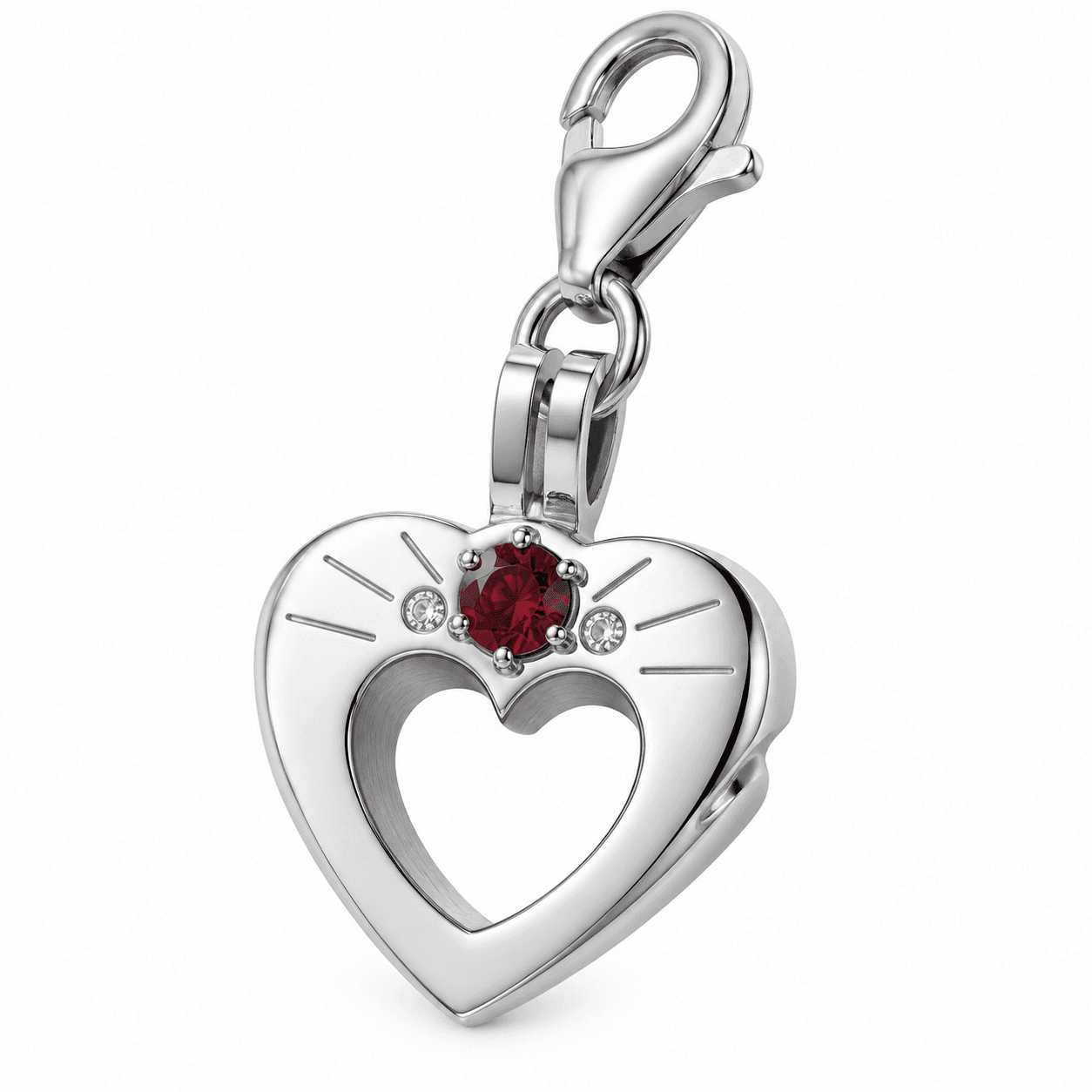
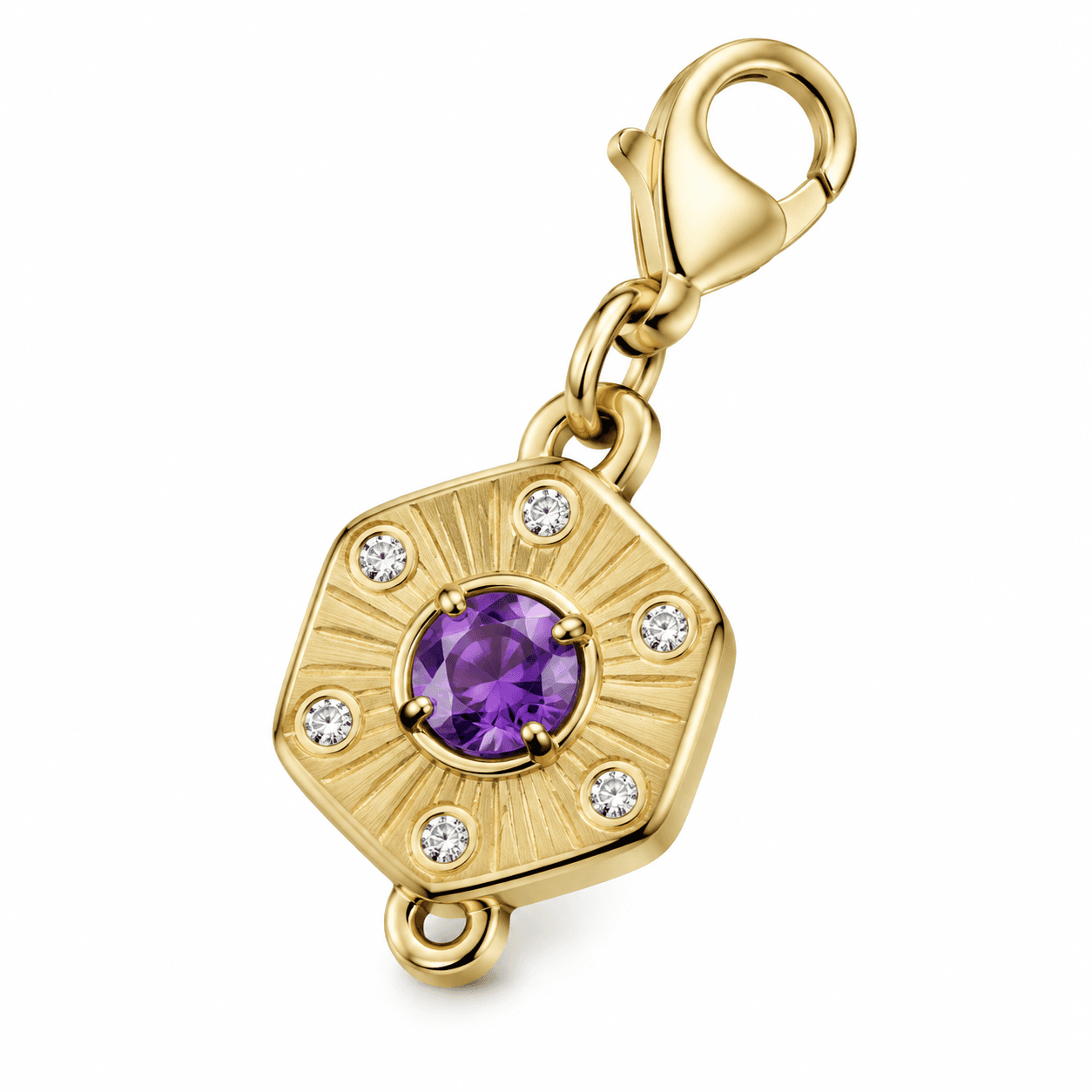
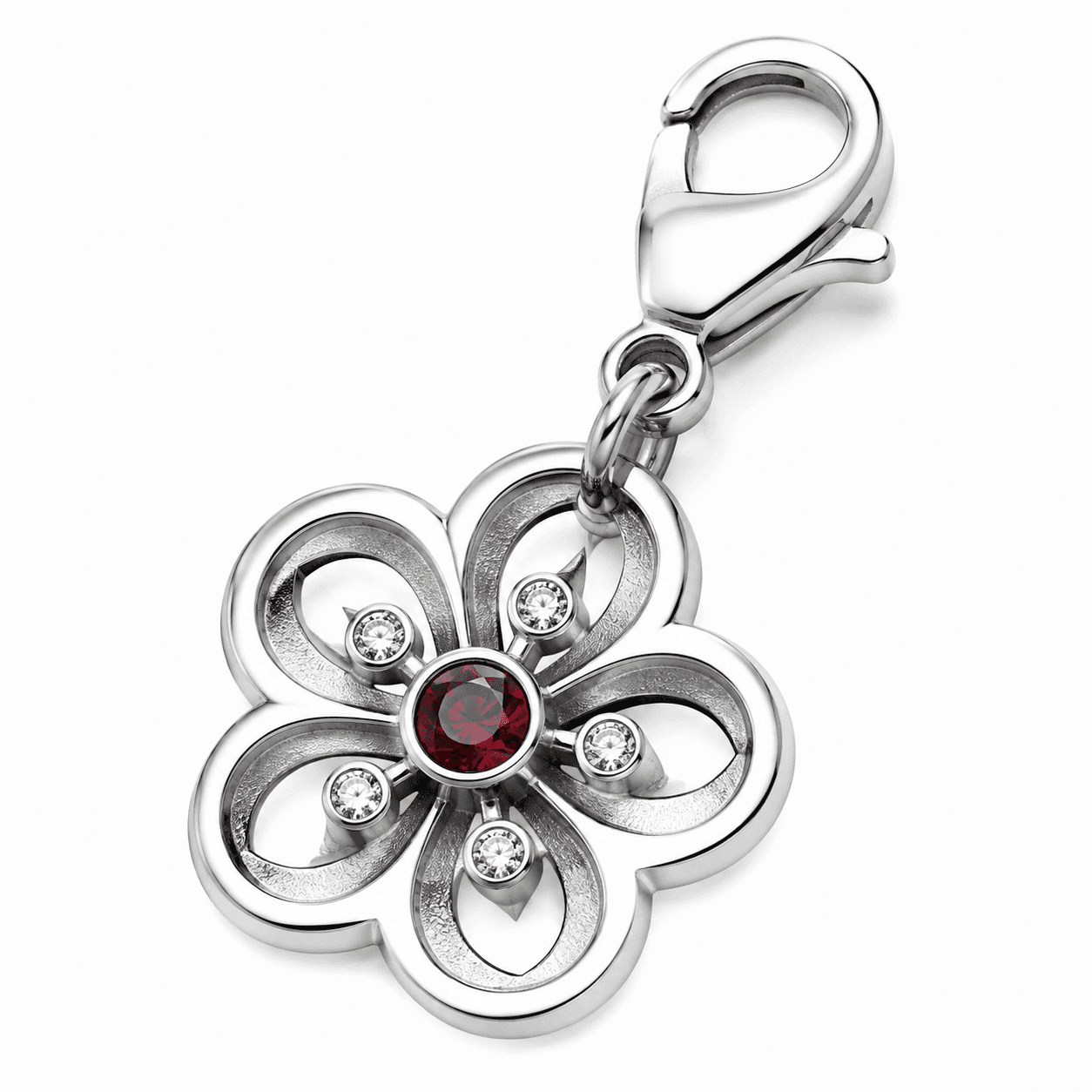
The visual identity of birthstone necklace charms depends on the relationship between color, light reflection and decorative placement. Crystal inlay creates a focused reflective element, while enamel color filling produces a more continuous and controlled color area. Both techniques can be incorporated into 316L stainless steel charm designs, but they require different structural considerations. Crystal settings need a properly engineered seat and secure retention geometry. Enamel areas require sufficient recess depth, clean boundaries and suitable surface preparation to achieve an even appearance.
When planning a monthly collection, designers should establish a color specification for every birthstone concept. The specification can include a reference color, acceptable color variation, decorative area, crystal dimensions and the intended visual intensity. January designs may use deep red accents, February concepts can feature violet tones, and March themes may incorporate light blue. Other months can use green, clear, warm yellow, orange, pink or blue treatments according to the approved design direction. These are creative color references rather than guarantees of natural birthstone identity or composition.
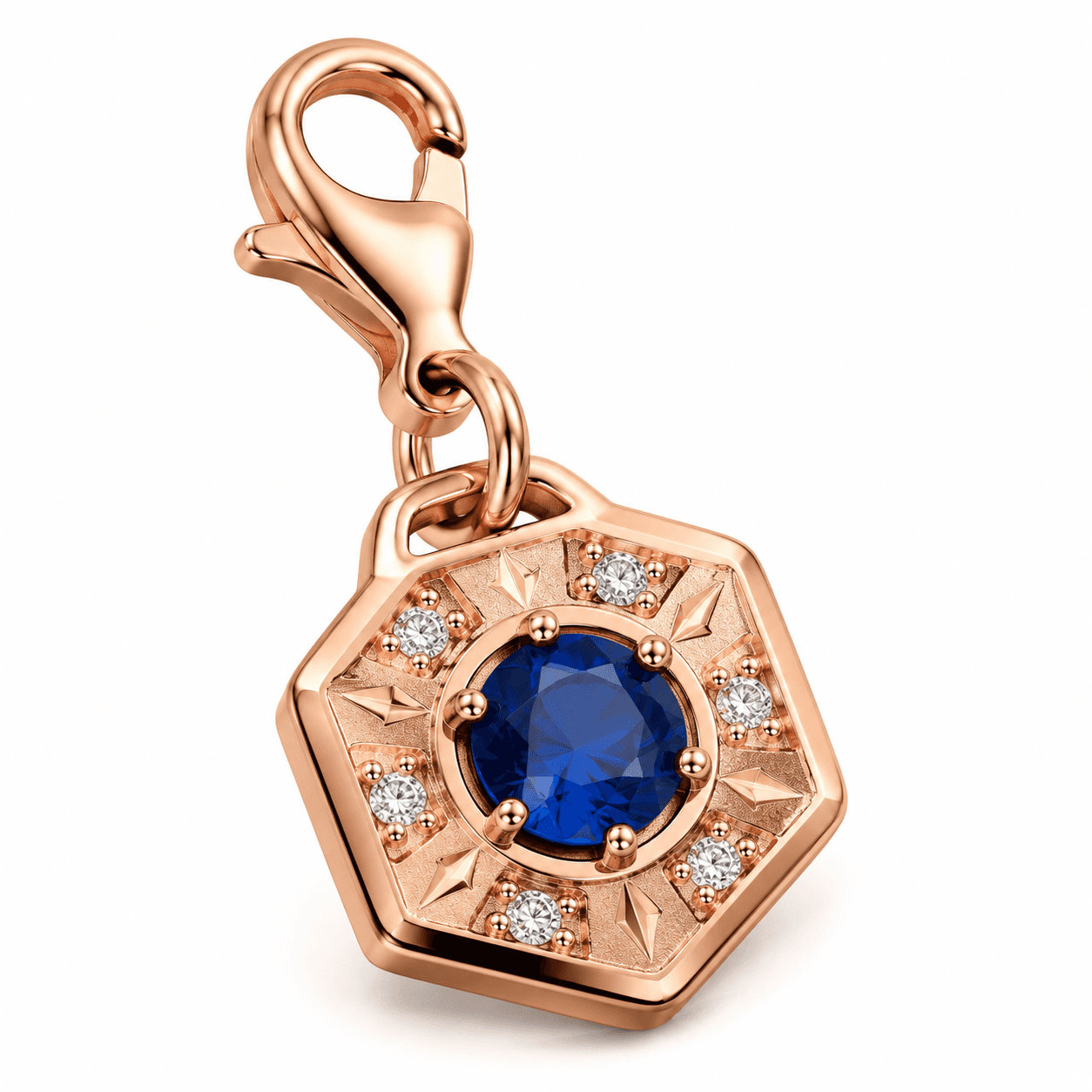
Finish selection also changes how each color appears. PVD gold plating provides a warm metallic background, while silver finish creates a cooler visual contrast. Rose gold plating can introduce a softer, warmer appearance. Designers should assess the complete combination rather than selecting the color and surface treatment independently. A useful prototype exercise is to evaluate the same decorative layout against two or three approved finishes, recording color consistency, setting proportions and overall readability. This creates a documented design decision before sample approval and commercial production.
PVD Plating and Surface Preparation for Consistent Finishes
PVD, or physical vapor deposition, is a vacuum-based surface treatment process used to deposit a thin functional and decorative coating onto a prepared substrate. In birthstone necklace charms manufacturing, PVD gold plating and rose gold plating provide controlled metallic color options. The final appearance depends on several connected variables, including substrate condition, polishing quality, cleaning, surface preparation, coating parameters and handling after deposition. A consistent coating process begins with a consistent underlying surface.
Before plating, the charm surface should be checked for scratches, polishing marks, residue and uneven edges. Contamination or inconsistent surface preparation can affect coating appearance and adhesion. Small decorative details require particular attention because recessed areas, narrow edges and complex contours may reflect light differently from broad polished surfaces. Designers should communicate whether a design requires a high-polish appearance, a defined texture or a combination of surface effects. These requirements should be included in the approved sample specification.
Quality evaluation should distinguish visual inspection from performance testing. Visual inspection assesses color uniformity, surface defects, coverage and consistency between production pieces. Performance evaluation may include appropriate adhesion and corrosion-related testing based on the intended market and product specification. Salt Spray testing can provide information about corrosion behavior under defined test conditions, but results should not be interpreted as a direct guarantee of performance in every wearing environment. Buyers should request the actual test method, duration, acceptance criteria and applicable report when reviewing finish requirements.
Crystal Inlay and Enamel Engineering for Custom Birthstone Designs
Crystal inlay and enamel color filling provide two distinct approaches to birthstone-inspired decoration. Crystal inlay introduces concentrated points of reflection and can create a dimensional appearance. Enamel produces a more continuous color field and works well for recognizable monthly symbols, decorative outlines and compact color panels. A designer should choose the technique according to the intended visual effect, available design area, production complexity and inspection requirements.
Crystal setting begins with the relationship between the crystal dimensions and the receiving structure. The setting must provide sufficient support without obscuring too much of the visible surface. The receiving seat should be designed to maintain a consistent position and minimize movement during normal handling. Designers should specify crystal size, shape, placement, quantity and acceptable alignment variation. A sample should be inspected from multiple angles to identify uneven positioning, visible gaps, inconsistent spacing or insufficient retention. The charm should also be checked after appropriate handling tests to assess setting stability.
Enamel development requires attention to recess geometry, color preparation and filling consistency. Shallow or irregular recesses can create uneven coverage, while insufficient separation between adjacent color areas may reduce visual definition. Color samples should be approved under consistent lighting conditions, with reference values retained for subsequent production. For a twelve-month collection, a master color chart can help prevent gradual differences between monthly designs and repeat orders. Lancy supports custom enamel color filling and crystal inlay development on 316L stainless steel charms, allowing designers to combine decorative techniques within a coordinated OEM project.
Prototype Development and Technical Specifications for Designers
Successful sample development transforms an artistic concept into a manufacturable charm. The process should begin with a complete design package containing a vector drawing or three-dimensional model, overall dimensions, thickness, material grade, finish selection and decorative details. Designers should identify the front and back surfaces, edge treatment, attachment opening and intended necklace application. For a typical birthstone charm, a bail or jump ring must pass through a genuine hole or integrated loop and remain mechanically plausible. Connector dimensions should be checked against the intended necklace chain and the desired movement of the charm.
A practical prototype workflow can be divided into five stages. First, review the artwork for structural feasibility, including narrow sections, unsupported projections and insufficient material around openings. Second, confirm the 316L stainless steel construction and the required surface finish. Third, develop a physical sample with the proposed decorative treatment. Fourth, evaluate dimensions, color, polishing, setting quality and connector function. Fifth, document revisions and approve a controlled reference sample. Changes to artwork, plating color, crystal dimensions or attachment geometry should be recorded so that the approved specification remains clear.
For designers working with an ODM charm supplier, early technical communication can reduce unnecessary sample revisions. A useful specification sheet includes product drawings, dimensions in millimeters, color references, surface finish, crystal or enamel details, logo position, target quantity and packaging requirements. Buyers should also distinguish between a visual concept sample and a production-approved sample. The latter should represent the agreed construction and finish standard that the factory will use for subsequent manufacturing and inspection.
Testing, SGS Documentation and International Quality Considerations
International sourcing requires buyers to evaluate both the material specification and the evidence supporting the finished product. SGS-related testing documentation may cover different requirements depending on the product, market and requested scope. Commonly discussed areas include RoHS, REACH, EN1811 and Salt Spray testing. These are not interchangeable certifications, and buyers should avoid treating a single test report as proof of compliance with every applicable requirement.
RoHS addresses restrictions on specified hazardous substances within its applicable scope. REACH concerns chemical substance obligations and restrictions under the relevant European regulatory framework. EN1811 is a test method associated with nickel release from articles intended for direct and prolonged skin contact, where applicable. Salt Spray testing evaluates corrosion behavior under defined laboratory exposure conditions. The relevance of each test depends on the product construction, intended use, destination market and current regulatory requirements. A report should identify the tested sample, method, test conditions, date, results and issuing laboratory. Buyers should verify the report directly with the issuing organization when documentation authenticity or scope is important.
Lancy can support buyer discussions around testing requirements and factory quality standards for 316L stainless steel charms. Quality planning should include incoming material verification, dimensional inspection, surface inspection, plating appearance checks, decorative detail assessment and final packaging checks. Sampling frequency and acceptance criteria should be agreed before bulk charm orders are placed. For international distribution, importers remain responsible for confirming the regulations applicable to their products and markets. Clear documentation and traceable approved samples help create a stronger foundation for consistent repeat manufacturing.
Planning a Twelve-Month Birthstone Collection for Wholesale Programs
A commercially effective birthstone program needs more than twelve individual designs. It should operate as a coordinated collection with a shared visual language, consistent construction standards and enough creative variation to make each month identifiable. Designers can begin with a common charm silhouette or attachment system, then introduce differences through crystal color, enamel details, symbolic motifs and surface finish. This approach helps create visual continuity while allowing individual designs to communicate their own monthly identity.
Assortment planning should consider the intended sales channel. Boutique jewelry brands may prioritize a balanced selection with a strong range of personalized designs. Charm bar retailers may need clearly differentiated monthly options, repeatable dimensions and easy-to-understand display organization. Gift companies may focus on coordinated packaging, seasonal presentation and opportunities for personalization. Distributors may require stable product specifications, consistent packaging identification and dependable replenishment planning. Each channel benefits from a collection matrix listing the SKU, month, design, color reference, finish, decorative method, sample status and approved production specification.
Commercial planning should also account for MOQ, tooling requirements, sample approval and the cost implications of multiple decorative variations. Grouping designs that share manufacturing processes can improve production planning. For example, a common base construction with different enamel colors may be easier to coordinate than a collection with completely different structures for every month. Lancy supports low MOQ discussions, OEM development and private label charms programs, helping buyers evaluate an appropriate assortment before confirming bulk quantities. Explore the birthstone collection and all products to review the available product direction.
Custom Branding, Packaging and Repeat Production Control
Brand presentation is an important part of a birthstone necklace charm program. Logo engraving can be incorporated into an approved design where sufficient surface area and structural depth are available. Placement should be determined early because adding a logo after the main geometry has been finalized may affect available decorative space or manufacturing complexity. Designers should provide vector artwork, preferred logo dimensions, location references and any requirements for legibility at the finished product size.
Private-label packaging should be planned alongside the charm rather than treated as a final administrative step. Packaging options can include a presentation card, organized display tray or coordinated protective packaging, depending on the buyer's retail channel. The packaging specification should define dimensions, printed information, product identification, quantity per unit and any required market-specific labeling. For a twelve-month assortment, a consistent packaging layout with clearly differentiated month identification can simplify merchandising and stock management.
Repeat production control depends on maintaining an approved reference sample and a documented specification. The factory should compare subsequent production against agreed standards for dimensions, surface appearance, PVD color, enamel coverage, crystal positioning and attachment construction. Buyers should identify which variations are acceptable and which require corrective action. A controlled approval process reduces misunderstandings between design, purchasing and production teams. For custom projects, Lancy combines logo engraving, decorative development, finish selection and private-label packaging support through its OEM service. Buyers can use the contact page to discuss project requirements.
Frequently Asked Questions About Birthstone Necklace Charms
Develop Your Custom Birthstone Charm Collection With Lancy
Ready to translate your birthstone design concept into a production-ready 316L stainless steel charm collection? Lancy Jewelry supports jewelry designers, boutique brands and private-label buyers with OEM and ODM development, sample development, PVD plating, enamel color filling, crystal setting, logo engraving and coordinated packaging. Each project begins with understanding the design requirements and evaluating the most practical manufacturing approach.
To prepare an accurate RFQ, send your design drawings or reference images, preferred charm dimensions, 316L stainless steel specification, selected finish, monthly color chart, crystal or enamel details, logo requirements, target quantity per design, estimated MOQ and packaging preferences. Include your destination market, required testing documentation, target sample approval date and expected bulk delivery schedule. If the final artwork is still being developed, an initial concept brief with approximate dimensions and visual references is sufficient for an initial feasibility discussion.
Visit the OEM service page to understand custom manufacturing support, browse available products for design direction or submit your RFQ and quote request. You can also reach the team through the contact page. A clear project specification helps Lancy evaluate sample requirements, decorative processes, MOQ considerations and a practical route toward consistent bulk production.
Related resources
Related resources
- 316L Stainless Steel Custom Enamel Sterling Charms: A Buyer’s Guide
- Custom OEM/ODM Guide to Stainless Steel African Jewelry Charms Wholesale
- 316L Stainless Steel Custom Enamel Pins with Charms: A Buyer’s Guide
- How to Evaluate 316L Stainless Steel Zodiac Bracelet Charms Wholesale Suppliers
- Guide: Stainless Steel Evil Eye Charm Jewelry Wholesale OEM Tips
- Stainless Steel Interchangeable Charms Jewelry Wholesale: Guide
- Stainless Steel Tiny Charms for Jewelry Making Wholesale OEM
- How to Choose Durable Stainless Steel Charms for Cross-Border E-Commerce
- Stainless Steel Animal Jewelry Charms Wholesale: Quality Guide
- Stainless Steel Inspirational Jewelry Charms Wholesale Guide