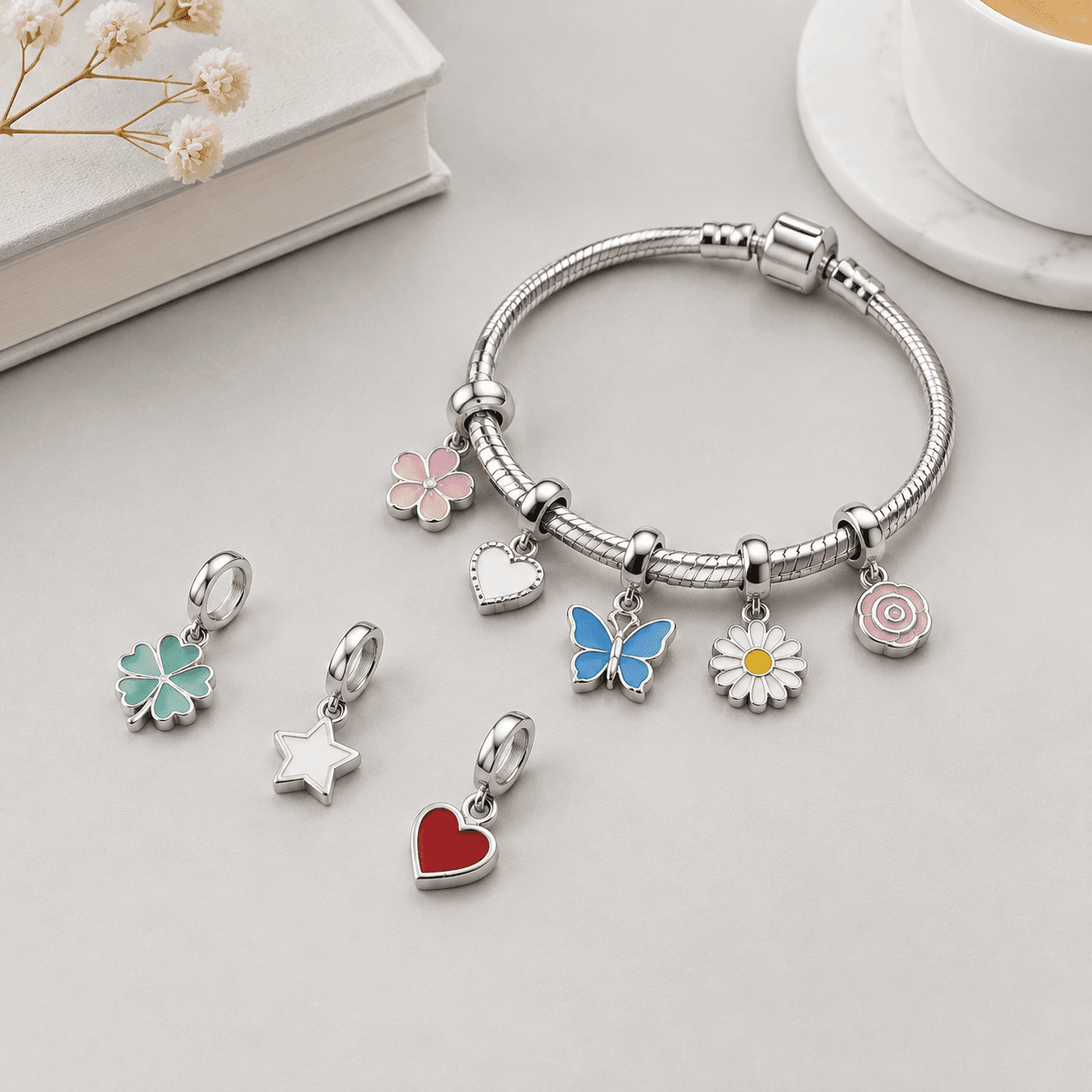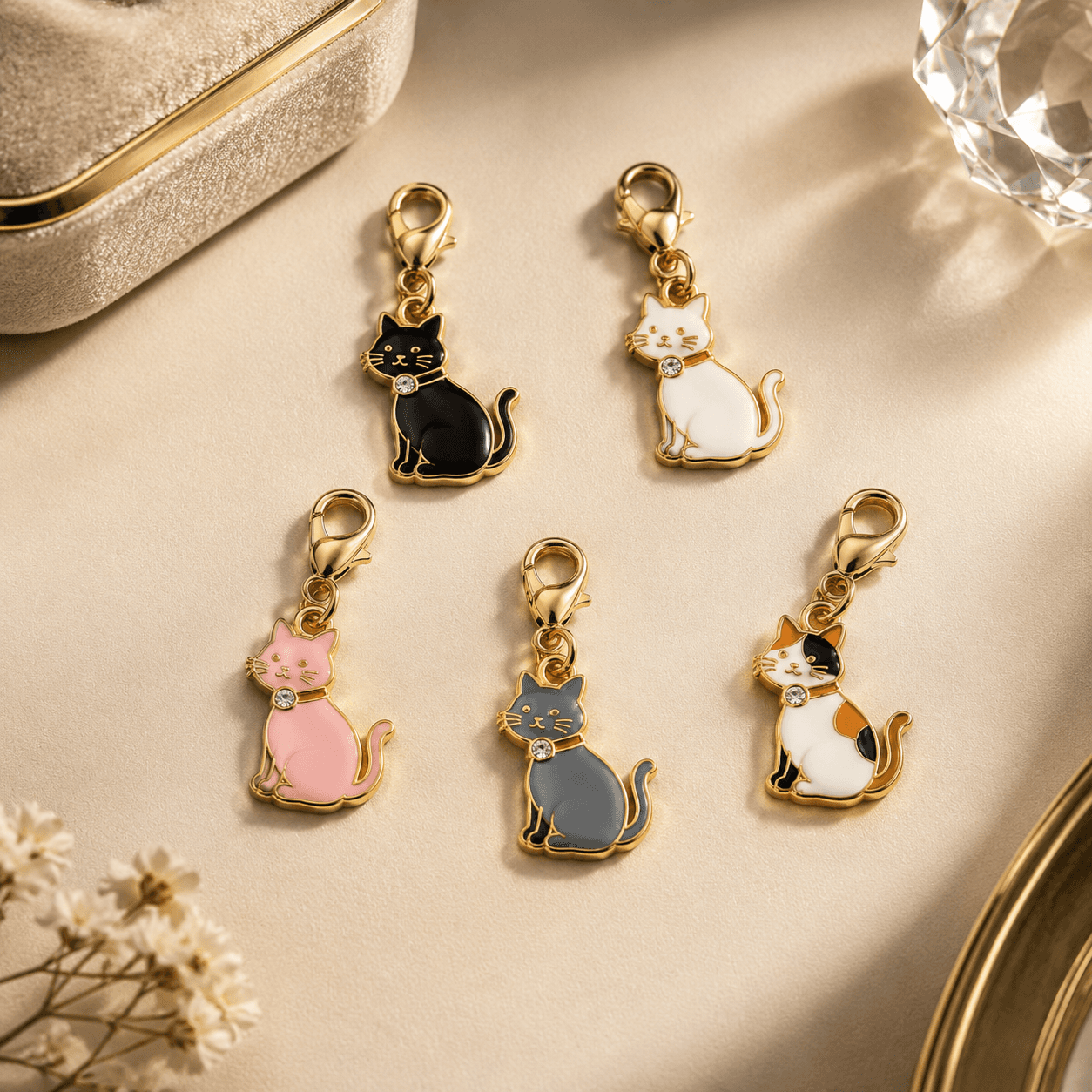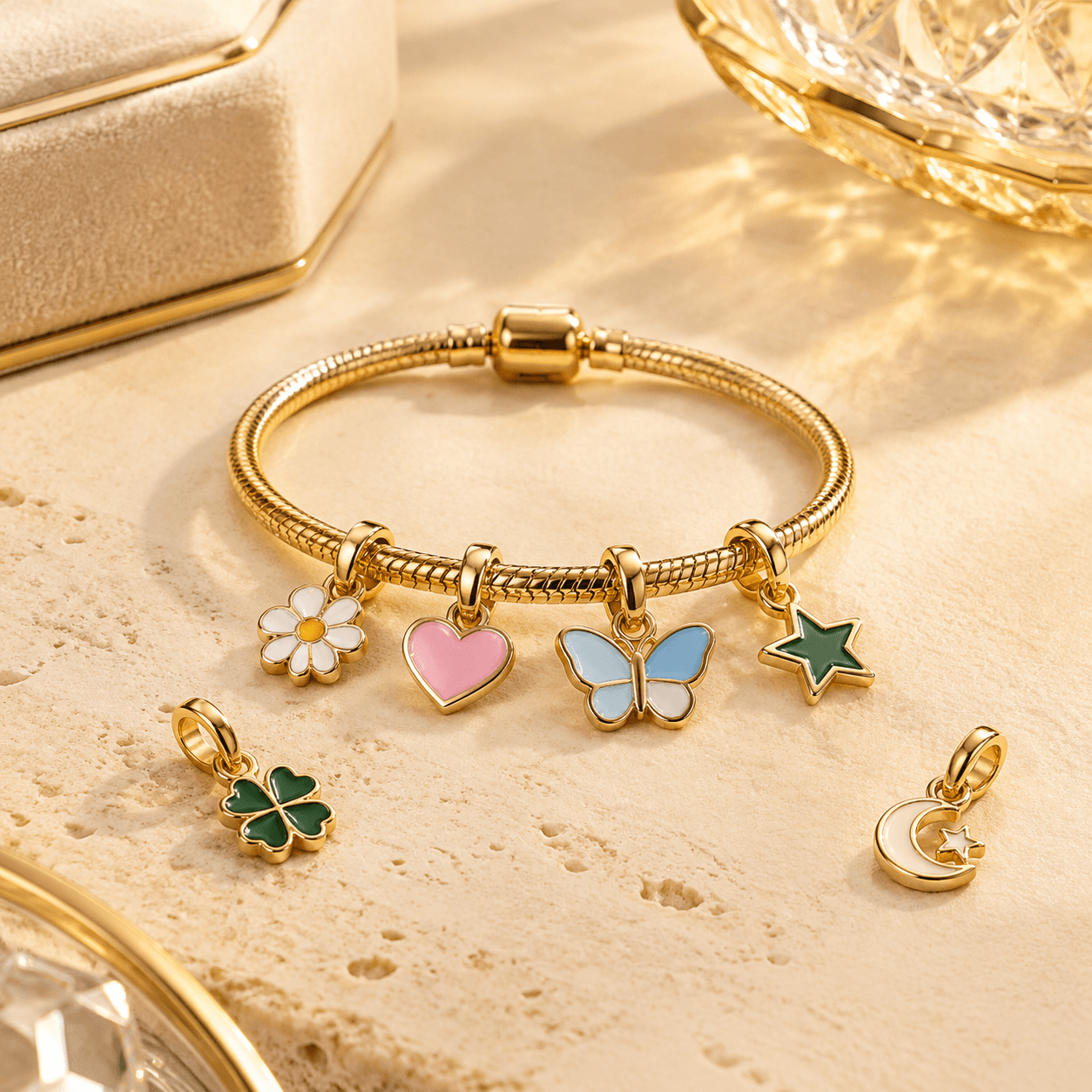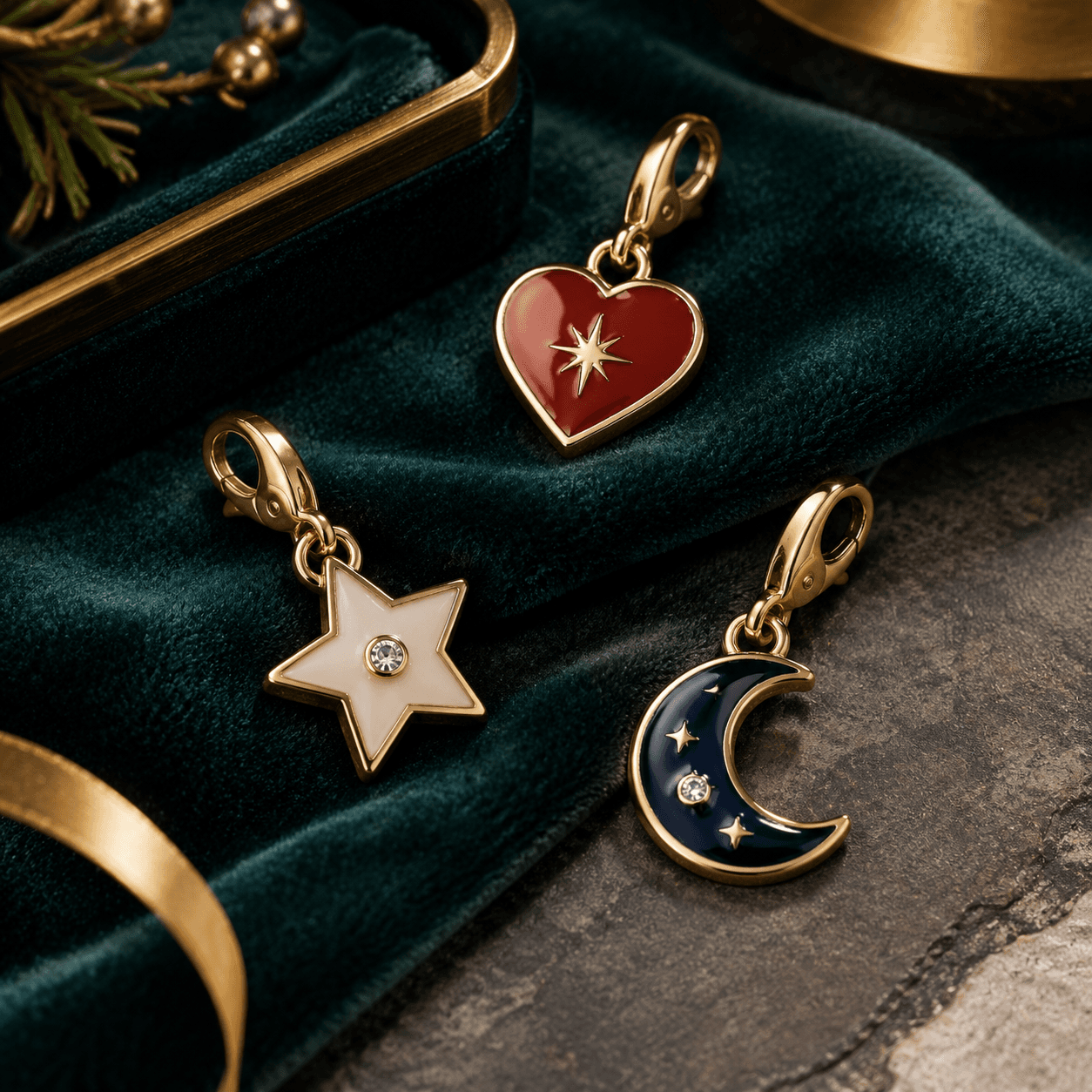
Choosing a stainless steel custom enamel charms wholesaler is not simply a matter of comparing quotations and reviewing product photographs. For procurement teams, the real challenge is finding a manufacturing partner that can demonstrate material compliance, consistent enamel quality, reliable production processes, and repeatable product performance. A supplier that cannot provide verifiable documentation creates unnecessary risks, including inconsistent batches, premature surface deterioration, delayed deliveries, and costly customer complaints.
For boutique jewelry brands, charm bar retailers, gift companies, and private-label buyers in the United States and Canada, supplier evaluation should follow a documented checklist. Every important claim should be supported by evidence, every quality requirement should be measurable, and every production commitment should be recorded before an order is approved. This guide explains how to assess a wholesaler systematically and what procurement teams should demand before committing to bulk production.
How to Vet a Stainless Steel Custom Enamel Charms Wholesaler
A qualified wholesaler should demonstrate control over the entire manufacturing process, from material identification and component preparation to enamel application, finishing, inspection, packaging, and shipment. Do not rely exclusively on a supplier's sales presentation. Evaluate its technical capabilities, documentation, sample performance, and ability to maintain consistent quality across repeated orders.
1. Verify the 316L Stainless Steel Base Material
Material verification is the first purchasing requirement. The base material determines the fundamental characteristics of the finished charm, including corrosion resistance, structural integrity, and suitability for regular jewelry use. Require the supplier to identify 316L stainless steel explicitly in the product specification and supporting documentation.
- [ ] Obtain a written material declaration identifying 316L stainless steel as the base material.
- [ ] Request relevant material test reports or traceable supplier documentation.
- [ ] Confirm that the documentation corresponds to the actual production material rather than an unrelated reference sample.
- [ ] Check whether incoming material inspection is included in the factory quality-control procedure.
- [ ] Require written approval before any change to the specified material or manufacturing process.
For higher-risk purchasing programs, request independent verification when necessary. Material identification should be documented at the purchase-order level, especially when the same supplier manufactures several charm collections with different specifications.
2. Examine Enamel Application and Color Consistency
Enamel quality directly affects the visual appeal and perceived value of custom charms. Uneven filling, visible gaps, inconsistent color, surface contamination, and poor adhesion can make an otherwise well-manufactured product unsuitable for retail presentation.
Procurement teams should evaluate enamel performance under consistent inspection conditions. Request samples showing the actual production colors, surface texture, filling depth, and edge finishing. Compare approved samples against subsequent production batches using the same inspection criteria.
- [ ] Check for bubbles, pinholes, cracks, exposed base surfaces, and incomplete color filling.
- [ ] Inspect the boundaries between enamel sections and surrounding metal surfaces.
- [ ] Compare color samples against an approved physical reference or documented color specification.
- [ ] Examine whether the enamel surface is level and consistently finished.
- [ ] Request adhesion and wear-resistance test results appropriate to the enamel process.
- [ ] Confirm that the supplier has documented procedures for rejecting defective enamel components.
Color approval should never depend exclusively on digital photographs. Lighting, camera settings, and display differences can influence perceived color. Establish a physical master sample or an agreed color reference before mass production.
3. Assess PVD Plating and Surface Finishing
When a custom enamel charm includes gold plated, silver finish, or rose gold plating details, the procurement team must evaluate the finishing process separately from enamel quality. A visually attractive sample does not automatically demonstrate long-term surface performance.
- [ ] Identify the specified surface finish for every product SKU.
- [ ] Request information about PVD processing and applicable quality controls.
- [ ] Ask for relevant coating thickness or process specifications where applicable.
- [ ] Review available corrosion and surface durability test reports.
- [ ] Inspect edges, recessed areas, attachment loops, and detailed surfaces for inconsistent coverage.
- [ ] Confirm that production batches are evaluated against the same approved finishing standard.
Do not accept general descriptions such as premium plating or long-lasting color as sufficient technical evidence. Ask for measurable specifications and supporting test documentation. If a supplier offers a wear-resistance guarantee, require its scope, testing conditions, exclusions, and claim procedure in writing.
Why a Documented Supplier Evaluation Matters
Supplier qualification is a risk-management process. A reliable manufacturing partner helps procurement teams control product consistency, reduce inspection disputes, protect retail margins, and maintain dependable replenishment schedules. These benefits become particularly important for North American businesses purchasing wholesale stainless steel charms for recurring seasonal collections or permanent retail assortments.
Key Benefits of Verified Certifications and Testing
Certifications and test reports provide a stronger basis for supplier selection than unsupported quality claims. Lancy Jewelry has SGS-certified testing coverage for RoHS, REACH, Nickel Release EN1811, and Salt Spray 240H. These documented testing areas can support buyer evaluations of regulatory considerations, nickel release performance, and corrosion resistance.
Procurement teams should understand what each document actually demonstrates:
- RoHS: Provides information about restricted substances within the scope of the applicable assessment. Buyers should verify the relevant product scope and documentation.
- REACH: Supports evaluation of applicable chemical substance requirements for products entering relevant markets. Request documentation covering the applicable product and material scope.
- Nickel Release EN1811: Provides a recognized testing framework for assessing nickel release under specified conditions. Review the actual results, test method, and tested product configuration.
- Salt Spray 240H: Documents performance under a specified salt spray exposure period. It provides useful corrosion-resistance information but should not be interpreted as a guaranteed equivalent number of years of real-world use.
One important distinction: a certification or test report should not automatically be treated as universal approval for every SKU, color, finish, or production batch. Request the document number, issuing laboratory, testing date, tested configuration, and applicable scope. Where production specifications change, determine whether additional testing is necessary.
North American Compliance Considerations
For US and Canadian procurement programs, compliance reviews should address the actual destination market, intended product use, customer age group, and applicable product requirements. US buyers should evaluate relevant consumer product safety obligations and applicable state-level requirements. California Proposition 65 screening may also be relevant depending on the product and its chemical exposure profile.
Do not assume that ordinary decorative jewelry charms require FDA approval simply because they are consumer products. FDA requirements should be evaluated according to the intended use and applicable regulatory category. Buyers should distinguish jewelry compliance documentation from food-contact, medical, or other regulated product requirements.
For Canadian distribution, review applicable Canadian consumer product and chemical safety requirements with the responsible compliance team. Maintain accessible product specifications, supplier declarations, and relevant laboratory reports. A supplier's willingness to provide accurate, traceable documentation is an important part of vendor qualification.
Detailed Supplier Vetting Checklist: From Factory Audit to Final Approval
Step 1: Evaluate Actual Manufacturing Capabilities
Determine whether the wholesaler operates its own production facility, manages manufacturing through controlled partners, or primarily coordinates trading activities. This distinction affects production visibility, technical communication, lead times, and accountability.
A capable stainless steel charms manufacturer should be able to explain its manufacturing workflow and identify the responsible quality-control stages. For custom products, investigate the availability of CNC processing, laser cutting, laser marking, welding, polishing, enamel filling, and surface finishing.
- [ ] Request a factory profile and manufacturing process overview.
- [ ] Verify which processes are completed in-house and which are outsourced.
- [ ] Review equipment availability and maintenance procedures.
- [ ] Ask how production capacity is allocated during peak ordering periods.
- [ ] Confirm who is responsible for inspection, corrective action, and final release.
Factory capability should be evaluated against your actual product specifications. A facility with modern equipment is not automatically qualified unless it can demonstrate process control and consistent finished-product quality.
Step 2: Establish a Sample Development Approval Process
Never approve a substantial production order based solely on catalogue images or verbal assurances. Sample development should be treated as a formal quality-control stage, not an informal purchasing convenience.
Ask the supplier to prepare representative samples using the intended 316L stainless steel specification, enamel colors, surface finishes, attachment hardware, and logo details. Evaluate the physical sample against a documented product specification.
- [ ] Approve the overall dimensions, thickness, and product weight.
- [ ] Check the front design, edges, attachment holes, and jump ring connections.
- [ ] Evaluate enamel color, coverage, and surface uniformity.
- [ ] Inspect PVD and other specified surface finishes.
- [ ] Confirm logo engraving position, clarity, and consistency.
- [ ] Retain an approved reference sample with an identifiable revision number.
Any design modification after sample approval should trigger a documented review. Changes to dimensions, material specifications, enamel formulation, or finishing processes may affect performance and should not be introduced without buyer authorization.
Step 3: Review Testing Standards and Wear Resistance
A professional supplier should understand the difference between appearance inspection and performance testing. Visual checks identify visible defects, while laboratory and controlled functional tests provide additional evidence about product durability.
Ask for a test plan that matches the intended product and usage conditions. Relevant evaluations may include:
- Corrosion resistance: Review applicable salt spray testing and the recorded exposure conditions.
- Nickel release: Examine EN1811 results where applicable to the product's intended use and market requirements.
- Enamel adhesion: Request an appropriate method for evaluating resistance to separation, chipping, or peeling.
- Surface abrasion: Establish a repeatable test method for assessing finish wear under defined conditions.
- Attachment strength: Evaluate the mechanical integrity of loops, bails, and connection points.
- Dimensional consistency: Compare finished products against approved drawings and tolerances.
Do not accept a single test report as proof of every durability characteristic. Each test should have a defined objective, method, acceptance criteria, and recorded result. Ask whether the tested sample represents the actual production configuration.
Step 4: Inspect Production Quality and Batch Consistency
Even a successful sample approval does not eliminate the need for production inspection. A supplier must demonstrate that the approved specifications can be maintained across the entire order quantity.
Agree on inspection requirements before issuing the purchase order. Define critical defects, major defects, and minor cosmetic defects. Establish sampling methods, acceptance criteria, and responsibility for corrective action.
- [ ] Confirm incoming material inspection procedures.
- [ ] Review in-process checks for cutting, forming, polishing, and enamel filling.
- [ ] Request final inspection records before shipment.
- [ ] Establish agreed tolerances for dimensions and enamel color.
- [ ] Require segregation and identification of nonconforming products.
- [ ] Confirm that corrective actions are documented and verified.
For recurring orders, compare batch records and retained samples. Monitor defect rates, delivery performance, and complaint trends. A supplier that consistently documents its results is easier to evaluate and manage over time.
Step 5: Verify MOQ, Lead Times, and Commercial Reliability
Commercial flexibility matters, particularly for growing boutique businesses and charm bar retailers that need to test new designs before expanding their assortment. However, low MOQ should never become a reason to compromise material specifications or quality controls.
Evaluate the supplier's ability to support both initial sampling and repeat bulk orders. Request a written quotation covering tooling or development costs, unit pricing, MOQ by design and finish, packaging requirements, sample lead time, mass-production lead time, and shipping terms.
- [ ] Confirm the MOQ for each design, enamel color, and finish.
- [ ] Obtain a detailed quotation with clearly defined cost components.
- [ ] Establish sample approval and production scheduling milestones.
- [ ] Confirm capacity for repeat orders and seasonal demand.
- [ ] Review payment terms, delivery responsibilities, and defect-resolution procedures.
- [ ] Confirm whether private-label packaging and custom logo services are available.
Do not compare quotations using unit price alone. A slightly higher quotation may offer stronger documentation, more reliable inspection, better sample support, and lower overall procurement risk.
Step 6: Audit Communication and Documentation Practices
Effective supplier communication is an operational control. Procurement teams should have a designated contact who can answer technical questions, provide updated documentation, and escalate production issues without unnecessary delays.
Maintain a supplier qualification file containing the factory profile, approved drawings, material declarations, applicable test reports, sample approvals, purchase orders, inspection records, packaging specifications, and corrective-action history.
Use a formal document revision system. Every specification should have a clear revision identifier and approval date. This reduces the possibility of outdated drawings or unapproved changes being used during repeat production.
Supplier Red Flags Procurement Teams Should Not Ignore
Some warning signs indicate that a wholesaler may not be ready to support professional B2B purchasing requirements. Investigate these issues before issuing an order:
- Unverifiable material claims: The supplier cannot provide relevant documentation identifying the specified 316L stainless steel.
- Unclear testing scope: Test reports lack identifiable samples, methods, dates, or applicable product details.
- Uncontrolled sample changes: Production specifications differ from the approved sample without authorization.
- Vague durability promises: The supplier guarantees long-term performance without explaining test conditions or claim procedures.
- Inconsistent communication: Technical questions receive generic answers rather than documented explanations.
- Missing inspection procedures: The supplier cannot explain how finished products are checked and released.
- Unclear production responsibility: The supplier cannot identify who controls manufacturing quality and resolves defects.
Any one of these issues deserves investigation. Multiple unresolved issues should prevent supplier approval until sufficient corrective evidence is provided.
Frequently Asked Questions
What documents should a stainless steel custom enamel charms wholesaler provide?
Request a 316L stainless steel material declaration, relevant material documentation, applicable SGS or independent laboratory reports, enamel and finishing specifications, production inspection records, and approved sample documentation. For North American distribution, assess the documents against the actual destination-market requirements and product category.
How can buyers evaluate enamel durability before placing bulk orders?
Request production-representative samples and assess color consistency, filling quality, surface defects, adhesion, and resistance to defined wear conditions. Establish a documented test method and acceptance criteria before mass production. Retain an approved physical reference sample for subsequent batch comparisons.
Does Salt Spray 240H guarantee years of corrosion resistance?
No. Salt Spray 240H identifies a specified laboratory exposure period under defined testing conditions. It provides useful comparative evidence of corrosion performance but does not directly translate into a guaranteed number of years of everyday use. Buyers should review the complete test conditions and results.
What should procurement teams include in an OEM charm purchase order?
Include the base material, product drawings, dimensions, enamel color references, surface finish, logo specifications, approved sample revision, MOQ, quantity, packaging requirements, testing expectations, inspection criteria, delivery schedule, and defect-resolution terms. Clearly document that any material or process changes require prior written approval.
Partner With Lancy Jewelry for Reliable OEM/ODM Charm Manufacturing
Choosing the right manufacturing partner requires more than an attractive catalogue and competitive pricing. It requires a supplier that understands material control, surface finishing, enamel consistency, documented testing, and the commercial realities of repeat B2B purchasing.
Lancy Jewelry specializes in OEM/ODM 316L stainless steel charms manufacturing for boutique jewelry brands, charm bar retailers, gift companies, distributors, and private-label buyers. Our modern manufacturing facility uses CNC processing, laser cutting, laser marking, welding, and polishing capabilities to support custom product development and controlled production.
Our manufacturing capabilities include custom logo engraving, PVD plating, enamel color filling, crystal inlay, sample development, and private-label packaging. We support low MOQ requirements and help buyers organize coordinated charm collections with consistent product specifications and retail-ready presentation.
Our SGS-certified testing coverage includes RoHS, REACH, Nickel Release EN1811, and Salt Spray 240H, providing relevant documentation for supplier qualification and product evaluation. Buyers can discuss specific testing requirements and confirm the applicable documentation for their intended products and markets.
Whether you are launching a new collection, expanding an existing charm bar assortment, or sourcing wholesale stainless steel charms for recurring bulk orders, Lancy can help turn your product specifications into a structured manufacturing program.
Take the next step: Explore our stainless steel charm product range, learn more about our OEM and ODM manufacturing services, or submit an RFQ and request a quotation. Provide your design requirements, target quantity, preferred finishes, and packaging expectations so our team can evaluate your project and recommend the next steps.