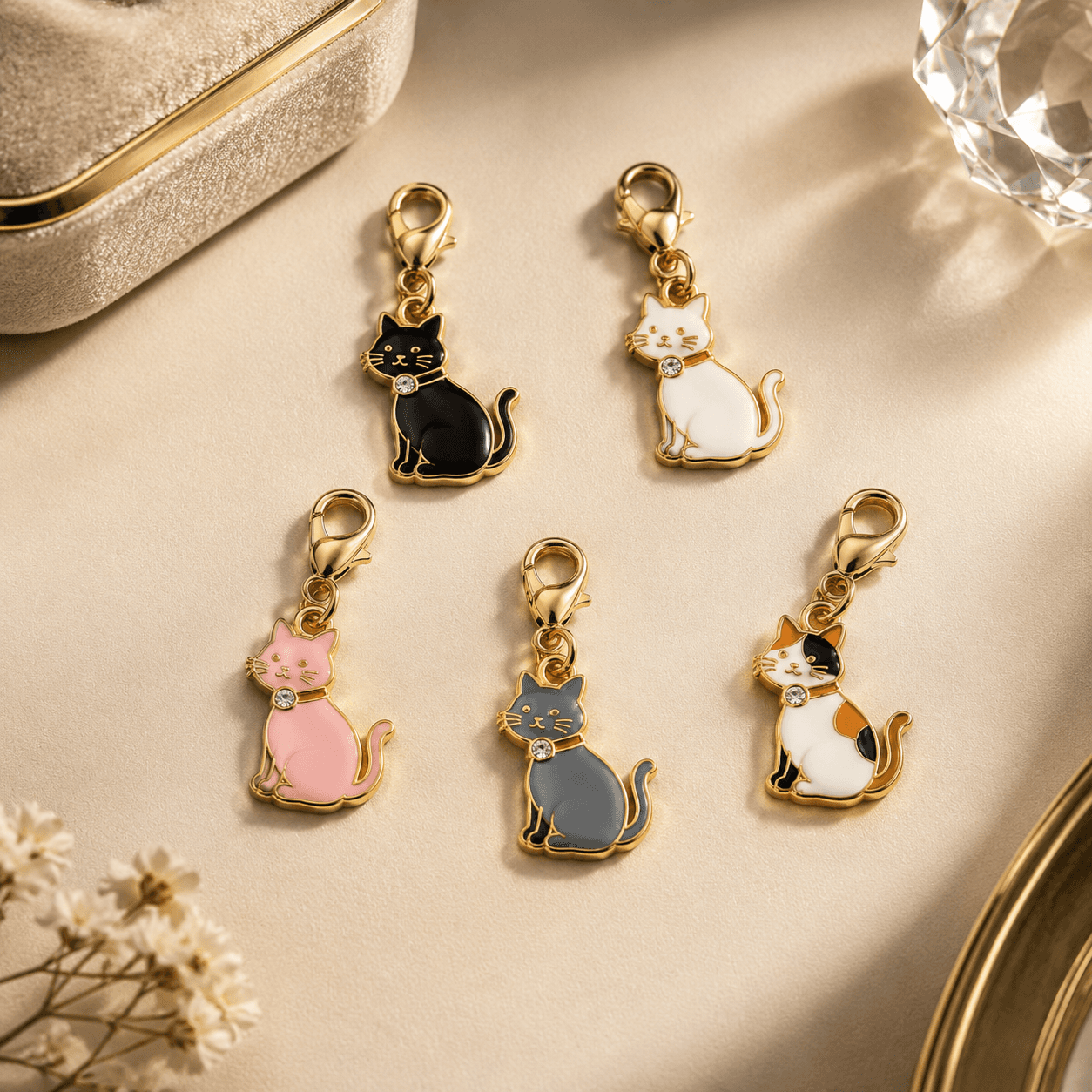
For jewelry designers, enamel cat charms can turn a creative concept into a distinctive product line, but choosing the right wholesale supplier involves more than comparing unit prices. The quality of the 316L stainless steel base, enamel application, surface preparation, PVD coating, and final polishing all influence the finished appearance and consistency of a collection. A reliable manufacturing partner should also support practical customization, sample development, clear quality standards, and production quantities that suit your business.
This sourcing guide explains how to evaluate stainless steel enamel cat charms wholesale suppliers, compare finishing methods, and identify the technical details that matter before placing a bulk order. It is designed for jewelry designers, boutique brands, charm bar retailers, and private-label buyers serving the US and Canadian markets.
How to Evaluate Stainless Steel Enamel Cat Charms Wholesale Suppliers
Start by assessing whether a supplier can manufacture your intended design consistently, rather than judging a supplier solely by a catalog photograph. Cat charms may feature raised outlines, recessed enamel areas, engraved facial details, polished edges, or multiple color sections. Each feature requires suitable production methods and inspection criteria.
Compare Manufacturing Capabilities Before Requesting a Quote
A capable stainless steel charms manufacturer should explain how your design moves from artwork to a production-ready sample. Ask whether the supplier can support CNC machining, laser cutting, laser marking, welding where required, polishing, enamel color filling, and PVD finishing. The appropriate process depends on the charm's geometry, thickness, attachment hole, surface details, and finish requirements.
For a custom cat design, prepare a reference drawing with dimensions, front and back views, enamel color references, and the location of the jump ring or bail. Clarify whether the facial details are engraved, raised, or formed as recessed areas for enamel. These details help the supplier assess feasibility before quoting.
Supplier Comparison Table
| Evaluation factor | Basic supplier offering | Supplier with stronger production controls | What buyers should verify |
|---|---|---|---|
| Material specification | General product description | Documented 316L stainless steel specification | Material records and traceability |
| Enamel application | Limited color and detail information | Defined color references and filling process | Sample consistency, coverage, and edge definition |
| Surface finishing | Finish described mainly by appearance | Defined polishing and coating requirements | Color consistency, surface uniformity, and inspection criteria |
| Customization | Existing designs with limited changes | OEM and ODM design development | Logo placement, dimensions, artwork feasibility, and revision terms |
| Quality documentation | General quality assurances | Relevant test reports and documented checks | Report scope, tested sample, dates, and applicable requirements |
| Order planning | Pricing without a clear production plan | Defined MOQ, sampling, lead-time, and inspection arrangements | Written quotation and production schedule |
The stronger option is not necessarily the supplier with the most elaborate presentation. It is the supplier that can provide evidence, explain process limitations, and agree on measurable acceptance criteria before production starts.
Why Material Quality and Finishing Matter
Enamel cat charms are small products, so minor surface defects can become highly visible. Uneven color filling, rough edges, inconsistent gold tones, and poorly finished attachment points can affect the perceived quality of an entire collection. Selecting the correct base material and finishing sequence helps reduce these risks.
Benefits of 316L Stainless Steel Charms
316L stainless steel provides a practical foundation for everyday fashion accessories. Its corrosion resistance and mechanical properties make it suitable for many charm applications, while its surface can be prepared for polishing, enamel detailing, and decorative PVD finishes. Actual performance still depends on manufacturing quality, exposure conditions, maintenance, and the requirements of the finished product.
When evaluating 316L stainless steel charms, request a clear material specification rather than relying on a general description. Confirm that the specification applies to the actual charm and that the supplier can provide appropriate supporting documentation. Also establish how the base surface will be inspected before enamel application or coating.
Certifications and Compliance Documentation
For North American buyers, supplier documentation is an important part of responsible sourcing. Lancy Jewelry reports SGS-certified testing covering RoHS, REACH, nickel release under EN 1811, and salt spray testing for 240 hours. Ask to review the relevant reports and confirm the tested product, sample configuration, test method, and scope before relying on a result for a specific SKU.
These reports should not be treated as a universal guarantee of compliance with every US or Canadian requirement. For US distribution, ordinary fashion jewelry is not generally regulated by the FDA as a whole product category; FDA requirements may become relevant when a product or its intended use falls within the agency's jurisdiction. Depending on product design, intended users, marketing claims, and sales channel, other federal, state, or Canadian requirements may apply. Buyers should confirm applicable obligations with a qualified compliance professional, particularly for children's products and products making specific health or safety claims.
Compare Finishing Techniques for Enamel Cat Charms
Finishing decisions affect both the visual identity and production consistency of a cat charm collection. PVD coating, electroplating, polishing, and enamel filling perform different functions. They should not be treated as interchangeable processes, and their order must be selected according to the design and production requirements.
PVD Coating Versus Electroplating
PVD is a physical vapor deposition process used to apply a thin decorative coating. Electroplating deposits a coating through an electrochemical process. Either method requires suitable surface preparation and process controls, and the best choice depends on the requested appearance, design geometry, production specification, and performance requirements.
| Comparison point | PVD coating | Electroplating |
|---|---|---|
| Process | Deposits a coating through a physical vapor process | Deposits a coating through an electrochemical process |
| Design considerations | Requires suitable surface preparation and controlled processing | Requires suitable surface preparation and controlled bath conditions |
| Appearance options | Can support specified decorative gold tones and other finishes | Can support selected decorative finishes according to the process specification |
| Quality variables | Surface cleanliness, coating uniformity, adhesion, and process settings | Surface cleanliness, deposit uniformity, adhesion, and process settings |
| Buyer verification | Request a finished sample and relevant coating test information | Request a finished sample and relevant coating test information |
Do not assume that a finish will perform identically across all designs. Recesses, narrow edges, raised details, and complex contours can affect the final result. For gold plated or rose gold plating options, approve the target color using a physical sample and record the agreed appearance in the production specification.
Polishing and Surface Preparation
Polishing helps create a uniform surface and improves the visual clarity of exposed areas. It also prepares the base for subsequent finishing operations. Poor polishing may leave visible marks, inconsistent reflections, or rough edges that remain noticeable after coating.
For cat charms with small ears, whisker details, or narrow cutouts, ask how the supplier controls edge definition and protects fine features during finishing. Inspect the front, back, sides, attachment hole, and perimeter under consistent lighting. A good sample should show a complete silhouette, a secure attachment point, and no obvious burrs or unintended surface marks.
Enamel Filling and Color Consistency
Enamel adds visual contrast and allows designers to create distinctive cat expressions, patterned coats, and coordinated seasonal colorways. The manufacturing challenge is keeping the fill level, color placement, and boundaries consistent across production units.
Provide color references and identify which areas require separate fills. Ask the supplier how it handles narrow sections, small facial details, and transitions between adjacent colors. Review the sample for bubbles, gaps, overflow, uneven fill levels, and unwanted color transfer. If the design combines enamel with PVD coating, request confirmation of the proposed process sequence and inspect the finished sample for any interaction between the finishes.
A Step-by-Step Guide to Selecting a Wholesale Supplier
Step 1: Define Your Product Requirements
Prepare a concise specification before contacting suppliers. Include the intended charm dimensions, thickness, weight target if relevant, 316L stainless steel requirement, enamel colors, surface finish, logo requirements, attachment method, packaging, and estimated order quantity.
Decide whether your collection needs a polished silver finish, gold plated appearance, rose gold plating, or a combination of finishes across different SKUs. Keep the design consistent with your brand's visual direction while allowing enough production flexibility to achieve clean details.
Step 2: Assess OEM and ODM Support
An OEM charms manufacturer should be able to develop products from your supplied specifications, while ODM support may help buyers develop a design from an initial concept. Ask how the supplier handles design files, revisions, sample approvals, logo engraving, and ownership or permitted use of custom artwork.
Review the supplier's [OEM service](/oem) information to understand its customization process. A structured development process is especially valuable when you need several related cat designs with coordinated colors, dimensions, and finishes.
Step 3: Request and Inspect Samples
Sample development is one of the most useful ways to evaluate a supplier before committing to bulk charm orders. Request a production-representative sample that reflects the proposed material, enamel, coating, and polishing process rather than an unrelated reference item.
Use a consistent checklist covering dimensions, weight where specified, color, surface appearance, attachment strength, edge quality, and finish consistency. Photograph the approved sample under repeatable lighting and record any permitted tolerances. If a revision is required, document the change and approve the revised sample before production.
Step 4: Compare MOQ and Total Order Costs
Wholesale pricing should be assessed alongside setup charges, sampling fees, logo engraving, finishing options, packaging, inspection, and shipping. A low unit price may not provide the best overall value if important finishing requirements or quality checks are excluded.
Ask suppliers to identify the MOQ for each design and finish. For a new collection, low MOQ charm production can help buyers test demand before expanding the range. However, custom colors, additional finishes, and specialized packaging may affect minimum quantities and unit costs. Request separate quotations when different options create materially different production requirements.
Step 5: Confirm Quality Controls and Production Timing
Before placing an order, establish the inspection method, acceptable defect criteria, sample approval procedure, packaging specification, production lead time, and process for handling nonconforming units. Confirm whether finish checks and material documentation are available for the relevant order.
For recurring programs, ask how the supplier maintains consistency between production batches. Written specifications and approved reference samples help reduce differences in color, polishing, dimensions, and engraving. Keep the agreed requirements in the purchase documentation rather than relying on verbal assurances.
Step 6: Evaluate Communication and Reordering Support
A dependable supplier should respond clearly to technical questions, explain feasibility concerns, and identify potential delays early. This matters when designers are coordinating product launches, gift programs, or seasonal collections for North American customers.
Evaluate whether the supplier can support repeat orders, maintain approved artwork, and organize coordinated product series. Review the [product catalog](/products) to assess available design directions and determine where custom development may add value.
Customization Opportunities for Boutique Jewelry Brands
Custom stainless steel charms can help a collection feel cohesive without requiring every design to be completely different. A cat series might use consistent dimensions and attachment geometry while varying facial expressions, enamel colors, engraved details, and decorative accents.
Useful customization options include:
- Enamel colorways: Develop coordinated color combinations for core collections, seasonal releases, or gift programs.
- Logo engraving: Specify a discreet logo location and confirm that the chosen area has enough space for clear marking.
- Surface finishes: Coordinate polished silver finish, gold plated appearance, or rose gold plating with the intended product presentation.
- Series planning: Use a consistent design language across several cat expressions or motifs to create a recognizable collection.
- Private-label packaging: Request packaging specifications, branding placement, and packing methods suitable for retail presentation.
For charm bar retailers, standardized design dimensions and consistent attachment points can also simplify merchandising and product selection. Confirm all physical requirements with the supplier, especially when a charm will be used with a particular chain, clasp, or display system.
Frequently Asked Questions
What should I look for in a stainless steel enamel cat charm supplier?
Prioritize a documented 316L stainless steel specification, consistent enamel filling, reliable polishing, clearly defined PVD or electroplating requirements, relevant test reports, and responsive OEM or ODM support. Request a production-representative sample before approving a bulk order.
Is PVD coating always better than electroplating?
Not automatically. The processes differ, and the outcome depends on the coating specification, surface preparation, design geometry, and manufacturing controls. Compare approved samples and relevant test results against your product requirements instead of choosing solely by the process name.
Can I order custom enamel cat charms with a low MOQ?
Low MOQ availability depends on design complexity, custom color requirements, finishing choices, packaging, and production setup. Ask for a written quotation that separates sampling costs, minimum quantities, unit prices, and any additional charges for customization.
Which compliance documents should North American buyers request?
Request relevant material specifications and test documentation, including applicable RoHS, REACH, nickel release, and corrosion-resistance information when appropriate. Confirm the scope of each report and independently assess applicable US and Canadian requirements for your product, intended users, and sales channels.
Partner With Lancy Jewelry for Custom Stainless Steel Charms
Choosing the right wholesale supplier means finding a manufacturing partner that understands both design intent and production control. Lancy Jewelry supports B2B buyers with OEM and ODM development, 316L stainless steel charms, laser marking, polishing, enamel color filling, PVD finishing, sample development, and private-label packaging.
Our manufacturing capabilities include CNC processing, laser cutting, laser marking, welding, and polishing to support product development and finishing requirements. We work with buyers to clarify specifications, evaluate design feasibility, and establish sample approval requirements before moving toward bulk production.
Whether you are launching a new cat charm collection or expanding an existing assortment, start with a clear brief covering dimensions, enamel colors, finish, logo placement, target MOQ, and packaging needs. This gives our team a practical basis for evaluating your project and preparing a quotation.
Visit our OEM service page to explore customization support, or use the request a quote page to submit your requirements. Lancy Jewelry can help you plan a consistent, boutique-ready stainless steel charm collection with finishing specifications aligned to your business goals.