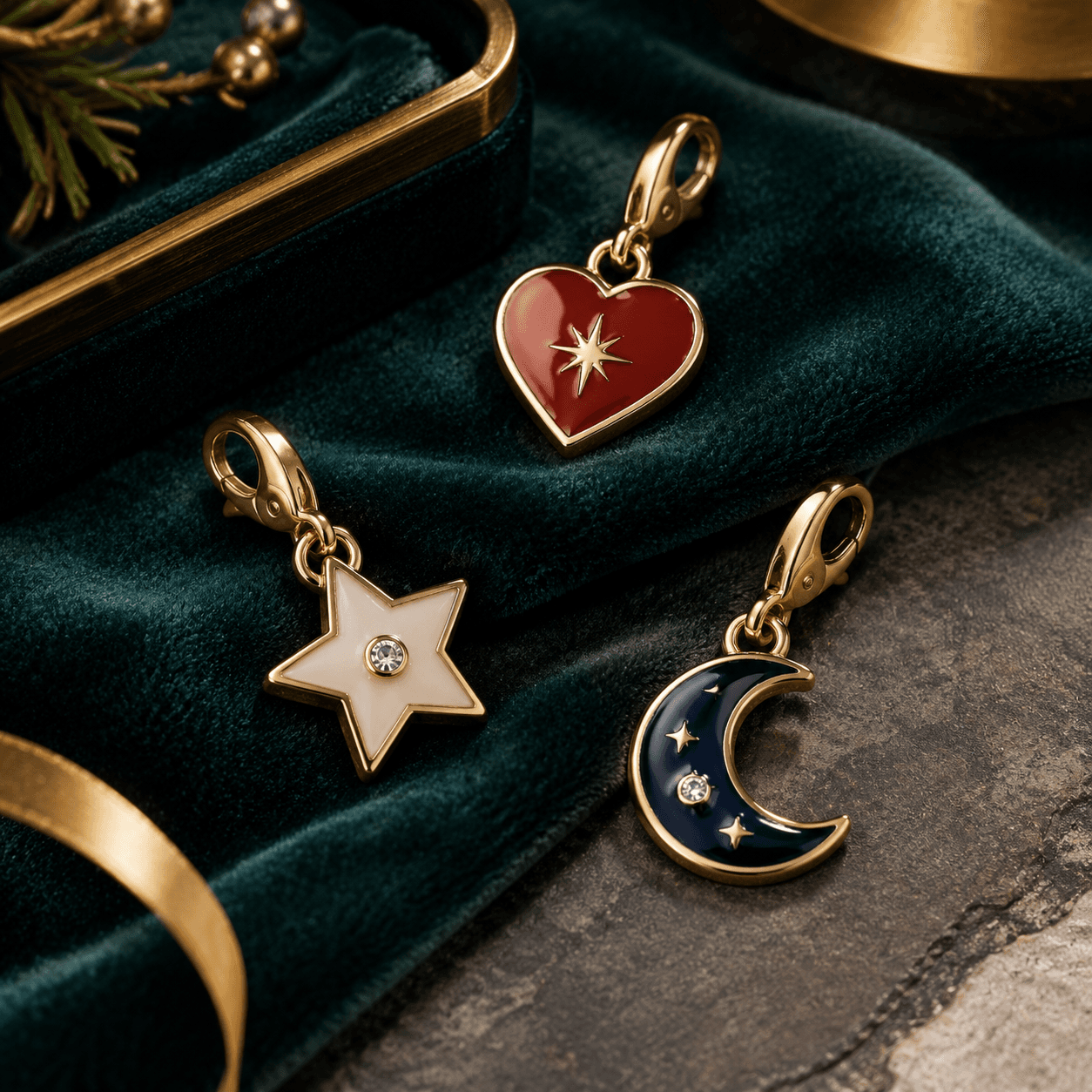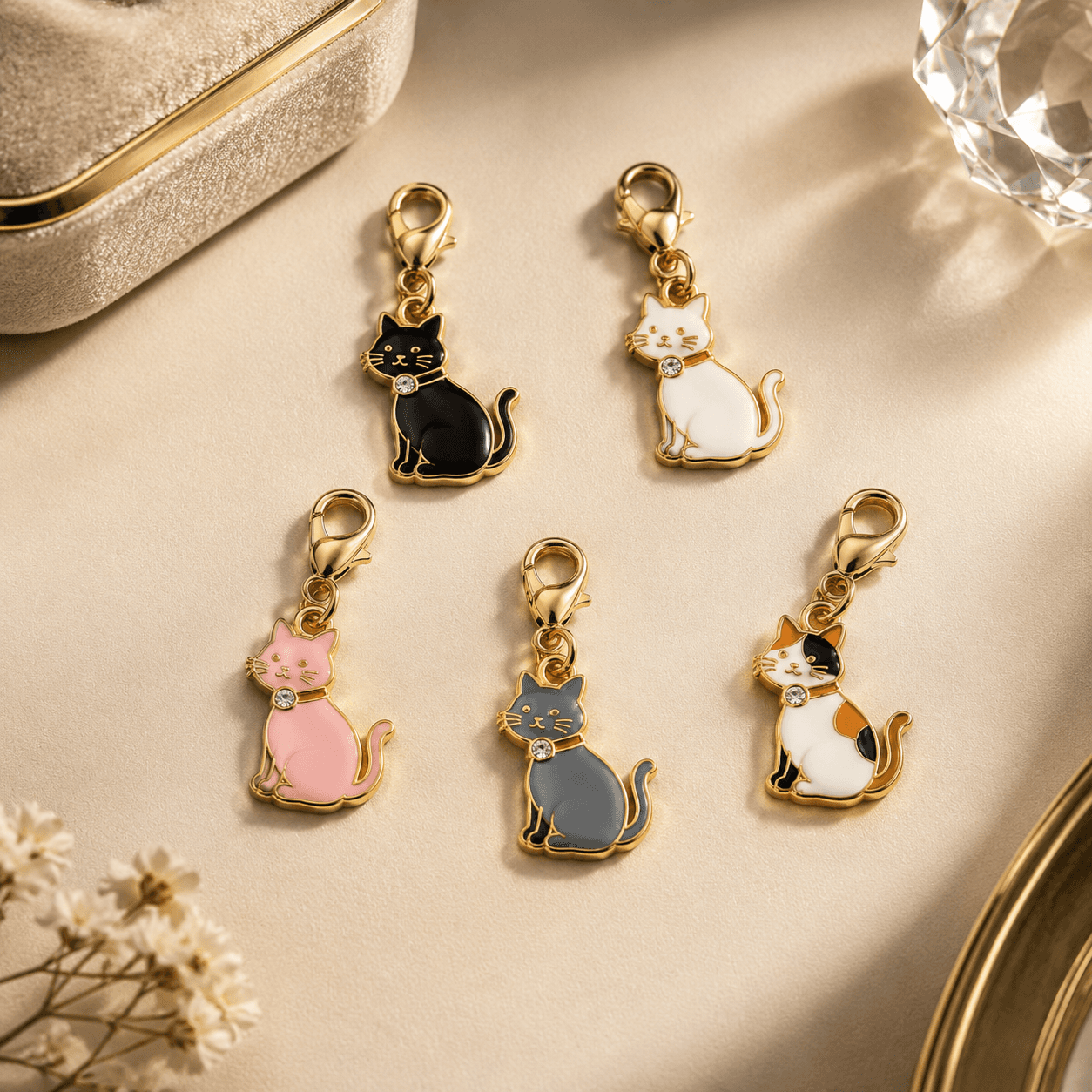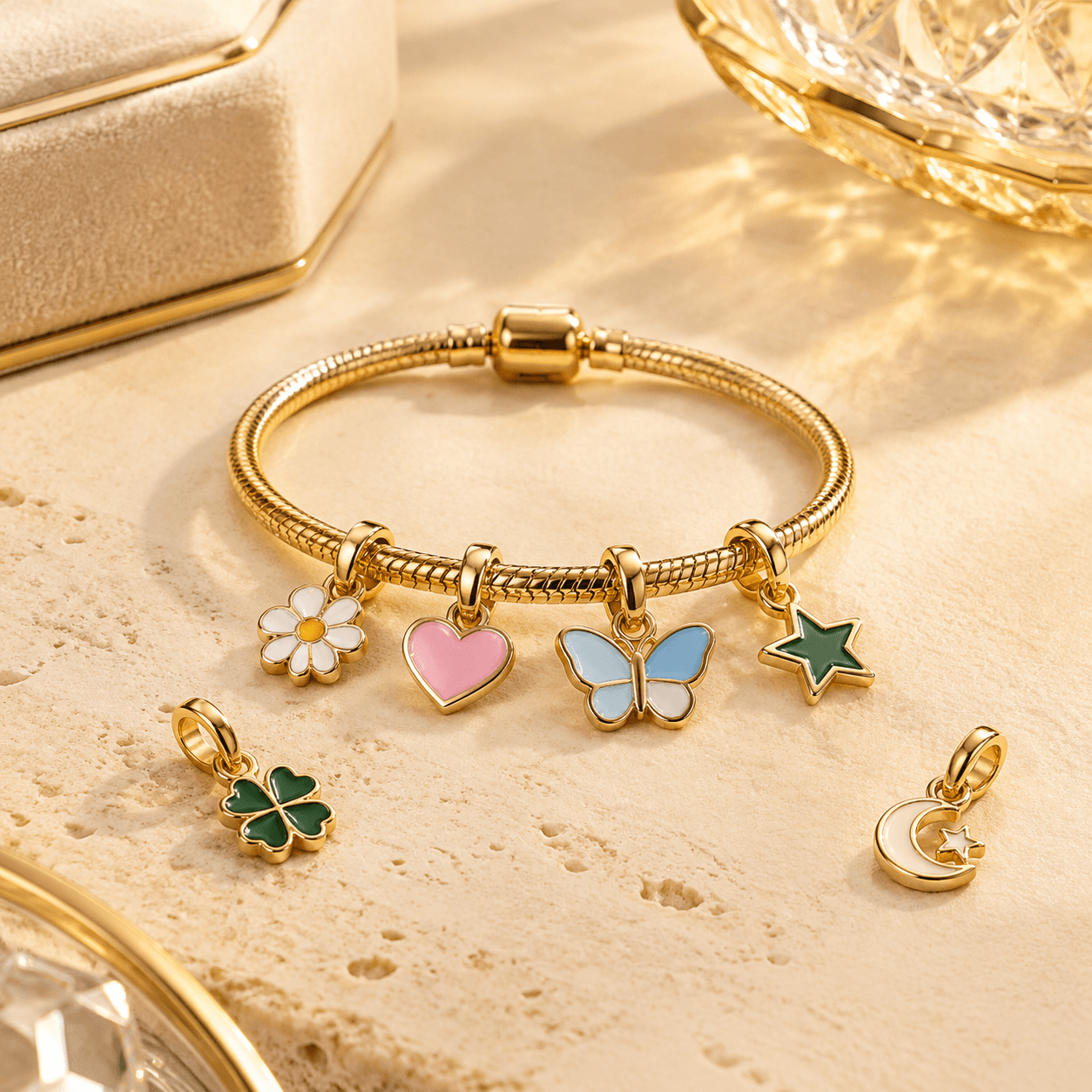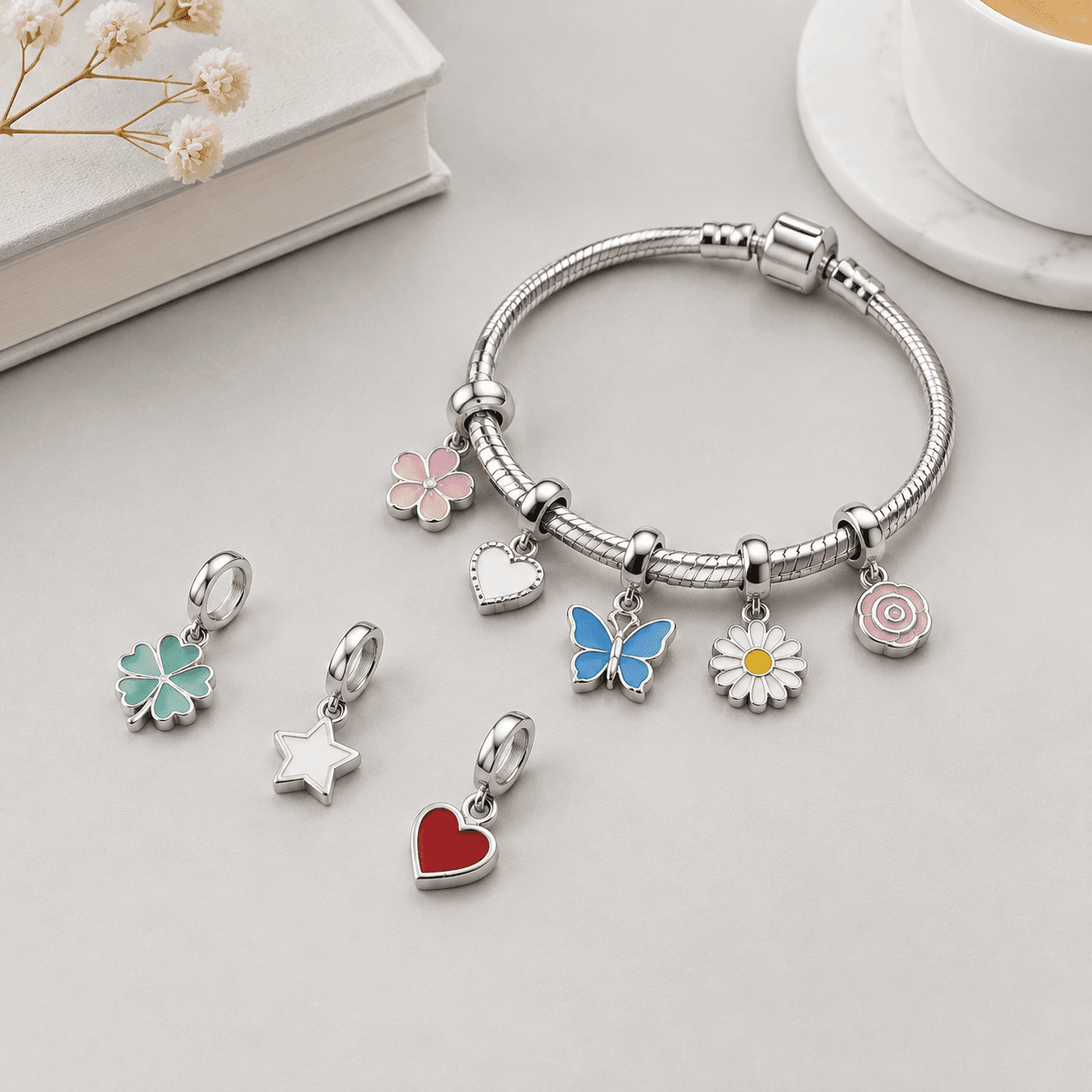
Choosing a wholesale supplier for custom enamel charms is a procurement decision that directly affects product consistency, customer satisfaction, inventory costs, and long-term brand reputation. A polished sample may look impressive, but it does not establish whether a manufacturer can maintain consistent material specifications, enamel adhesion, surface quality, and production tolerances across thousands of units.
For North American boutique jewelry brands, charm bar retailers, gift companies, and private-label buyers, supplier evaluation must go beyond pricing and sample appearance. A reliable sourcing process requires documented material verification, repeatable quality testing, manufacturing audits, regulatory awareness, and enforceable warranty terms. This checklist explains how to evaluate stainless steel custom enamel charms wholesalers systematically, identify hidden quality risks, and establish a supplier relationship that supports sustainable bulk purchasing.
How to Vet Stainless Steel Custom Enamel Charms Wholesalers: A Procurement Checklist
The objective of supplier qualification is to establish whether a manufacturer can repeatedly deliver products that meet approved technical, visual, and commercial specifications. Procurement teams should evaluate five interconnected areas: material traceability, manufacturing capability, enamel performance, compliance documentation, and quality management.
1. Verify the 316L Stainless Steel Base Material
Material verification should be the first qualification gate. A supplier's product description or verbal assurance is insufficient evidence of material composition. Require documentation that connects the specified 316L stainless steel grade to the actual production batch.
Procurement checklist:
- [ ] Obtain a written declaration confirming 316L stainless steel as the sole base material.
- [ ] Request material test reports or mill documentation identifying the applicable material grade.
- [ ] Confirm whether the documentation corresponds to the current production lot rather than an unrelated historical sample.
- [ ] Establish a batch identification and traceability process.
- [ ] Confirm that material substitutions require prior written approval.
- [ ] Request independent material verification when documentation or supplier claims are insufficient.
For advanced verification, procurement teams should understand the distinction between a material declaration and analytical test results. A declaration records what the supplier claims to use. Independent analysis provides additional evidence of elemental composition. Depending on the risk level, buyers can request laboratory analysis using an appropriate method, such as X-ray fluorescence screening, while recognizing that certain analytical methods have limitations when distinguishing closely related stainless steel grades.
Do not accept a generic statement that a product is stainless steel as a substitute for grade-specific evidence. Material identity should be included in the purchase specification, approved sample documentation, and final inspection criteria.
2. Examine Enamel Application and Surface Consistency
Enamel quality is one of the most important performance variables in custom decorative charms. Differences in filling depth, curing conditions, surface preparation, and finishing can produce visible inconsistencies between samples and mass-production units.
Ask the supplier to explain its enamel color-filling process and identify the inspection points used before and after finishing. A capable manufacturer should be able to discuss color references, filling boundaries, curing controls, surface leveling, and acceptable cosmetic tolerances.
Procurement checklist:
- [ ] Request physical samples representing the proposed enamel colors.
- [ ] Confirm color references using an agreed color standard or approved master sample.
- [ ] Inspect enamel coverage under consistent lighting.
- [ ] Check for visible pinholes, bubbles, uneven filling, contamination, and rough edges.
- [ ] Evaluate adhesion and resistance to ordinary handling.
- [ ] Confirm that enamel thickness and appearance remain consistent across production batches.
- [ ] Define acceptable cosmetic defects and rejection criteria in writing.
For multicolor designs, inspect the boundaries between adjacent color areas. Poorly controlled filling can create irregular edges, color migration, or inconsistent separation. Small decorative details also require close inspection because manufacturing variation becomes more noticeable as design complexity increases.
3. Evaluate Surface Finishes and Plating Stability
When charms include PVD gold plating, rose gold plating, or a silver finish, buyers should evaluate finish consistency separately from enamel performance. These processes introduce additional quality-control requirements.
Ask for written specifications covering the finish, appearance, coating process, inspection method, and approved acceptance limits. Where applicable, request information about coating thickness and the measurement method used. Avoid accepting an unspecified statement such as premium plating without measurable requirements.
Procurement checklist:
- [ ] Confirm the approved surface finish for each SKU.
- [ ] Review color consistency against the signed reference sample.
- [ ] Inspect edges, recessed details, attachment points, and contact surfaces.
- [ ] Check for discoloration, scratches, uneven coverage, and visible processing marks.
- [ ] Request documented abrasion and corrosion-resistance testing where relevant.
- [ ] Establish separate acceptance criteria for plated and non-plated product versions.
Buyers should also confirm that finishing processes do not damage enamel boundaries, attachment mechanisms, or decorative details. A charm may pass a visual inspection while still having weaknesses that become apparent during repeated handling or extended use.
Why Supplier Qualification Matters for North American Buyers
North American procurement teams often manage multiple product variations, seasonal launches, retail replenishment schedules, and private-label requirements simultaneously. A supplier that performs well on one sample but lacks production controls can create costly problems throughout the supply chain.
4. Reduce Quality Claims and Inventory Risk
Inconsistent material specifications, poor enamel adhesion, and unstable finishes can result in customer complaints, returns, rework, and unsold inventory. These problems become more expensive when they affect an entire bulk shipment rather than a small sample order.
A structured supplier qualification process reduces uncertainty by establishing objective acceptance criteria before production begins. Buyers should document critical-to-quality characteristics, including material grade, charm dimensions, attachment-hole measurements, enamel appearance, finish color, and surface condition.
For businesses purchasing wholesale stainless steel charms, this information also makes it easier to compare supplier performance across purchase orders. Instead of relying on subjective impressions, procurement managers can track defect rates, delivery performance, corrective-action completion, and batch consistency.
5. Verify Testing and Certification Documentation
Independent testing provides useful evidence, but certification terminology must be interpreted carefully. Lancy Jewelry has SGS-certified testing documentation covering RoHS, REACH, Nickel Release EN1811, and Salt Spray 240H. Buyers should request the relevant reports and verify their scope, dates, tested samples, and applicability to the products being purchased.
Each document addresses a different qualification concern:
- RoHS: Provides information about restrictions on specified hazardous substances within the applicable scope. Buyers should verify whether the report covers the relevant product and intended market requirements.
- REACH: Addresses applicable chemical substance obligations in the European regulatory framework. It can be relevant to North American businesses importing products or selling into European markets, depending on their distribution activities.
- Nickel Release EN1811: Evaluates nickel release using a standardized testing method relevant to applicable skin-contact product requirements. Buyers should check the tested product configuration and report conditions.
- Salt Spray 240H: Documents performance under a specified salt spray exposure procedure. It provides useful comparative information about corrosion resistance but does not independently guarantee a particular service life.
Never treat one certification report as proof that every SKU, color, finish, or production batch has identical performance. Request confirmation of product coverage and establish a risk-based retesting schedule.
6. Understand FDA Considerations and US Regulatory Responsibilities
For ordinary decorative jewelry charms, FDA is generally not the primary regulatory authority. Procurement teams should avoid assuming that an FDA document is a universal jewelry compliance certificate. FDA requirements may become relevant when a product is marketed with medical, therapeutic, or other claims that bring it within the agency's jurisdiction.
For standard consumer jewelry sold in the United States, buyers should pay particular attention to applicable Consumer Product Safety Commission requirements, chemical restrictions, and Federal Trade Commission advertising and labeling rules. Children's products may involve additional requirements under applicable federal legislation, including restrictions and testing obligations concerning specified substances.
Canadian buyers should separately assess applicable Canadian consumer product and chemical safety requirements. A supplier's European testing documentation can support an evaluation, but it should not automatically be treated as proof of compliance with every US or Canadian requirement.
Procurement checklist:
- [ ] Identify the intended sales markets and product age classifications.
- [ ] Determine applicable federal and state requirements before placing an order.
- [ ] Review relevant chemical testing documentation.
- [ ] Confirm product descriptions and material claims are accurate.
- [ ] Obtain supporting records for any compliance statements used in product listings.
- [ ] Establish a process for reviewing regulatory changes and updating documentation.
The key principle is straightforward: compliance must be assessed against the finished product, its intended use, its destination market, and the applicable legal requirements.
Detailed Supplier Evaluation: From Factory Audit to Bulk Production
7. Conduct a Manufacturing Capability Audit
A supplier's production equipment and process controls influence whether approved designs can be reproduced consistently. Procurement teams should evaluate the actual manufacturing facility rather than relying exclusively on sales presentations or catalog photographs.
For custom stainless steel charms, relevant capabilities include CNC machining, laser cutting, laser marking, welding, polishing, enamel color filling, PVD finishing, and crystal setting where specified by the approved design.
Lancy Jewelry operates a modern manufacturing facility equipped with CNC, laser cutting, laser marking, welding, and polishing capabilities. These processes support product development and controlled manufacturing for boutique brands and private-label buyers.
Factory audit checklist:
- [ ] Confirm the supplier's actual manufacturing address and production responsibilities.
- [ ] Identify which processes are performed in-house and which are outsourced.
- [ ] Review incoming material inspection procedures.
- [ ] Examine work instructions and production records.
- [ ] Check equipment maintenance and process calibration arrangements.
- [ ] Review operator training and quality inspection responsibilities.
- [ ] Inspect segregation procedures for rejected products and approved production.
- [ ] Confirm how production deviations are documented and authorized.
Pay particular attention to outsourced finishing or testing. Outsourcing is not automatically a quality weakness, but the supplier must demonstrate control over subcontractor selection, specifications, records, and final acceptance.
8. Assess OEM and ODM Development Capabilities
Custom projects require more than the ability to manufacture an existing catalog item. A qualified OEM charms manufacturer should be able to translate buyer specifications into practical production instructions while maintaining the approved design.
Evaluate the supplier's ability to support logo engraving, custom dimensions, enamel color filling, crystal inlay, PVD finishing, and private-label packaging. Ask how technical drawings are reviewed, how production limitations are identified, and how design revisions are controlled.
Development checklist:
- [ ] Submit technical drawings with dimensions and tolerances.
- [ ] Define enamel colors, finish specifications, and decorative details.
- [ ] Confirm logo placement, engraving depth, and readability requirements.
- [ ] Request a physical pre-production sample.
- [ ] Document all approved changes and sample revisions.
- [ ] Establish written approval before mass production.
- [ ] Confirm sample retention and reference-sample identification procedures.
A structured sample development process is especially important for boutique-ready series. When a collection includes several coordinated designs, the supplier should evaluate shared dimensions, finish consistency, color relationships, and attachment requirements across the complete series.
9. Test Durability Before Approving Mass Production
Visual inspection alone cannot establish long-term product durability. Procurement teams should develop a testing matrix based on product design, expected handling conditions, finish type, and intended market.
The following tests are useful considerations when establishing a product-specific qualification plan:
- Enamel adhesion evaluation: Assess whether the color filling remains securely attached under an agreed test method and conditioning procedure.
- Surface abrasion evaluation: Examine how exposed surfaces and decorative finishes respond to controlled rubbing or contact.
- Corrosion resistance evaluation: Review documented salt spray results and inspect for visible corrosion or finish deterioration.
- Attachment strength evaluation: Apply an agreed mechanical load to bails, jump rings, and other attachment structures to assess deformation or separation risk.
- Dimensional inspection: Measure critical dimensions, including thickness, hole diameter, overall size, and connector geometry.
- Repeated handling evaluation: Assess whether ordinary handling causes visible deterioration, loose components, or functional problems.
Testing must be repeatable and documented. Record the test method, sample quantity, conditioning requirements, acceptance criteria, equipment, and results. For destructive testing, establish an appropriate sampling plan so that test samples do not compromise saleable inventory.
Do not confuse a 240-hour salt spray result with a guarantee of 240 hours of real-world use or a specific number of years of product life. Laboratory exposure and everyday conditions are different. Durability claims should be based on relevant evidence and clearly defined test conditions.
10. Establish an Incoming Quality Control and Inspection Plan
Even qualified suppliers need an incoming inspection process. Procurement teams should establish inspection requirements before production, not negotiate acceptance standards after a shipment arrives.
A practical inspection plan can use three defect categories:
- Critical defects: Issues involving safety, incorrect material identity, or other conditions that make the product unacceptable for its intended use.
- Major defects: Material deviations, significant enamel defects, incorrect dimensions, defective attachment structures, or unacceptable finish variation.
- Minor defects: Small cosmetic deviations that do not materially affect function or the approved appearance.
Define acceptable quality limits for each category in the purchase agreement. If using an AQL-based sampling plan, specify the applicable inspection standard, inspection level, lot size, and acceptance numbers. AQL is a sampling decision tool, not a guarantee that every individual unit is defect-free.
Pre-shipment checklist:
- [ ] Verify purchase order quantities and SKU identification.
- [ ] Check material and finish against approved specifications.
- [ ] Inspect enamel coverage and color consistency.
- [ ] Verify critical dimensions and attachment mechanisms.
- [ ] Review packaging, labeling, and SKU separation.
- [ ] Obtain inspection records and relevant test documentation.
- [ ] Record nonconformities and corrective actions before shipment release.
11. Review MOQ, Lead Times, and Supplier Communication
Commercial terms should be evaluated alongside technical performance. A supplier offering attractive pricing may still create excessive operational costs if minimum order quantities are inflexible, sampling takes too long, or production schedules change without notice.
For smaller boutique brands and developing retail programs, low MOQ charm production can help control inventory exposure while testing product demand. However, procurement managers should establish whether minimum quantities apply per design, finish, enamel color, or combined order.
Request a written quotation that identifies tooling costs, sample charges, production lead times, payment terms, packaging costs, shipping responsibilities, and price validity. Confirm how revisions affect the production schedule and whether repeat orders can use retained technical specifications.
Evaluate communication quality by asking the supplier to explain a manufacturing risk or proposed corrective action. Professional suppliers should provide clear technical answers, supporting records, and realistic timelines rather than vague assurances.
12. Put Longevity Expectations and Warranty Terms in Writing
Longevity guarantees should be contractual, measurable, and appropriate to the product. Avoid accepting broad promises that a charm will never fade, corrode, or experience enamel damage. Real-world performance depends on design, finish, handling, environmental exposure, and maintenance.
Instead, establish a documented warranty framework covering:
- [ ] Warranty duration beginning from an agreed delivery or acceptance date.
- [ ] Covered manufacturing defects and material deviations.
- [ ] Clear exclusions for misuse, accidental damage, and conditions outside the agreed product specification.
- [ ] Evidence required when submitting a quality claim.
- [ ] Notification deadlines and investigation procedures.
- [ ] Replacement, rework, credit, or refund arrangements.
- [ ] Responsibility for return shipping and corrective-action costs.
- [ ] Corrective-action timelines and repeat-defect prevention requirements.
For recurring bulk orders, consider adding periodic performance reviews and a formal corrective-action process. Suppliers should investigate root causes rather than simply replace defective units without addressing the underlying manufacturing issue.
Supplier Comparison: A Practical Procurement Scorecard
Procurement teams can use a weighted scorecard to compare shortlisted wholesalers consistently. The following model prioritizes product quality while recognizing manufacturing and commercial performance.
| Evaluation category | Suggested weighting | Evidence required |
|---|---|---|
| Material verification | 20% | 316L documentation and batch traceability |
| Enamel and finish quality | 20% | Approved samples and performance testing |
| Compliance documentation | 15% | Applicable SGS and laboratory reports |
| Manufacturing capability | 15% | Factory audit and process records |
| Quality management | 15% | Inspection plans and corrective-action records |
| Commercial performance | 10% | MOQ, quotations, and delivery history |
| Communication and support | 5% | Response quality and sample development support |
Score each category from one to five, where one indicates insufficient evidence and five indicates strong, verified performance. Multiply each score by its weighting to obtain a comparable result.
However, a high total score should never compensate for a critical failure in material verification, applicable regulatory requirements, or essential product safety criteria. Establish mandatory qualification gates before applying the commercial scorecard.
Frequently Asked Questions
1. What documents should I request from a stainless steel custom enamel charms wholesaler?
Request 316L stainless steel material documentation, applicable laboratory test reports, enamel and finish specifications, production inspection records, and batch traceability information. Depending on the destination market, also review relevant RoHS, REACH, and Nickel Release EN1811 documentation. Confirm that every report covers the relevant product configuration.
2. How can buyers evaluate enamel durability before placing a bulk order?
Begin with a physical pre-production sample and inspect color consistency, surface leveling, coverage, and visible defects. Request documented adhesion and abrasion evaluations using agreed methods. Establish written acceptance criteria and repeat relevant checks during mass production. Sample approval alone should not replace production inspection.
3. Does SGS certification guarantee that every charm meets North American requirements?
No. SGS test documentation provides evidence for the specific substances, properties, products, and test conditions covered by each report. Buyers must independently determine applicable US and Canadian requirements and verify that the documentation is relevant to the finished products being imported and sold.
4. What should a private-label buyer include in a custom charm RFQ?
Include the required 316L stainless steel specification, product drawings, dimensions, enamel colors, surface finish, logo requirements, attachment details, packaging specifications, expected order quantities, sample requirements, testing expectations, destination market, and requested delivery schedule. Ask the supplier to identify MOQ, tooling costs, lead times, and quality documentation.
Partner With Lancy Jewelry for Reliable Custom Enamel Charm Manufacturing
Supplier qualification should lead to a manufacturing partnership built on measurable standards, transparent communication, and consistent production execution. Lancy Jewelry supports boutique jewelry brands, charm bar retailers, gift companies, distributors, and private-label buyers seeking dependable 316L stainless steel charms manufacturing.
Our OEM and ODM capabilities include custom development, logo engraving, laser marking, polishing, PVD finishing, enamel color filling, crystal inlay, and private-label packaging. Our manufacturing facility uses CNC, laser cutting, welding, and other controlled production processes to support custom product development and repeat orders.
We also provide sample development support and low MOQ options to help buyers evaluate new designs and organize coordinated product series. Our SGS-certified testing documentation covers RoHS, REACH, Nickel Release EN1811, and Salt Spray 240H, providing relevant technical information for supplier qualification and product assessment.
Whether you are developing a new boutique collection, expanding a charm bar assortment, or planning recurring wholesale orders, our team can help translate your specifications into a practical production plan.
Start your sourcing process:
- Explore our 316L stainless steel charm catalog to review available product directions.
- Discover our OEM and ODM manufacturing services for custom designs and private-label development.
- Submit your requirements through our RFQ and quotation request page to discuss specifications, MOQ, samples, and bulk production.
Choose a manufacturing partner based on verified quality, not promises alone. Contact Lancy Jewelry to discuss your next custom enamel charm project and establish a sourcing plan designed for consistent quality and long-term business growth.