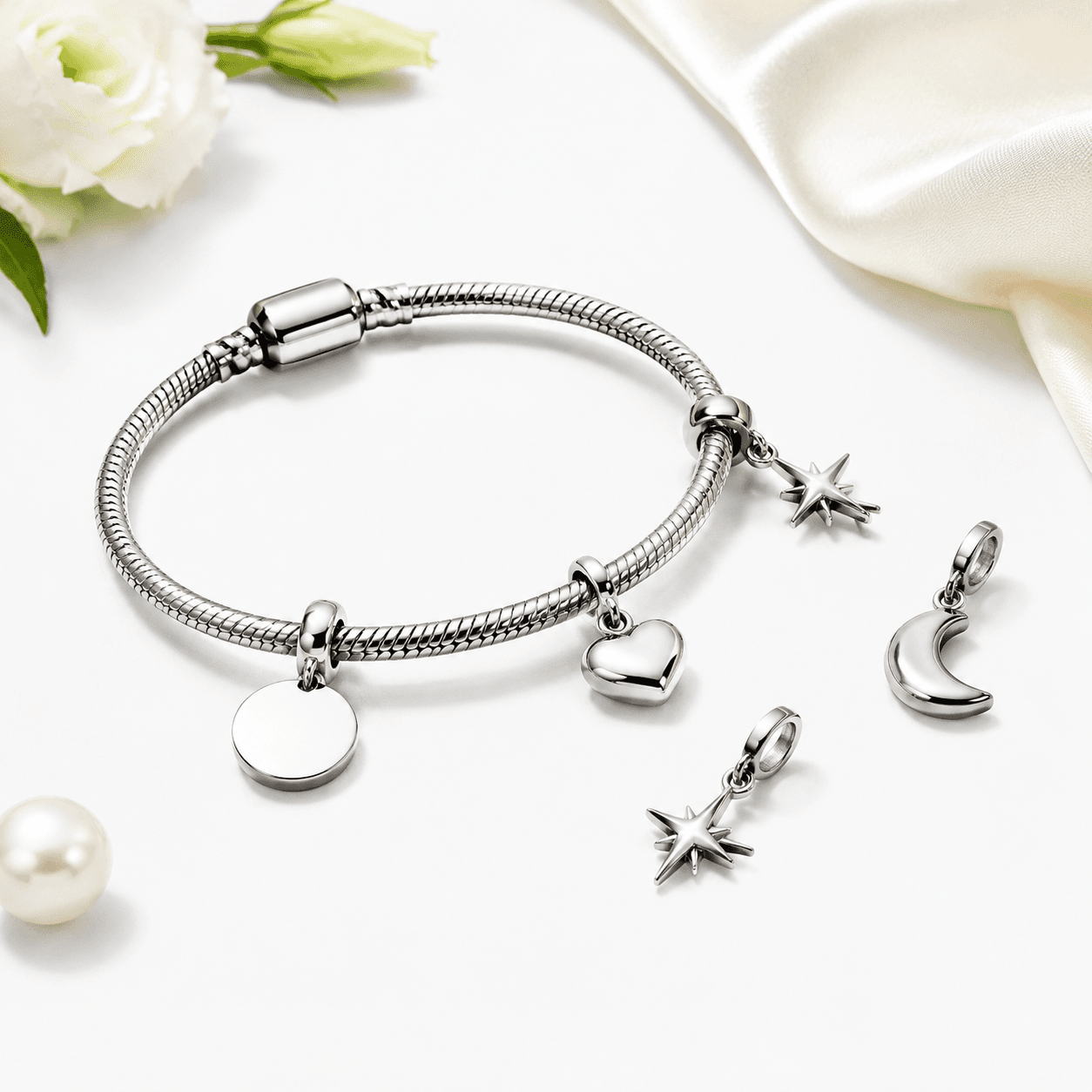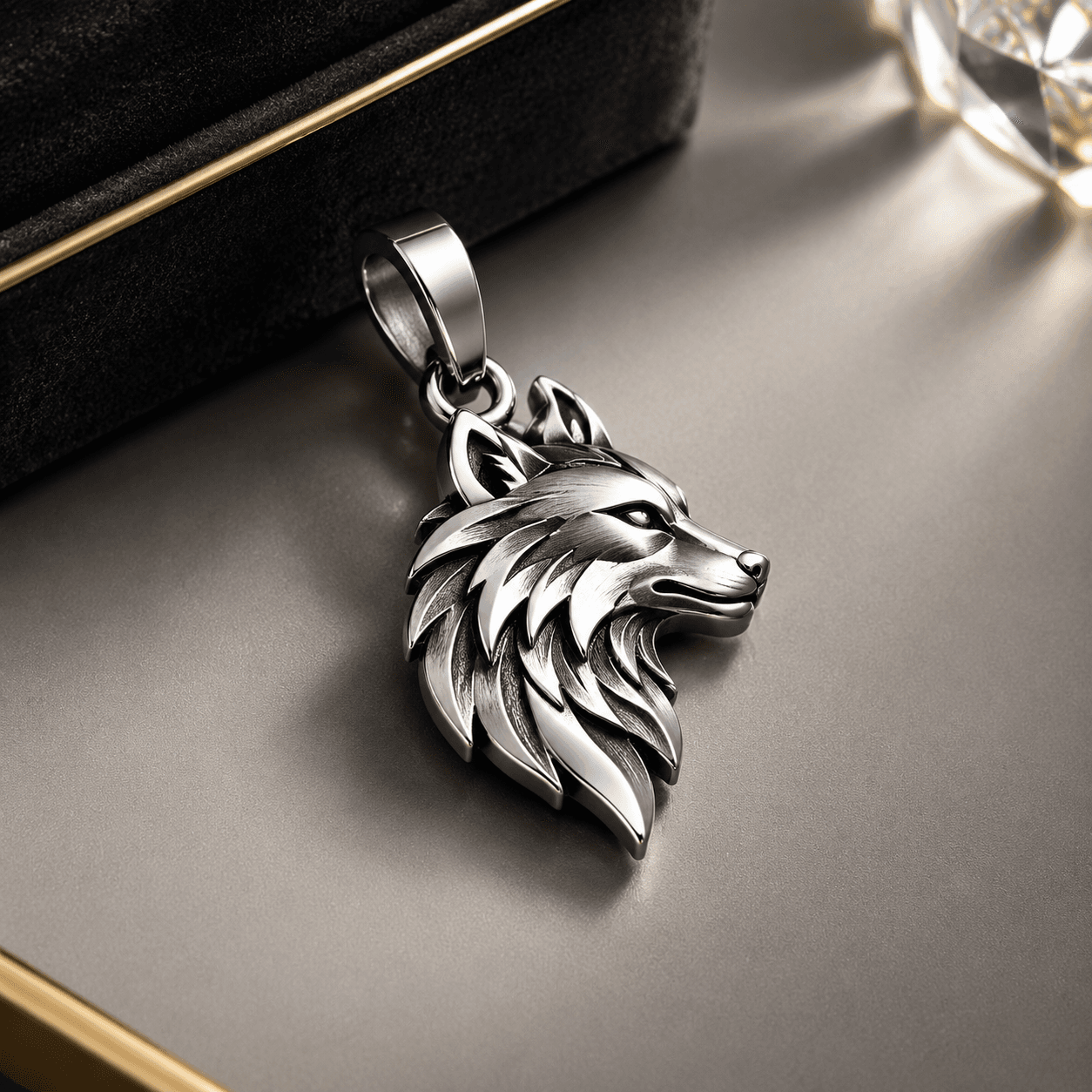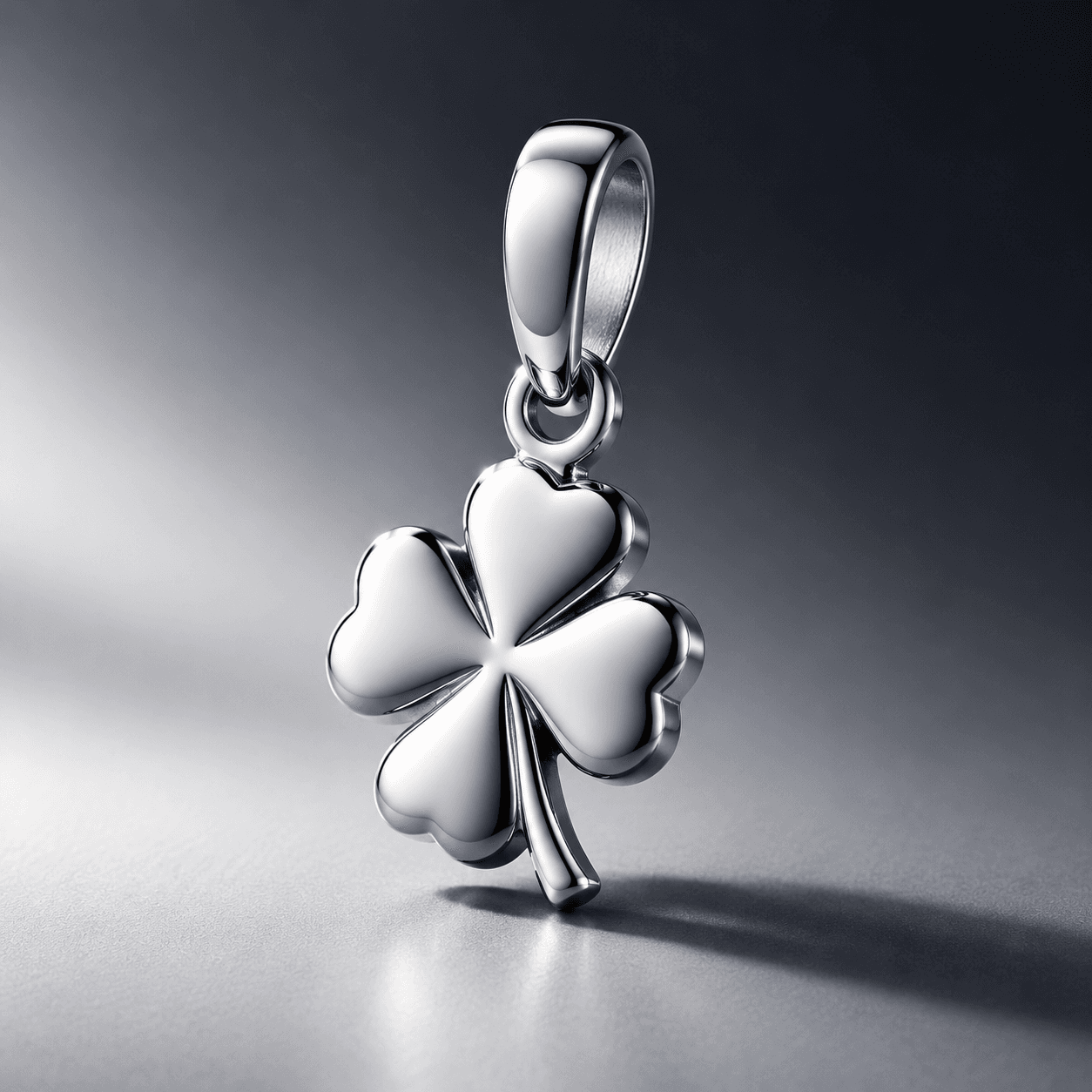
For cross-border e-commerce sellers, a successful charm product must do more than attract clicks. It needs consistent quality, convincing product photography, clear product specifications, reliable fulfillment, and a finish that performs well during normal use. A product that looks excellent in a listing but develops visible wear too quickly can generate returns, negative reviews, and additional customer service costs.
Choosing durable 316L stainless steel charms therefore requires a purchasing process that considers both physical performance and online retail operations. Buyers should compare material documentation, finish testing, sample consistency, supplier capabilities, packaging, and shipping arrangements before committing to a commercial order. This guide explains how to assess these factors, compare supplier offers, and build a practical sourcing checklist for international sales.
How to Choose Durable Stainless Steel Charms for Cross-Border E-Commerce
Start with Product Requirements, Not Just Appearance
Charm selection often begins with shape, color, and visual appeal. However, e-commerce buyers should define product requirements before evaluating quotations. Decide whether the assortment will prioritize everyday jewelry charms, seasonal gift accessories, personalized initials, symbolic designs, or coordinated boutique collections.
Each application affects the purchasing decision. Small decorative details must remain legible in listing images, attachment points must be mechanically sound, and finishes should suit the intended price positioning and customer expectations. Sellers offering multiple colors should also confirm that the supplier can maintain consistent appearance across production batches.
For businesses evaluating a stainless steel charms manufacturer, a useful starting point is to request a specification sheet, representative samples, available finish options, test documentation, and production lead-time estimates. This creates a consistent basis for comparing suppliers instead of relying on photographs or unit prices alone.
Compare the Factors That Affect Long-Term Performance
| Evaluation factor | What to check | Why it matters online |
|---|---|---|
| Base material | Confirm that the product uses 316L stainless steel and request supporting documentation. | Clear material information improves listing accuracy and purchasing confidence. |
| Surface finish | Inspect silver finish, gold plated, rose gold plating, or other specified finishes for consistency. | Color differences between samples, batches, and images can increase complaints. |
| Attachment structure | Inspect holes, loops, jump rings, and connection points for secure construction. | Weak attachment points may lead to damage, loss, or avoidable returns. |
| Decorative details | Check enamel edges, crystal inlay security, engraving clarity, and polishing quality where applicable. | Close-up photographs make small defects especially visible. |
| Testing evidence | Review relevant corrosion, finish, and restricted-substance test reports. | Documented evidence supports supplier qualification and internal quality decisions. |
| Batch consistency | Compare approved samples with pre-shipment samples and agreed specifications. | Consistent products reduce listing discrepancies and quality-related returns. |
Benefits of Choosing Well-Tested 316L Stainless Steel Charms
1. More Predictable Product Quality
316L stainless steel is widely selected for jewelry applications where corrosion resistance and practical durability are important. Its performance still depends on the finished product, including surface condition, construction, polishing, and any applied decorative finish. Buyers should therefore evaluate the complete charm rather than assume that a material designation alone guarantees long service life.
For e-commerce sellers, predictable quality supports more stable product reviews, fewer preventable returns, and more reliable replenishment. A standardized purchasing specification also helps the supplier reproduce the approved design when an item moves from sample development to bulk production.
2. Better Control of Finish Expectations
PVD is a surface treatment used for colored finishes, including gold plated and rose gold plating options. Buyers should request finish specifications and test evidence relevant to the intended product. Performance varies with the coating system, preparation, geometry, exposure conditions, and use patterns, so no finish should be treated as immune to wear.
Ask suppliers to clarify what their test results demonstrate and which conditions were used. A controlled test can provide useful comparative evidence, but it cannot establish that a charm will retain its original appearance indefinitely under every customer usage pattern.
3. More Credible Quality Documentation
Lancy Jewelry reports SGS certification or testing coverage for RoHS, REACH, Nickel Release EN1811, and Salt Spray 240H. Buyers should request the applicable documents and verify their scope, product coverage, issue dates, and testing conditions before using them for procurement or compliance decisions.
These references address different questions. RoHS and REACH relate to regulatory substance requirements within their applicable scopes. Nickel Release EN1811 concerns nickel release testing for relevant articles and conditions. Salt spray testing evaluates corrosion behavior under specified laboratory conditions. A 240-hour result does not automatically predict an equivalent number of months or years in consumer use.
4. Stronger Merchandising and Lower Operational Uncertainty
When product specifications, finishes, and sample quality are controlled, sellers can prepare more accurate listings and plan replenishment with greater confidence. Consistent charm dimensions and clearly documented colors also make it easier to organize product variants, create coordinated collections, and train customer service teams.
For private-label programs, documented specifications can connect product development, photography, packaging, inspection, and repeat ordering. This is particularly useful when products are sold in several countries through different storefronts.
Detailed Buyer Guide: Comparing Suppliers and Product Options
Step 1: Evaluate Material and Construction Evidence
Ask the supplier to confirm 316L stainless steel as the base material and identify any surface finishes or decorative treatments. Request relevant material records and, where necessary, independent test reports. Confirm that the documentation corresponds to the actual product or an appropriately representative product rather than assuming that a general company certificate covers every SKU.
Next, examine the charm's physical construction. Inspect edges, openings, attachment loops, soldered or welded connections where present, and the fit of any jump ring. Hardware should pass through a real hole or loop and close securely. The charm should not have sharp burrs, visibly weak connections, or malformed details.
For products featuring enamel or crystal inlay, request close-up images and inspect sample units for uneven filling, loose settings, surface marks, or gaps. Decorative complexity can increase inspection requirements, making it important to define acceptable quality before mass production.
Step 2: Compare Finish and Durability Testing
Use a consistent test plan for every shortlisted supplier. The objective is to evaluate relevant performance under defined conditions, not to accept broad claims such as scratch-proof, fade-proof, or lifetime durability without evidence.
| Test or inspection | What it can establish | Buyer limitation |
|---|---|---|
| Visual finish inspection | Checks color uniformity, surface marks, polishing, and visible defects. | Does not independently measure long-term wear. |
| Salt spray testing | Assesses corrosion behavior under a specified salt spray procedure. | Results depend on the test method and conditions; they do not directly convert into service-life guarantees. |
| Nickel release testing | Evaluates nickel release under the applicable test method, such as EN1811. | Does not measure every aspect of corrosion or coating durability. |
| Coating adhesion assessment | Evaluates whether the finish remains attached under a defined test procedure. | Acceptance criteria and method must be agreed in advance. |
| Wear or abrasion assessment | Compares surface change under controlled rubbing or wear conditions. | Results may not represent all combinations of friction, moisture, chemicals, and customer handling. |
| Sample-use evaluation | Reveals practical issues during a documented, representative usage period. | Informal use is not a substitute for standardized laboratory testing. |
Record the test method, conditions, sample identification, acceptance criteria, and result for each evaluation. If the product includes a colored PVD finish, inspect the finished product rather than relying solely on base-material documentation. For repeated orders, establish whether periodic retesting or production-lot inspection is appropriate.
Step 3: Compare Product Selection, MOQ, and Commercial Terms
Product durability is only one part of a profitable assortment. E-commerce sellers must also balance assortment breadth, purchase quantities, inventory exposure, and restocking speed. A low initial unit price can become less attractive when the supplier requires excessive quantities or cannot reproduce the approved finish.
| Purchasing model | Main advantage | Risk to manage | Best fit |
|---|---|---|---|
| Small trial order | Limits initial inventory exposure and supports demand validation. | Unit costs or freight costs may be higher. | New listings and market tests. |
| Wholesale stainless steel charms | Can improve unit economics for proven products. | Slow-moving variants may tie up working capital. | Established sellers with repeat demand. |
| OEM production | Supports custom shapes, logos, and defined specifications. | Development, tooling, approval, and production schedules require coordination. | Brands building differentiated assortments. |
| ODM development | Can support selection and refinement of designs for a commercial collection. | Design selection and customization scope must be confirmed. | Buyers seeking coordinated product series. |
| Private label program | Aligns product presentation and packaging with the seller's own business. | Artwork approval, packaging quantities, and labeling requirements add planning steps. | Retailers developing a consistent brand experience. |
Ask each supplier to quote the same product specifications, finish, packaging, order quantity, inspection scope, and delivery terms. Confirm MOQ by design, color, and packaging configuration instead of assuming one minimum applies to the entire order. Low MOQ support is especially useful for testing several designs before concentrating inventory in proven sellers.
Step 4: Assess Product Photography and Listing Readiness
Online customers cannot inspect a charm physically before purchasing, so listing quality is an important part of product selection. Request high-resolution product images that show the complete charm, front and back surfaces, attachment mechanism, finish, and important decorative details. A scale reference can help buyers understand the actual size.
For the main listing image, use a clean white background, centered composition, realistic shadows, and enough space to display the full silhouette. The charm should be large enough to inspect without appearing disproportionately large. Additional images can show close-up details, dimensions, packaging, and a realistic application context.
Confirm that photography accurately represents the approved sample. Lighting and image processing should not conceal surface defects or make a finish appear substantially different from the shipped product. If multiple finishes are offered, maintain consistent lighting and framing across variants to make comparisons easier.
Product descriptions should state verified dimensions, base material, finish, decorative details, package contents, care guidance, and relevant limitations. Use specific measurements rather than vague labels such as mini or oversized. Avoid unsupported claims about guaranteed wear life, waterproof performance, or suitability for every skin type.
Step 5: Plan Shipping, Packaging, and Dropship Options
Cross-border fulfillment requires more than selecting a carrier. Buyers should confirm whether products ship individually, in bulk, or in retail-ready packaging; whether packaging is included in the quotation; and how the supplier protects polished surfaces during transit. Separate compartments or suitable protective packaging can reduce scratching and tangling between units.
Ask the supplier about sample dispatch, production lead time, order consolidation, tracking, shipping terms, documentation, and the division of responsibility for import procedures. Delivery estimates should distinguish production time from transit time and customs processing. Actual delivery performance depends on destination, carrier service, shipment conditions, and local procedures.
For dropship operations, verify whether the supplier supports direct-to-customer dispatch, order-level processing, neutral or private-label packaging, inventory synchronization, tracking updates, and returns coordination. Do not assume that a manufacturer offering bulk production also provides dropshipping. Confirm the available workflow, fees, service levels, and order cut-off times before publishing a delivery promise.
For wholesale fulfillment, request packaging specifications and agree on carton quantities, product identification, and inspection records. For direct-to-customer fulfillment, test the complete order journey with a sample shipment to the target market. This can reveal packaging, tracking, and delivery communication issues before a larger launch.
Step 6: Validate Samples Before Approving Bulk Orders
Sample development should follow a written brief covering dimensions, weight where relevant, design details, surface finish, engraving, enamel colors, crystal inlay, attachment points, and packaging. Record the approved sample version and retain reference images or a physical sample for comparison.
When the sample is approved, ask how the supplier controls production consistency. A practical quality plan may include incoming material checks, in-process inspection, finish inspection, dimensional checks, functional attachment checks, and final sampling against agreed criteria. The exact inspection level should reflect product complexity, order size, and the cost of failure.
Before authorizing shipment, review the pre-shipment sample or inspection results against the approved reference. Clarify how nonconforming units are handled, whether corrective action is required, and what remedies apply under the purchase agreement. A clear written process is more useful than an unspecified promise of perfect quality.
Supplier Scorecard for Cross-Border Buyers
| Criteria | Suggested weighting | Evidence to collect |
|---|---|---|
| Material and compliance documentation | 25% | Material specification and applicable test reports. |
| Finish and construction quality | 25% | Approved samples, inspection results, and defined acceptance criteria. |
| Commercial flexibility | 20% | MOQ, sample costs, customization scope, and price breaks. |
| Fulfillment readiness | 15% | Lead times, packaging options, dispatch process, and shipping terms. |
| Communication and repeat-order control | 15% | Specification management, response times, and corrective-action procedures. |
These weightings are an illustrative purchasing framework, not an industry standard. Adjust them to reflect the seller's priorities. A business launching a private-label collection may prioritize customization and finish consistency, while a high-volume seller may place more emphasis on repeat-order control and fulfillment capacity.
How Lancy Jewelry Supports B2B Charm Sourcing
Manufacturing and Customization Capabilities
Lancy Jewelry focuses on 316L stainless steel charms for boutique jewelry brands, charm bar retailers, gift companies, distributors, and private-label buyers. Its manufacturing capabilities include CNC processing, laser cutting, laser marking, welding, and polishing, with OEM and ODM support for product development and production planning.
Available customization services include logo engraving, PVD plating, enamel color filling, crystal setting, and private-label packaging. These capabilities can help buyers coordinate product appearance, brand presentation, and assortment planning within a defined specification. Final feasibility, development time, MOQ, and cost depend on the design, finish, production requirements, and order configuration.
For buyers seeking a 316L stainless steel charms supplier, the practical starting point is to submit target designs, intended finishes, estimated quantities, dimensions, and packaging requirements. Lancy Jewelry can then review the brief and discuss sample development, manufacturing feasibility, and quotation requirements.
Documentation and Quality Planning
Lancy Jewelry identifies SGS coverage for RoHS, REACH, Nickel Release EN1811, and Salt Spray 240H. Buyers should request the relevant reports or certificates and verify their applicability to the selected products, finishes, and destination-market requirements. Documentation should be reviewed as part of supplier qualification rather than treated as a substitute for product-specific inspection.
For repeat orders, agree on a quality reference that includes the approved sample, finish specification, critical dimensions, attachment construction, packaging requirements, and acceptance criteria. This provides a common basis for production checks and helps identify deviations before goods enter the fulfillment process.
To explore available products, visit the Lancy Jewelry product catalog. Buyers considering custom shapes, logos, or coordinated series can review the OEM and ODM manufacturing service. For pricing, MOQ, and lead-time discussions, submit an inquiry through the RFQ and quotation request page.
Frequently Asked Questions
Are 316L stainless steel charms suitable for cross-border e-commerce?
They can be suitable when the product construction, finish, documentation, packaging, and fulfillment arrangements meet the seller's requirements. Buyers should verify material specifications, relevant compliance documentation, finish performance, and destination-market obligations before listing products internationally. Suitability depends on the specific design and intended use.
Does a 240-hour salt spray test guarantee years of corrosion resistance?
No. A 240-hour salt spray result describes performance under a defined laboratory procedure. It does not translate directly into a guaranteed number of years in consumer use. Request the test method, acceptance criteria, sample details, and report scope, and combine this evidence with finish inspection and appropriate product-use evaluation.
What should e-commerce sellers request before placing a bulk order?
Request a written specification, representative samples, relevant material and test documentation, finish options, MOQ by variant, production and shipping lead times, packaging details, inspection criteria, and a clear process for handling nonconforming products. For private-label orders, approve the logo artwork and packaging proof before production begins.
Can Lancy Jewelry support low MOQ, OEM, ODM, or dropship programs?
Lancy Jewelry supports OEM and ODM development, sample development, and private-label packaging, with low MOQ support depending on product and order requirements. Dropshipping arrangements should be confirmed separately because availability, dispatch methods, fees, packaging, and service levels depend on the agreed fulfillment workflow. Include the intended sales markets, expected order volume, and delivery model in your RFQ.
Partner With Lancy Jewelry for Durable Charm Collections
Choosing a supplier for cross-border e-commerce is a structured purchasing decision. The strongest sourcing process combines verified 316L stainless steel specifications, relevant durability testing, controlled finish quality, accurate product photography, realistic shipping plans, and repeatable inspection procedures. It also considers commercial flexibility, because MOQ, customization, packaging, and replenishment terms directly affect inventory risk and retail performance.
Lancy Jewelry works with B2B buyers to develop stainless steel charms for boutique collections, gift programs, and private-label assortments. Whether you are evaluating existing designs or planning an OEM or ODM project, provide your target specifications, preferred finishes, estimated quantities, and delivery requirements to begin a practical sourcing discussion.
Ready to evaluate your next charm collection? Visit the Lancy Jewelry contact page or submit an RFQ with your product brief. Request sample details, relevant test documentation, MOQ options, and a quotation to compare the proposal against your quality and fulfillment requirements.