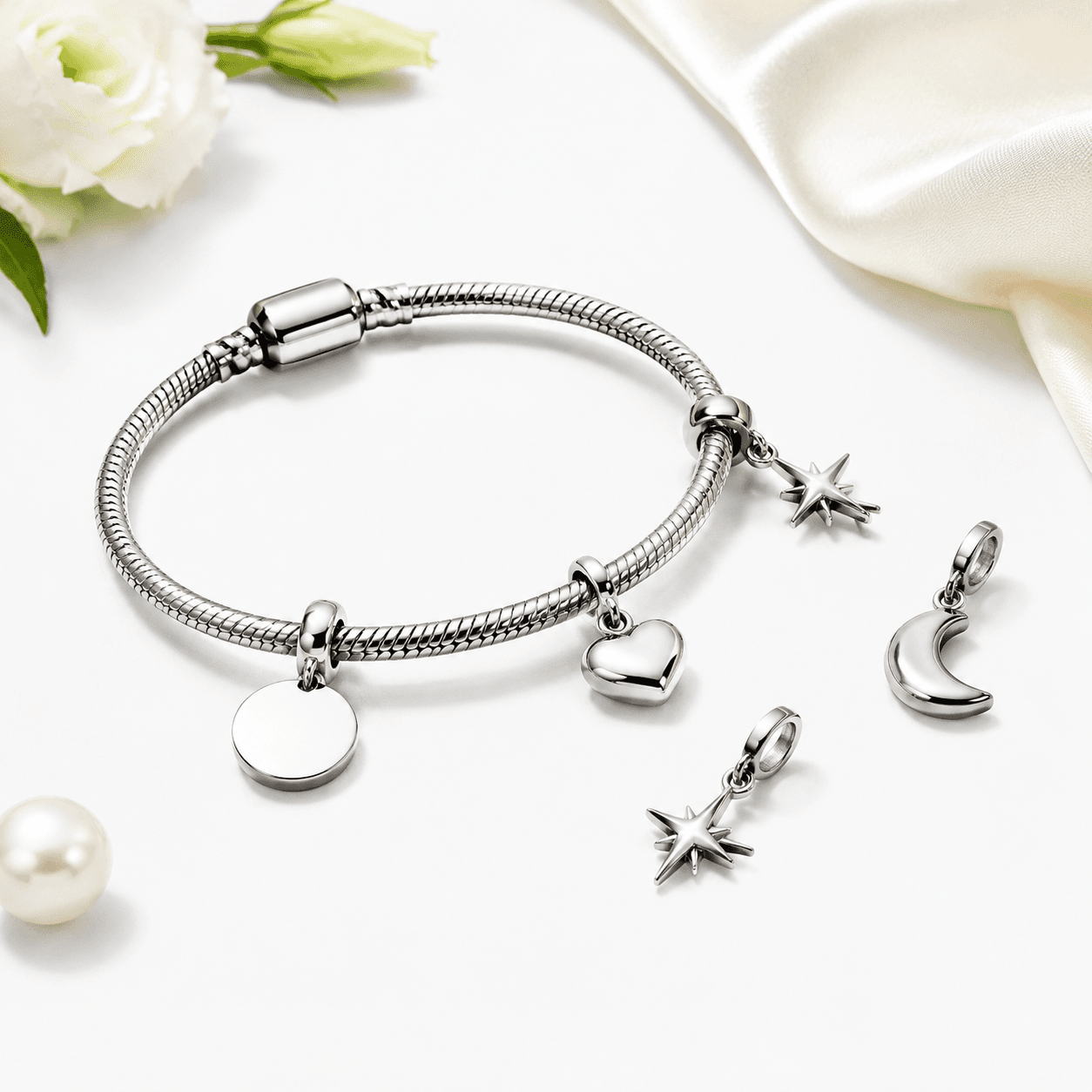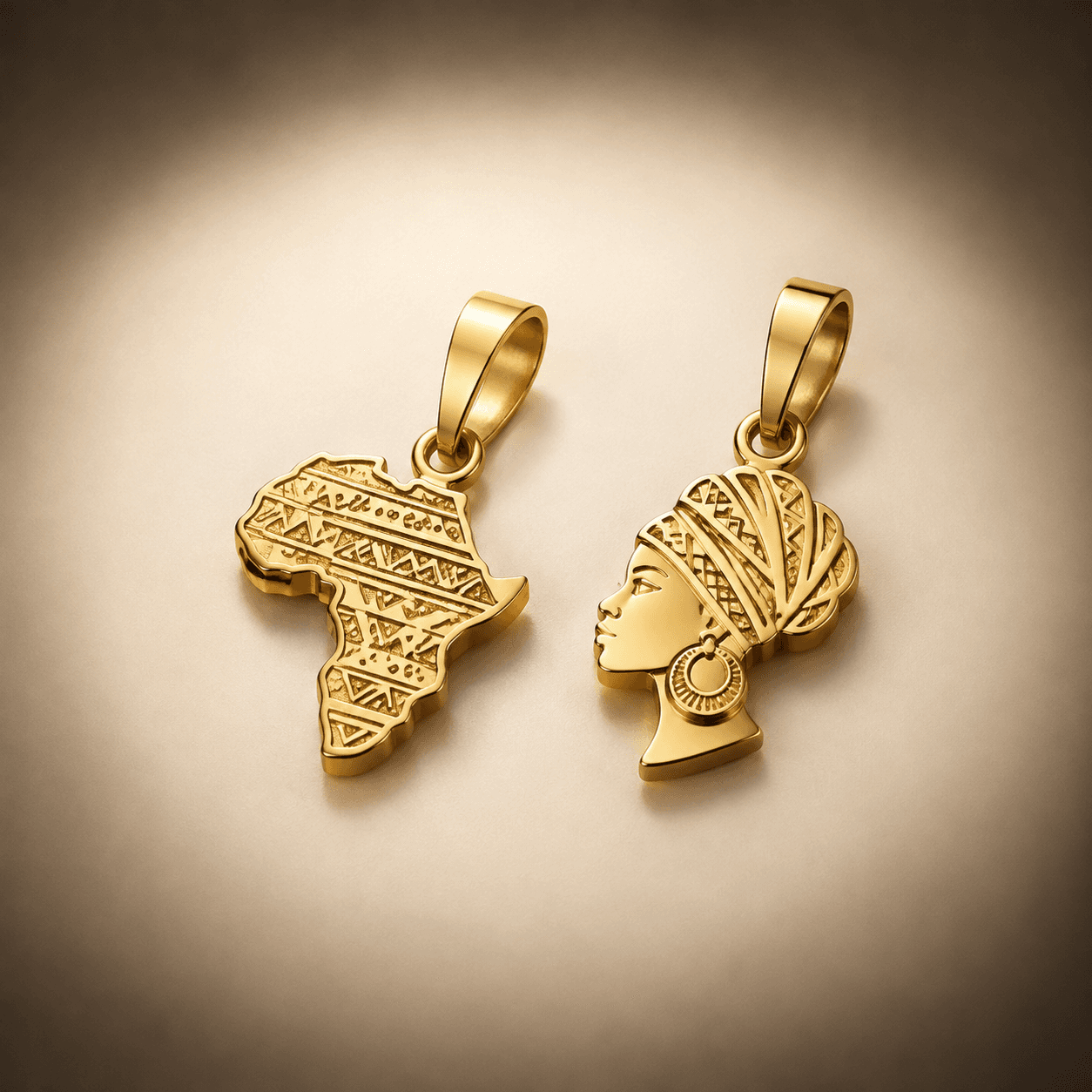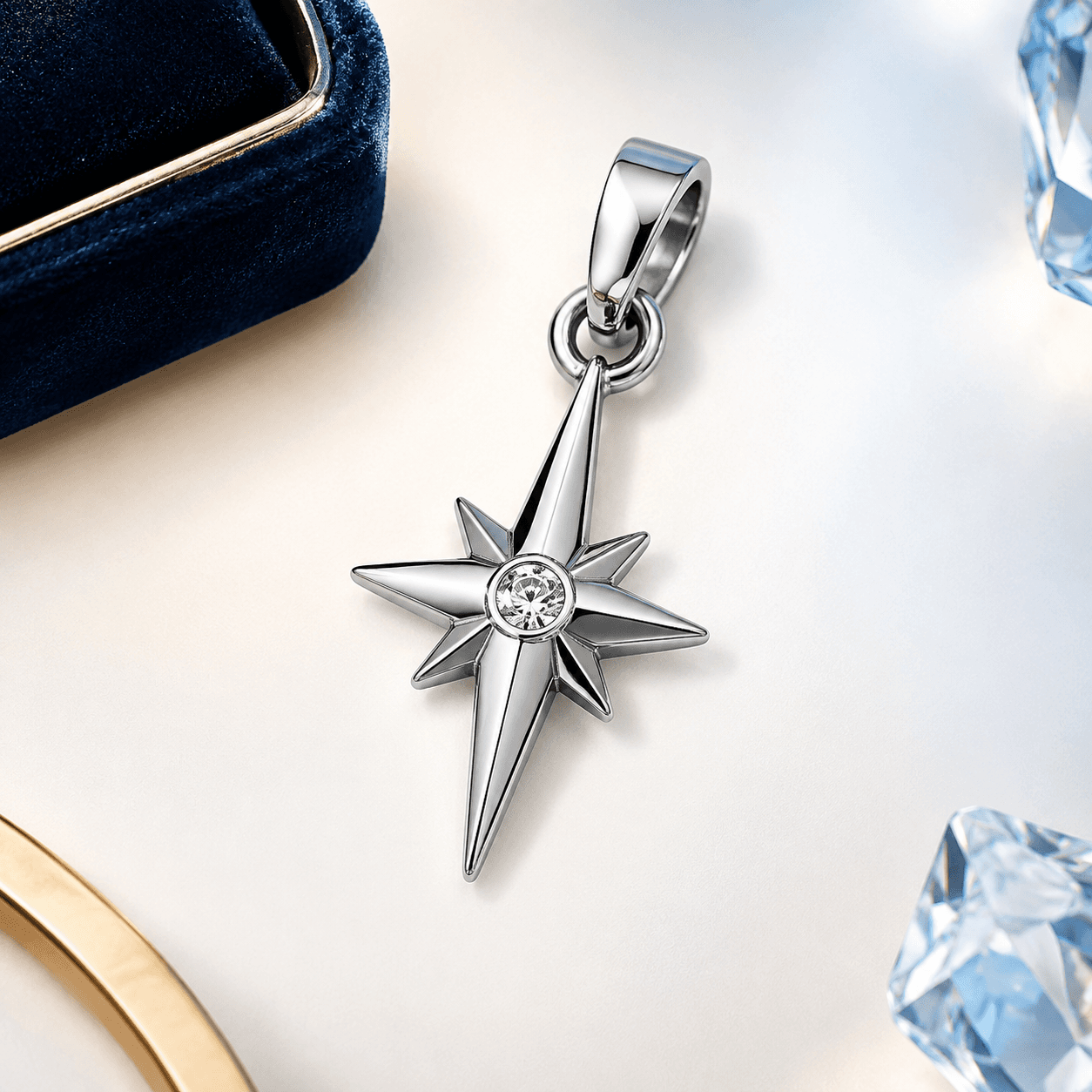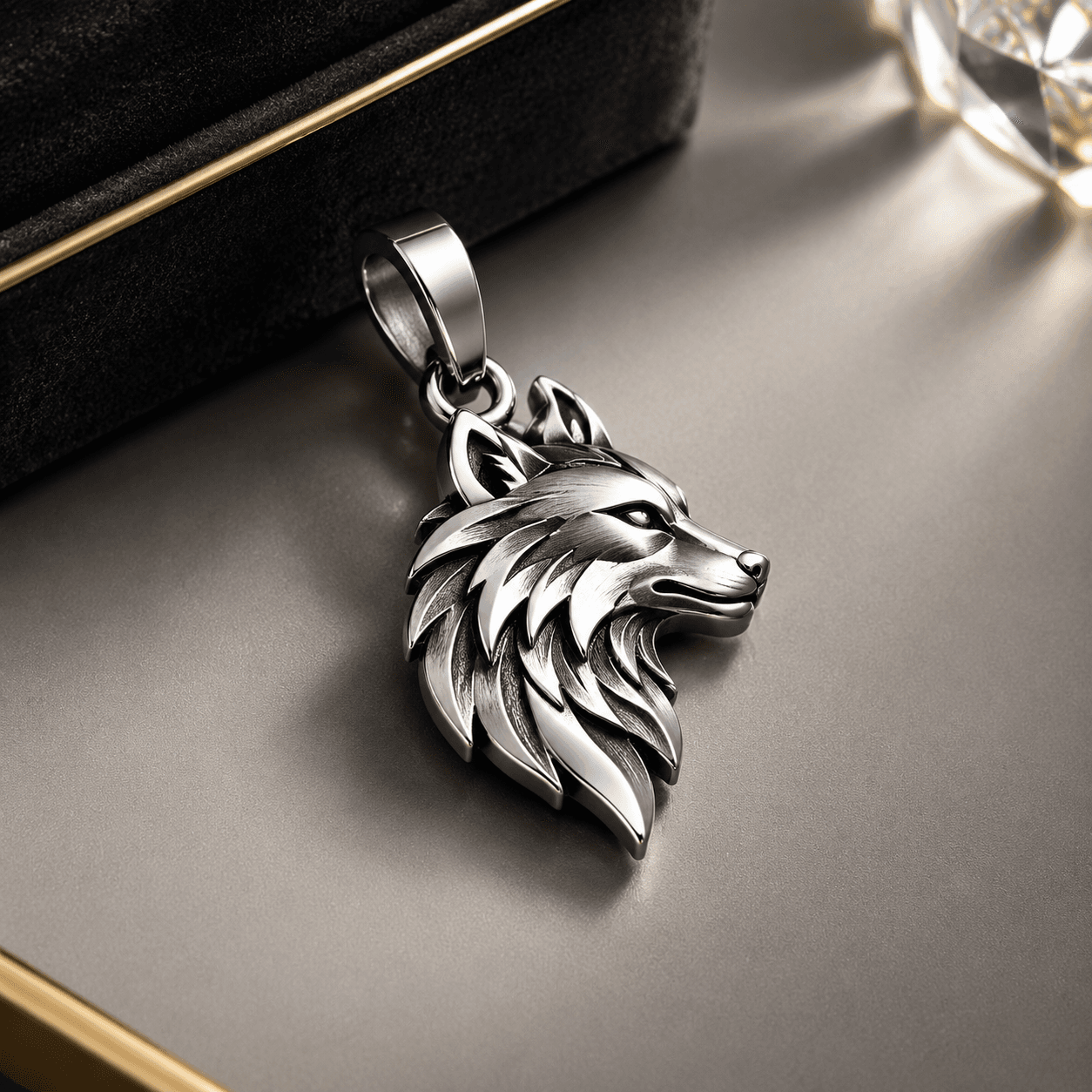
Animal motifs can help jewelry designers build distinctive product stories around pets, wildlife, nature, and personal interests. For boutique jewelry brands, gift companies, and charm bar retailers in North America, however, choosing the right design is only part of a successful sourcing decision. The base material, surface finish, attachment strength, production consistency, and quality documentation all influence how a product performs after purchase. This guide explains how to evaluate wholesale stainless steel animal jewelry charms, compare finish and customization options, and establish practical quality requirements before placing a bulk order.
Stainless Steel Animal Jewelry Charms Wholesale: What Buyers Should Evaluate
When sourcing animal-themed jewelry accessories, buyers should assess both the creative possibilities and the manufacturing controls behind each design. A charming silhouette may attract customers, but consistent dimensions, clean edges, secure attachment points, and stable surface finishes help protect the product's long-term value.
Design variety and production requirements
Popular design directions include cats, dogs, paw prints, butterflies, bees, horses, dolphins, turtles, and other wildlife motifs. Designers can explore recognizable silhouettes, engraved details, textured surfaces, enamel color accents, and crystal inlay while maintaining a coherent collection identity.
For commercial programs, evaluate whether a supplier can translate a concept into repeatable specifications. A stainless steel charms manufacturer should be able to discuss drawing preparation, dimensional tolerances, surface finishing, logo placement, attachment geometry, sampling, and repeat-order controls.
How 316L stainless steel supports jewelry programs
316L stainless steel is a practical base material for many everyday jewelry applications because it offers corrosion resistance, useful strength, and good dimensional stability. Its performance still depends on design, manufacturing, finishing, exposure conditions, and maintenance. Material selection alone does not guarantee that every finished product will remain unchanged under all conditions.
Lancy Jewelry focuses on 316L stainless steel charms for OEM and ODM projects. Available finishing and decorative options include PVD, gold plated finishes, silver finish, rose gold plating, enamel, and crystal inlay. These options allow designers to develop different visual directions while retaining a consistent base material.
Benefits of Wholesale 316L Stainless Steel Animal Charms
1. Practical durability for everyday use
Animal charms may be worn on bracelets, necklaces, anklets, or other jewelry formats, and some designs may also be used in bag charm or gift accessory programs. Repeated contact, friction, moisture, perspiration, and cosmetic products can affect the finished surface over time. A well-specified 316L stainless steel design provides a useful foundation, while suitable polishing, plating controls, and product care instructions help support service life.
2. Flexible customization for boutique collections
OEM and ODM development can accommodate different animal silhouettes, proportions, surface textures, logo engraving, and decorative treatments. Enamel color filling can distinguish species or highlight selected features, while crystal inlay can add a focal detail. Designers should identify which features are essential and which can be simplified to maintain manufacturing consistency and a commercially viable unit cost.
3. Repeatable quality across bulk orders
Retail programs require more than an attractive sample. Buyers need confidence that subsequent production will follow approved dimensions, color references, finish requirements, and attachment specifications. Documented inspection criteria and retained approved samples help reduce variation between production batches.
4. Documented testing and material compliance
Lancy Jewelry reports SGS-related testing and compliance documentation covering RoHS, REACH, nickel release under EN 1811, and a 240-hour salt spray test. Buyers should request the relevant reports or certificates, confirm the tested product or sample scope, and check whether the documentation matches the proposed material, finish, and intended market requirements.
These records support supplier evaluation, but their scope matters. A report for one configuration should not automatically be treated as proof that every color, coating, or customized design has identical results. Confirm the applicable documents before approving a production order.
Quality Comparison: How to Assess Animal Charms Side by Side
A structured comparison makes supplier quotations easier to evaluate. Use the following table to compare samples and documented production controls rather than relying on photographs or unit price alone.
| Evaluation area | What to inspect | Why it matters | Buyer verification |
|---|---|---|---|
| Base material | Confirmed 316L stainless steel specification | Supports consistent sourcing and material expectations | Request material documentation and identify the tested sample |
| Surface finish | Even color, smooth edges, uniform polish, and consistent coverage | Visible defects can affect perceived quality | Inspect under consistent lighting and compare with the approved sample |
| Wear resistance | Finish condition after an agreed abrasion or handling test | Helps assess performance under defined conditions | Agree on test method, cycle count, and acceptance criteria |
| Corrosion resistance | Results from an applicable salt spray test | Provides evidence of performance under a specified exposure protocol | Check test duration, method, sample configuration, and acceptance criteria |
| Nickel release | Applicable nickel release test documentation | Supports evaluation for relevant skin-contact requirements | Review EN 1811 results and applicable market requirements |
| Attachment strength | Closed loops, sound joints, and secure connectors | Reduces the risk of detachment during normal handling | Request visual inspection and an agreed pull or load test where appropriate |
| Decorative details | Clean engraving, even enamel filling, and secure crystal setting | Improves visual consistency and reduces finishing defects | Define acceptable color variation, alignment, and setting condition |
| Batch consistency | Dimensions, color, finish, and workmanship across samples | Helps maintain a recognizable collection across replenishment orders | Use an approved reference sample and written inspection criteria |
Finish options: choosing the right production specification
| Finish or decoration | Design advantage | Quality checks |
|---|---|---|
| Polished stainless steel with silver finish | Clean, versatile appearance for minimalist and detailed motifs | Check polishing marks, edge smoothness, and surface uniformity |
| PVD gold plated finish | Warm color for coordinated gift and jewelry collections | Compare color consistency and evaluate wear resistance using an agreed method |
| Rose gold plating | A softer color direction for romantic or seasonal assortments | Confirm the approved color reference and inspect for uneven coverage |
| Enamel details | Distinctive colors for eyes, wings, spots, and other recognizable features | Check fill consistency, boundaries, adhesion, and visible defects |
| Crystal inlay | Adds sparkle to selected design features | Inspect alignment, setting security, and gaps around the setting |
These options should be evaluated as complete finish systems, not as appearance choices alone. The base surface preparation, coating process, design geometry, and quality controls can all affect the result.
A Step-by-Step Buyer Guide to Quality and Durability
Step 1: Define the intended use and design size
Start by identifying where the charm will be used, the target customer, and the expected retail price range. Many everyday jewelry charms fall within an approximate 8–18 mm size range, although the right dimensions depend on the motif and attachment format. Small details may be difficult to reproduce at miniature sizes, while oversized features can change weight, handling, and production cost.
For animal designs, specify the silhouette, front and back appearance, edge profile, thickness, target dimensions, and location of the attachment hole or loop. Make sure the connection point is proportionate to the charm and designed to withstand the intended use.
Step 2: Establish measurable acceptance criteria
Replace broad requirements such as premium quality or long-lasting color with inspectable standards. A purchase specification can identify dimensional tolerances, approved color references, allowable surface marks, engraving depth expectations, enamel coverage, crystal setting requirements, and attachment integrity.
For a new collection, approve a physical sample before mass production. Keep a reference sample and, where practical, retain photographs and written notes for each finish. These records give the supplier and buyer a common standard for evaluating production.
Step 3: Verify material and compliance documents
Request documentation that identifies the material grade and clarifies the scope of relevant testing. For North American buyers, it is useful to distinguish general material quality from product-specific legal obligations. In the United States, FDA requirements apply to products and uses within the agency's jurisdiction; ordinary jewelry is not automatically FDA-approved simply because a supplier provides a material test report. Depending on the product and intended claims, other federal, state, provincial, or national rules may apply.
For example, buyers selling children's products or products marketed for children should evaluate applicable requirements for lead, surface coatings, small parts, and other relevant hazards. Canadian buyers should likewise check the rules applicable to their specific product and sales channel. Ask qualified compliance professionals or the relevant authorities when the scope is unclear.
Step 4: Agree on wear-resistance testing
Wear resistance should be assessed using a defined method. For a PVD finish, agree on an appropriate abrasion or handling procedure and inspect for visible changes, exposed base material, or unacceptable color loss. The test method should reflect the product's intended use and be applied consistently to comparable samples.
A 240-hour salt spray result can provide useful evidence about performance under the specified test conditions. It is not equivalent to a promise of a fixed number of years of wear, and it does not reproduce every real-world exposure. Perspiration, cleaning products, friction, storage, and individual care habits can affect actual service life.
Step 5: Inspect attachment points and mechanical details
Animal charms often have small loops or holes that connect to a jump ring or other fitting. Confirm that the connector passes through a real, properly sized attachment point and can close securely. Examine the surrounding material for sharp edges, cracks, thin sections, or visible deformation.
Where appropriate, agree on a repeatable pull or load test. The acceptance limit should reflect the design and application rather than an arbitrary universal value. For crystal inlay designs, also inspect setting security and request an agreed evaluation method for resistance to normal handling.
Step 6: Compare suppliers using total sourcing value
Unit price is only one part of wholesale sourcing. Consider sample charges, tooling or development costs, MOQ, finish consistency, packaging, lead time, inspection arrangements, and the supplier's ability to support replenishment. A lower quotation may be less attractive if it requires extensive rework or produces inconsistent batches.
| Supplier capability | Basic evaluation | Stronger sourcing practice |
|---|---|---|
| Sample development | One sample supplied for visual review | Approved sample, documented specifications, and finish references |
| Production control | General quality assurance statement | Defined inspection points and written acceptance criteria |
| Testing support | Undetailed claims of durability | Relevant reports with identifiable scope and test conditions |
| Customization | Limited changes to existing designs | Documented OEM or ODM workflow for logos, colors, and geometry |
| Order planning | Quotation based mainly on quantity | Transparent MOQ, sampling, packaging, and repeat-order planning |
Customization and OEM Production for North American Buyers
Turn animal concepts into a coordinated collection
A coherent assortment can combine several animal motifs with a shared visual language. For example, a nature-themed program might include a butterfly, a bee, and a leaf-associated wildlife motif, while a pet-focused program could feature different animal silhouettes and paw details. Consistent thickness, attachment geometry, finish selection, and packaging help the assortment look intentional across different designs.
Lancy Jewelry supports OEM and ODM development, logo engraving, laser marking, PVD finishing, enamel color filling, crystal setting, and private-label packaging. Its manufacturing capabilities include CNC processing, laser cutting, welding, and polishing. The appropriate process depends on the design, dimensional requirements, and selected finish.
Plan samples before confirming bulk orders
Sample development gives buyers an opportunity to review shape, dimensions, finish color, decorative details, and connection geometry before approving production. Provide reference drawings or clear concept images, desired dimensions, color references, logo artwork, estimated order quantities, and packaging requirements when requesting a quotation.
Buyers with smaller initial runs should discuss low MOQ charm production early. MOQ may vary with customization complexity, finish requirements, tooling, and packaging. A clearly defined brief helps the factory identify practical options without compromising the required quality standards.
To explore production capabilities, visit the Lancy OEM service page. For collection planning, browse available product categories, then submit specifications through the RFQ and quotation route. These steps help connect creative development with realistic commercial requirements.
Frequently Asked Questions
Are 316L stainless steel animal charms suitable for everyday jewelry?
They can be suitable for many everyday jewelry applications when properly designed, manufactured, and maintained. Actual performance depends on the finish, construction, exposure conditions, and wear habits. Buyers should review applicable material and finish testing rather than assume that any single material grade guarantees every outcome.
What quality documents should a wholesale buyer request?
Request material identification and relevant test reports for the proposed configuration. Depending on the product and market, useful documents may include RoHS and REACH-related documentation, nickel release results under EN 1811, and salt spray test reports. Confirm the scope, tested sample, date, and applicability of each document.
Does a 240-hour salt spray test guarantee years of corrosion-free use?
No. It records performance under specified laboratory conditions. Actual wear depends on environmental exposure, handling, cleaning, coating condition, and product design. Treat the report as one part of a broader quality assessment rather than a direct conversion to a service-life guarantee.
Can Lancy customize animal charms for private-label collections?
Lancy Jewelry supports OEM and ODM development for 316L stainless steel charms, including custom shapes, logo engraving, PVD finishes, enamel details, crystal inlay, and private-label packaging. Buyers should provide a design brief, target dimensions, finish preferences, estimated quantity, and testing requirements to confirm feasibility, MOQ, sampling, and production timing.
Partner With Lancy Jewelry for Wholesale Animal Charms
Successful wholesale sourcing combines creative flexibility with measurable quality requirements. By defining the base material, documenting finish expectations, checking attachment strength, reviewing relevant testing, and approving a production sample, jewelry designers can make more informed purchasing decisions and reduce avoidable quality risks.
Lancy Jewelry is a B2B OEM/ODM manufacturer focused on 316L stainless steel charms for boutique brands, charm bar retailers, gift companies, private-label buyers, and distributors. Its factory-direct development support helps buyers evaluate custom designs, finish options, sample requirements, and packaging needs before moving to bulk production.
Prepare your animal charm concept, target dimensions, finish preferences, estimated order quantity, and compliance requirements. Contact Lancy Jewelry to discuss your project and request a tailored quotation for your next collection.