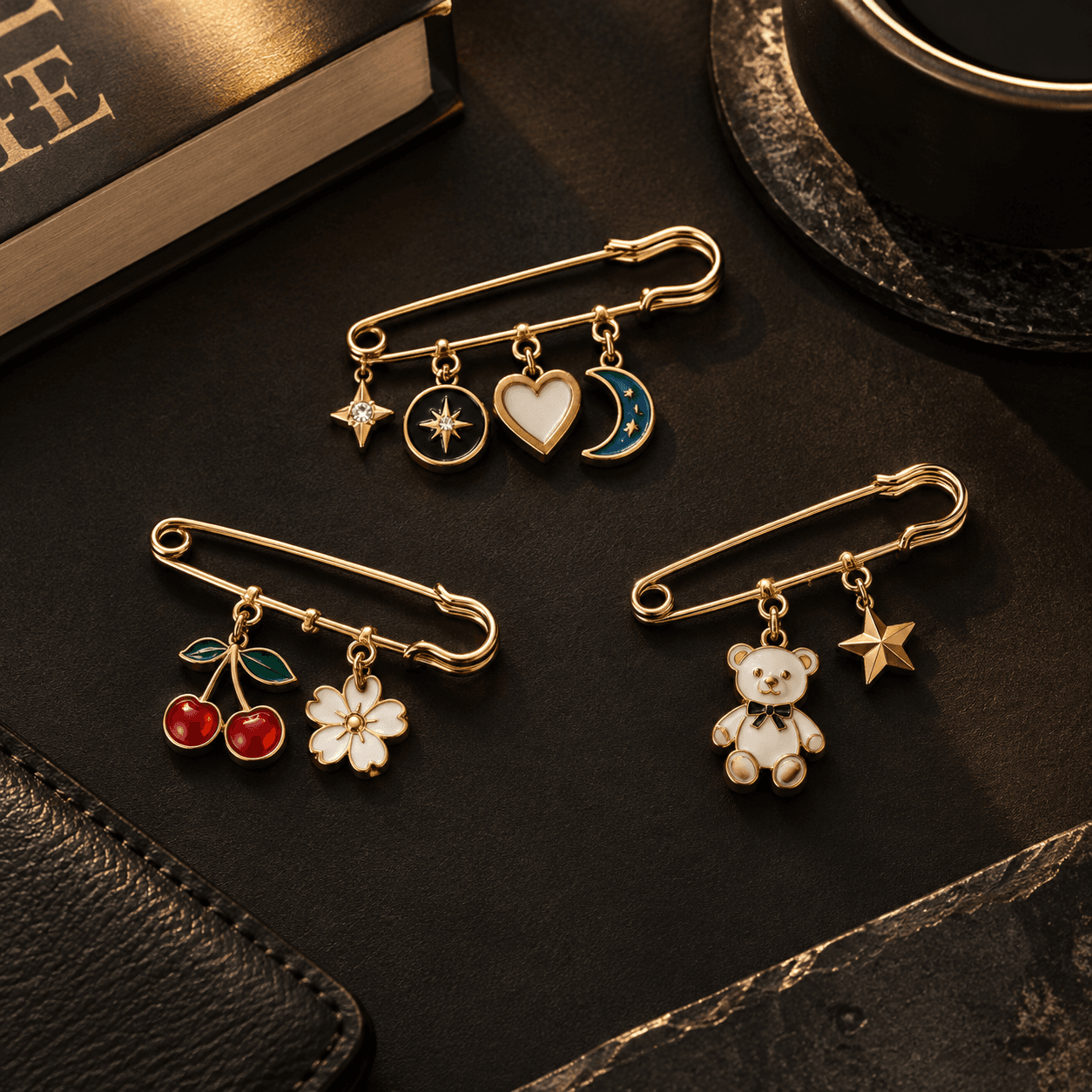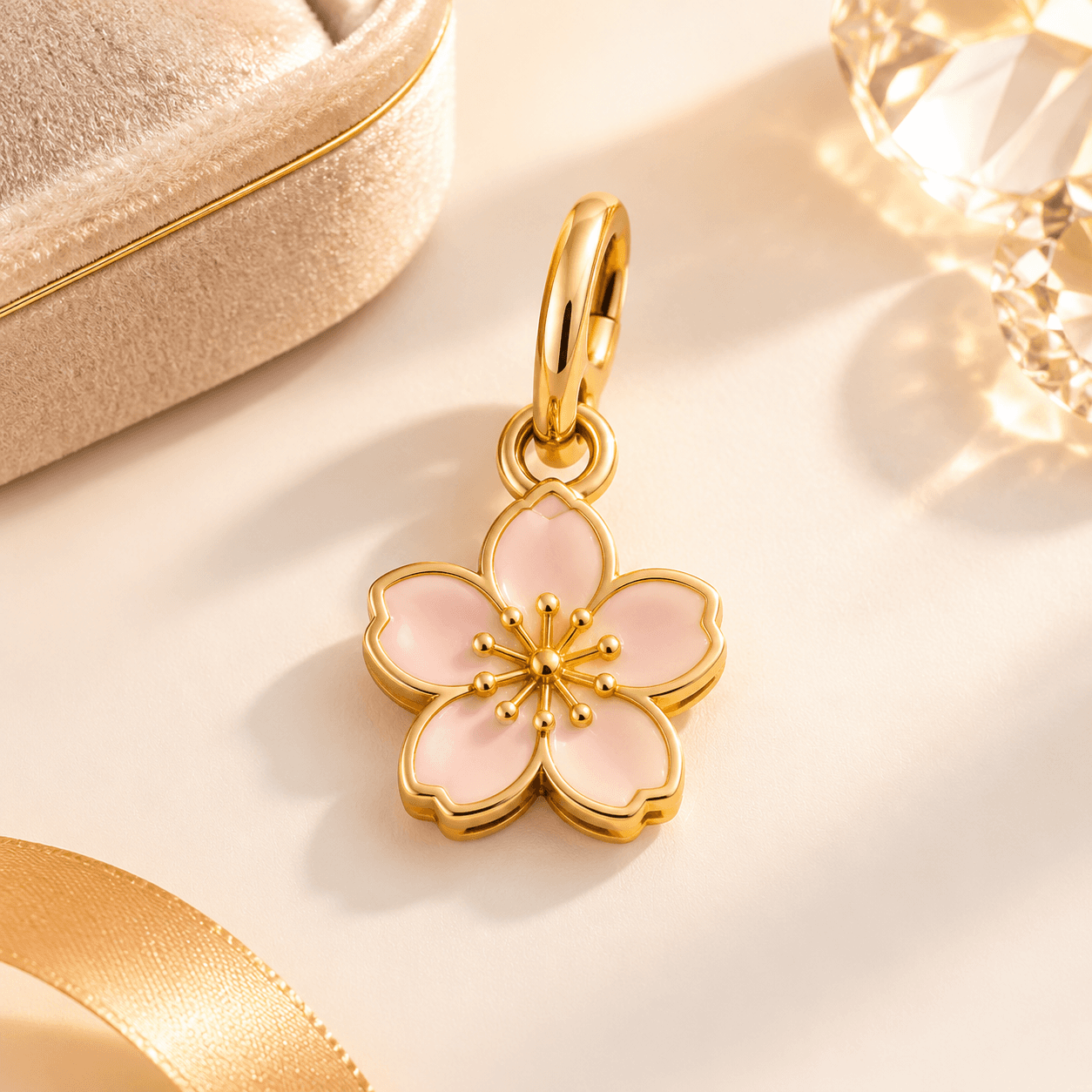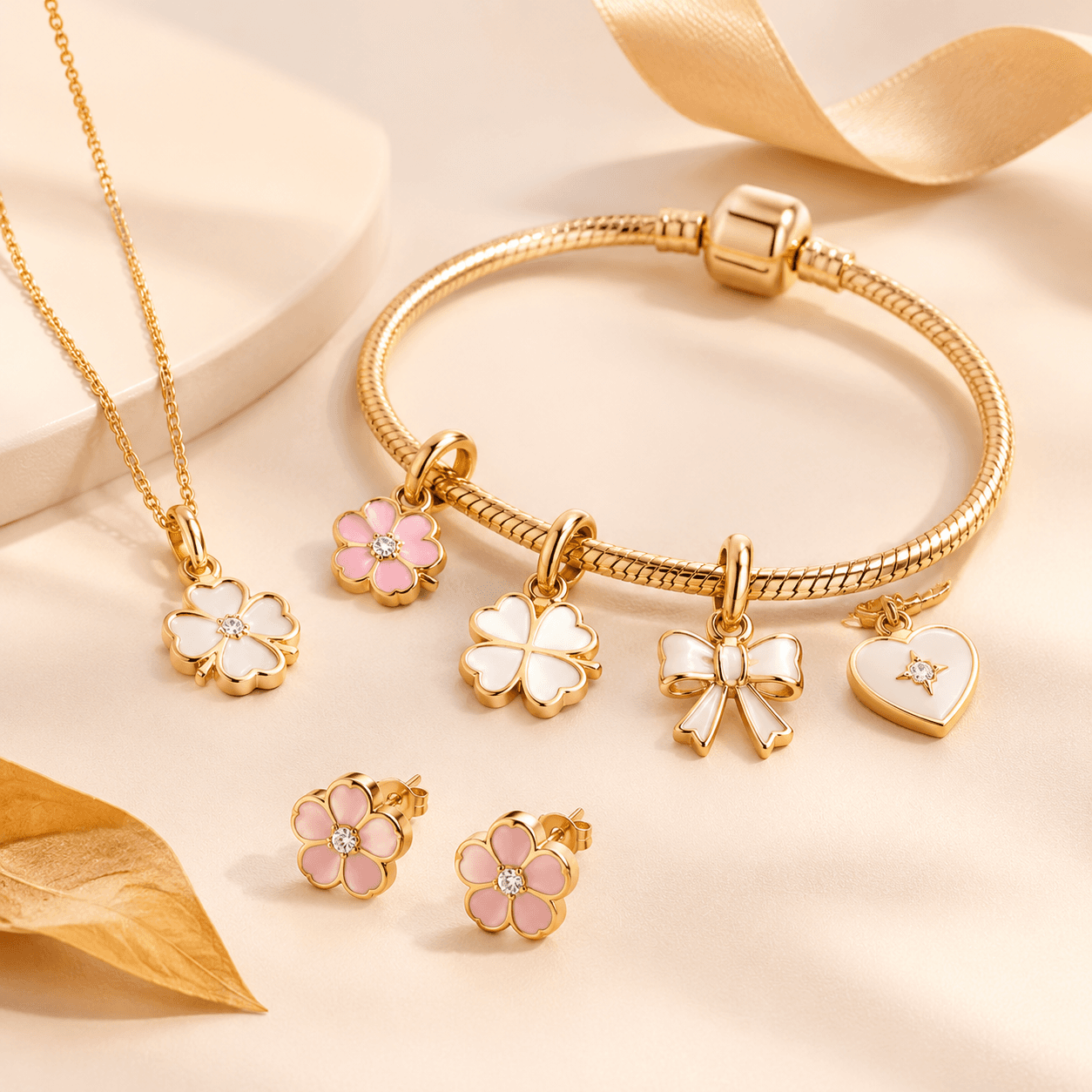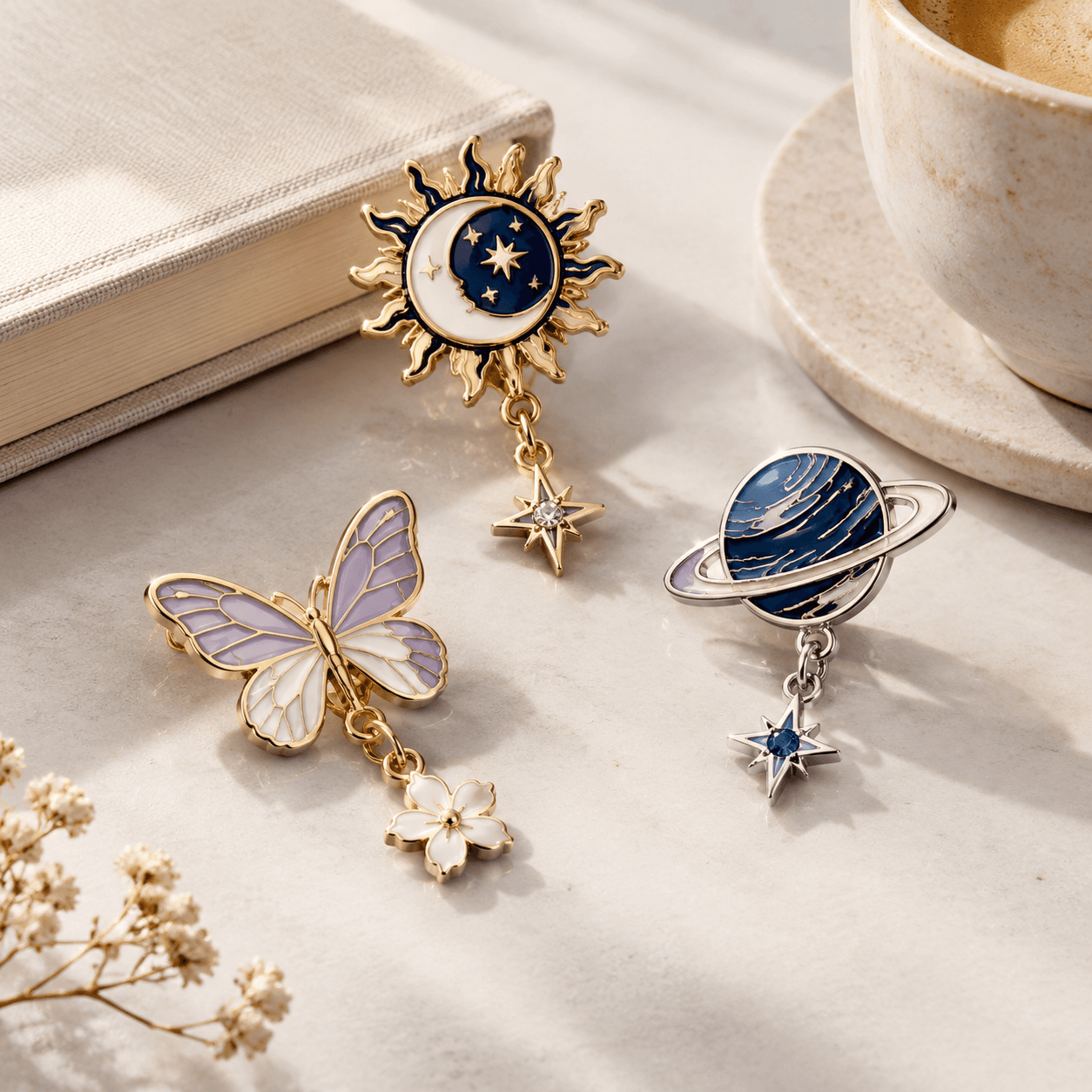
Developing a successful custom enamel pin and charm program requires more than an attractive design. Product developers must evaluate material chemistry, dimensional accuracy, enamel performance, surface finishing, attachment engineering, regulatory requirements, and production repeatability before approving a commercial order. These decisions directly influence product durability, sampling costs, manufacturing lead times, and customer satisfaction.
For North American boutique brands, gift companies, and private-label buyers, 316L stainless steel offers a technically compelling foundation for decorative charm development. Its chromium-based corrosion resistance, molybdenum content, and controlled carbon composition make it suitable for products requiring consistent appearance and dependable everyday performance. This guide explains how to evaluate custom enamel charms, coordinate separate pin components where required, and establish a reliable OEM manufacturing specification. The focus throughout is on 316L stainless steel charms rather than treating pins as the primary manufactured product.
316L Stainless Steel Custom Enamel Pins with Charms: Understanding the Product Opportunity
Defining the Charm Component in a Combined Product Program
A custom enamel pin and charm program can involve several coordinated decorative components. A pin may function as a separately specified accessory, while a 316L stainless steel charm serves as a removable decorative element for jewelry, keychain charms, bag charms, or gift accessories. These components should have independent technical specifications, inspection criteria, and attachment requirements.
For charm manufacturers, the central engineering challenge is creating a decorative component that maintains its intended geometry, surface quality, and functional attachment after repeated handling. Enamel introduces another layer of complexity because its appearance depends on cavity geometry, filling consistency, curing conditions, and the relationship between the surrounding metal and colored areas.
Why 316L Stainless Steel Deserves Material-Level Evaluation
316L stainless steel is an austenitic chromium-nickel-molybdenum grade. Its composition provides a useful combination of corrosion resistance, mechanical performance, and manufacturing flexibility. The chromium content supports the formation of a passive surface film, while molybdenum improves resistance to localized corrosion in challenging environments.
The low-carbon designation is also significant. Reduced carbon content helps limit sensitization risks during appropriate thermal processing. However, actual performance still depends on material traceability, fabrication methods, finishing quality, and the finished product's exposure conditions.
Benefits of 316L Stainless Steel Enamel Charm Manufacturing
1. Corrosion Resistance and Long-Term Appearance
The chromium-rich passive film on 316L stainless steel helps protect the underlying material from environmental exposure. Molybdenum further improves resistance to localized corrosion, making this grade a practical option for decorative products exposed to humidity and routine handling.
Buyers should distinguish between the corrosion resistance of the base material and the performance of a decorative finish. PVD gold plating, rose gold plating, and silver finish each require their own process controls. Enamel areas also require appropriate adhesion and surface-quality checks. A corrosion-resistant base does not automatically guarantee that every finished surface will remain unchanged under every use condition.
2. Consistent Manufacturing and Decorative Precision
316L stainless steel supports precision manufacturing processes, including CNC machining, laser cutting, laser marking, welding, and polishing. These processes help manufacturers control outer dimensions, decorative recesses, attachment openings, and surface transitions.
For custom enamel charms, precise recess geometry is particularly important. If cavity depth varies, the visual relationship between colored enamel and the surrounding metal can become inconsistent. Dimensional controls therefore need to be established before production rather than relying exclusively on final visual inspection.
3. Documented Material and Compliance Evaluation
Independent testing provides buyers with stronger evidence than marketing descriptions alone. Lancy Jewelry supports manufacturing quality evaluation through SGS-certified testing documentation covering RoHS, REACH, Nickel Release EN1811, and Salt Spray 240H.
These testing references address different technical questions. RoHS concerns restricted substances within its applicable scope. REACH addresses chemical requirements under European regulations. EN1811 provides a method for assessing nickel release from relevant articles. Salt Spray 240H evaluates corrosion behavior under a defined accelerated testing environment.
Buyers should request applicable reports, identify the tested product configuration, and verify that the report corresponds to the relevant material, finish, and production specification. A test report for one configuration should not automatically be treated as evidence for every future product variation.
Detailed Materials Science: Comparing 316L Specifications and Manufacturing Decisions
Understanding the Chemistry of 316L Stainless Steel
Material selection should begin with the actual grade designation and supporting documentation. A typical 316L composition is controlled within established specification ranges. The following figures are useful reference values for product developers, although the governing material standard and supplier certificate must determine the accepted limits for a particular order.
| Element | Typical specification range or limit | Engineering significance |
|---|---|---|
| Chromium | 16–18% | Supports passive-film formation and corrosion resistance. |
| Nickel | 10–14% | Helps stabilize the austenitic structure and supports ductility. |
| Molybdenum | 2–3% | Improves resistance to localized corrosion. |
| Carbon | Maximum 0.03% | Defines the low-carbon grade and reduces sensitization susceptibility. |
| Manganese | Maximum 2% | Contributes to processing and metallurgical control. |
| Silicon | Maximum 1% | Supports metallurgical processing characteristics. |
| Phosphorus | Maximum 0.045% | Controlled residual element. |
| Sulfur | Maximum 0.03% | Controlled residual element. |
Iron forms the balance of the composition. Buyers should not approve material solely because a supplier describes it as stainless steel. Request a material certificate identifying the grade, applicable specification, and traceability information. Where appropriate, independent chemical analysis can help verify the supplied material.
316L Stainless Steel Versus Different Finish Systems
One important purchasing distinction is that the base material and decorative finish perform different functions. The base material provides the structural foundation, while the surface treatment determines the final appearance and contributes to surface performance.
| Evaluation factor | 316L stainless steel with natural silver finish | 316L stainless steel with PVD gold plating | 316L stainless steel with enamel |
|---|---|---|---|
| Primary function | Clean metallic appearance | Decorative gold-tone surface | Controlled color and visual contrast |
| Base structure | 316L stainless steel | 316L stainless steel | 316L stainless steel |
| Critical process control | Polishing and surface consistency | Surface preparation and coating parameters | Cavity preparation and filling consistency |
| Key inspection | Scratches, polishing marks, and color uniformity | Coverage, adhesion, and color consistency | Color accuracy, filling quality, and surface defects |
| Buyer priority | Consistent metallic appearance | Repeatable decorative finishing | Accurate color reproduction and clean boundaries |
These are complementary finishing approaches rather than interchangeable material specifications. A product developer should select the surface treatment according to the visual brief, intended usage, and required inspection standard.
How Enamel Changes the Engineering Requirements
Enamel introduces a localized decorative layer into the product design. Its success depends on the geometry and cleanliness of the receiving cavity, filling technique, curing parameters, and compatibility with the surrounding finished surface.
For each custom enamel charm, define the following parameters before approving a sample:
- Color references, including approved physical samples or controlled color specifications.
- Cavity dimensions, depth, and boundary geometry.
- Required filling level and acceptable surface variation.
- Minimum separation between adjacent color areas.
- Surface finish requirements around the enamel boundaries.
- Inspection criteria for bubbles, contamination, incomplete filling, and visible defects.
Complex artwork should be evaluated for manufacturing feasibility. Extremely narrow color sections, intricate outlines, and multiple adjacent colors can increase production difficulty. Simplifying selected details may improve repeatability without compromising the design's essential visual identity.
Product Development: From Technical Drawing to Approved Sample
Step 1: Establish the Product Specification
Start with a complete technical brief. It should identify the intended application, dimensions, thickness, 316L stainless steel grade, finish, enamel colors, logo requirements, and attachment structure.
For a charm intended to connect to another decorative component, specify the attachment interface independently. A jump ring must pass through an actual hole or closed loop. Its internal diameter, wire thickness, opening method, and clearance should be assessed against the intended hardware.
Do not approve a drawing that shows a visually attractive but mechanically impossible connection. Functional geometry should be verified in the technical drawing and physical sample.
Step 2: Review Prototype Feasibility
The next stage is design engineering. Lancy Jewelry uses CNC equipment, laser cutting, laser marking, welding, and polishing capabilities to support custom charm development.
During feasibility review, the manufacturer should evaluate minimum feature dimensions, edge conditions, cavity depth, material thickness, hole placement, and finishing access. Designs with very small details may require adjustments to preserve clean outlines and avoid manufacturing inconsistencies.
A well-managed sample development process should identify technical risks before mass production. This is particularly important for product developers introducing new decorative formats or coordinated product series.
Step 3: Approve Finish and Enamel Samples
Never rely exclusively on digital artwork when approving color-sensitive products. Monitor actual samples under consistent lighting and compare them against the approved references.
Inspect the relationship between enamel color and the surrounding metallic surface. Check for uneven boundaries, surface contamination, visible processing marks, and inconsistent color distribution. Where PVD gold plating is required, evaluate color uniformity and coverage across both visible and functional areas.
Step 4: Validate Attachment and Physical Performance
Mechanical performance deserves the same attention as appearance. Check whether the attachment opening provides adequate clearance, whether the connecting hardware closes securely, and whether repeated movement creates unexpected friction or deformation.
Depending on the product application, the validation plan may include dimensional inspection, attachment retention checks, abrasion evaluation, corrosion testing, and repeated handling assessment. Establish measurable acceptance criteria before production begins.
Step 5: Confirm the Production Reference Sample
The approved reference sample becomes the visual and dimensional baseline for manufacturing. Record the material specification, drawing revision, finish, enamel references, dimensions, attachment details, and acceptable tolerances.
Changes made after sample approval should be documented and reviewed. Even a small change to cavity depth, coating sequence, or hole diameter can affect the final product. A controlled approval process reduces unnecessary rework and protects consistency across bulk charm orders.
North American Buyer Considerations: Compliance, Testing, and Market Expectations
FDA Considerations for Decorative Accessories
North American buyers should avoid treating FDA terminology as a general jewelry certification. Ordinary decorative jewelry is not automatically subject to FDA premarket approval simply because it is sold in the United States. FDA requirements may become relevant when a product falls within a specific regulated category, such as an applicable food-contact or medical-related use.
For typical decorative charm programs, buyers should identify the regulations that actually apply to their product, intended users, marketing claims, and distribution channels. Children's products can trigger additional requirements, including applicable lead-content and testing obligations under the Consumer Product Safety Improvement Act. California Proposition 65 may also require separate exposure and warning assessments when applicable.
Canadian buyers should independently review applicable Canadian consumer product and chemical safety requirements. A test report should be evaluated against the actual market and intended product category rather than treated as universal regulatory clearance.
US and Canadian Consumer Expectations
North American buyers commonly prioritize clear product specifications, dependable finishing, consistent color, and reliable reorder quality. Boutique brands also benefit from coordinated collections in which several designs share a consistent visual language.
For this reason, suppliers should support series planning rather than evaluate each charm as an isolated project. A coordinated program can establish common dimensions, finish references, enamel standards, and attachment specifications across multiple designs.
Which Documents Should Buyers Request?
| Document or evidence | What it helps verify | Buyer action |
|---|---|---|
| Material certificate | Specified 316L stainless steel grade and chemistry | Check grade designation and traceability. |
| RoHS documentation | Applicable restricted-substance requirements | Confirm product and report scope. |
| REACH documentation | Relevant chemical compliance requirements | Verify applicable substance and article requirements. |
| EN1811 test report | Nickel release assessment | Confirm the tested configuration and relevant use conditions. |
| Salt Spray 240H report | Performance under a defined corrosion test | Review the method, sample, and acceptance criteria. |
| Final inspection report | Dimensions, appearance, and workmanship | Agree on inspection points before mass production. |
Production Planning: MOQ, Lead Times, and Commercial Risk
How to Evaluate MOQ Requirements
MOQ should be evaluated against the manufacturing complexity of the product rather than treated as a single universal number. A simple polished charm and a multi-color enamel design may require different production preparation, finishing sequences, and inspection resources.
Buyers should ask whether the MOQ applies per design, per finish, or across a coordinated collection. Combining related designs into a planned production program may improve purchasing efficiency, provided that the manufacturer's production conditions support the arrangement.
Lancy Jewelry supports low MOQ discussions for suitable projects. Actual quantities depend on design complexity, material preparation, finishing requirements, and production planning.
What Determines Sample and Bulk Production Lead Times?
Lead times depend on more than the number of manufacturing days. Artwork approval, drawing revisions, material preparation, prototype production, enamel development, finishing trials, and final inspection all influence the project schedule.
Buyers should request separate estimates for technical review, sample development, sample revision, and mass production. They should also identify which approvals must be completed before the next stage begins.
| Development stage | Primary activity | Potential schedule risk |
|---|---|---|
| Design review | Artwork and specification assessment | Incomplete technical information |
| Prototype | Geometry and functional validation | Complex details or attachment revisions |
| Sample finishing | Enamel and surface treatment approval | Color adjustments and process trials |
| Production preparation | Approved specifications and planning | Late design changes |
| Bulk manufacturing | Production and quality inspection | Unapproved variations or process inconsistency |
How to Prepare an Effective RFQ
A complete RFQ helps a stainless steel charms manufacturer assess the project accurately. Include the following information:
- Product drawings, reference images, or vector artwork.
- Required 316L stainless steel specification.
- Finished dimensions, thickness, and tolerances.
- Surface finish, including PVD gold plating or silver finish where applicable.
- Enamel colors and approved color references.
- Logo engraving and marking requirements.
- Attachment mechanism and functional requirements.
- Estimated quantity, MOQ expectations, and target delivery schedule.
- Packaging requirements and private-label presentation details.
- Target market and applicable compliance documentation.
Providing these details at the beginning reduces quotation uncertainty and creates a more reliable path from concept to approved production.
How to Select an OEM Manufacturing Partner
Evaluate Process Capability, Not Just Product Images
Product photographs can demonstrate design potential, but they cannot independently verify material chemistry, manufacturing repeatability, or finishing controls. Buyers should evaluate the supplier's actual production capabilities, technical communication, sample support, and documentation.
For an OEM charms manufacturer, important questions include whether the factory can review drawings, control laser-cut details, maintain consistent polishing, execute logo engraving, coordinate enamel filling, and inspect attachment structures.
ODM development may provide additional support when buyers need help translating an initial concept into a production-ready design. The supplier should explain design limitations and recommend technically practical adjustments before the sample stage.
Why Factory-Direct Communication Matters
Direct technical communication makes it easier to resolve questions about dimensions, tolerances, finishes, and inspection criteria. It also creates clearer accountability when a sample requires modification.
Lancy Jewelry operates as a B2B OEM/ODM 316L stainless steel charms manufacturer, supporting boutique brands, charm bar retailers, gift companies, distributors, and private-label buyers. Its manufacturing processes include CNC machining, laser cutting, laser marking, welding, and polishing, with support for PVD plating, enamel color filling, crystal setting, logo engraving, and private-label packaging.
Buyers can explore the OEM manufacturing service to understand custom development support or browse the product catalog when planning a coordinated charm collection.
Frequently Asked Questions
1. Why is 316L stainless steel suitable for custom enamel charms?
316L stainless steel combines chromium-based corrosion resistance, molybdenum content, and low carbon composition. It provides a dependable structural foundation for decorative charm manufacturing. Its suitability for a specific product still depends on the design, finishing process, intended use, and quality validation.
2. Can Lancy Jewelry develop custom enamel charms with PVD gold plating?
Yes. Lancy Jewelry supports custom 316L stainless steel charms with enamel color filling and PVD gold plating. Buyers should provide artwork, dimensions, finish references, and enamel specifications so the factory can evaluate feasibility and prepare a suitable sample.
3. What testing should North American buyers request?
Buyers should begin with a material certificate and determine which chemical, corrosion, and product-safety requirements apply to their intended market. Relevant supporting documentation may include RoHS, REACH, Nickel Release EN1811, and Salt Spray 240H reports. Children's products and products with specialized intended uses may require additional assessments.
4. Can Lancy support low MOQ and private-label charm production?
Lancy Jewelry supports low MOQ discussions, sample development, OEM/ODM manufacturing, and private-label packaging for suitable projects. The final MOQ and schedule depend on design complexity, finishing requirements, production planning, and the requested quantity.
Partner With Lancy Jewelry for Your Next Charm Development Project
Successful custom charm programs begin with disciplined material selection, technically sound product drawings, realistic finishing specifications, and measurable quality requirements. For North American product developers, evaluating these factors before production helps reduce sampling uncertainty and protects the consistency of future orders.
Lancy Jewelry combines 316L stainless steel manufacturing expertise with OEM/ODM development, laser processing, precision polishing, PVD finishing, enamel filling, crystal setting, logo engraving, and private-label packaging support. Whether you are developing a coordinated boutique collection, expanding a charm bar assortment, or sourcing custom decorative accessories for a gift program, our team can help translate your specifications into production-ready samples.
Prepare your artwork, target dimensions, finish preferences, estimated quantity, and market requirements. Our team can review your project, discuss technical feasibility, and provide a manufacturing quotation.
Start your project: Visit our OEM service page or contact Lancy Jewelry to discuss your requirements. For a project quotation, submit your details through our RFQ request page.
Build your next collection on a clearly specified 316L stainless steel foundation, with manufacturing processes and quality expectations established before bulk production begins.