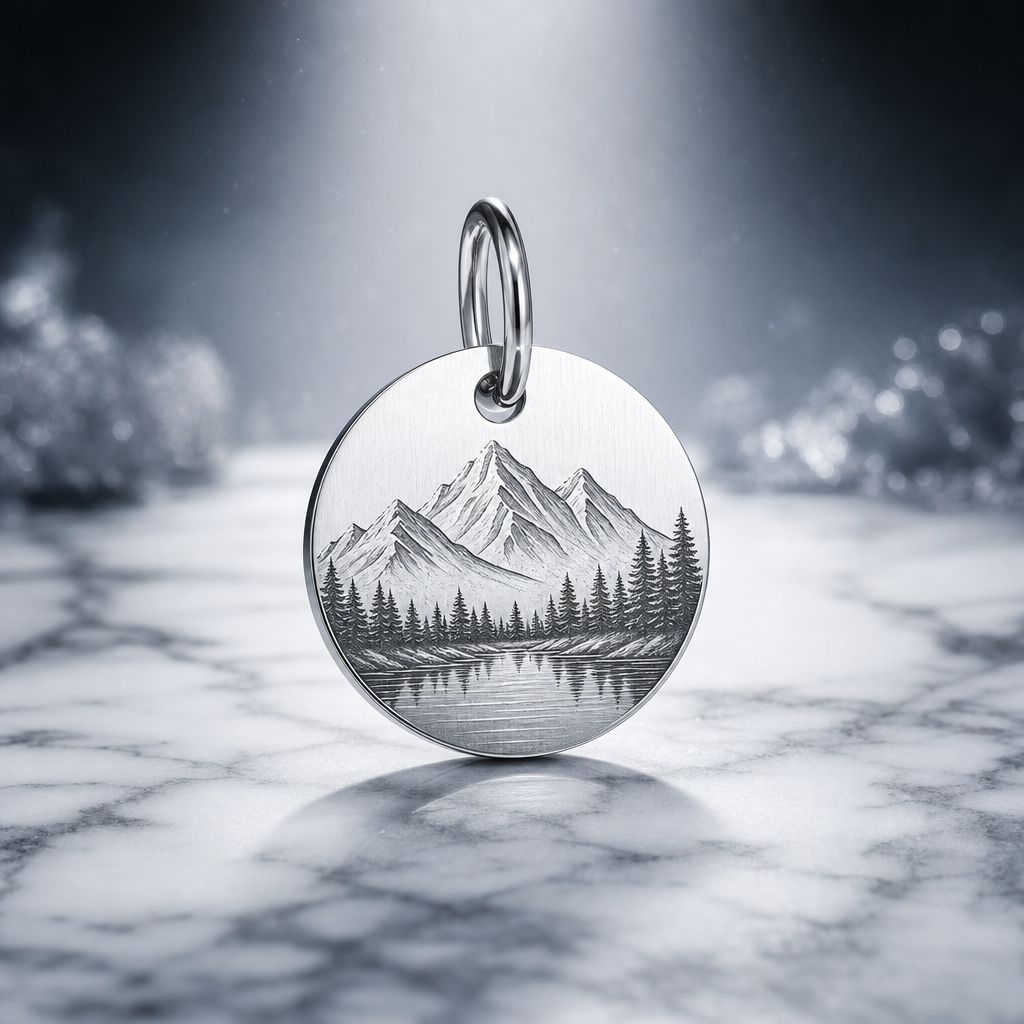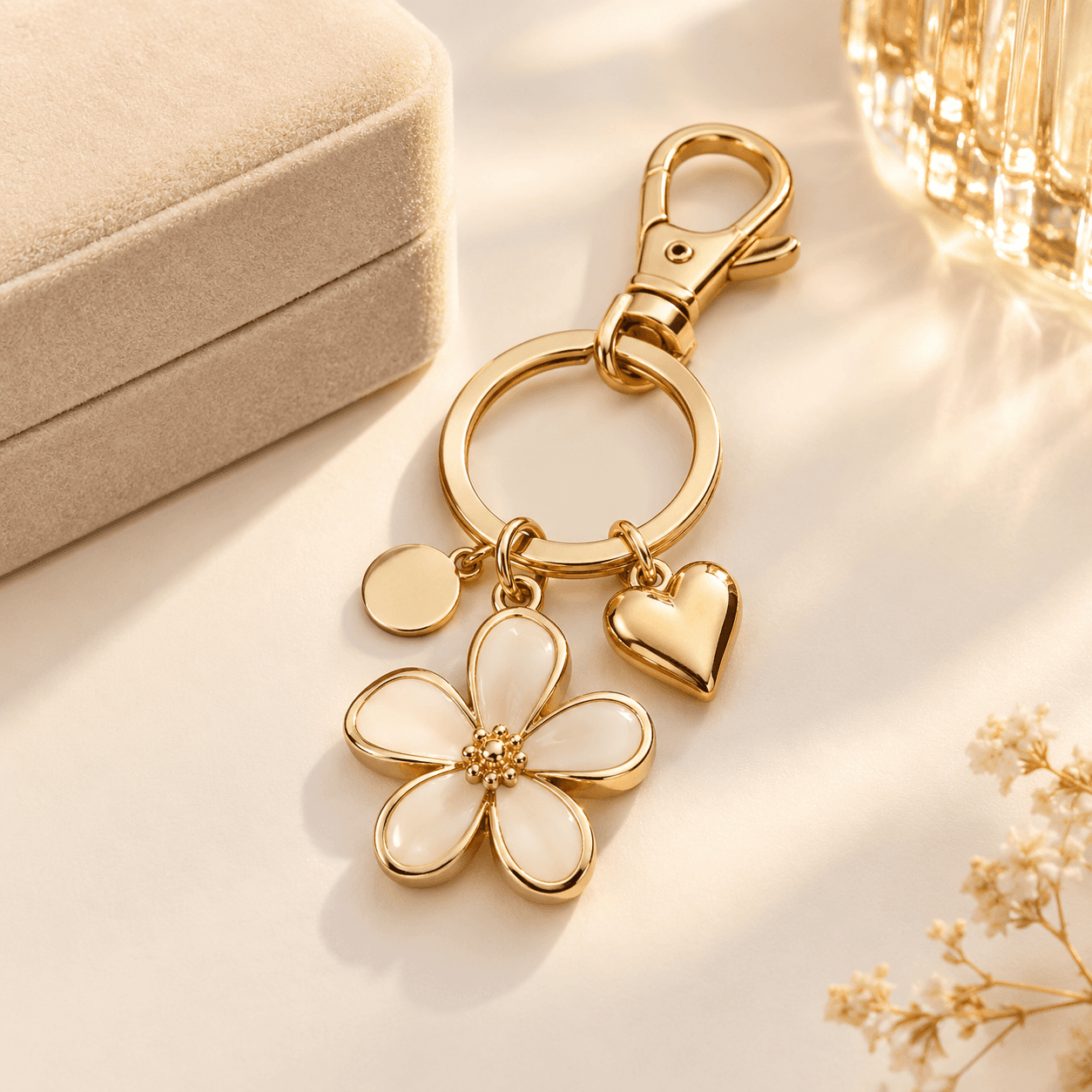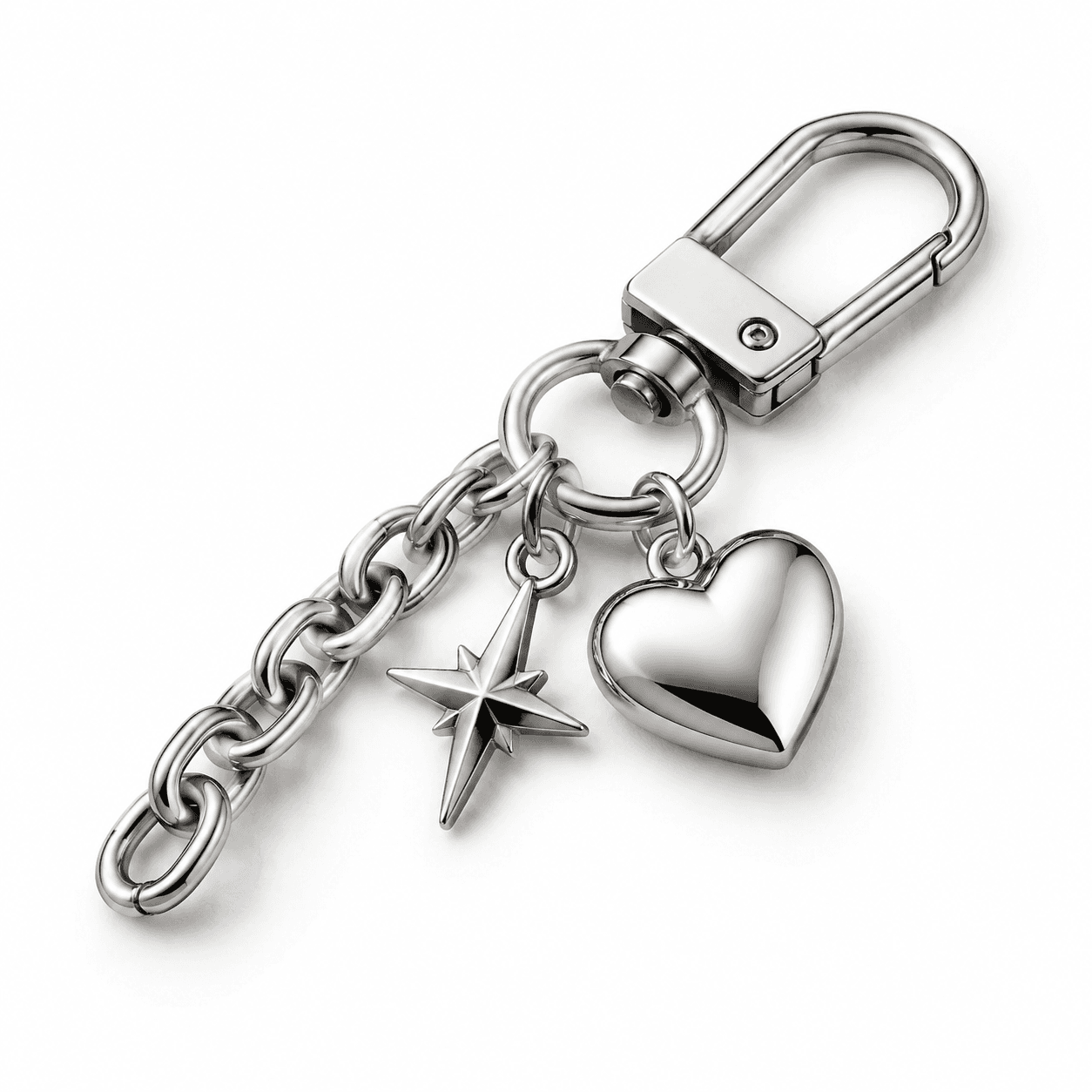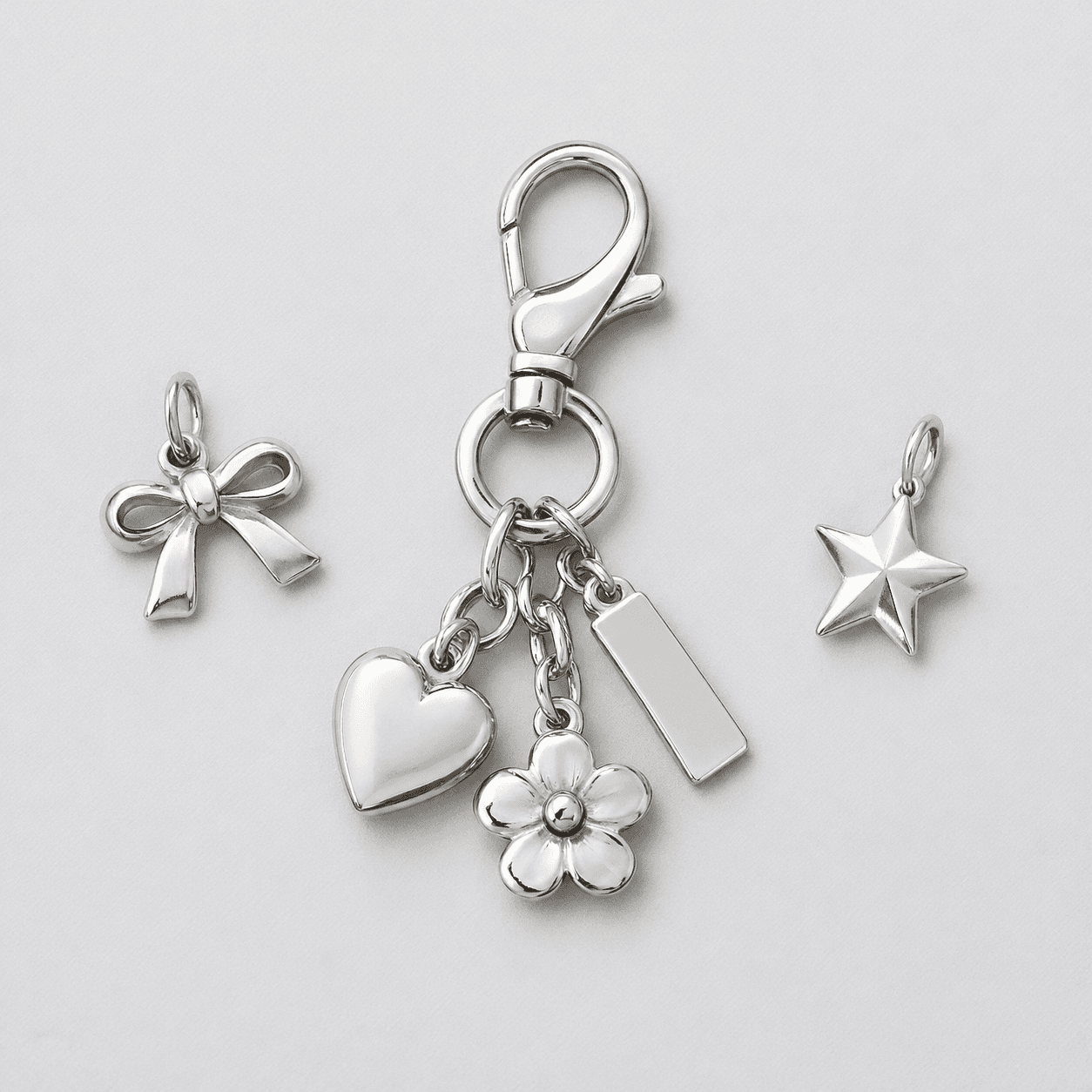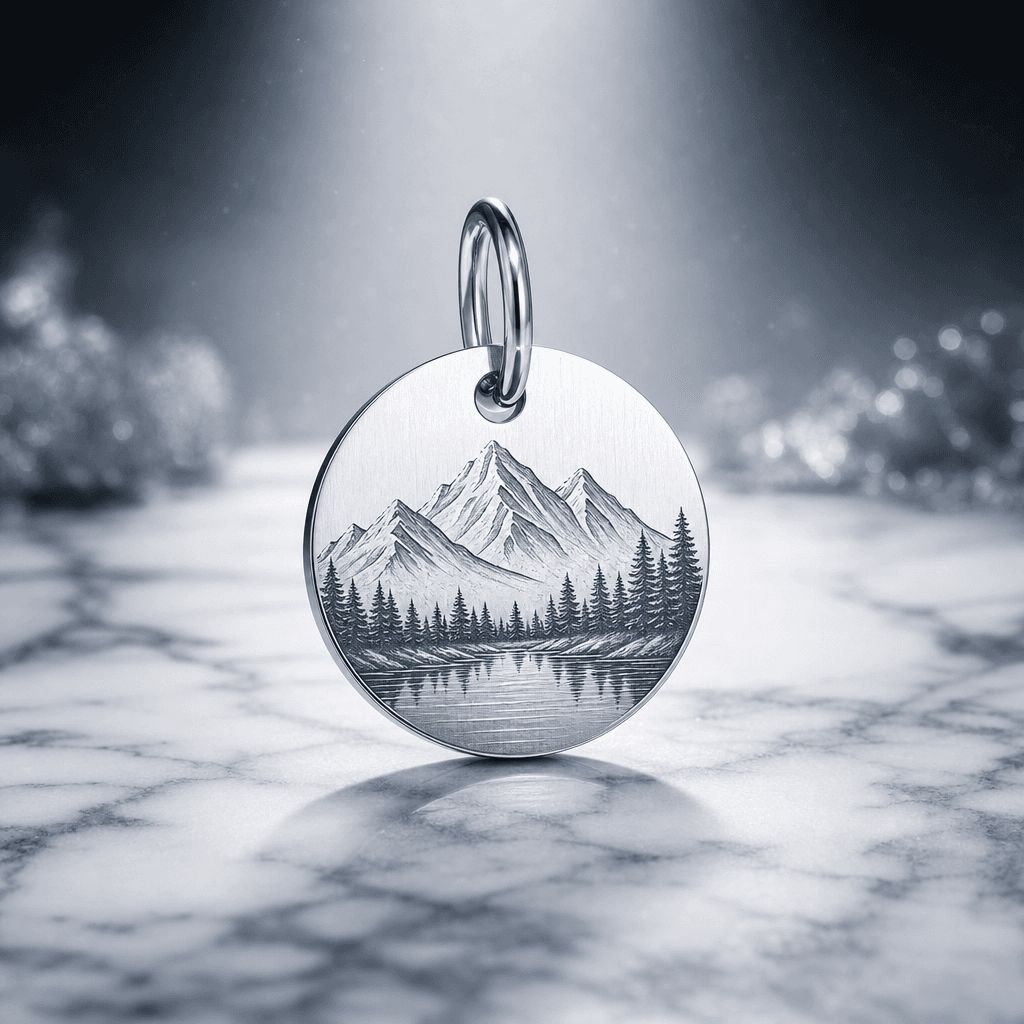
Bulk charm programs succeed when product quality is measurable, documentation is audit-ready, and durability is verified before volume production. If your procurement team is planning custom engraved charms in 316L stainless steel for charm bars, gift programs, or private-label assortments, this checklist helps you evaluate vendor capability end-to-end—so the charms stay sharp, plated evenly, and wear-resistant from first shipment to long-term retail use.
Custom engraved charms stainless steel bulk checklist for procurement
Use this action-oriented checklist to vet whether a supplier can deliver consistent engraved detail, stable surface finishes, and reliable bulk performance—without surprises at inspection time. Keep it in your RFQ workflow as your standard for custom stainless steel charms, especially for procurement teams managing bulk charm orders across regions.
1) Confirm base material compliance (no deviations)
- ☐ Request written confirmation that the base material is strictly 316L stainless steel (not mixed materials).
- ☐ Ask for material traceability records at batch level (heat/lot references if available).
- ☐ Verify that engraving is performed on the confirmed base and not on a temporary coating layer.
2) Validate engraving quality criteria (visual + functional)
- ☐ Require sample engraving under your exact artwork/vector files and final size range (e.g., 8–18 mm typical charm scale).
- ☐ Check minimum line width and micro-detail retention: verify engraving depth and edge definition.
- ☐ Confirm post-processing plan (polishing, deburring) so engraved recesses remain clean and readable.
- ☐ Inspect for burrs or sharp edges around engraving grooves (safety + comfort for charm bar handling).
3) Verify surface finish stability for wear resistance
- ☐ If you require PVD plated stainless steel charms, request the plating specification and thickness range targets.
- ☐ For enamel stainless steel charms or crystal inlay programs, verify how color/setting survives handling and long-term display.
- ☐ Confirm quality gates: surface uniformity (no patchiness), consistent gloss, and clean edges around engraved areas.
4) Test plan and standards alignment (before bulk)
- ☐ Ask for a testing summary aligned to retail durability: abrasion/wear resistance, salt exposure, and corrosion risk evaluation.
- ☐ Confirm that the supplier supports documented test results, not only “pass/fail claims.”
- ☐ Require representative test pieces from the same production process (same equipment route, similar finish stack).
5) Certifications and compliance documentation for audits
- ☐ Collect proof of compliance for regulated areas: request the latest reports for RoHS and REACH.
- ☐ Request nickel release documentation (e.g., Nickel Release EN1811) for sensitive skin risk management.
- ☐ Confirm salt spray performance (e.g., Salt Spray 240H) as evidence of corrosion resistance.
- ☐ Ensure documentation is provided in a format procurement teams can store for audits (PDF reports, revision dates, batch references if applicable).
6) Manufacturing capability fit (CNC/laser, marking, polishing)
- ☐ Verify the supplier can execute your process route: CNC, laser cutting, laser marking/engraving, welding, and polishing.
- ☐ Confirm how they maintain alignment between engraving and the final polished surface (recess visibility after finishing).
- ☐ Ask what changes trigger a re-sample: artwork changes, finish changes, plating cycle changes, or tooling updates.
7) Hardware integrity for bulk charm programs
- ☐ Confirm attachment mechanism quality: jump ring, bail, or loop must be properly formed and mechanically plausible.
- ☐ Require a check for secure connection points (no loose metal, no deformation after finishing).
- ☐ Request sample inspection under normal retail handling conditions (opening/closing if applicable, threading if applicable).
8) MOQ strategy and lead time realism
- ☐ Ask for a clear MOQ structure by finish and process complexity (engraving + plating + enamel/crystal changes risk).
- ☐ Confirm sample development timeline and whether your artwork needs vector cleanup or revisions.
- ☐ Use RFQ stage questions to reduce schedule drift: confirm production capacity and shipping windows for your regions.
9) Private-label packaging readiness
- ☐ Confirm you can opt for private-label packaging for gift programs or charm bar merchandising.
- ☐ Request packaging mockups early to avoid last-minute carton rework.
- ☐ Verify labeling and barcode readiness if your distribution process requires it.
Why it matters: quality and durability reduce returns, rework, and audit risk
In bulk programs, small quality gaps become expensive. Engraving that fades, plating that wears unevenly, or finishes that corrode under exposure can drive customer complaints and procurement escalation. A robust vendor process protects both your brand experience and your compliance posture.
Key benefits for procurement teams
- Wear-resistant performance: 316L stainless steel base supports consistent durability for daily handling in retail settings.
- Documented compliance: Lancy Jewelry provides SGS certified compliance documentation including RoHS, REACH, Nickel Release EN1811, and Salt Spray 240H to support audit-ready procurement.
- Consistent finishing: stable plating and finishing workflows help maintain color uniformity across large production runs.
- Lower operational risk: clear testing expectations and measurable quality criteria reduce re-sampling cycles.
- Vendor scalability: OEM/ODM capability supports development from sample to bulk manufacturing without changing the underlying process route.
Detailed guide: how to evaluate a supplier’s engraved 316L charm bulk readiness
Follow these steps in your sourcing workflow. The goal is to decide quickly, with evidence, whether the supplier can meet your durability expectations and compliance requirements for global distribution.
Step 1: Build your RFQ with measurable requirements
- ☐ Provide artwork in final vector format and include size range for your charm design.
- ☐ Specify finish stack: engraving-only, engraving + PVD, engraving + enamel, engraving + crystal inlay.
- ☐ Define acceptance criteria: visual legibility in recesses, finish uniformity, and hardware integrity.
Step 2: Ask for sample development that mirrors bulk manufacturing
- ☐ Request sample development using the same process sequence intended for bulk production.
- ☐ Verify engraving after final polishing and any plating/enamel steps.
- ☐ Require sample photos and physical inspection access if your team can audit before shipment.
Step 3: Conduct a durability-focused inspection rubric
- ☐ Visual: engraving edge sharpness, recess cleanliness, and no visible finish pooling around engraved lines.
- ☐ Surface: even gloss/coverage for PVD plated programs; clean enamel fill boundaries for enamel programs.
- ☐ Corrosion resilience: verify supplier-provided salt exposure results (e.g., Salt Spray 240H) and confirm applicability to your finish stack.
- ☐ Skin-safety documentation: nickel release compliance evidence for your target markets.
Step 4: Confirm quality control gates before bulk charm orders
- ☐ Ask how final inspection is done (visual checks + any dimensional checks).
- ☐ Request information on defect handling: what happens if engraving depth or plating coverage deviates from sample approval.
- ☐ Confirm whether the supplier locks a “golden sample” standard for ongoing production consistency.
Step 5: Plan for bulk logistics and packaging control
- ☐ Confirm private-label packaging specs and how components are protected in transit.
- ☐ Ensure protective measures against scuffs on plated surfaces.
- ☐ Ask about carton-level packing configuration and labeling for distribution in your countries.
Step 6: Keep procurement audit trails complete
- ☐ Store the compliance reports you receive (RoHS, REACH, EN1811 nickel release, Salt Spray performance) and ensure they match your current production revision.
- ☐ Maintain RFQ documents showing agreed acceptance criteria and sample approval sign-off.
FAQ: custom engraved stainless steel charm bulk sourcing
1) What should procurement teams verify first for custom engraved charms stainless steel bulk?
Start by confirming the base material requirement: strict 316L stainless steel and a documented process route. Then validate engraving quality on samples, followed by finish stability checks and procurement-ready compliance documentation (RoHS, REACH, Nickel Release EN1811, Salt Spray 240H).
2) How do we evaluate durability for PVD plated stainless steel charms in bulk?
Ask for test summaries relevant to wear and corrosion risk, plus evidence of consistent plating coverage. During sample development, inspect engraving recesses and edge finishing after the full plating/finishing stack—because durability issues often appear at the interface between engraving and surface finish.
3) Can the supplier support low MOQ charm production and still keep quality consistent?
Many programs start small to validate designs. A capable OEM/ODM partner should support low MOQ charm production while using controlled production processes and clear acceptance criteria, so sample results translate reliably into bulk manufacturing.
4) What documentation do we need for audits across US, EU, UK, and other markets?
Request SGS certified compliance documentation for RoHS and REACH, plus Nickel Release EN1811 and Salt Spray 240H results. Ensure you receive current revision dates and a structure that procurement can store for internal audits and distributor documentation requests.
Partner With Us: build an audit-ready bulk charm program
If you’re preparing bulk charm orders for boutique charm bars, private-label programs, or gift assortments, Lancy Jewelry can support OEM and ODM development for custom engraved charms stainless steel bulk programs built on a strict 316L stainless steel base. We offer sample development, engraving, PVD finishing, enamel color filling, crystal inlay options, and private-label packaging—backed by compliance documentation for procurement confidence.
Optional next step: Browse the catalog to align your design requirements and then submit your RFQ details through Request a Quote.