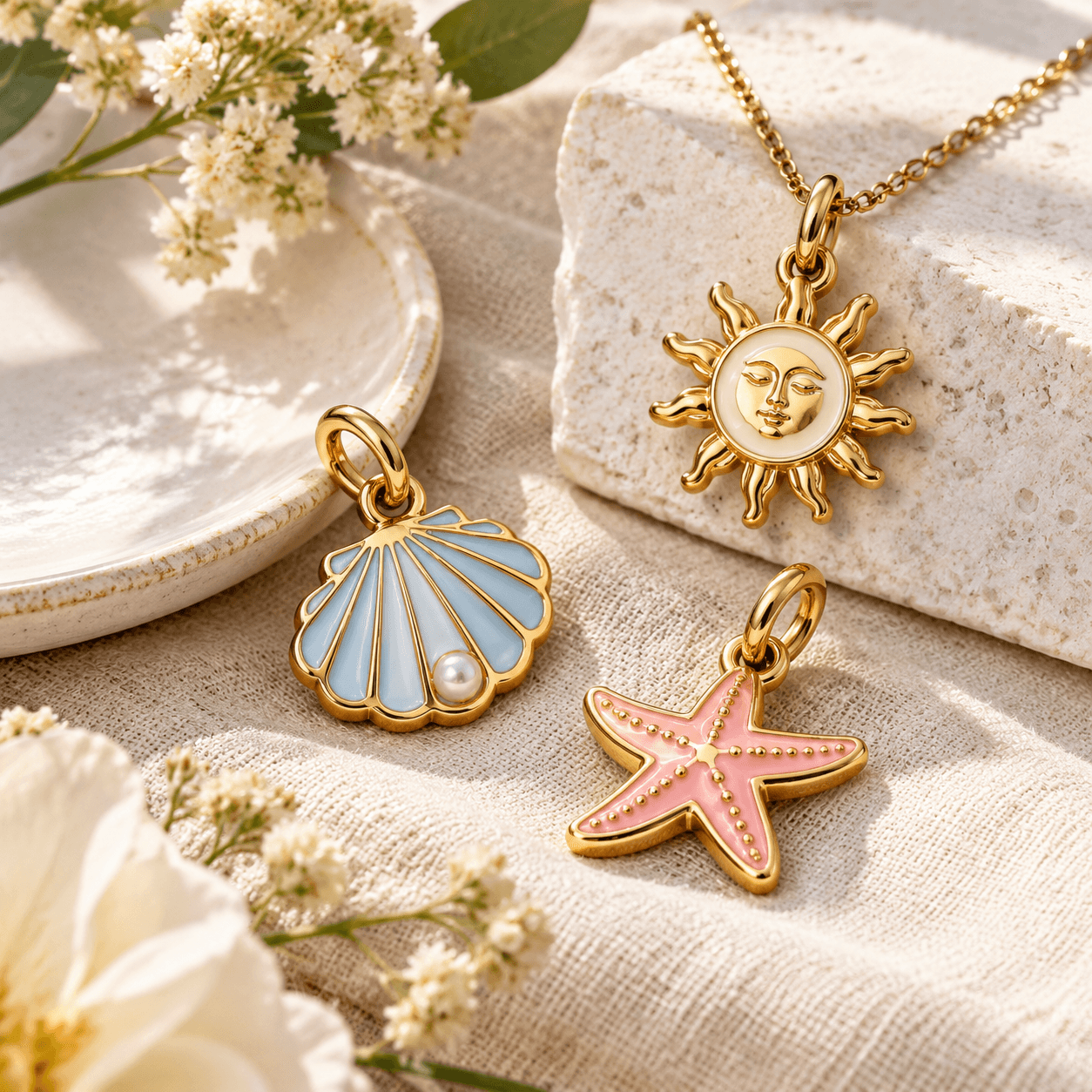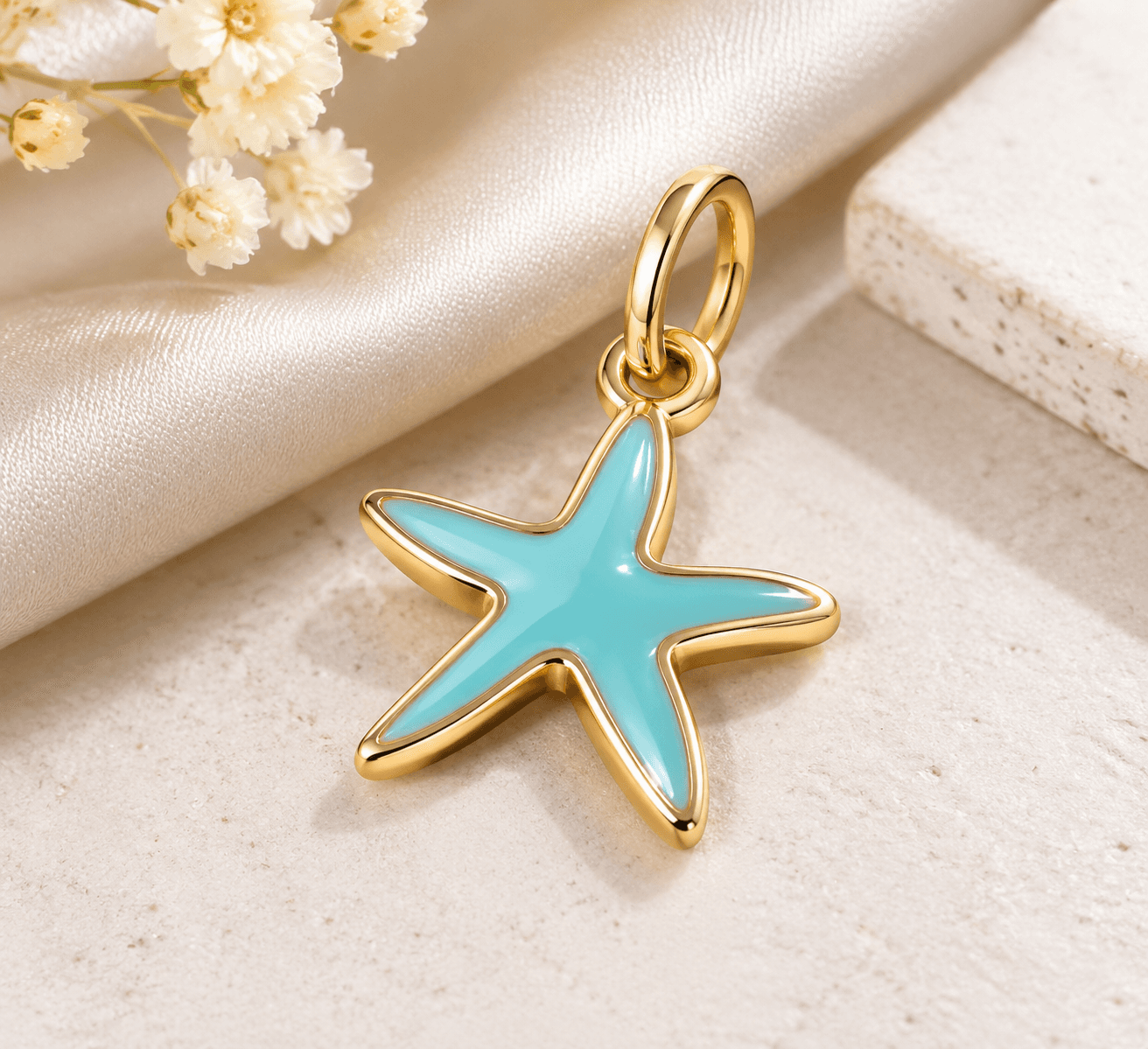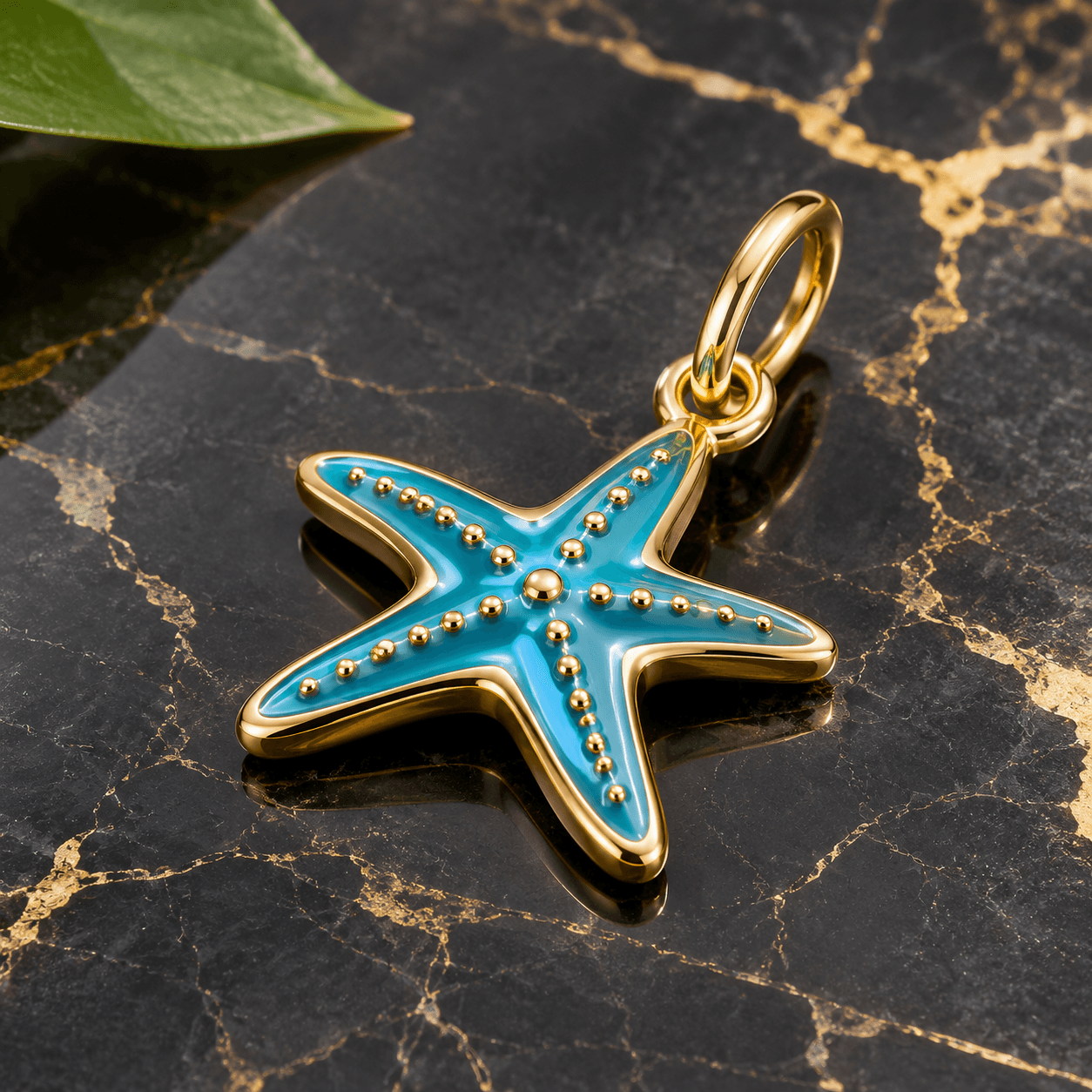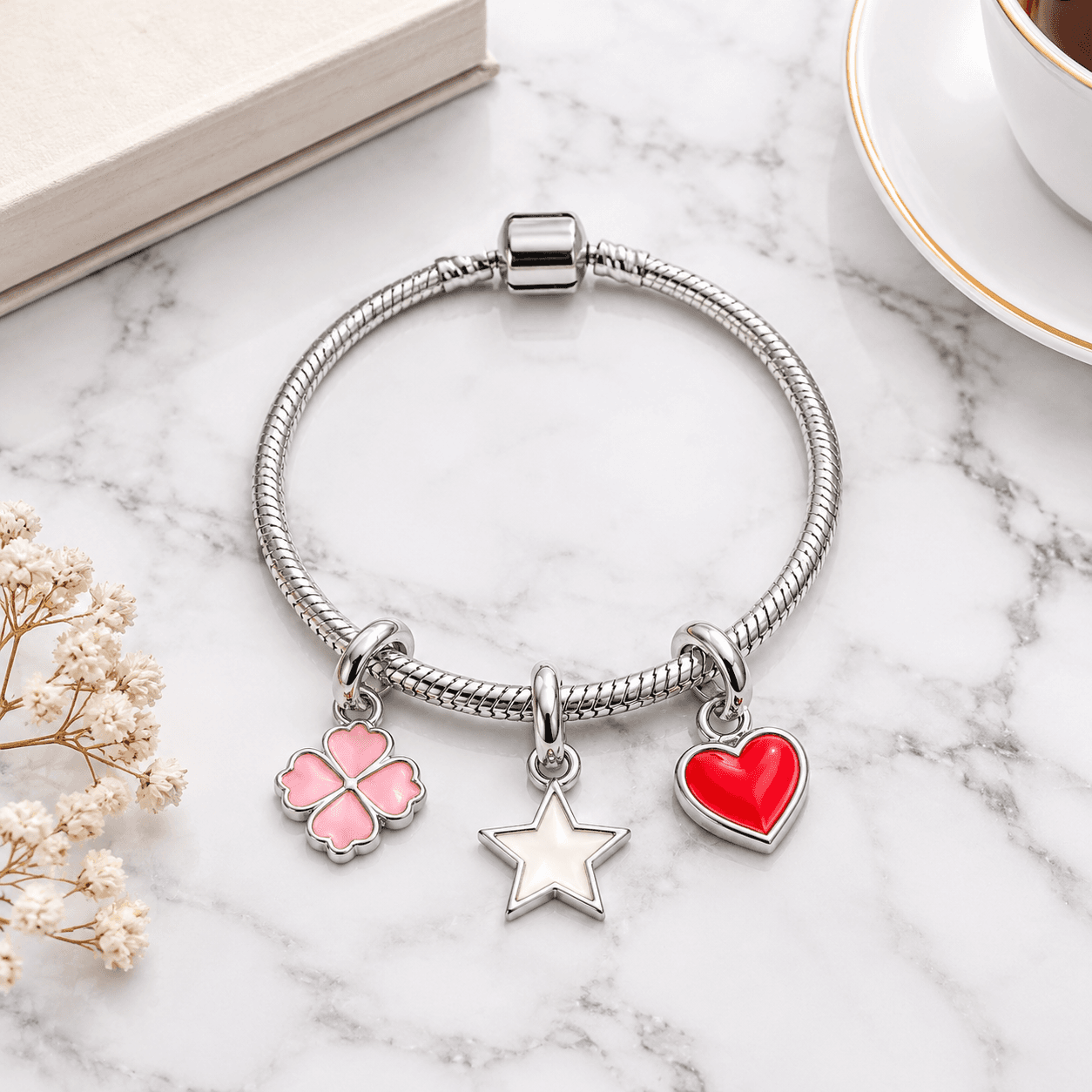
Choosing a supplier for stainless steel custom enamel bracelet charms requires more than reviewing product photographs and comparing unit prices. For jewelry designers and boutique brands in the US and Canada, the real sourcing challenge is finding a manufacturing partner that can translate creative concepts into repeatable production while maintaining consistent color, surface quality, dimensional accuracy, and attachment functionality. Enamel application, PVD coating, electroplating, and mechanical polishing each influence the final appearance and durability of a charm. More importantly, these processes must work together as a controlled finishing system rather than as isolated production steps.
A qualified supplier should demonstrate material traceability, finishing expertise, documented quality controls, practical sample development, and reliable bulk production capabilities. This guide explains how to evaluate these factors, compare manufacturing approaches, and identify an OEM partner capable of supporting a growing jewelry collection.
How to Choose a Stainless Steel Custom Enamel Bracelet Charms Supplier
Custom enamel bracelet charms combine a precision-engineered 316L stainless steel structure with carefully controlled decorative color application. The manufacturing result depends on the interaction between the base surface, enamel filling, coating sequence, polishing requirements, and attachment design.
Understand the Manufacturing Requirements Before Requesting Quotes
Begin by preparing a technical brief rather than sending a reference photograph alone. A useful brief should specify the charm's overall dimensions, thickness, front and back design, color locations, finish requirements, attachment opening, logo position, and expected order quantity.
For designers developing a coordinated collection, also define the intended visual relationship between individual designs. A collection might combine polished silver finish, gold plated surfaces, rose gold plating, and several enamel colors. These variations should share consistent proportions, edge treatment, hardware dimensions, and visual quality.
Ask each potential stainless steel charms manufacturer whether it can manage the complete development process, including engineering review, sample development, laser marking, enamel filling, finishing, inspection, and packaging. A supplier that understands the entire production sequence is better positioned to identify technical conflicts before they become expensive sampling or production problems.
Evaluate the Base Material and Structural Design
Material selection should be established before decorative finishing is discussed. Lancy Jewelry focuses on 316L stainless steel charms as its exclusive charm base material. This provides a consistent foundation for custom development and helps establish repeatable production specifications.
316L stainless steel offers useful characteristics for everyday jewelry applications, including corrosion resistance, mechanical strength, and suitability for precision manufacturing. However, the final performance of a charm also depends on its geometry, surface condition, finishing specification, and manufacturing controls.
Pay particular attention to the bail, jump ring opening, attachment loop, and narrow connecting sections. These functional areas must be designed with sufficient material thickness and appropriate tolerances. A visually attractive enamel surface cannot compensate for a poorly engineered attachment point.
Why Finishing Capabilities Matter for Custom Enamel Charms
Finishing quality determines how a charm looks under different lighting conditions, how clearly its decorative details appear, and how consistently an entire collection presents at retail. For North American boutique brands, customers often expect coordinated colors, refined reflective surfaces, clean edges, and dependable appearance across multiple purchasing occasions.
Key Benefits of a Controlled Finishing Process
- Visual consistency: Controlled surface preparation and coating parameters help maintain a consistent appearance across production batches.
- Design flexibility: Different PVD finishes and enamel color combinations allow designers to develop recognizable collection themes.
- Surface quality: Proper polishing reduces visible machining marks and prepares the surface for subsequent finishing operations.
- Production repeatability: Documented process specifications make it easier to reproduce approved samples during bulk manufacturing.
- Quality assurance: Defined inspection procedures help identify defects before finished charms enter packaging and distribution.
Certifications and Compliance Documentation
Certifications and laboratory testing records should form part of supplier evaluation, particularly for businesses selling into the US and Canada. Lancy Jewelry holds SGS certification documentation covering RoHS, REACH, Nickel Release EN1811, and Salt Spray 240H testing.
Buyers should request applicable reports and verify that the documented product configuration, material specification, and tested finishing system correspond to the products being purchased. A report should not automatically be interpreted as proof that every possible design or finishing combination has been tested.
For US market planning, understand the regulatory distinction between general jewelry quality requirements and product-specific legal obligations. The FDA does not generally issue an approval or certification for ordinary fashion jewelry. However, FDA requirements may become relevant when a product has a separate regulated use or makes claims that bring it within FDA jurisdiction. General consumer product obligations, applicable restrictions on certain substances, labeling requirements, and state-level rules should also be reviewed with qualified compliance professionals.
Canadian importers should similarly review applicable Canadian consumer product and chemical requirements. Ask suppliers to provide material declarations, relevant laboratory documentation, and traceability information rather than relying on broad statements such as compliant or certified.
Detailed Comparison of Enamel and Surface Finishing Techniques
One of the most important questions when evaluating a supplier is how it combines decorative enamel with surface finishing. Different processes serve different functions. PVD creates a controlled decorative surface coating, electroplating deposits a metallic finish through an electrochemical process, and polishing prepares or refines the physical surface. Enamel adds localized color and visual contrast.
1. PVD Coating: Consistent Decorative Surface Finishes
Physical vapor deposition, commonly called PVD, is a vacuum-based coating process. A coating material is vaporized and deposited onto a prepared surface under controlled conditions. In jewelry manufacturing, PVD can produce decorative gold plated and rose gold plating appearances, while other specifications can provide different metallic visual effects.
For designers, the main advantage is the ability to specify a controlled decorative finish across a coordinated product range. However, PVD performance depends on more than the process name. Surface preparation, substrate condition, coating composition, equipment parameters, component geometry, and post-process handling all affect the result.
Ask suppliers for details about coating specifications, sample approval, thickness measurement where applicable, color references, and batch inspection. Do not accept the phrase premium PVD as a substitute for technical information.
2. Electroplating: An Alternative Metallic Finishing Route
Electroplating uses an electrical current to deposit a metallic coating onto a prepared conductive surface. Its process characteristics differ from PVD, and the appropriate method depends on the required finish, product geometry, production specification, and validated process capability.
For sourcing managers, the important comparison is not simply which process sounds more advanced. Instead, determine whether the supplier can deliver the required color, coverage, adhesion, surface uniformity, and repeatability under defined production conditions.
Request finished samples from the actual proposed process. Review recessed areas, edges, attachment loops, and transitions between decorative sections. These locations can reveal coating inconsistencies that may not be visible in a front-facing product photograph.
3. Mechanical Polishing: The Foundation of Surface Quality
Polishing is a mechanical finishing operation that improves surface smoothness and visual clarity. Depending on the design, a supplier may use different polishing stages to remove machining marks, refine edges, and establish the required reflective appearance.
Polishing is especially important for charms with small decorative recesses, narrow borders, and multiple enamel compartments. Excessive polishing can soften sharp design boundaries or change dimensional details. Insufficient polishing can leave visible marks that remain noticeable after coating.
Ask whether the supplier controls polishing intensity and inspection criteria for each design. A professional manufacturing team should understand that different charm geometries require different finishing approaches.
4. Enamel Filling: Color Accuracy and Edge Definition
Enamel filling introduces color into designated recessed sections of a charm. Successful execution requires suitable recess geometry, clean boundaries, controlled filling, and appropriate curing or setting conditions for the specified enamel system.
Designers should provide approved color references and specify the acceptable visual relationship between adjacent color sections. Important inspection points include bubbles, pinholes, uneven filling, contamination, color variation, surface irregularities, and inconsistent boundaries.
Ask the supplier how it records approved colors and how it manages color matching during repeat orders. A production-ready color specification is more useful than an informal description such as light blue or warm pink.
Side-by-Side Comparison of Finishing Methods
| Process | Main Function | Buyer Evaluation Priority | Typical Application |
|---|---|---|---|
| PVD coating | Decorative surface coating | Color consistency, coverage, adhesion, process control | Gold plated and rose gold plating finishes |
| Electroplating | Electrochemical metallic deposition | Uniformity, coating specification, adhesion | Specified decorative metallic finishes |
| Mechanical polishing | Surface refinement | Smoothness, edge definition, dimensional control | Reflective surfaces and refined borders |
| Enamel filling | Localized decorative color | Color accuracy, fill consistency, clean boundaries | Multicolor decorative charm designs |
Comparison of Supplier Capabilities
| Evaluation Factor | Basic Supplier | Advanced Manufacturing Partner |
|---|---|---|
| Design development | Works mainly from finished drawings | Provides engineering feedback and design optimization |
| Material control | Provides general material descriptions | Documents 316L stainless steel specifications and traceability |
| Enamel management | Relies on visual color descriptions | Maintains approved references and inspection standards |
| Surface finishing | Offers limited finish information | Explains PVD, electroplating, polishing, and process controls |
| Quality assurance | Performs basic visual checks | Uses defined inspection criteria and relevant testing records |
| Production support | Focuses on individual orders | Supports sampling, MOQ planning, repeat orders, and private-label packaging |
How to Evaluate an OEM Enamel Charm Supplier: A Practical Sourcing Framework
Step 1: Assess Engineering and Design Development
Start by evaluating whether the supplier can convert creative concepts into manufacturable products. A professional OEM charms manufacturer should review the proposed dimensions, structural thickness, enamel compartment depth, attachment geometry, logo placement, and finishing requirements.
For complicated artwork, ask for feedback on minimum line widths, narrow decorative sections, and the separation between adjacent enamel colors. Some visual details may need adjustment to accommodate manufacturing tolerances without compromising the original design intention.
Also establish which information is required for an accurate RFQ. A complete technical brief reduces quotation uncertainty and prevents unnecessary sampling revisions.
Step 2: Review Sample Development Capabilities
Sample development is where supplier claims become measurable. Ask for a prototype that represents the proposed production material, attachment structure, enamel process, and surface finish as closely as possible.
Evaluate the sample using a documented checklist:
- Confirm overall dimensions, thickness, and weight.
- Inspect the front design and reverse-side construction.
- Check the attachment loop and ensure the jump ring passes through a real opening.
- Examine enamel depth, boundaries, color uniformity, and surface cleanliness.
- Inspect polished areas for machining marks and inconsistent reflection.
- Compare PVD color against the approved visual reference.
- Check edges, recessed areas, and transitions between different finishes.
Do not approve production based solely on a digital rendering. Retain an approved physical sample and its associated technical specifications as the production reference.
Step 3: Examine Manufacturing Equipment and Process Integration
Manufacturing capability should be supported by actual production resources. Lancy Jewelry operates a modern manufacturing facility equipped with CNC machining, laser cutting, laser marking, welding, and polishing capabilities.
These processes support different stages of charm development. CNC machining helps establish dimensional accuracy, laser cutting supports precision component processing, and laser marking enables controlled logo and design identification. Welding and polishing contribute to component construction and surface refinement.
When assessing any supplier, ask which processes are performed in-house and which are managed through external partners. This distinction matters because production coordination, quality responsibility, and delivery schedules can become more complicated when critical finishing stages are distributed across multiple facilities.
Step 4: Verify PVD and Enamel Quality Controls
Request written inspection standards for each decorative process. For PVD, establish the approved color reference, coverage requirements, applicable coating measurements, and acceptable surface appearance. For enamel, define color references, filling boundaries, visible defects, and acceptable surface variation.
Also ask how the supplier handles nonconforming components. A reliable quality system should explain inspection frequency, defect classification, rework authorization, rejection criteria, and corrective action procedures.
Salt spray testing can provide useful comparative information about corrosion performance under a defined test method. However, a 240-hour test result should not be treated as a guarantee of a particular service life. Actual performance depends on product construction, coating specification, exposure conditions, and handling.
Step 5: Compare MOQ, Pricing, and Bulk Production Readiness
Commercial evaluation should consider more than the quoted unit price. Request a breakdown of tooling or development charges, sampling costs, finishing specifications, packaging, inspection, and shipping arrangements where applicable.
For boutique businesses, low MOQ charm production can make it possible to test new designs without committing to excessive initial inventory. However, MOQ may vary according to design complexity, production setup, enamel colors, finishing requirements, and packaging specifications.
Ask whether several designs can be planned as a coordinated production program. A supplier experienced in boutique-ready series planning can help organize related designs, establish shared technical specifications, and identify opportunities to improve production efficiency without compromising design requirements.
When comparing quotations, ensure that all suppliers are pricing the same material specification, finish, enamel colors, dimensions, and inspection standards. Otherwise, the lowest quotation may simply reflect a different manufacturing specification.
Step 6: Evaluate Private-Label and Repeat-Order Support
Private-label charms require consistent product specifications and dependable packaging execution. Confirm whether the supplier can support logo engraving, product identification, packaging cards, and custom packaging arrangements.
For repeat orders, establish how the supplier stores approved artwork, technical drawings, color references, and physical samples. Ask how changes to a design are reviewed and approved. Even a small adjustment to an enamel boundary or polishing specification can affect the appearance of the finished collection.
North American Market Considerations for Jewelry Designers
US and Canadian boutique buyers frequently need product ranges that can serve several retail environments, including independent jewelry stores, charm bar retailers, gift companies, and online private-label programs.
Design Preferences and Collection Planning
Custom enamel bracelet charms offer flexibility for seasonal collections, personalized gifting programs, birthstone themes, alphabet designs, zodiac concepts, ocean motifs, botanical details, and symbolic decorations.
For North American audiences, designers may consider coordinated color stories, meaningful personalization, compact decorative proportions, and versatile metallic finishes. These are useful design directions rather than fixed market rules. Buyer research, customer feedback, and retail testing should determine the final assortment.
Rather than launching a large number of unrelated designs, consider building a collection around a recognizable visual system. Consistent dimensions, attachment specifications, finishing standards, and packaging presentation help create a more organized retail assortment.
Documentation and Import Readiness
Before placing a purchase order, establish who is responsible for product classification, import documentation, applicable consumer product obligations, and market-specific labeling. Request relevant material declarations and testing reports, and verify that the documentation matches the actual ordered products.
For US buyers, review applicable federal and state requirements with qualified compliance professionals. For Canadian buyers, check relevant federal consumer product and chemical requirements. Neither a supplier's general certification statement nor an individual laboratory report should be treated as universal regulatory clearance.
Common Supplier Selection Mistakes to Avoid
Choosing Based on Price Alone
A low quotation is not meaningful unless the production specification is equivalent. Differences in polishing, coating coverage, enamel inspection, structural dimensions, and packaging can create substantial differences in finished quality.
Approving Samples Without Written Specifications
A physical sample should be supported by measurable dimensions, approved color references, finish requirements, and defect standards. Without these records, repeat production becomes difficult to control.
Ignoring Attachment Engineering
Charm functionality depends on properly designed openings, loops, and connecting hardware. Confirm that each connection is mechanically plausible and that moving or connecting components have sufficient clearance.
Overlooking Repeat-Order Management
Initial samples may be excellent, but a long-term supplier must reproduce the approved result. Ask about production records, batch inspection, retained samples, and change-control procedures before making a long-term commitment.
Frequently Asked Questions
1. What should I look for in a stainless steel custom enamel bracelet charms supplier?
Prioritize 316L stainless steel material control, enamel application experience, PVD finishing capabilities, polishing quality, dimensional accuracy, sample development, relevant testing documentation, and repeat-order management. Also evaluate MOQ flexibility, communication, and private-label support.
2. Is PVD coating better than electroplating for custom enamel charms?
Neither process is universally better. PVD uses a vacuum-based deposition process, while electroplating uses electrochemical deposition. The appropriate choice depends on the required decorative appearance, coating specification, geometry, process control, and validated performance. Compare approved physical samples and relevant test results before selecting a finishing route.
3. Can 316L stainless steel charms be customized with enamel and logo engraving?
Yes. Custom development can combine enamel color filling, laser logo marking, different PVD finishes, and carefully engineered decorative details. The feasibility of each feature depends on the charm dimensions, artwork complexity, manufacturing tolerances, and agreed finishing sequence.
4. What information should I include in an RFQ for custom enamel bracelet charms?
Provide design artwork, dimensions, thickness, 316L stainless steel requirements, enamel color references, preferred PVD or silver finish, logo specifications, attachment design, estimated order quantity, packaging requirements, target delivery schedule, and any relevant testing or documentation requirements. More complete specifications help suppliers provide accurate quotations and realistic sampling timelines.
Partner With Lancy Jewelry for Custom Enamel Charm Manufacturing
Selecting the right manufacturing partner is a strategic decision that affects design flexibility, product consistency, inventory planning, and long-term collection development. A capable supplier should combine material expertise, engineering support, controlled finishing processes, and practical commercial flexibility.
Lancy Jewelry is a B2B OEM/ODM manufacturer specializing exclusively in 316L stainless steel charms. Our manufacturing capabilities include CNC machining, laser cutting, laser marking, welding, polishing, PVD finishing, enamel color filling, logo engraving, and private-label packaging support.
We work with boutique jewelry brands, charm bar retailers, gift companies, distributors, and private-label buyers seeking custom stainless steel charms with coordinated finishes and dependable production specifications. Our approach emphasizes low MOQ support, sample development, consistent finishing standards, and organized bulk charm orders.
Whether you are developing a new enamel collection, expanding an established assortment, or preparing a private-label program for the North American market, our team can help evaluate your design requirements and manufacturing options.
Explore our 316L stainless steel charm collections, review our OEM and ODM manufacturing services, or contact Lancy Jewelry to discuss your project. For project pricing and production evaluation, submit your requirements through our RFQ inquiry page.
Send us your artwork, preferred finishes, estimated quantities, and packaging requirements. Let us help turn your creative direction into a technically sound, production-ready charm collection.