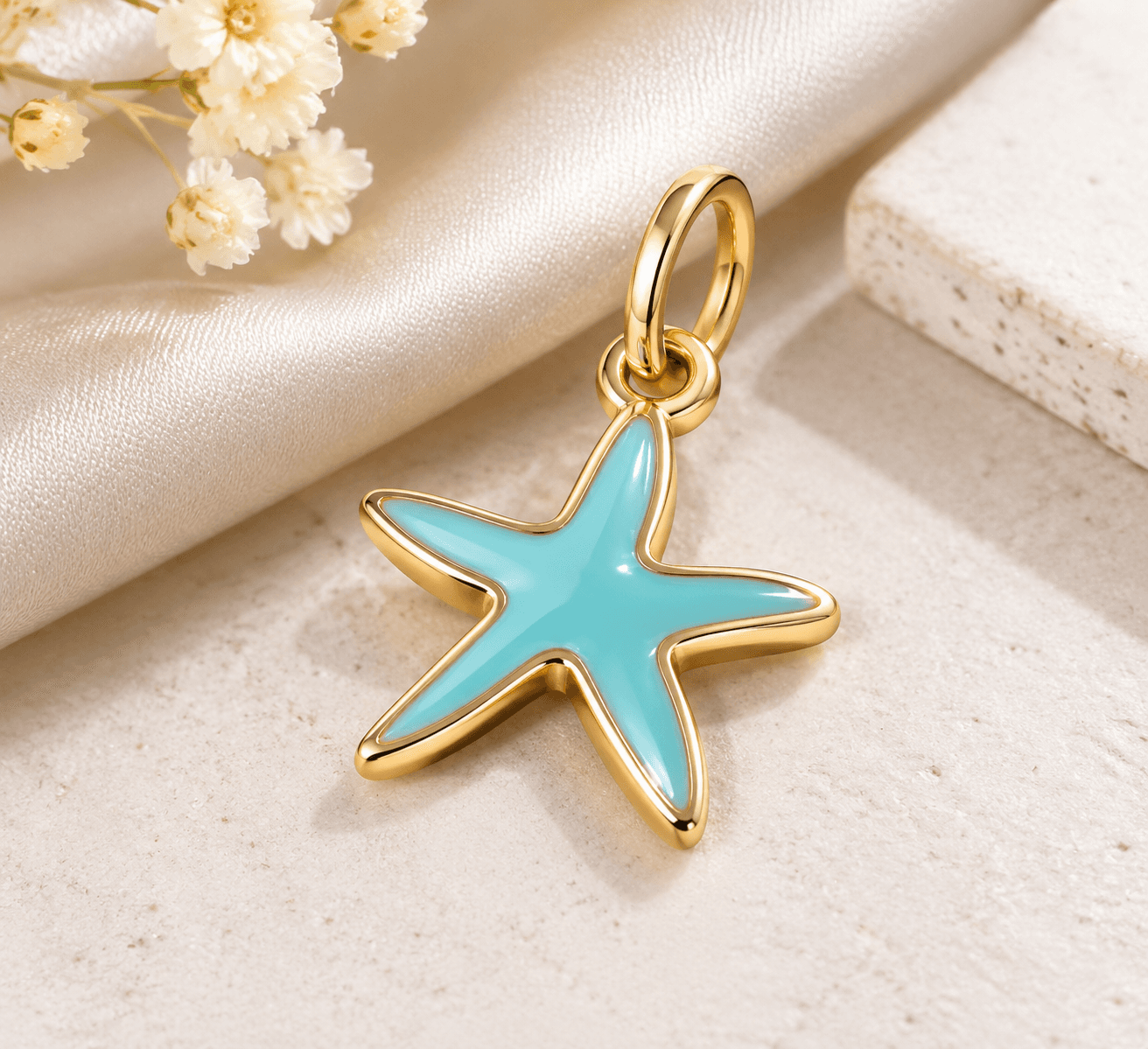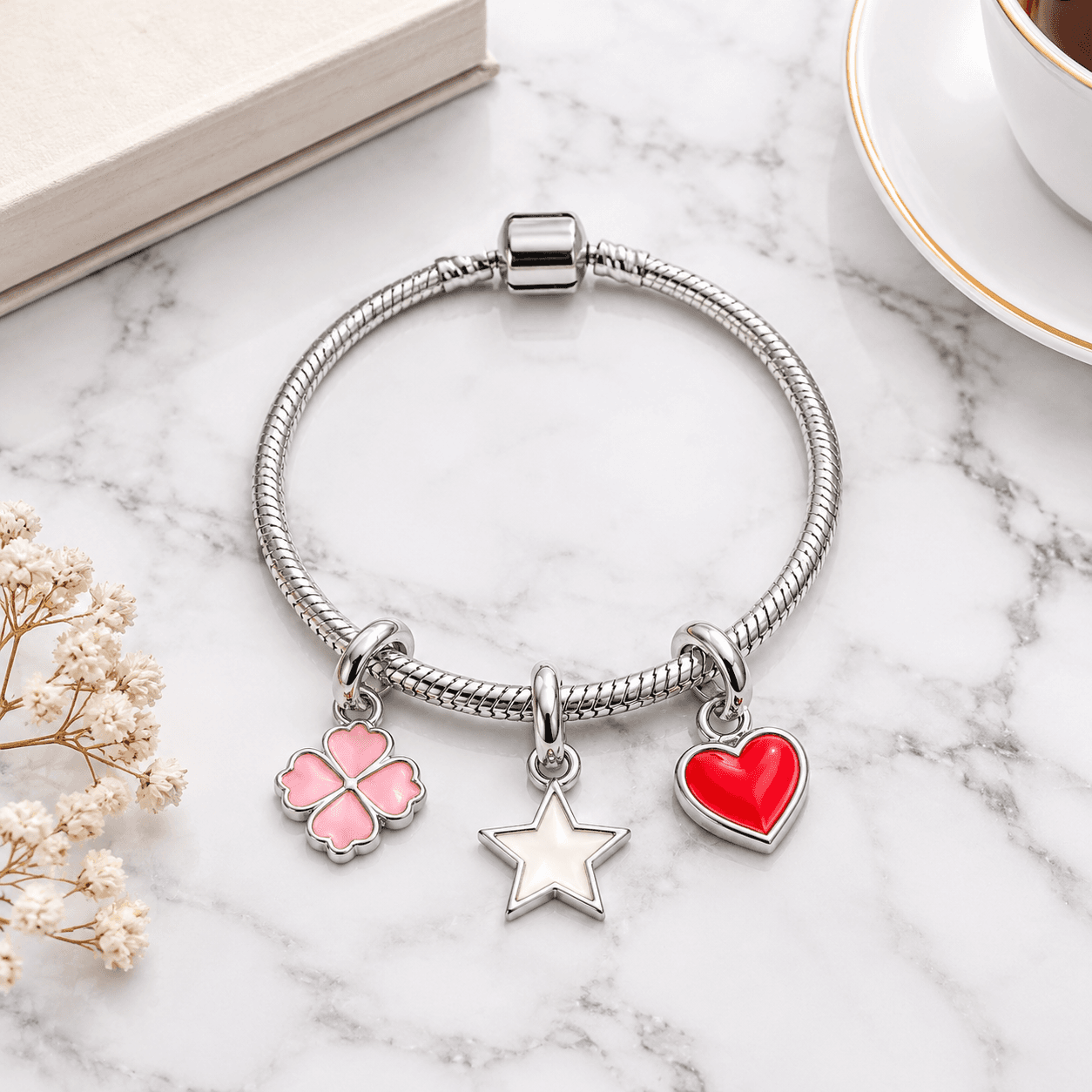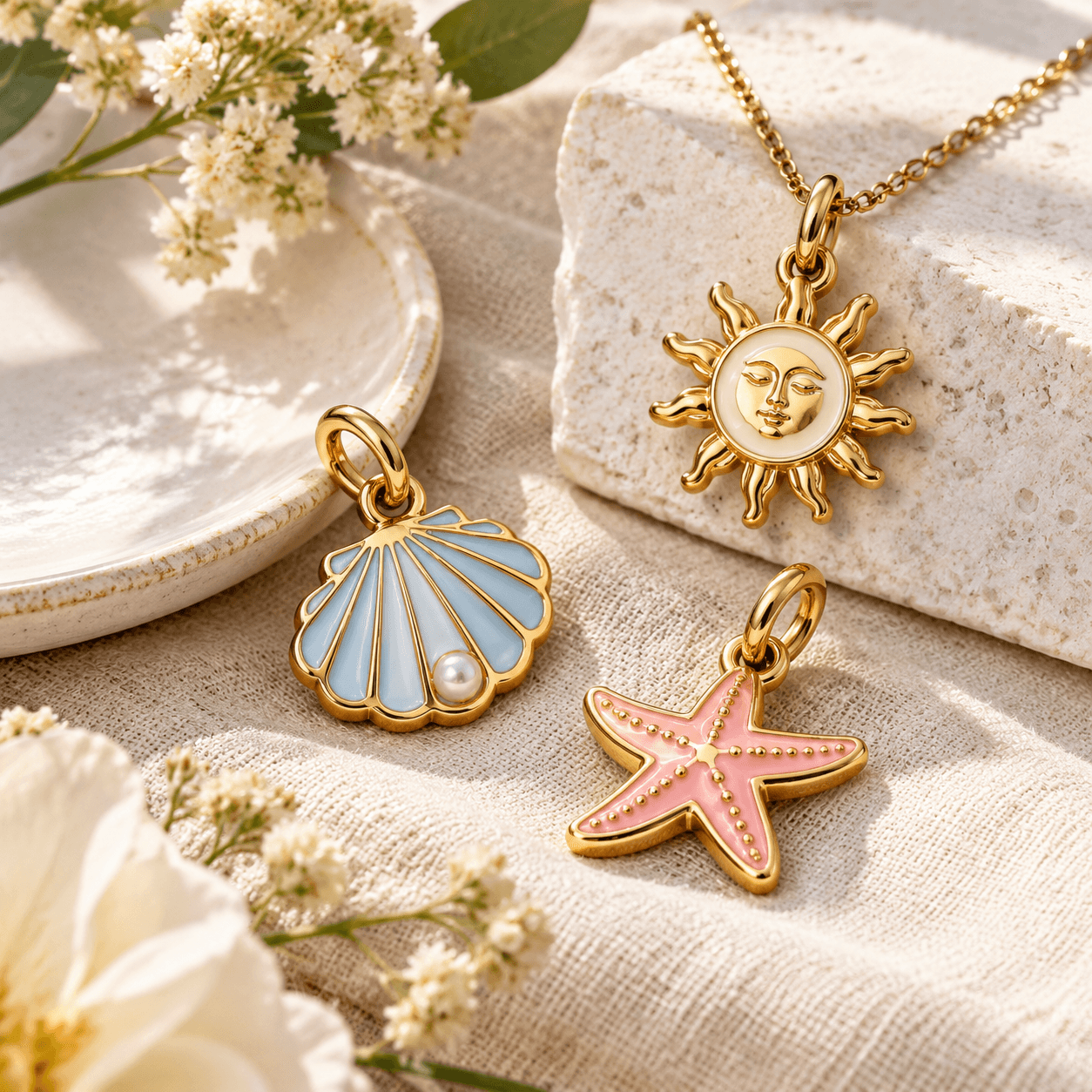
Choosing a custom enamel charm supplier involves more than comparing quotations, reviewing product photographs, or checking minimum order quantities. For procurement teams serving the US and Canadian markets, the real priority is finding a manufacturing partner that can demonstrate material consistency, reliable enamel application, documented compliance, and repeatable production quality. A charm that looks excellent in a sample but develops coating wear, color inconsistencies, or attachment problems during regular use can create returns, customer complaints, and unnecessary sourcing costs.
This buyer's checklist provides a practical framework for evaluating suppliers of custom 316L stainless steel charms. It covers material verification, enamel performance, surface finishing, compliance documentation, durability testing, factory capabilities, and bulk production controls. Use it during supplier qualification, sample approval, factory audits, and RFQ evaluation to make purchasing decisions based on measurable evidence rather than promises.
Stainless Steel Custom Enamel Charms: Essential Quality Checklist
Custom enamel charms combine a precision-manufactured 316L stainless steel structure with carefully controlled decorative color filling. Their quality depends on several interconnected processes. A well-finished surface cannot compensate for inconsistent dimensions, and attractive enamel cannot compensate for weak attachment hardware.
1. Verify the 316L Stainless Steel Base Material
Material verification should be the first step in supplier evaluation. Require the supplier to identify 316L stainless steel as the base material for every approved charm model. Do not accept a general description such as premium stainless steel without supporting documentation.
- ☐ Request material specifications identifying the 316L stainless steel grade.
- ☐ Obtain material inspection records or appropriate test documentation for the supplied production batch.
- ☐ Confirm that the documented material applies to the actual charm components, not merely an unrelated factory sample.
- ☐ Ask how incoming material batches are identified, inspected, and traced.
- ☐ Verify that material specifications are included in the approved product drawing or purchase specification.
Where additional verification is necessary, discuss suitable material identification methods with the supplier. For procurement teams, the objective is to establish traceability between the approved specification, production records, and delivered goods. A qualified stainless steel charms manufacturer should be able to explain this process clearly.
2. Inspect Enamel Color and Application Quality
Enamel consistency is one of the most visible indicators of manufacturing control. Buyers should evaluate color accuracy, filling precision, surface uniformity, and the relationship between decorative areas and surrounding metal details.
- ☐ Compare sample colors against an approved physical reference or documented color standard.
- ☐ Check for bubbles, pinholes, cracks, incomplete filling, and visible contamination.
- ☐ Confirm that enamel remains within the intended recessed design areas.
- ☐ Inspect the boundaries between different colors for clean separation.
- ☐ Check whether the finished surface is level and consistent with the approved design.
- ☐ Record approved color references for future repeat orders.
For US and Canadian boutique programs, consistent color presentation is particularly important when products are sold as coordinated collections or through seasonal gift programs. Even small differences between production batches can become noticeable when customers purchase multiple pieces together.
3. Evaluate PVD Plating and Surface Finishing
When a design includes gold plated, rose gold plating, or silver finish options, procurement teams should assess the complete finishing specification. Surface appearance alone does not establish coating durability.
- ☐ Identify the approved finish for each SKU.
- ☐ Request written finishing specifications and applicable process controls.
- ☐ Inspect for uneven color, visible marks, surface defects, and inconsistent gloss.
- ☐ Confirm that the finishing process is controlled across different production batches.
- ☐ Request relevant wear and corrosion test results for the finished product.
- ☐ Establish acceptable appearance standards before approving bulk production.
PVD is an important finishing option for buyers seeking consistent decorative surface treatments. However, performance depends on the complete manufacturing process, including surface preparation, application controls, product geometry, and subsequent handling. Ask suppliers to provide evidence for the exact finish being purchased rather than relying on general statements about coating performance.
4. Inspect Functional Details and Attachment Hardware
A charm must perform reliably as well as look attractive. Procurement teams should pay particular attention to holes, loops, jump rings, connection points, and other functional features specified in the design.
- ☐ Confirm that attachment openings match the approved technical drawing.
- ☐ Check that jump rings pass through actual holes or loops correctly.
- ☐ Inspect connection points for sharp edges, incomplete finishing, and visible deformation.
- ☐ Check that moving or opening components function consistently where applicable.
- ☐ Verify dimensions, thickness, weight, and overall silhouette against the approved sample.
These details directly influence the customer's experience. A decorative surface may attract attention initially, but poorly finished attachment points can undermine product reliability during everyday handling.
Why a Documented Quality Checklist Matters
A structured supplier evaluation system protects purchasing budgets, reduces quality disputes, and creates a repeatable standard for future orders. For B2B buyers, the objective is not simply to receive attractive samples. It is to establish a production relationship in which specifications, testing, documentation, and inspection procedures remain consistent.
Key Benefits of Verifiable Supplier Quality
Improved regulatory preparation: Buyers can review documented material and chemical compliance evidence before products enter their target markets. Lancy Jewelry provides SGS-certified documentation covering RoHS, REACH, Nickel Release EN1811, and Salt Spray 240H. Procurement teams should request applicable reports and verify their scope, issue details, sample identification, and relevance to the specific product and finish.
Reduced quality variation: Written color references, dimensional tolerances, approved samples, and finishing specifications help suppliers maintain consistency between orders.
More predictable purchasing: Documented sample approval and production inspection requirements make it easier to identify deviations before goods are dispatched.
Stronger supplier accountability: A defined quality agreement establishes responsibilities for testing, defect classification, corrective action, and replacement arrangements.
Better collection planning: Buyers can develop coordinated product series while maintaining common material specifications, finishing expectations, and packaging requirements.
Understanding Certifications and Testing Evidence
Certification references should always be evaluated in context. RoHS and REACH documentation can support chemical compliance assessments, while EN1811 testing addresses nickel release under the applicable test conditions. Salt Spray 240H documentation provides evidence of performance under a defined corrosion-test procedure.
Do not treat a test report as a universal guarantee of product lifespan. Test methods, sample preparation, product configuration, coating condition, and acceptance criteria all influence interpretation. Ask the supplier whether reports represent the actual product configuration and whether different colors or finishes require additional testing.
For North American procurement, FDA considerations should also be handled accurately. Ordinary decorative jewelry is generally not regulated by the FDA simply because it is jewelry. However, products marketed with therapeutic or medical claims may require a different regulatory assessment. Buyers should also review applicable Consumer Product Safety Commission requirements, particularly when products are intended for children. For children's products, determine whether additional testing, certification, labeling, or age-related requirements apply before placing an order.
Detailed Supplier Evaluation and Durability Testing Guide
5. Establish a Practical Durability Testing Plan
Never approve a custom enamel charm solely from a visual sample inspection. Establish a testing plan that reflects the product's intended application, expected handling, finish, and customer requirements.
Enamel Adhesion and Surface Integrity
- ☐ Ask for a documented enamel adhesion evaluation using a suitable method for the product construction.
- ☐ Inspect tested samples for cracking, lifting, chipping, or separation.
- ☐ Check the enamel boundaries after appropriate handling simulations.
- ☐ Record the test method, sample identification, conditions, and results.
Wear and Abrasion Resistance
- ☐ Define the expected handling and wear conditions for the product.
- ☐ Request suitable abrasion testing for the enamel and finished surface.
- ☐ Inspect for visible finish changes, exposed base material, and decorative damage.
- ☐ Compare tested samples with the original approved reference.
Corrosion and Environmental Resistance
- ☐ Request applicable corrosion-test documentation.
- ☐ Review Salt Spray 240H results where relevant to the product specification.
- ☐ Check the appearance of the enamel and finished surface after testing.
- ☐ Clarify that laboratory conditions do not automatically represent every real-world wearing environment.
Attachment and Mechanical Performance
- ☐ Inspect jump rings, loops, and attachment points for structural consistency.
- ☐ Agree on suitable connection-strength or handling tests for the intended application.
- ☐ Evaluate repeated opening and closing where the design contains functional mechanisms.
- ☐ Record acceptance criteria and establish procedures for investigating failures.
Buyers should request measurable test criteria rather than accepting statements such as excellent durability or long-lasting quality. If a supplier offers a longevity guarantee, require written terms defining the covered components, applicable usage conditions, exclusions, evidence requirements, and remedy process. No laboratory test should be interpreted as proof of unlimited service life.
6. Review Factory Capabilities and Production Controls
A supplier's equipment and process management influence dimensional accuracy, design consistency, and production repeatability. During supplier qualification, review whether the factory has the equipment and technical expertise required for the proposed design.
Lancy Jewelry operates a modern manufacturing facility equipped with CNC processing, laser cutting, laser marking, welding, and polishing capabilities. These processes support custom development and controlled production of 316L stainless steel charms.
- ☐ Review the factory's production workflow from material preparation to final inspection.
- ☐ Confirm the availability of laser marking for approved logo and identification requirements.
- ☐ Review polishing and finishing controls before enamel application.
- ☐ Ask how production drawings and approved samples are maintained.
- ☐ Confirm how defective components are identified and segregated.
- ☐ Request examples of production inspection records and corrective-action documentation.
For procurement teams, the most important question is whether the supplier can demonstrate repeatable processes rather than simply list available equipment. Factory capability must be supported by documented quality controls and relevant production experience.
7. Conduct a Structured Supplier Documentation Review
Before approving a vendor, create a documentation file for each proposed product series. This file should remain available to purchasing, quality assurance, compliance, and merchandising teams.
- ☐ Company and factory information.
- ☐ 316L stainless steel material specifications.
- ☐ Product drawings and approved dimensions.
- ☐ Enamel color references and finish specifications.
- ☐ Applicable SGS test reports and compliance documentation.
- ☐ Approved pre-production sample photographs or physical references.
- ☐ Production inspection procedures and defect acceptance criteria.
- ☐ Packaging specifications and shipping inspection requirements.
- ☐ Written warranty, complaint, and corrective-action procedures.
For supplier audits, ask how documents are controlled, how frequently specifications are reviewed, and how changes are communicated. Any modification to the approved material, enamel formulation, finishing process, or product dimensions should undergo documented review before implementation.
8. Approve Samples Before Authorizing Bulk Production
Sample development is a critical stage in custom manufacturing. It allows procurement teams to evaluate the complete product before committing to commercial quantities.
A reliable sample approval process should include the following steps:
- Submit the design brief: Provide dimensions, reference drawings, color requirements, surface finish, logo details, and intended application.
- Review technical feasibility: Ask the supplier to identify potential manufacturing limitations and recommend appropriate construction details.
- Evaluate the first sample: Check material documentation, shape accuracy, enamel filling, surface finish, and functional details.
- Request corrections: Document specific deviations and obtain a revised sample where necessary.
- Approve the reference: Record the final sample version and establish it as the quality benchmark.
- Confirm production requirements: Agree on MOQ, lead time, inspection standards, packaging, and shipment documentation.
Never rely on verbal sample approval. Keep an identifiable approved reference and ensure the supplier understands that bulk production must follow the accepted specifications.
9. Define Bulk Order Inspection and Acceptance Criteria
Once production begins, quality control must continue beyond sample approval. Establish inspection checkpoints for incoming material, in-process operations, finishing, final assembly, and packaging.
For each order, document the inspection method, sampling plan, acceptable defect levels, and treatment of critical, major, and minor defects. Buyers may use an appropriate AQL-based inspection framework, but the selected sampling level and acceptance criteria should be agreed in advance.
- ☐ Check material and SKU identification.
- ☐ Verify dimensions and quantity against the purchase order.
- ☐ Inspect enamel color and filling consistency.
- ☐ Evaluate plating appearance and surface defects.
- ☐ Inspect attachment hardware and mechanical details.
- ☐ Confirm individual packaging and carton specifications.
- ☐ Retain inspection records and representative production samples.
For private label charms, packaging and product identification should also be treated as controlled specifications. Confirm logo placement, packaging artwork, barcode requirements where applicable, and product labeling before the shipment deadline.
Frequently Asked Questions
1. What should buyers check first when sourcing custom enamel charms?
Start with base material verification. Confirm that the product uses 316L stainless steel and request supporting documentation. Next, evaluate enamel application, surface finishing, attachment construction, and applicable compliance reports. Approve a documented physical sample before authorizing bulk production.
2. Which tests are important for 316L stainless steel enamel charms?
Relevant evaluations may include material identification, nickel release testing under EN1811, enamel adhesion, abrasion resistance, corrosion testing, and attachment-strength assessment. The specific test plan should reflect the design, finish, intended use, and applicable market requirements. Salt Spray 240H results can provide additional corrosion-performance evidence under defined laboratory conditions.
3. Can a supplier guarantee that enamel charms will never fade or chip?
No responsible supplier should promise unlimited durability under every condition. Enamel and surface performance depend on product construction, finishing processes, handling, and environmental exposure. Request documented testing, written warranty terms, and clearly defined acceptance criteria instead of relying on absolute claims.
4. What documents should procurement teams request before placing a wholesale order?
Request material specifications, applicable SGS test reports, product drawings, approved sample records, enamel color references, finishing specifications, production inspection procedures, packaging requirements, and written warranty terms. Confirm that the documentation corresponds to the actual product and ordered configuration.
Partner With Lancy Jewelry for Custom Enamel Charm Manufacturing
Successful sourcing requires a supplier that understands both product development and procurement risk management. Lancy Jewelry supports boutique jewelry brands, charm bar retailers, gift companies, distributors, and private-label buyers with OEM and ODM manufacturing focused exclusively on 316L stainless steel charms.
Our manufacturing capabilities include CNC processing, laser cutting, laser marking, welding, polishing, PVD plating, enamel color filling, crystal setting, and private-label packaging. We support low MOQ requirements, structured sample development, and coordinated product series planning for buyers developing distinctive commercial collections.
Whether you are developing a new enamel charm range or expanding an established product program, our team can help translate your design requirements into clear manufacturing specifications and practical quality checkpoints.
Before sending your RFQ, prepare your design references, target dimensions, preferred enamel colors, finishing requirements, estimated order quantities, and packaging expectations. This information helps establish a more accurate development and quotation process.
Explore the next step:
- Explore Lancy OEM and ODM Manufacturing Services for custom development and private-label projects.
- Browse the Lancy Product Catalog to review available product directions.
- Contact Our Manufacturing Team to discuss samples, specifications, and production requirements.
- Submit an RFQ to request pricing and discuss your next bulk order.
Make supplier qualification a documented process, not an assumption. With clear material specifications, verified testing, controlled samples, and measurable inspection standards, your procurement team can build a more dependable supply program for custom 316L stainless steel enamel charms.