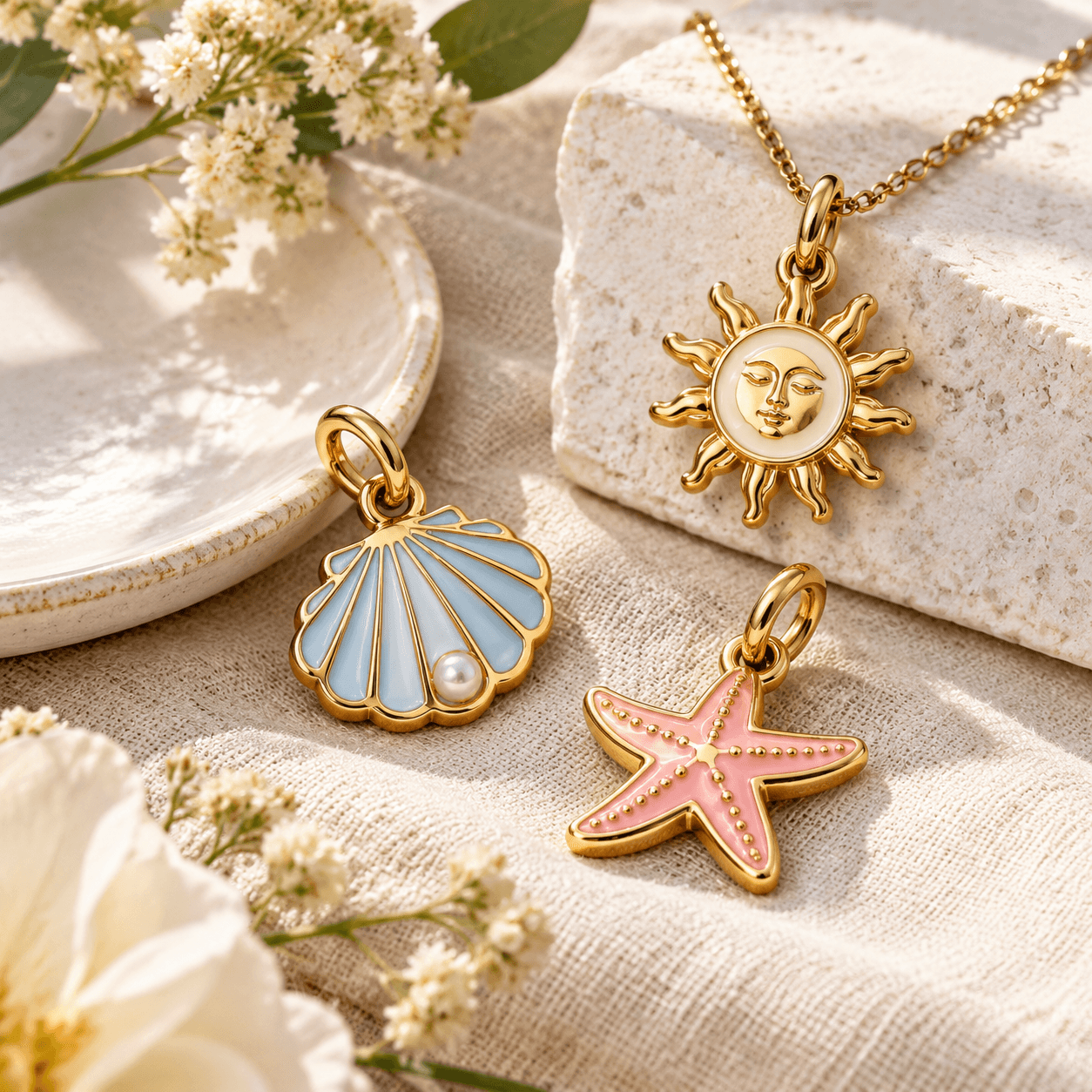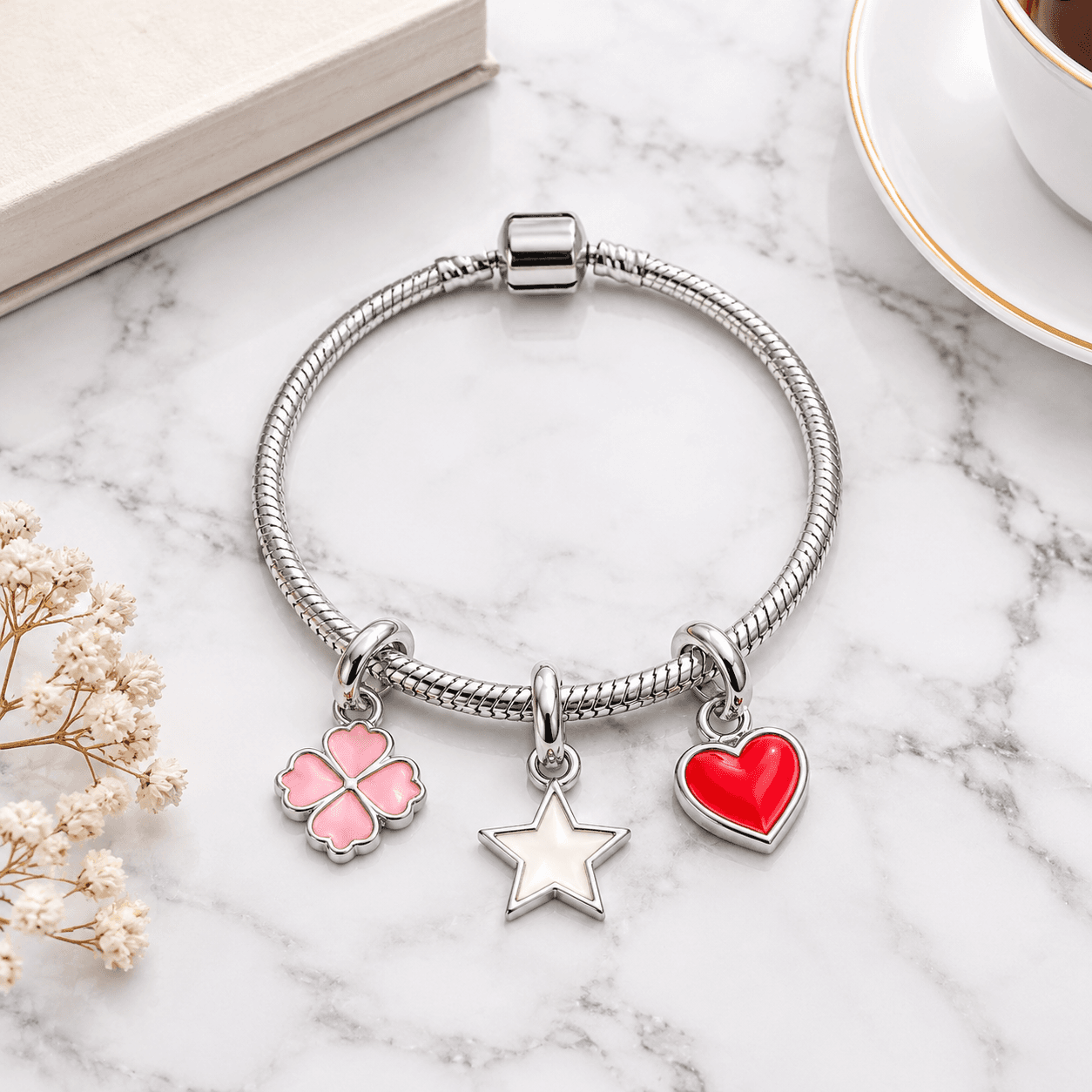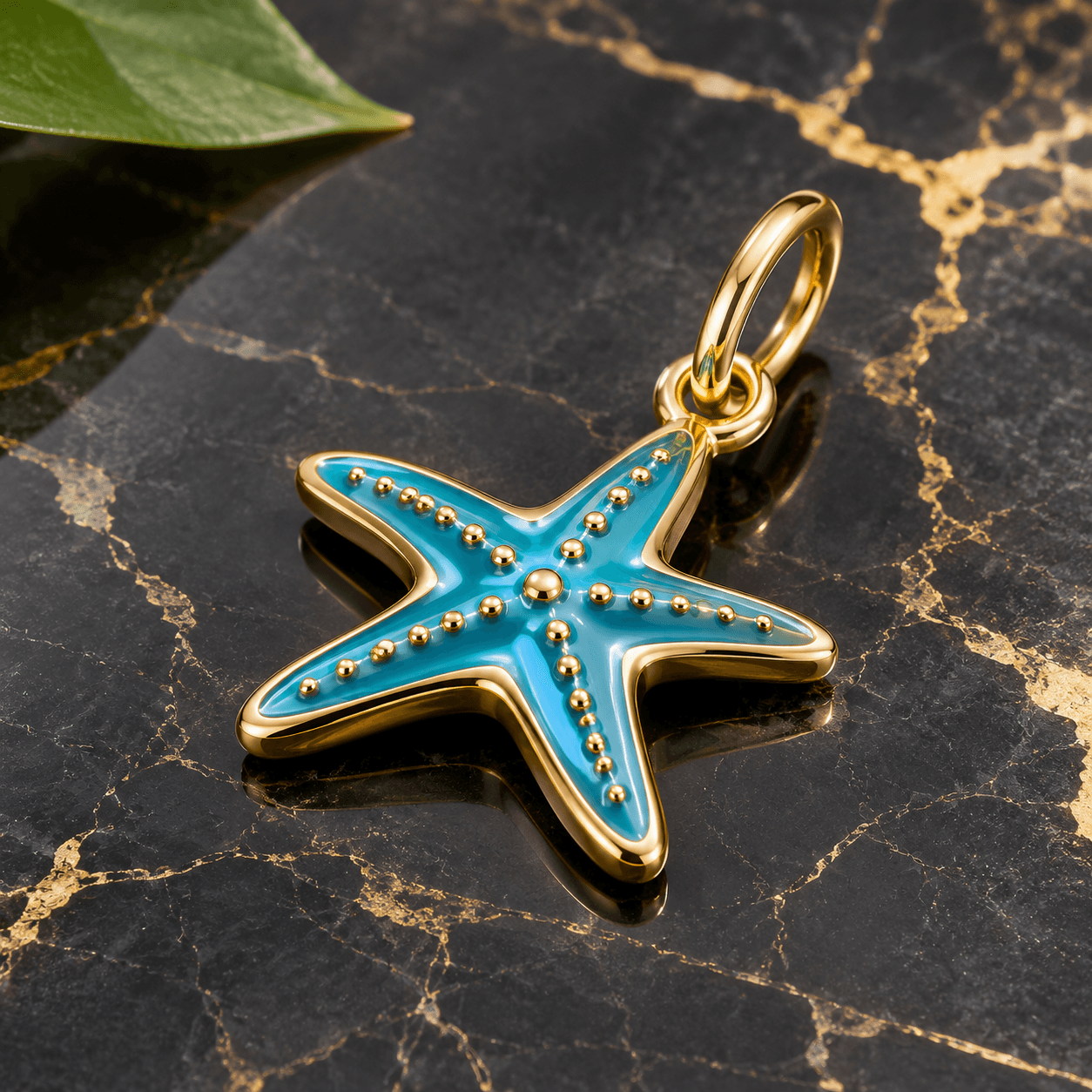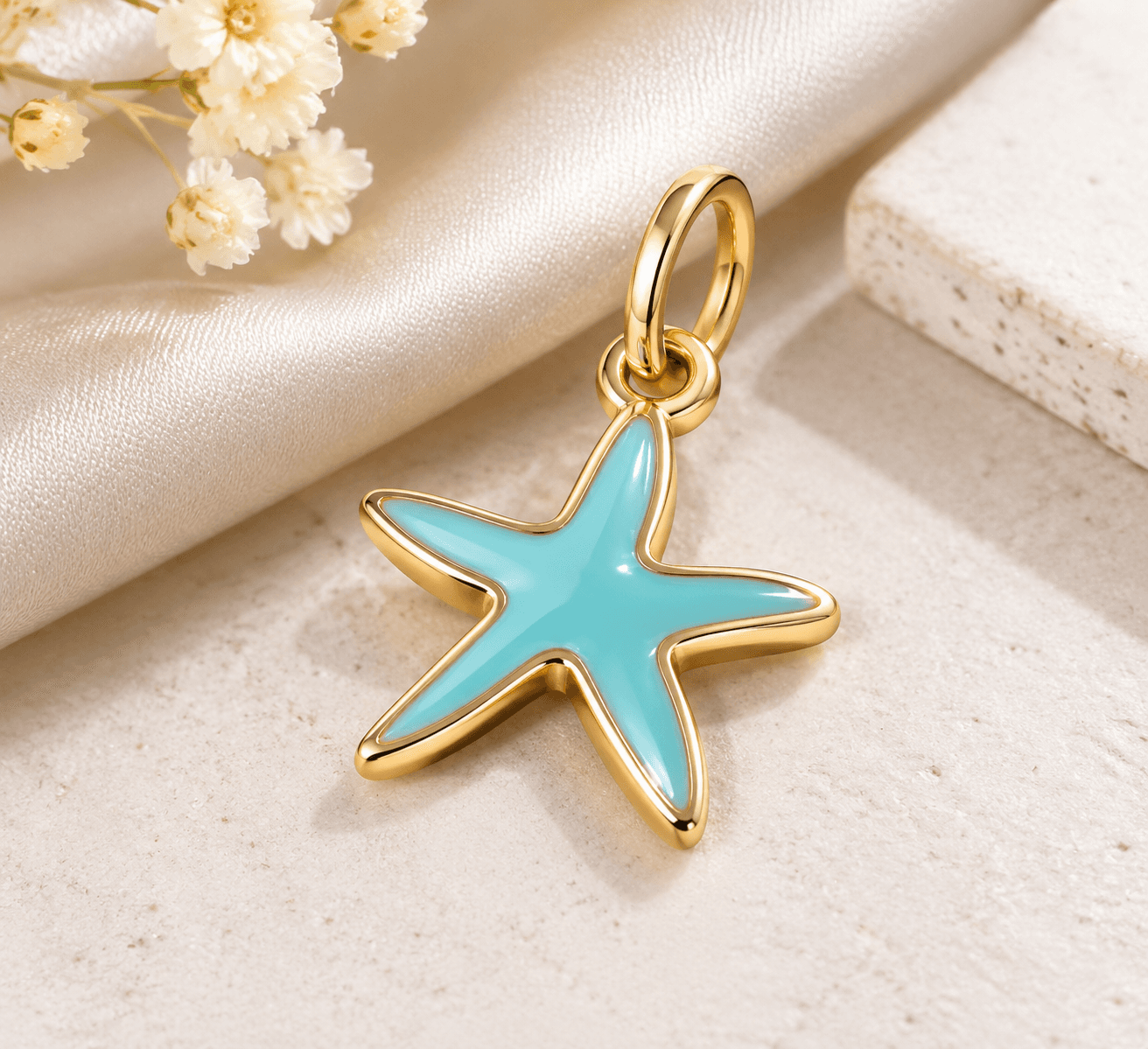
Custom enamel charms give jewelry designers an effective way to introduce distinctive colors, recognizable visual details, and coordinated product themes into a commercial collection. However, attractive samples do not automatically indicate reliable production quality. For boutique brands and private-label buyers, the real challenge is ensuring that every charm maintains consistent color, secure enamel filling, reliable surface protection, and satisfactory performance throughout its expected service life.
Choosing the right manufacturing partner requires more than reviewing photographs or comparing initial quotations. Buyers should understand the characteristics of 316L stainless steel, evaluate enamel application methods, establish measurable acceptance criteria, and request appropriate testing before approving bulk production. This guide explains how to assess custom enamel charms from a practical B2B purchasing perspective, with particular attention to North American market expectations.
Stainless Steel Custom Enamel Charms: Understanding Quality Requirements
Why 316L stainless steel matters
The base material determines many of the physical properties that influence a charm's performance. 316L stainless steel is valued for its corrosion resistance, strength, and suitability for detailed jewelry components. Its low-carbon composition also makes it a practical choice for products that require consistent machining, polishing, and finishing.
For jewelry designers developing colorful collections, this material provides a stable foundation for combining polished surfaces with enamel color areas. Available finishing options can include silver finish, PVD gold plating, and rose gold plating, depending on the approved product specification.
Buyers should request confirmation that the specified base material is maintained throughout production. Material identification and production documentation help reduce uncertainty when managing repeat orders or developing coordinated product ranges.
How enamel quality influences the finished product
Enamel quality depends on several interconnected factors: surface preparation, filling precision, color formulation, curing or processing conditions, and final inspection. Even a well-designed charm can appear inconsistent if the color depth varies or the filled areas are uneven.
For custom projects, buyers should evaluate both visual quality and functional performance. The enamel should occupy its intended design area, present a consistent appearance, and remain securely attached during normal handling and reasonable wear.
Benefits of Custom Enamel Charms for Jewelry Brands
Creative flexibility and collection development
Enamel customization allows designers to develop recognizable product themes through controlled color combinations, shapes, symbols, and surface details. A single design concept can support several coordinated variations without changing the fundamental product structure.
For example, a boutique collection may use different enamel colors to distinguish seasonal releases, special occasions, initials, or themed decorative elements. This flexibility helps buyers organize a cohesive assortment while maintaining a consistent manufacturing specification.
Custom stainless steel charms can also incorporate logo engraving, crystal inlay, and selected PVD finishes where the design permits. These options should be evaluated individually to ensure that decorative details do not compromise attachment points or the overall structure.
Durability and material performance
316L stainless steel offers a combination of structural strength and corrosion resistance that supports repeated everyday use. Its performance depends on the finished product, manufacturing controls, and the conditions in which the charm is worn or stored.
Enamel adds visual distinction, but its durability must be assessed separately from the base material. Color stability, adhesion, edge quality, and resistance to routine handling are important purchasing considerations.
Compliance documentation for North American buyers
Supplier documentation is an important part of responsible sourcing. Lancy Jewelry has SGS-certified testing documentation covering RoHS, REACH, Nickel Release EN1811, and Salt Spray 240H. Buyers should request relevant reports and verify that the tested specifications correspond to the product, finish, and production requirements being purchased.
For US and Canadian distribution, buyers should also review the regulatory requirements applicable to their intended products and customer groups. In the United States, ordinary fashion jewelry should not be assumed to require FDA product approval. FDA requirements may become relevant when a product falls within a regulated category or is marketed with claims that bring it under FDA jurisdiction. Applicable consumer product requirements, including relevant CPSC restrictions and children's product provisions, should be reviewed separately.
Canadian importers should likewise confirm applicable product safety, chemical restriction, labeling, and import obligations. A supplier's test report is useful supporting evidence, but it does not automatically replace the buyer's responsibility to verify market compliance.
Detailed Buyer Guide: Comparing Enamel Quality and Manufacturing Standards
1. Compare enamel application and visual consistency
Different enamel application approaches produce different visual effects and manufacturing requirements. Buyers should identify which approach suits the design and establish an approved sample before production.
| Evaluation factor | Precision color filling | Multi-color detailed filling |
|---|---|---|
| Design suitability | Defined color sections and simple shapes | Complex designs with multiple color zones |
| Color management | Focus on consistent color depth | Focus on consistency across several colors |
| Production control | Check fill boundaries and surface level | Check separation between adjacent colors |
| Inspection priority | Uniform appearance and clean edges | Color placement and detail accuracy |
| Buyer consideration | Suitable for coordinated color variations | Requires more detailed sample approval |
Neither approach is automatically superior. The appropriate choice depends on artwork complexity, required production quantity, acceptable visual tolerances, and the intended retail positioning.
2. Evaluate adhesion and surface durability
Enamel adhesion is a critical factor because poorly controlled application can result in separation, chipping, or visible defects. Buyers should ask manufacturers how they prepare the surface, control filling conditions, and inspect finished products.
A useful comparison is between appearance-only inspection and a more comprehensive quality evaluation.
| Quality checkpoint | Basic visual inspection | Comprehensive quality evaluation |
|---|---|---|
| Surface appearance | Checks visible defects | Checks finish uniformity, edges, and color distribution |
| Enamel adhesion | Identifies obvious separation | Includes an agreed adhesion evaluation |
| Wear resistance | Reviews general appearance | Uses defined handling and abrasion evaluation criteria |
| Corrosion resistance | Reviews visible surface condition | Considers documented environmental test results |
| Production consistency | Reviews individual samples | Includes batch sampling and inspection records |
For an objective purchasing decision, buyers should agree on the test method, sample quantity, acceptance criteria, and reporting format before production begins. Do not assume that one test proves every aspect of product durability.
3. Understand important testing standards
Testing should reflect the actual performance requirements of the finished charm. A useful supplier evaluation considers the following areas:
- Nickel release: EN1811 is a recognized reference method for evaluating nickel release from relevant consumer products. Buyers should confirm the applicability of the method and applicable market limits for their products.
- Salt spray resistance: Salt spray testing evaluates resistance to a controlled corrosive environment. Lancy Jewelry has SGS-certified Salt Spray 240H testing documentation. Buyers should confirm the tested finish, sample configuration, and reported outcome rather than treating the test duration as a universal wear-life guarantee.
- RoHS: Relevant documentation helps buyers evaluate restricted substance requirements within the scope of the applicable regulation and tested product.
- REACH: Documentation supports assessment of relevant chemical substance obligations for products entering European markets and other applicable supply chains.
- Enamel adhesion: Buyers should agree on a suitable test procedure and measurable acceptance criteria for the actual design.
- Color consistency: Approved color references and controlled sample comparisons help maintain repeat-order consistency.
Testing reports should be reviewed alongside product specifications. A report for one finish or design should not automatically be treated as evidence for every variation in a collection.
4. Compare finishing options and production controls
Custom enamel charms may combine colored areas with different surface finishes. Each combination introduces additional quality checkpoints, particularly around the boundaries between enamel and exposed metal surfaces.
| Finish option | Visual characteristics | Buyer inspection priority |
|---|---|---|
| Silver finish | Clean metallic appearance | Surface uniformity and polishing quality |
| PVD gold plating | Warm gold-colored appearance | Color consistency and coating coverage |
| Rose gold plating | Soft pink-toned metallic appearance | Color matching and edge coverage |
| Enamel color filling | Defined decorative color sections | Fill accuracy, adhesion, and color consistency |
| Crystal inlay | Additional reflective decorative detail | Setting security and alignment |
For products combining multiple finishes, request a representative sample that includes the actual color arrangement and finishing sequence. Reviewing each component separately may not reveal defects that occur where different treatments meet.
5. Establish practical sample approval procedures
Sample development is an essential stage in custom manufacturing. It allows jewelry designers to evaluate the actual physical product before committing to a larger commercial order.
A structured sample approval process should include the following steps:
- Submit the design brief: Provide artwork, dimensions, target colors, logo requirements, intended application, and estimated order quantity.
- Confirm the technical specification: Define 316L stainless steel as the base material and identify the selected finish, enamel areas, attachment structure, and required tolerances.
- Review the first sample: Check overall dimensions, shape accuracy, color placement, surface finish, and mechanical attachment details.
- Evaluate performance: Request relevant adhesion, corrosion, nickel release, and other applicable testing documentation.
- Approve a reference sample: Record the accepted design, colors, dimensions, finish, and quality criteria for subsequent production.
- Confirm bulk production controls: Establish inspection procedures, packaging requirements, sampling frequency, and defect acceptance criteria.
Keeping an approved reference sample reduces misunderstandings between the buyer and manufacturer, especially when a collection contains multiple colors or coordinated designs.
6. Evaluate the manufacturer beyond the quotation
A competitive quotation is important, but manufacturing capability and quality management have a direct influence on the commercial success of a collection.
When evaluating a stainless steel charms manufacturer, consider the following comparison:
| Supplier evaluation | Questions buyers should ask | Why it matters |
|---|---|---|
| Material control | Can the manufacturer confirm 316L stainless steel specifications? | Supports material consistency |
| Customization | Can the factory manage engraving, enamel filling, and PVD finishing? | Reduces production coordination issues |
| Equipment | Does the facility have appropriate machining, marking, and polishing capabilities? | Supports dimensional and visual consistency |
| Testing | Can relevant testing documentation be provided? | Supports quality and compliance assessment |
| MOQ flexibility | Can the supplier support the buyer's initial quantity? | Helps manage inventory investment |
| Packaging | Can private-label packaging requirements be accommodated? | Supports retail presentation |
| Repeat orders | Are approved samples and production specifications retained? | Improves collection consistency |
7. Understand MOQ, pricing, and bulk order considerations
The cost of custom enamel charms depends on more than the unit price. Design complexity, dimensions, number of colors, engraving requirements, finish selection, sample development, inspection, and packaging can all influence the quotation.
Buyers should compare quotations using the same technical specification. A lower quotation may exclude sample revisions, specialized testing, or individual packaging requirements.
For boutique brands, low MOQ charm production can provide a practical starting point for testing new designs and evaluating customer demand. However, MOQ depends on the product structure, manufacturing process, color requirements, and production schedule. Buyers should request confirmation for each project rather than assuming a universal minimum quantity.
For larger bulk charm orders, maintaining consistent production specifications becomes especially important. Buyers should establish an approved color reference, inspection criteria, and repeat-order documentation before scaling production.
How Lancy Jewelry Supports Custom Enamel Charm Manufacturing
Integrated OEM and ODM development
Lancy Jewelry is a B2B OEM/ODM manufacturer specializing in 316L stainless steel charms for boutique brands, charm bar retailers, gift companies, distributors, and private-label buyers.
Our modern manufacturing facility uses CNC equipment, laser cutting, laser marking, welding, and polishing processes to support the development of detailed custom products. Manufacturing services include logo engraving, PVD plating, enamel color filling, crystal setting, and private-label packaging.
As an ODM charm supplier, Lancy can support product development from an initial design concept through sample evaluation and production planning. Buyers can discuss coordinated collections, color variations, decorative details, and practical production requirements with our team.
Quality documentation and production consistency
Lancy Jewelry provides SGS-certified testing documentation covering RoHS, REACH, Nickel Release EN1811, and Salt Spray 240H. These testing references support buyer evaluation of material and finish requirements. Project-specific testing and documentation should be confirmed during the quotation and sample approval stages.
Our production approach emphasizes specification control, visual inspection, sample approval, and consistent finishing requirements. This helps buyers establish clearer expectations before moving from product development into commercial orders.
What to include in your RFQ
To receive a useful quotation, buyers should prepare the following information:
- Product artwork or reference drawings.
- Required dimensions and approximate product weight.
- Confirmation of 316L stainless steel as the base material.
- Selected enamel colors and color references.
- Preferred finish, including silver finish, PVD gold plating, or rose gold plating.
- Logo engraving and other customization requirements.
- Estimated MOQ and expected bulk order quantity.
- Required testing documentation and destination market.
- Private-label packaging and delivery requirements.
Providing these details helps reduce quotation revisions and gives the manufacturing team a clearer understanding of the required production process.
Frequently Asked Questions
1. Are 316L stainless steel enamel charms suitable for everyday jewelry collections?
Yes. 316L stainless steel offers good corrosion resistance and structural strength for everyday jewelry applications. However, the durability of the complete charm also depends on enamel adhesion, surface finishing, attachment construction, and wearing conditions. Buyers should request appropriate product-specific testing rather than relying on the base material specification alone.
2. How can buyers check whether custom enamel colors will remain consistent?
Buyers should establish approved color references during sample development and compare production samples against those references under consistent lighting conditions. The manufacturer should also define acceptable color variation, inspect enamel filling, and document the approved specifications for repeat orders.
3. Does Salt Spray 240H guarantee that a charm will last for a specific number of years?
No. Salt Spray 240H identifies a controlled testing duration, not a guaranteed number of years of real-world performance. Results depend on the tested finish, test conditions, product construction, and acceptance criteria. Buyers should review the actual SGS documentation and consider additional performance evaluations where necessary.
4. What information is needed to order custom enamel charms from Lancy Jewelry?
Buyers should provide artwork, product dimensions, enamel colors, finish requirements, estimated quantity, logo specifications, testing expectations, and packaging details. Lancy can then evaluate the project, discuss MOQ requirements, arrange sample development, and provide an OEM/ODM production quotation.
Partner With Lancy Jewelry for Custom Enamel Charms
Successful custom enamel charm sourcing starts with a clear design specification and a manufacturing partner that understands material performance, decorative precision, and repeat-order consistency. Evaluating 316L stainless steel specifications, enamel adhesion, finish quality, and relevant testing documentation helps jewelry designers make informed purchasing decisions while reducing avoidable production risks.
Lancy Jewelry supports boutique brands and private-label buyers with custom stainless steel charms, OEM and ODM development, flexible MOQ discussions, sample development, and private-label packaging. Whether you are introducing a new color-focused collection or expanding an established product range, our team can help translate your design requirements into a practical manufacturing plan.
Explore our stainless steel charms catalog, learn more about our OEM manufacturing services, or contact Lancy Jewelry to discuss your project. You can also submit your specifications through our RFQ and quotation page to begin your custom enamel charm development.