Finishing stainless steel charms used in bracelet programs is a pivotal step that shapes durability, aesthetics, and long-term performance. For 316L stainless steel, the chosen finish—whether PVD color, electroplated metal, enamel fills, or crystal inlays—drives consumer appeal and brand consistency across markets. As a stainless steel charms manufacturer and OEM/ODM partner, Lancy Jewelry supports low MOQ charm production, private-label packaging, and rapid sample development to help boutique brands scale with confidence.
Charm Finishes for 316L Stainless Steel: PVD, Plating, and Polish
The 316L stainless steel base offers strong corrosion resistance and skin-friendly performance. Finishes are selected to complement bracelet applications, yet they must withstand daily wear, cleaning, and repeated handling in a retail environment. The main finish families below explain how to maximize visual impact while maintaining manufacturing reliability.
1) PVD Coating: Durable color with film-like hardness
Physical Vapor Deposition (PVD) creates a thin, hard coating that adheres to the 316L stainless steel substrate. PVD is favored for gold-plated, rose gold, and silver finishes because it delivers uniform color, excellent adhesion, and high scratch resistance. For designers, PVD provides a way to deliver consistent, boutique-ready color across production lots while preserving the base’s corrosion resistance. In practice, PVD follows surface preparation steps (degreasing, micro-abrasion, passivation) to ensure a clean substrate and robust adhesion. PVD is market-relevant enamel fills and crystal inlays, enabling multi-material finishes on a single charm.
2) Electroplating and Gold/Rose Gold/Silver Finishes
Electroplating deposits metal layers through controlled electrochemical reactions. For 316L stainless steel charms, electroplating is commonly used to achieve gold plating, rose gold plating, or silver-tone finishes atop underlayers such as copper or nickel. Designers should evaluate plating thickness, hue, and edge coverage to ensure consistent appearance across complex ornamentation. Plate adhesion, wear resilience, and return-to-brightness after bending or clasping are key metrics. When paired with polishing and protective topcoats, electroplated finishes can maintain a uniform look through long-term wear in a wholesale or private-label program.
3) Enamel Color Filling: Color stability and design versatility
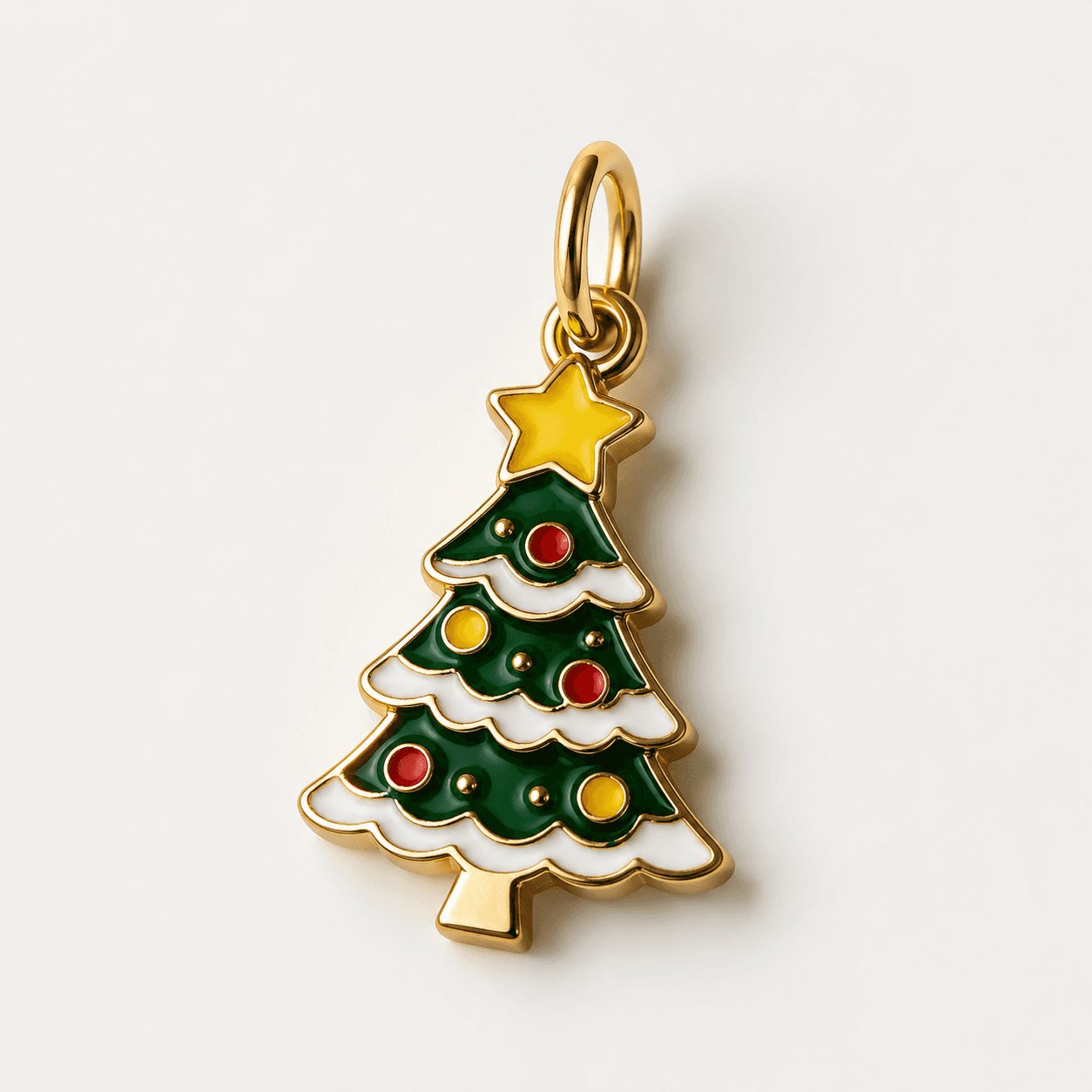
Enamel fills provide vivid color on 316L stainless steel charms and are commonly applied after precise surface planarity checks. The process involves filling recessed areas with glass- or resin-based enamel, then curing to fuse the color with the metal. Enamel adds design versatility for month names, zodiac symbols, or branding accents. For best results, enamel is cured under controlled conditions to prevent cracking or color migration during wear or cleaning. Enamel finishes can be paired with PVD or electroplated bases to achieve multi-layered aesthetics and durable color blocks.
4) Crystal Inlays: Subtle sparkle with durable mounting
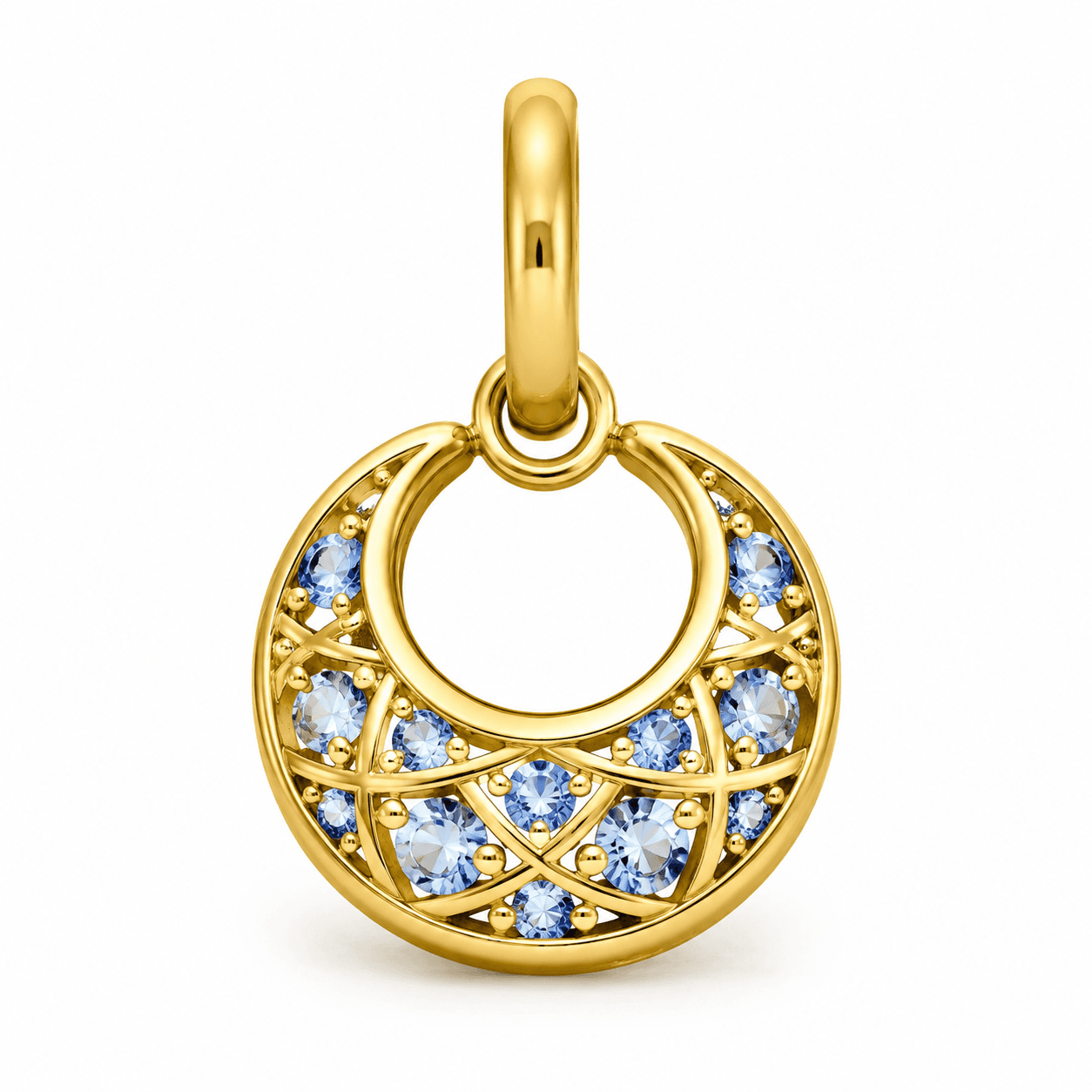
Crystal inlays add a faceted, light-catching element that complements the metallic base. When integrating crystals into 316L stainless steel charms, the mounting technique—bezel setting, prong setting, or precision bonding—must ensure long-term retention against daily wear. Precision drilling, stone alignment, and consistent seating are essential for mass production. For private-label packaging, crystal accents should be documented with tolerance guidelines and care instructions to minimize stone loss during transit.
5) Surface Treatment and Polish: From rough to showroom-ready
Surface treatments refine edges, reduce micro-porosity, and enhance luster through mechanical and chemical processes. A multi-stage polish sequence—coarse to fine—restores brightness and improves finish retention during cleaning. Consistent polishing is critical for uniform appearance across production lots and market requirements. In a multi-part supply chain, rigorous QC checks at the polishing stage ensure each unit meets the same standard, which is vital for wholesale stainless steel charms and private-label lines.
6) Surface Treatments for Global Compliance
Finish choices should align with SGS-certified processes and nickel-release testing to satisfy RoHS, REACH, EN1811, and Salt Spray 240H requirements. A transparent finish roadmap—detailing plating thickness, enamel firing temperatures, and PVD color codes—helps customers in the US, EU, UK, AU, CA, DE, FR, and additional markets plan private-label campaigns with confidence. For buyers, this translates into reliable supplier performance, predictable cost structures, and smoother RFQ-to-PO cycles.
Benefits/Why Finishes Matter for Charm Bracelets
Finishing is a differentiator that translates design intent into market-ready products. The right combination of PVD, plating, enamel, and polishing yields consistent, brand-consistent results across private-label lines and OEM/ODM programs. Beyond aesthetics, effective finishes protect the base metal from corrosion, micro-scratches, and tarnish, which matters for wear-focused items like charms that encounter daily handling and cleaning.
Key benefits for designers and buyers
- Durable, color-stable coatings that resist daily wear and washing cycles
- Color options that align with branding: gold, rose gold, silver, and specialty hues via PVD
- Consistent plating quality across batches, enabling reliable private-label lines
- High clarity in enamel fills and secure crystal settings for premium visuals
- Compliance-ready finishes with SGS certification support for RoHS, REACH, and nickel release
- Efficient sample development and low MOQ options for rapid prototyping
For manufacturers and buyers alike, standardizing finishes across a catalog while offering customization drives faster time-to-market and reduces post-launch warranty issues. Lancy Jewelry supports this through a charm factory approach, combining precision machining, finishing science, and strict QA to deliver reliable finishes for global markets. See how our OEM Service and Request a Quote workflows streamline private-label projects, and learn how we can support sample development and bulk charm orders for new collections.
Detailed analysis/Guide: Finished Charm Development in Practice
This section translates finishing theory into a practical workflow you can adopt when collaborating with a 316L stainless steel charms manufacturer. The steps are designed for use in design briefs and supplier RFQs to ensure alignment from concept to shipment.
Step 1: Define the finish strategy early
For a given collection, decide whether you want a pure PVD color, a gold-plated base, enamel accents, or a combination. Document color codes (for example, PVD Gold 18K, Rose Gold 14K), enamel color numbers, and crystal sizes. Early decisions influence downstream processes, tooling costs, and lead times. When you define finish strategy at the concept stage, you enable precise BOMs for OEM/ODM projects and smoother sample development at the factory level.
Step 2: Surface preparation and cleaning
A pristine surface is foundational for reliable finishing. Typical prep includes degreasing, mechanical deburring, micro-roughness adjustment, and a passivation rinse to improve receptivity to subsequent coatings. This stage reduces porosity and ensures stronger adhesion for PVD or electroplated layers, while minimizing color inconsistency or coating delamination in service.
Step 3: PVD coating workflow
The PVD process places parts in a vacuum chamber, vaporizes a target material, and deposits it as a thin film on the charm surface. Controls include chamber pressure, deposition rate, substrate temperature, and coating thickness. For gold and rose-gold appearances, PVD offers color stability, scratch resistance, and low risk of chipping. The coating is typically color-uniform and can be tailored to multiple color zones on a single charm if required for branding. Post-deposition inspection checks color uniformity and adhesion quality.
Step 4: Electroplating sequence
When electroplating, establish a robust underlayer chemistry to promote adhesion and uniform thickness across complex geometries. Define plating thickness targets and perform QA checks at regular intervals. Implement an electrodeposition schedule that accounts for edge coverage and recessed details to avoid thin spots. After plating, perform a chemical passivation or satin-polish step to even out the surface before final polish and assembly.
Step 5: Enamel application and firing
Enamel fills require controlled curing cycles and surface flatness to prevent cracking or crazing. Use enamel under controlled temperatures and humidity to achieve consistent gloss and depth. A protective clear layer may be applied to reduce micro-scratches and improve chemical resistance. Document curing times and temperatures for ongoing private-label production.
Step 6: Crystal setting and assembly considerations
Crystal-inlayed charms demand careful hole alignment and stone seating. Use precision jigs and consistent torque on bezel settings to prevent loosening. For mass production, implement standardized tests for stone retention under vibration and cleaning cycles, ensuring the final product meets quality thresholds in wholesale stainless steel charms programs.
Step 7: Polishing and finishing glaze
A multi-stage polish sequence restores luster and removes micro-scratches from earlier steps. A final micro-polish or buff with a controlled lubricant yields showroom-bright surfaces. Some teams apply a temporary protective glaze to minimize smudges during packaging, then remove it before shipment or provide care instructions for end users to maintain the finish.
Step 8: QA and certification readiness
QA should cover visual uniformity, coating thickness, adhesion strength, color stability, and nickel-release testing per EN1811. SGS-certified processes should be verified with certificate numbers and test reports included in private-label documentation. A formal QA protocol supports cross-market sales and reduces the risk of returns due to finish issues in wholesale orders or OEM projects.
Step 9: Private-label packaging and labeling
Finish documentation should accompany each batch for private-label packaging, including color code, coating thickness, enamel color references, and care instructions. Private-label packaging requires consistent branding assets and a SKU-mapped finish matrix to ensure retailers receive uniform product lines. This consistency is essential for creating a reliable, market-ready collection that can scale across bulk charm orders and ongoing OEM programs.
Step 10: Logistics, MOQ and sample development
Most clients engage with a low MOQ charm production arrangement for early-stage collections and concept testing. A defined sample development process helps you evaluate finishes on actual parts before committing to large runs. Partnering with a factory that can provide quick-turn samples accelerates lead times and reduces the risk of costly reworks. For buyers, working with a dedicated charm factory that offers OEM/ODM services and private-label packaging simplifies the end-to-end experience from design brief to shipment.
FAQ
1. What finishes are available for 316L stainless steel charms?
Typical finishes include PVD gold, PVD rose gold, PVD silver, enamel fills, and crystal-inlay accents, often with a clear protective topcoat. Finishes are selected to balance aesthetics, wear resistance, and manufacturing complexity, and they are aligned with private-label packaging programs and OEM/ODM production.
2. Do you offer low MOQ and sample development?
Yes. Lancy Jewelry supports low MOQ charm production and dedicated sample development to help brands test finishes, validate color matches, and refine design details before committing to bulk orders. This approach supports rapid iteration in global markets and across wholesale channels.
3. What certifications support finishes for global markets?
Our SGS-certified processes cover RoHS, REACH, EN1811 (Nickel Release), and Salt Spray 240H, ensuring compliance for US, EU, UK, AU, CA, DE, FR, ES, and other regions. These certifications help retailers and brands mitigate regulatory risk and build shopper confidence in private-label lines.
4. How does private-label packaging fit into finishing decisions?
Private-label packaging requires finish traceability, care guidance, and branding alignment. A well-defined finish specification, packaging artwork, and labeling ensure a cohesive collection across catalog pages and showroom samples, enabling consistent wholesale or OEM fulfillment for boutique brands and gift programs.
Call to Action: Partner With Us
Whether you are designing a private-label collection, exploring OEM/ODM opportunities, or sourcing wholesale stainless steel charms for a charm bar or gift program, Lancy Jewelry offers a factory-direct path to reliable finishes, scalable production, and global compliance. Our OEM Service and capability to support sample development and bulk charm orders make us a strong partner for designers and sourcing managers worldwide. Reach out via the Contact page to discuss your finish strategy, color palette, and packaging requirements, or start a formal RFQ through Request a Quote to begin the collaboration.