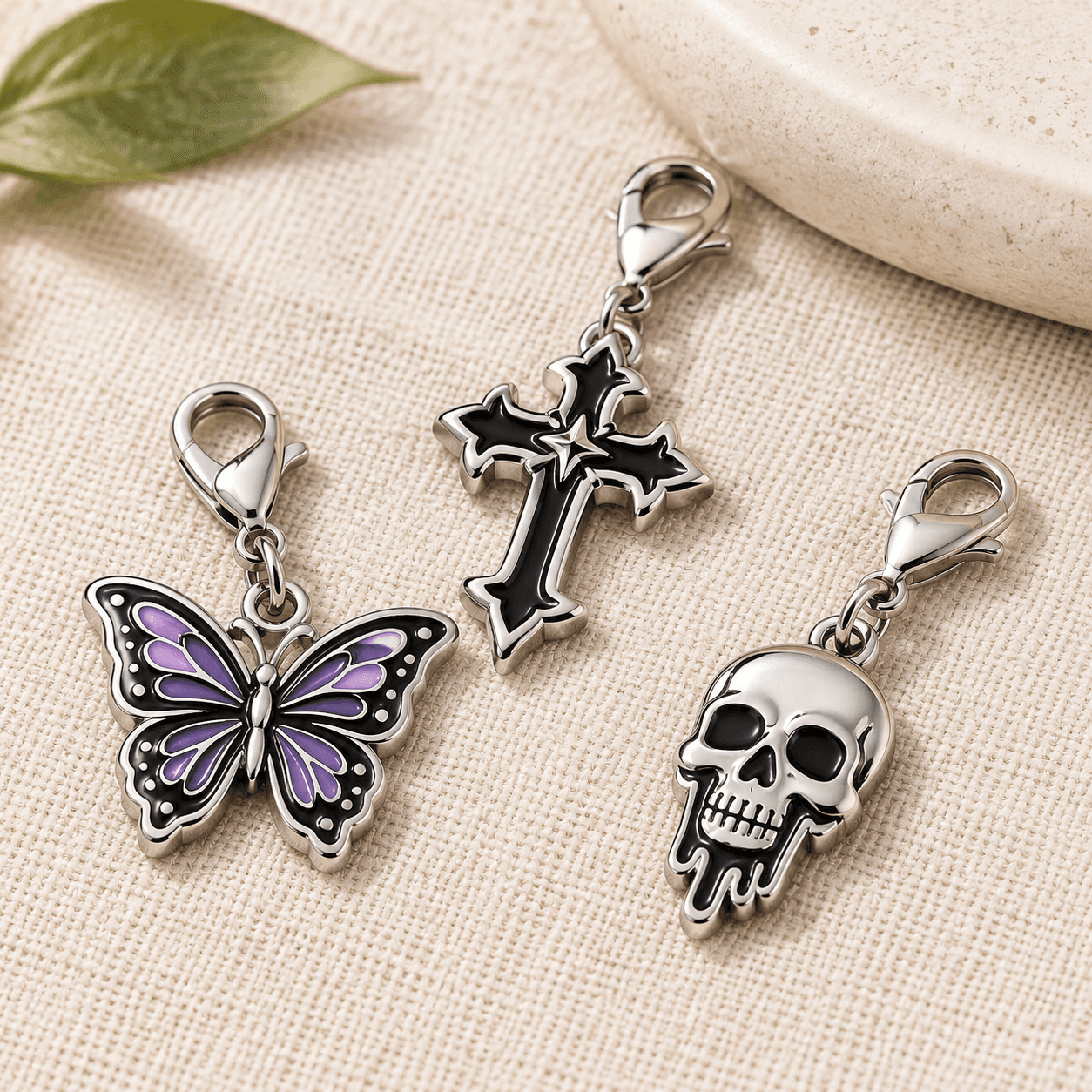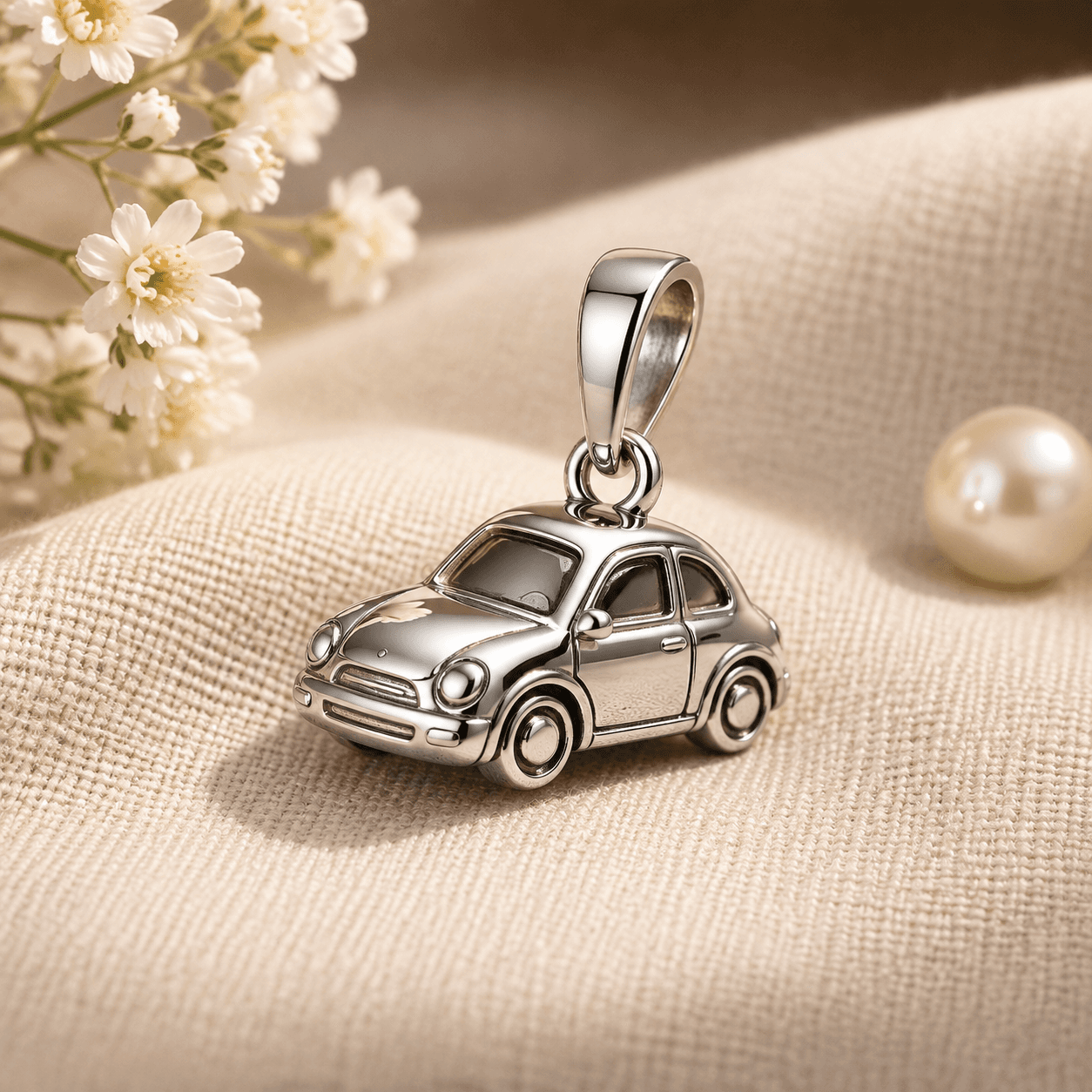
Wholesale car charms can look simple on a product sheet, but durability, finish consistency, attachment quality, and supplier reliability directly affect returns, reviews, and margin. For North American buyers, the right sourcing process should go beyond a low unit price. You need a repeatable method for checking material quality, wear resistance, production controls, documentation, packaging, and replenishment capability before placing a bulk order.
This checklist is designed for boutique brands, gift companies, distributors, and private-label buyers sourcing stainless steel car charms. Use it before approving samples, negotiating MOQ, or moving into regular production.
How to Source Durable Stainless Steel Wholesale Car Charms
☐ 1. Confirm the Base Material First
Start with a clear material requirement: 316L stainless steel. The supplier should be able to identify the material used for the charm body and provide supporting documentation when requested. A clear material specification reduces uncertainty when you compare quotations from multiple factories.
For wholesale buyers, consistency matters as much as the material name. Ask whether the same material specification will be maintained across repeat orders, samples, and production runs. Also confirm which components are included in the quoted product and whether the attachment hardware follows the same agreed specification.
☐ 2. Check the Finish Against Your Retail Positioning
Choose the finish according to your target assortment and retail price point. Lancy Jewelry supports PVD, gold plated, silver finish, rose gold plating, enamel, and crystal inlay options on 316L stainless steel charms.
Do not evaluate plating only from a fresh sample under showroom lighting. Inspect edges, recessed areas, holes, attachment points, and detailed surfaces. These locations can reveal inconsistent coverage or finishing problems that may become more visible during use.
☐ 3. Request Wear and Corrosion Test Evidence
Durability should be supported by testing rather than marketing language alone. Ask the supplier which tests apply to the product and request relevant reports or records. Lancy Jewelry's SGS certification coverage includes RoHS, REACH, Nickel Release EN1811, and Salt Spray 240H.
Salt spray testing can help buyers evaluate corrosion resistance under a defined test method, while Nickel Release EN1811 is particularly relevant when products may have prolonged skin contact. RoHS and REACH documentation can also support compliance planning for North American and international buyers, although requirements should always be checked against the specific destination, application, and sales channel.
☐ 4. Inspect the Attachment Mechanism
A durable charm is not useful if the attachment point fails. Check that the bail or jump ring passes through a real hole or loop and is fully closed where applicable. For car charm applications, confirm that the intended mounting method is mechanically plausible and that the charm does not place excessive stress on a thin connector.
During sample evaluation, manually inspect the connection point for sharp edges, deformation, loose hardware, and incomplete welding or closure. Ask the factory whether the same connector specification will be controlled during bulk production.
☐ 5. Evaluate Surface Detail and Edge Quality
Run a simple inspection under strong, even light. Look for clean laser marking, defined edges, smooth polished areas, consistent enamel filling, and secure crystal inlay where applicable. Detailed decorative charms should retain their visual definition after finishing.
Pay special attention to small holes, corners, recessed patterns, and narrow lines. These areas often require tighter CNC, laser cutting, polishing, or finishing control than broad flat surfaces.
☐ 6. Test a Production-Representative Sample
Do not approve a bulk order solely from a digital rendering. Request a physical sample that represents the intended production process. If you require custom logo engraving, PVD plating, enamel color filling, or crystal setting, those processes should be represented in the approval sample.
For buyers working on seasonal launches, sample development speed also matters. A supplier that can move efficiently from drawing to prototype can help you validate the design before committing significant inventory.
☐ 7. Compare MOQ With Your Inventory Plan
A low quoted unit price does not automatically produce the best purchasing result. Compare MOQ against expected sales velocity, launch quantity, storage costs, and replenishment frequency. A lower MOQ can be valuable for testing several designs before committing to a larger assortment.
Ask for pricing at several order quantities rather than evaluating only one bulk tier. This gives you a clearer view of the relationship between unit cost, inventory exposure, and margin.
☐ 8. Calculate Landed Margin, Not Just Factory Price
Build your wholesale model around the expected landed cost. Include product cost, packaging, shipping, duties where applicable, inspection costs, and any customization charges. Then compare the result with your planned wholesale or retail pricing.
For North American buyers, maintain a realistic buffer for freight fluctuations, packaging revisions, and replacement inventory. A supplier offering stable quality can protect margin better than a supplier whose low initial quotation leads to inconsistent production or higher defect rates.
☐ 9. Verify Production Capability
Ask how the factory handles CNC machining, laser cutting, laser marking, welding, polishing, and finishing. These capabilities are especially relevant when your assortment includes detailed shapes, custom logos, or repeatable decorative elements.
Lancy Jewelry operates a modern production facility supporting these processes for OEM and ODM development. For buyers, the important question is not simply whether a supplier owns equipment, but whether its processes are organized to reproduce the approved sample consistently at scale.
☐ 10. Confirm Private-Label and Packaging Support
If the product will be sold under your own business identity, confirm packaging specifications before production. Ask whether the supplier can support private-label packaging, packaging cards, product identification, and assortment-level organization.
Packaging should match the intended retail environment without adding unnecessary complexity. For boutique and gift programs, a clean presentation can improve perceived value while keeping fulfillment practical.
☐ 11. Establish a Quality-Control Checklist Before Production
Before approving a purchase order, document the critical specifications in writing. Include material, dimensions, finish, color references, logo artwork, attachment mechanism, packaging, acceptable tolerances, and testing requirements.
Use the approved sample as the physical reference where appropriate. This creates a clearer standard for both buyer and supplier and reduces ambiguity when repeat orders are placed months later.
☐ 12. Ask How Repeat Orders Are Controlled
Supplier reliability becomes most important after the first successful order. Ask how production specifications, artwork, finishing parameters, and packaging files are retained for future orders. A dependable supplier should be able to reproduce an approved product without forcing the buyer to restart development each time.
For growing assortments, this repeatability supports better forecasting, faster replenishment, and more predictable margins.
Why Durable Stainless Steel Car Charms Matter for Wholesale Buyers
Quality Protects Margin
Defects create costs beyond the original unit price. Returns, replacements, customer-service time, negative reviews, and delayed replenishment can reduce the profitability of an apparently inexpensive product. Durable 316L stainless steel charms give buyers a stronger foundation for building repeatable assortments.
Testing Supports Confident Sourcing
Relevant testing provides objective evidence that complements visual inspection. Lancy Jewelry supports SGS-certified testing coverage for RoHS, REACH, Nickel Release EN1811, and Salt Spray 240H. Buyers should still confirm the specific regulatory requirements applicable to their market and product use rather than assuming one certification covers every legal obligation.
Consistent Finishing Supports Brand Presentation
Wholesale buyers need collections that look consistent across multiple SKUs. Stable PVD and finishing processes help reduce visible variation between samples and production units. Consistency becomes especially important when several charm designs are sold together as a coordinated program.
Reliable Manufacturing Supports Better Replenishment
A sourcing relationship should support more than one purchase order. When a supplier can manage sample development, OEM or ODM production, logo engraving, finishing, quality control, and private-label packaging, buyers can reduce the number of separate production handoffs involved in launching and replenishing a collection.
Detailed Buyer Guide: A Practical Approval Process
Step 1: Define the Product Brief
Write down the target dimensions, charm shape, finish, logo requirements, attachment method, packaging format, expected quantity, and target delivery window. A precise brief makes supplier quotations easier to compare.
Step 2: Request Supplier Documentation
Ask for material information, relevant testing documentation, production capabilities, sample lead time, MOQ, packaging options, and quotation tiers. Keep the documents associated with the SKU so they can be reviewed during future replenishment.
Step 3: Approve the Physical Sample
Inspect the sample for silhouette, dimensions, surface finish, engraving clarity, attachment strength, edge quality, and packaging presentation. Photograph approved samples for internal purchasing records.
Step 4: Review the Commercial Terms
Compare MOQ, unit pricing, sampling charges, customization costs, production lead time, packaging costs, and shipping assumptions. Then calculate your expected landed margin at realistic order quantities.
Step 5: Place the Bulk Order With Written Specifications
Reference the approved sample and final artwork in the purchase documentation. Clearly identify all critical requirements so production and inspection teams have one consistent specification.
Step 6: Inspect Before Shipment
Use a sampling inspection or agreed quality-control process before shipment. Check material, finish, logo placement, dimensions, attachment hardware, packaging, and visible defects. For larger bulk orders, consider using a documented inspection checklist for every production batch.
Step 7: Track Reorder Performance
After launch, monitor defect rates, customer feedback, sell-through, replenishment speed, and actual margin. Use these results to refine your next order rather than relying only on the initial purchase price.
FAQ
What should I verify first when sourcing wholesale car charms?
Start with the agreed 316L stainless steel specification, then verify the finish, attachment mechanism, testing documentation, sample quality, MOQ, and production capability. These factors establish whether the supplier can meet your commercial and quality requirements.
What certifications or tests should wholesale buyers request?
Ask for documentation relevant to your destination market and product application. Lancy Jewelry supports SGS certification coverage including RoHS, REACH, Nickel Release EN1811, and Salt Spray 240H. Buyers should confirm any additional requirements that apply to their specific sales channel or jurisdiction.
How can I reduce risk when placing a large bulk order?
Approve a production-representative sample, document all critical specifications, confirm MOQ and lead time, establish inspection criteria, and verify the supplier's ability to reproduce approved products. A staged purchasing approach can also help validate demand before expanding quantities.
Can Lancy support custom and private-label car charm programs?
Yes. Lancy Jewelry provides OEM and ODM development, logo engraving, PVD plating, enamel color filling, crystal setting, sample support, and private-label packaging. Buyers can begin with sample development and then move into wholesale or bulk charm orders after the specifications are approved.
Partner With Lancy Jewelry for Factory-Direct Charm Sourcing
If you are building a wholesale car charm assortment, choose a supplier based on measurable quality, repeatability, and commercial flexibility—not only the lowest quotation. Lancy Jewelry focuses exclusively on 316L stainless steel charms and supports boutique brands, gift companies, distributors, and private-label buyers with factory-direct OEM and ODM production.
For custom requirements, review the OEM Service to understand development support. For broader assortment planning, browse All Products. When you are ready to discuss specifications, quantities, packaging, and pricing, submit an RFQ or contact the Lancy team through Contact.
Buyer takeaway: confirm 316L stainless steel, verify testing, inspect the attachment mechanism, approve a representative sample, calculate landed margin, document production standards, and select a supplier capable of consistent repeat orders. That checklist gives wholesale buyers a practical foundation for durable, scalable car charm programs.