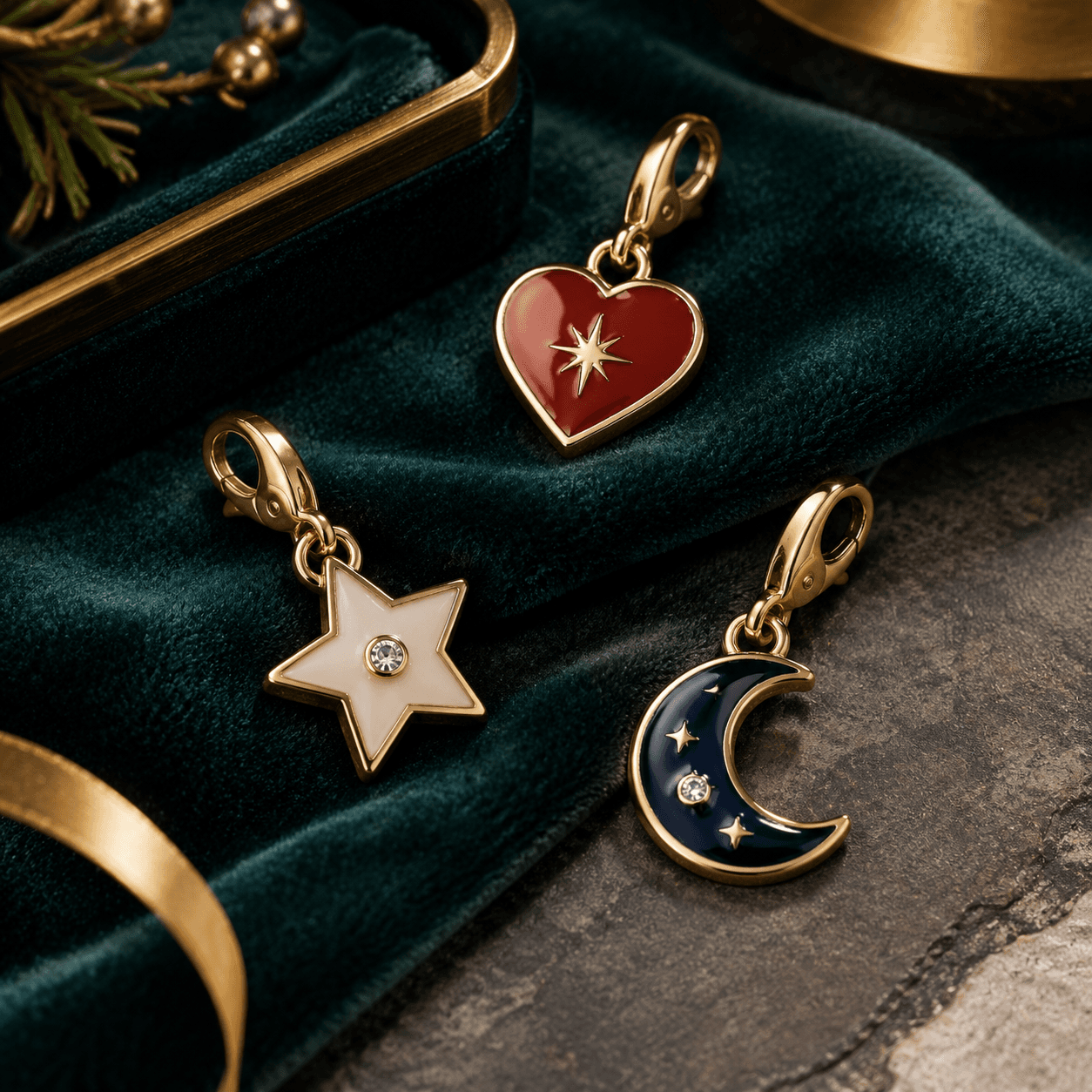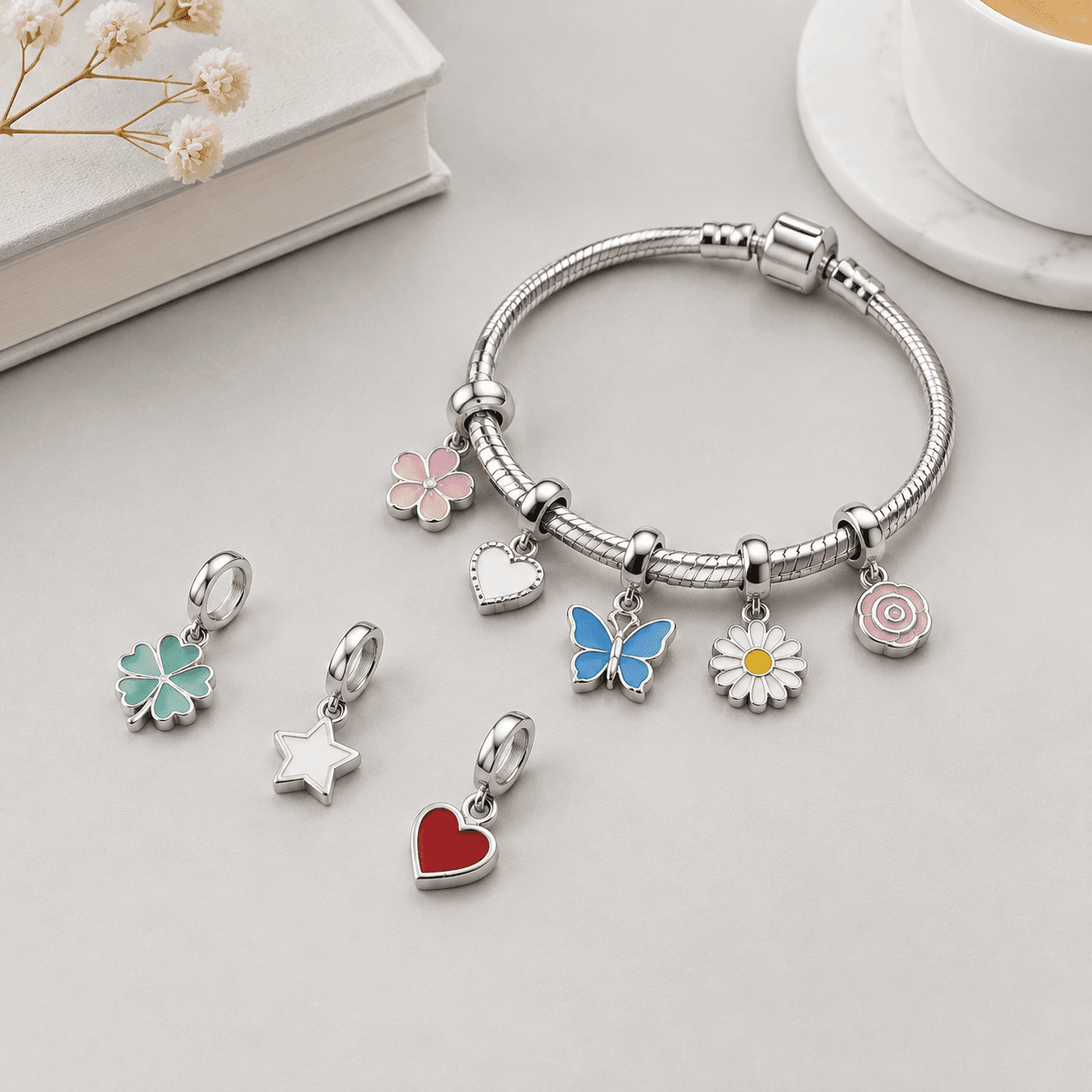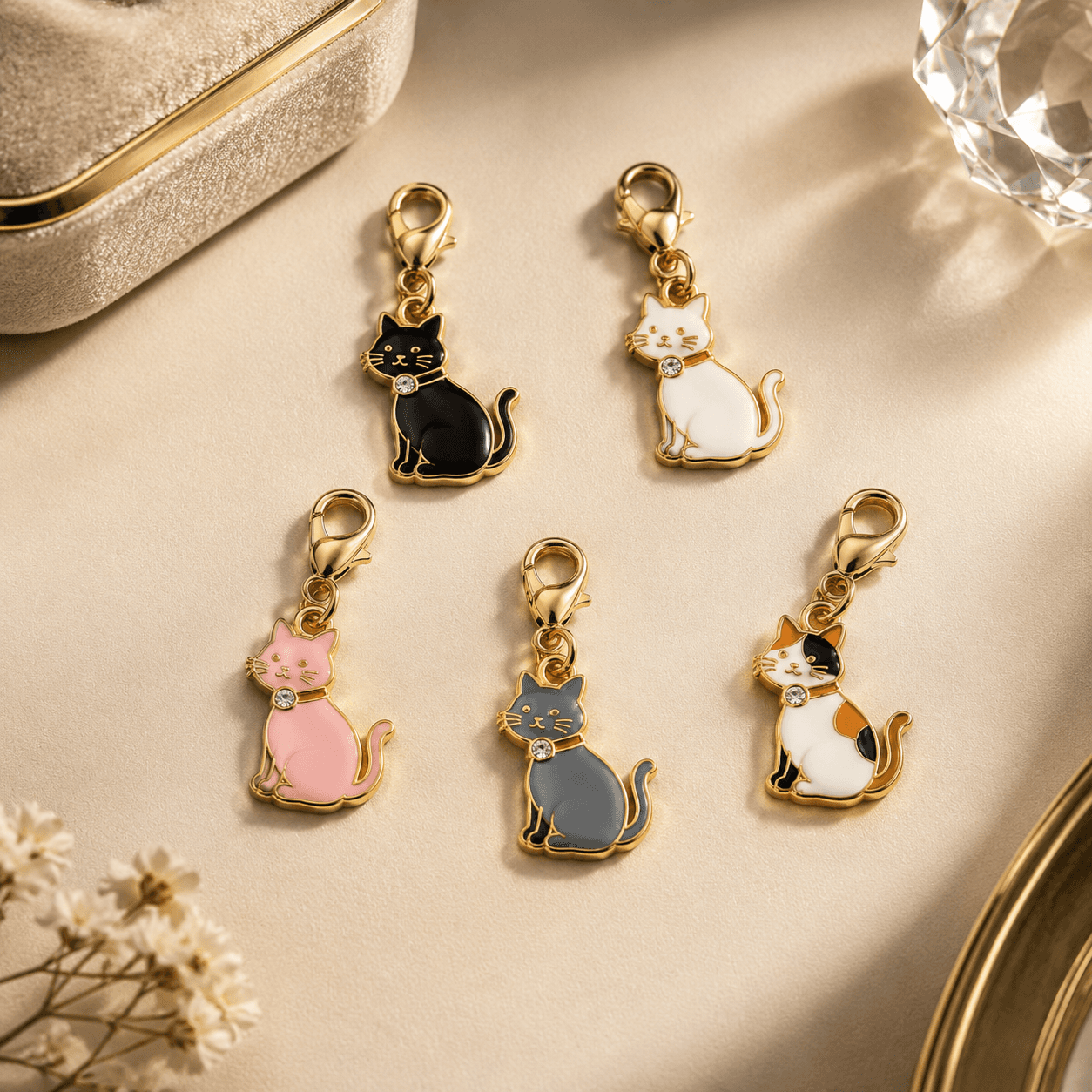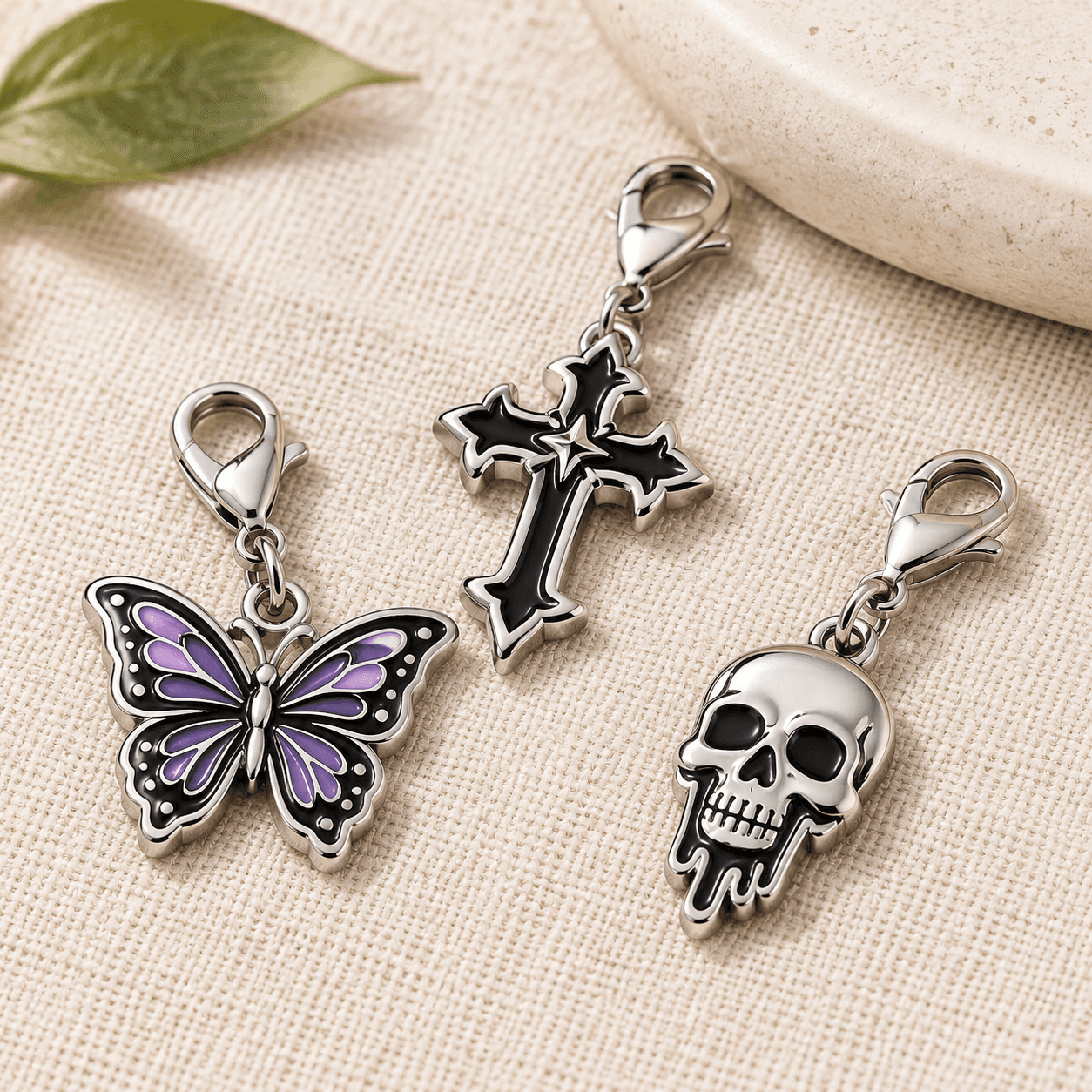
Choosing a supplier for custom enamel charms involves more than reviewing attractive product samples or comparing quotations. For jewelry designers and boutique brands, the right manufacturing partner must demonstrate reliable material quality, consistent enamel application, durable surface finishes, and the ability to reproduce approved designs across repeated production orders. A charming sample has little commercial value if its color changes, surface deteriorates, or attachment details fail during everyday use.
This sourcing guide provides an actionable checklist for evaluating stainless steel custom enamel charms suppliers. It covers material verification, enamel performance, testing documentation, customization capabilities, production controls, and long-term supplier reliability. Use these checkpoints before approving samples, negotiating MOQ requirements, or placing bulk orders.
How to Evaluate Stainless Steel Custom Enamel Charms Suppliers
A qualified stainless steel charms manufacturer should provide clear answers about material specifications, production processes, inspection procedures, and product durability. Do not evaluate suppliers based solely on photographs, catalogue descriptions, or initial pricing. Request measurable evidence and examine how consistently the supplier can translate a creative concept into a repeatable finished product.
1. Verify the 316L Stainless Steel Base Material
Material verification should be the first checkpoint. Lancy Jewelry focuses exclusively on 316L stainless steel charms as the base material. This material offers a practical combination of corrosion resistance, strength, and suitability for detailed jewelry designs.
Ask potential suppliers to provide documentation identifying the material grade used in production. Confirm that the documentation relates to the actual production specification rather than a general material description.
- ☐ Confirm that the base material is specifically identified as 316L stainless steel.
- ☐ Request relevant material certificates or supplier documentation.
- ☐ Check whether material identification can be traced to production batches.
- ☐ Confirm that the approved material specification will remain unchanged during repeat orders.
- ☐ Ask how incoming material inspections are performed.
For jewelry designers, this verification protects the integrity of the product concept. It also helps sourcing teams maintain consistent specifications across different charm collections and seasonal releases.
2. Examine Enamel Application and Color Consistency
Enamel is an important design element because it introduces color, contrast, and visual identity. However, attractive color samples do not automatically demonstrate manufacturing consistency. Suppliers should explain their enamel filling procedures and how they control color accuracy, surface coverage, and finishing quality.
- ☐ Request physical samples showing the proposed enamel colors.
- ☐ Examine whether color filling is even and whether the boundaries are clean.
- ☐ Check for visible gaps, bubbles, uneven surfaces, or inconsistent color coverage.
- ☐ Confirm that the supplier can reproduce approved colors in subsequent batches.
- ☐ Ask whether production samples are checked against an approved color reference.
- ☐ Verify that enamel areas remain visually consistent around design edges and recessed details.
Designers should also evaluate the relationship between enamel colors and the selected finish. Gold plated, silver finish, and rose gold plating options can create different visual effects. Request samples that demonstrate the complete combination rather than approving each decorative feature independently.
3. Inspect Construction and Attachment Details
A charm must function as well as it looks. Small manufacturing defects around holes, loops, and connection points can affect usability and customer satisfaction. Inspect the complete charm, including its reverse side and attachment mechanism.
- ☐ Confirm that the bail or jump ring is properly connected through a real opening or loop.
- ☐ Check that attachment components are securely closed where applicable.
- ☐ Inspect edges for sharp areas, rough polishing, or visible manufacturing defects.
- ☐ Confirm that the charm maintains its intended shape and proportions.
- ☐ Check that decorative elements do not interfere with the attachment mechanism.
- ☐ Evaluate the finished charm under normal handling conditions.
Request photographs of both sides and close-up views of functional details. For custom stainless steel charms, mechanical accuracy should be included in the sample approval process, not treated as a final-stage cosmetic check.
Why Supplier Quality and Durability Matter
Supplier evaluation directly affects product longevity, customer experience, and the cost of managing future orders. A consistent production partner helps boutique brands reduce avoidable quality problems while maintaining a recognizable product standard throughout their collections.
Key Benefits of Working With a Qualified Supplier
More predictable product performance: Verified material specifications and controlled production procedures reduce uncertainty when developing new charm designs.
Consistent visual presentation: Controlled enamel filling and surface finishing help maintain the approved appearance across production batches.
Better quality documentation: Relevant test reports provide sourcing teams with objective information for internal approval and market-specific compliance reviews.
Reduced production risk: Sample evaluation, documented specifications, and inspection checkpoints help identify problems before they affect larger orders.
Stronger collection planning: A capable ODM charm supplier can help designers coordinate shapes, colors, finishes, and decorative details across a complete product series.
4. Review Certifications and Independent Testing
Testing documentation is an essential part of supplier qualification. It provides evidence that relevant product characteristics have been evaluated against specified requirements. However, buyers should distinguish between a factory's general capabilities, a specific product test report, and certification or compliance documentation.
Lancy Jewelry has SGS testing and certification support covering RoHS, REACH, Nickel Release EN1811, and Salt Spray 240H. These are useful reference points when evaluating material and product quality. Buyers should request the relevant documentation and confirm its scope, tested sample identity, applicable requirements, and validity for the products being considered.
- ☐ RoHS: Review applicable restrictions concerning specified hazardous substances and confirm the relevance of the report to the intended product.
- ☐ REACH: Request relevant documentation addressing applicable chemical substance requirements for the target market.
- ☐ Nickel Release EN1811: Review the test result and confirm whether the tested product configuration meets the applicable requirement.
- ☐ Salt Spray 240H: Examine the documented test conditions and results to understand the corrosion resistance performance of the tested sample.
Do not assume that one report automatically covers every design, finish, or production batch. Different surface treatments and product configurations may require separate evaluation. Ask the supplier which test documents are available for the exact product specification.
5. Evaluate Wear Resistance and Surface Durability
Durability should be evaluated through documented testing and practical sample inspection. A supplier should be able to explain how its quality team assesses surface appearance, enamel integrity, and resistance to expected handling conditions.
For enamel charms, pay particular attention to the following characteristics:
- ☐ Enamel adhesion: Ask how the supplier evaluates the attachment of enamel to the finished design.
- ☐ Surface abrasion: Request information about relevant abrasion evaluation procedures and acceptance criteria.
- ☐ Color stability: Ask whether the supplier has documented procedures for evaluating visible color changes.
- ☐ Corrosion resistance: Review applicable salt spray test reports and their stated limitations.
- ☐ Finish consistency: Compare samples for surface smoothness, color uniformity, and visible defects.
- ☐ Attachment strength: Confirm that functional connection points are inspected and evaluated.
Salt spray testing is useful for assessing corrosion behavior under defined laboratory conditions, but it does not establish every aspect of everyday wear performance. Similarly, passing a specific surface test does not guarantee that a product will remain unchanged under all environmental conditions. Request test methods, acceptance standards, and results rather than relying on broad durability claims.
6. Ask About Longevity Guarantees and Quality Responsibilities
A professional supplier should explain what its quality commitments actually cover. Avoid accepting vague statements such as permanent color, lifetime durability, or guaranteed performance without supporting conditions.
Instead, request written information covering:
- ☐ The agreed product specifications and approved reference sample.
- ☐ Applicable quality inspection standards and defect classifications.
- ☐ Procedures for reporting defects after delivery.
- ☐ Responsibilities for confirmed manufacturing defects.
- ☐ Available replacement, rework, or corrective action arrangements.
- ☐ Any warranty period, exclusions, and conditions for submitting a claim.
Clear quality responsibilities are particularly important for private label charms. They establish a common understanding between the buyer and manufacturer before commercial production begins.
Detailed Supplier Evaluation Checklist for Jewelry Designers
Once material quality and durability have been reviewed, assess whether the supplier can support your creative requirements and commercial production schedule. A technically capable factory should also demonstrate reliable development, communication, and production management.
7. Assess Customization and Design Development Capabilities
Customization determines how effectively a supplier can transform a design concept into a commercially practical charm. Look beyond whether a supplier accepts custom orders. Examine the manufacturing processes and technical resources available for developing the requested details.
Lancy Jewelry operates a modern manufacturing facility equipped with CNC processing, laser cutting, laser marking, welding, and polishing capabilities. These processes support the development of detailed charm structures and customized finishing requirements.
Use the following checklist when reviewing customization capabilities:
- ☐ Can the supplier review technical drawings and reference dimensions?
- ☐ Can it develop customized outlines, shapes, and decorative patterns?
- ☐ Can it support logo engraving and laser marking?
- ☐ Can it provide controlled enamel color filling?
- ☐ Can it support crystal inlay when the design requires additional decorative detail?
- ☐ Can it coordinate PVD plating with the selected design and color specification?
- ☐ Can it develop coordinated designs for a complete boutique collection?
- ☐ Can it provide physical samples before approving mass production?
A structured sample development process is especially useful for designers who need to validate dimensions, proportions, colors, and finishing combinations before committing to larger quantities.
8. Compare Sample Quality With Production Readiness
Samples should be treated as technical approval references, not merely sales presentations. Request a sample that reflects the intended production specification as closely as possible.
- ☐ Compare the sample with the original design drawing.
- ☐ Verify dimensions, thickness, weight, and attachment details.
- ☐ Approve the exact enamel colors and surface finishes.
- ☐ Inspect front, reverse, edge, and connection details.
- ☐ Record approved specifications and reference photographs.
- ☐ Confirm whether the sample production process will match the intended bulk manufacturing process.
Ask the supplier to document any changes made during development. This creates a clear approval history and helps prevent misunderstandings when repeat orders are placed.
9. Review MOQ, Pricing, and Production Capacity
Commercial terms should be evaluated alongside manufacturing quality. The lowest quotation does not necessarily represent the best sourcing decision if it excludes important inspection procedures, sample development, or finishing requirements.
When evaluating OEM production, ask for a transparent quotation that identifies the major cost factors.
- ☐ Confirm MOQ for each design, finish, and enamel color configuration.
- ☐ Request separate pricing for samples and bulk production.
- ☐ Clarify whether custom tooling or development costs apply.
- ☐ Confirm the expected production lead time.
- ☐ Ask how repeat-order pricing is managed.
- ☐ Verify available production capacity for the requested quantity.
- ☐ Confirm packaging, labeling, and shipping requirements.
For smaller boutique brands, low MOQ support can make it easier to introduce several coordinated designs without committing to excessive inventory. For distributors and established gift companies, consistent bulk production and repeat-order management may carry greater importance.
10. Check Communication and Private Label Support
Reliable communication is a practical indicator of supplier management quality. A supplier should be able to answer technical questions, identify potential production limitations, and provide clear updates during development.
- ☐ Is there a clear contact person for technical and commercial questions?
- ☐ Are drawings, specifications, and sample revisions documented?
- ☐ Can the supplier provide regular production updates?
- ☐ Does it support private-label packaging and customized presentation?
- ☐ Can it maintain consistent specifications across repeat orders?
- ☐ Does it provide clear procedures for handling quality concerns?
Private-label buyers should also confirm packaging dimensions, branding requirements, barcode information where applicable, and final artwork approval before production. These details can affect the efficiency of receiving, inventory management, and retail preparation.
11. Use a Weighted Supplier Evaluation Scorecard
After completing the checklist, score each potential supplier using a consistent evaluation framework. A weighted scorecard makes it easier to compare manufacturers based on evidence rather than personal impressions.
| Evaluation Area | Suggested Weight | Evidence to Review |
|---|---|---|
| 316L material verification | 20% | Material documentation and traceability |
| Enamel and surface quality | 20% | Physical samples and inspection results |
| Testing and compliance | 15% | Relevant SGS reports and test documentation |
| Customization capabilities | 15% | Technical processes and sample development |
| Production reliability | 10% | Capacity, lead times, and quality controls |
| Commercial flexibility | 10% | MOQ, quotation transparency, and repeat orders |
| Communication and packaging | 10% | Response quality and private-label support |
Score each category from 1 to 5, then multiply the score by its assigned weight. A supplier with strong visual samples but insufficient material documentation should not automatically receive a high overall rating. Treat material verification and essential compliance requirements as mandatory approval checkpoints regardless of the final numerical score.
Frequently Asked Questions
1. What should buyers check first when choosing a custom enamel charm supplier?
Start with base material verification. Confirm that the charms use 316L stainless steel, request relevant material documentation, and examine physical samples. Next, evaluate enamel application, surface finishing, attachment construction, and applicable test reports. These checks establish a reliable foundation before discussing pricing and production quantities.
2. How can buyers evaluate the durability of enamel stainless steel charms?
Request documentation covering relevant enamel adhesion, surface abrasion, corrosion resistance, and finish inspection procedures. Examine physical samples for uneven color, visible defects, and weak attachment details. Review salt spray results where applicable, but remember that laboratory testing under defined conditions cannot guarantee every aspect of everyday wear performance.
3. What certifications and testing documents should a supplier provide?
Depending on the target market and product configuration, buyers should review applicable RoHS, REACH, Nickel Release EN1811, and salt spray testing documentation. Confirm the tested sample, report scope, conditions, and results. Lancy Jewelry has SGS testing and certification support covering these areas.
4. Can boutique brands order custom enamel charms with a low MOQ?
MOQ depends on the design, dimensions, enamel requirements, finishing specifications, and production arrangements. Buyers should discuss quantity expectations during the RFQ stage and request a clear breakdown of sample costs, development requirements, and bulk pricing. Lancy Jewelry supports OEM and ODM development with low MOQ options for suitable projects.
Partner With Lancy Jewelry for Custom Enamel Charm Development
Finding the right manufacturing partner requires evidence, not promises. Buyers should prioritize verified 316L stainless steel, consistent enamel application, documented testing, practical durability evaluation, and dependable production management. These factors help jewelry designers create commercially viable collections while reducing sourcing uncertainty.
Lancy Jewelry is a B2B 316L stainless steel charms manufacturer supporting boutique jewelry brands, charm bar retailers, gift companies, distributors, and private-label buyers. Our manufacturing capabilities include OEM and ODM development, CNC processing, laser cutting, laser marking, welding, polishing, PVD plating, enamel color filling, crystal setting, logo engraving, and private-label packaging.
Whether you are developing a new collection or expanding an established product range, our team can assist with design evaluation, sample development, finishing selection, and production planning. We focus on practical customization, consistent manufacturing specifications, and clear communication throughout the sourcing process.
Ready to evaluate your next custom enamel charm project? Explore our stainless steel charm product range, learn more about our OEM and ODM manufacturing services, or submit an RFQ and request a quotation. Share your design drawings, target quantities, preferred finishes, and customization requirements so our team can review your project and recommend the next development steps.